Overcoming a few challenges to ride on Ghana’s trains
The Plan
A visit to Ghana had long been close to the top of my travel wish list. Although I had heard many excellent things about the country, the ability to travel around extensively by train was not one of them. In fact, by October 2024 there were just four passenger services a day in Ghana: one commuter train made a daily round trip into Accra; another brought workers into Takoradi and then took them home again.
A brief history of the Ghanaian rail network
My plan was to visit Ghana in early November 2024 and try to ride on these trains. After spending time in Accra and taking the train there, I would travel the 220km to Takoradi by road. I would stay there for a few days and aim to catch the train on one of them. I would then return to Accra with a stop in the town of Cape Coast on the way back.

Arriving in Accra
I travelled out to Accra on a British Airways A350. I left at lunch time on a Friday and arrived in the early evening: the lack of a time difference with London a welcome benefit. Using points, I had purchased a room in an airport hotel for the first few nights. After checking in I went straight to the bar.
Prince, the barman, was a brilliant ambassador for his country, and over a pleasant couple of hours I learned quite a lot. There were 35 million people in Ghana, the population of Accra was around 2.5 million. The forecast was for several hot and humid days: it was approaching the end of the rainy season. I also got a crash course in Twi, the local language, and I had a tasting session of Ghanaian beers. I decided Club was my favourite. There were twenty Cedis to the British Pound and a bottle of Club usually went for around twenty.

Makola Market
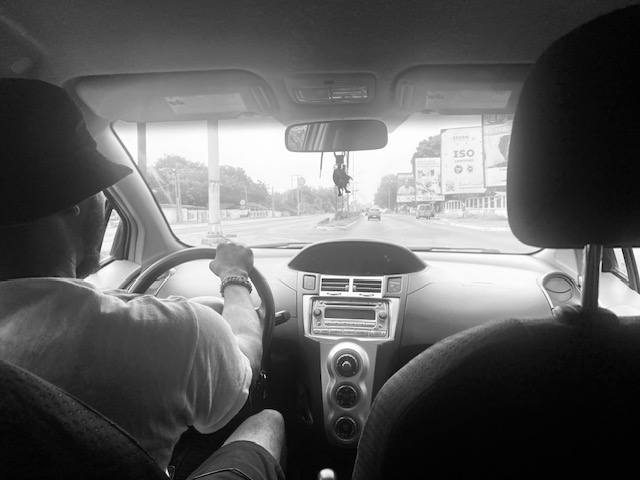
The next morning, I was up early and ready to go. It was already extremely hot and humid at 9am. I ordered a Bolt and it was in front of the hotel within a few minutes (generally I found Uber and Bolt both worked really well in Accra). The driver suggested that due to heavy traffic it would be better for me to head to Makola Market rather than my first choice, the station, so we did that.
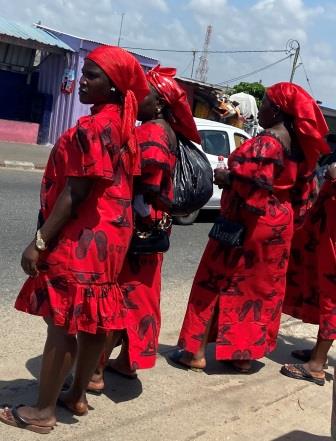
My first strong impression of Ghana was the sight of the women of Makola Market. Specifically, it was the amount of stuff many of them were carrying on their heads as they walked around the place that surprised me.
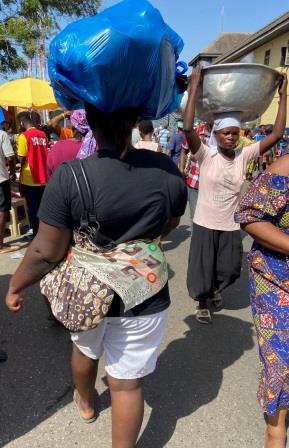
It is said they can manage to carry up to around 40kg and as I negotiated my way through the busy streets I was amazed at how many seemed to be doing it without a care in the world.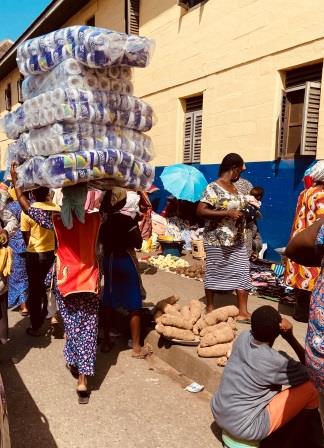
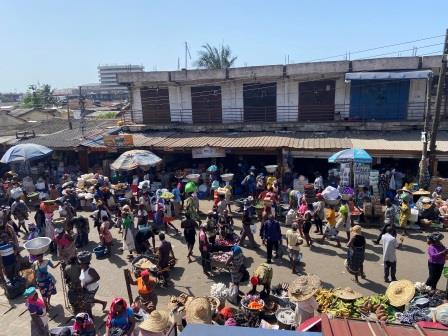
The market itself occupies several streets in the heart of Accra’s downtown and by the time I reached it, Saturday midmorning, it seemed to have reached its peak. There was a constant buzz about the place. Almost all the vendors were women, some were sitting down and others were walking around.
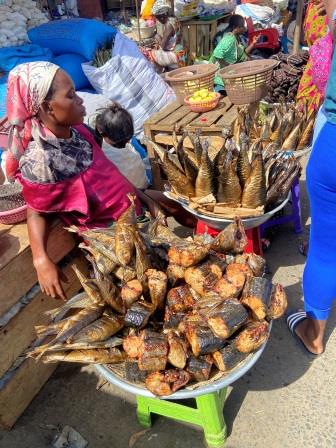
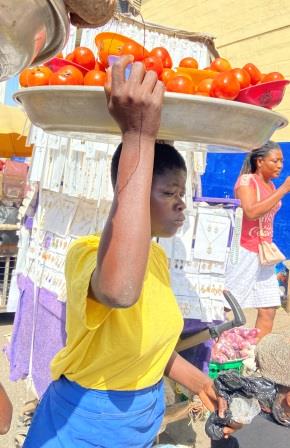
This is one of the busiest markets in the whole of West Africa and as I walked around it, it just felt insane. I struggled to even move a lot of the time and then incredulously felt myself being pushed sideways as the throngs of people parted when a vehicle tried to come through.


Eventually I found a quieter spot and spying a second storey veranda, I climbed the steps and for a moment or two just stood their looking at everything.
Accra Station
The entrance to Accra Station took a bit of finding but after some toing and froing I finally located a small gateway in what was a kind of perimeter fence.
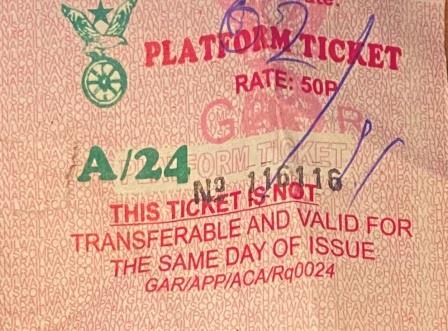
As I passed through it and headed towards the station building I was challenged by a couple of guys wearing railway worker’s jackets. They told me that I needed to buy a platform ticket for 50 cents to get in.

I explained I wanted to see if the trains were running, but I was told there were no services on Saturdays. I asked if there were services during the week and was met with a very unconvincing nod. I walked through the station building and out onto the single platform.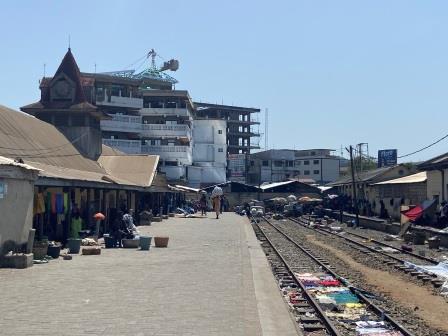
There were market traders everywhere and I assumed this was essentially an extension of Makola. It was less crowded though, which was welcome. There were no officials to ask about trains. There were no timetables either. I wandered up and down the platform taking it all in.
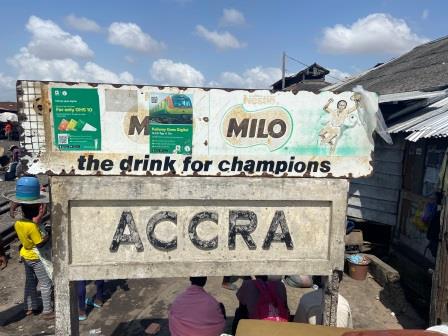
Accra station was completed in 1910 when the line linking the capital with Mangoase opened. Services finished in 2011 when the site was taken over by these market traders. They stayed on even after the daily service to Tema was brought back in 2019.
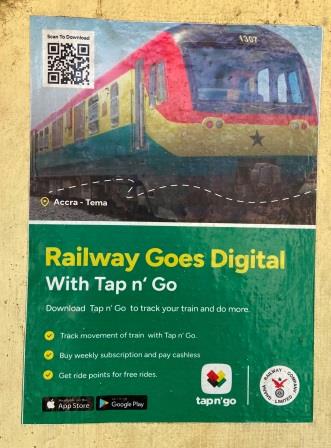
I knew that if the train to Tema ran, it ran once a day. It arrived here in the morning presumably bringing in commuters and then it took them home again in the evening. I walked down to the end of the platform and finally found a small poster about the train service. It said it would be digitalised and “touch and go” could be used. There still did not seem to be any information about when the thing actually ran though.
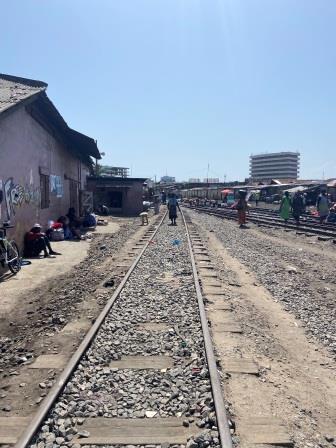
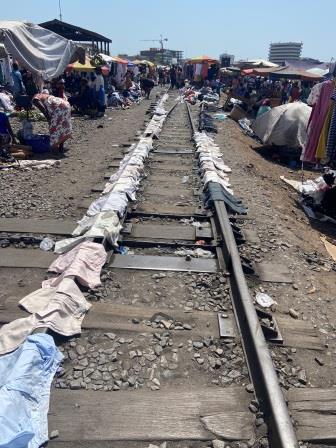
The train on the poster was a Diesel Multiple Unit painted in the colours of the Ghanaian flag. Surveying the scene before me I started to wonder if it did actually run or not. The only clue I had was that the rails looked pretty shiny: evidence perhaps that something was using them.

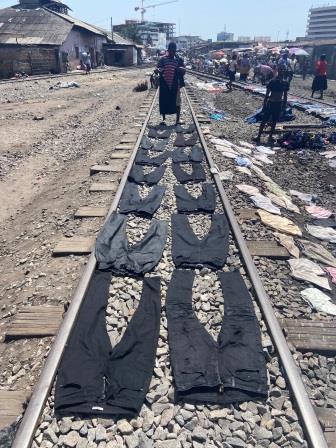
I jumped down from the platform onto the track and began to follow it out of the station. In the end I walked about half a mile before I turned back. All along the line, traders had placed little stalls and in most cases they had laid out their wares right across the track.
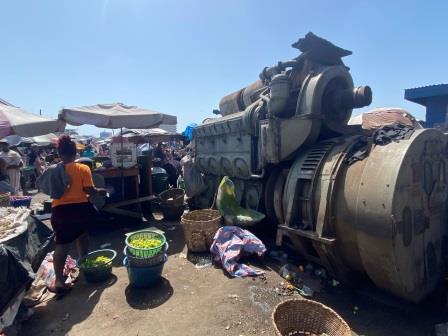
At an old engine shed just outside the station, there was a power unit from a diesel engine just lying there surrounded by people selling fruit.

As I walked along many people smiled at me politely, but nobody really bothered about me. It had been the same in the market. In one sense it was a little disconcerting but in another sense it was quite refreshing. No one seemed curious about me or what I was doing there. This was true of most of my time in Ghana.
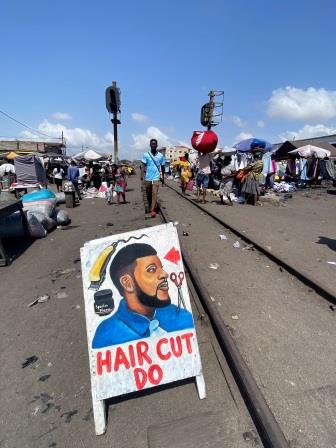
I got chatting to one guy who was standing by a fabric stand. He introduced himself as Bright and told me he was from Accra. I asked him if the train still ran, but he did not really know.
He asked for my phone number so we could stay in contact by text, and I gave it to him. This happened a lot throughout my stay in Ghana; I was contacted a couple of times but I never heard anything again from Bright or most of the people I swapped numbers with.
Lunch
I walked south from the station in the direction of the coast eventually leaving the bustling market behind me. On the way I spotted a sign outside a restaurant displaying a variety of Ghanaian foods.

Prince had suggested I try fufu, the national dish, but I decided to leave it until I was feeling more adventurous. My first proper meal in Ghana was Jollof Rice which came with a bit of chicken.
Jamestown
Having had enough of crowded downtown Accra for now, I decided to head over to Jamestown, the fishing port and the oldest part of the city.

I had underestimated how exhausting it would be to walk in the heat, and by the time I arrived at Jamestown Lighthouse I was more than a little exhausted.
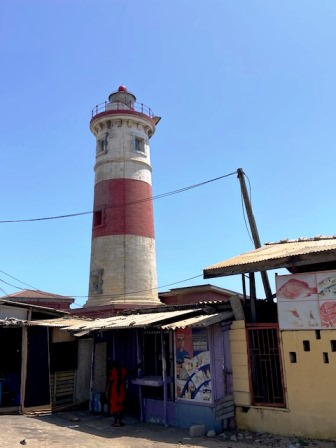
As I sat on a bench drinking water, a guy came up to me and introduced himself. I thought he said his name was “Nice One”, but I was not really listening. He explained he was offering a walking tour around Jamestown and rolled off a list of places I could be taken to.
I was about to decline when I realised that he had already signed up a young couple from Lagos, Nigeria, to his tour. Reasoning I would not be alone, and having worked out the asking price in pounds, I reluctantly decided to go ahead, although as we set off I was still sceptical.

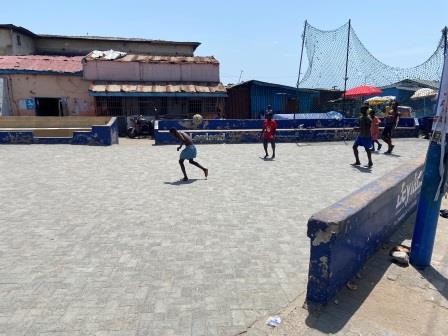
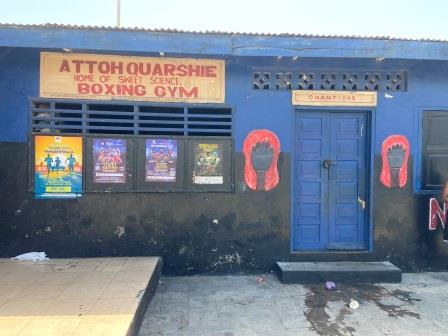
We were led out first to a courtyard where children were playing basketball and then shown a boxing gym which was labelled “the House of Pain.” It had its motto, “no pain, no gain,” clearly displayed over the entrance. The rival “Will Power” Boxing Gym just across the yard had a similarly threatening slogan: “Go hard or go home”.
Fort James
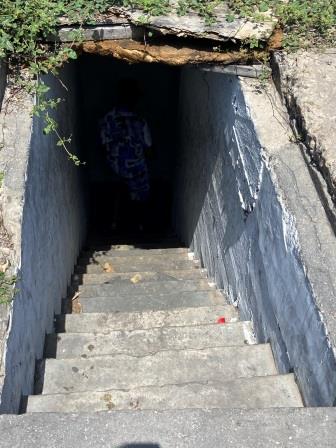
We were led down steps and shown into a dungeon below. “Nice one” explained that this was how slaves were introduced to Fort James. There was once a long dark passage that led from here into the castle several hundred metres away.
Fort James was where we went to next. “Nice one” banged on the gate for the security guard to let us in to the otherwise deserted building. He explained that the structure was built in 1673 by the Royal African Company of England and served thereafter as a trading post for both gold and slaves.
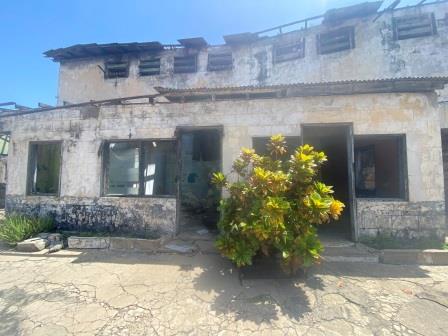
It was in remarkably good condition. Perhaps on account of it being used as a prison by the British and Ghanaians until relatively recently. Ghana’s first president, Kwame Nkrumah, was imprisoned here between 1950 and 1951.
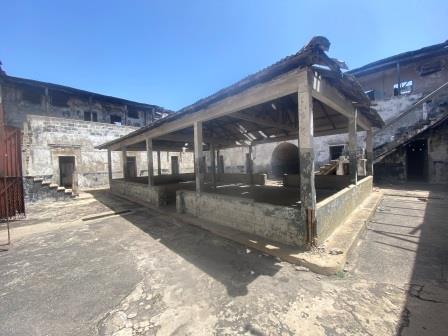
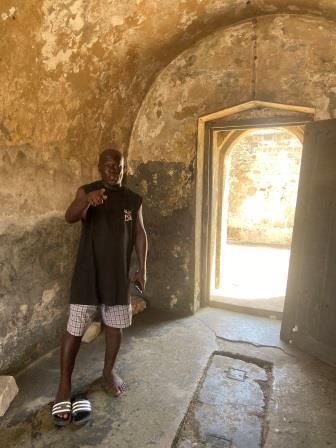
We were led through the area where slaves were once bought and sold and shown the “gate of no return.” Slaves passed through here to board ships that would take them away from the continent of their birth forever.
Fish
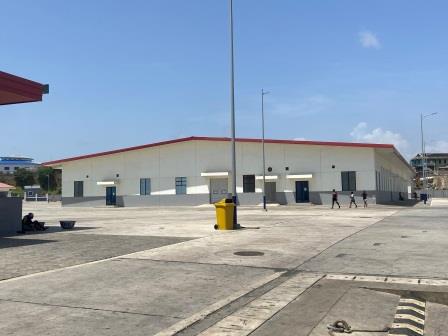
We were led through the slum conditions of the local fishing village and then down to the large Chinese-financed fishing port. It is said there is a lot of animosity towards the Chinese here who use their own boats and their own people.

The new harbour complex, constructed with a $60-million grant from China, was expected to generate employment and improve the lives of the locals. Perhaps it was doing that, but certainly on the dockside at Jamestown things did not seem so simple.
Keep them off the streets
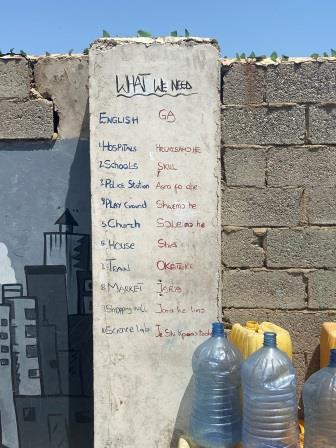
I had to admit I was enjoying the walking tour much more than I expected, but the moment my scepticism really vanished was at our last stop when we were introduced to the “Keep off the street foundation.”

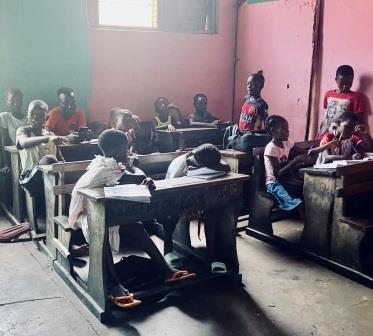
We were taken around the school and introduced to the students and teachers. I worked out that part of the money I had paid for the tour was going to the upkeep of the school.

The school had originally been founded by a French charity and some of the kids were learning French. It was fascinating to hear about how they were trying to educate some of the poorest children in the city.
I left with a good impression of the whole place. I thought it polite to ask for the correct name of our guide. He rattled it off quickly. “It is really difficult to pronounce”, he explained. “A tourist from the UK a couple of years ago thought it sounded like “Nice one”, so now I use that with everyone.” Nice one !
Presidential Shrine
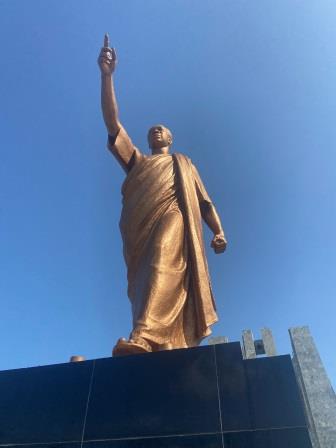
A short Bolt ride away from Jamestown was the museum dedicated to the first Ghanaian President, Kwame Nkrumah.
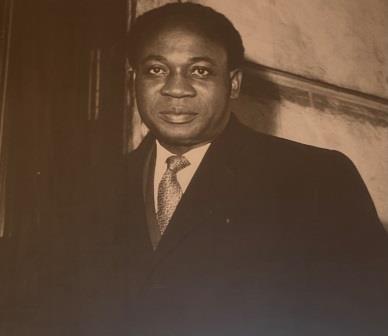
Kwame Nkrumah (1909-1972) served as Prime Minister of the Gold Coast from 1952 until 1957, and then after independence he became Ghana’s first Prime Minister and then President between 1957 and 1966. He was an early proponent of Pan-Africanism.

The museum sits in a vast five acre complex that apparently used to be the British colonial polo field. Like much in Ghana, as I was about to discover, they had two vastly different prices: one for locals and one for foreign tourists. It was fair enough, I suppose.

The whole complex contained a museum, several memorials and the mausoleum where Nkrumah and his wife are interned. First opened in 1992, it had recently undergone a restoration and was quite impressive.
Walking Back
By now the heat of the day was starting to subside and, having got used to walking, I decided to go back to the hotel on foot. It was a fascinating 7km trek.
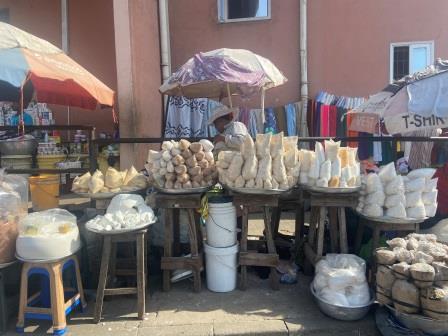

I started out from Kinbu Gardens and took some time to have a look at the market stalls dotted around the streets. The atmosphere here was a little more relaxed than Makola but fascinating, nonetheless.

Then I set out along Independence Avenue. I walked past modern tall buildings, expensive hotels and alongside a large children’s park, complete with miniature railway track.
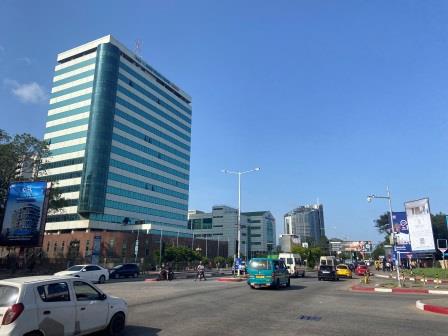
As I walked I came across fewer people than I had in the centre of the city, but most people engaged me with a smile or a greeting. Occasionally there were kids playing by the side of the road and I got a few calls of “Obruni” (white person / foreigner), but it all seemed friendly.

They were having a presidential election soon (at the beginning of December) and there were posters everywhere. I later learned there were 13 candidates in all.
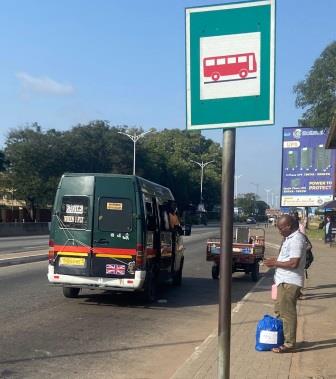
I noticed that, although there were a few full size buses, the main intra-urban transport seemed to be the minibus, here called “tro tro”. I saw dozens of these things. They were crammed with people but still stopped to try to pick up more passengers.
It took me around two hours to get back to the hotel. Back in the room, I planned the next stage of my journey. I would have to abandon trying to catch the train in Accra for now. The next morning, I would head out to Takoradi.

Other posts….

 Trains To Beyond