Visiting Freetown in November 2024
The Plan
I had long wanted to visit Sierra Leone, not least because I knew that it had a railway museum with a remarkable history. In mid-November 2024, I finally achieved my goal and spent 10 days in Freetown.
My visit to the railway museum itself is documented here – National Railway Museum
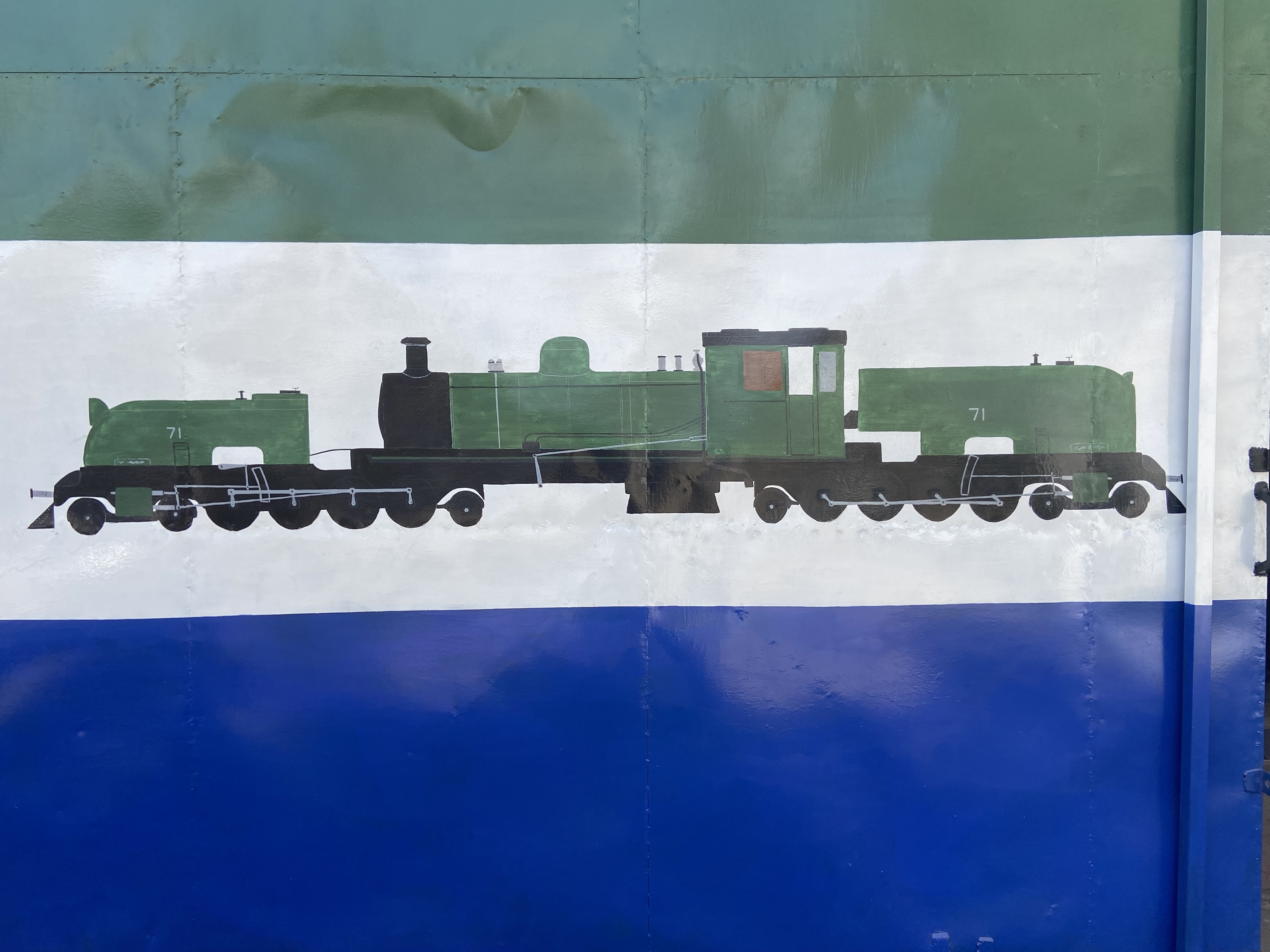
I enjoyed my visit to Sierra Leone immensely but it was not without surprises. Here then are 13 things that perhaps I was not quite expecting to find….

1. The airport boat ride is wonderful but very time consuming.
The location of Lungi Airport, on the opposite side of the bay to Freetown itself, means that the only realistic way of getting to and from the city is to use one of the dedicated speed boat services.

Two competing companies, Sea Bird and Sea Coach, operate the boats. Both take about 30 minutes. They have slightly different terminals in Freetown, but they do not compete on price. At $40 for a single trip, they are not cheap either.
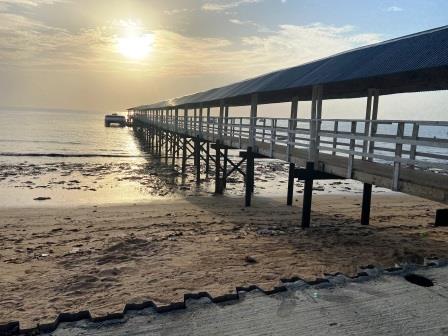
I chose Sea Coach. I got my tickets from a cubicle right opposite the airport arrivals building. After a short wait I boarded a bus for the trip to the jetty. There was a further wait in a terminal building before we were finally allowed to board.

Looking out from the terminal towards the deserted beach, it seemed incredible that we were still just minutes from the airport. The boat ride itself was very comfortable and it was certainly a great way to arrive in the city. Nevertheless, from descending the plane steps to arrival in Freetown took more than two hours.

Even worse was the length of time in advance of a departing flight you need to leave the city. There are only a few boats a day, each one dedicated to a certain flight. In order to be in time for a 7pm flight departure I was asked to leave Freetown at 2pm. Luckily, the airport terminal itself was rebuilt a few years ago and was not an unpleasant place for a wait for more than four hours.

2. The largest bank note is worth less than one Pound
The currency of Sierra Leone is the Leone. It is subdivided into 100 cents. The currency was reformed in 2022 when 1000 old Leone became 1 new Leone. During my visit, some traders were still confused and were quoting prices in the old money. To confound things, the country is still suffering from high inflation with rates of more than 20% recorded in 2024.
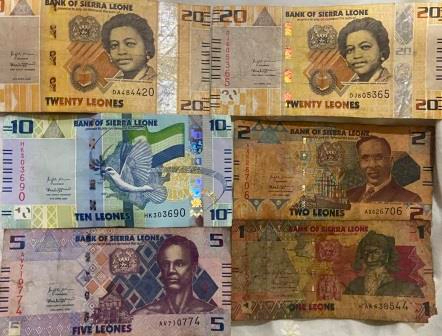
The exchange rate to the UK pound was between 27 and 30 leones at the time of my visit. Whilst that was roughly the same as Ghana, the big issue in Sierra Leone was that the largest note was just 20 leones (less than £1).
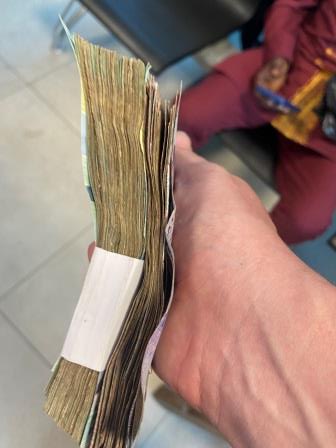
A large wad of notes, and often only 5s were available, was thus needed to settle even small debts. It was impossible to use a wallet and most of the time I was carrying around more than 200 notes in both pockets.

3. There are 23 living languages in the country.
Sierra Leone is home to around 16 ethnic groups all with their own culture and traditions. The largest ethnic groups are the Mende (around 35%) Temne (31%) and Limba (6%). The languages of all three groups are still spoken and are among the 23 living languages.
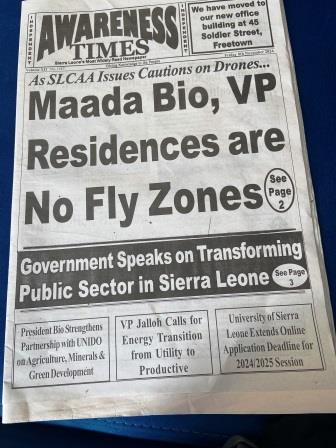
The total population is around 7.5 million with around 1.5 million in Freetown. Estimates suggest that around 77 percent of the population is Muslim and 22 percent Christian, although the country is known for its inter-religious tolerance.
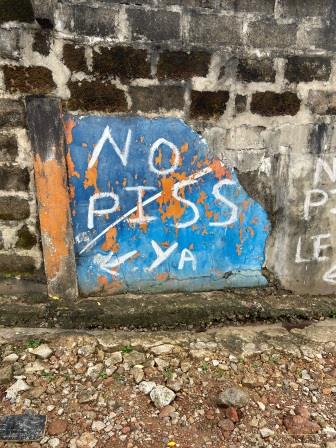
The official language of Sierra Leone is English, and it is used and spoken widely. Yet, the most common local language is Krio. Derived from English and several West African languages, this was the tongue of the freed Africans who returned to the country in the 19th century.
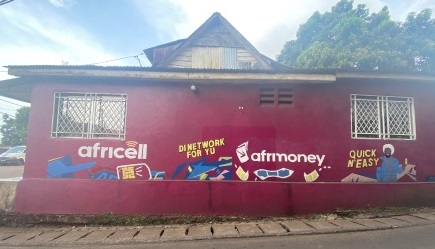
Even though Krios now makes up less than 2% of the modern population, their language is used as a unifying factor. Although part derived from English, Krio is not as easy to master as it might seem. 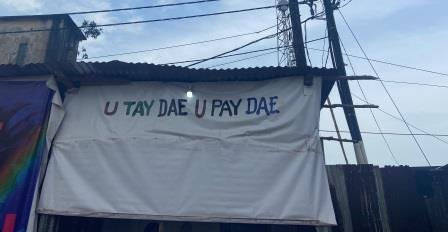
4. Freetown Harbour is the second-largest natural harbour in the world
Freetown is the largest natural harbour in Africa and second only to Sydney in the world. The city’s strategic location has helped to make it a big centre for trade and commerce over the years.
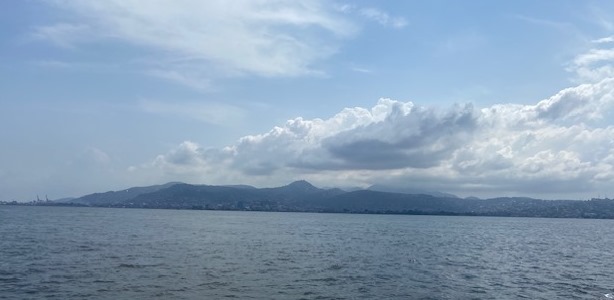
As seen from the airport ferry, the city rises up from the harbour and sprawls across several ranges of undulating wooded hills. The name of the country itself is derived from the lion-shape of one of these hills. Coined originally by Portuguese explorer Pedro de Sintra as Serra Lyoa.

Despite the undeniable squalor in parts of the place, there is no doubt that Freetown also has its own beauty. I spent a lot of time walking around and found the combination of pretty little bays, white sandy beaches, colourful dwellings, undulating hills and lush forest quite enchanting. 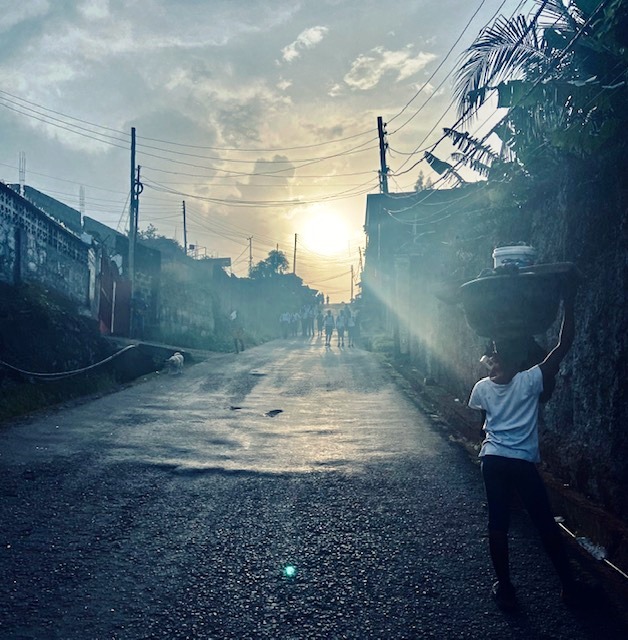
The tropical climate needs a bit of getting used to, especially the humidity. I visited at the end of the rainy season and encountered daily temperatures in the high twenties or low thirties (Centigrade) with frequent sunshine and little rainfall.
5. Sierra Leone is facing a crisis with both electricity and water.
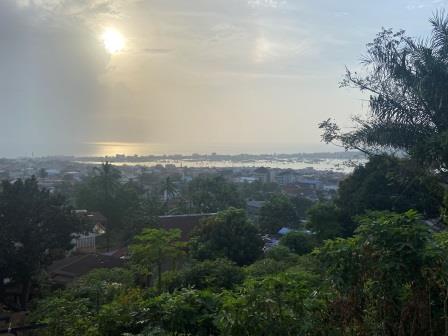
The country has one of the lowest electricity access rates in the world with only about a quarter of the population having power. The figure is obviously higher for Freetown but even in the capital there are big problems. A Turkish power generating ship lies moored in the bay connected to the grid. The high price of electric power causes its own problems.

Sierra Leone also has a water crisis, connection rates here are equally low and many have to pay to access water from a well. Deforestation is also threatening the country’s water supply.
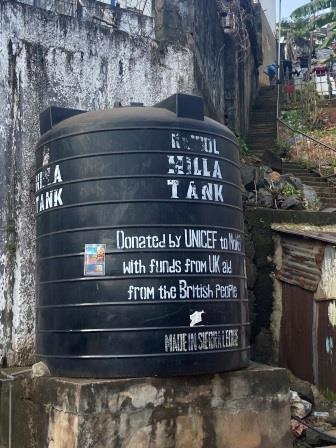
On my daily walks around the city, I came across a lot of people carrying buckets accessing wells. I also saw many water storage tanks that had been provided by the various foreign aid agencies.
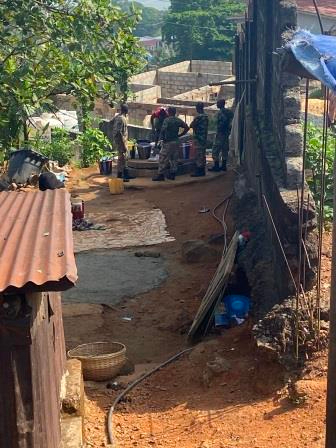
For most of my time in Freetown I was staying in an Airbnb without a generator and there were frequent power cuts. On some nights I spent a good two or three hours without power.
6. Freetown has its own Cenotaph and Remembrance Day commemoration.
My visit to Freetown coincided with November 11th, Remembrance Day. The country has combined the honouring the dead of both wars with remembering victims of its brutal civil war (1991 to 2002).
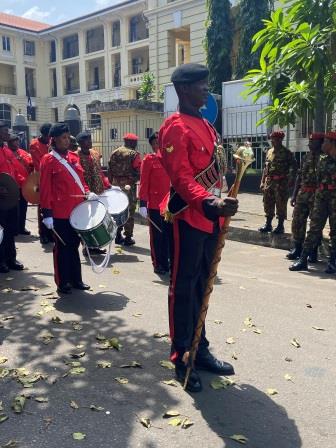
I was able to watch the ceremony, attended by President Bio, in front of the cenotaph. Wreaths of poppies were laid, and this was followed by a march past of soldiers dressed in the uniform of the old West Africa Regiment.
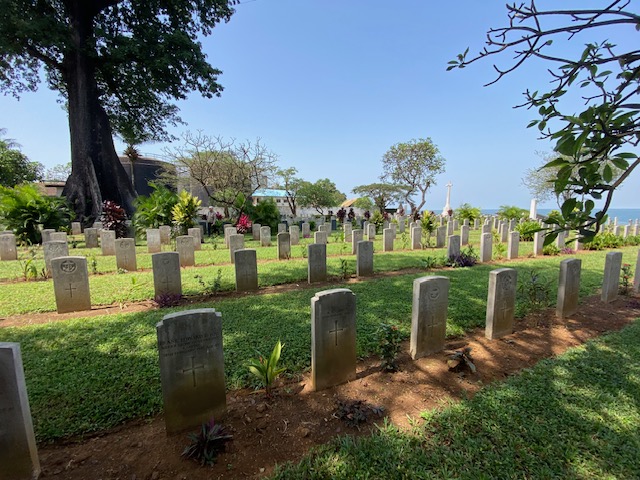
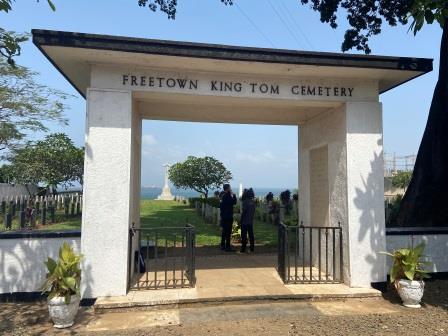
I was also able to pay a visit to the cemetery at King Tom which contains the graves of almost four hundred from both world wars. Like other Commonwealth cemeteries around the world, it is very well kept, and the visit was a very moving experience.

Many of the men who perished in Freetown in the Second World War were merchant seamen, often from sunken ships, with many succumbing to malaria.
7. Freetown feels more prosperous than expected.
Sierra Leone has abundant natural resources, including diamonds and gold, but a sizeable portion of its population lives in poverty. According to the statistics, Sierra Leone is one of the poorest countries in the world. About 80% of the population lives in absolute poverty. According to some sources the average person lives on less than two US Dollars a day.

Yet visiting Freetown it is not immediately obvious where the problems lie. Clearly the figures are averages and apply to the whole country, the bustling markets and businesses of the capital undoubtedly seem to hide some of the larger problem.

I spent a lot of time walking around Freetown and whilst I did see some extremely poor living conditions in places, most of the place seemed to be bustling. If anything, the biggest culture shock I got was that it was by no means as poor as I had expected.
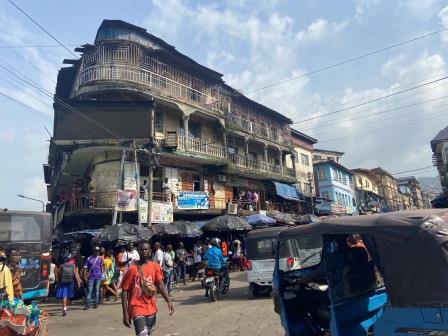
According to the experts, the causes of poverty in the country are down to a myriad of economic reasons: poor growth, low income, high debt, high levels of both unemployment and underemployment.
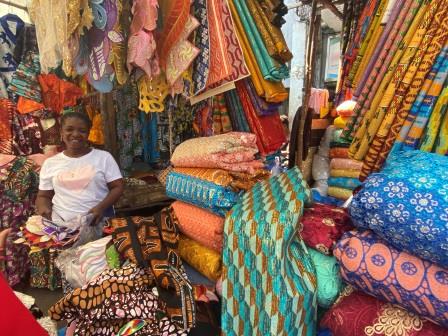
Many of these factors of course apply to other similar economies, although in Sierra Leone there are further issues lying in the background. Chief among them is the civil war (1991-2002) which destroyed much of the infrastructure, and then just as the country was getting back on its feet, the Ebola outbreak in 2015 did not help things. As elsewhere, COVID also took its toll.

Yet, the country does have enormous potential. Sierra Leone is still only about 60% self-sufficient in rice for example, but it has almost the perfect climate for growing the crop. Agricultural production is growing but held back by the poor condition of infrastructure and investment.

The level of education in the country is another factor holding the country back. Literacy rates even among people in the younger age bracket are around 50%. Almost everyone I met had mobile phones and were keen to swap numbers but many struggled to exchange e-mail addresses.
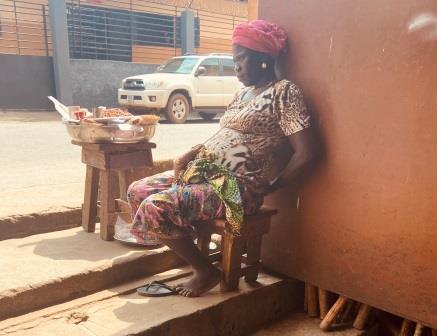
Government corruption is often cited as another major reason holding things back. Obviously, that is difficult to discern on the street, although a few of the motor tricycle taxis I was travelling in were stopped by the police and asked for a small bribe.
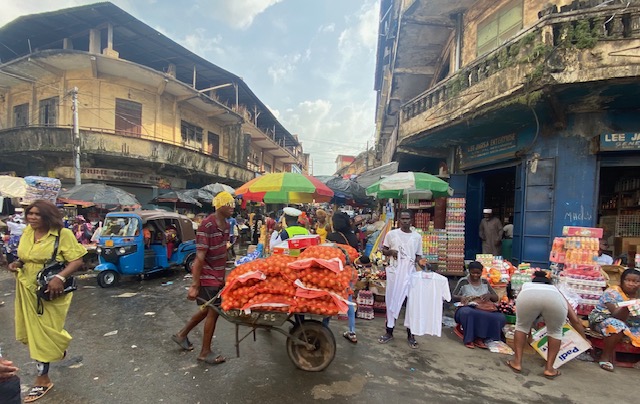
From some of the people I talked to, I got the impression that quite a few things were improving under the current President. Julius Bio has been president since 2018 and was re-elected in 2023 for a final five-year term. Time will tell, I suppose.
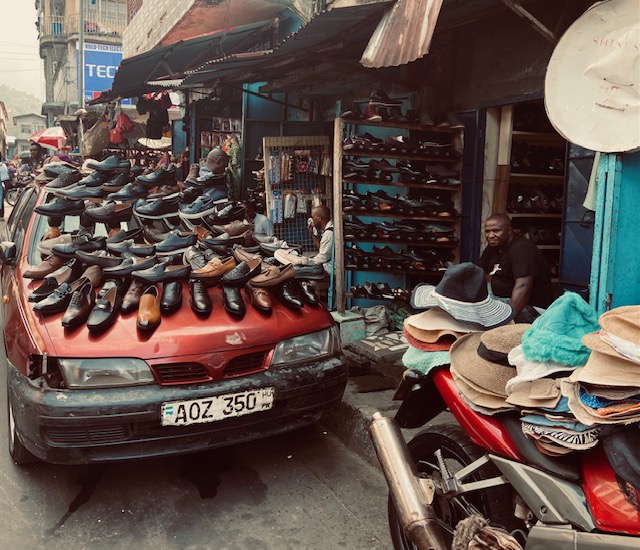
8. The bus has just been relaunched in Freetown.
When it comes to getting around Freetown, there are several transport options. Traditionally minibuses, saloon-car shared taxis, motorcycle taxis and three-wheeler motorcycle taxis, have dominated. From the beginning of this year, however, there is a new option in town: the bus.
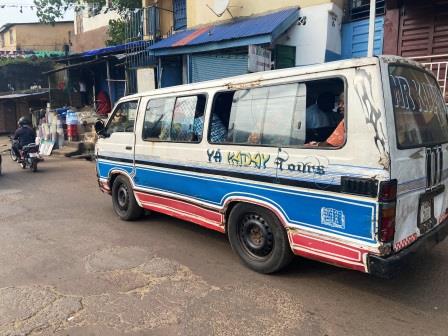
Poda poda are 12-15-seater minibuses which are the equivalent to the Trotro in Ghana. The ones here were a lot older and seemed a bit ricketier than the ones I had encountered in Ghana.
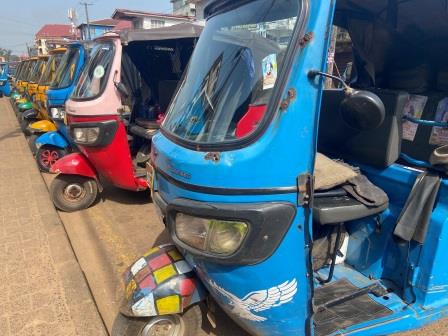
Whilst saloon taxis and especially motorcycle taxis, called Okada here, have traditionally dominated, they are now in relative decline. During my visit I got a few offers of rides by hopeful looking motorcyclists, often conforming to their reputation for recklessness by not offering a spare crash helmet or even wearing one themselves.

The number of Keke, three wheeled motorcycle taxis, has exploded in the past few years. The vehicles are everywhere, and all seem to be made by TVS, a Chinese manufacturer.
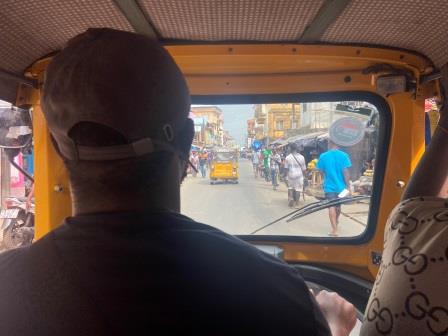
They are decorated in a variety of mainly religious messages both Christian and Islamic. I had several rides in Kekes, mostly I loved the experience but I found that some of the drivers could be reckless.

The big news though is that from earlier this year, route buses have been introduced onto the streets of Freetown. A new government project involves the introduction of 50 Ashok Leyland single deckers which have been given the brand name Waka Fine (Krio for fine walking) The buses initially run on two routes.
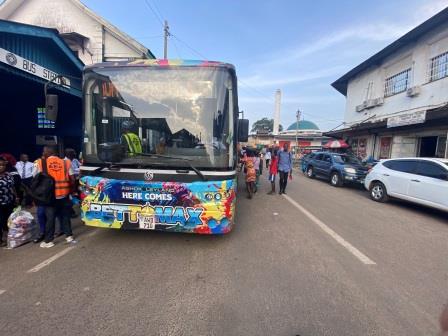
I used the buses to Lumley several times and found them excellent. For a flat fare of a mere 10 leones (33p) I could travel all the way across the town. It seemed that, after only eight months, they were popular with locals too. I spent one trip sitting next to a guy who was struggling to control the live chicken in his bag. It was probably a lot easier to do that than on the back of a motorcycle.

9. Sierra Leone is home to some of the most unspoiled beaches in Africa and some of the dirtiest ones too.
If truth be told, beaches in Sierra Leone were a very mixed bag. In the time I was there I experienced some of the most beautiful beaches I have ever seen but also some of the filthiest, litter strewn ones as well.

I was lucky to be able to visit River Number Two Beach, famous for its role in the Bounty Chocolate bar commercial in the late 1980s. It is situated about an hour out of Freetown. It is almost idyllic with white sand and a beautiful lagoon created by the river estuary.
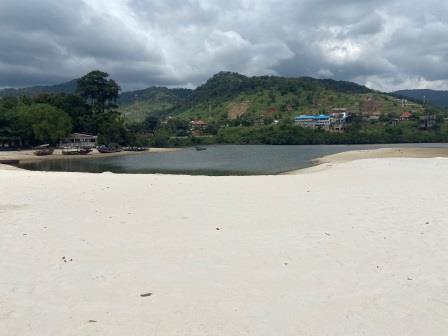
Although there are no obvious public transport links and despite the fact there is a made road almost to the shoreline, it is impossible to get to without your own vehicle. 

The beach is run by a community association, there is accommodation on offer and the restaurant is adept at providing excellent fresh lobster and grilled fish.
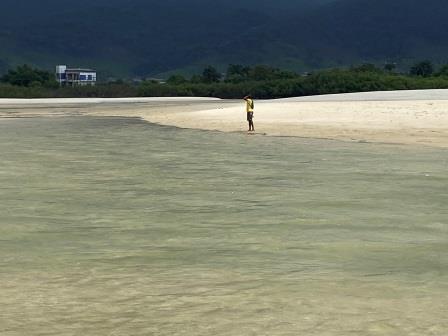
The beach is well used by locals during the weekends, but on weekdays like the one when we visited it was really quiet.


At the other end of the spectrum, during my walks around Freetown I visited Lumley Beach several times. It might not win the prize for the most picturesque beach in the country but as it is just minutes away from the city centre it is the most popular.
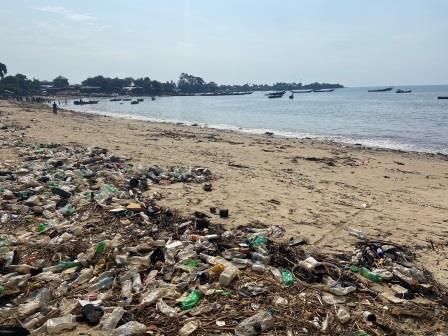
The place certainly had charm and atmosphere, and it was relaxing to hang out in one of the many beach bars that lined it.
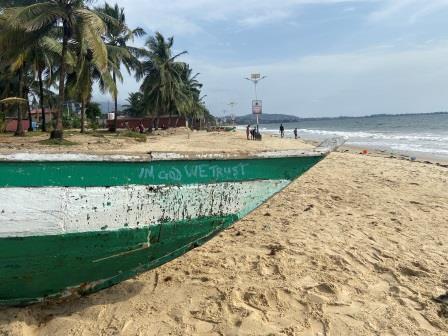
There were signs all the way along requesting people to keep it clean, yet it was obvious that they were going unheeded. The sand was strewn with plastic bags, bottles, beer cans, syringes and goodness knows what else.
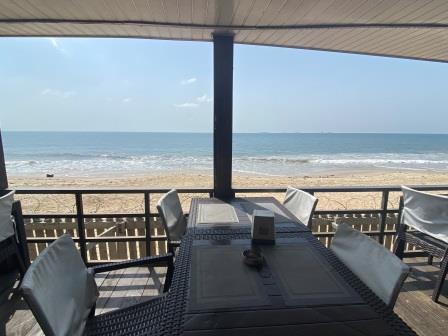
I wondered if Number 2 beach would ever succumb to this level of dirtiness or more hopefully whether Lumley will one day be as pristine as its southern counterpart.
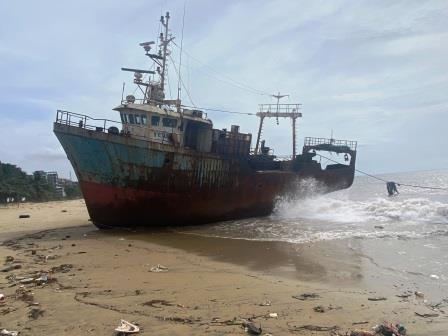
10. Fish accounts for 80% of all protein intake.
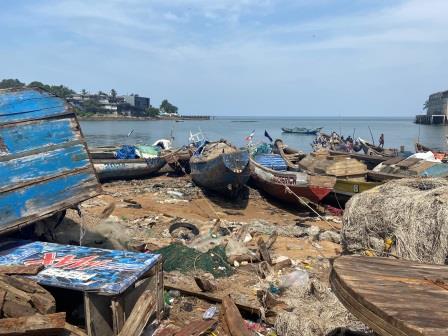
I loved the fish in Sierra Leone and ate quite a lot of it. It was possibly made more delicious by the fact that I spent quite a lot of time watching the fisherman drag their nets in on Lumley Beach.
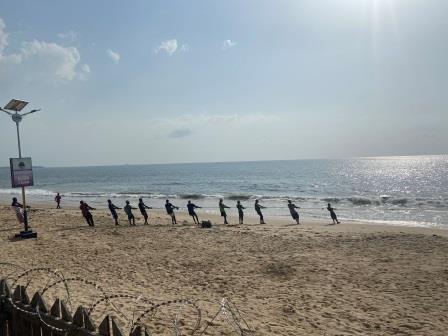
It was also fascinating to walk along the beach and chat with the fishermen as they cleaned their boats or mended their nets. I got talking to one group and they let me watch them cutting up the fish.

They also introduced the small market behind the beach where women were busy selling the latest catch. They were smoking what they were not selling fresh in a little shed behind the beach.
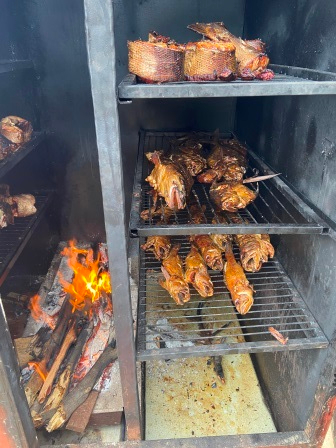
Fishing is important to Sierra Leone: the sector provides employment to around 35,000 people but there are almost a quarter of a million in total when all the people employed in ancillary activities are counted.

Although a lot of the fishing is local, around a third of the catch is landed by foreign vessels. The theory goes that the revenue from the licences supplements the local industry.
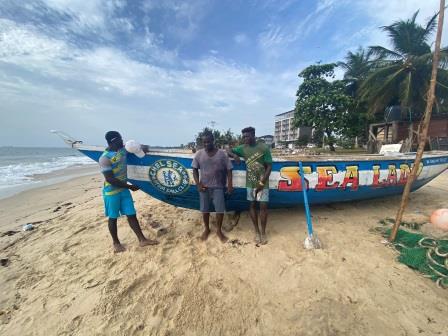
Chatting to the guys on Lumley beach I did not find a lot of love for foreign fishermen, especially the Chinese who apparently control around 75% of the licences. Fish stocks are in decline and people are worried.
11. Rice is a fundamental part of the diet
I found all the food I ate in Freetown excellent. One thing that did surprise me was that rice was such an important part of the meal. This is the case much more than in many other parts of Africa. The rice itself came in several varieties, local and imported.

Rice was invariably served with stew. Known locally as plasas or palaver and often cooked in palm oil, the stews themselves comprised of cassava leaves, potato leaves, stewed greens or similar.

In Sierra Leone peanuts are known as groundnuts, and they are also used as a common ingredient in soups and stews (above). Often the stews came with a protein like a piece of salted fish or a bit of chicken. I found all the soups I had were really tasty, but a lot of the meat was gristly and to be honest did not add too much to the whole experience.

I had read good things about the fish before my visit, so whilst this was not a surprise, it even surpassed my expectations. Delightfully fresh and well cooked, amongst what I tried were barracuda and snapper. Cheap lobster was also on offer in several places too.
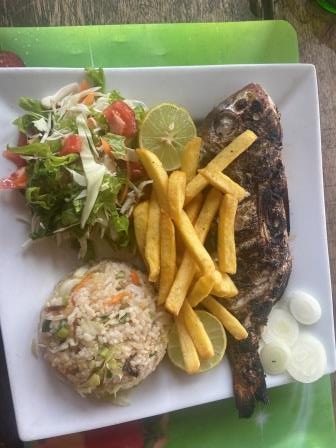
One of the best meals I had was at a quiet vegetarian restaurant where I was the only customer. I walked in to find a lady reading a bible; she turned out to be the owner, she explained that there was no menu, just one dish. I ended up with delicious pumpkin stew and local rice.
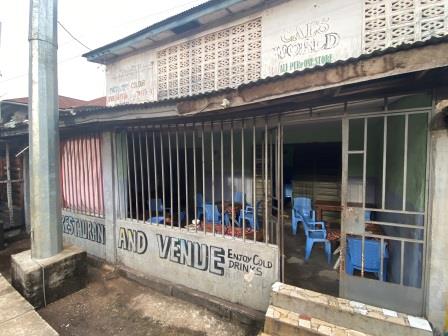

Generally, I ate lunch rather than dinner, and I frequented several restaurants in the downtown area that were full of local businessmen. The menu always had daily specials and I usually went for those.
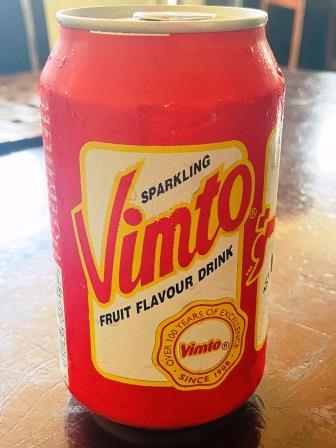
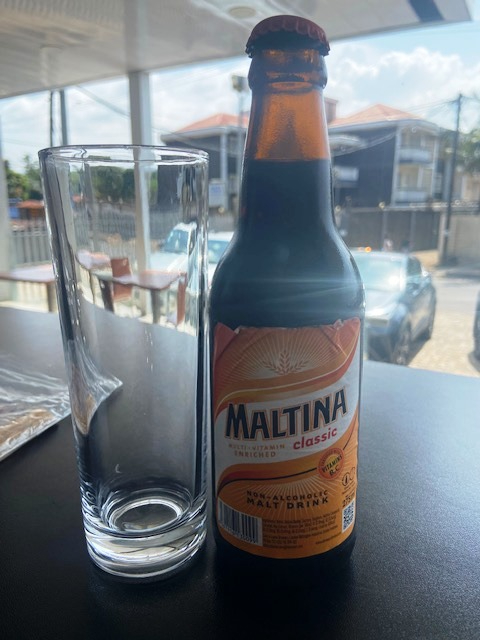
I drank mostly beer with my meals, but I was surprised to find that an old friend from my childhood is still alive and kicking in Freetown: Vimto. The local drink, Maltina, a carbonated malt drink was also surprisingly good.
12. Freetown is a city that likes to party
Wherever I went in Freetown I saw posters for carnivals, parties and concerts. There was a wide range of venues, including hotels, casinos and pubs. It seems that Nightclubs are open for 24 hours on weekends.
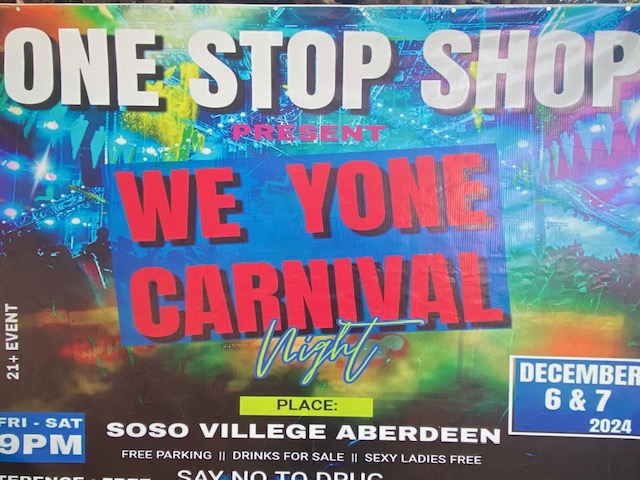
On my last day I even joined in with a group of people who were jogging behind a truck that was blaring out reggae music. It turned out to be a mobile advert for a forthcoming concert. I was introduced to the performer himself, and we all had a dance in the street together.
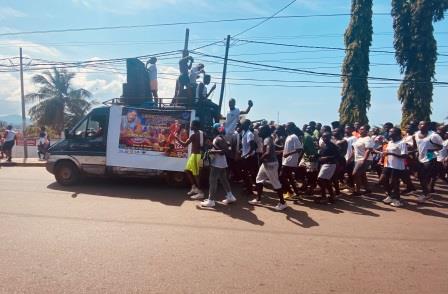
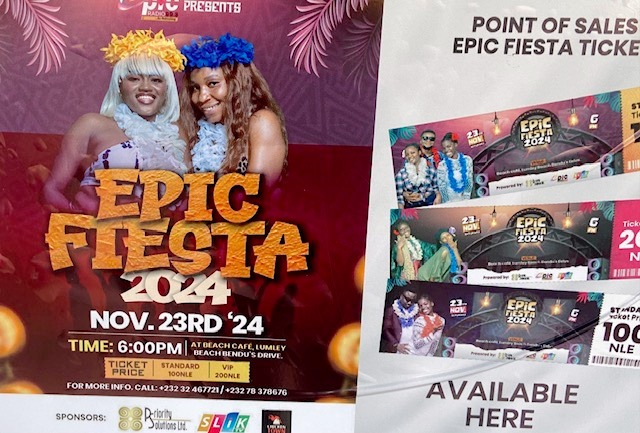
Freetown is, after all, a city that likes to party. Perhaps it is only the country’s wealthier and more well-to-do who tend to frequent the various bars and clubs, but it certainly does not feel that way and I imagine many of the less well-off might take part too.

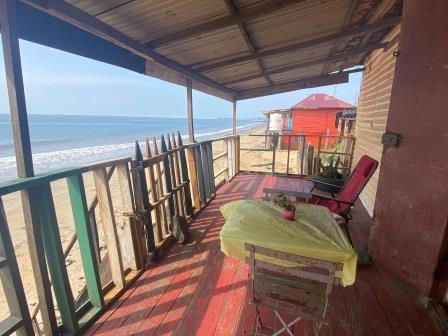
The bars in Freetown were a mixed bag. The beach bars of Lumley were relaxing in the day but crowded with locals at the weekends. In town, bars had a different character with lots of loud music playing. Perhaps best of all were just little shops that sold beer of a night time and had a few chairs for people to sit, drink and chat.

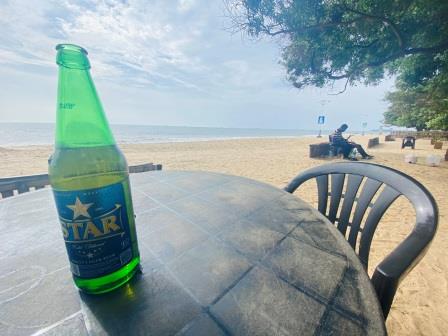
The Sierra Leone Brewing Company produces foreign beers such as Amstel, Guinness (foreign extra stout) and Mutzig, but its most popular brand is the local one, Star lager. I found it a tasty accompaniment to food and a satisfying drink on its own.
13. Freetown feels welcoming and safe
At the end of the day, it was really hard not to like Sierra Leone. Although it still has the scars of its civil war and Ebola and some of its infrastructure is still extremely basic, it has a special something. You can see why the locals call it Swit Salone or sweet Sierra Leone.

Despite problems of corruption, it has a democratically elected government and relatively low crime rates. The country currently occupies 66th position on the global peace index, a surprisingly high placing well above other countries like Thailand, Egypt and Morocco.
All the time I was in Freetown I felt safe. The only problem was once getting lost in the dark streets, stumbling and having to ask directions. The people all speak English and that of course makes their culture very accessible. All the Sierra Leoneans I met were warm and friendly.

It might not be on its way to becoming a mass tourist destination in the next few years, but I would be surprised if it does not achieve that status in the next few decades. Shine on Salone !


 Trains To Beyond