Studying for the Railway Studies MA at York
Kings Cross to York
On a cold evening in early January 2025, I boarded a Grand Central Trains’ service at Kings Cross and headed up to York. At just under two hours, the trip was a relatively short one, but for me it represented the completion of a much longer “journey.”

In the autumn of 2021, I enrolled on the Railway Studies MA at the University of York. I finally completed the three year course (via distance learning) in September 2024. I was travelling to York to take part in the graduation ceremony.

Deciding to do the Railway Studies MA was one of the best decisions I have ever made. I found the studying both extremely challenging and immensely rewarding. I learned a lot about British railway history and actually realised that I had known relatively little beforehand. Through frequent online seminars and later via face-to-face meetings, in my fellow students, I also met some wonderful people.

The curriculum for the Railway Studies MA was expertly created and enthusiastically taught by railway historian, Dr David Turner. Dr Turner built on the work of his predecessor Professor Colin Divall who established the Institute of Railway Studies, a collaboration between the University of York and the National Railway Museum.
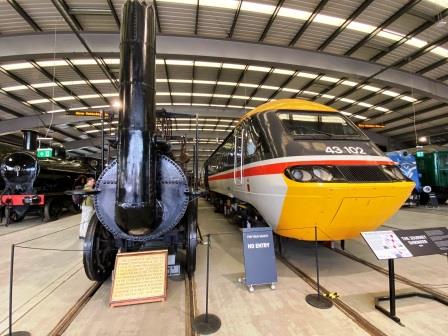
If you have an interest in railways and are eager to learn more, I would have wholeheartedly recommended the Railway Studies MA to you. However, for reasons that are not totally clear, after less than ten years the University of York decided to cut the course in early 2022 and for the moment it is not on offer anywhere else. This unfortunate decision meant that those students like me who started out in 2021 were the last ever to graduate.
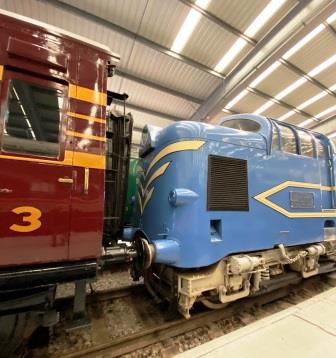
The Course
Hopefully, one day the course will be resurrected somehow, somewhere. In the meantime, here is a little taste of the journey I have been on for the last few years….

The Railway Studies MA was divided into a taught element and a research element. The taught part comprised of six modules over the first two years with a written assignment to be submitted at the end of each module. The research element was undertaken in the third year and required independent research and the submission of a 12,000 word dissertation on a chosen topic. The final mark was derived from a combination of the six written assignments and the dissertation.

The course aimed to set the history of the railways in Britain in the context of social, political, cultural and economic forces. The six taught modules, arranged roughly chronologically, aimed to show how external factors influenced the growth of the railway and how the railway itself influenced them in return. I have included a little description of each module below, along with a few of the more surprising things I learned.
Module 1 dealt with the growth of the British network up to 1900 against the background of the political philosophy of laissez faire. We studied the impact of the new form of transport on cities, suburbia and the countryside. The changing perception of travel, the beginning of holidays by rail and the impact railways had on trade and industry.

Britain’s railways were more expensive to build than those in many other countries. The unplanned way in which the network grew was almost inevitable, new proposals for lines were considered locally and the national picture was lost. A more logical planned network might have saved a lot of ultimately redundant track mileage being built.

Module 2 covered the decline in profitability of the railways between 1870 and 1914. The context here was the general fall in competitiveness of Britain’s economy and the country’s relative decline in comparison with other nations, particularly the USA. We studied the role of managers, directors and government in this decline and saw how the railways’ ability to charge enough for shipping freight was constrained by Parliament, preventing them from charging enough to cover their rising costs. We also examined the growth of alternative transport, particularly tramways, and the railways’ attempts to counter decline by innovation.
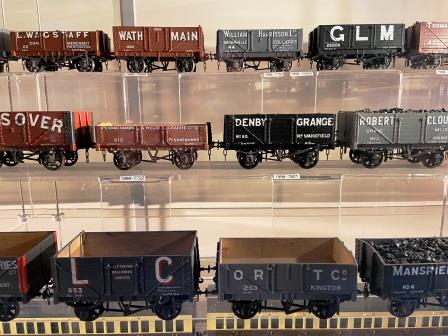
One of the issues behind the decline in profits was the inability or unwillingness of the companies to collect the data necessary to measure and manage. The difficulties railways faced when they tried to move from small coal wagons to larger, more efficient ones, were also fascinating to learn about.

Module 3 concentrated on railway workers across a slightly wider time period. We learned how railway workers were recruited, often from the countryside, and how the early companies looked to the military for inspiration in imposing discipline. We covered the establishment of internal labour markets, the emergence of the great railway towns and the long and complicated story of how the railway unions began.

During the first ever national rail strike in 1911, the workers, many of whom were not unionised, were effectively a step ahead of union leaders and were often more militant. In response, some of the railway companies were actually arguing that it would be better if unions grew stronger in order to control their membership.

Module 4 covered roughly the period between 1900 and 1945 against a backdrop of increased government interference. As Britain became a “mixed economy” the state increasingly intervened, often unevenly, in economic activity. We studied how government control during the First World War gave way to the formation of the Ministry of Transport. The growth of motor transport and the declining economy meant that railways faced financial hardship in the 1930s. We concluded with a look at how the railways fared in the Second World War.

In the 1930s the “Big 4” companies struggled to make investments to improve performance. A key cause of this was that they were over capitalised. Their obligations were higher than the net revenue they were earning could support. They were not generating enough profit to pay shareholders and invest in the future, sometimes they were unable to do either.

Module 5 covered the period between 1945 and 1979, a time of great societal changes. We studied nationalisation in 1948 and the relative decline of the railways as car ownership flourished and Britain became a consumer society. One of the big stories was the seismic shift away from the use of coal as a power source in industry and the impact on rail freight. We looked at the various attempts to restore vitality to British Railways such as the 1955 Modernisation Plan and then the inevitability of the Beeching Report and its effect on rural Britain. We concluded by examining the varying fortunes of British Rail in the 1970s.
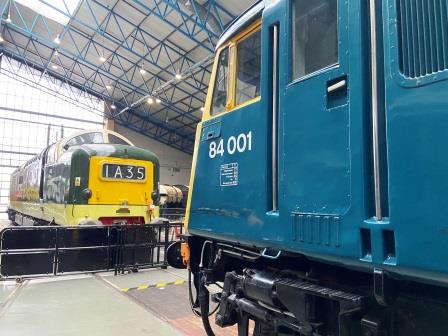
The relentless growth in road haulage, alongside social and economic changes, hurt BR’s wagonload business in the 1950s and 60s but it was not the main cause of rail’s falling freight traffic. The decline of heavy industry and dramatic fall in coal played a bigger role. BR had some success in increasing trainload freight, and here the new “motor age” proved beneficial as cement, car carrying and oil traffic all increased.

Module 6 concluded the story with a look at the period between 1979 and 2010. We studied the impact of Thatcherism on the railways, the internal reorganisation of British Rail into sectors in the 1980s before looking at the privatisation process and the operation of the privatised railway up to 2010. We finished with a look at the impact of community rail networks and the role the railway should play in bringing social and cultural benefits.
The unions used privatisation to their own advantage whilst at the same time arguing against it. The RMT’s position in disputes was often strengthened by the fragmented industry. A pay and conditions database was set up in 2003 to monitor disparities between companies. Strength came from knowledge of the whole industry; the union could endeavour to restore parity by exploiting the lack of knowledge of imported or inexperienced managers who often did not understand unions.
Research – In the final year I chose to write my dissertation on the role local government in Kent played during the creation of the 1899 working union of the South Eastern Railway and the London Chatham and Dover Railway. The study also covered local reaction to the initial poor performance of the “merged” South Eastern & Chatham Railway (SECR).
I missed the camaraderie of my fellow students in the final year, but I found doing the research by myself very rewarding. I visited several archives across Kent and the National Archives at Kew. Writing the dissertation itself was challenging; I was grateful for quarterly on-line meetings with my supervisor, Dr Kevin Tennant.

Five Trips to York
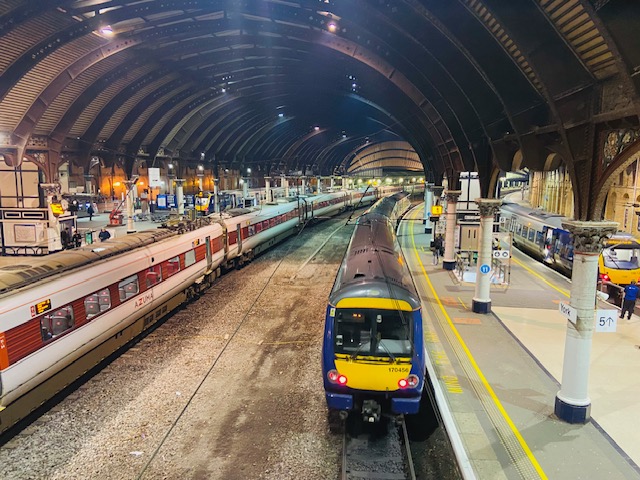
My train arrived at York on time and as I walked across the footbridge towards the exit of the station I looked up at the magnificent roof. No matter how many times I visit York this station never fails to inspire me.
This was the fifth trip I had made to York since starting the course. I attended two residential conferences here in early 2023 and early 2024. Both of these events took place at the “Search Engine” research facility at the National Railway Museum, whilst one planned for 2022 was held online due to COVID.
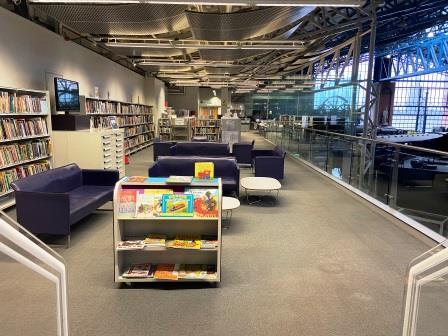
They provided a chance to meet fellow students on the course and to listen to lectures on a variety of interesting topics. We were also honoured to be given a behind the scenes look at the NRM archives – twice !

As well as the educational benefit, the residential conferences had an important social side too, allowing us to get together in the evening. We normally started out in the wonderful York Tap pub adjacent to the railway station.

I also attended two alumni meetings in York, one in August 2023 and the second in August 2024. These more informal occasions also allowed me to meet some former students who had already completed the course.

The University of York
Although it was always obvious that the masters’ degree was by distance learning, I still find it a bit strange that I managed to graduate from the University of York without ever being required to visit it.
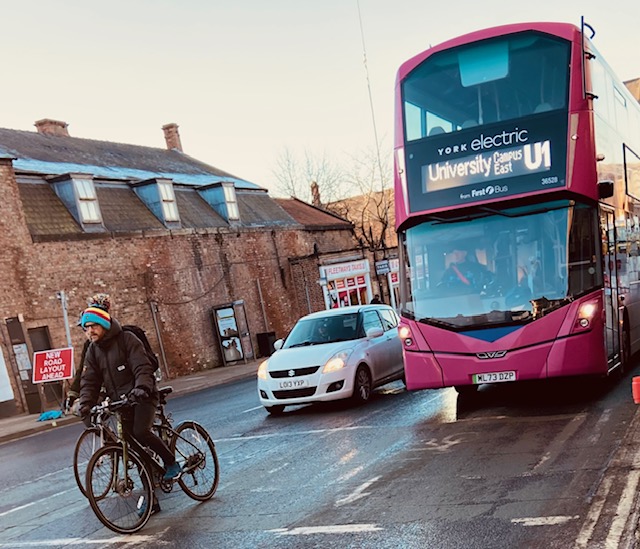
I had been curious though, and after the first residential conference in early 2023, I caught a bus out of the city and spent the afternoon walking around by myself. The university was founded back in 1963 and is located to the south east of the city, originally in the grounds of Heslington Hall, an old manor house.

The university now has 22,000 students enrolled and an academic staff of over 2,500. It is now split between two campuses, West and East. The East Campus is the newer of the two and dates from 2009. It is now home to five of the eleven colleges.
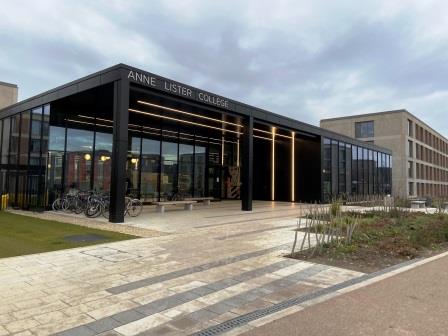
The East Campus follows the example of the West in being constructed around a large man-made lake. One of the architectural highlights is Anne Lister College, named for the early 19th Century diarist. It won a regional RIBA award.

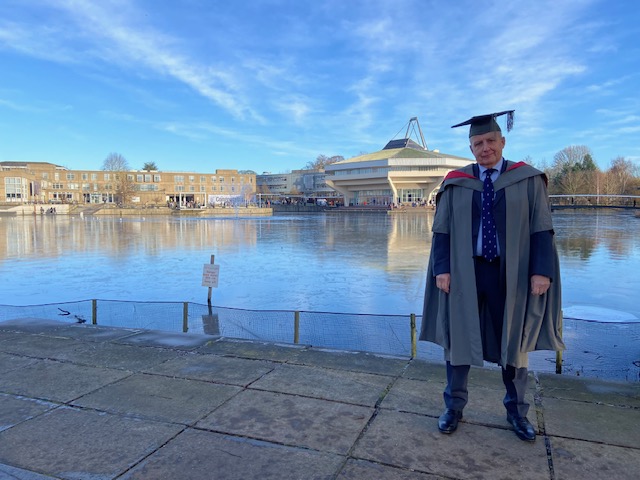
The West Campus was constructed from the mid-1960s onwards and contains examples of Brutalist architecture, most notably the Grade II listed Central Hall (1968) which, set in the lake, is often used as a symbol of the university.

Graduation Ceremony
The winter 2025 graduation ceremonies at York were held in the Central Hall over three days in the first week of January. There were nine ceremonies in total, three on each day. Each ceremony involved about 300 graduands.

Our own ceremony was the second on the first day and was timed to start at 1:30pm. Things seemed well organised, if a little complicated. Having met up with a few of my fellow students, we queued for tickets to the ceremony, then for our gowns and finally to get into a reception party held just beforehand. We were all delighted to see that Dr Turner had made the trip especially to support us at the event.

We then made our way into the hall. We were lucky to be in the front row which not only gave us a great view of everything, but meant we were called up first. All that was required was a simple walk across the stage, a turn to doff the cap at the officials and then the degree was handed to us. We then spent the next hour or so clapping everyone else. We had time at the end for photographs before the gowns had to be returned.
York
All my previous four trips to York had required overnight stays and they had given me the opportunity to visit the National Railway Museum at its main site and also at its annex in nearby Shildon. Nevertheless, I had never found much time for looking around the city itself. 
On this final trip, I stayed an extra day to catch up on the sightseeing. A weekday in early January turned out to be the perfect time to avoid the usual hordes of tourists too.

I am no stranger to York: it was a popular day trip with my parents when I was a child, but it has been more than fifteen years since I had had a good look around the centre.

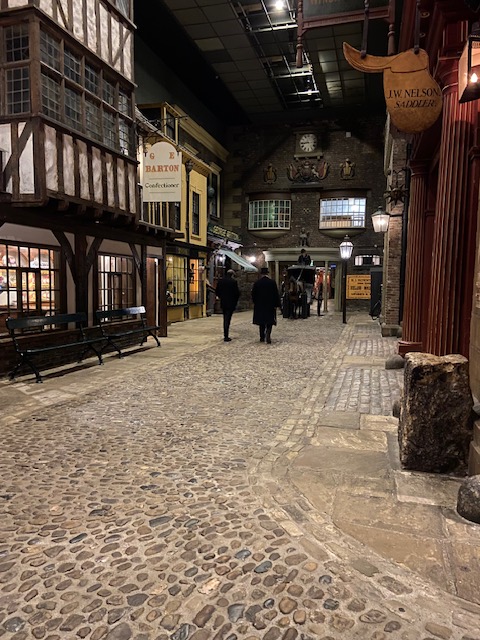
The highlight for me was an old favourite, the Castle Museum, which I first visited back in 1975. The recreated Victorian street is still as magical now as it was back then, although they have made it bigger. The old Edwardian equivalent has now been turned into a 1960s street, complete with a Vespa parked in front of a shop selling Biba clothes.
York to Kings Cross
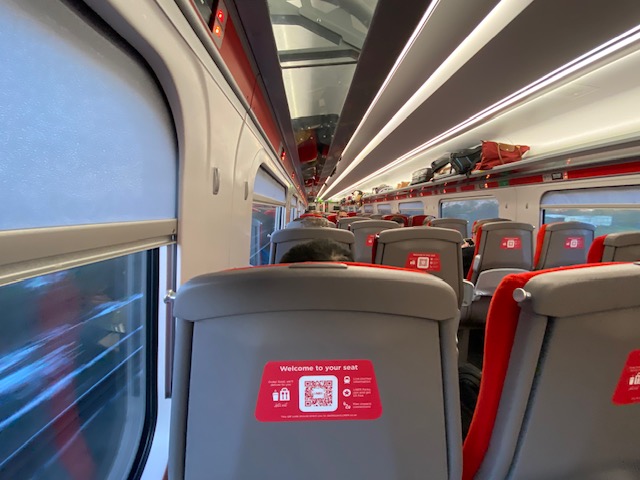
My journey back from York was on LNER, the main operator on the route. The competition with Grand Central seems to keep the prices keen, and I have normally gone for the cheapest option.
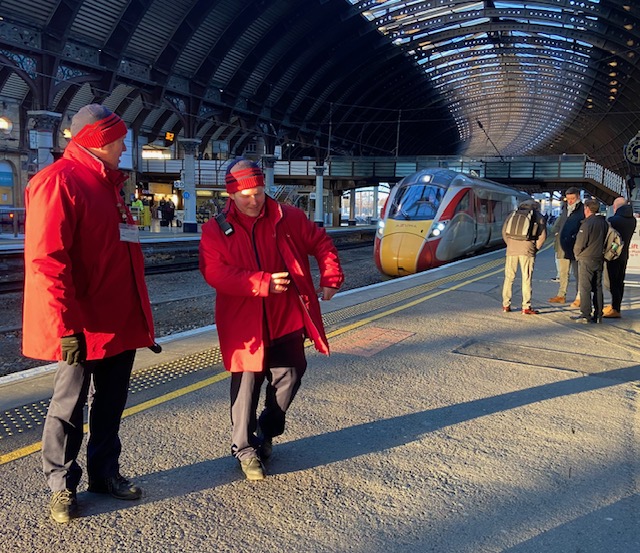
As I left York I will admit that I had mixed feelings. I felt very proud to have graduated but really sorry that the Railway Studies MA had been withdrawn. I think most of the alumni feel the same, it seems such a shame that nobody else will get to follow us on this fantastic journey.

I know I will miss the studying and I will need something to fill the gap. Over the past year my fellow students have been discussing what to do next, some will be doing PhDs, some will be writing books and others will be continuing informal research into railway-related topics.
I am not sure what I will do myself. For now, I will continue volunteering in my local Community Rail Partnership and in the heritage railway museum sector (more on that in a forthcoming post) and with celebrations for Rail 200 (1825-2025) already underway, it promises to be an exciting year.

Meanwhile, my rucksack is almost packed and ready for my forthcoming journey to Zimbabwe.
More soon…..

 Trains To Beyond