Catching the “Zambezi” train from Livingstone to Ndola
My journey
Having crossed into Zambia, I now planned to spend the day in Livingstone before heading out on the weekly “Zambezi” train to Ndola (800 km) in the Zambian Copperbelt. The train was timed to leave at 20:00 on Monday evening, pass through Lusaka on Tuesday afternoon and arrive at Ndola around 03:00 on Wednesday. To avoid too early an arrival, I had planned to go to the terminus, Kitwe, arrive at a more sensible 06:00 and then double back to Ndola, 100 km by road.

Welcome to Zambia
I reached the centre point of the bridge and just as I was studying the national flag on the “You are now entering Zambia” sign, a guy came up to me and suggested I hang around to watch the next bungee jumper. I looked across to the little hut where the jumpers were supposed to gather but it looked deserted. Fearing he was trying to sell me the opportunity to be the next jumper, I decided to move on quickly.

I took one last look back at Victoria Falls and stepped off the bridge and onto Zambian territory proper. It was still reasonably early, but I was quite surprised at how little traffic there was on the bridge. They had a policy of one vehicle at a time, but in the whole time it had taken me to cross I had only encountered two cars.

Unsurprisingly, there was no queue at the Zambian immigration office. The entry procedure was simplicity in itself, no visa required, nothing to pay, no form to fill in, just a nice smile and a quick stamp in the passport.

The taxi driver touts had been hassling for my business before I went into the immigration building and now I was out they intensified their efforts. I did not have any local Kwacha so I knew I would have to deal in dollars. Eighteen seemed to be the extortionate rate being offered for the 11 km trip into Livingstone, I haggled a bit, gave up and quickly settled on fifteen.

Livingstone
Livingstone (population 177,000) seemed like a larger and more workaday version of Victoria Falls. It had the same wide tree-lined roads and verandas, but here everything seemed less touristy. There were no snake experiences or trinket vendors, more fruit sellers and butchers. I changed my dollars for Kwacha. It felt more normal to be using the local currency but I soon missed the clarity that dealing in dollars had given me in Zimbabwe.
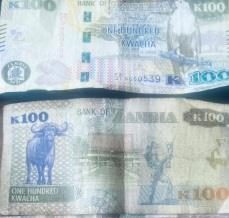
Inevitably, as I walked down the street, I tried to compare things with Zimbabwe. Both countries had a similar population (20 million here compared to 17 million back over the bridge) but here it certainly looked more prosperous. The figures supported this theory, Zambia’s PPP GDP per capita was $4,000 which was almost twice Zimbabwe’s.
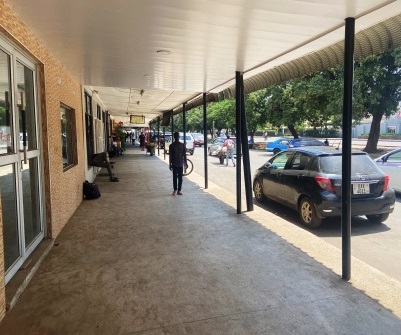
There seemed to be a lot of South African influence here too. The main supermarket was Shoprite and there was an outlet of the Hungry Lion fast food chain next door. Both are South African.
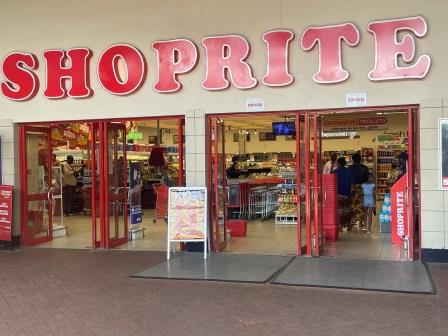
I popped into Shoprite and found it was a lot better stocked than anything I had seen in Victoria Falls or even Bulawayo. They had an instore bakery and lots of fresh fruit piled high. It would come in handy later for the provisions I needed to get for my long train journey.
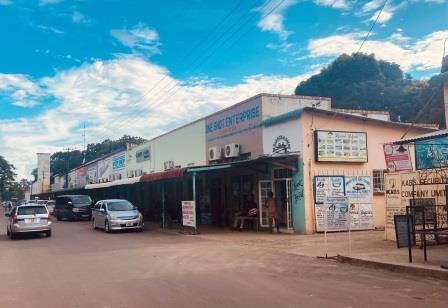
As I was sitting in a coffee shop the power went off. The lady owner explained that it was a timed outage, what they called “load shedding”. It was happening a lot this year, she explained, due to low levels of water in the hydro-electric system. I knew it was a widespread problem in Zimbabwe too, but in the five days I had been there I had not experienced it.

Killing Time
By the time I had walked around a bit more, the power had come back on. I decided to get an early lunch. I had a lovely piece of fried bream at a little place on the outskirts of the centre, it came with a choice of nshima or rice and I quickly chose rice. The beer that I had to go with it, Mosi, was less impressive. It is the most popular Zambian brand but I found it very bland with a stale maize after taste. I missed Zambezi. 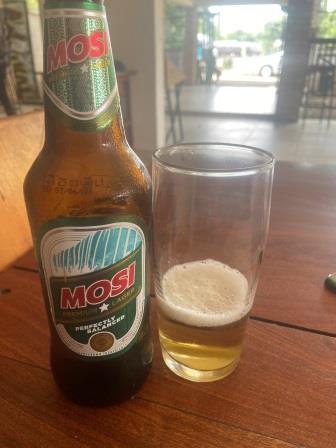
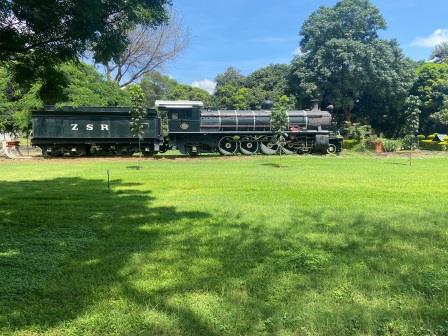
In the afternoon I visited a couple of great museums. At the Livingstone Railway Museum, I learned not only about the history of the Sawmills Railway, but also the fascinating story of Jewish immigration into Zambia (the owners of the sawmill itself were Jewish) and the positive impact it had on the country.
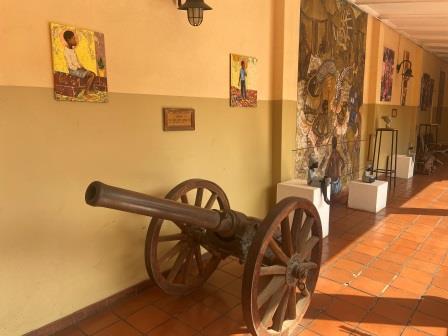
Meanwhile, the Livingstone Museum covered quite a wide range of topics, including the life and times of David Livingstone and the story of Zambia’s struggle for independence. Perhaps the most interesting thing was a re-creation of a Zambian village. One of the stewards told me that her favourite exhibit was the small village grocer’s stall; it was just like the ones she had grown up with, she said.
Departure
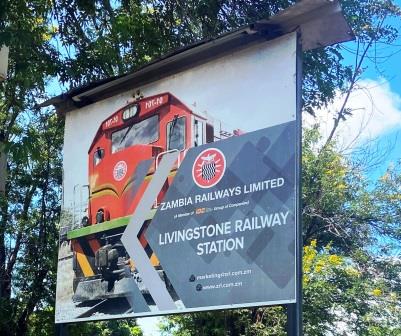
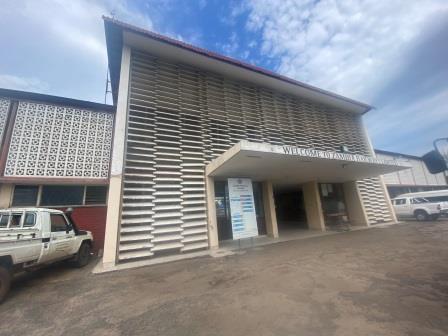
At 17:00 I went to Livingstone Station in search of the stationmaster I been communicating with via WhatsApp. The ticket office directed me to the parcels office, and although he was not there, they issued me with the first class sleeper ticket (430 Kwacha / £12) I had requested. I asked if the train would still be arriving at Ndola on Wednesday early in the morning as scheduled. The clerk said, “morning or afternoon, yes”.
I went for a walk and had a drink at a nearby lodge and then returned at 19:00 to find quite a crowd of people milling around the platform. Most of them were carrying a lot of baggage with them and it struck me that this was one of the big advantages of travelling by train. The platform was fenced off from the waiting crowd, there was just a small gate in the middle where I presumed we would enter and have our tickets checked.
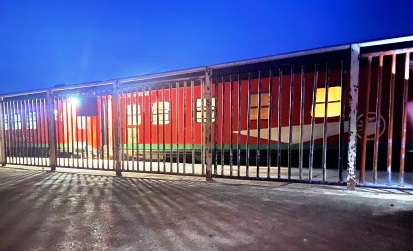
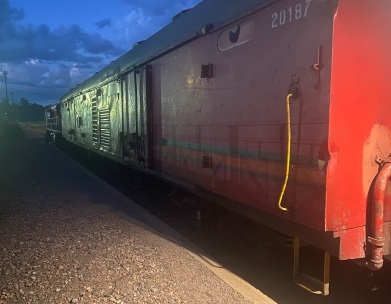
I found a space behind the fence and sat down on the floor to watch the train, resplendent in its bright red livery, slowly back in. First came the three baggage vans at the end, then six or seven economy class carriages, a kitchen car, a business class carriage, then the first class sleeping carriage, a generator van and finally the locomotive pushing everything slowly into the platform.

With the train in the platform, they started to load the checked and unaccompanied baggage. We waited behind the fence as everything was loaded into the vans at the back. The porters were certainly earning their money. First came goats, nine of them, tethered in threes and looking very reluctant as they were led along. Then came furniture, beds and mattresses, and finally a mixed assortment of bulky items in boxes or giant bags.

At about 19:30 there was a power cut and the station lights went out. We sat in darkness for a while until the lights of the train came on. A few minutes later three guys in uniform came up to me. One of them introduced himself as the stationmaster and explained they were here to take me to the train. I was led through the gate, past the waiting crowds, onto the platform and guided into the sleeper carriage.
The coach was made up of twin berth and four berth compartments. I had been allocated compartment C, a two berth cabin with the upper bed secured out of use. The stationmaster assured me that no one else would be joining me. He was a really nice guy, eager to make me welcome and even apologising for the torn seat. I said it did not matter as long as it was comfortable. It was.

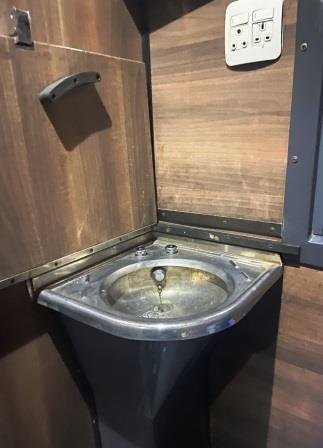
There were no blankets or pillows on offer, but I had not expected any. I used clothes rolled up or spread out to make a reasonable bed. There was a sink unit but no running water; I made do with the extra bottled I had brought for washing. The carriage had previously been owned by South African Railways, so there was a South African plug socket as well as a UK one. Perhaps the biggest surprise was the air conditioning was working perfectly.

Livingstone to Choma – “Slow Progress”
The train left about twenty minutes behind schedule. The diesel engine was purring gently but with my noise cancelling headphones on, I could not really hear it. I looked out of the window with the compartment lights turned off for a while but having had a long day, I quickly fell asleep.
The bed was comfortable and I slept soundly. I woke up around 6:30am and then dozed for another half an hour. The train was swaying from side to side but it did not seem to be moving fast. When I consulted MAPS.ME I was surprised to find that we had not made much progress out of Livingstone. In fact, with eleven hours already elapsed, we were only just pulling in to Choma (less than 200 km).

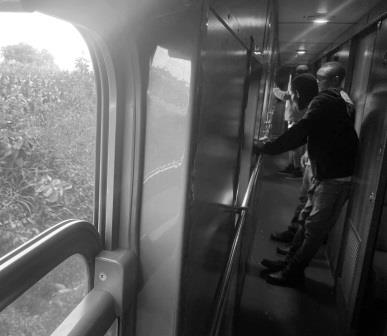
I went into the corridor and started to chat with the three guys who were standing outside Compartment D. It turned out that they were train crew, two were travelling maintenance engineers for the generator van, which I was told could be temperamental, and the third was an assistant kitchen car attendant. They all made the trip every few weeks, they explained. I enquired as to the progress of the train and was told “so far so good” by the guy who seemed to be in charge.

He then explained that we were three or four hours late and the delay had been caused by the Rovos tourist train being given priority ahead. We had had to wait for it to clear longish sections of single track before we could proceed. I realised that this probably explained why I had slept so well, we had spent much of the night stationary.
The delay was good news for me, of course, the prospect of having to go to Kitwe had now most likely vanished and there was even a chance that I might be rolling up to my Ndola hotel around lunch time. I asked one of the “D” guys when we would get to Ndola. He did some calculations in his head and then pronounced, with what seemed to be a high degree of confidence, “we will arrive there at 16 tomorrow”.
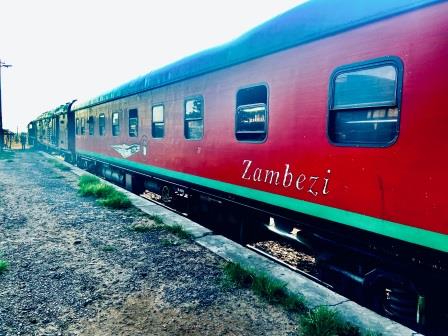
It seemed that everyone, crew and passengers, used the 24 hour clock verbally and they rounded up to the hour too. So, we had left at “20” and we would be there by “16”. It was logical because with potential delays of more than twelve hours it might not be clear about which four o clock you were talking.

The guys from “D” also told me that we would be staying in Choma for at least an hour and this would be the case for most of the larger stations on route. I secured my stuff in the compartment and went for a walk around. I walked back to look at the baggage vans; it was easy to see why the station stops would be so long. The whole business of unloading and reloading was a long drawn out process.

As the train sat in the station, the locals were setting up a whole market around it. By the time we got moving again around 8:00, stalls had been positioned right up to the edge of the tracks. With only one passenger train in each direction each week to disturb things, I suppose it seemed logical enough.


Choma to Monze – “Village Life”
After Choma, I went for a wander through the train. There were only a few other people in the first class sleeper, but the business class section, fitted out with seats like a long-distance bus, was a little busier.
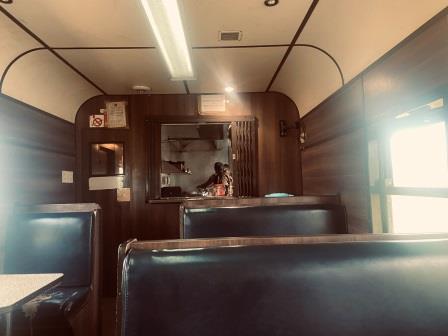
The kitchen car was next, but there was no one around. There was a cute little sign above the serving hatch which said, “only those who are drinking beer and eating nshima are allowed to remain here.” I went back to my compartment.
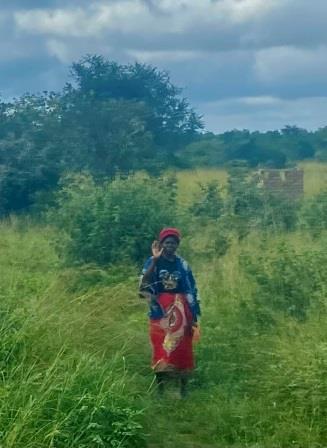
We spent most of the morning and the early afternoon making slow progress. The scenery was pretty much unending bushland. It was not densely populated but occasionally there would be someone standing there, perhaps waving at the train.

Every so often we stopped at wayside stations. There was no discernible platform but crowds of people would gather at the side of the train and we would wait whilst packages were loaded onto or unloaded from the vans.
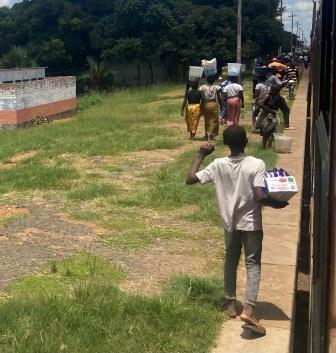
The train seemed to be a veritable lifeline for these rural communities. The fact it was already running several hours late did not seem to worry anyone. I wondered if they even had any way of knowing how the train was progressing on its journey and when it would get to them.

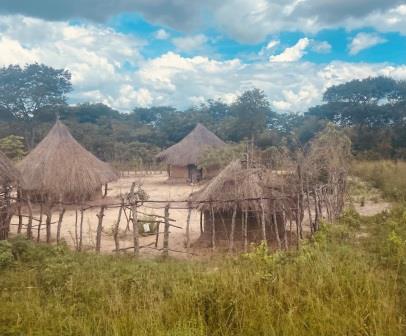
Some of the places we passed through resembled the traditional village centre I had seen recreated in the Livingstone Museum. The exhibit had explained how traditional village life was being threatened by urban development and I wondered how long places like this would continue to exist.
Monze to Mazabuka – “Bananas and Sugar”
At one of the stops after Monze, a lady came on board selling bananas for a Kwacha each. The smallest note I had was 10 kwacha (33p), there was obviously a problem with the change (manufactured or real), so I decided to just get ten. I was wondering what to do with them all when I realised that three ladies had emerged from Compartment A and were watching me, laughing. I then decided to keep four for myself and donate the rest to them.
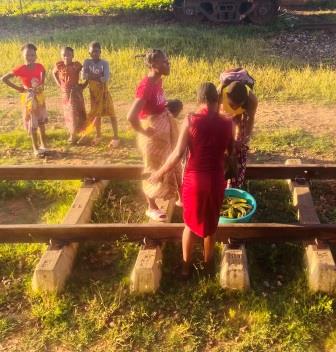
I spent the next hour in Compartment A eating the delicious bananas and chatting with the ladies. There were two friends from just outside Kitwe who were returning from visiting relatives in Livingstone and another lady from Livingstone visiting someone in Kitwe. They were tremendous fun and wanted to know all about my trip.

The guys in “D” were terrific too. They pointed out things to me as we went along. Most of the crops we could see from the window were corn or sunflowers but when we were approaching Mazabuka they told me it was known as the sweetest town in Zambia. It had the largest sugar cane plantation in the country and there were even railway sidings to help transport the crop.
Mazabuka to Lusaka – “Train Trouble”
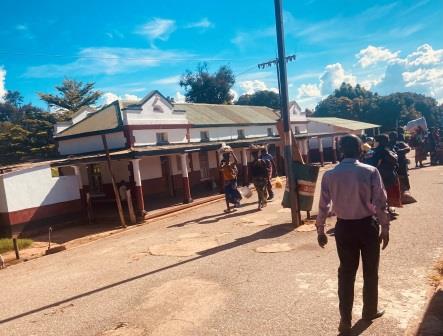
We stopped in Mazabuka for a while and whilst I was photographing the train I got into a conversation with the driver. He turned out to be almost the same age as me and was just coming up for retirement.

He told me he was driving the section from Choma to Kafue and would return to Choma by road. I asked him what time we would reach Lusaka (125 km away). We had been due there at 13:20 and it was now already 16:30. You will be there at “19”, he replied.
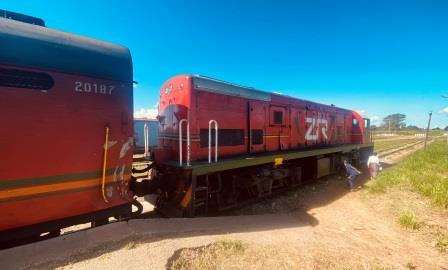
The two engineers in “D” were not as confident. They explained that they were quite concerned about the condition of the locomotive. It had already been slipping on some of the hilly sections. The gradients between here and Kafue were much fiercer than we had encountered so far. A new locomotive would have to be found at Kafue, they explained, and suggested that we would not be into Lusaka before “23”.

The guys were proved right in the end. The locomotive slipped badly on the climbs and we came to a halt more than once and had to retreat to attack the hill again. For the first time, I started to wonder if I would even make Ndola by Wednesday night. Eventually the driver managed to coax the engine just enough and as the sun was setting we crossed the great bridge at Kafue and arrived at the town of the same name at 18:45.

The locomotive was changed at Kafue and this plus a few other delays meant that we arrived at Lusaka at 23:00, 10 hours adrift. The lights of the city looked pretty enough, but I did not pay much attention to Zambia’s capital. I was happy in my cozy compartment and fell asleep while we were still standing in the station.

Lusaka to Kabwe – “The Red Eye”
I was awoken by a loud banging on the compartment door. I looked at my watch and saw it was 00:30. The train had started moving again. I unlocked the door to find the train conductor standing there. He apologised profusely and explained that he needed to put a guy in the compartment with me. I told him not to worry, I could hardly complain. Within ten minutes the top bunk had been unlocked and my new roommate had climbed into it. I was soon asleep again.

I was woken again at around 5am when my roommate got up to go to the toilet. As he opened the door a swarm of insects flew in. Half asleep, I instinctively reached for my mosquito repellent to cover my arms. In the semi-darkness I aimed the spray carefully at my right arm. It was only when I felt the burning liquid go straight into my left eye I realised that I must have had the nozzle the wrong way round.
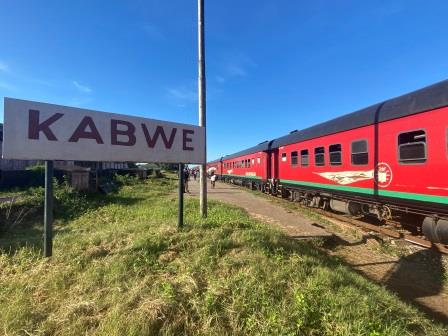
It was agony but at least I could still see with the eye. With the train swaying about, I tried to pour water from a litre bottle over my face, most of it ended up on the seat. By the time we arrived at Kabwe at around 7:00, most of the worse pain had gone, but the eye would continue to irritate me for the next few days.
Kabwe to Kapiri – “Lead and Sunflowers”
Kabwe was the centre of operations for Zambian Railways and the guys from Compartment D were getting off there. I was sorry to see them go. They had kept everything on the train working and had been great company too. They were a real credit to Zambian Railways.

I asked them who was going to take care of me now, and they introduced me to their replacement, who they joked was a “senior citizen”. In other words, “he is not quite as old as me”, I suggested.

When we got going again, I realised that the “senior citizen” must be hanging out somewhere else. I saw that my old roommate had now moved into “D” and I began to chat to him through the open door. He lived in Lusaka and was making a business trip to Ndola for a few days. We both tried to work out what time we would now arrive there and decided it would be “16”.
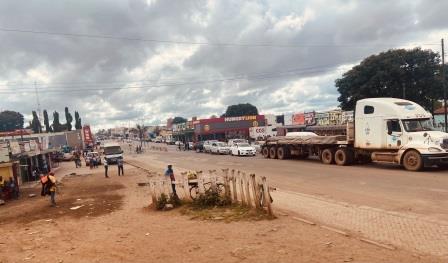
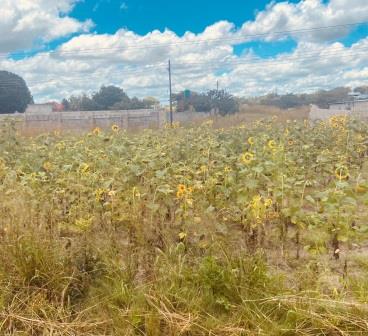
Kabwe was the first big settlement north of Lusaka, originally famous for lead mining it was once one of the most polluted cities in Africa. It did not take long for us to break free of it though, and soon we were trundling along once more passing through fields of sunflowers.
Kapiri to Ndola – “At long last”
At around 11:00 we made it into Kapiri Mposhi. We had been due here the previous night at 21:45, so I figured we were now about 15 hours behind schedule. I glanced out at the bus station to where I knew I would be returning in a few days time to continue my journey on the Tazara train. We left Kapiri Mposhi at 12:20. There was now 200 km left to run to Ndola and about 300 to Kitwe. 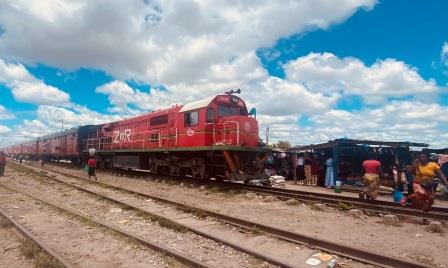
Two of the “A” ladies now seemed worried that they would not make it to Kitwe until “22” or maybe later. They lived a way outside the city and because the porters would not unload baggage from the vans after dark, they would need to find a place to spend the night in Kitwe. I showed all three ladies what I had done to my eye. I felt stupid but they were sympathetic, one of them had had Malaria five times and another had someone close to her die from it.
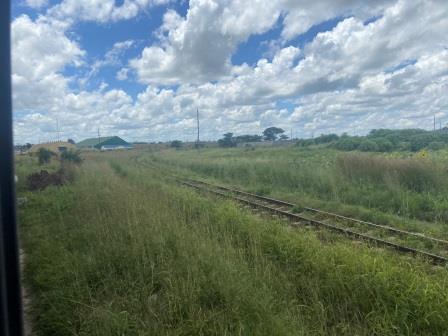
We continued making slow progress for most of the afternoon stopping five or six times. Each time we were greeted by a crowd of people by the tracks waiting to load cargo. I was told that most of this was now produce from villages being sent to be sold in Ndola. I found it incredible that had the train been on time, all this would have been happening in the middle of the night.

The sun was already setting as we passed a line of coal trucks just ahead of Ndola station. We pulled up in the platform almost dead on 19:00. We were fifteen and a half hours late. I said a final goodbye to the ladies in “A”. I felt sorry for them, they had at least another three hours to Kitwe. One of them told me she was going to repeat the whole return trip again in a month.
I found a taxi in the station car park and set off towards my hotel. I had to admit that, having not been in any kind of hurry at all, I had really enjoyed the Zambezi. If I had wanted to get to Ndola quickly, I could have caught a bus and been there in 13 hours or so. What I had experienced over 48 hours was so much more than getting from A to B. I was glad that I was not going to have to do it all again in a month though.


 Trains To Beyond