Arriving in Dar es Salaam
My journey
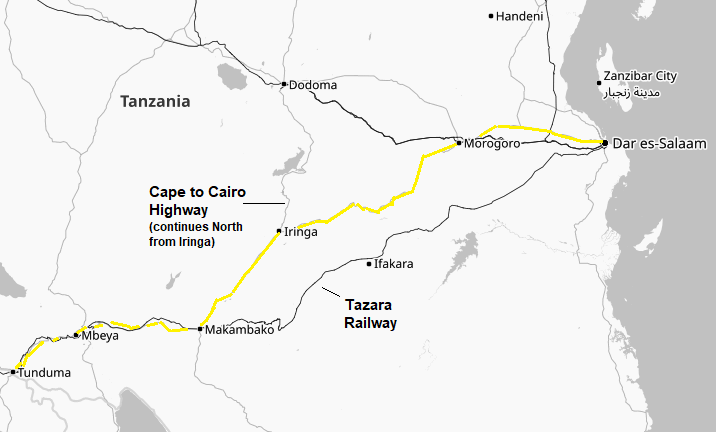
Having arrived safely at the border crossing at Nakonde, I now planned to complete Tanzanian immigration, walk into Tunduma, change my Kwacha into Shillings and find somewhere to eat. I then intended to travel by overnight bus to Dar and spend my final few days walking around Tanzania’s largest city.
Tunduma
With my Zambia exit stamp secure, I joined the long queue of people in front of the solitary Tanzanian official. The line moved slowly and it was more than forty minutes before I presented my passport and e-visa paperwork to the guy. He was nice enough, and started by asking me how Zambia had been. “Not as good as I think Tanzania will be”, I answered, trying to be as diplomatic as possible. I got a nice smile in return.

It was past four by the time I walked out of the border gate and into Tunduma. It was not that much different from Nakonde, but the main road was made and there were lots of tuk tuks (here called bajaj) flashing about. I asked around at a couple of petrol stations and eventually found a little office to change money.
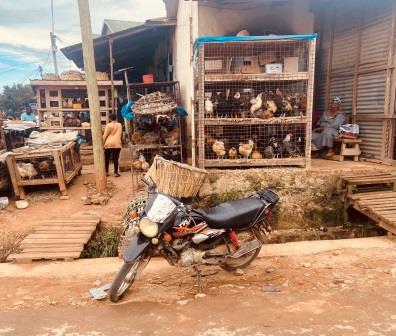
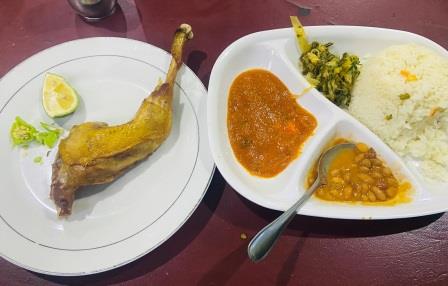
The guy in the exchange office could not have been nicer, not only did he give me a decent rate, but he also gave me advice on where to catch the bus for Dar and recommended a little Indian cafe across the road. I followed his advice; I got a ticket on New Force’s 19:00 departure to Dar and then enjoyed a delicious thali with some chicken.

As I sat in the cafe drinking a cup of chai, “Mr Tazara” came in and joined me. He explained that he was catching a slightly earlier bus to Dar and he told me that I had done the right thing by not aiming for Mbeya; there had been a level crossing incident and the Tanzanian train had actually turned around short at Makambako.
With a few hours to kill, I decided to go for a little walk. I thought I might try to spot differences between Tanzania and Zambia. On the face of it, Tunduma looked a lot more down at heel than any of the places I had stayed in Zambia or Zimbabwe, but to be fair it also looked a lot more upmarket than what I had seen briefly of Nakonde. They were both border towns and if you believed a lot of what was written online, neither were worth hanging around in for long.

Tanzania has a population of 67 million, effectively three times that of the two countries I had visited so far. On paper, its GDP per capita on a PPP basis was about the same as Zambia. But, as I wandered around Tunduma, I realised that two of the biggest differences were not economic.

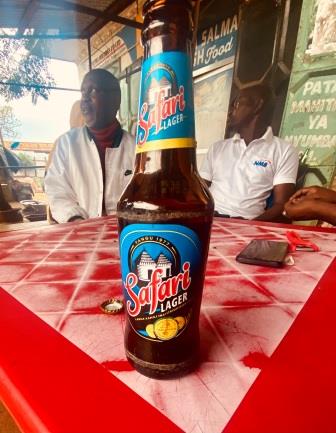
First, I walked past a mosque just opposite the border gate. It was packed full with worshipers. Although 63% of Tanzanians are Christians, a substantial number, 34%, are Muslim. Then, finding a makeshift little pub to have a beer, I encountered communication problems. Tanzania boasts 100 languages but the lingua franca here was not English, but Swahilli. 
The guys at my table were extremely friendly and we managed to talk a bit about football (they were Chelsea fans) but there was none of the free-flowing conversation I had enjoyed in Zambia and Zimbabwe. I quickly had to resort to my written notes. Asante Sana = thank you very much.
New Force
I boarded the New Force bus and claimed my seat about thirty minutes before the scheduled 19:00 departure time. This was just as well because I was one of three people who all had “Seat 37” written on their ticket. When the bus finally left at 20:10 there were about ten people standing in the aisle and they stood all the way to Mbeya, two hours away. With our late departure I happily assumed that there would now be no chance of us arriving in Dar (900 km) at the scheduled time of 06:30.

I had been expecting the bus journey to be absolute hell, but in fact it was quite pleasant. The guy sitting next to me offered me some of his food, but he did not speak any English. They played loud African music and, bizarrely, had announcements in Chinese on the PA. I put on my headphones and selected the whole of the first series of Downton Abbey on the iPad and, to my surprise, slept for much of the time.
As Lady Mary worried about her entail, I dozed steadily and woke only occasionally. What I did see of the driving was a bit scary, there seemed to be a lot of perilous overtaking and almost every vehicle we overtook was a long truck carrying wood. We stopped for a comfort break and I noticed there were a lot of stands selling potatoes and other vegetables at 2am. I wondered if there was a big price differential with Dar that made all this worthwhile.

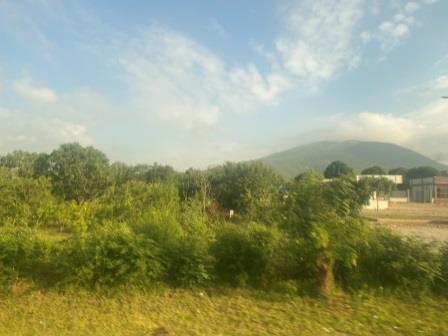
By dawn, Downton was on the verge of the First World War and I was looking out onto different scenery with hills in the distance. We passed through the large city of Morogoro and then just outside it there was an immigration check. Police boarded the bus and inspected the passports of all foreigners (there were about five Zambians and me) before letting us go. We finally made it to Dar’s ultra-modern Magufuli bus terminal at 11:30. We were around 5 hours behind schedule, but I had absolutely no complaints.
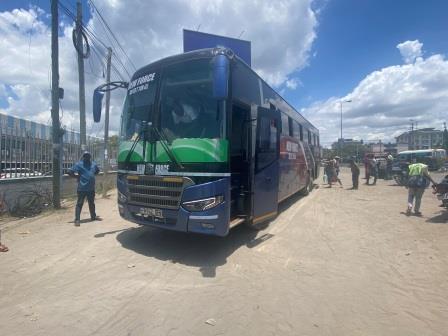
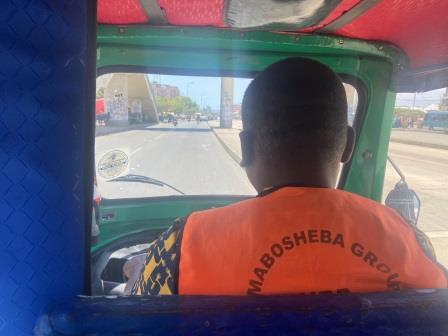
Magufuli was around 20 km from the centre of Dar; as I prepared to get off, my seat mate was kind enough to explain, using hand gestures, that the bus would continue to Shekilango, Ubungo. About ten of us stayed on and we eventually terminated 12 km closer to the centre at a dusty parking lot full of waiting bajaj and motorcycle taxis. I jumped into a bajaj and about twenty minutes later I was checking into my hotel in the centre of town.
Sokoine
Dar es Salaam (“abode of peace”) was a quiet fishing village until the mid-nineteenth century, but it is now a thriving metropolis of over 6 million people. It is the largest city, by population, in East Africa and the sixth largest on the whole continent. Proximity to the equator and the warm Indian Ocean mean it experiences hot and humid weather almost all year round. The high was about 28 degrees Celsius for the whole time I was there.

I walked a short distance from my hotel to Dar’s old German-style railway station. It was looking very smart as its renovation neared completion. Dar’s railway infrastructure is actually quite complicated with three different systems using three different gauges.

During my stay, I completed a longer walk to study all three systems a little more closely. 
Link to it here – “Railways in Dar (2025)”
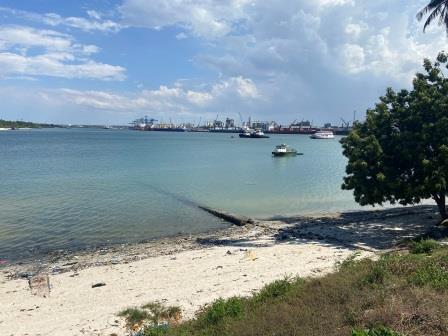
From the station, I took a stroll along Sokoine Drive, walking past all the competing Zanzibar ferry terminals, with their touts outside hassling for business. Eventually from Kiyukoni Drive I got better views of the port and the ocean beyond.
This whole area contained a lot of German-style buildings dating from the late nineteenth century. Deutsch-Ost Afrika (German East Africa), which covered Tanzania (then Tanganyika) as well as present-day Rwanda and Burundi, was established in 1885, Dar became its administrative capital.
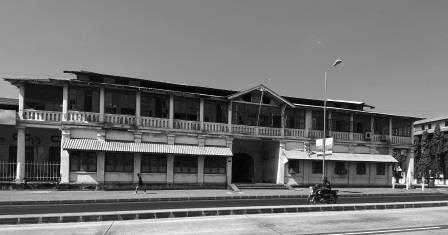
Although Christianity had already been established in the region, the German presence intensified its spread. I visited Saint Joseph’s, Roman Catholic cathedral. It faced the harbour and was built between 1897 and 1902. It is the “mother church” for Tanzania’s 23 million Catholics. 
A little further up Sokonie Drive I came to Azania Front Lutheran Church. Built by German Missionaries in 1898, its white walls, red-tiled roof and canopies over the windows are apparently representative of late nineteenth century Bavarian style. Today there are around 6.5 million Lutherans in Tanzania, about 13% of the population.

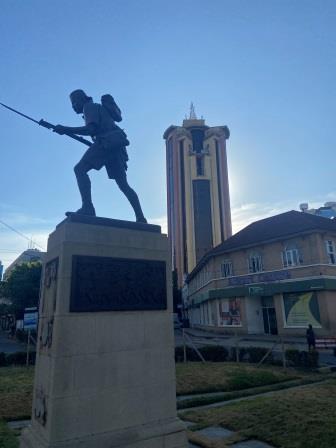
A few blocks away I found the Askari Monument (1927). It is dedicated to the Askari (African soldiers) who fought in the British campaign in East Africa during the First World War. The Germans ceded control to the British and Dar continued to be the capital even after Tanzanian independence in 1961. Since 1974 the capital city has been the more centrally located Dodoma.
Kivukoni
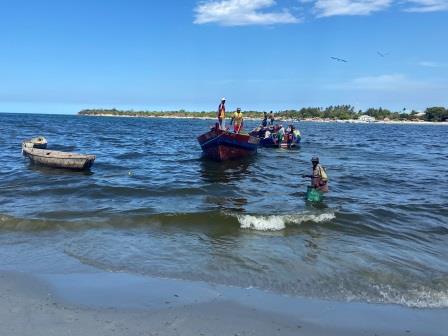
I could smell Kivukoni Fish Market before I even got to it. The place was pretty lively even in the middle of the afternoon. It was roughly divided into three parts. I went first to the area where they were transferring fish from the boats. I was surprised to see there were a few boats loaded with fish still appearing.

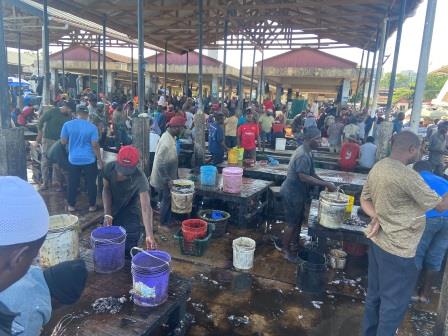
A little further from the shore was the area where they were cleaning, cutting and selling the fish. The process was fascinating to watch. The smell might have been almost overwhelming but there was an amazing array of fish on offer including snapper, kingfish, crabs, octopus, squid, shrimp, and prawns.

Finally, I walked through to the area where they were cooking the fish and tried to pay for samples in a few places. Most of the stuff was being packed away directly into boxes and I was refused a couple of times.
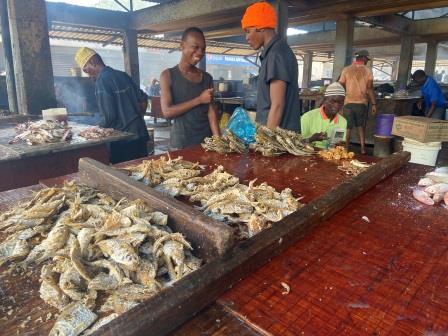
I finally found one place that let me buy a few samples and I got to eat a few pieces straight off the grill. It was fantastic and fresh.


Growing City
Dar seemed to have a nice down-to-earth feel. In the brief time I was there, I could not really claim to have seen much of the city (I intend to return soon) but the sheer variety between the neighborhoods impressed me. Walking around between all these different areas was quite intriguing.

The part of downtown where I was staying felt a bit chaotic, it was cramped and dusty but there was a lot going on. There were lots of small businesses, many dealing in textiles, run by guys from the Middle East and the Indian subcontinent.
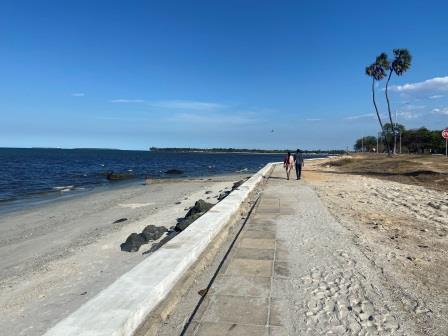
A few miles away it was possible to have a relaxed walk alongside the white sandy beaches. Looking out at all the cargo ships docked in the harbour it was easy to understand that Dar is now East Africa’s second biggest port.

A lot of areas tended to be zoned by industry. One street I found particularly fascinating was filled with businesses dealing in automotive parts. Many of the little shops had engines neatly stacked at the back and then there were often people sitting on the pavement repairing small parts.

There were several very pleasant tree-lined avenues hosting embassies, official residences, and corporate offices. Then on Kisutu Street there were temples and other buildings reflecting a connection with the city’s Hindu community.

Close by were mosques and small restaurants that got busy in the evening preparing Iftar buffets for Dar’s Muslim population who were celebrating Ramadan.
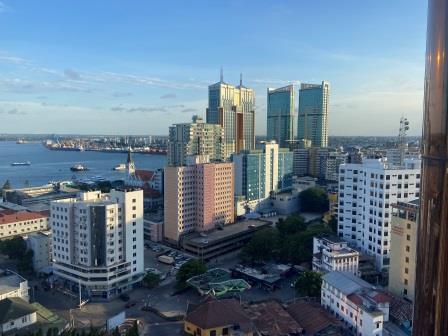
With several high-rise buildings open or under construction, it was easy to see why Dar is one of the fastest-growing cities in the world, with some projections suggesting the population will exceed 13 million by 2035. The rooftop cafe at the Golden Tulip Hotel had expensive coffee but a magnificent view of the modern part of the city.

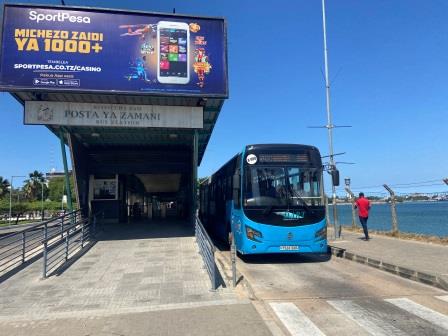
Almost wherever I wandered I came across disruption to vehicular and pedestrian traffic. This was down to the extensive construction work for the city’s rapidly expanding Bus Rapid Transit (BRT) system. A few lines of the BRT were already open, but the number is about to increase dramatically. Within a few years the network will stretch all over the city, including out to the airport.
Karaikoo
I spent a few hours walking around Karaikoo, home to the city’s largest outdoor market, where the narrow streets were lined with shops and filled with stalls selling everything from food to electronics.

Karaikoo was chaotic and I knew I needed to keep my wits about me, but I never really got hassled by anyone. If anything, people were very friendly and I got a lot of smiles and more than one “Karibu Tanzania”
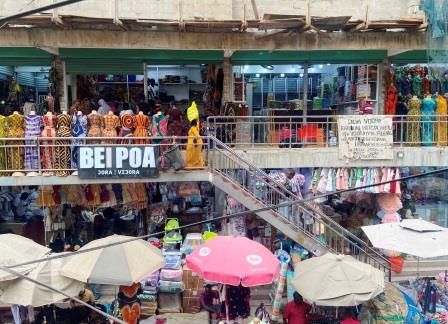
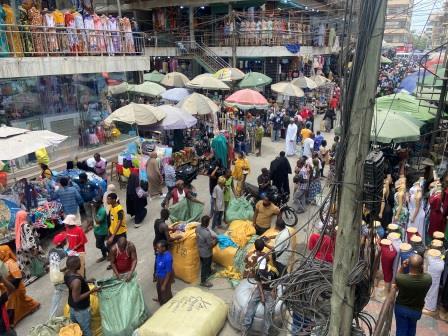
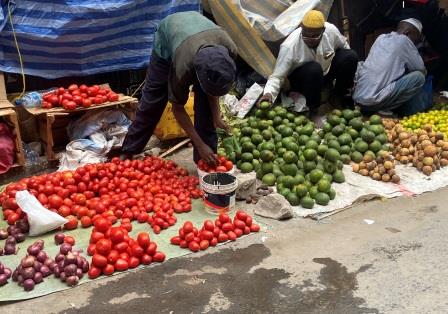
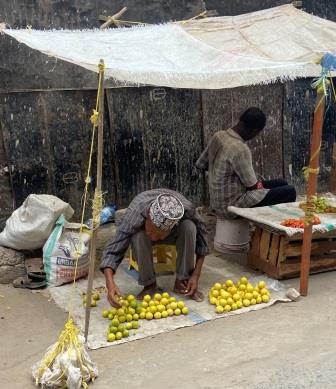
The market was divided into zones. I walked around streets full of electrical appliances that soon gave way to streets full of food and then further on there was cloth. Watching the women buying fabric at some of the stalls was akin to watching a mini auction and very entertaining.


The displays of fruit and vegetables were incredible with meticulous care being taken to make even the most basic stall attractive to customers.
National Museum
Perhaps my only disappointment in Dar was the National Museum, particularly in comparison with the museums I had visited in Zimbabwe and Zambia and considering the 15 dollars I paid to get in. There were several buildings but I found some of them, including the beautiful original hall (1940), were either empty or undergoing refurbishment. The signage was pretty poor too and it was impossible to know if you were walking into an empty hall or not.
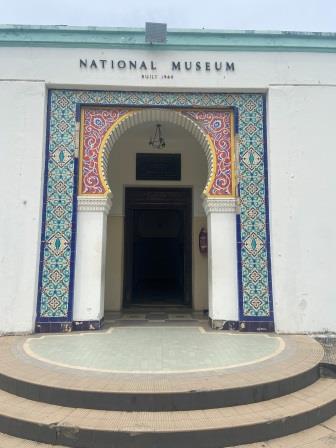
In common with the other museums that I had visited earlier in the trip, there were reasonable exhibits on early man and natural history, but coverage of how the local population fared during the colonial period and the struggles for independence was patchy at best. It felt unbalanced with certain random topics covered in a lot of detail and others ignored.
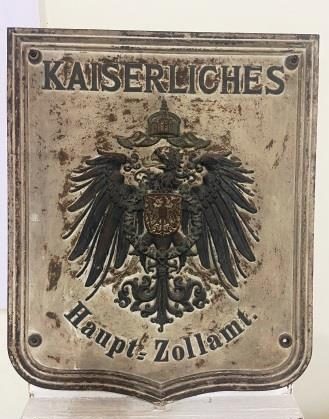
There was an extensive memorial to the 1998 US Embassy bombing, but possibly the most interesting section was an extensive display covering President Nyerere’s visit to meet President Kennedy in the 1960s.

Gajjar Chicken
On one of my days, I had lunch in a large food market. Only a small proportion of the many stalls were open, presumably because of Ramadan. Most of the places that were open were selling chicken or fish with ugali (the local version of nshima). One was offering chips as an alternative to ugali, so I ate there. Chips seemed to be a popular thing in Dar and they even had chipsi mayai, an omelette made with chips.

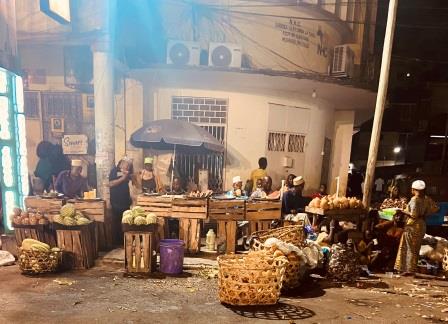
Walking around at night, the city seemed alive with little stalls grilling gajjar chicken and other meat with wonderful smells wafting around. I ate at a little place that was basically a pop up BBQ in the middle of the pavement surrounded by a few plastic chairs and tables. It was the best meal I had the whole trip. I walked past the next morning but there was no sign that anything had ever been there.
Journey’s End
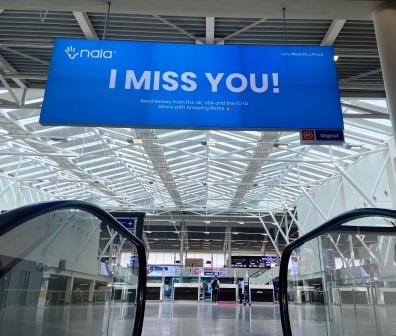
At last, it was time to finish my trip. The Uber I took to Dar International Airport’s brand new Terminal 3 was the last vehicle I used on my overland journey from Bulawayo. Over the course of the 3,000 km, I had spent a total 71 hours on 2 trains and 37 hours on 3 long distance buses. I had also taken 4 taxis, a bajaj a motorcycle and a few dala dala minibuses to get around town. I had walked quite a bit too. I calculated my average speed to be around 27 km/h (17 mph).

The lady Uber driver asked if me I had enjoyed Dar and she seemed a little surprised when I told her that I was already planning to come back next year. Although I would also love to return to Zimbabwe especially if they ever open up the passenger rail network, my current plan is to go back to Tanzania, travel on the Standard Gauge and Metre Gauge networks and see a lot more of the country.

 Trains To Beyond