A ‘Rail & Sail’ trip to see the Dutch National Railway Museum
The Plan
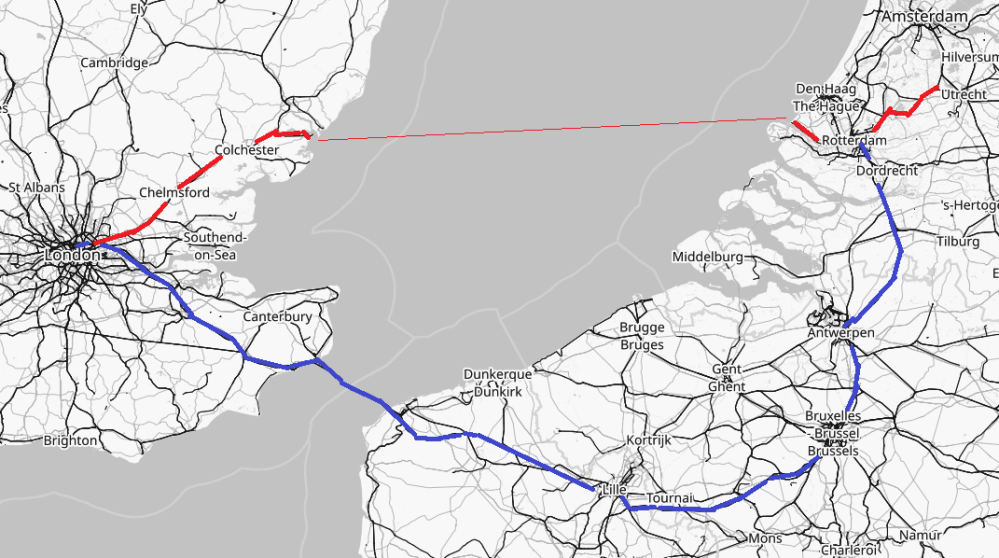
In early summer 2025 I made a very quick visit to Utrecht in the Netherlands. I met up with an old Dutch friend and we spent most of the time visiting the Spoorweg (Railway) Museum together. I travelled out from London using the time-honoured route, the overnight ferry from Harwich to Hoek van Holland. I returned from Rotterdam direct to St Pancras on the last Eurostar of the evening.
My journey began at Liverpool Street station on a Monday evening in June.
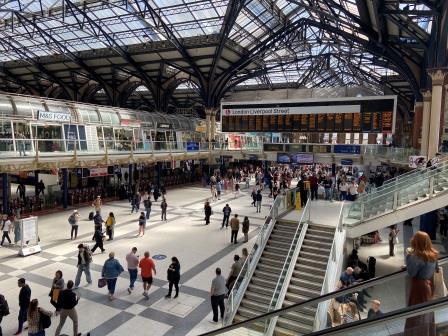
Liverpool Street – International Gateway
It is now 19:00 and Liverpool Street station is quietening down again after the rush hour. Although, of course, ‘working from home’ now means that the first day of the working week is nowhere near as busy as it once was. 
As well as being one of London’s busiest commuter stations, this terminal has a long held connection with foreign travel. Today, frequent trains to Stansted Airport carry passengers bound for Europe and beyond, but 150 years ago it was the link to the port of Harwich that first led to Liverpool Street to become one of London’s international gateways.

I am using a ‘Rail & Sail’ ticket purchased from Stena Line. The £62 fare includes the train from Liverpool Street (or any Greater Anglia station) and ferry to the Hook of Holland. As I am catching the overnight boat, due to leave Harwich at 23:00 and arrive at the Hook at 8:00, I am obliged to book a cabin, so I have paid an extra £49. An ‘environmental fee’ brings the total to £120, although, given that I am also saving a night’s accommodation, this still seems pretty reasonable to me.
Not quite “The Hook Continental”
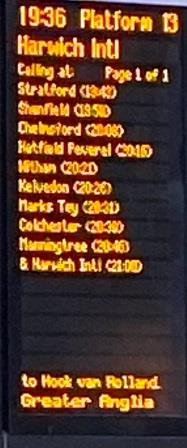
I am catching the 19:36 train direct to the port of Harwich or ‘Harwich International’ as it is now known. Although the train fits into the regular hourly pattern of services as far as Colchester, it is extended from there to Harwich International specifically to connect with the sailing. It is one of only four daily through trains to Harwich International from London.
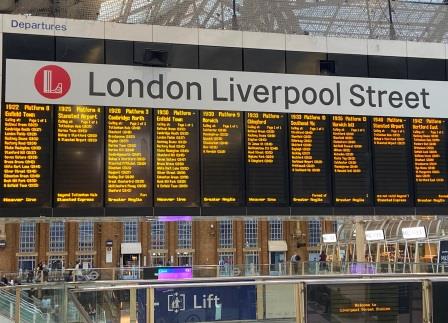
The departure board at Liverpool Street soon indicates my train will depart from Platform 13. I make for the barrier but the automatic gates won’t accept the print out from the Stena Line website so I need to get the attendant to show me through.
As I am boarding, I wonder how many other passengers are connecting with the boat. There is a lady with a bike that is fitted with panniers, and a middle-aged couple with two large suitcases and a Union Jack carrier bag. Other than that, I can’t see any obvious suspects.
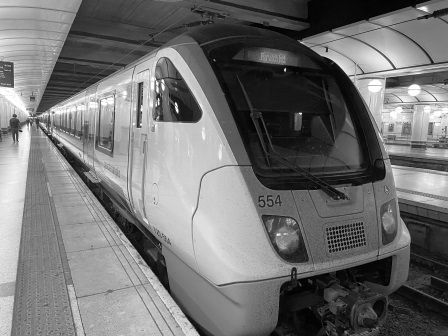
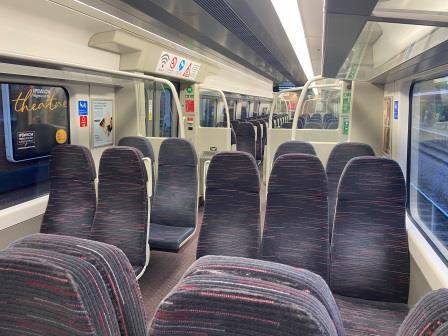
My train today is operated by Greater Anglia and is formed of two five-car Class 720 Aventra electric multiple units, built at Derby and introduced in 2020. Externally they resemble the Class 345 trains being used on the Elizabeth Line but they are fitted with ‘3+2’ seating, ideal for outer suburban runs like this one. The seats are not uncomfortable and even with five minutes to go there are very few passengers on board. I start off with a bay of six to myself.
Boat trains commenced running to Harwich Parkeston Quay in 1882 and were timed at 1 hour 45 minutes for the 68 miles from London. By 1912 this was down to 1 hour 22 minutes. Given that we will make a lot more stops, our own time of 1 hour 24 minutes seems very good, although it is now possible to get to Harwich even faster by changing from the Norwich-bound expresses at Manningtree.

In 1927 the London North Eastern Railway (LNER) named the main evening boat train “The Hook Continental” and provided it with new rolling stock. The train and the name continued in use after nationalisation and only ceased in the mid-1980s. In the 1950s the train departed London at 19:30 and arrived at Harwich at 21:00, almost exactly the same timings as my train tonight. We depart on time.

Dinner on board
As we leave Liverpool Street my mind immediately turns to food. It will be past 21:00 by the time I get to the ship so I have decided to eat on the train. Corridor restaurant cars were provided on the Harwich boat trains from 1904 and it was possible to get a meal on board right up to the mid-1980s. In the 1920s and 1930s the Hook Continental also included a Pullman car. In fact, one of the carriages used, Car 64 (now known as Christine), is still running on the Bluebell Railway.

Network Rail’s website has a menu from the 20:30 (8:30pm) Liverpool Street to Harwich Parkeston Quay service for 7th May 1935. For five shillings (equivalent to about £22.50 now) travellers got a choice of soup, grilled salmon, roast chicken, Victoria pudding or fruit, plus cheese and coffee. There was an extensive wine list too.

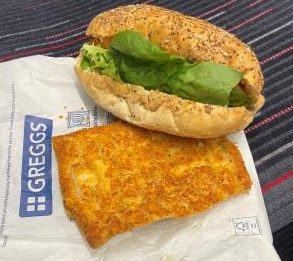
Knowing that there will not be anything quite so grand (or actually anything at all) on the 19:36, I have visited Greggs on the concourse and supplied myself. As we climb the bank out of Liverpool Street I am already tucking into a Mexican chicken salad roll. By the time we are pulling into Stratford I have finished off a tasty feta cheese and pepper bake too and I am on to a bottle of Diet Coke.
The train fills up a bit at Stratford and there are now three others sitting in my bay of six seats. We hurry along the Great Eastern Main Line to Shenfield and Chelmsford and thereafter settle down into a stopping pattern with a handful of passengers alighting at each station. It is a beautiful evening and as we pass through some lovely Essex countryside I imagine myself back in 1935 looking at all this whilst finishing off my cheese, cress and biscuits. We are into Colchester at 20:30.

The Mayflower Line
At Colchester the train, now almost empty, changes character. We have been in driver only operation thus far, but now a guard gets on and checks the tickets. He seems satisfied with my print out and I suspect the final few passengers still on the train will have similar tickets. We continue along the main line to Manningtree, the normal terminus for the hourly train to Harwich Town, and then turn off and head along the branch line.

Harwich has been a port since the 11th century and a naval base since the 18th century. This branch connecting it to Manningtree was first opened in 1854. Today it is marketed as the “Mayflower line.” The name comes from the famous ship which was apparently constructed at Harwich.

Just after we come off the junction at Manningtree, another track joins us from the north easterly direction. There are still a couple of daily passenger trains that traverse this chord which connects Ipswich with Harwich. Until 1986 it was used by the “North Country Continental,” another express which provided a link from Manchester into the overnight boat. Back in the 1890s, Harwich was also served by direct trains from Liverpool and York.

We hasten along the branch not bothering to stop at either Mistley or Wrabness. The line hugs the shoreline for a bit and there are some excellent views across the estuary of the River Stour as the sun begins to set. Eventually the train slows for Harwich International and the massive Stena ship that I will soon be boarding becomes visible. We come to a stand in the platform dead on 21:00.

Harwich International (née Parkeston Quay)
The port and station at Harwich International were built by the Great Eastern Railway (GER) in 1883 in order to supplement and perhaps replace the original port which was closer to Harwich Town station. Named after GER chairman, Charles Henry Parkes, the site was known as Harwich Parkeston Quay until 1995.

Ferry services from Harwich have a long history. The GER ran boats from the 1860s onwards and, over time, various companies have operated to Zeebrugge, Flushing, Antwerp and Esbjerg. The only route that remains today, to Hook of Holland, was for a long time shared between British and Dutch shipping lines. The current twice daily service has been run exclusively by Stena Line since 1990.

I count less than fifteen people alighting from the train. The lady with the bike and the couple with the Union Jack carrier bag are amongst them though. I find the transition from train to ship extremely simple. Especially as, unlike similar experiences at Newhaven and Holyhead, it does not involve waiting for a bus to take me to the car deck.

Here, I simply walk up the station stairs, through a set of double doors, put my luggage through the security scanner, have my passport looked at briefly and then receive my paper contactless cabin key. Within ten minutes of arriving at the station I am already climbing up the long covered passageway towards the Stena Britannica.

Stena Britannica
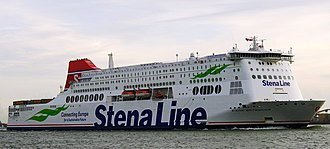
The Stena Britannica at 64,039 gross registered tons is, along with sister, Stena Hollandica, one of the largest super ferries in the world. Launched in 2010, the ship features 2 restaurants, 3 bars and several shops. Apparently there are more than 500 passenger cabins and around 5.5 km of vehicle deck with enough space for 300 trucks.
As I climb up the passageway I stop a few times to watch a procession of trucks now being driven onto the bow of the ship. Many of them seem to be ‘drop trailers’ and are being brought on to the vessel by tractors belonging to the port. I am guessing we will be carrying a lot of freight tonight but perhaps not quite so many truck drivers.

When I get to the ship I enter on the starboard side, with the door and staircase painted in the international standard green colour. I climb to Deck Nine where all the restaurants are located and then continue on to find my cabin on Deck Ten above.

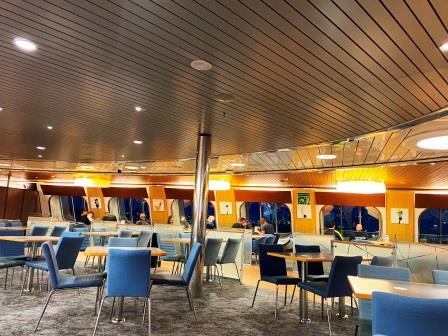
I drop my bag and immediately go for a wander. The ship has recently been refurbished and has a nice bright feel to it. There don’t seem to be too many people travelling tonight though. I have a small beer in the observation bar. Apart from a few motorcyclists eating curry in the adjacent restaurant the whole place is pretty deserted.
I have one of the cheapest inside cabins, but it is perfectly adequate. It comes with a comfortable bed, a decent shower unit and a TV. The internet isn’t brilliant though, I give up on trying to catch up on the news and by 22:30 I am dozing off. Then at precisely 23:00 the captain’s voice comes loudly over the PA, “the vessel has been made ready for sea and there will now be a safety announcement”. It is necessary I suppose, but it is very loud. I start to wonder how early they will make the next announcement in the morning.

Wake Up Call
The announcement comes at 05:30 (UK time). This is a little early, I think, given that we still have ninety minutes to run until our 08:00 (Dutch time) arrival. I try to go back to sleep but in the end I give up. I am up on deck by 07:00 (my watch now adjusted to Dutch time) with a croissant and a coffee. It still doesn’t feel busy. A few people are walking around outside but none of the restaurants have many customers.

The Britannica is now edging its way along the Nieuwe Waterweg, the channel which connects the North Sea to the Rhine and Meuse Rivers. There are plenty of vessels to observe here, everything from outgoing cargo ships to the smaller barges carrying containers towards the Rhine. By 8:00 the ship is alongside the jetty and tying up.

I wait inside with a handful of other foot passengers but soon I am walking off, this time through the red-painted port exit. It is then quite a trek up the covered gangway alongside the ship to the terminal at the end. Dutch immigration, just a few questions about my lunch plans, is over in a minute and I am free to walk out. It is 08:10 exactly.
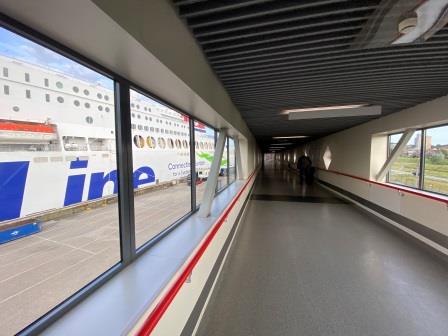
I have already noticed the railway line running along the shoreline from the ship. This is now part of the Rotterdam Metro. As I come out of the terminal I can see the new metro station platform directly opposite. The old railway station is on the right.
Hoek van Holland Haven Station
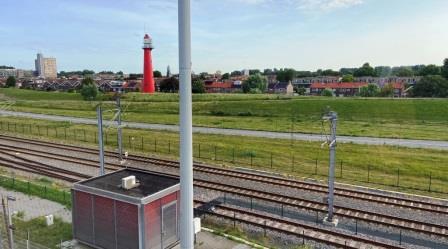
Hoek Van Holland Haven station no longer has any track leading to it. The old building is still standing though and part of it is being used as a Japanese restaurant. I walk along the old main platform. Here and at two other platforms at the eastern end, express trains would once have been waiting to take passengers from their overnight ferry from Harwich onwards to various destinations across the continent.

A glance at the 1934 timetable, for example, shows three trains departing within ninety minutes of the boat’s earlier arrival from Harwich. Departing first at 06:25 from one of the two easternmost platforms was a relatively short distance domestic service with portions for both Rotterdam and Amsterdam.

Departing at 06:59 and leaving from the main platform where I am standing now was the train to Southern Germany. This service had many portions and divided enroute with one or two coaches each going to Konstanz, Basel, Munich, Vienna and Budapest.
At the rear of this train were two more Pullman-type coaches that would be detached at Utrecht and there combined with more carriages from Amsterdam to then follow the path of the River Rhine all the way down to Basel. This was the prestigious ‘Rheingold’, a service that started in 1928 and continued on right up to 1987. In summer it extended to Zurich.
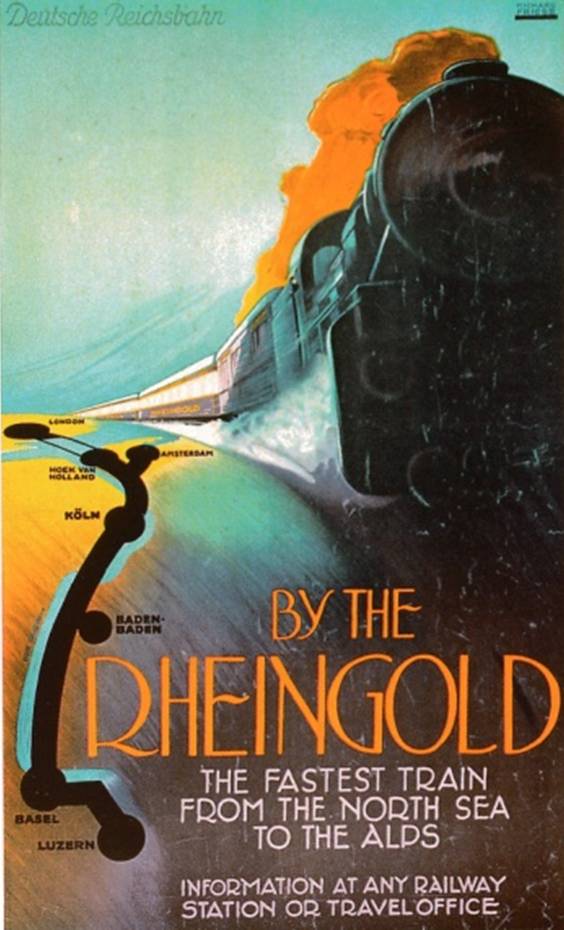
The final departure, at 07:25, was the North German service, destined to split at Osnabruck with one portion serving Hamburg and the other going to Berlin and arriving there in the early evening. It was along this route that the young Christopher Isherwood would have travelled on his way to the German capital in the early 1930s. His semi-autobiographical novel ‘Mr Norris Changes Trains’ which inspired the musical ‘Cabaret’, begins on board the train itself.

This pattern of routes being served from Hoek van Holland resumed after the Second World War and lasted right up until the opening of the Channel Tunnel in 1994. Some destinations changed over time, trains were extended to Copenhagen or Warsaw for example, but the basic system remained.
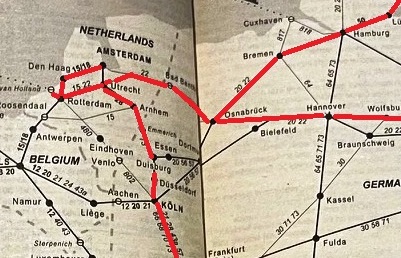
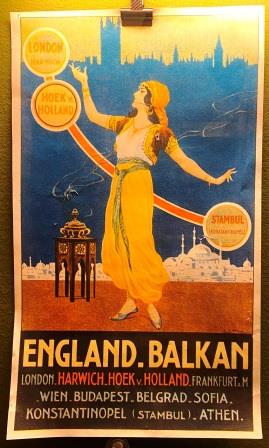
The routes can be seen above highlighted in red on a Thomas Cook timetable from the 1980s. A similar pattern of connecting services waited for the evening arrival of the day crossing from Harwich too. Even at the height of the cold war there were through coaches that went all the way to Moscow.
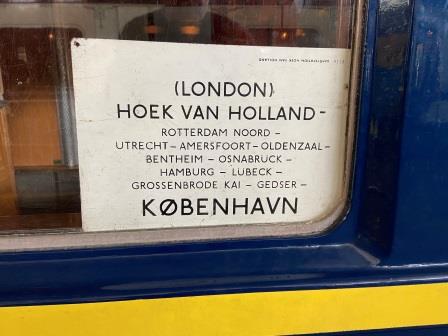
Channel Crossing to Life
As well as well-to-do British travellers catching luxury trains to destinations all over the continent of Europe, Hoek van Holland is also deeply associated with refugees travelling in the opposite direction. The port was an embarkation point for Jewish people fleeing persecution both from Russia during the late 19th century and from Nazi Germany during the 1930s.
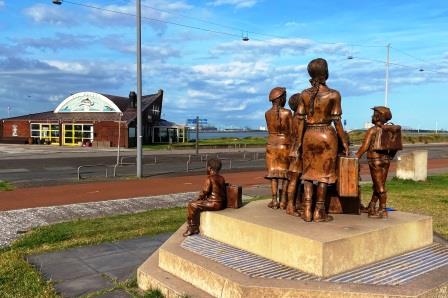
Many of the 10,000 children rescued by the Kindertransport programme between 1938 and 1939 came this way. They are commemorated by a memorial just a few minutes’ walk from the station. It is entitled “Channel Crossing to Life” and features a group of five children.
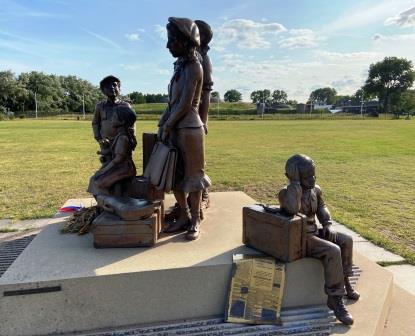
The sculptor, Frank Meisler, was from Danzig (Gdansk) and was one of the children saved. The same group of five children feature in a memorial outside Gdansk station as ‘The Departure’ and on another outside Liverpool Street in London, ‘The Arrival’.

RET – Line B
I wander back to the Metro station opposite the ferry terminal. It is a simple single island platform between the two tracks. At this time in the morning, it is busy with Rotterdam-bound commuters although there are a few bag-carrying ferry passengers mixed in. I manage to get a ‘2 hour’ chipcard from the ticket vending machine just as the next train is arriving and hurry through the barrier to board.

NS, the Dutch national rail operator, handed over the tracks between Rotterdam and Hoek van Holland to the Rotterdam Metro operator, RET, back in 2017. The line reopened as part of Line B in 2019. Today it is served by an efficient service of trains running roughly every 20 minutes.
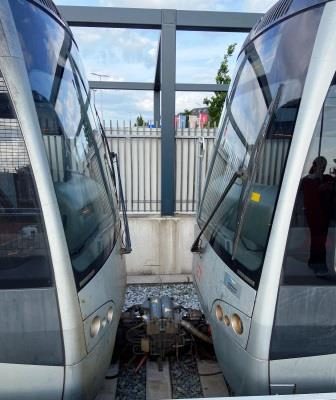
The journey into the centre of the city takes just over 30 minutes. I ponder that I left Liverpool Street ninety minutes after the last Eurostar departed St. Pancras (18:04) last night and I will be in Rotterdam ninety minutes before the first one (10:32) arrives this morning. The boat would still seem to have a small niche, especially for those who want to avoid flying.

We pause at Schiedam, where a connection to Rotterdam Central and the main NS system is available. Then we enter the central tunnel section to travel alongside lines A and C under the city.
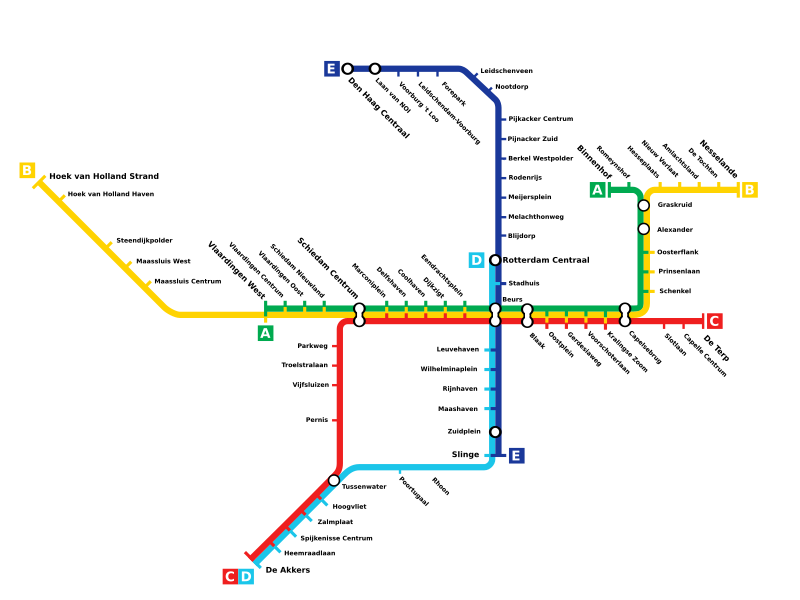
There is the possibility of a transfer to Lines D and E at Beurs where passengers heading to Rotterdam Central can also change, but I stay on the train. I am heading out towards Hesseplaats in the eastern suburbs where I am being picked up.

Spoorweg Museum
My friend is waiting in the small car park at the metro station and we are soon on the A12 mototway heading towards Utrecht. As we drive along we catch up on the latest gossip and happenings. The news on the radio is quite dramatic: the Dutch government has fallen just a few hours earlier.

After a drive of around 40 minutes, we reach the outskirts of Utrecht and then the Sat Nav does the rest, guiding us through narrow streets full of cyclists to reach the Spoorweg (Railway) Museum. We park up and walk into the old Maliebaan Station building that forms the entrance. It is beautiful on the outside and even more impressive on the inside.

We spend the next hours slowly going around the museum and having a long lunch in the museum cafe. My friend is not really a railway enthusiast but the place still impresses him greatly. I also think it is excellent. It is educational and entertaining at the same time, like any good museum should be.
There is more about it and my own brief account of the history of Dutch railways here > Utrecht railway museum

Rail Shuttle
After almost five hours at the museum together I bid farewell to my friend and head over to Maliebaan’s own operational platform to board the hourly ‘sprinter’ service to Utrecht Centraal. The trains only run when the museum is open.

It wouldn’t actually take too long to walk to the city centre, but I think it is pretty cool that there is a dedicated train serving the museum, so I am keen to use it. I am not alone; there are around ten of us on the little four carriage electric SNG (Sprinter New Generation) unit.
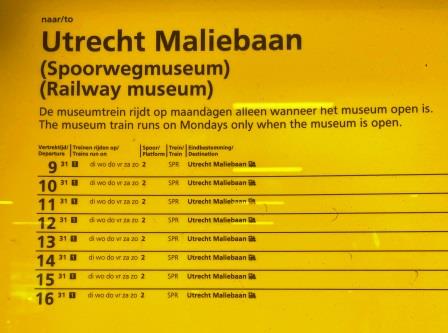
The trip, including a reversal enroute, only takes around 17 minutes and before long I have arrived at Platform 2 of the city’s ultra-modern station.

Interlude – A few hours in Utrecht
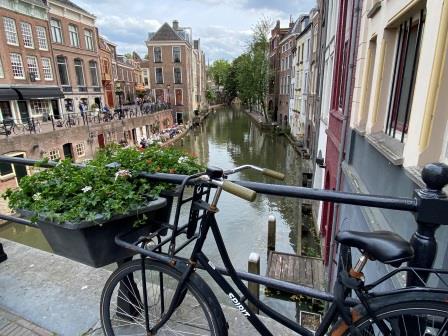
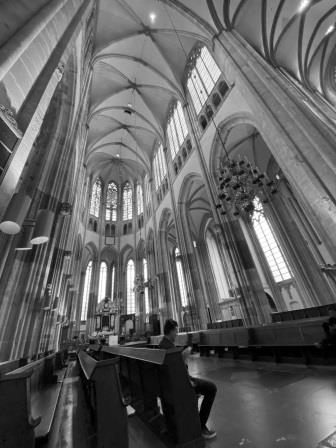
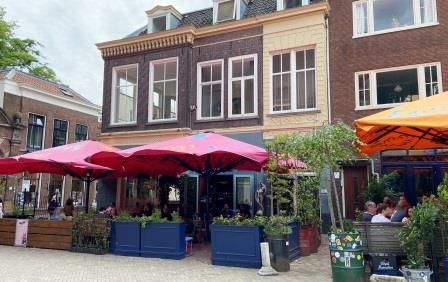
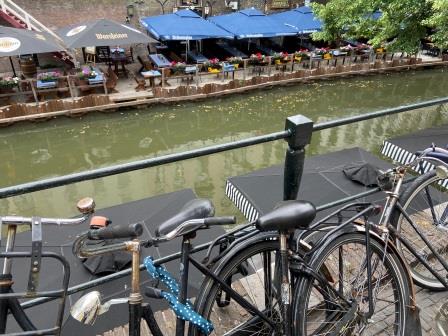
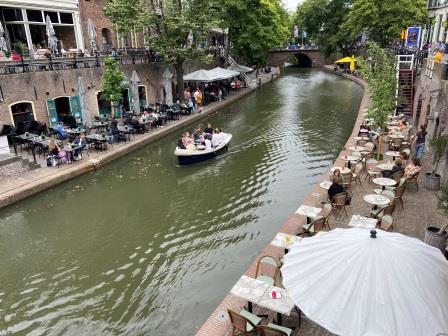
I have to admit that, whilst I am no stranger to the Netherlands, I have never managed to visit Utrecht, the fourth largest city. I don’t have long for this first visit; a more in-depth look will have to wait for another time. For now, I just content myself with a stroll around the old centre, a look inside the cathedral, a couple of beers at a little pub and a wander along the banks of the main canal. I am extremely impressed with it all and I vow to come back soon.



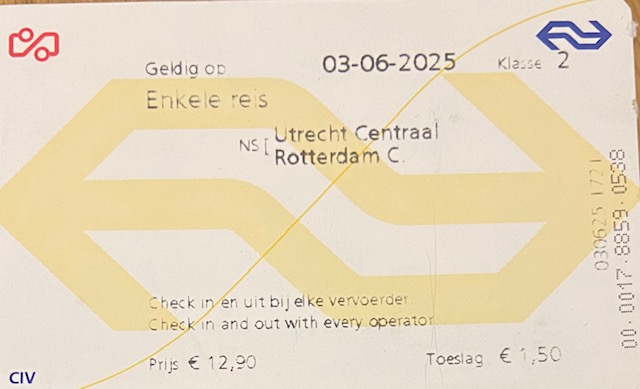
Enkele Reis (Utrecht > Rotterdam)
Utrecht Centraal Station, completely modernised and renovated in 2016, is the largest and busiest railway station in the Netherlands. It reminds me of the inside of Terminal 5 at Heathrow Airport, and not in a bad way. It serves as a major hub with not only bus and tram stops but also the world’s largest cycle parking facility.

I get my single trip chip card ticket to Rotterdam, paying 14 euros for the 50km journey. I find the next train, an Intercity, is leaving from Platform 12. It is formed by a NS Class 4000 ICM (Intercity Material) unit dating from the 1980s. I have actually just seen one of the same type at the museum, although this one has been nicely refurbished inside.
It is now getting on for 17:40 so the train is filling up with Rotterdam-bound commuters and I only just manage to get a seat. We are off on time. The scenery on the route via Gouda is characteristically Dutch: flat terrain, canals, with perhaps the odd windmill thrown in. After stopping a couple of times, the train terminates at Rotterdam Centraal about 35 minutes after leaving Utrecht.

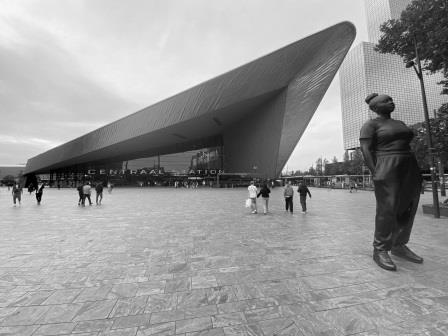
Rotterdam Central is another a major hub in the Netherlands. It is also another modernised station, itself undergoing a transformation in 2014. Although I am just passing through this evening, I have a quick wander out into the station square.

I have spent a bit of time in Rotterdam in the past, including a very pleasant day wandering around just before Christmas in 2018 ( here – Rotterdam). It is certainly a rewarding city to visit and perhaps, given a bit of the anti-tourist sentiment there these days, a more welcoming destination than Amsterdam.
The 19:28 to London St. Pancras
After my brief sojourn outside, I go back into the station and follow the “London” signs to the small Eurostar terminal on platform 2. There is a queue outside but it moves reasonably fast. I show my ticket to the lady at the counter and am guided through a security check, through two lots of passport control, one Dutch and one British, and then finally into the cramped departure lounge.

Eurostar launched a direct service from London to Rotterdam and Amsterdam in April 2018, but with the return journey connecting through Brussels where passport controls and security screening were conducted. The service is now direct although it still waits quite a while in Brussels for a crew change. The 3hr 30 minute schedule could, I guess, be a bit tighter.

According to my ticket I am supposed to be here by 1813 a full 75 minutes before the train is supposed to depart. It is now past 18:30 though and I just manage to get one of the last seats in the lounge and sit there watching as more people arrive. With about 15 minutes to go, it is standing room only and the place feels over crowded. There is nowhere to eat or drink either.
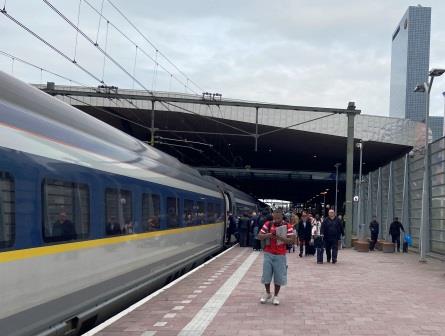
The call goes out, people start moving and we go back out onto platform 2. Here we are now fenced off from the rest of the station, with lots of security guards present. This is to ensure that we, who are essentially already in the UK, are not allowed to mingle with anyone else. Platform 2 is used as a regular platform for most of the day, so it seems quite a difficult operation to arrange, but the Dutch do it well.
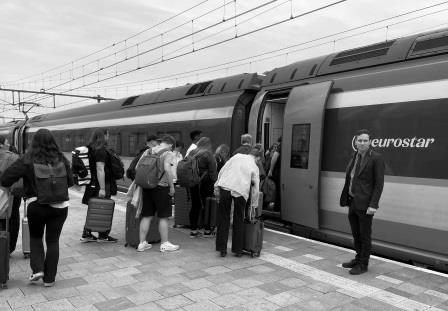
The train soon arrives from Amsterdam and we head towards the rear of it to board, it would seem they only let the Rotterdam passengers in the back of the train. I find my table seat in coach 13, and I am glad to see that, unlike many previous trips on Eurostar, it is aligned with a window. Not so the seat opposite though. To be fair, Eurostar is not the only train company to have seats that don’t align with windows, but it is still annoying.
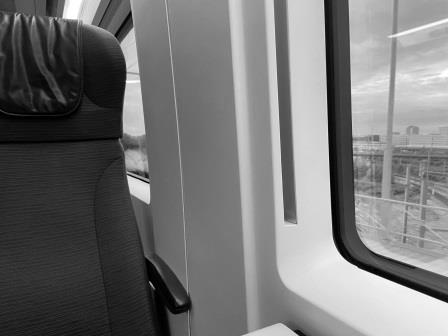
We speed off, darting along the Dutch High Speed line, HSL-Zuid, reaching 300km/h and passing seamlessly onto the Belgian HSL-4 as we cross the border. This takes us to the outskirts of Antwerp and then we slow to a crawl to pass through the underground platforms of the city’s old terminal station. Then we use the conventional tracks as far as Brussels before making another slow transit through the tunnel under the city centre to reach Midi. Now we wait, as scheduled, for almost 20 minutes.

At 20:56 we are off again. We head along Belgian HSL 1, the French LGV Nord, make a stop at Lille, pass through the Channel Tunnel and then dash through Kent along HS1. We reach St. Pancras on time just before 22:00. Alighting from the back of the train, and with one escalator blocked off, it takes ages to get out of the station. I can’t help it; I still can’t bring myself to love Eurostar.
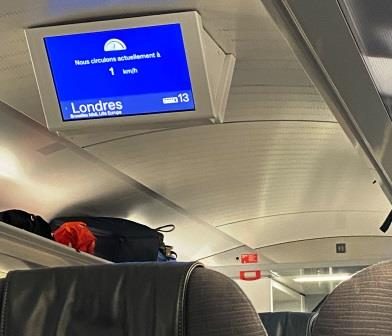
It is a tricky question then, if I were making the trip to Rotterdam again, would I choose the boat or train? I cannot deny Eurostar is fast, here I am in London less than four hours after leaving Rotterdam. Yet, if I price a single trip for tomorrow night, Stena will cost me £120 again but the cheapest single on Eurostar would be £220. Booking ahead would get me a cheaper ticket but it is by no means guaranteed.
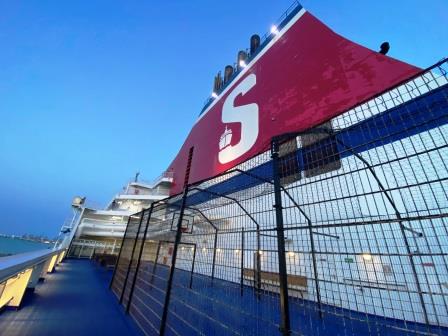

 Trains To Beyond


