A quick and easy stopover in Addis Ababa
Ethiopian Airlines
On my recent trip to southern Africa, I flew with Ethiopian Airlines. It was my first time with the carrier and I was impressed. All my flights were on time, the aircraft were modern and clean, the cabin crews courteous and the food not at all bad. Better still, the reasonable fare included the option to stop over in Addis Ababa at no extra cost.
Although neither Ethiopia nor Addis Ababa had been high up on my list of places to visit, faced with this offer, I decided to go for it. It turned out to be an excellent decision.

I flew into Addis Ababa Bole International Airport late on a Monday evening, stayed three nights at a pleasant little hotel nearby and then flew out early on a Thursday morning. I managed to spend a very enjoyable two days looking around the city. During my visit I travelled on the relatively new light rail system. In fact, I tried to incorporate it as much as possible into my trips between the various points of interest, albeit with mixed results.
Ethiopia & Addis Ababa: The Basics
Ethiopia, covering an area roughly equivalent to France and Spain combined, has a total population of 109 million people, making it the 10th most populus nation on the planet. 67% of Ethiopians are Christian (48% Ethiopian Orthodox) and 31% are Muslim. The main language is Amharic. The country has one of the fastest growing non-oil economies in the world and the current GDP per capita (adjusted for purchasing power parity) is around 3,000 USD.

UK citizens need an entry visa to visit and it is available at the airport on arrival or in advance. Traffic drives on the right and the Euro type C plug is used. The currency is the Birr, with the exchange rate currently (March 2025) 170 to the Pound / 130 to the Dollar.

Addis Ababa has a population of more than 5 million. It is one of the highest capital cities in the world and sits at 2300 metres above sea level. Highest daily temperatures generally stay within a relatively narrow range between 20 and 25 degrees Celsius.

The Light Rail System
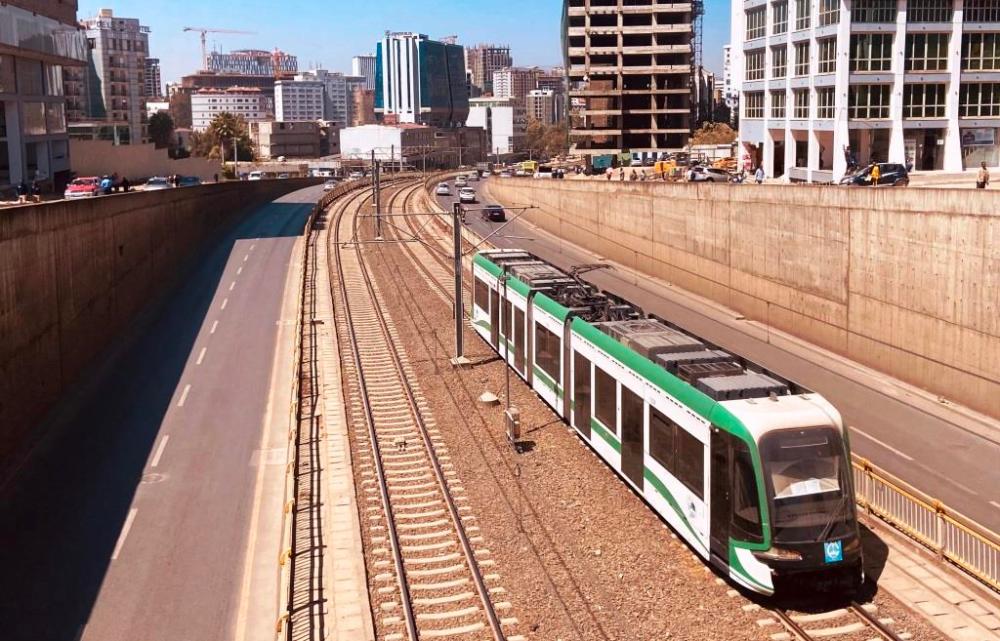
The Addis Ababa Light Rail system was first opened in 2015 and currently has two lines which are both approximately 17 km (11 miles) in length. They converge in the centre of Addis to share about 3 km of common track. Line 1 runs east-west, whilst Line 2 links the southern suburbs with the city centre.
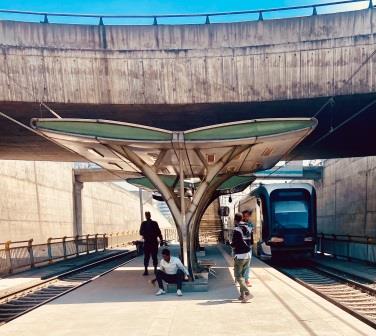
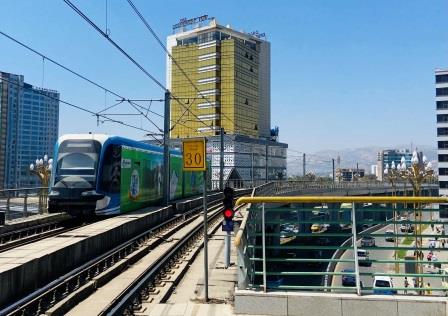
The lines and the vehicles that run on them are colour-coded: green for Line 1, blue for Line 2 and red is used on some maps for the common section. In the city centre the lines are mostly elevated. The system does not yet serve the airport or the main airport hotel district (marked with a star below).

The entire system was constructed by China Railway Group with funds from the Export-Import Bank of China and it uses rolling stock supplied by a Chinese manufacturer. The fleet consists of 41 three-section light rail vehicles, although reliability problems, possibly related to inadequate maintenance, mean that less than half that number are currently in service.
Using the System
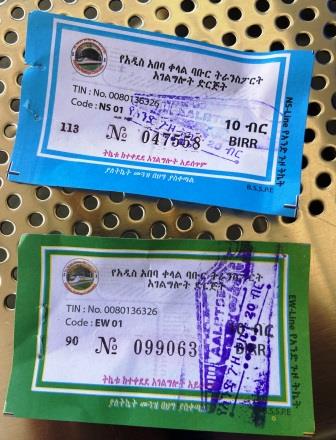
Using the LRT system was relatively simple. All the stations had manned ticket offices on or near the platforms. Fares were calculated on distance, so it was best to state the destination. I paid no more than 20 Birr (10 UK pence) for my trips within the centre. Curiously, there seemed to be no system maps posted anywhere on the stations, although there were in car line diagrams.
On the positive side, the system was spotless and there were cleaning staff on the stations; they were even picking up litter from the track between passage of the trains. There also seemed to be quite a high security presence and, although I was careful to take the usual precautions against pickpocketing, I felt very safe at all times.

On the negative side, the frequency of the trains seemed to have been affected by the vehicle reliability issue. Some wait times were as long as twenty minutes and even during the middle of the day the vehicles got seriously overcrowded and sometimes it was a struggle to get on. It would probably not have been practical to use the system in the rush hours before 09:00 or after 15:30.

Other modes of transport….
The airport hotel where I stayed was about 4 km from the nearest LRT station. I really enjoy urban walking and, using a few different routes, I always covered this distance on foot. The main Airport Road went through one of the most modern areas of the city and was lined with cafes, restaurants, shops and had plenty of pedestrians walking along it.

In addition to what seemed like a fairly limited conventional bus service, there were lots of shared taxis and minibuses plying back and forth along Airport Road. They stopped often and operated on the same principle as in other African countries, with a conductor who took the fares and was usually found hanging out of the door shouting the destination. 
Regular taxis came in three types. Private blue and white vehicles, including some old Ladas from the communist period, had a somewhat bad reputation and it was said they were best avoided. Yellow government-run vehicles were safer but could be more expensive, and although neither Bolt nor Uber were available (2025) there were local ridesharing apps.

Navigating
After my walks to the LRT station, I either caught the train or continued to explore on foot. Airport Road terminated at Meskel Square (St Estfanos – Line 1) and from there it was possible to take Line 1 two stops to Legehar and visit “La Gare”, or change to Line 2 and travel to Gojam Berenda for the Merkato (Market) or on to the terminus, Menilik II Square for St George’s Cathedral and more. In the descriptions below, the various places of interest are grouped by their proximity to the four stations mentioned above.

Places of Interest by Station
Menelik II Square (Menelik II Square – Line 2)
Menelik II Square LRT station is the only one on the system that is completely underground and so it is more akin to a regular metro station. Up on the surface, Menelik II Square itself is the city’s “Km-zero point” and all distances are measured from here. At the centre of the square there is an equestrian statue of the Emperor Menelik II (1844-1913). This is a good place to start exploring the city as it was Menelik II and his queen, Taytu, who founded Addis Ababa (the name means new flower) in 1886 and, after building a palace, established it as capital in 1889.
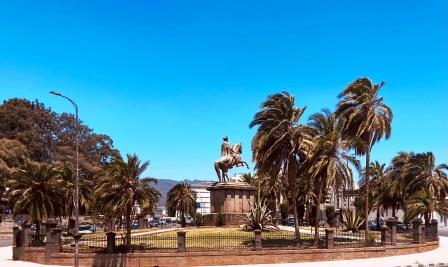
Adwa Memorial and Museum (Menelik II Square – Line 2)
The Adwa Victory Memorial commemorates the Battle of Adwa of 1896. One of the most momentous events in the country’s history, it resulted in a victory over the invading Italians, ensuring Ethiopia was one of the few African countries never to be colonised by the Europeans. It also set an example that independence movements in other African countries followed after the Second World War.


Ethnological Museum (Menelik II Square – Line 2)
The Ethnological Museum is about a 30 minute walk* from Menelik II Square. It is housed in a former palace of Emperor Haile Selassie and is now part of Addis Ababa University. The museum houses an extensive collection of artifacts and documents which tell the story of Ethiopia’s history, culture and traditions. Ashamed to admit that I knew little about the subject beforehand, I found it all interesting.
The exhibits connected to Haile Selassie (1892-1975) himself were even more fascinating. Emperor of Ethiopia from 1930, he was not only an important figure in modern Ethiopian history but was given divine status in Rastafari. He modernised the country, introducing economic and social reforms. After fleeing Mussolini’s invading forces in 1936 and then being exiled to the UK, he returned with the British Army to liberate the country in 1941. Postwar, he was instrumental in the formation of the Organisation of African Unity (the forerunner of the African Union). He was overthrown by the Derg in 1974.
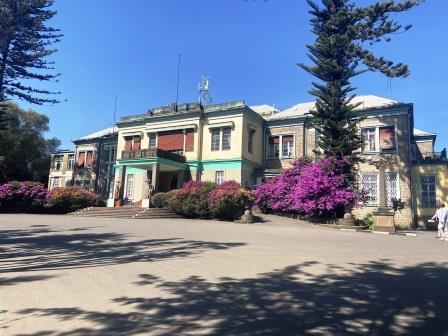
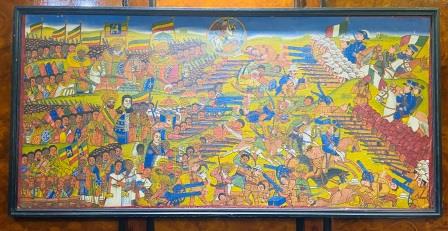


*The renowned National Museum, whose most famous exhibit is “Lucy”, a 3.2 million year old skeleton is also a 30 min walk from Menelik Square. At the time of my visit, it was closed for renovation.
St George’s Cathedral (Menelik II Square – Line 2)
It was necessary to employ the services of one of the resident priests as a tour guide in order to enter St. George’s Cathedral but it was worth it. Built to commemorate the defeat of the Italians at Adwa, it was opened by Menelik II in 1911 and Haile Selassie was also crowned here in 1930. Its octagonal structure has deep significance in Orthodox Christianity. The building contained beautiful frescoes and stained glass windows but was closed for worship due to construction work. There was a service going on outside and the grounds were filled with people standing listening to the chanting coming from the loudspeakers.
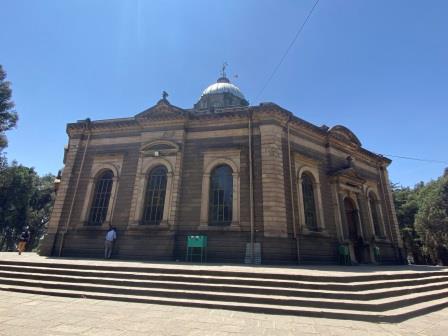
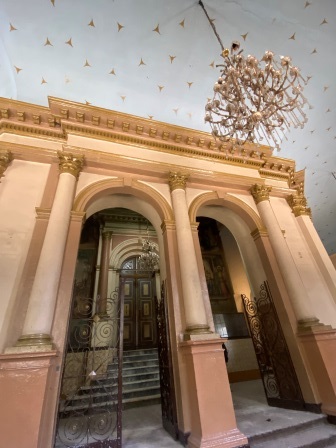


Churchill Avenue (Menelik II Square – Line 2) / Legehar Lines 1 & 2 )
Churchill Avenue, named in honour of the British Prime Minister, is one of the main shopping streets in Addis Ababa. It begins just south of Menelik II Square and ends near Legehar. A walk along its entire 2.6 km length provided a fascinating and everchanging insight into the modern city.


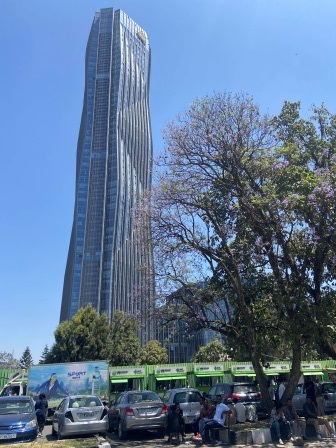

Merkato (Gojam Berenda – Line 2 )
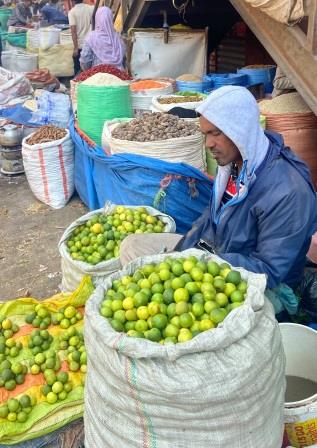
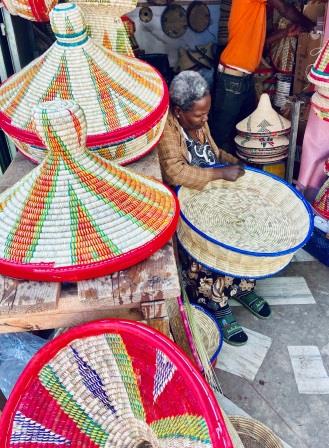
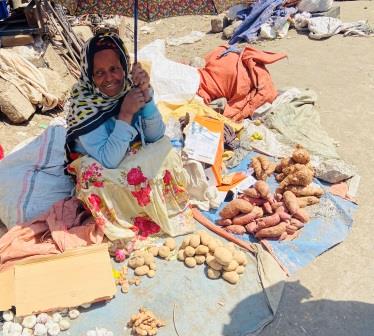
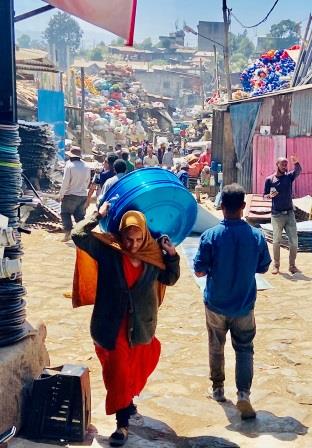
The Addis Merkato with 13,000 people and around 7,000 businesses, is the largest open air market in Africa. It was chaotic and pretty difficult to navigate around but fascinating, nonetheless. I spent several hours wandering. Sometimes divided up into product category, it sold everything from fresh produce to clothing but with quite a heavy concentration on wholesale businesses. The scrap metal recycling section was incredible.






La Gare (Legehar – Line 1 / 2 )
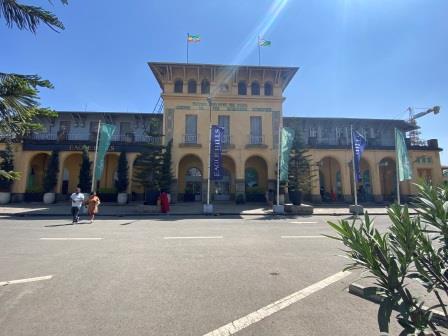
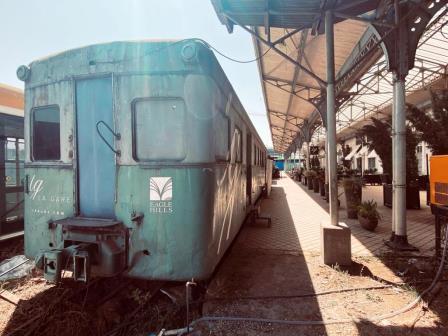
Legehar, derived from the French “La Gare” used to be the terminus of the metre-gauge railway that connected Addis to the port city of Djibouti. Built by the French and completed in 1917, the railway has now been replaced by a standard-gauge line opened in 2017. The new station is on the outskirts of the city, but the old one has been preserved. There was a collection of old locomotives and carriages in the platform and part of the main building had been turned into an attractive coffee shop. All around the station, the former railway land was being turned into a new high rise development with posters everywhere explaining what was to come.


Meskel Square (St Estafanos – Line 1 )
Meskel Square is the largest public “square” in the city and is actually in the shape of a massive semi-circle with the LRT tracks forming the northern boundary. They actually charged a nominal entry fee to get into the square, a bit unfair perhaps as there are restaurants and coffee shops inside. Nevertheless, it was a great place to relax with a drink and watch the world go by.


The Red Terror Martyrs’ Memorial Museum (St Estafanos – Line 1 )
Located at the eastern end of Meskel Square, this museum, established in 2010, was the most shocking place I had visited for a long time. It covered the story of the rise to power of the Derg military junta who ruled Ethiopia between 1974 and 1991. Beginning with the overthrow and murder of Haillie Selassie, it focused on the many victims of the communist regime and ended with the ultimate bringing to justice of some of the perpetrators. Entry was free (although donations were encouraged) and included an excellent guided tour in English. I found the visit harrowing but necessary, probably the most memorable thing I did in my two days.


Addis Ababa Museum (St Estafanos – Line 1 )
Located close to the Martyrs’ memorial museum, but dealing with a slightly lighter subject matter, the Addis Ababa Museum tells the story of the city itself. It was first opened in 1986 to celebrate the centenary of Addis. It was not dramatically interesting, but the photographs of the building of La Gare were worth a look.

&
Food
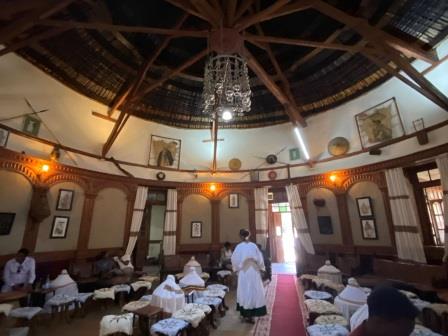
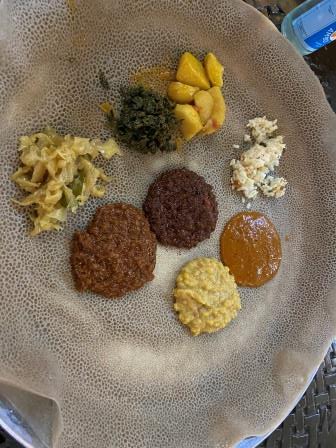
I had been lucky enough to sample Ethiopian cuisine before in various parts of the world, although experiencing it a few times in its homeland was certainly special. In its most popular format, it involves injera, thin spongy bread, being used as a base to put various stews and sauces onto. Small pieces of injera are then torn off and used to scoop up food. Orthodox Christians refrain from eating meat on Wednesdays and Fridays as well as other days throughout the year, and many dishes are vegetable or plant based. All restaurants had “fasting” options on their menus.

Drink
I found Ethiopian beer a very pleasant surprise. St. George was the main brand and came in bottles. I also visited a microbrewery close to my hotel where they had their own beer on draught. Tej was Ethiopian honey wine, somewhat similar to mead.


Coffee
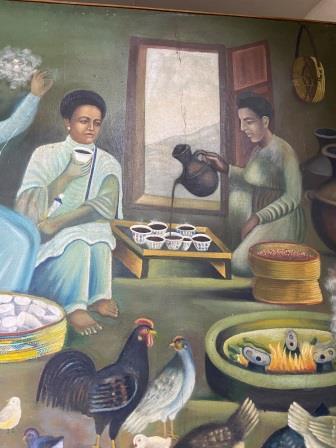
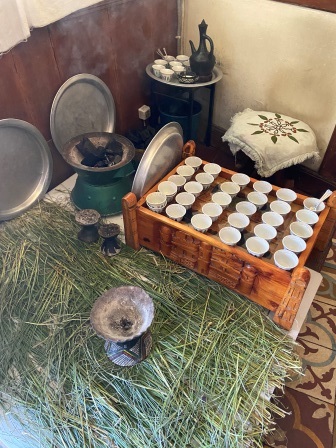
As legend has it, coffee was first discovered in Ethiopia when a goat herder noticed that his animals were becoming very energetic after eating coffee berries. Traditionally the drink was served at a small ceremony or “bunna.” The coffee I enjoyed at several shops around the city was absolutely excellent.

Safety
Before I visited I read several messages in travel forums online that warned that Addis was not such a safe city to visit. Nevertheless, I walked around during the day, normally in busy streets, and never felt threatened or insecure in the least. However, I chose not to walk around the city at night, confining myself to my hotel bar or the immediate vicinity. Walking around the Merkato and on the LRT vehicles I paid particular attention to the threat of pickpocketing.
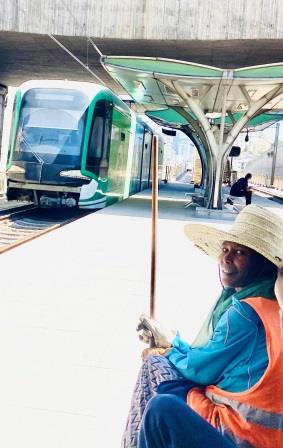
I found the people friendly, in most cases a smile was rewarded by a smile back and often my interest in someone wearing an English football shirt (there were quite a few of those) resulted in short conversations. My longer discussions were limited to professionals in the hospitality industry such as museum stewards, bar and restaurant staff who all spoke excellent English.

On your way….
Without sounding like an advert for Ethiopian Airlines, I would certainly recommend making a stopover in Addis Ababa. It is something I might try again myself in order to see parts of the city I missed and explore more of the country.

There are plans to extend the LRT system and it may eventually reach the airport, the standard gauge railway station and a whole host of other interesting and useful places. If they can improve the fleet reliability and increase carrying capacity it should prove to be a great way for visitors to get around Addis Ababa.


 Trains To Beyond
