Trips in and around the city of Porto
São Bento
São Bento Railway Station in Porto is one of the most beautiful termini in Europe. Built in the French Beaux-Arts style, its main hall features several interior arches and is decorated with beautiful Azulejo tiles.
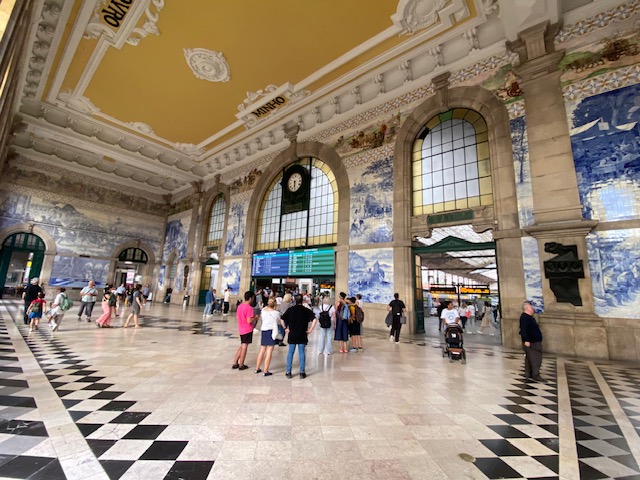
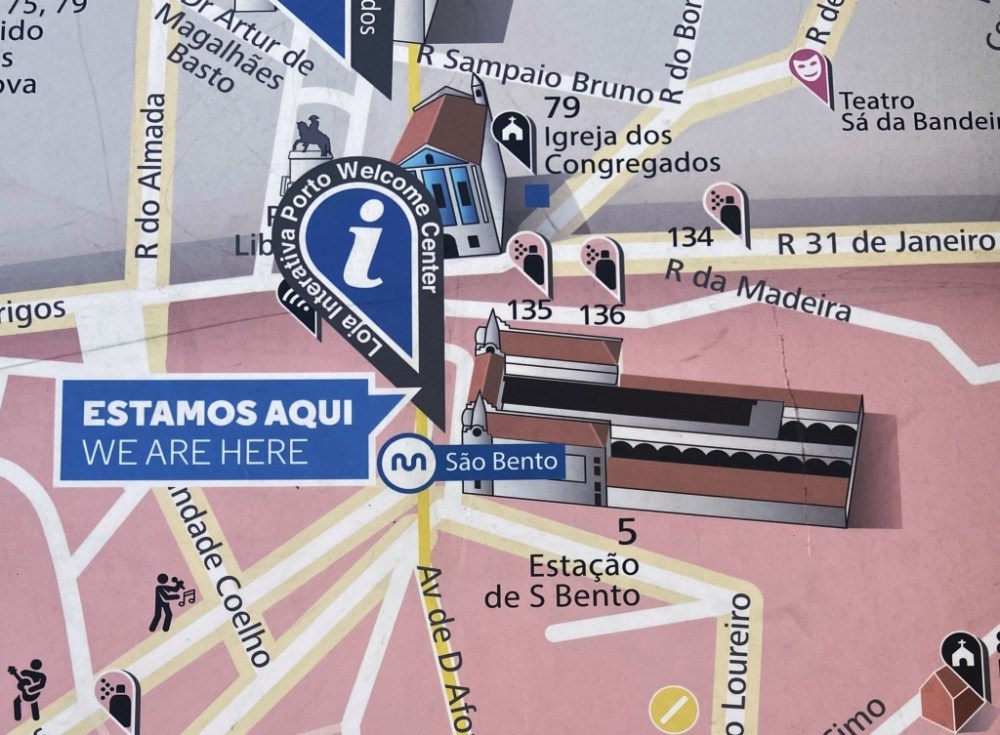
During a recent week-long trip to Porto, we stayed in a small apartment within walking distance of the great terminal. It became the focus of several of the journeys we made in and around the city and beyond.
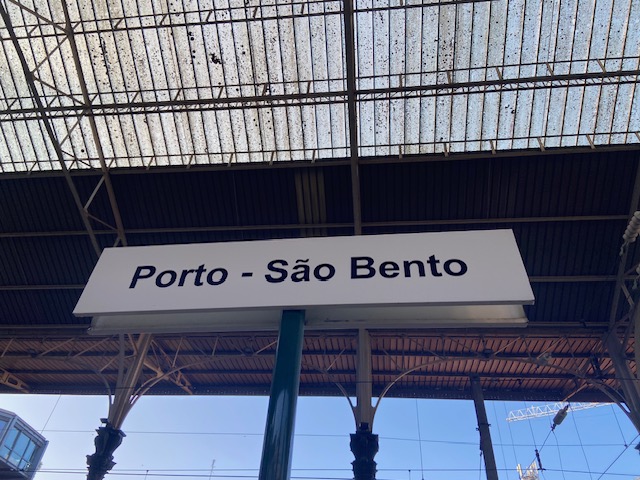
The Arrival of the Railway
The railways came to Porto around 150 years ago with the construction of Campanha Station on the eastern outskirts of the city in 1877. As the network developed over the following decade, plans were made for a line linking Campanha with the historic centre.
The local topography meant that a long tunnel would be needed to access the centre, and this delayed things. Work was finally begun in 1890 and the tunnel itself was completed in 1893. The station at the western end of the tunnel would be constructed by demolishing a derelict convent. A 16th-century Benedictine monastery had once stood on the site and this gave rise to the name, ‘São Bento’ (Saint Benedict).

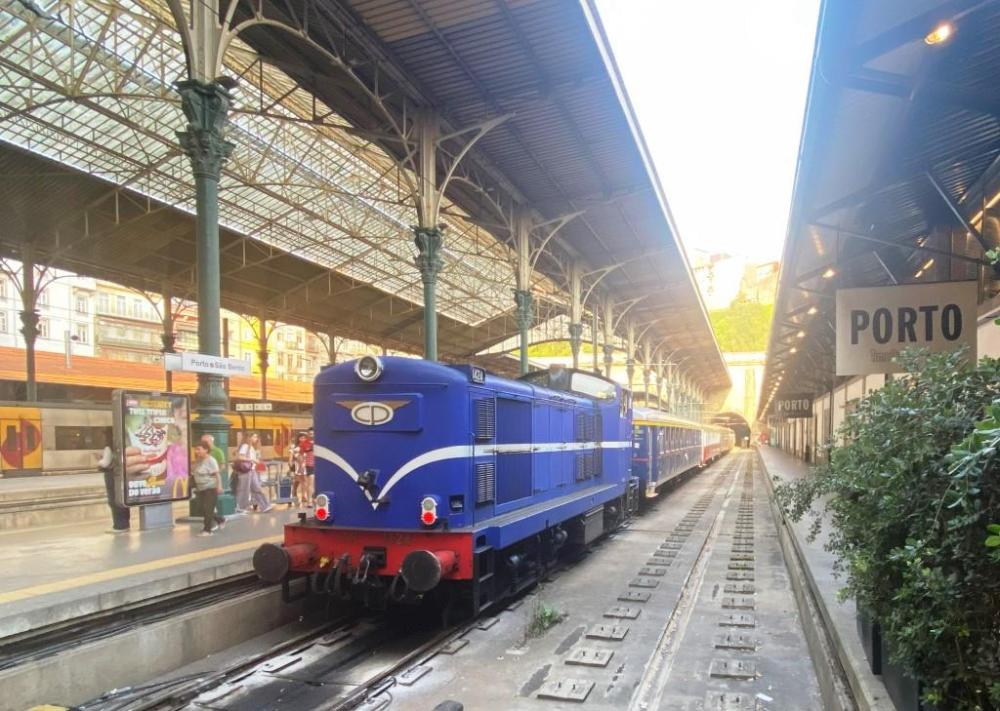
The first trains ran into a temporary station in 1896 but various delays, most the result of political wrangling, would mean that the main station building would not be fully opened until 1916. The magnificent train shed itself is a separate structure and features a glassed-over roof which provides a lot of sunlight.
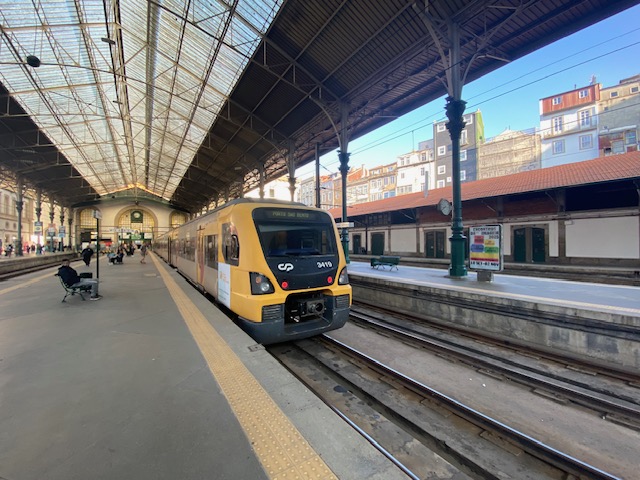
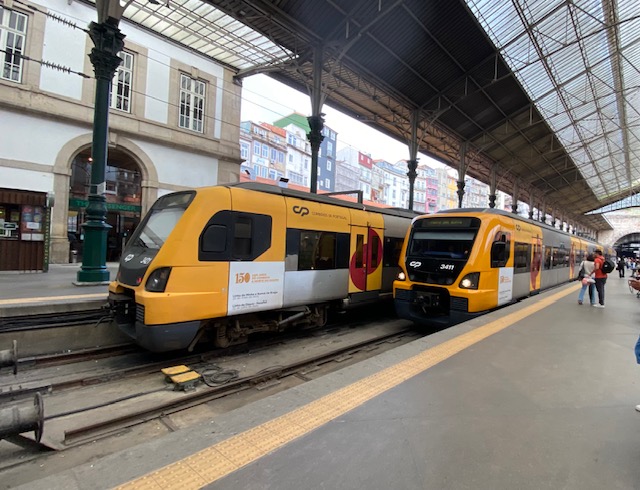
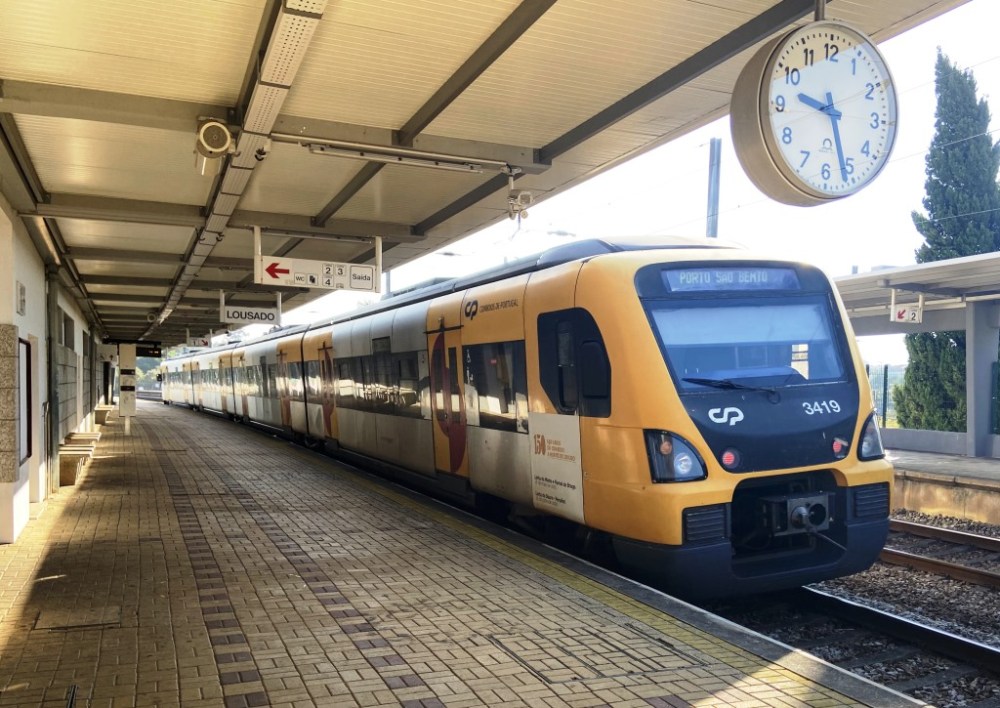
There are six platforms here, and with the exception of the Inter Regional trains heading along the scenic Douro Valley line, most of the services using it today are the yellow Urbano suburban trains which offer four or five services an hour towards their first stop, Campanha.
The Main Building
The first stone of the main building had been laid was by King Carlos I in 1900 but the start of construction, to a design by the architect José Marques da Silva, was actually delayed until 1904.

The basic design is a three-storey building in a U-shape with the main facade facing southwest. The main hall is its most significant feature.
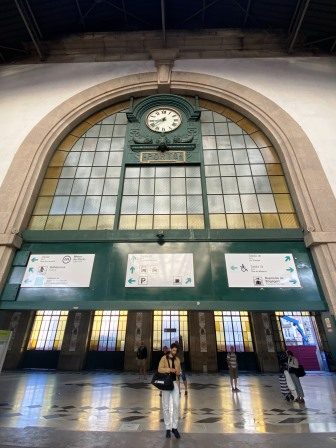
The display of 20,000 Azulejos tiles were fixed to the walls of the hall over a period of 11 years between 1905 and 1916. The work of artist Jorge Colaço, they depict significant moments from Portugal’s history.
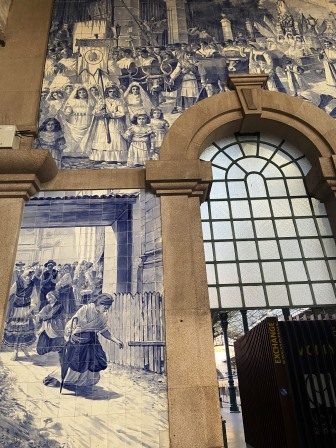
The tiles show landscapes as well as historical events such as the Battle of Valdevez (1140), the arrival of King John I in Porto (1387) and the Conquest of Ceuta (1415).
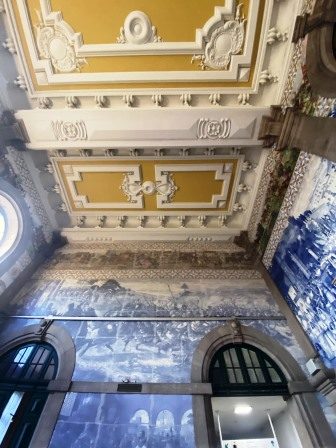
Ironically, one of the most momentous events in modern Portuguese history occurred during their installation with the overthrow of the centuries-old monarchy and its replacement with a republic in 1910.

Not everything is in blue and white. Running along the top of each wall is a colour frieze and there also tiles depicting the history of transport and railways themselves. The whole thing is spectacular and ensures that São Bento has a constant stream of visitors many of whom have no intention of catching trains.

Trips from Sao Bento
We returned to São Bento every day we were in Porto, sometimes to catch trains or sometimes to wander around and marvel at it all.
Some of the trips we made enabled me to discover more about the history of rail-based transportation in and around the Porto area.
There are links to them below. Click on the titles above the images.

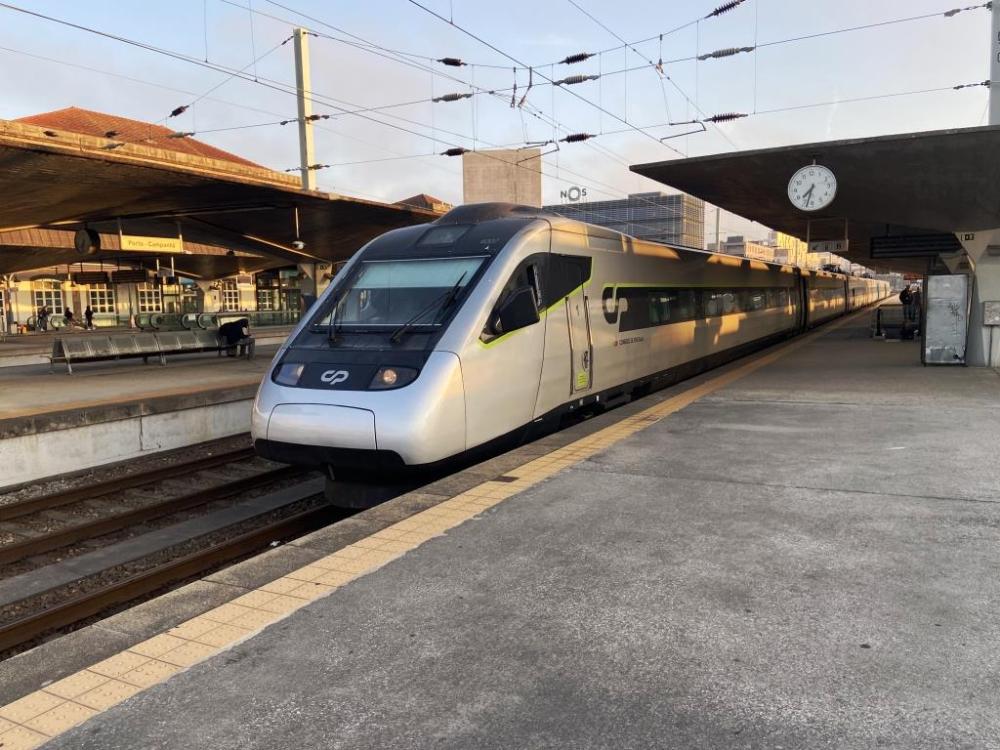



 Trains To Beyond