A walk through Tokyo to celebrate the centenary of the Ginza Line
The Plan
In late 2025, during a trip back to Japan, I spent some time walking between all of the nineteen stations on Tokyo Metro’s Ginza Line. My journey was aimed at celebrating the fact that construction of the line, Asia’s first subway, started almost exactly a century ago in September 1925.
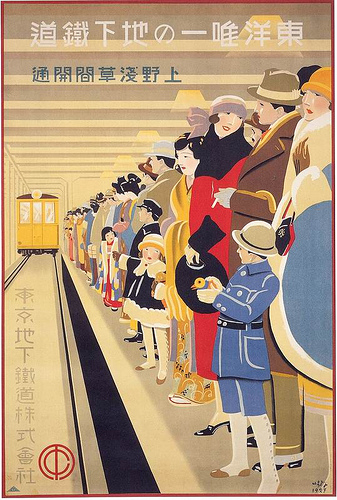
Originally conceived in 1920, the first part of the line was opened in 1927 and it was only fully completed in 1939. It gained the name “Ginza Line” when Tokyo’s second subway, the Marunouchi Line, opened in the mid-1950s. When it first appeared, it was known only by the Japanese word for subway, ‘Chikatetsu’
The Walk
I walked from Asakusa to Shibuya following the route of the 14.3 km (8.9 miles) line. All of it is underground except for the last few hundred metres at Shibuya.
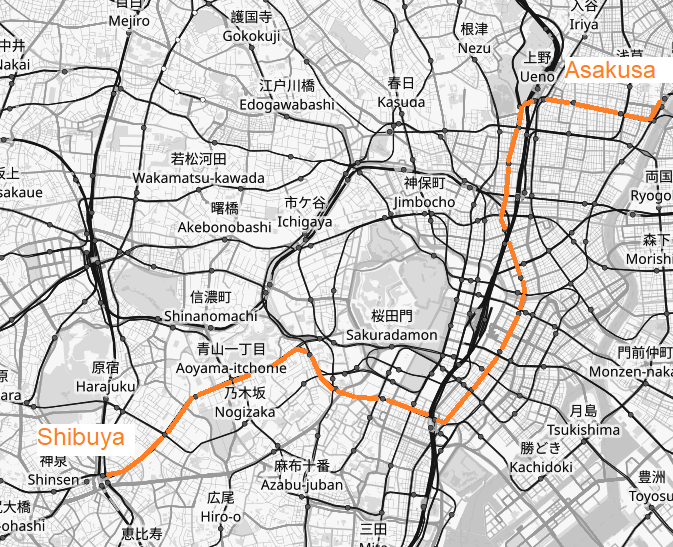
As the line was built directly under the main roads of Tokyo, navigation was easy. I started out by walking 2.2km along Asakusa-dori to Ueno, turned into Chuo-dori and then walked the 5.8km to Shimbashi. I followed Sotobori-dori 2.3km as far as Akasaka-mitsuke and then completed the last 4km to Shibuya by walking along Aoyama-dori.
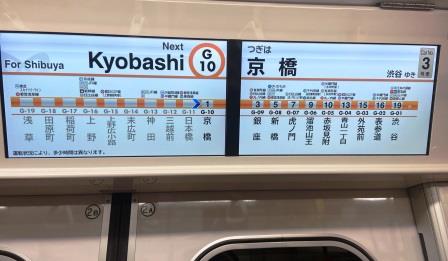
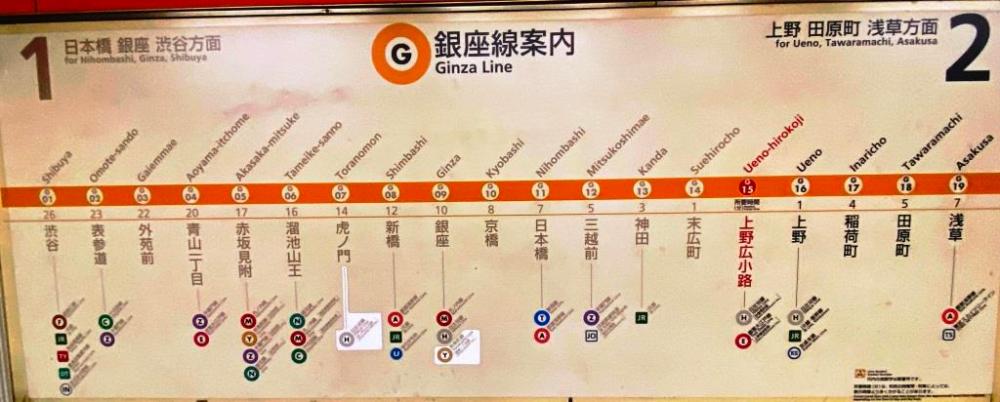
In 2004 Tokyo Metro began numbering their stations in a scheme designed to help foreign visitors. The Ginza Line received the numbers G1 (Shibuya) to G19 (Asakusa).
Whilst Tokyo has changed dramatically over the course of a century, there are still some parts of the 1920s and 1930s city that remain. I decided that during my walk I would try to find elements in and around the Ginza Line stations that remain today and that would have been recognisable to early travellers on the chikatetsu.
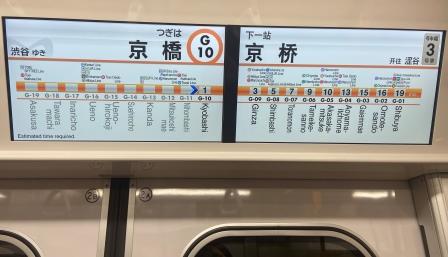
Start the journey here or read on to find out more about Tokyo in the 1920s and 30s and the origins of the Ginza Line.
G19 to G15 – Asakusa to Ueno-hirokoji
G14 to G10 – Ueno-hirokoji to Kyobashi
G9-G5 – Kyobashi to Akasaka-mitsuke
G4-G1 – Akasaka-mitsuke to Shibuya
G1-G19 – Shibuya to Asakusa (Return by Train)
1920s and 1930s Tokyo
During the twenty years that passed between the subway’s conception and its eventual completion, Japan underwent significant change. As it entered the 1920s, eight years into the reign of Emperor Taisho (1912-1926), the nation was becoming more democratic with increased political participation. Universal male suffrage was established in 1925 and numerous political parties emerged.
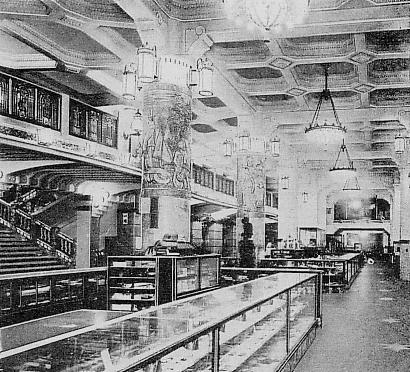
Japan was also being heavily influenced by Western fashion, food and entertainment. Reading magazines, watching movies, frequenting cafes and listening to Jazz all became popular. Many Japanese ‘western’ dishes such as curry, croquettes and omelettes filled with rice first appeared in the 1920s.
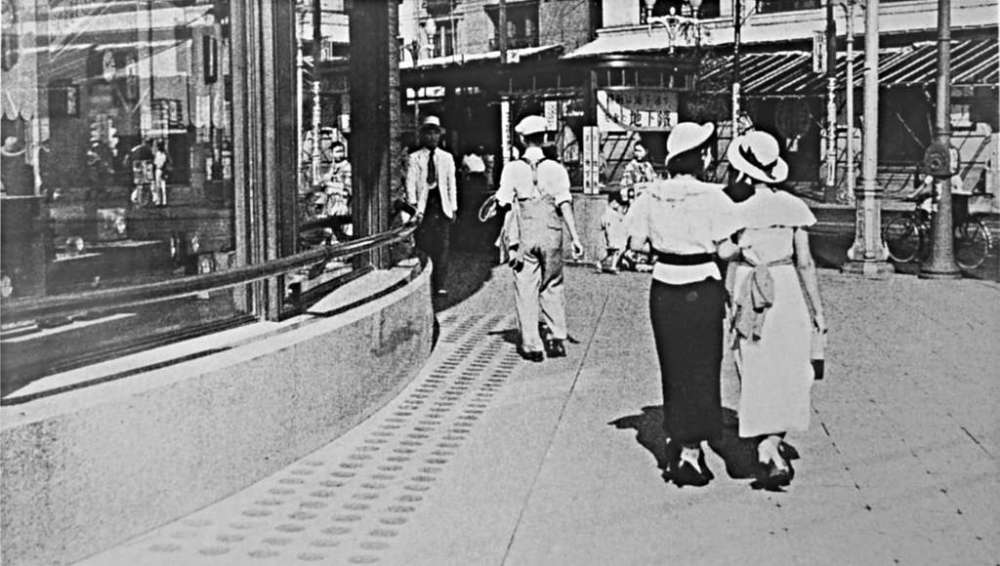
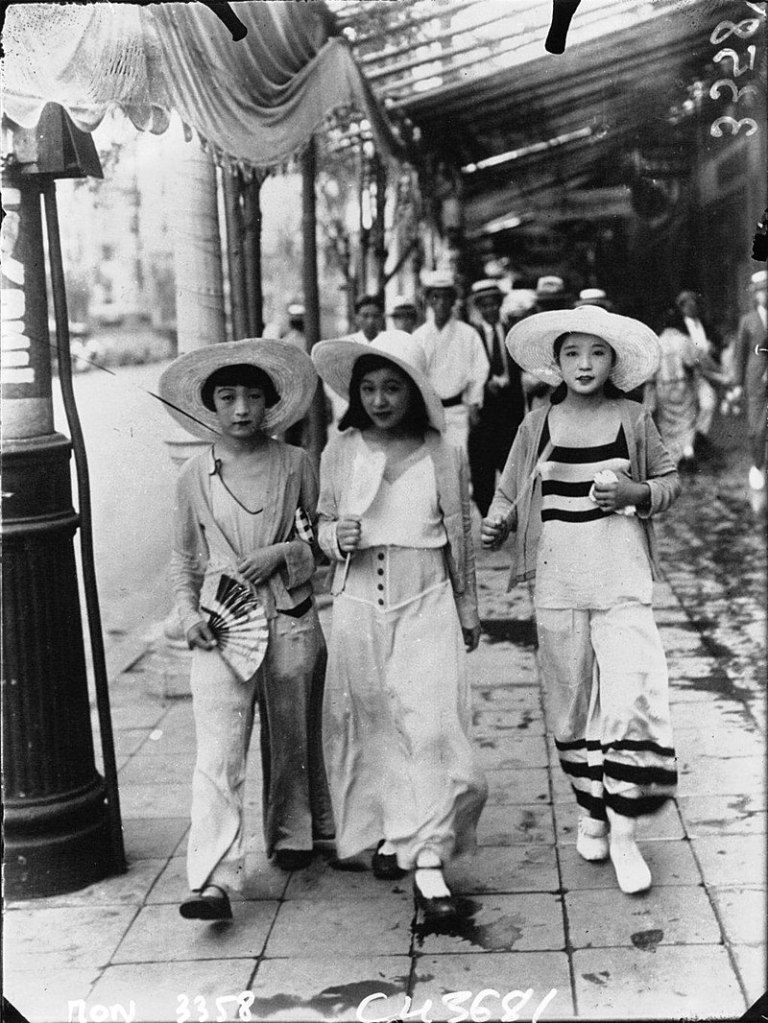
The Japanese suffragette movement also advanced, although females were not to get the right to vote until after the war. ‘Moga’ (short for modern girl) were young, fashionable women; their dresses, hairstyles and makeup were roughly based on the American ‘flappers’.
In the first decade of the Showa era (under Emperor Hirohito 1926-1989) the trend towards democratisation was reversed. By the mid-1930s there was declining public confidence in the political process and a rise in militarism. Increased authoritarianism at home combined with the military’s expansionist ambitions abroad, set the stage for Japan’s entry into World War Two.

The period also presented significant economic problems, including inflation and the Great Kanto Earthquake in 1923, which devastated Tokyo and Yokohama causing widespread loss of life and a serious economic recession.
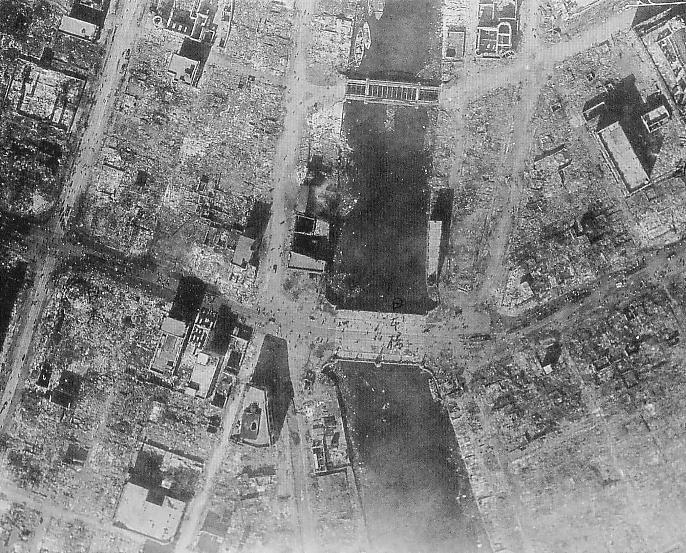
Despite these challenges, Tokyo itself experienced economic growth, particularly in manufacturing and the continued rise of powerful conglomerates (zaibatsu) like Mitsui, Mitsubishi, Sumitomo, and Yasuda. The population also increased rapidly, reaching 4.48 million in 1925 and 7.35 million by 1940.
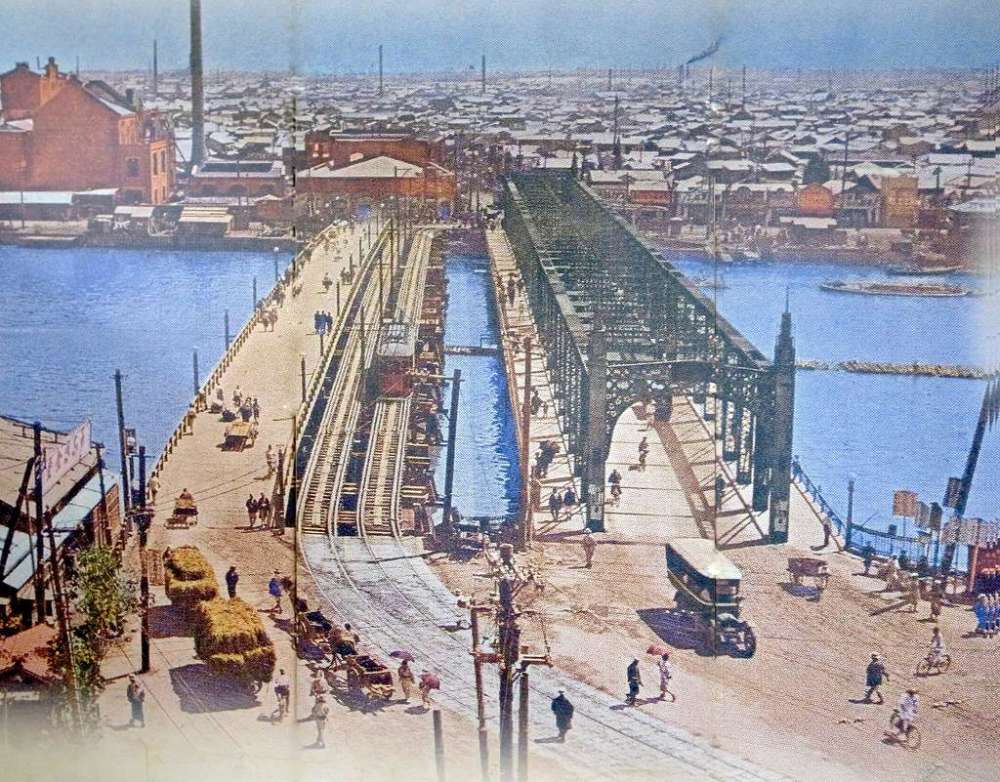
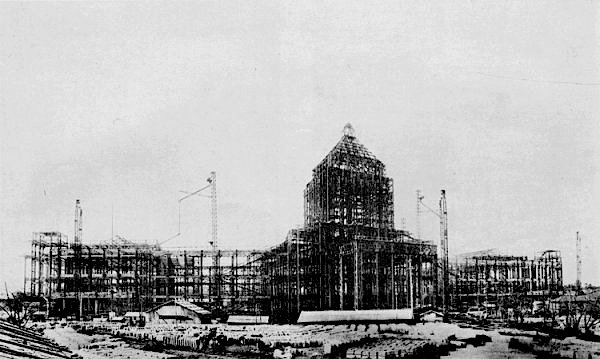
Not surprisingly, the period also saw a lot of construction as the city recovered from the earthquake. Although many of these new buildings were lost in the aerial bombing during World War Two or as part of post war development, it is still possible to find evidence of the 1920s and 1930s in modern Tokyo.
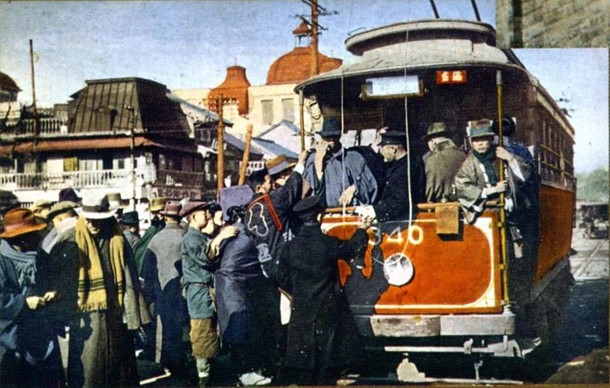
As the city grew, the network of electric tramways expanded to cope and at its peak in the 1930s reached over 200 km with around forty lines in operation. Originally built by private companies, tramways had been taken over by the municipal government in the early 1900s. By the 1920s they were already being regarded as too slow and lacking the capacity to solve the city’s transport problems.
History of the Subway
The development of Tokyo’s subway system began in 1920, when businessman Hayakawa Noritsugu, drawing inspiration from London, founded the Tokyo Underground Railway Company (Tokyo Chika Tetsudo).

Hayakawa began lobbying the Tokyo government, local business and foreign companies for investment. A proposal for a route between Ueno and Shimbashi was made but eventually dropped in favour of a shorter initial section of line linking Asakusa and Ueno.
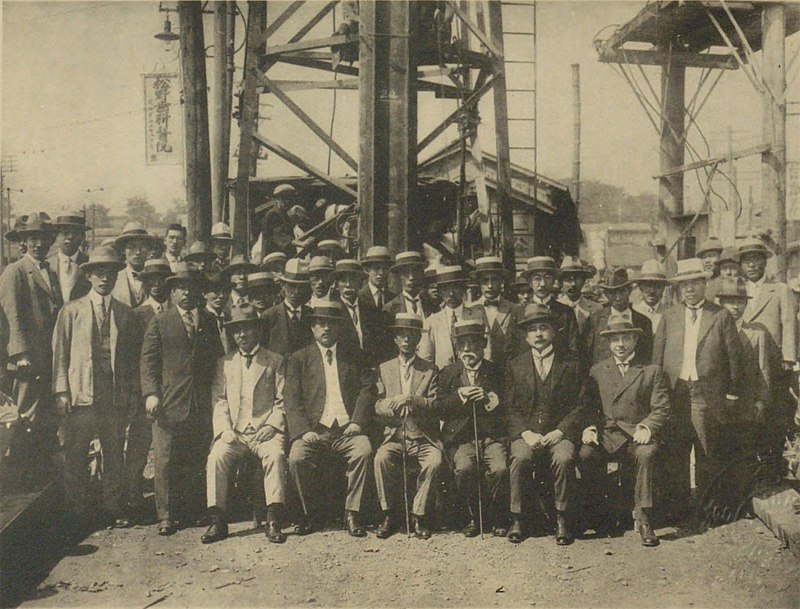
The company made significant progress with raising capital but was then forced to suspend its plans as a result of the economic downturn resulting from the Great Kanto Earthquake in September 1923.

Recovery from the earthquake took time but, with funding eventually in place, construction of the line began on 27 September 1925. The first stretch of the underground railway was designed and built by Okura Dobuku, forerunners of today’s Taisei corporation. The project mostly relied on Japanese expertise and labour.

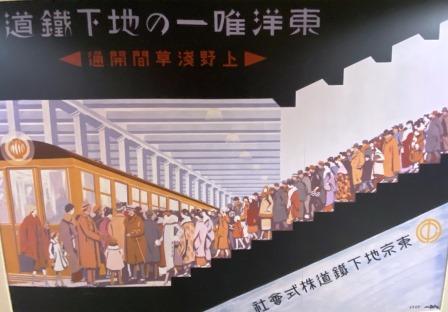
The line from Asakusa to Ueno (2.2km) opened in late December 1927 and was immediately publicised as “the first underground railway in the Orient.” Thousands queued to buy a token, insert it in the turnstile and board the single carriage train for the short ride.
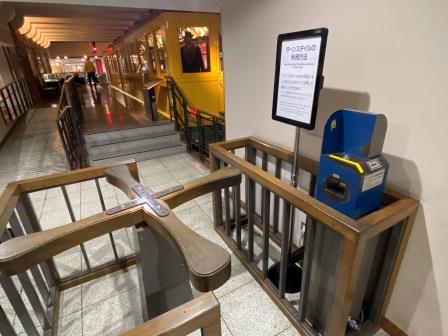
In January 1930, the line was extended to a temporary terminus at Manseibashi (1.7 km) and in November 1931 under the Kanda River to Kanda (0.5 km), with Manseibashi then closing as Kanda opened.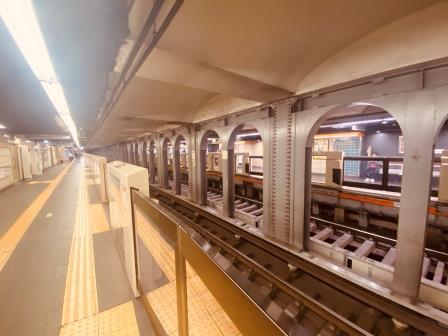
In April 1932, the line arrived at Mitsukoshimae (0.7 km) and in December the same year Kyobashi (1.3 km) became the new terminus. In March 1934, another section to Ginza (0.7 km) opened before Shimbashi (0.9 km) was finally reached in June 1934.

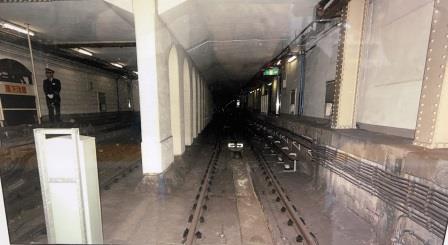
In 1935, a second company, the Tokyo Rapid Railway (Tokyo Kosoku Tetsudo), began construction of a separate line aimed at linking Shibuya with Shimbashi. In November 1938, a 4.4 km section between Aoyama-Rokuchome (now Omotesando) and Toranomon was opened and then a month later extended the 1.1 km to Shibuya.
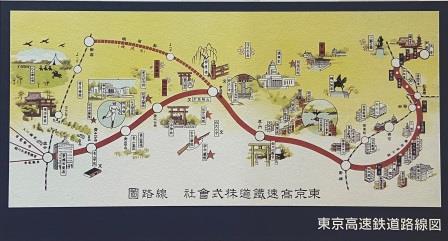
The final link opened in January 1939 to Shimbashi, where a separate platform (later employed as a turnaround siding) from the line to Asakusa was used. From April 1939 joint fares were offered and in September direct operation connecting the two lines began using the original 1934 Shimbashi platforms.
Network Expansion
The two companies were merged under the nationalised Teito Rapid Transit Authority ( or Eidan Subway) in July 1941. In the 1950s, with the arrival of the Marunouchi Line, the subway was renamed the Ginza Line.

The Ginza Line became increasingly crowded in the postwar economic boom, although the new Hanzomon Line began to relieve its traffic in the 1980s. The newest station on the line, Tameike-sanno, between Akasaka-mitsuke and Toranomon, opened in 1997 to provide a connection to the newly built Namboku Line.

The line, station facilities, and rolling stock, were inherited by Tokyo Metro after the privatization of TRTA in 2004. Today, Tokyo Metro is held jointly by the Japanese Government, Tokyo City Government and private shareholders.
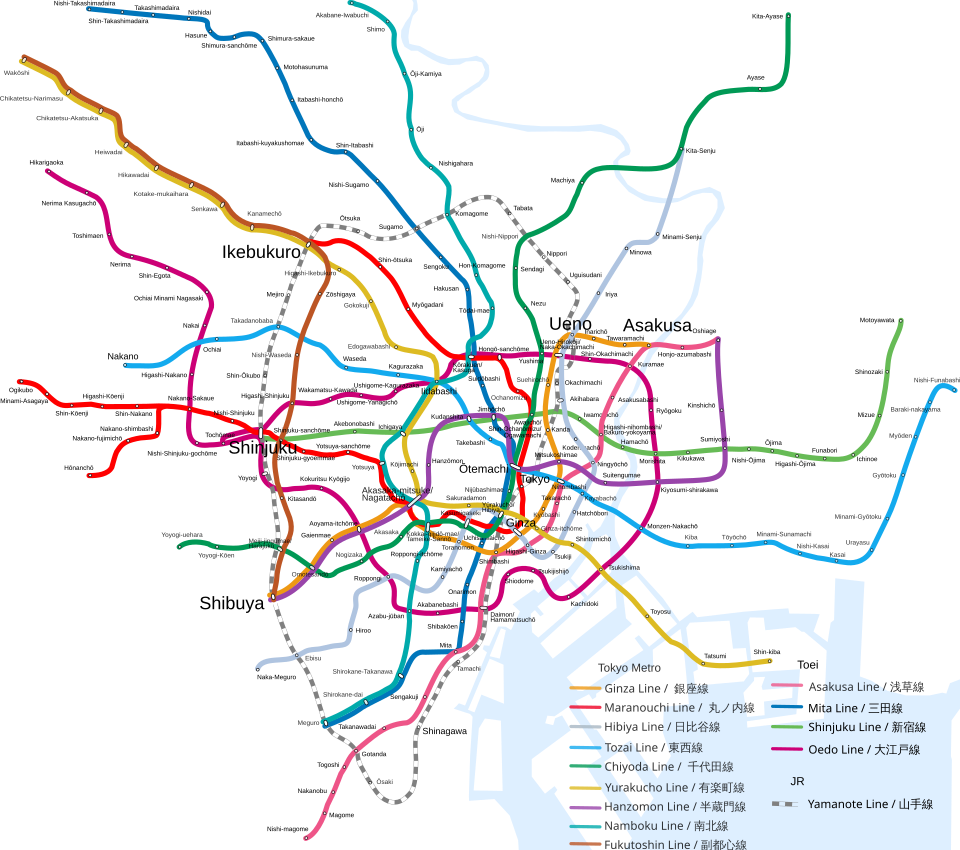
The Ginza Line is now one of nine Tokyo Metro lines which together with the four Toei lines make up the Tokyo network. The first line from Asakusa to Shibuya is just about discernible on the map below which shows both systems and the JR Yamanote loop.
Rolling Stock
The Ginza Line uses 1435 mm (4 ft 8+1⁄2 in) standard gauge track and third rail 600 V DC electrification. The Marunouchi Line (1955) was built with the same system, but all subsequent lines used 1500 V DC overhead power supply and most employed narrow gauge (1067 mm (3 ft 6 in) rails to accommodate through services from private railways.
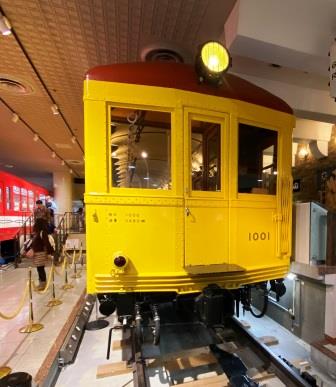
The Ginza Line trains have the smallest profile on the network, even those on the Marunouchi line are a little larger. The first trains on the line were the Tokyo Underground Railway 1000 series introduced in 1927.
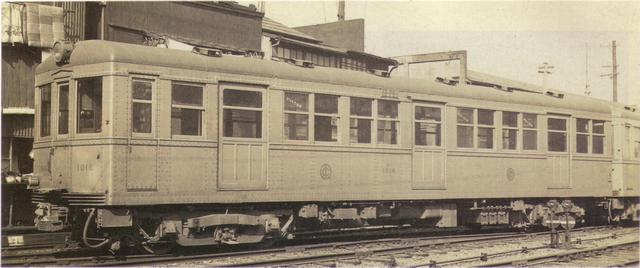
As the line was extended and trains, which were initially formed of one or two cars, gradually got longer more vehicles were built in small batches. Minor changes were made with each build; the 1100 series arrived in 1930 and the 1200s in 1934.

The, initially separate, Tokyo Rapid Railway ordered thirty similar cars in 1938 when its Shimbashi to Shibuya section opened. Designated ‘Series 100’ and originally turned out in a different green and cream livery, they were eventually repainted in the same yellow colours as the older trains after unification of the two systems.
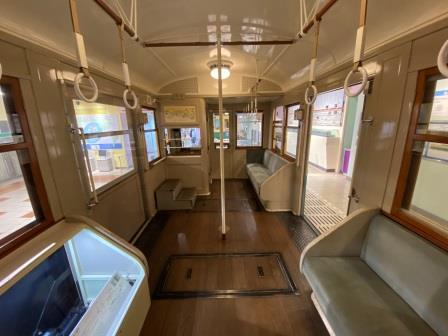
After World War Two, more cars were ordered in small batches as service frequency increased and trains were gradually lengthened again. By 1966 all trains were formed of six coaches. The series numbers incremented from the 1300s in 1949 to the 1900s in 1958. Withdrawal of most of the pre-war vehicles came in 1968.
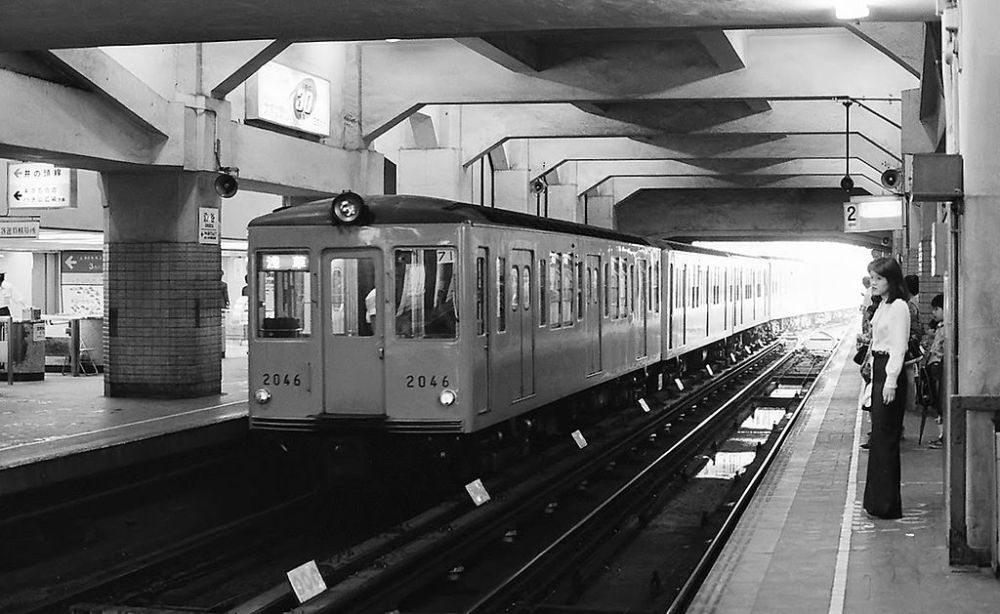
The final two batches which followed the basic pattern of the originals were of a significantly improved design. The 2000 series driving cars arrived between 1960 and 1963 and the 1500N intermediate series in 1968. A final extra 8 cars were built as late as 1981. Some of these trains, the last on the line to be fabricated from steel, continued in service until 1993.
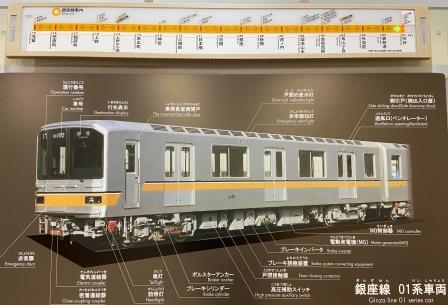
A comprehensive fleet replacement began in the early 1980s with a total of 37 Tokyo Metro 01 Series aluminium six-car trainsets entering service between 1983 and 1993. A 38th was added in 1997 for the opening of Tameike-sanno station.

The smaller profile of the original tunnels meant that, unlike new trains on other lines, there was no space for air-conditioning. Eventually, a slim line cooling unit was found and trains built after 1990 were fitted with it and earlier ones retrofitted.
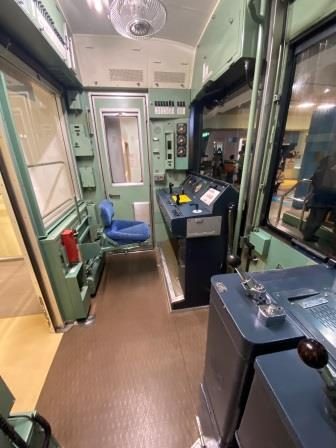
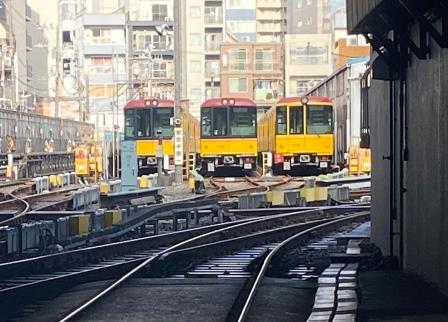
The first of the current fleet of 40 Tokyo Metro 1000 series trains entered service in 2012 and by 2017 they had replaced all of the 01 series. They are painted in retro colours that recall the yellow livery of the original Tokyo Underground railway 1000 trains.

 Trains To Beyond
