Bengaluru
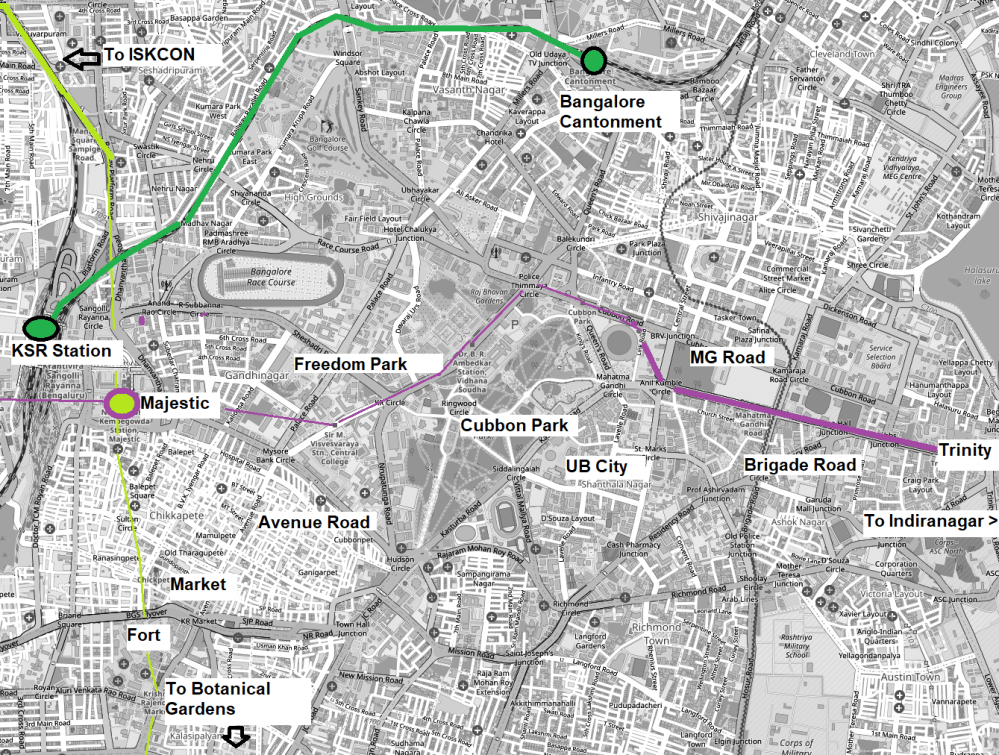
I flew into Bengaluru from London on a British Airways 777, arriving just before 5am on a Friday morning in the middle of January 2026. I spent three nights in the city, exploring on foot and by metro. I also made a short trip by train from Cantonment Station to the main KSR terminus.
Arrival
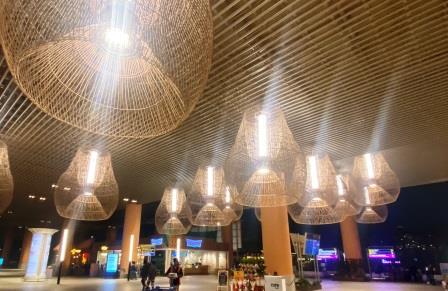
My first impressions were positive. The arrival experience at Bengaluru Airport, one of the most modern in India, was excellent. Immigration with an e-visa took just a few minutes and the terminal was spacious and clean. It had particularly stunning lmpshades.
Unfortunately, the flight arrived at 5am, perhaps not the best time to go to the centre. Happily, there were plenty of places to wait in the arrivals part of the terminal. I grabbed a coffee in the Mitti Café and made it last for more than an hour. 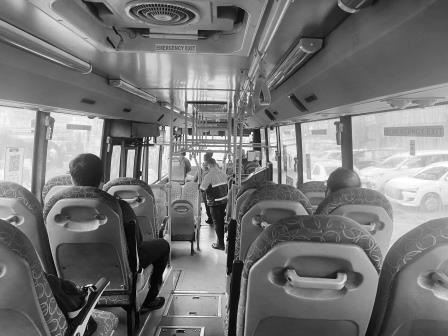
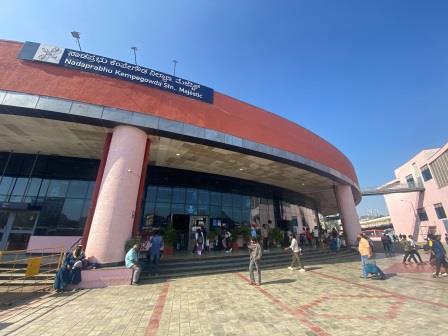
At around 7am, still in no real rush to get to the city centre, I caught the BMTC local airport bus. It cost only 250 Rupees (the Rupee was about 120 to the UK pound) and took around two hours. The bus dropped me at Majestic, Bengaluru’s busiest transport hub, just opposite the Metro station and the main railway station.
Around Majestic
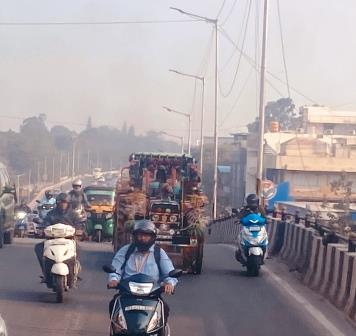
Bengaluru (Bangalore), with eight million inhabitants, is the third most populous city in India. It is one of the main centres for the IT industry and known for its modern trendy lifestyle. The climate is pleasant all year-round, with cooler months in December and January. It was 28 degrees Celsius the day I arrived.
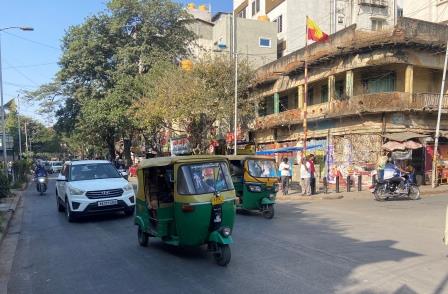
The Grand Sigma Hotel was just a few minutes’ walk from Majestic, Despite it being only just after nine thirty they agreed to an early check in. We did a kind of deal where I promised that I would check out around the same time three days later when my stay was up.
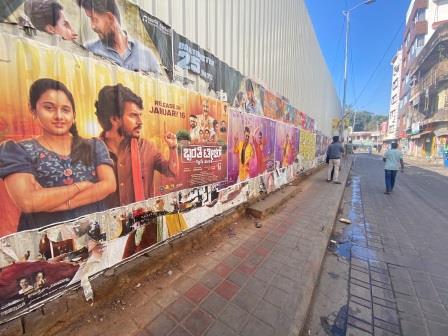
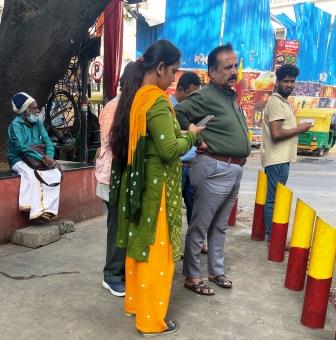
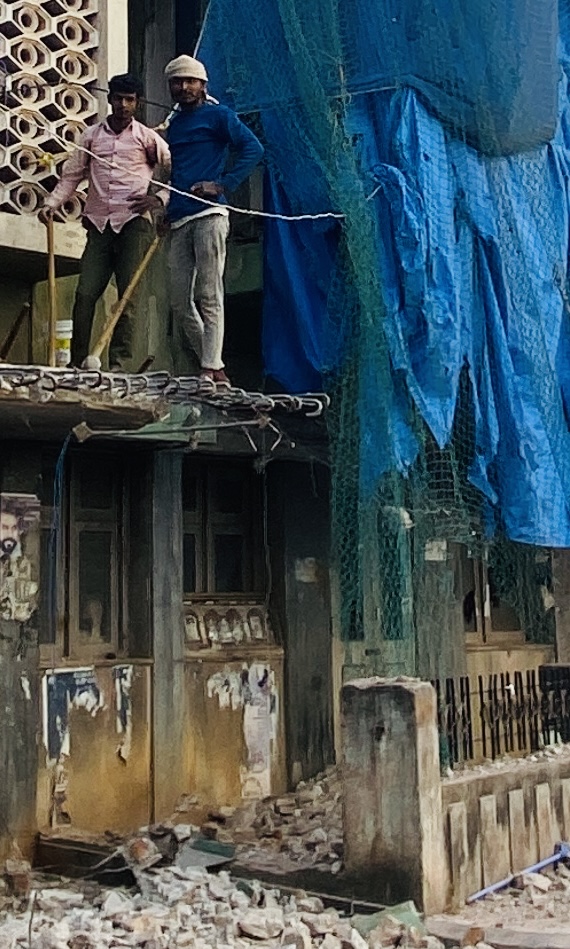
I had asked for a quiet room and I got one on the third floor. It probably would have been quite tranquil if they had not been demolishing the building next door. I tried to catch up on my rest but managed only a fitful sleep.
In the afternoon I went for a walk around the neighbourhood. The whole area around the station was, predictably perhaps, filled with hotels and restaurants. Most places seemed to hedge their bets and offered North and South Indian, Veg and non Veg as well as Chinese food. The local people seemed extremely friendly and I received some great smiles.
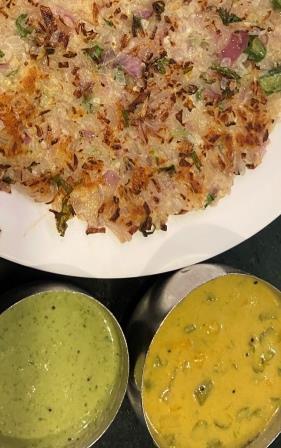
Kannada was the official language in the state of Karnataka, but English and Hindi were widely spoken. On my first night I had a few beers in a pub around the corner where a mug of Kingfisher draft went for Rs 175. I met a retired university lecturer and tried a few words of Kannada on him. “Dhan’yavadagalu” was thank you. I made some valiant attempts but never seemed to get the pronunciation right.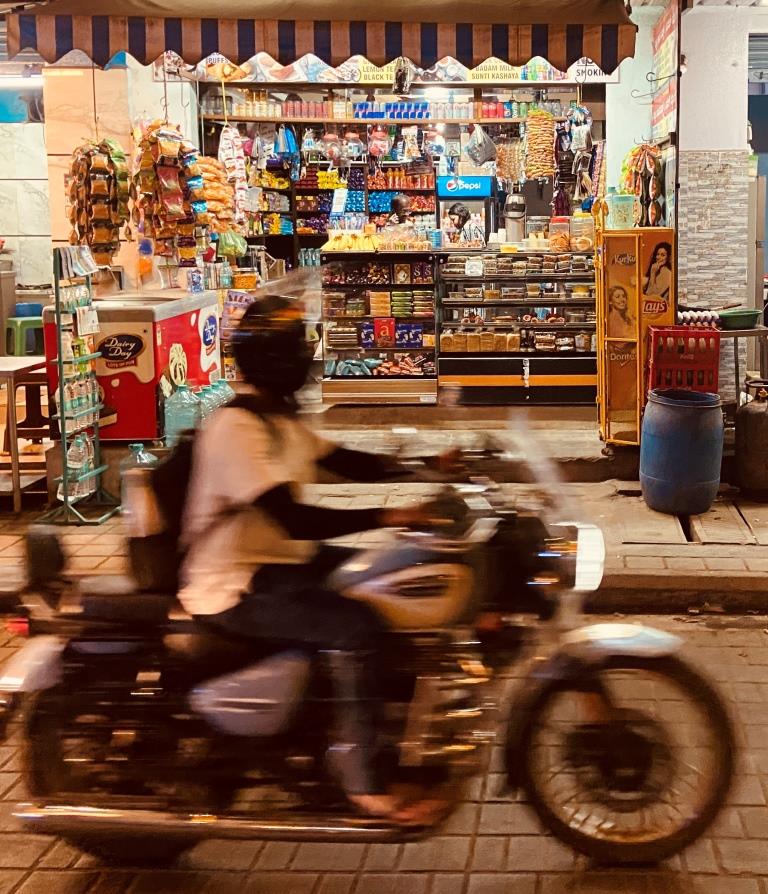
Freedom Park
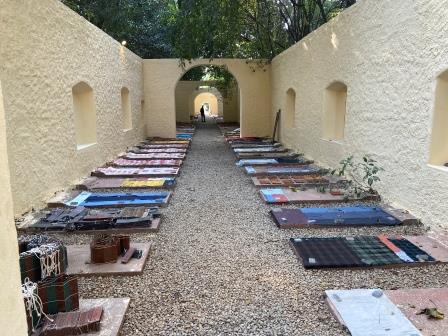
Bengaluru is nicknamed the “Garden City,” on account of its many public gardens and tree-lined avenues. About twenty minutes’ walk from the hotel was the Freedom Park, a major urban park built on the site of the former Central Jail.
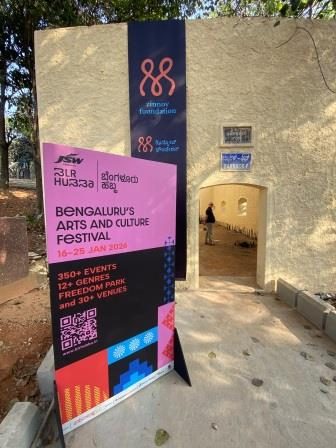
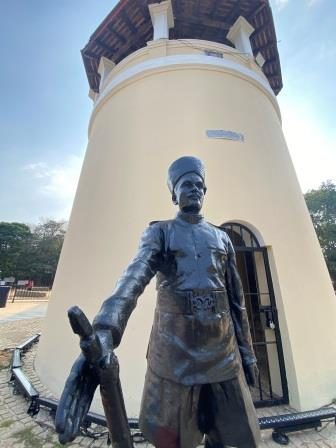
The old jail dates back to the British colonial era. It was used to detain freedom fighters, and later, during the Emergency in the mid-1970s, political leaders were imprisoned here. The jail closed in the early 2000s and was redeveloped into a park. The old barracks, watchtower and cells remain.
It was acting as one of the main venues for Bengaluru’s Arts and Culture festival which was being held from 16th January and promised 350 events in the park and at 30 other venues around the city.
Cubbon Park
A short walk on from Freedom Park brought me to Cubbon Park, the city’s original municipal gardens established back in 1870. Spread across hundreds of acres, it is known for its network of walking paths and impressive colonial-era buildings. It was a great place to escape to and I returned to it a couple of times during my stay.
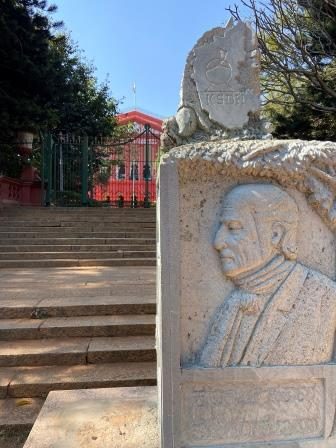
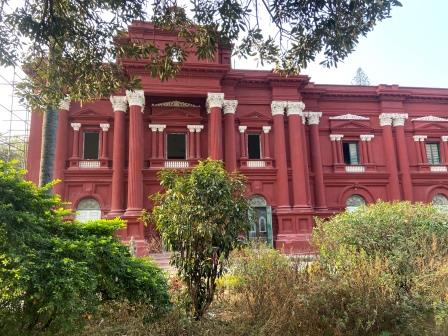
The landmarks inside the park include the Karnataka High Court and (below) the State Central Library. There were also several statues of historical figures including one (above) of Sir Mark Cubbon, the British Commissioner of Mysore, himself.
The park rules were posted on signs outside: no picnics, no group activity involving more than 20 people, no smoking, alcohol or drugs, no single use plastic and on the roads that ran through the park, no honking. There were safety instructions on another sign: I was to beware of bees and snakes. There was a larger green sign inside with more warnings: ‘nuisance’ was not allowed and birthday celebrations were prohibited. 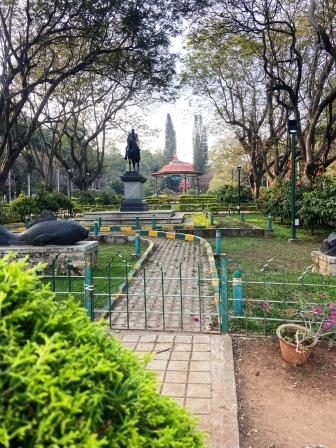
The Government Museum, dating from 1865, was described on the signs outside as the second oldest archaeological museum in southern India. Right next door was the modern Venkatappa Art Gallery, which displays works by the celebrated artist K. Venkatappa and others.
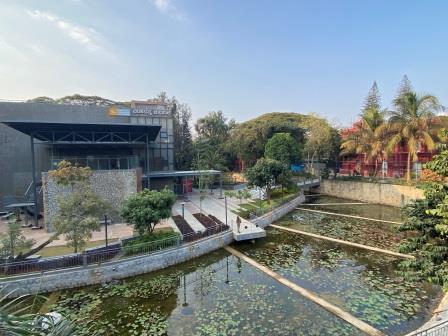
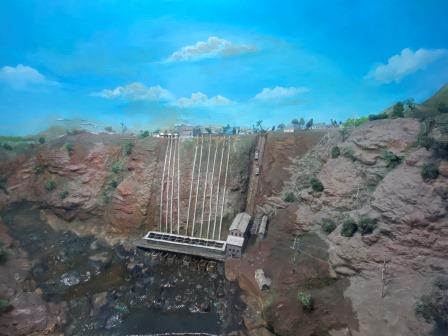
Also located just outside the park was the science museum named after Sir M. Visvesvaraya. The museum is dedicated to making science fun and was filled with working models as well as historical exhibits. For me the most interesting part was learning about Visvesvaraya himself.
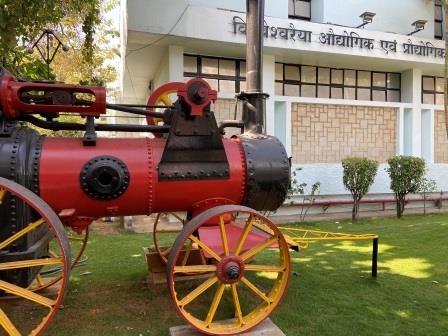
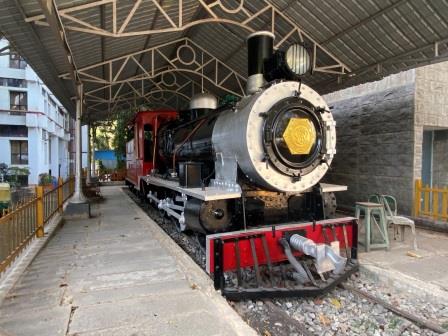
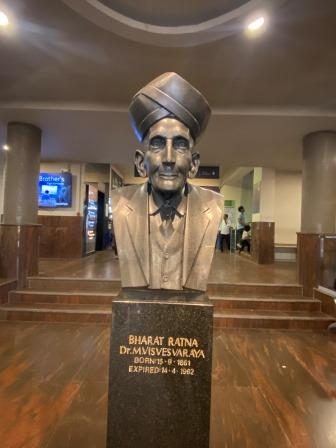
Mokshagundam Visvesvaraya (1861-1962) played a key role in transforming the Kingdom of Mysore into an industrial centre. He established soap factories and steel works, designed dams and implemented pioneering flood protection mechanisms. He is known as the father of modern Indian engineering, and his birthday (15th September) is celebrated every year as Engineer’s Day.
Avenue Road
The next morning, I went for a stroll along Avenue Road, one of the busiest shopping streets in the city. I began my walk on the corner of K G Road where a couple of Hindu Temples, Sri Anjaneyaswamy and Ranganathaswamy stood opposite each other.
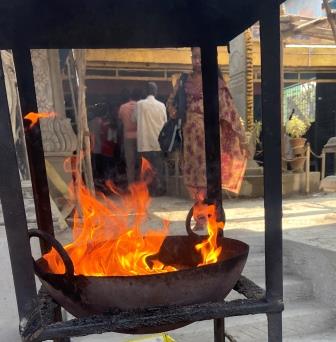
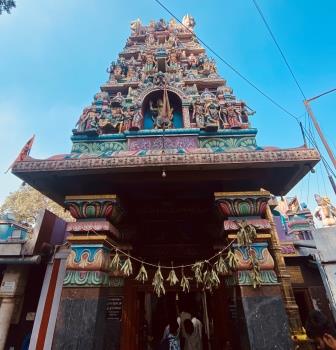
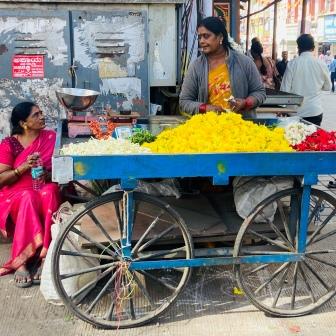
From here Avenue Road stretches through the Chickpete district towards the city’s main market. The shops here were clustered by business type and the first section was dedicated to books and stationery. Further along were textile shops and flower sellers offering jasmine garlands.
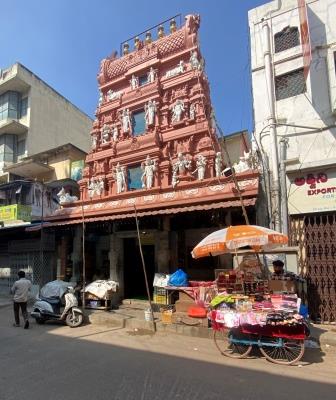
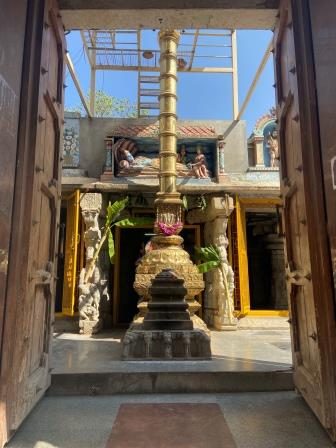
I left Avenue Road briefly to reach Sri Dharmaraya Swamy Temple. Inside, it felt peaceful compared to the chaos outside. It is believed to be over 500 years old, making it one of the city’s oldest. 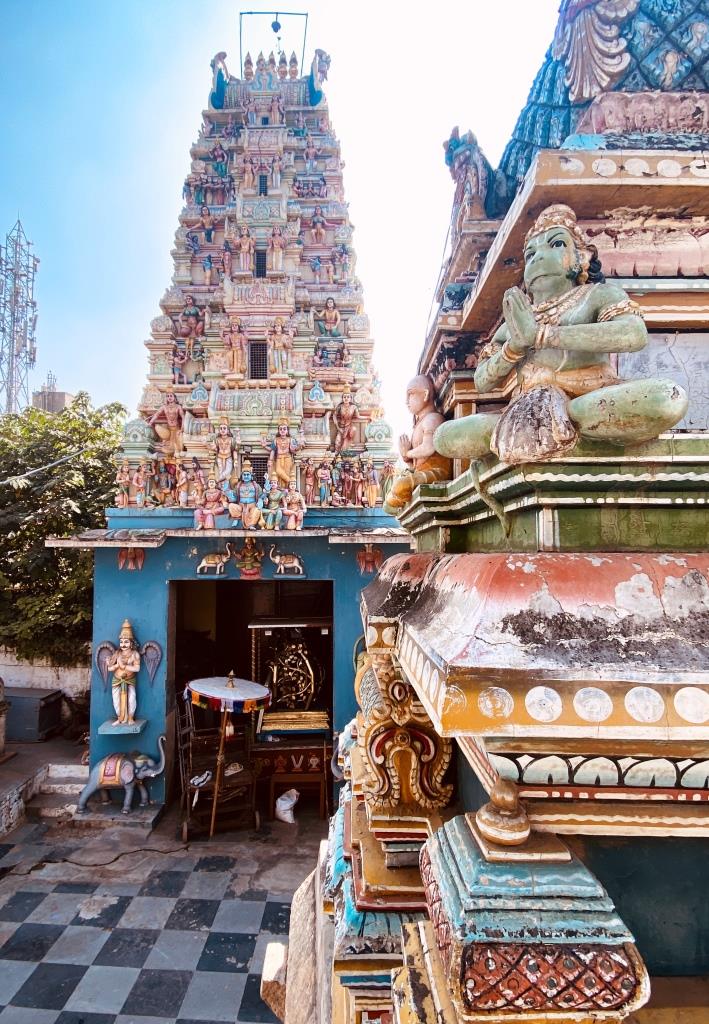
The streets around the market were known as ‘petes’. Each one of them specialised in a different thing. The word pete meant market and the various names came from the things they sold. Balepete was for bangles for example, whilst Kumbarpete was for pottery. Avenue Road itself used to be known as Doddapete, literally ‘big market’.
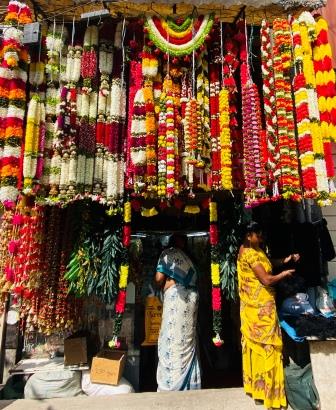
K R (Krishnarajendra) Market itself was divided into two. A historic red-brick building from the British era was selling fruits, vegetables, spices, grains, lentils, flowers and puja (religious) materials. A newer, multi-storey structure was filled with vendors selling tools, electronics, utensils, household goods and more.
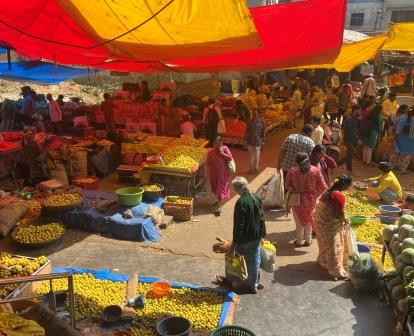
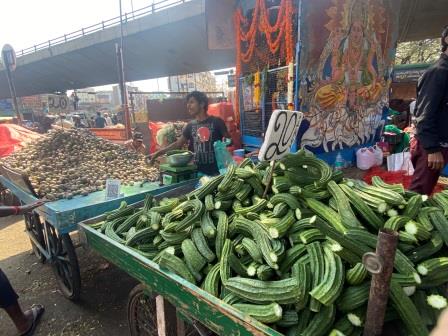
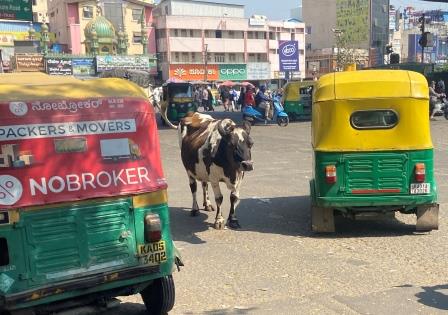
After wandering around the market for a while, I came to the end of Avenue Road and crossed over Mysore Road towards Bengaluru Fort. There was a cow in the middle of the intersection doing its best to stop the traffic.
The Fort is one of the city’s most important historical landmarks. The Delhi Gate (Main Entrance) is the most prominent surviving part. I strolled around admiring the thick stone walls, arched passages and open courtyards.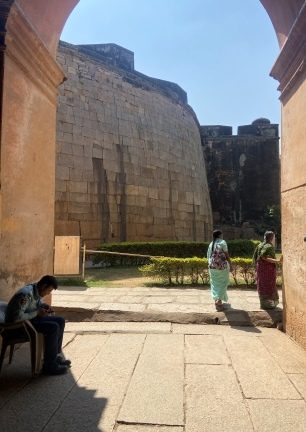
Namma Metro
The first section of the Namma Metro in Bengaluru, the Purple Line, was opened in October 2011. There are now 96 km (60 miles) and three operational lines (Purple, Green, and the recently opened Yellow). Already India’s second-largest network, the system is now expanding with two more lines (Pink and Blue) and another 220 km of route planned to open by 2030.
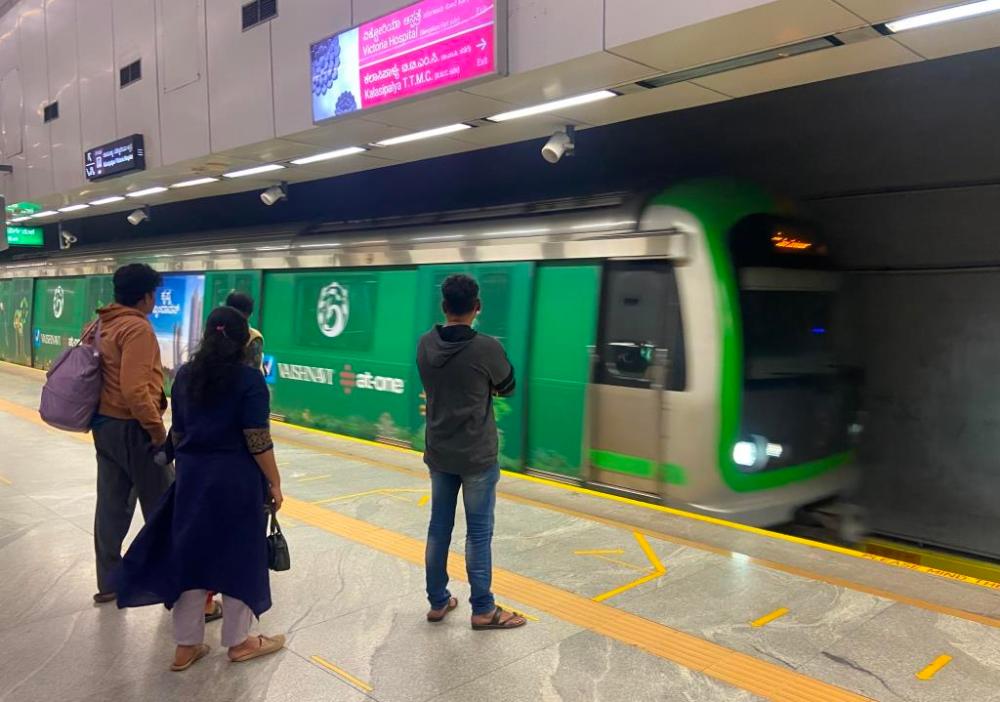
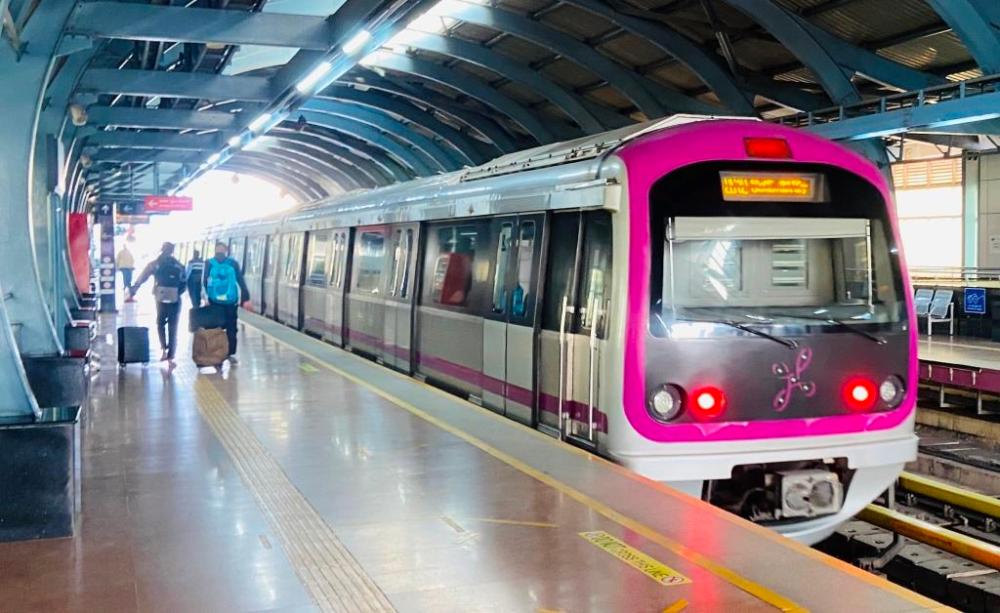
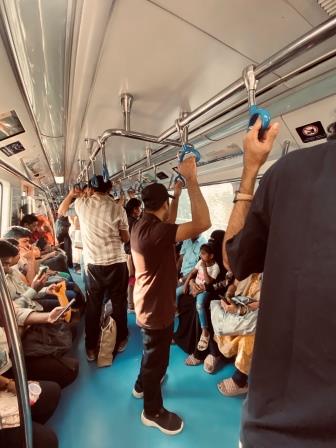
The network was pretty easy to negotiate, the purple line and the green line formed the shape of a cross with the point where they met was Majestic. The livery of the trains was colour coded for simplicity.
Ticketing on the metro was on a by distance rather than zonal or flat fare system. There was a map showing the origin station at the centre, with the fare to the two closest stations set at 10 rupees and then to the next two at 20, the next two at 30 and so on.
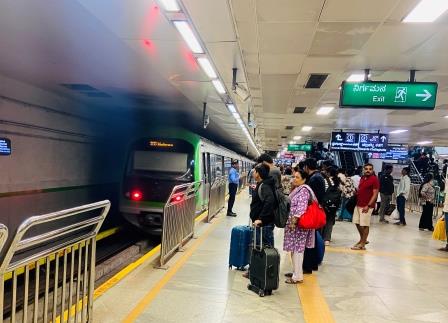
For single journeys, the system used tokens inserted into the barriers. The tokens were returned to the user at the entry gates and needed to be retained until they were swallowed by the exit gates. A lot of people were using cards and phones to get through.
Cash payment seemed rare, judging by the lack of change available at the ticket booth. Most payments were being made by the new IP (India pay) system that seemed to be installed everywhere but was not available to those without a local mobile phone number.
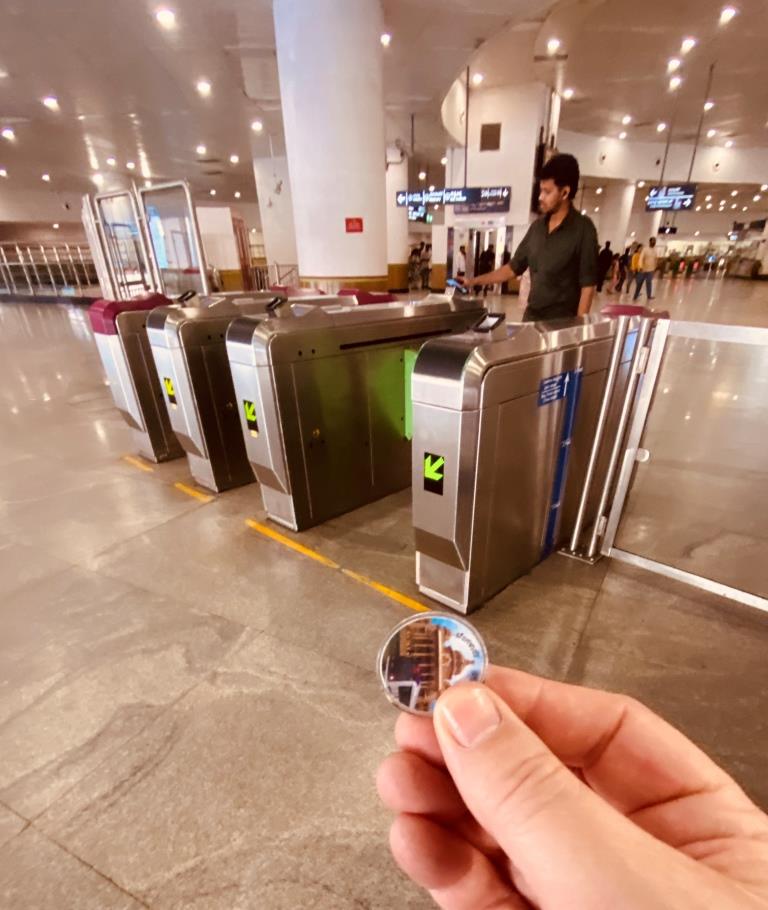
Security on the metro was extra tight. Entry to the system was through a metal detector with another check by an employee with a wand. All bags being brought onto the system had to go through airport-style x ray machines. Among the prohibited items were, unsealed plant saplings, tear gas, corpses and manure of any kind.
Botanical Gardens
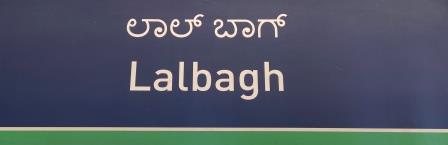
I caught the Green Line out to Lalbagh Metro Station, just a short walk away from the entrance to the botanical gardens.
Lalbagh is a 240-acre green space commissioned by Hyder Ali in 1760 and completed by Tipu Sultan.
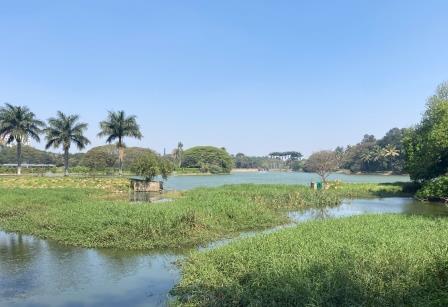
There was a small queue to get in. At the security checkpoint the plastic bottle I was carrying was confiscated. First, I walked around the whole of the 40-acre lake. There were very few people about and it was very pleasant. 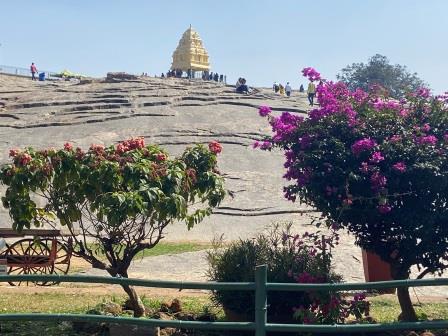
The ancient rock formation in the centre of the park is over 3 billion years old. It offered one of the best viewpoints in the garden. I climbed to the top and got a sweeping view of all the greenery and the city skyline beyond.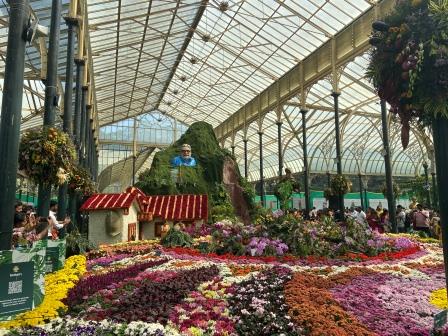
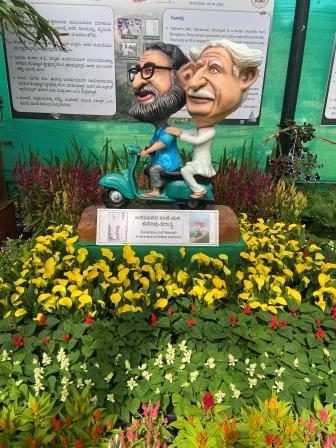
There were more people queuing to see inside the glass house. It was inspired by London’s Crystal Palace and built in 1889. Throughout the place were celebrations of the life of Kuppali Puttappa Poornachandra Tejaswi (1938 – 2007) a writer, novelist, farmer, photographer and ornithologist. He was the son of the famous poet, Kuvempu.
MG Road & Brigade Road
Transferring to the Purple Line, I caught a train to Trinity. Trinity Church was built in 1851 for a British regiment. It is considered the largest “military” church in southern India.
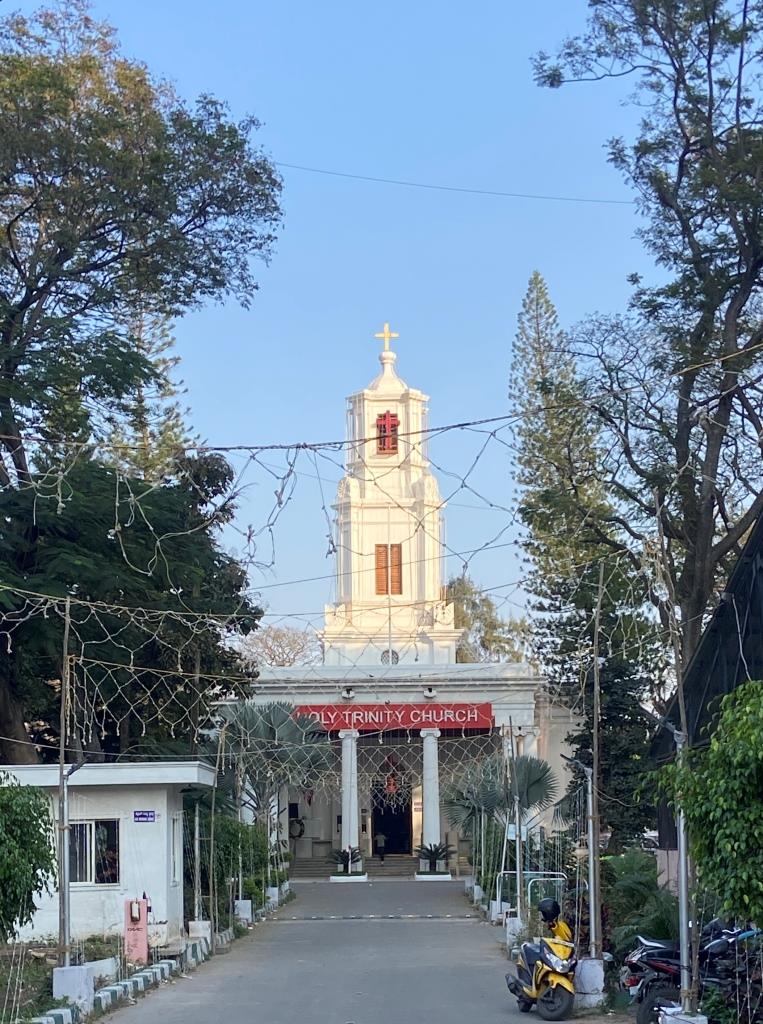
From Trinity Circle, Mahatma Gandhi (MG) Road runs west for almost two kilometres. It is one of the busiest streets in the city and is lined on one side with office buildings, restaurants and stores. I started to walk along it.
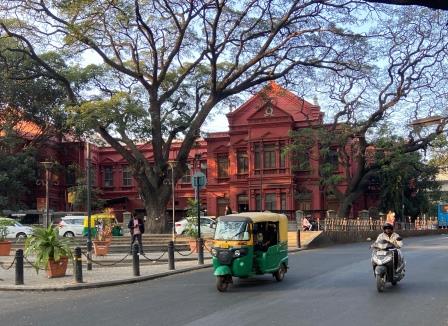
At the corner of Residency Road was Bengaluru’s City Civil Courts (Mayo Hall) originally built to honour the memory of Richard Bourke the 4th Viceroy of India.
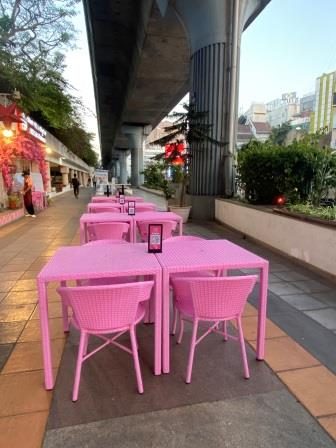
The Metro tracks are elevated above MG Road and about halfway along is MG Road station itself. It is already a busy stop but it will soon become an interchange when the Pink Line (currently under construction) is completed.
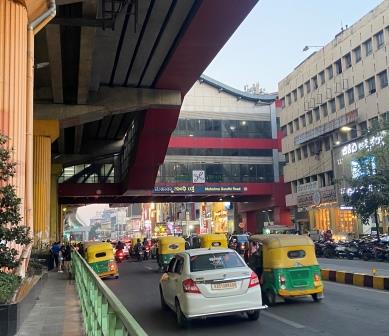
For some of its length, MG Road runs parallel with Church Street, another busy thoroughfare. The ‘1 Sobha’ shopping mall, located at the end of the street, is typical of the new retail centres found around India. 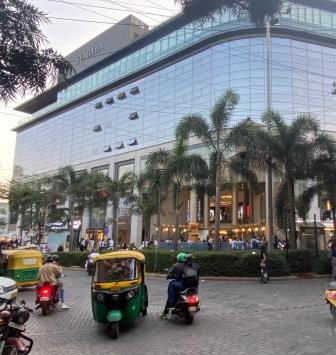
To the west of MG road is UB City, India’s first luxury mall and a major mixed-use high-rise complex. It opened in 2008 and was developed by the United Breweries Group. The complex features four main blocks. Three (Comet, Canberra and Concorde) are named after iconic aircraft on account of the Kingfisher Airlines connection.
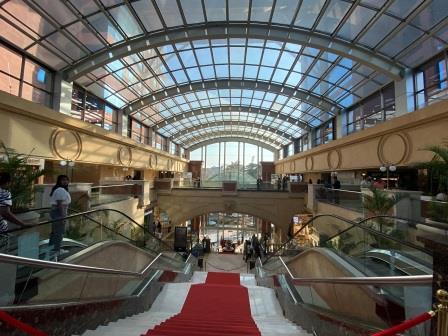
Brigade Road runs south from its junction with MG road and is another of Bengaluru’s energetic commercial streets. It was lined with trendy fashion outlets, sportswear chains, local boutiques and electronic shops.
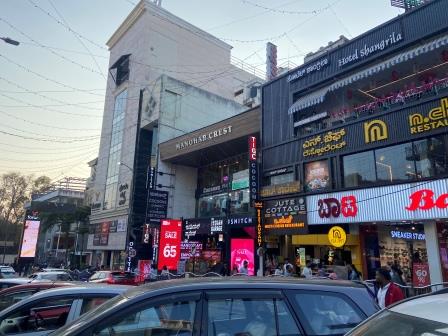
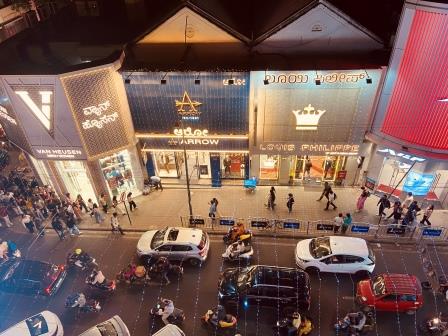
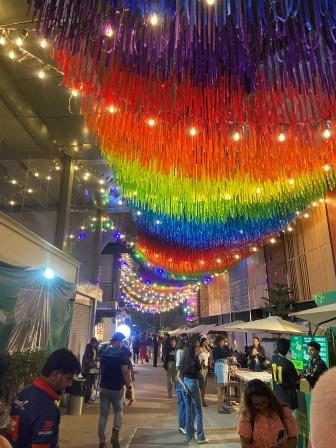
It was particularly lively after dark. The vibrant signage and illuminated boards created a ‘Times Square’ or ‘Piccadilly Circus’ effect.
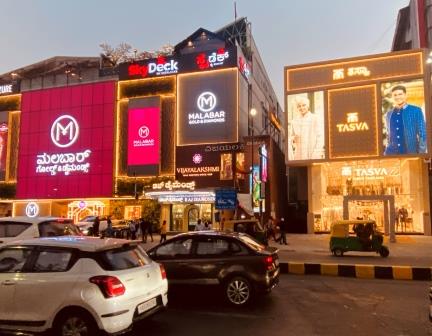
Bengaluru is often called India’s craft beer capital thanks to its many microbreweries and brewpubs which all have locally made beers on tap. I visited a few brewpubs in the Brigade Road area. They had excellent vibes and a wide choice of beers.
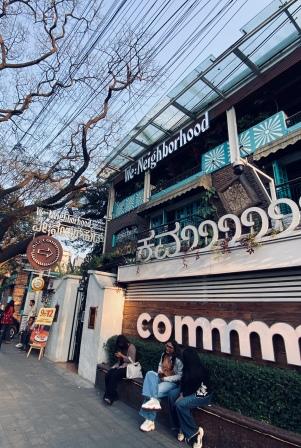
At the Community Neighbourhood (above) I sampled a Belgian Wheat beer and an Irish Ale. Toca (below) was on Brigade Avenue itself and had a stylish rooftop terrace with magnificent views of the street below.
ISKCON
The next morning, I got onto the Green Line again. I was heading to one of the largest Krishna temples in the world. The nearest metro station was Mahalakshmi just a short walk away. The station was above ground but there was no escalator down from the platforms, instead there was a little sign, “Use stairs, keep fit.”
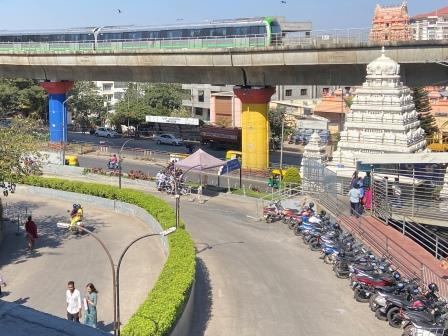
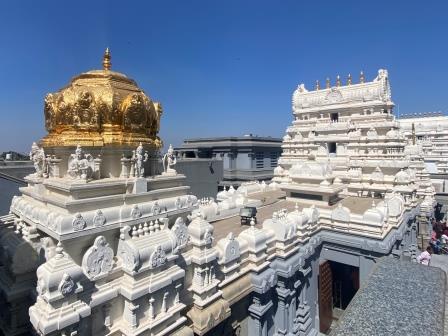
This was one of the largest ISKCON (International Society for Krishna Consciousness) temples in the world. It was dedicated to Sri Radha Krishna. I took off my shoes and socks and put them in an old sack marked with the words ‘Imperial Refined White Sugar.’ I handed them to the attendant and joined the queue to make my way up to the temple which was situated on top of a hill.
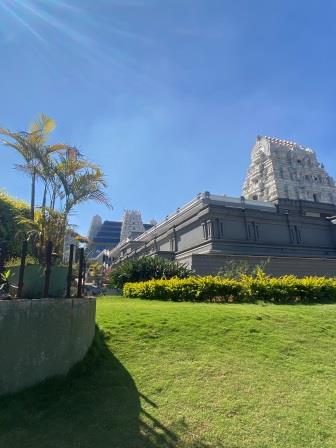
Barefooted, I climbed upwards and then at the top did a complete circle of the temple complex including the vast prayer hall and the restaurant and gift shops in its basement. There were signs everywhere encouraging the faithful. “Always remember Krishna and never forget Krishna” .
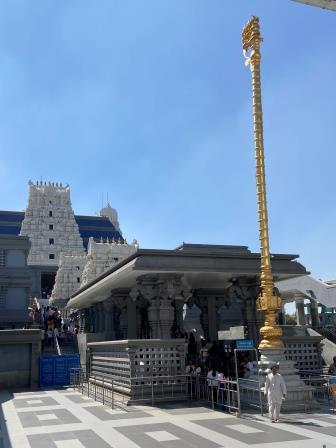
The temple (completed in 1997) was of traditional design but with modern elements. I can’t really say I felt any strong spiritual connection, but the architecture was breathtaking and the place, despite being crowded, certainly exuded a certain sense of peace and tranquillity.
Indiranagar
Indiranagar Station (Purple Line) was just around the corner from 100 Feet Road. The avenue is typical of ‘new Bengaluru’ with its hip vibe, craft breweries and boutiques. I got a seat at the bar at Toit. Established in 2010 as one of the pioneers of the craft beer scene, the place offers a wide variety of house-brewed beers.
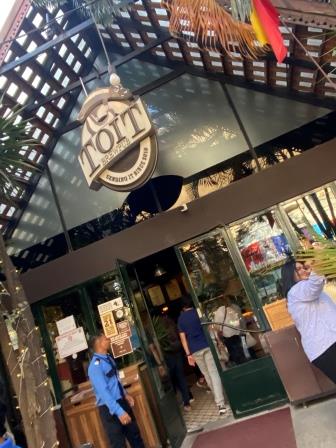
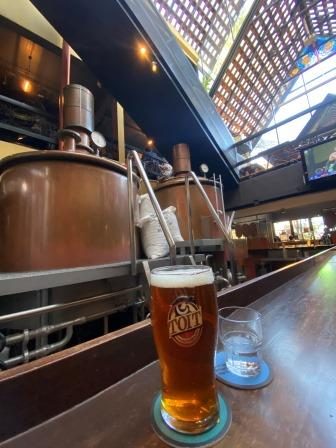
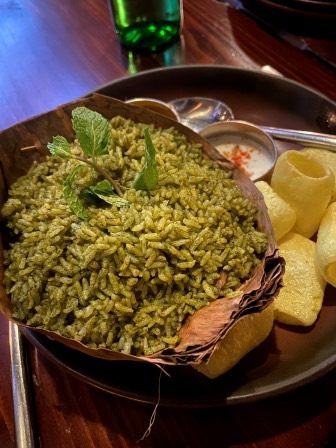
I enjoyed a few pints whilst experiencing the lively atmosphere, and treating myself to Bengaluru donne biryani, basically hot spicy biryani in the Hyderabadi style served (donne) on a banana leaf.
I walked back towards the station, passing trendy shops; Sandowitch, Glen’s Bakehouse and Madam Chocolate. I stopped to chat for a while with a local guy who was living in Toronto and back home visiting his family.
Train #12639, Brindavan Express
Although I knew I had several long train journeys already planned, I could not resist making my first rail trip even before I left Bengaluru. I got an auto rickshaw to Cantonment station, just north of the city centre, with the idea of riding the short distance around to the main KSR terminus.
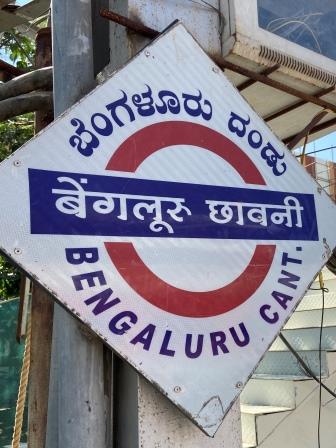
The city’s first rail link was completed in 1864 from Cantonment to Jolarpetti and onwards to Madras (now Chennai). Bangalore’s City Station was eventually developed just to the west. It was renamed Krantiveera Sangolli Rayanna (KSR) in 2016 after a freedom fighter.
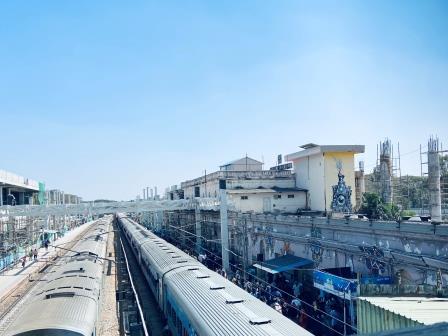
I arrived at Cantonment about a quarter to one. I got a ticket and I was told that the next train would be #12639, the Brindavan Express. It had left Chennai at 07:30 and was due to make its last stop at Cantonment at 13:10 before terminating a few kilometres away at KSR.
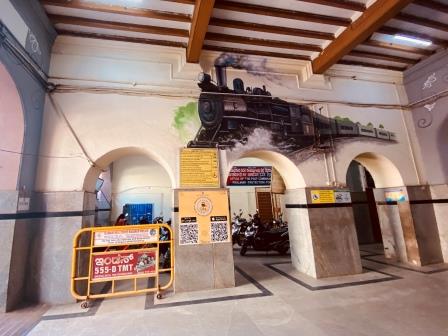
Cantonment was in the process of being rebuilt, the plans on a poster on display looked impressive, but it seemed sad that they would lose the character of the original historic station. I was glad to see the old building before it finally went. I also learned a few lessons that put me in good stead for the rest of the trip.
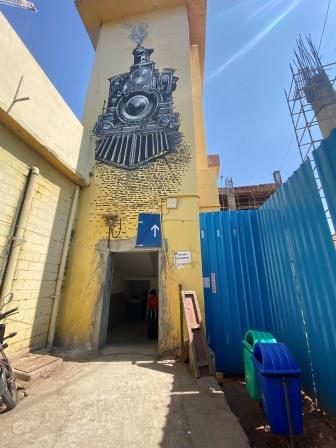
The first lesson was not to try to identify the train on the display board by its scheduled departure time. I started out looking for the 13:10 on the monitor. The display merely said #12639 with 13:27 alongside it. This was the new estimated departure time, I presumed. It was not always updated though; it was still being displayed as 13:27 at 13:40. The station master at Cantonment taught me another useful trick, “just look out for the last three numbers, your train is the 639”.
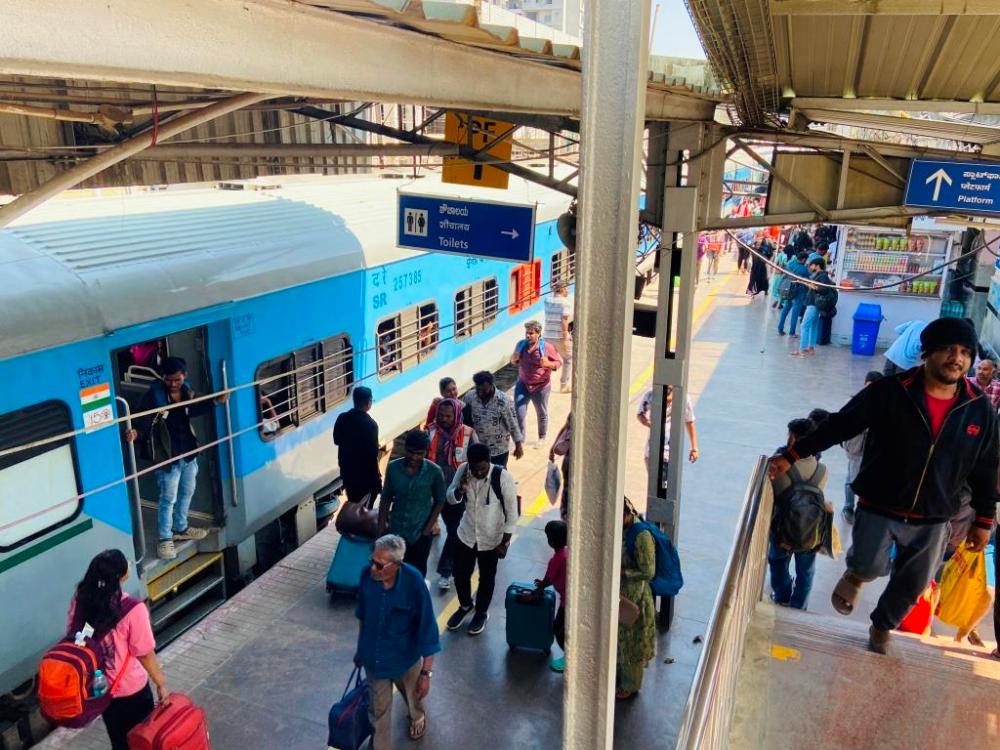
The second lesson was how the Indian platform information system worked. Most trains were very long so it was important to know the place where each coach would stop. Trains only stopped for a few minutes, so you needed to be close to the exact coach if you had a reservation or near the unreserved section if you did not.
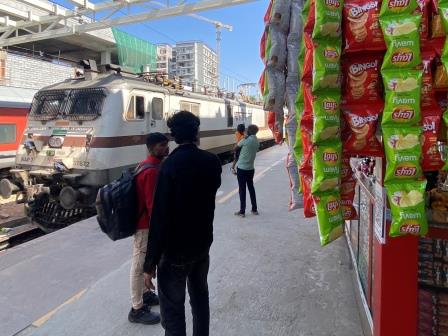
At Cantonment, the display showed that #12639 would be formed by a rake of twenty two carriages. The little monitors all the way along the platform showed two or three letter codes such as SLR, GEN, D1, C1, and EOG which indicated where each coach would stop. Deciphering these codes was important.
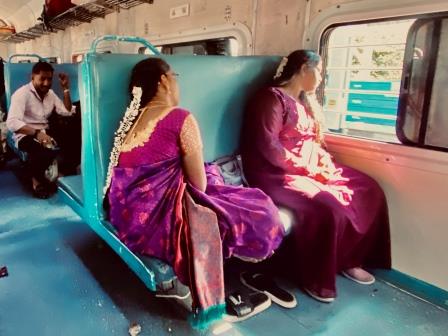
In #12639’s case, the signs indicated that behind the locomotive there would be a van (SLR) which served as a combination of space for disabled passengers, parcels and the guard. Then there would be three “general” unreserved (GEN) carriages. These would be followed by twelve reserved day seating carriages (D12 to D1), a pantry car, two air-conditioned reserved chair cars (C1 and C2), two more GEN unreserved carriages and, at the very back, a generator van (EOG) to provide extra power for the train’s systems. I worked out that, without a reservation, I needed to stand near one of the five ‘GEN’ signs.
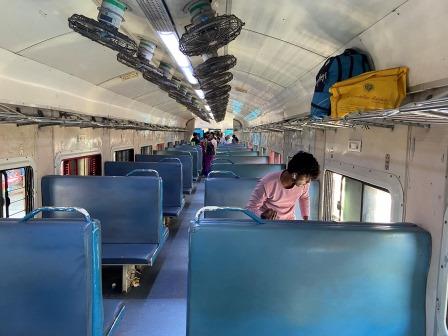
The third lesson was that there was a generous amount of recovery time built into the schedules. #12639 finally turned up at 13:45, I clambered aboard and rode it for the short distance to KSR where, I learned later, I actually arrived on time at 14:00. Those last four kilometres had been timed for 50 minutes. On almost all my subsequent journeys I was delayed enroute but usually arrived on time or early at the terminus.
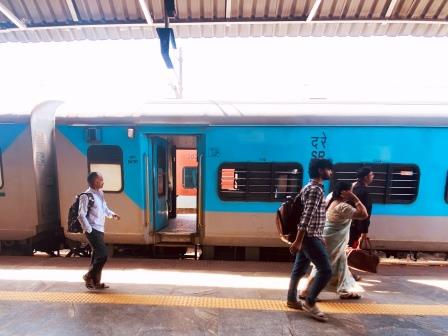
My final and probably most important lesson was to be very aware of the packs of stray dogs that hung around the stations. Whilst I had been waiting at Cantonment a pack of six dogs came racing down the platform towards me. One of them collided with me and knocked me off my feet and into the air. I fell down hard and landed on my ankle. It hurt like hell, I couldn’t walk properly for a few days and the pain lasted for much longer.
Welcome to India !
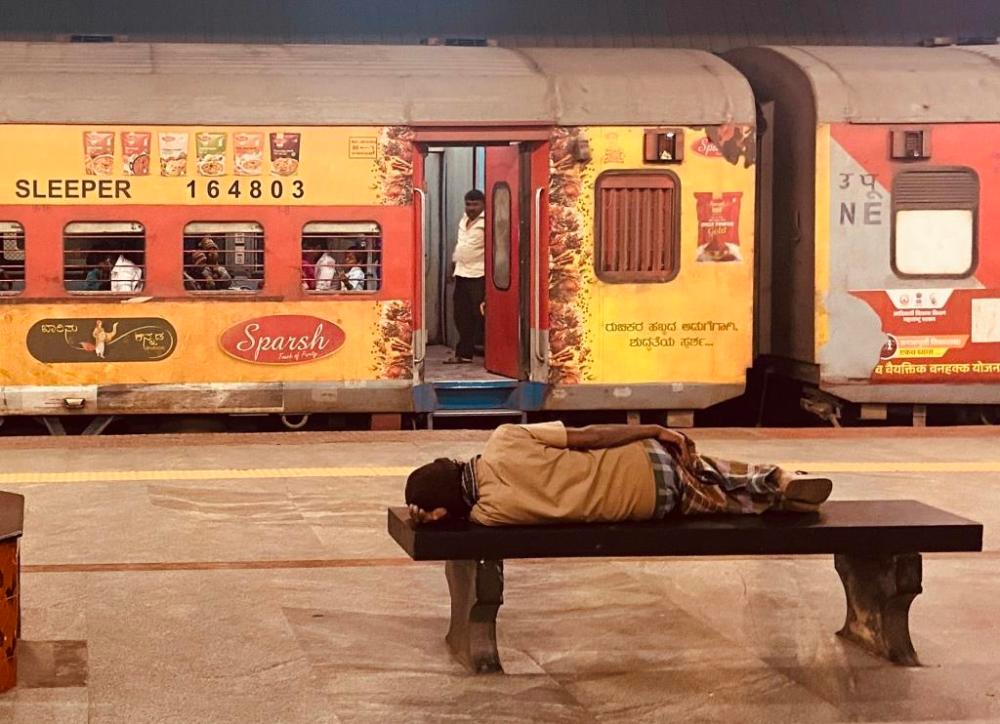
Continue the journey soon on the #12007 – Shatabdi Express (to Mysuru)

 Trains To Beyond