Wembley Central
The Bakerloo began service to Wembley Central (17.92 km) in April 1917.
 Station
Originally known as ‘Sudbury’, the station here was first opened by the London and Birmingham Railway in July 1837. It gained its current name in 1948. The ‘New Line’ first arrived in 1912 and is located on the western side of the station having dived under the WCML after leaving Stonebridge Park.
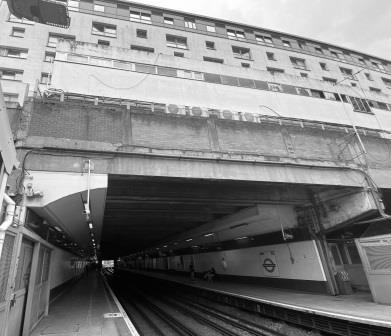
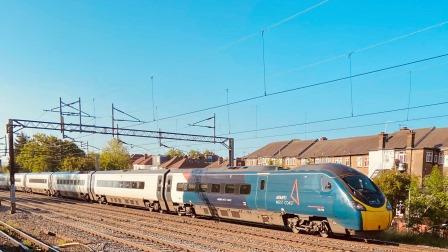
The Bakerloo and Lioness trains serve platforms 1 and 2. This is the first station out of Euston to have platforms (3 & 4) on the fast lines of the WCML, but nothing normally stops here. Most trains also pass through the WCML slow line platforms (5 & 6) and only the hourly Watford Junction to East Croydon services, operated by Southern, stop.
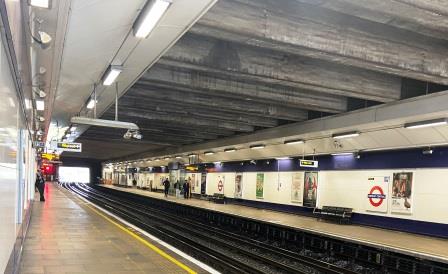
The station was extensively rebuilt in the mid-1960s when a concreted raft was installed above the platforms and then buildings constructed above them. 
Nearby
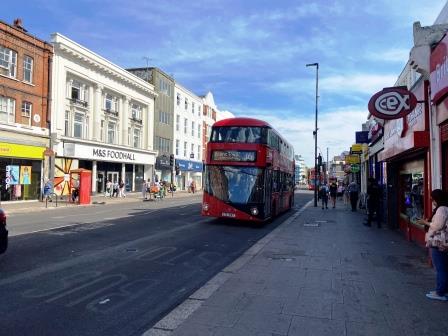
We come out of Wembley Central and walk west along the bustling High Road. Although Wembley is not a town in its own right, it certainly feels like a provincial town centre here with all the household names like Boots, TK Maxx, Iceland, Tesco, Vodaphone and Sports Direct and O2.
Baker
Wenzel’s is located right next to the station (Unit 3, HA9 7AJ). Wenzel’s the Bakers was founded in Watford in 1975 by Peter Wenzel. It now operates over 100 shops across London and is particularly strong in the North West part of the capital.
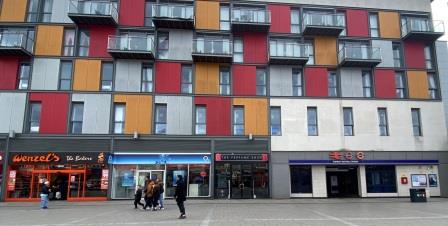
This is still a family-run business and it is famous for its affordable, freshly baked bread, sweet pastries, sausage rolls, and other baked savouries.
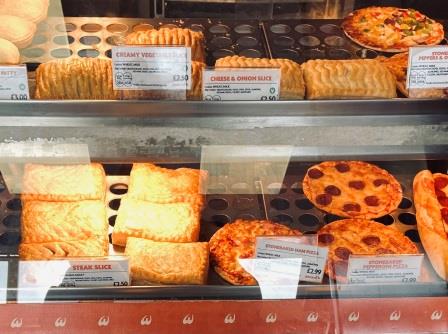
Wenzl’s is sometimes compared to Gregg’s, the larger nationwide chain that originated in the North East but has mostly given up on selling bread and concentrates on the sandwich and hot bakes and sausage roll take away food market. Here at Wembley the two bakers are facing each other across the High Road.
PHOTO
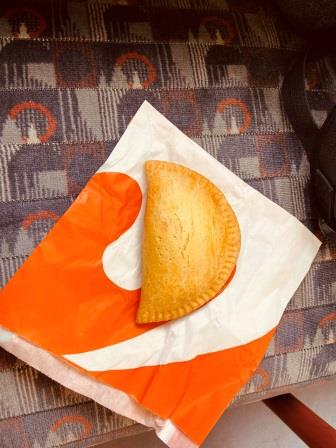
I don’t dislike Greggs (504 High Road, Wembley, HA9 7BH) It is very subjective but I think Wenzl’s has the edge in quality and of course it still sells bread. I must admit that its Jamaican Pasty hits a spot that nothing Greggs does matches.
Loo
There is a toilet in the station ticket hall area.
North Wembley
North Wembley (19.19 km) received its first Bakerloo line trains in April 1917.
Station
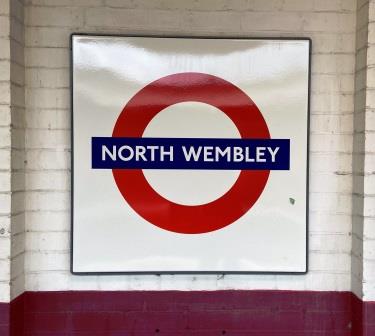
North Wembley opened in June 1912 and first received electric Bakerloo line trains in April 1917. Electric trains operated by the LNWR to London Euston and London Broad Street began running in 1922. They were taken over by the LNWR’s successor company, the London Midland & Scottish Railway in 1923, and became part of British Railways in 1948.

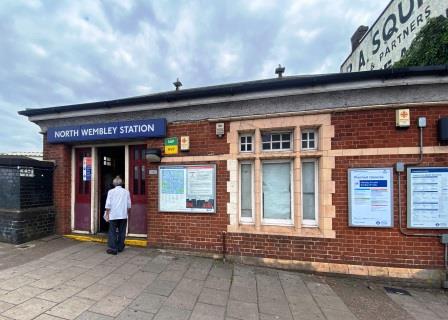
The station here is situated on East Lane, which was originally to be its name. The building here is very similar to the one further north at Kenton.
Nearby
We come out of the station on to East Lane and turn left. Here there is a little shopping area with a few shops. In between kebab, chicken and pizza places are a tanning salon, a nail spa and a beauty parlour. There are also specialists in Indian vegetables and a shop selling Sri Lankan and Polish food.
P
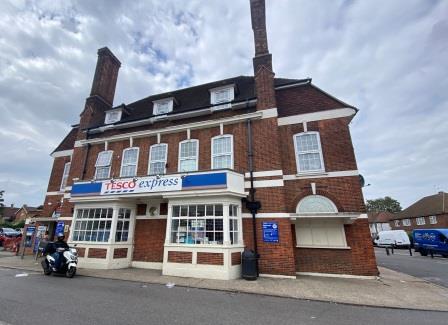
The streets leading away from here have 1920s and 1930s semi-detached houses along them. The Tesco Express opposite us housed in an impressive former pub building (previously known as the Hop Bine amongst other names) of the same era. We have certainly arrived in interwar suburbia.
Baker
Walking east from the bridge we come to a small industrial estate. Here are RRR and DDDD. The Ambassador Bakery is located here (14-15 Lumen Road, Wembley HA9 7RE). This is a Romanian commercial bakery and pastry shop.
It specialises in traditional bread, and Eastern European specialities. It operates around the clock to supply wholesale and retail orders
Ambassador also have a shop in nearby Neasden.
Loo
Sadly, there are no toilets within walking distance. Easier to go back to Wembley Central on the train.
South Kenton
South Kenton (20.09 km) was opened July 1933.
OOOO
Station
Although opened as long ago as July 1933, South Kenton is in one sense the ‘newest’ station that Bakerloo trains now call at. Constructed to serve new housing developments, it was built more than twenty years after the ‘New Line’ opened.
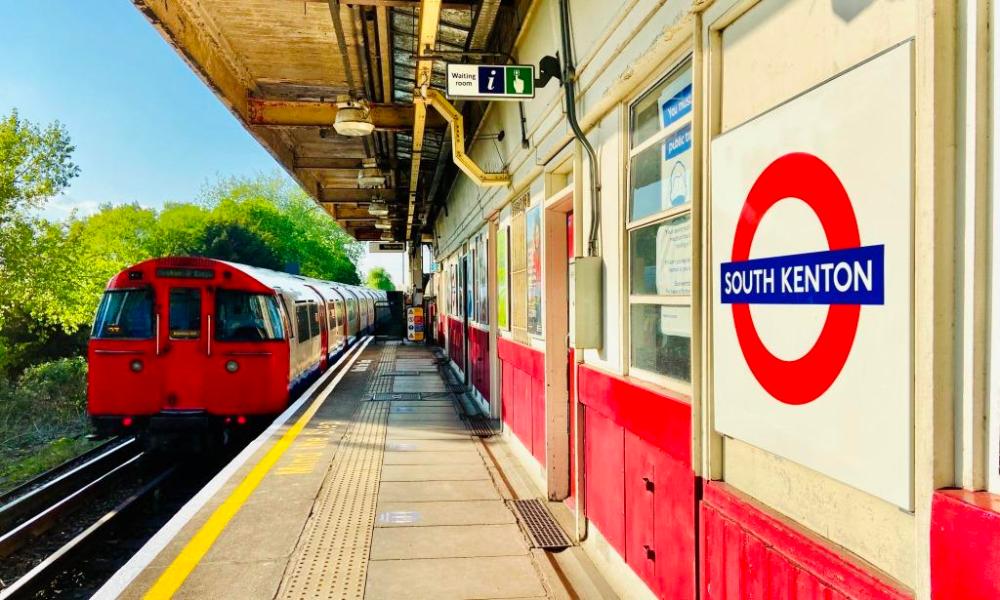
Its single island platform is linked by a pedestrian tunnel to both sides of the railway. The main building on the platform has been constructed in streamlined modern style, typical of the 1930s.
Nearby
We walk out of the station on the east side. Here is, as we would expect, a quiet, residential suburban area. Here we have peaceful 1930s housing estates with rows of semi-detached houses and a row of local corner shops including a Costcutter, a dry cleaners and a pharmacy.
We have been here before. South Kenton is also on the Capital Ring, a 78-mile (126 km) circular walking route that loops through inner (or outer-inner) London. It connects parks and nature reserves and tries to minimised. We follow the path again now heading through Preston Park.
Baker
We walk as far as Preston Road and we are almost at another tube station, Preston Road, when we see Lebanese or Patisserie
Near Preston….. Located at (469 Kenton Road, HA3 0UN), about 0.6 miles away, offering custom and fusion-flavored bakes.
Loo
The Windermere It is worth visiting for its art deco style interior alone. It is located just outside the station exit on Windermere Avenue (HA9 8QT).
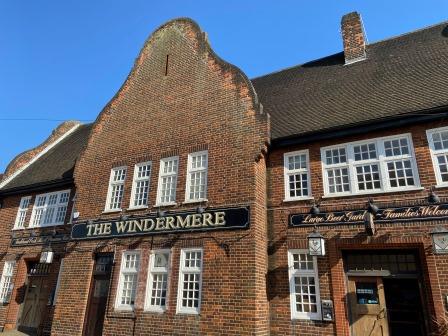
Its Grade II listing is a result of it being a remarkably intact, high-quality example of a late-1930s interwar suburban “Metro-Land” public house.
PHOTO
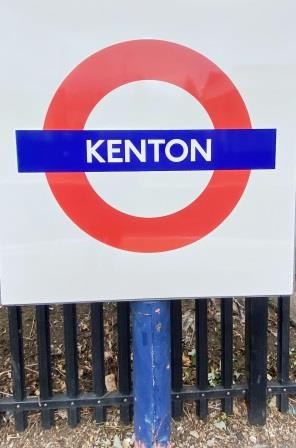
Kenton
Kenton (21.49km) was opened for Bakerloo trains in April 1917.
 Station
The station here is a very similar in design to North Wembley. The Bakerloo reached here in April 1917 and like all the other stations on the ‘New Line’ the station was served by Underground trains heading north to Watford Junction.

In September 1982, Bakerloo line services north of Stonebridge Park were withdrawn. All of the stations north of North Wembley including Kenton were cut off from direct services to the Underground.
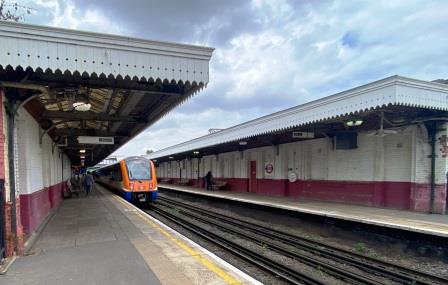
Bakerloo services were restored in June 1984 as far as Harrow and Wealdstone. Four tube trains an hour stop in each direction, combining with an equal number of Lioness services.

Nearby
We come out of the station onto Kenton Road. Here we are greeted by almost the same scene as at North Wembley. There is a parade of shops, there are more of them here and it is a little busier perhaps. Once again in the roads leading off the main street are rows and rows of 1920s and 1930s suburban semi-detached and detached family homes. When the ‘New Line’ first arrived here this must have been all green fields.
We are looking for a bakery here. There is everything but. We find a Costa, a Subway and restaurants of all kinds, Romanian, Lebanese, North Indian, South Indian and Afghan. Where do people get their bread from? The answer is on the other side of the tracks.
Baker
We walk east and on the other side of the railway we find Sainsbury’s (1 Nash Way, HA3 0JA). According to research by the Federation of Bakers, approximately 80% of us prefer to buy our bread at supermarkets. In France, as many as 70% prefer to buy from artisan bakers.
We walk into Sainsbury’s and grab a basket. 97% of all bread that is sold in the UK is sold in a supermarket. That compares with around 30% in France.
We find the bakery section and look at what is on offer. There is quite a selection. Around 85% of all the bread we buy is from industrial loaf manufacturers with around 12% coming from supermarket in-store bakeries. Independent stores account for just 3%.
We get……… Cake Inn Kenton, 31 Kenton Park Rd, HA3 8DN (0.4 miles away) offers fresh cream cakes and vegetarian/eggless options.
PHOTO
Loo
Sainsbury’s has a customer toilet too.
Harrow & Wealdstone
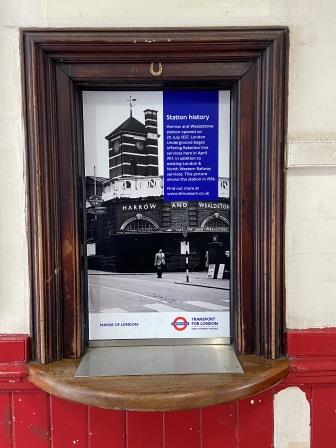
The Bakerloo Line arrived at Harrow & Wealdstone (23.3km from Elephant and Castle) in April 1917.
 Station
The station was first opened here on what was to become the WCML by the London and Birmingham Railway almost 190 years ago in July 1837. It is about eleven miles out of the Euston terminus.
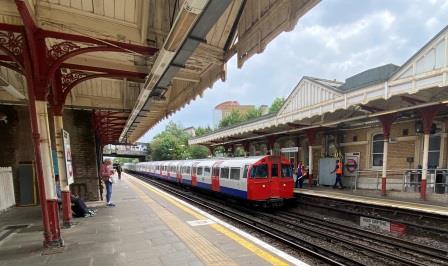
The Bakerloo Line trains terminate and start on platform 1 and 2 at the western side of the station. These were actually the original fast line platforms, but everything was moved to the east when the ‘New Line’ opened from Willesden Junction to here in 1912.

Originally double track, the WCML was quadrupled in the 1870s, with the four lines arranged in pairs according to speed. The north and southbound fast lines pass through platforms 3 and 4, in the centre of the station, and the slow lines serve platforms 5 and 6 on the eastern side.
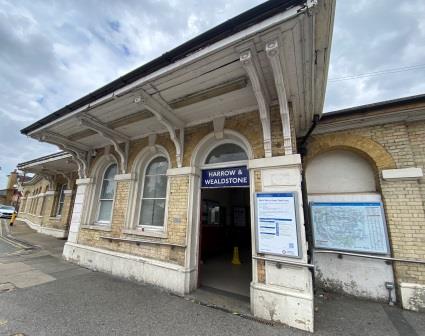
Trains using the fast lines are not normally scheduled to stop at Harrow, but there is a service of four trains an hour serving the slow lines. Southbound they provide a non-stop service to Euston, and northbound they extend to Tring or Milton Keynes. There is also an hourly service linking Watford Junction with East Croydon.
Nearby
We exit the station on the east side and walk up Wealdstone High Street. It has a diverse mix of independent shops, food stores, and international eateries.
We are intending to go for about five minutes and as we go, we are looking for signs of bakeries or even anywhere that sells bread or cakes. There is a Greggs, a Wenzls
There is a Cake Stand Studio thing. We turn round at Wealdstone’s clock tower. Built in the early 1900s and then unveiled in 1923 as a war memorial. We go back to the station.
Baker
Something a bit special to finish off with we call in at the Medina Bakery (61 High Street, HA3 5DQ)
Lawash Bread, Brown Bread, Bolani which are stuffed parathas.
Loo
There are toilets in the station itself, located in the ticket hall area on the western side.
Pub
Just opposite the station is Barrett’s Freehouse (9 Masons Avenue HA3 5AH) , a family-run Irish pub. It is a great place for a final pint.
Here is a toast…….
To all the bakers, to Loo cleaners and, last but not least, to the people at TfL who keep those 50 year old trains running along the Bakerloo Line.
Cheers !
And here is another toast….
Return to HOME
 Trains To Beyond