Six Generations
The history of the different types of train sets that have been used on the Tokaido Shinkansen since its opening in 1964 is a fascinating one. A visit to the extraordinary SCMaglev and Railway Park in Nagoya is highly recommended in order to learn more about how the original “0” series trains were gradually superseded by newer models.
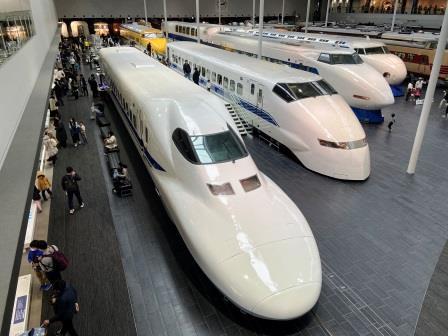
Impressively lined up in the main hall of the museum are the four successive generations of trains which preceded the N700 sets in use on the line today. The vehicles are open for exploration and the museum contains a wealth of information about their development and service history, a significant proportion of which is translated into English.
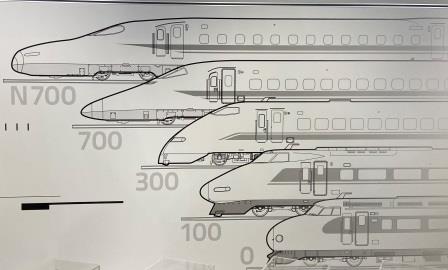
Included below is a brief history of the 0, 100, 300, 500, 700 and N700 fleets, concentrating on their use on the Tokaido Shinkansen. Most of the photographs were taken at Nagoya but some are from previous visits to Japan’s other two main railway museums at Kyoto and Saitama.
1st Generation: “0 Series” (1964-1999)
The design that launched the Tokaido Shinkansen back in 1964. Known originally as “Shinkansen” and only christened “0” series when the next generation of trains arrived later. The “0” series lasted for 35 years on the Tokaido Shinkansen but remained in use on the Sanyo Shinkansen until 2008.
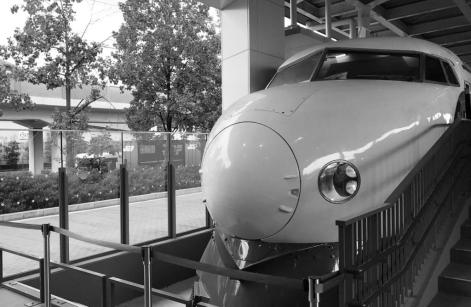
The final design was confirmed after experience with two prototype trains running on the “model line” test track. An initial 30 12-car sets were ordered for the start of operations in October 1964. To give various manufacturers experience in building the trains, construction was split between several firms. The first production trains appeared in March 1964.

Compared with the later types of Shinkansen, the fleet history of the 0 series is extraordinary complex and does not lend itself to easy explanation. In total, 3,216 coaches of varying types were constructed between 1964 and 1986. They were delivered in 38 separate batches of varying sizes (anything between 4 and 250 vehicles) roughly at the rate of 2 batches per year.
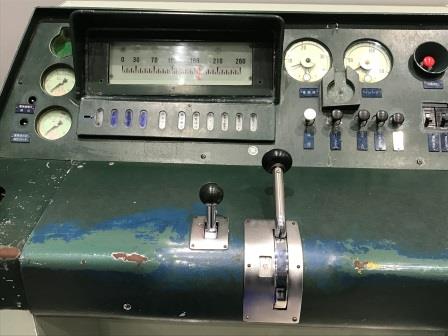
Although whole trains were sometimes delivered as part of the process, some batches were made up only of intermediate cars needed to lengthen existing trains. As production continued over the years and lessons from operation were learned, changes were made, thus almost every batch contained small detail improvements.
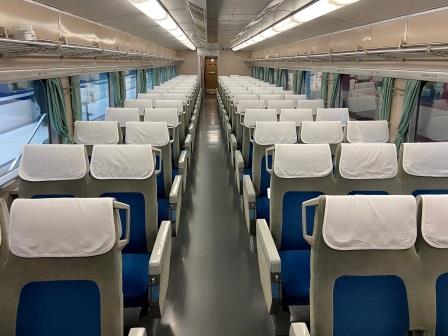
Initially, sets were numbered according to their builder, with six firms eventually involved.
- “H” sets built by Hitachi
- “K” sets built by Kisha
- “N” sets built by Nippon Sharyo
- “R” sets built by Kawasaki Sharyo
- “S” sets built by Kinki Sharyo
- “T” sets built by Tokyu Car Corporation
After the first 30 trains had been delivered, the manufacturers continued building more sets to enable services to expand quickly to meet demand. A further 10 were delivered in 1965, by 1966 the fleet had grown to 50 and by 1969 there were around 72 trains in service.
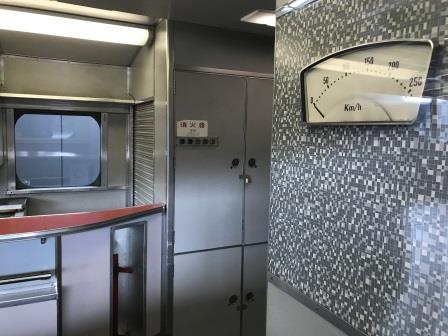
All the original 12-car sets were formed with ten second class carriages, of which two included buffet counters, and two first class (later Green Car) carriages. At the start of operations all trains were used on both Kodama and Hikari services.
After a few years, dedicated sub-fleets were created to match demand. Kodama sets now had one first class vehicle, whilst Hikari sets retained two. This arrangement was arrived at by mixing vehicles between sets and adding new-build cars into some of the formations. In late 1969 as passenger numbers increased further, extra new-build cars were added to some of the original Hikari sets to create 16-car trains. All this created the phenomena of “mixed-aged” sets that would continue for the next 40 years.
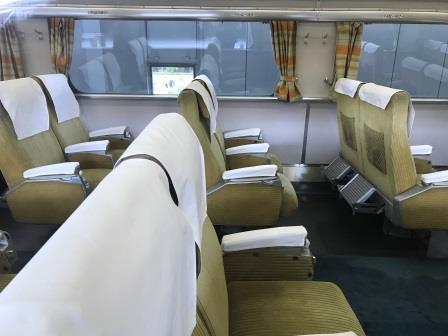
From the early 1970s numbering moved away from the manufacturer-based system and more simple designations were created. “H” sets became 16-car trains used on Hikari services whilst “K” sets were 12-car and used on Kodama trains. When some “K” sets were also lengthened to 16 cars, a new designation, “S”, was created for those that remained as 12. Demand fell in the late 1970s, and all the 16-car “K” sets had reverted back to 12-car “S” sets by the early 1980s.
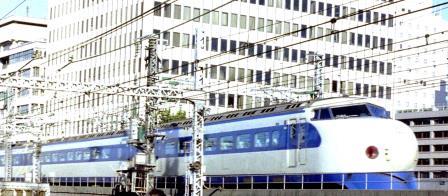
The opening of the Sanyo Shinkansen (as an extension of the Tokaido Shinkansen) to Okayama in 1972 and to Hakata in 1975 meant that more trains were needed for the fleet. The longer journey times of the Sanyo Shinkansen also meant that dining cars were built for the first time and substituted for one of the buffet vehicles in the Hikari sets. By 1976 a total of 2288 vehicles had been delivered in 21 batches. They were organised into 143 train sets of which 96 were Hikari “H” sets.

By 1976 the original vehicles from 1964 were approaching life expiry. They had been designed to last 20 years, but it was found that intensive high speed use had shortened their life. The first 1964-built vehicles entered Hamamatsu factory for scrapping in late 1976 whilst the first new carriages to replace them appeared in early 1977. Thought had been given to moving to a new design but in the mid-1970s JNR was cash-strapped and it was decided to stick to the tried and tested model.

From the 22nd batch, vehicles featured more significant design changes, most noticeably to the passenger saloon windows which became smaller. The official designation was 0-1000 series. Only three brand new complete 0-1000 trains (designated “N” sets) were ever built, the rest of the 0-1000 coaches were blended in to existing trains (designated NH or SK) to replace vehicles as they became life expired. Deliveries of 0-1000 vehicles continued until batch 29 in 1981 by which time a total of 619, enough to create/modify 48 sets, had been built.
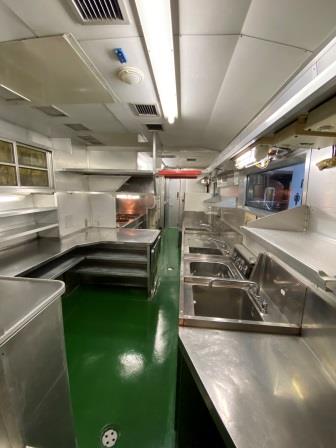
The final iteration of the 0 series, designated 0-2000, was introduced in 1981 at batch 30, and over the next 5 years a further 309 cars were produced. The new model featured a modified cab window and new reclining regular seats (the new seats were also retrofitted to earlier models) which replaced the tip over reversible version of the original design. The process of replacing vehicles continued and a further 30 sets were modified/created. The final 0-2000 vehicles, part of the 38th batch, entered service in April 1986 at the same time as the first of the successor 100 series trains were leaving the factory.

When JNR was privatised in 1987, the 0 series fleet was split between JR West, operator of the Sanyo Shinkansen, and JR Central, operator of the Tokaido Shinkansen. At this point there were five different types of train formations to be divided up between the two new companies.
| JR Central | JR West | |||
| H Sets | Hikari | 16 Car (all pre 1976) | 32 | 15 |
| N Sets | Hikari | 16 Car (all 0-1000) | 2 | 1 |
| NH Sets | Hikari | 16 Car (Mixed*) | 19 | 16 |
| S Sets | Kodama | 12 Car (all pre 1976) | 12 | |
| SK Sets | Kodama | 12 Car (Mixed*) | 26 | |
| Total 91 | Total 32 |
*Mixed sets contained some newer 0-1000 or 0-2000 cars, normally including the driving vehicles, but also retained some pre-1976 carriages (1975-built dining cars for example) in their formations.
The two operators had different plans for their respective fleets. JR Central quickly reformed their S/SK Kodama sets into 16 car trains, designated Y and YK respectively. JR West began shortening some of their sets in order to match them with the lower demand of the Sanyo Shinkansen. In time there would be 12-car SK, 6-car R and 4-car Q sets.
As more and more new 100 and 300 trains entered service, the JR Central 0-series fleet was gradually run down, starting with the older sets. The last Tokaido Hikari “0” services ran from Tokyo in 1995 and the last Kodama services in 1999. The shorter JR West formations remained on internal Sanyo Shinkansen Kodama services, becoming the last “0” series trains to be withdrawn in 2008.
25 “0” series vehicles have survived and are on display at various museums in Japan, with one car exhibited at York Railway Museum in the UK.
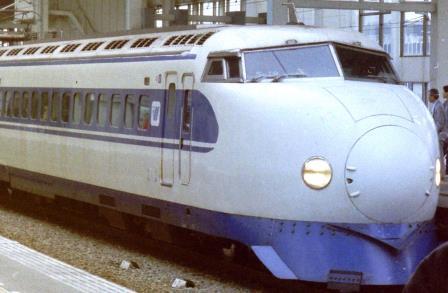
2nd Generation: 100 Series (1985-2003)
The direct successor to the “0” was the 100 series first introduced in 1985. The design featured a more pointed, some say “shark-like”, nose. Maximum speed of the first batches was 220km/h and two bi-level cars were included in the middle of the train formation.
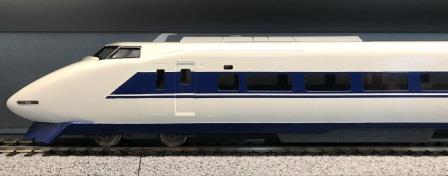
Introduced two years before privatisation, the trains followed a new JNR policy whereby units to be used on the Tokaido and Sanyo Shinkansen systems would be numbered in the sequence 100, 300, 500, 700 etc and those on the Tohoku and Joetsu Shinkansen would be numbered 200, 400 etc.
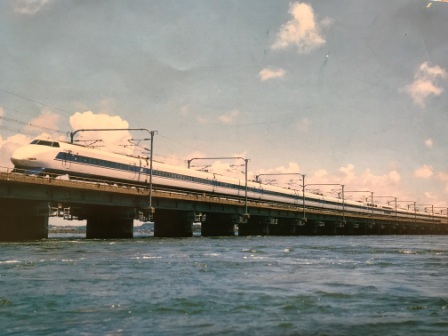
A total of 66 16-car sets were introduced between 1985 and 1992 in 3 basic types:
- 7 “X sets” with 2 double decker cars (220km/h) – JR Central
- 50 “G sets” with 2 double decker cars (220km/h) – JR Central
- 9 “V sets” with 4 double decker cars (230km/h) – JR West
One bi-level car on both the “X sets” and the “G sets” featured Green Car seating upstairs with small Green Car compartments on the lower deck. The second bi-level car on the “X sets” featured a restaurant upstairs with the kitchen and a buffet counter downstairs. On the “G sets” this was replaced by a car that featured a self-service cafeteria downstairs with Green Car seating upstairs.

The “V sets” (owned by JR West) featured a similar bi-level restaurant vehicle to the “X-sets” along with three vehicles which all offered 2+2 regular seating downstairs and Green Car accommodation on the top deck. These trains ran at 230km/h on the Sanyo Shinkansen in the fastest Hakata-Tokyo timings and were marketed by JR West as “Grand Hikari.“

The introduction of these trains helped to boost the number of Hikari services as well as irradicating most of the original “0” series trains built before 1976, and enabling the more modern “0” trains to be cascaded to Kodama duties.
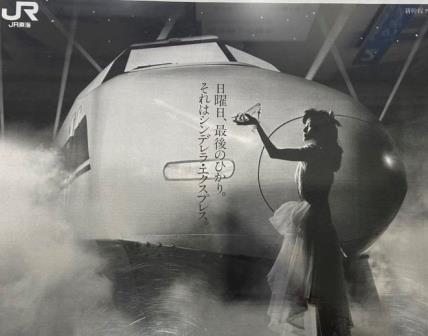
Deliveries of the next generation 300 series trains gathered pace in the mid-1990s and began to displace the 100s from Hikari duties. The first regular 100 Kodama services ran in 1995 and over the next few years they gradually took over most Tokaido Kodama services. Withdrawals of the first X sets began in 2000. With the planned speed up of the whole line to 270km/h imminent, the last 100 ran on the Tokaido Shinkansen in September 2003. 
Following their removal from front-line service, some 100 series trains were reformed into shorter four and six-car sets for the slower Kodama services on the Sanyo Shinkansen line. These did not have the bi-level cars, of course. They were finally withdrawn in 2012. Five vehicles were originally preserved. Today, a driving car can be seen at the Kyoto Museum and another driving car and bi-level restaurant car are on display at the SC Maglev and Railway Park in Nagoya.
3rd Generation: 300 Series (1992-2012)
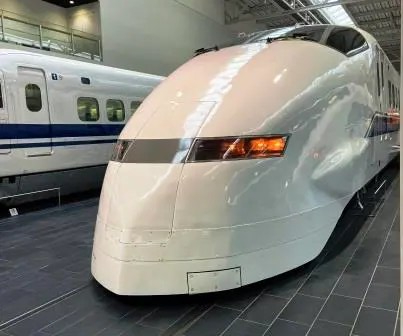
First appearing in 1992, the 300 series was the first new Tokaido Shinkansen design of the JR-era. The “curved wedge” front end styling represented a big change in looks from the previous two generations of trains.
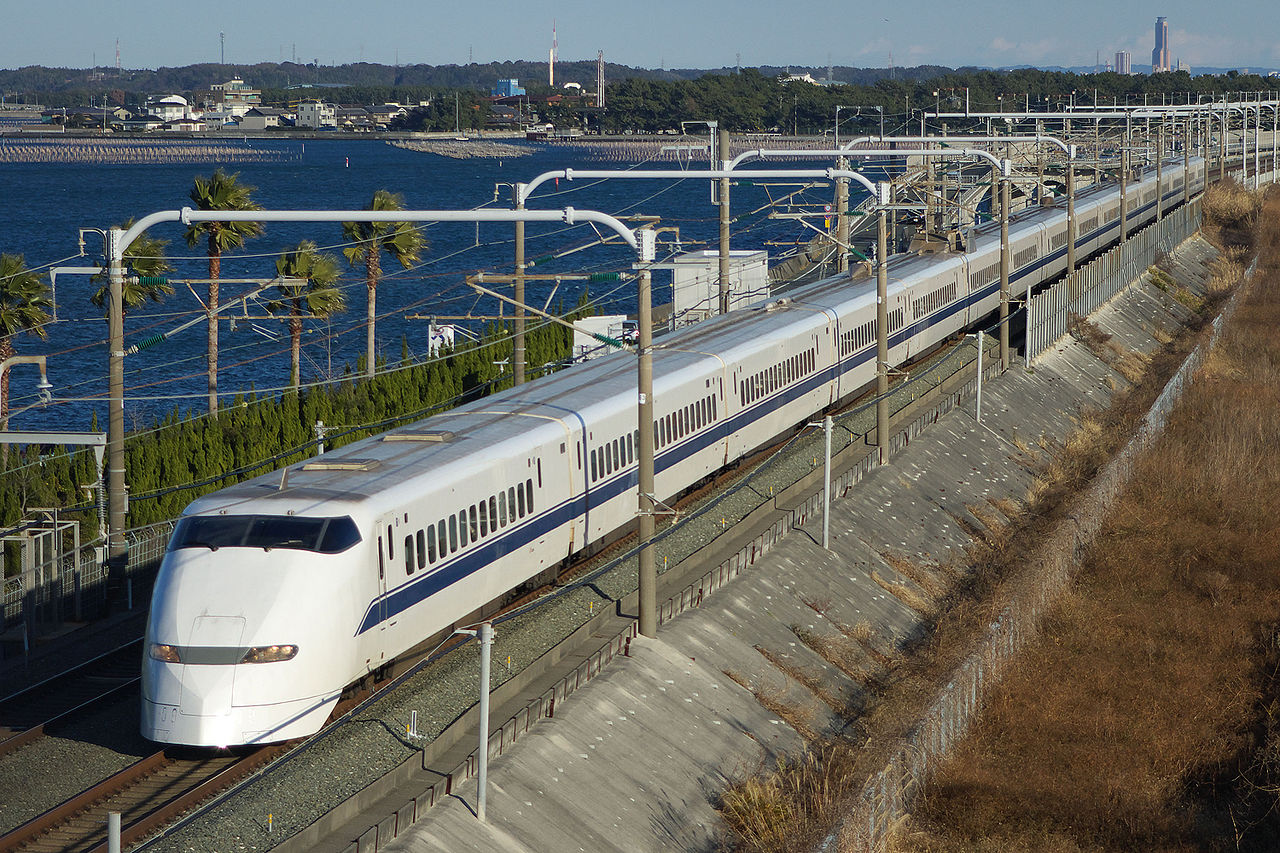
The 300 series were the first Shinkansen trains to employ AC rather than DC traction motors. They embodied a number of features designed to reduce overall weight. The 270km/h capability of the 300 series raised the operating speed of both Tokaido and Sanyo Shinkansen lines leading to reduced journey times and the introduction of a new train type: Nozomi.
In total, 70 16-car sets were produced between 1990 and 1998:
- 1 Pre-series set (later J1)
- 60 “J sets” (J2-J61) owned by JR Central
- 9 “F sets” owned by JR West
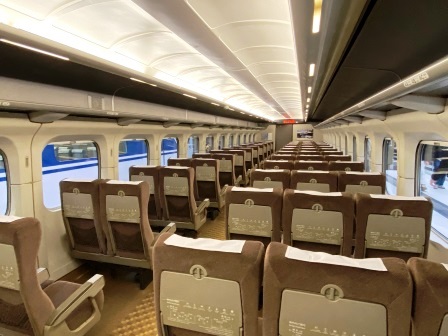
The 300 series established a standard formation pattern that has continued through all subsequent generations of trains. With car 1 at the Shin-Osaka end and car 16 at the Tokyo end, cars 1-7 were regular cars, 8,9 and 10 were green cars, and 11-16 were regular cars. No buffet or restaurant cars were included in the formation. The two small refreshment counters originally fitted were soon removed in favour of vending machines and trolley service.
The first 300 pre-series set was introduced on a single Tokyo to Shin-Osaka Nozomi working in March 1992. As more trains were delivered, hourly Nozomi departures to Hakata began a year later. The last 300 set was delivered in late 1998 by which time the 500 series had already begun to displace some 300s on Nozomi services. The last regular 300 Nozomi ran in 2001.
The introduction of the 300s to Hikari services enabled the speed of those trains to increase to 270km/h from 1996. As more 700s reached the fleet in the early 2000s, the 300s themselves took over Kodama services replacing all the 100s by 2003.

The entry into service of the N700 trains in 2007 began another cascade which led in turn to the first withdrawals of the 300s the same year. Over the next 5 years as more N700s were delivered, more 300s were withdrawn, with the final train running in March 2012.
Out of 1,104 constructed only two 300 vehicles now survive. The only one on public display is Car 1 of Set J1 (the prototype) housed at the SC Maglev and Railway Park in Nagoya.
500 Series (1997-2010)
The 500 series were never designed to be a new generation of Shinkansen train, rather they were a very expensive but elegant attempt by JR West to speed up services to 300km/h on the Sanyo Shinkansen. Their design was overseen by German Industrial designer, Alexander Neumeister and their sleek kingfisher-like profile still looks futuristic even now almost thirty years after their introduction.
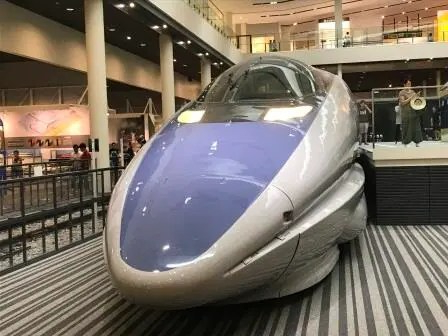
Only 9 16 car sets (W sets) were ever built. Until the N700 they remained the only trains that could reach 300km/h on the Sanyo Shinkansen, although they were limited to 270km/h on the Tokaido Shinkansen. They were employed mainly on Nozomi services between Tokyo and Hakata on a roughly two-hourly pattern.

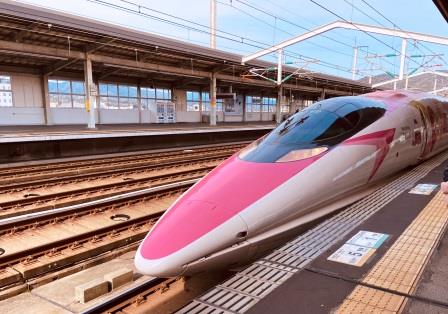
With the introduction of more N700 trains after 2007, the 500s were cascaded for use on Kodama workings inside the Sanyo Shinkansen. The last 500 Nozomi over the Tokaido Shinkansen ran in 2010. Subsequently 8 W sets were shortened to 8-car V sets. As of 2024, 6 sets remain in service, with one in “Hello Kitty” pink colours. They are scheduled to be retired by 2027. Two 500 vehicles have been preserved and one of them is in the Kyoto Museum.
4th Generation: 700 Series (1999-2020)
The 700s were introduced almost at the same time as the 500s. They were a development on from the 300 series, albeit with a dramatic flat “duck bill” nose. They provided 285km/h speed on the Sanyo Shinkansen but were still restricted to 270km/h on the Tokaido.

Although slightly slower, they were much cheaper to build than the 500s. In total, 75 16-car sets were produced between 1997 and 2006.
- 60 “C sets” owned by JR Central
- 15 “B sets” owned by JR West
First introduced on the Nozomi trains in tandem with the 500s they gradually spread to cover most Nozomi and Hikari duties.
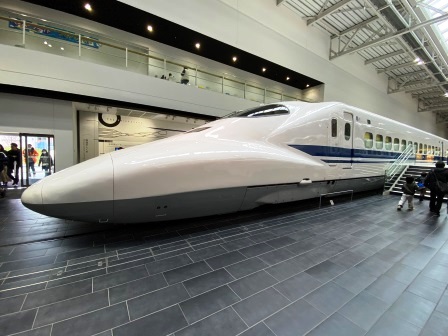
As N700 trains entered service after 2007, the 700s began to be cascaded onto the slower Kodama services, completely replacing the 300s by 2012. The first 700 withdrawals began in 2011 and continued gradually as more and more N700s were delivered. The last 700 ran on the Tokaido Shinkansen in 2020.

Out of 1,200 vehicles constructed for the 75 B and C sets only two now survive. Car 1 of set C20 is on display at a department store in Nagoya, whilst Car 1 of set C1 (the prototype) is housed at the SC Maglev and Railway Park.
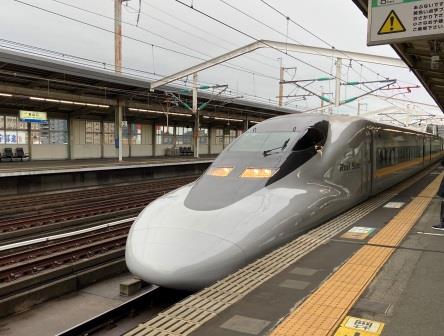
Although they never ran on the Tokaido Shinkansen, a further 16 8-car “E sets” were produced for use only on the Sanyo Shinkansen from 1999. As of 2024 all 16 remain in use on Kodama services between Shin-Osaka and Hakata.
5th Generation: N700 Series (2007-)
6th Generation: N700S Series (2020-)
The Fleet in early 2024 comprises of around 175 16-car N700 and N700S train sets. All have the same formation: three green cars (8-10) and ten standard cars (1-7, 11-16).
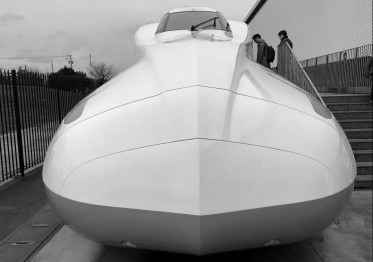
The first N700 trains were introduced in 2007 and were a significant development over the previous generation 700 units, enabling JR Central to speed up the Tokaido service. They featured increased acceleration, the ability to tilt and curve faster and higher top speeds of (eventually) 285km/h on the Tokaido Shinkansen and 300km/h on the Sanyo. The N700A (N700-1000) development in 2013 offered even better curving ability and its enhancements were later retrofitted to the whole N700 fleet. Production of the N700 ceased in 2020.

The N700S is a further refinement of the N700 and includes new features such as improved braking, battery backup systems and a more modular design that lends its self to the creation of different train lengths for different markets. First introduced in 2020, the new trains also feature an enhanced passenger saloon. Externally, they can be best distinguished from their older sisters by the different headlight design and “chubbier” cheeks.

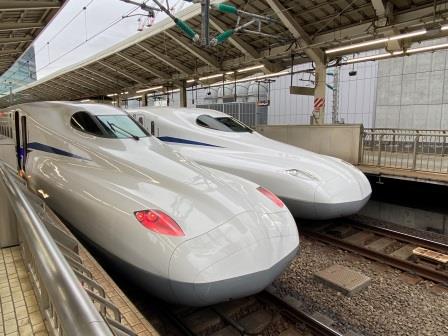
The earliest N700 trains are now being withdrawn as new N700S ones are introduced. Withdrawals commenced in 2019. Interestingly, the aluminium from the scrapped trains is being reused to make the new ones.

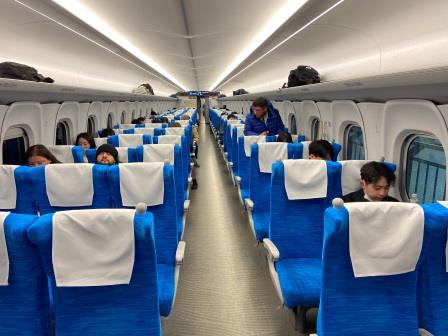
The eventual plan is to replace the whole N700 fleet with N700S sets, but in contrast to previous cascades where brand new trains have been rostered only for the fastest Nozomi services, the new N700S sets are currently being introduced on to Kodama and Hikari workings as well.
Although the N700S trains may have their top speed raised later, at the moment, in capability terms, the fleet is the most homogenous it has been since it was comprised of “0” series trains in identical formations back in the mid-1960s.
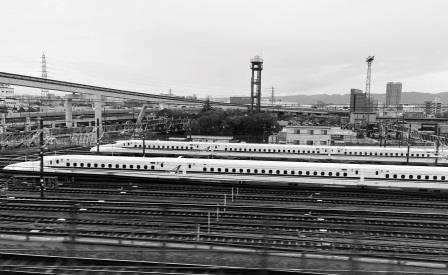
The N700 / N700S trains can be subdivided into three types / six groups depending on ownership and exact specification.
The three basic types currently (Feb. 2024) in use are –
- N700A – Originally N700, all trains now modified to match the later N700A units. Designated by a smaller font capital A added to the original N700 logo.

- N700A – Marketed as “Advanced” with a large capital A logo.

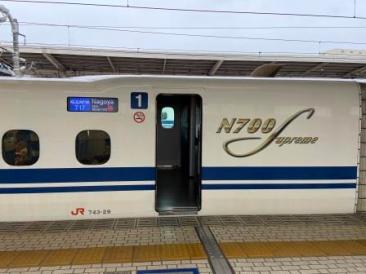
- N700S – Marketed as N700 “Supreme” with a golden “Supreme” logo.
2024 Fleet Guide
JR still use the same basic alpha-numeric system introduced by JNR in 1964 to number their sets. The whole Tokaido Shinkansen N700 fleet is as follows:
- 1 pre series N700A unit X0* – now on display at SC Maglev and Railway Park
- 80 “X” N700A sets (X1-X80*) owned by JR Central. Of which almost 40 have already been withdrawn.
- 16 “K” N700A sets (K1-K16) owned by JR West
- 51 “G” N700A sets (G1-G51) owned by JR Central
- 24 “F” N700A sets (F1-F24) owned by JR West
- 59 “J” N700S sets (J1-J59) owned by JR Central. Of which around 42 are currently in service and 17 more are on order for delivery before 2026.
- 4 “H” N700S sets (H1-H4) owned by JR West.
* Before conversion to the N700A specification, the original N700 units were designated “Z “sets (Z0, Z1-Z80)
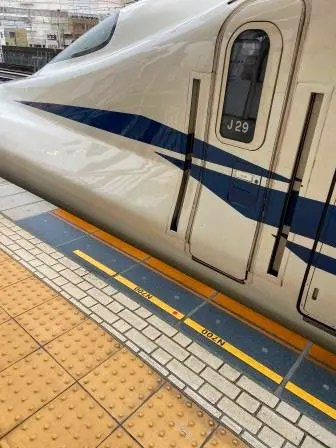
The set number appears most prominently on the window of the driver’s door. Here is J29.
 Trains To Beyond