Part Five
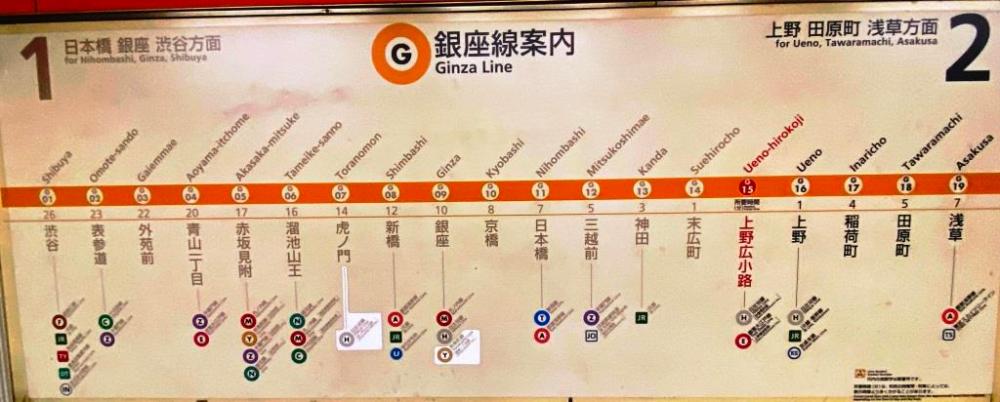
G1 – Shibuya, Finding Hachiko
Even before I set off, I start to regret my decision. Shibuya is complete chaos at the moment as the whole area around the JR station is being rebuilt. I struggle in the crowds and give up trying to get under the JR tracks. I take the long way around through the south part of the station and eventually emerge on the western side.
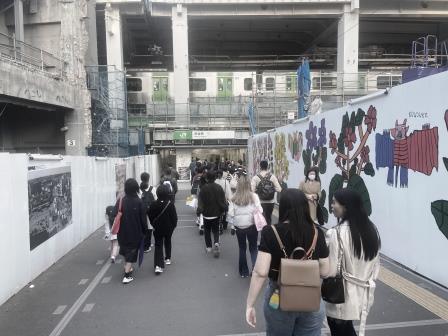
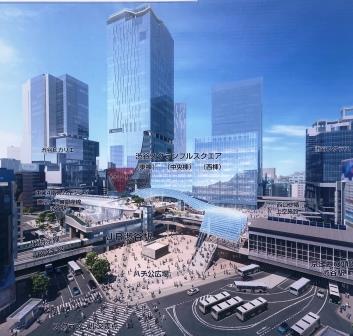
They have fenced off a lot of the construction site here with boards and decorated them with images of how the area used to look and how it will look when it is all completed. I have to admit the plans seem great but I think I will wait until it is all finished until I come back here again.
When the subway arrived here in 1938, in addition to the Yamanote Line, there were already three private electric railways operating. The interurban line to Tamagawa had begun back in 1907, the Toyoko Line towards Yokohama in 1932 and the Inokashira Line to Kichioji in 1934.
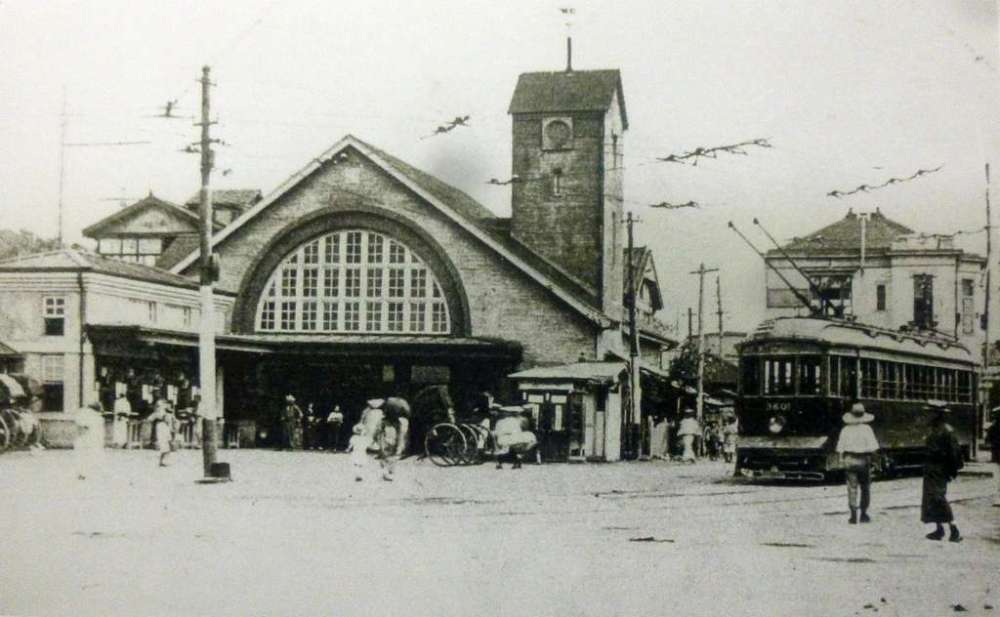
The Den-en-toshi Line, all underground, replaced the surface Tamagawa Line in 1977 and was then directly linked into the Hanzomon subway line which started operations in 1978 and was gradually extended into central Tokyo.
The Fukutoshin Line, a new subway heading north roughly parallel to the Yamanote Line, began in 2008 and is now linked in to a new underground section of the Toyoko Line, whose old surface terminal station has been demolished.
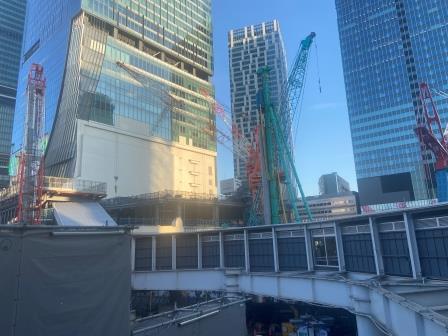
As I make my way gingerly through the construction site around the west side, I spot the old Ginza Line viaduct leading into the depot above me. It used to be busy with trains constantly leaving the station to turn around. Now most services reverse direction in the new station so trains on this section are rare. Nevertheless, they have retained one line (leading from the northernmost platform) to connect with the depot, still enclosed in Mark City.
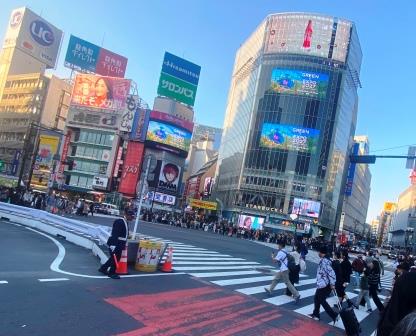
I finally arrive at Shibuya’s famous Scramble Crossing. I stand here and watch the lights change and the mass of people begin to cross the road from all the different directions. Behind me, in a square named in his honour, is one of the few constants in ever changing Shibuya, the statue of Hachiko the dog.
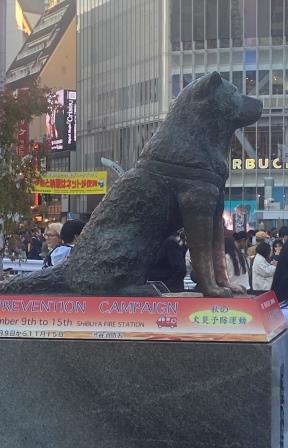
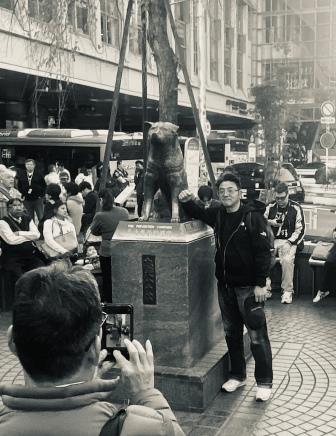
Hachiko (1923-1935) was an Akita dog who was famous for his loyalty. He continued to wait almost every day here outside Shibuya station for nine years after his owner’s death. Hachiko actually became famous during his own lifetime and the first bronze statue of him was unveiled a year before his death. It would have been here at the time of the opening of the chikatetsu. Although it was recycled as part of the war effort in 1945, a replacement was erected in 1948 and remains a popular tourist draw to this day.
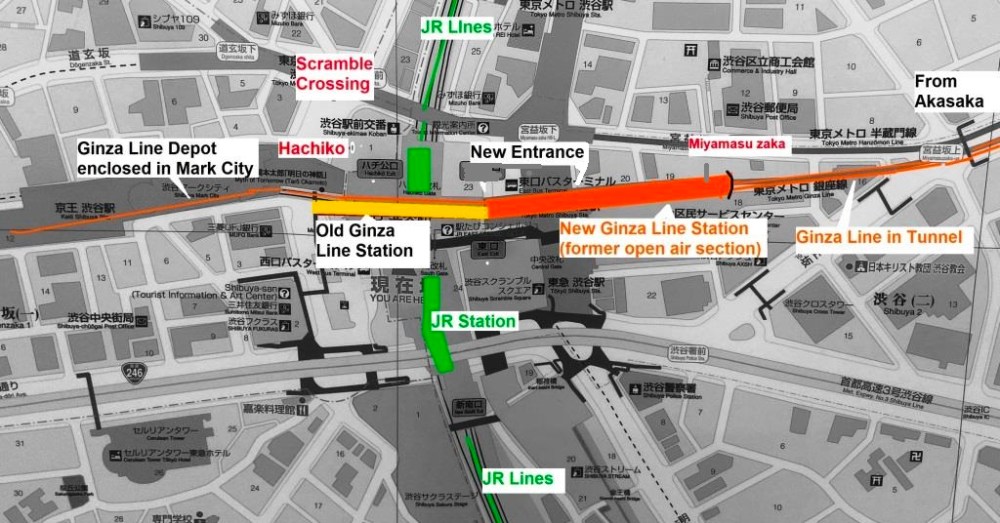
G1 to G19 – Train back to Asakusa (14.3km / 35 minutes)
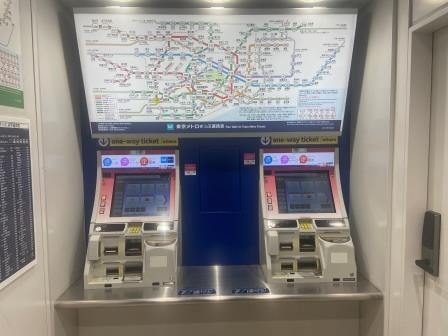
It is time to return to Asakusa. I recharge my Pasmo IC card at one of the ticket machines near the entrance to the Ginza Line and make my way through the barriers.
This is the first time I have seen the inside of the new station and I am very impressed. The new island platform is nice and wide and the roof is very cleverly designed in the shape of the “m” logo of Tokyo Metro.
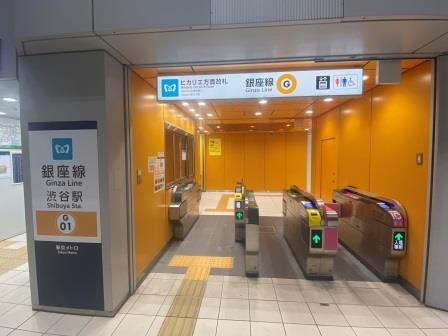
Although there is a connection to the depot from Platform 2, almost all the services turn around here in the station. The trains are alternating departures between the two platforms.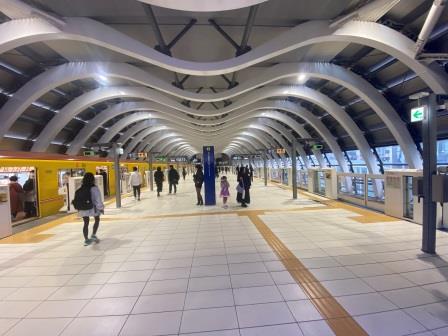
On weekdays, trains run around every two minutes in the rush hours and every five minutes the rest of the time. The first trains start out around 5am and the last ones leave around midnight, reaching each end of the line around 40 minutes later.
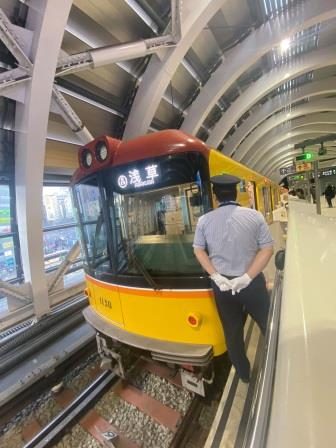
The Ginza Line uses a fleet of Tokyo Metro 1000 series trains. The first of the 40 six car trains was delivered in 2012 and the last one in 2017. Like all their predecessors, but unlike all other Tokyo subway lines except the Marunouchi Line, the trains run on 1435 mm standard gauge track and are powered by a 600 V DC electrified third rail.
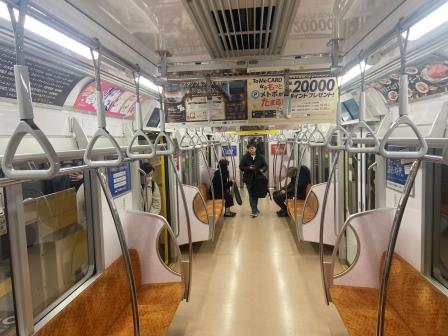
For the purpose they are being used, the trains are very comfortable. The information systems are especially good. At first I am intrigued why I am being told at Shibuya which platform my train will arrive at Asakusa on, until I realise that only one of the two tracks there has a direct connection to the Asakusa line.
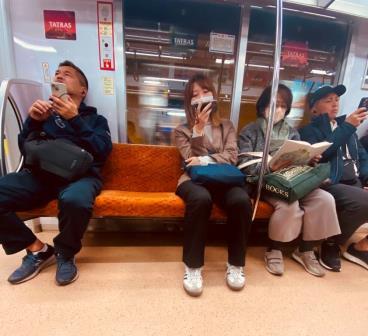
All the 1000 series trains are designed to evoke the very first 1000 type subway trains of 1927, but the last two built (Units 39 and 40) have extra features that celebrate the history of rolling stock on the line, including woodgrain effect panels and brass coloured handles. Their lighting can also be reduced to give an old-style effect.
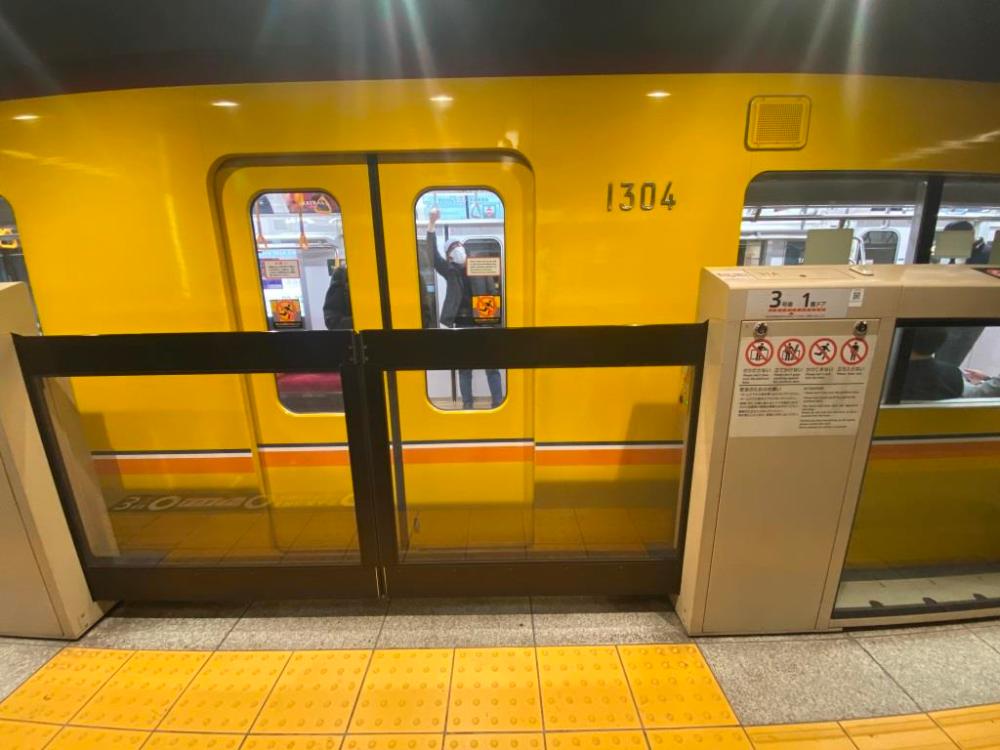
I make my way back towards Asakusa. It is all quite familiar to me. I used the Ginza Line quite often when I lived in Tokyo between 1987 and 1994 and on the many trips I have made back here since then. Slightly less familiar to me are the platform doors that have been retrofitted to each station to reduce accidents.
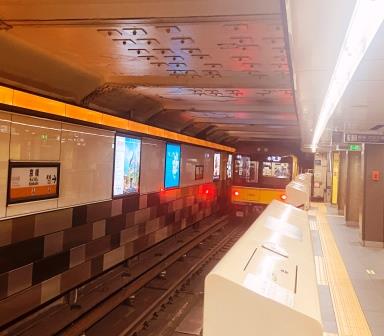
I get off at a couple of stations along the way just to have a look around and examine the design. The whole line is built to a smaller profile than the rest of the system and the low roofs can make it seem claustrophobic. Both the lines in the different directions are in the same tunnel but are separated by a system of steel girders and this seems to add to the constrained atmosphere.
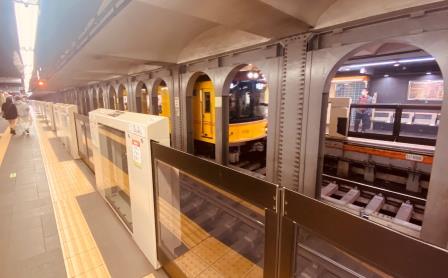
The stations between Shimbashi and Kanda and the new one at Tameike-sanno have island platforms, although those at Shimbashi and Nihonbashi have been augmented with extra side platforms. Omotesando and Akasaka Mitsuke both have double island layouts offering cross platform interchange to the Hanzomon and Marunouchi Lines respectively. The rest of the stations have side platforms.
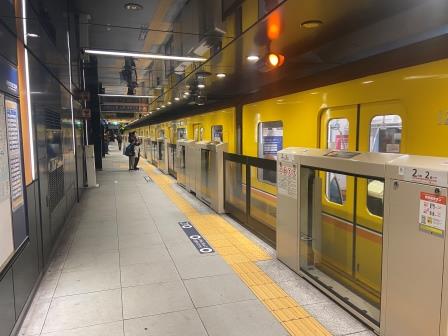
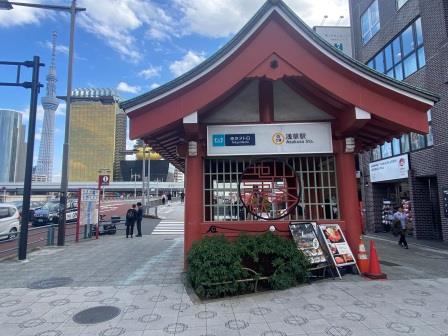
With a few stops, it takes me just under an hour to reach Asakusa. The non-stop journey takes around 35 minutes. As at Shibuya, the trains turn around here in the station, although here there are two side platforms.
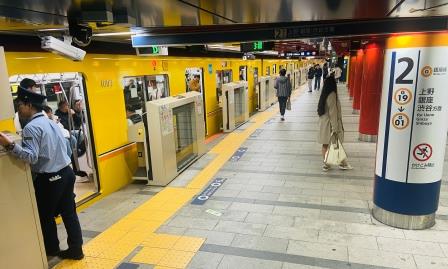
I climb back up to the surface. The Ginza Line is very shallow throughout its length and although elevators have now been added at the stations, the vast majority of travellers use the staircases.
I am finally back at Asakusa. Time for a drink to celebrate. Perhaps even an electric brandy !
Return to – “Chikatetsu at 100”
 Trains To Beyond