Gifu-Hashima (367.1km/229.4 miles)
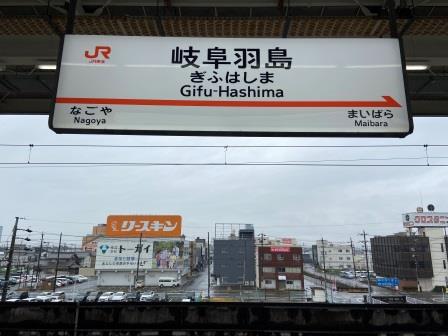
The layout at Gifu-Hashima is unique in that there are 6 tracks passing through the station. As well as the two centre fast roads there are also two island platforms each with two tracks either side. The four platforms are numbered 0, 1, 2 and 3. The train service here is only half hourly, so at first this looks to be over provision.
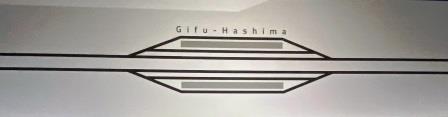
The answer is that the two outer platforms on each side are rarely used but they are there in case of disruption. This makes sense, because the next section through to Maibara is often affected by heavy snowfall in the winter.
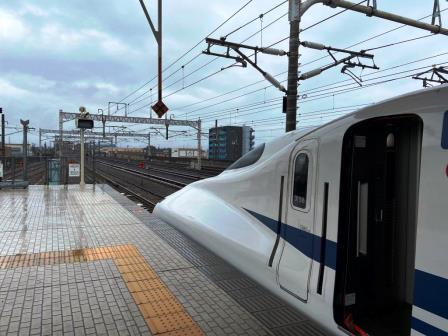
Even today after the introduction of various counter measures. Snow and heavy rain are often the only factors that ever affect the line’s incredible punctuality.

Back in 1964 the station was only ever served by Kodama services, but since the recasting of timetables in the 1980s the station now gets an hourly Hikari and an hourly Kodama.

In and around Gifu-Hashima Station
Gifu-Hashima is served only by the Shinkansen, although since it opened in 1964 another station, Shin Hashima (1982), has been constructed on an adjacent site. The Meitetsu Hashima Line provides service from here to Gifu city.
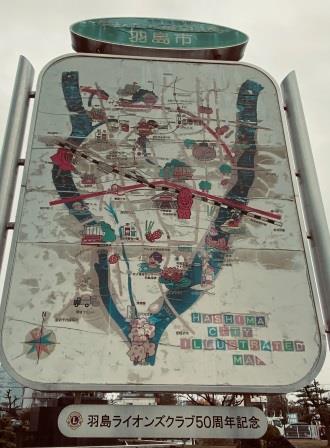
I go for a wander. The West exit seems pretty desolate, so I go across to the East exit. It is actually easy to imagine that when the station was opened there was nothing at all here. Even today although the makings of a new town have risen around the station, it is difficult to see why there needed to be a stop here at all.

There is a bit of a myth that Gifu-Hashima was only added because of the intervention of Mr Ohno, a local politician. The story goes that it had already been decided that the route would bypass the important city of Gifu on the old line, and it was only Ohno’s lobbying that got a station here as a compromise.

It is probably not true, as the plans to create the station had been made anyway, in part because they needed a place to halt trains in case of disruption. This hasn’t stopped them placing a large statue of Mr and Mrs Ohno, him with cigarette in one hand, pointing towards the bullet train tracks with the other, right in the middle of the station square. It is a nice touch.

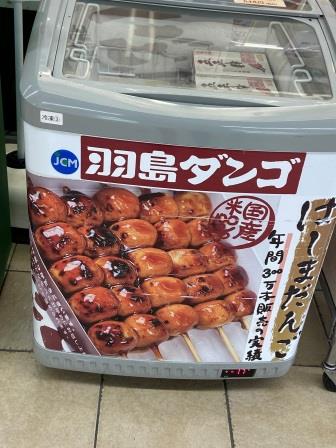
The concourse under the tracks is pretty deserted and this is easily the quietest station I have used today. There isn’t even much in the way of a selection of bentos either, although they do have Hashima Dango on sale, little dumplings made with regular and glutinous rice flour served on sticks with a sweet sauce.
Train #8 – Gifu-Hashima to Maibara
Back on the platform I spend around ten minutes watching some of the fast trains pass through the middle tracks. Then my next train, Hikari 643 (12:33 from Tokyo, and bound for Shin-Osaka), arrives.
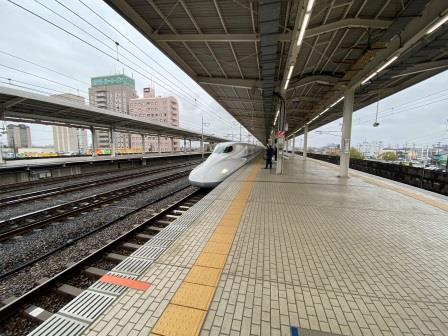
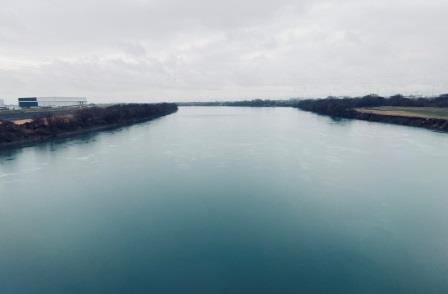
We depart at 14:35 and then cross the Nogaragawa (571m) and Ibigawa (489m) bridges in quick succession.
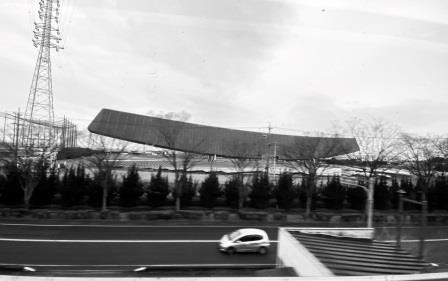
On the right the great solar ark comes in to view. It was created by Sanyo in 2002 and has over 5,000 panels that produce approximately 530,000 kilowatt-hours each year.
Soon we pass close to Sekigahara which is the site of one of the most famous battles in Japanese history. Interestingly the town itself is twinned with both Waterloo and Gettysburg. It is from here that we will head through the mountains towards Maibara, following the route of the old Tokaido Line, albeit on a much straighter course. When the proposed route for the Tokaido Shinkansen was first published in 1958, it actually bypassed this section.

Instead, the line was intended to go west from Nagoya and directly through the Suzuka mountains to Lake Biwa. This route would have shortened the line by 15km but would have involved building a 12km tunnel. Cost concerns and the wish to get the line open in time for the 1964 Olympic Games, awarded to Tokyo in 1959, meant that the Suzuka plan was dropped, and the Sekigahara route was adopted instead.

We pass through a short tunnel and then plunge into Sekigahara (2,810m) and arrive in Shiga Prefecture. Emerging back into the light we are now in much more open countryside; in some ways it seems like the first real continuous countryside of the whole trip. After another couple of tunnels, we are 400km from Tokyo. It is on this section that the Shinkansen is often photographed passing another famous mountain, Mt. Ibuki.

This is also the section that is notorious in winter for snow-related problems. Things are much better now with various countermeasures such as track sprinklers, but the “white stuff” can still cause a bit of a problem. We pass through another longer tunnel and then slowly curve left into Maibara. We arrive at 14:47. Our journey time of 12 minutes for the 41km compares with 19 back in 1965.

 Trains To Beyond