DAY FOUR
Santa Maria de Jesus
The next morning, I headed back to Antigua bus station and jumped on a crowded chicken bus heading up to the nearby town of Santa Maria de Jesus.
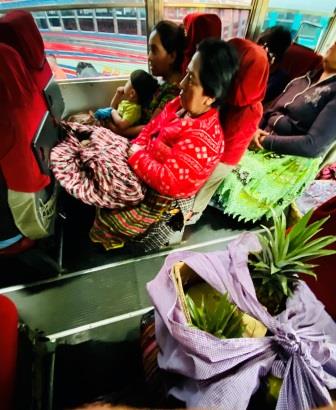

Even though it was still before 10am, almost all the passengers on the bus were ladies returning home from the market. I spent most of the journey standing next to a seat piled up with a box of pineapples and a box of sweaters. I wasn’t the only one standing either.

The bus slowly made its way out of Antigua in heavy traffic, and then after picking up the last few passengers, headed up the hill to Santa Maria. The road was extremely twisty, and it took all of my balancing skills to avoid falling onto the boxes.
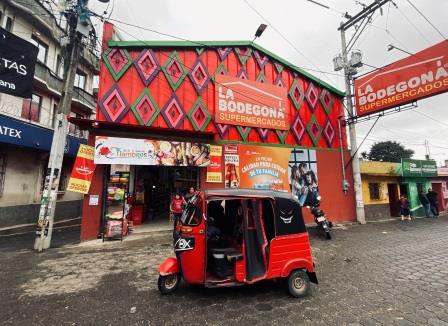
After a trip of 40 minutes or more the bus pulled up in a side road just outside the little town square. I watched as all the produce the passengers had bought at the market was slowly unloaded from inside the bus and from the roof.
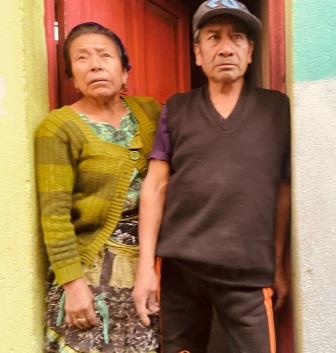
Santa Maria has a population of around 22,000, and the vast majority of the residents are indigenous Mayan people. Kaqchikel is spoken along with Spanish in the town.
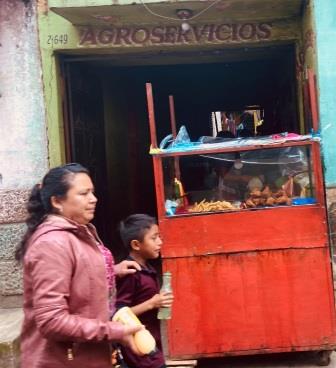
In fact, although Spanish is the official language of the country, spoken by around 93% as a first or second language, there are also around twenty Mayan languages spoken in rural areas.

I walked around the hilly town, circling around a few times back to the market square and its beautifully decorated church. The people here were mostly dressed in traditional clothing.
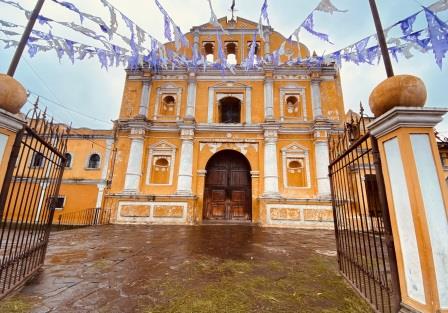
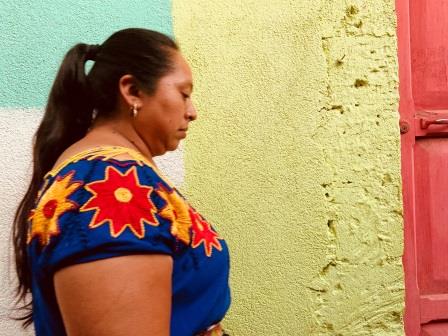
I was perhaps the only foreigner walking around and I had expected some curious looks from one or two people, but I got none. People just ignored me for the most part, but in a good way.
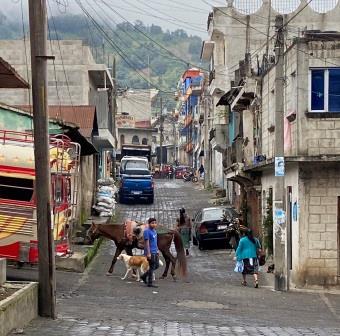
It was obvious from walking around that the town was a lot poorer than Antigua. There were certainly fewer cars, and quite a lot of horses and donkeys were being led around the streets.


Poverty amongst the indigenous communities is very high. Apparently, the UN estimate is that around 80% of their number can be classified as poor. This is against a figure of 50% in the general population.
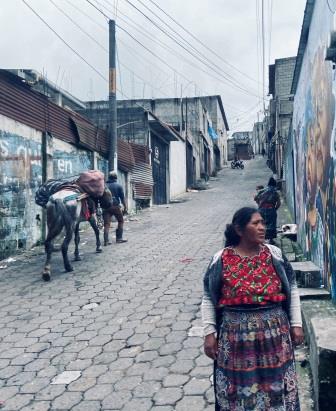
Government spending has been lacking and no efforts have been made to fund schools, hospitals and roads. Literacy levels remain low. So, it is unsurprising that there were quite a few posters and placards in support of the pro-democracy movement up here in Santa Maria too.
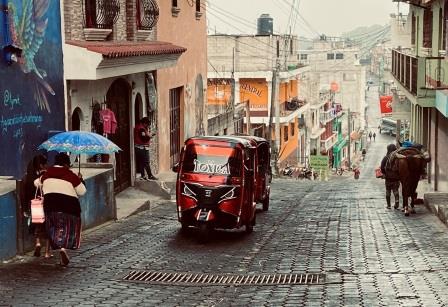
One of my strongest impressions of the visit were the beautiful murals painted on the walls all over the town.
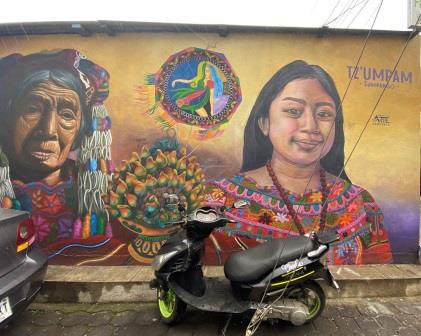
They were everywhere, blending in with the local costumes and adding colour to the drab concrete of the buildings.

El Almuerzo
Back in Antigua, I was standing in front of a restaurant trying to work out how to order lunch just by pointing. The counter was full of delicious looking stews in earthenware pots. I was doing my best to copy everyone else but I wasn’t getting anywhere.
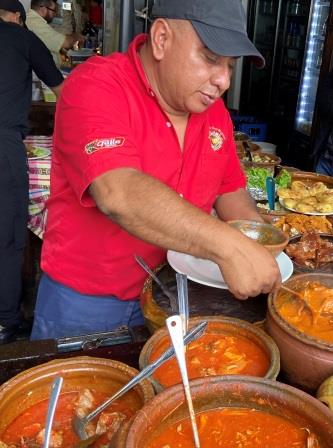
Luckily, there was a friendly local next in the queue. He explained in English that I needed to choose the main course, he recommended the shredded pork hilachas, and then I needed to pick two side dishes. I could get the tamale I had been pointing at, but it would be extra. The whole meal would be brought to me in one of the dining rooms on the upper floors. I wasn’t to worry; they would find me. I could pay at the end.
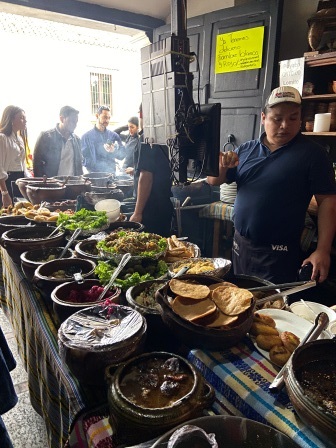
Eventually “my saviour” came and sat with me. Over a couple of beers, ordered from a separate waiter, he explained that he was married to a British girl and spent half his time in London. We sat there having a conversation about the reliability of the Northern Line and Guatemalan cuisine.
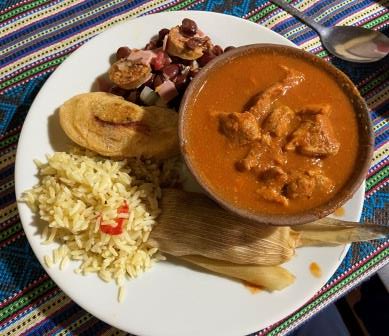
Every meal I had during my stay was excellent. For most of the time I survived on bread for breakfast, but I tried the traditional version of eggs, tortillas, beans and fried plantain on a couple of occasions and found it delicious.

My main meal of the day was usually lunch. I love the kind of cheap set lunch they have in small restaurants in many Latin American countries, and I tried a few different variations during my stay.
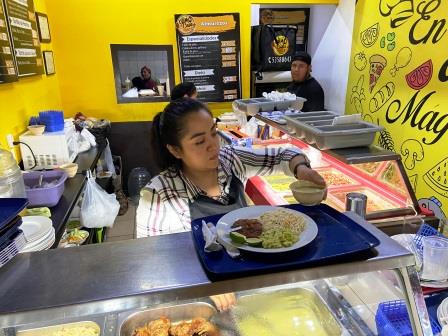
Most of the time there would be fish or meat, along with rice, plantain or potatoes. There might be some salad and a bit of salsa, most of the time there would be a cup of soup and there would always be fruit juice.
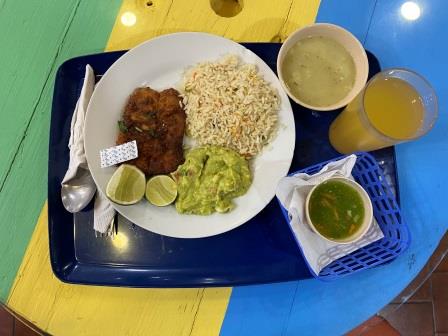
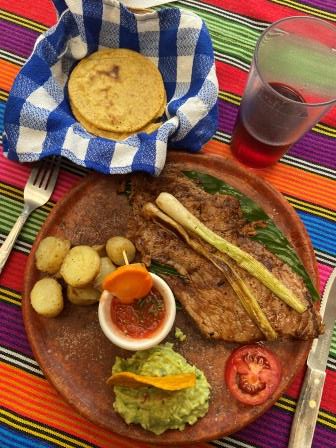
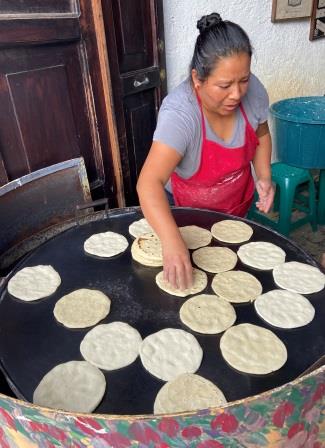
There were always tortillas as well, in fact many places had the tortillas being cooked at the entrance, perhaps as a way of enticing the customers in. Even in the expensive places this kind of meal would only be around 40 Quetzals or around 5 USD.
I also tried Pepian de Indio, recognised as one of the national dishes of Guatemala. Basically, it was cuts of chicken cooked in a lightly spiced tomato sauce and served with rice.

DAY FIVE
Lago de Atitlán
On my fifth day I made a trip out to Lake Atitlan, just to the north of Antigua in the Guatemalan Highlands and reachable by bus within a few hours.
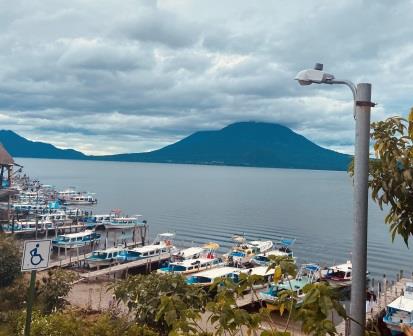
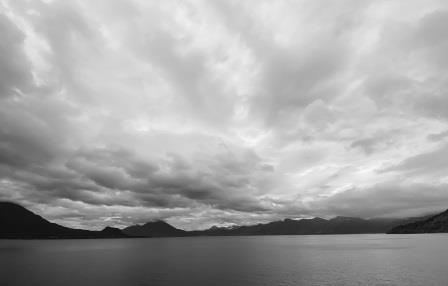
Often described as the most beautiful destination in the country, the setting is certainly pretty magical. The lake is surrounded by volcanoes.
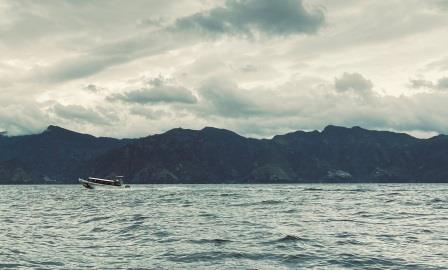
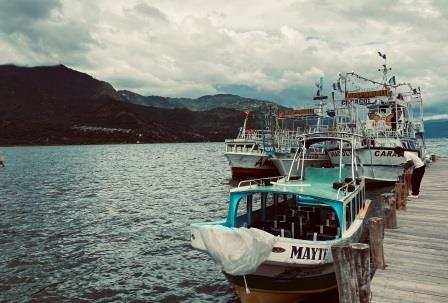
Starting at Panajachel, one of the larger towns on the lake, I spent the day touring a few of the other settlements around the shore using a fast boat.

The little tour that I joined had only just started up again after the protests had forced it to stop operating. It was still only available in Spanish; my fellow tourists were from Mexico, Argentina, Peru, Colombia and Ecuador.
I was the only English speaker, but somehow, we managed to get by with everyone helpfully chipping in translations from time to time. They were a really great bunch; by the end of the day we had a good camaraderie.
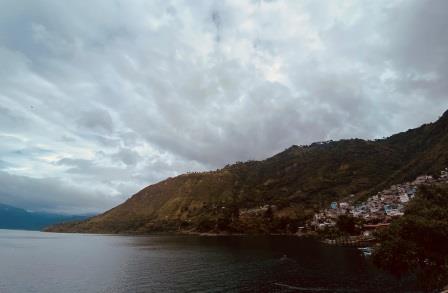
First up was the hillside settlement of San Antonio Palopo. It is famous for its cream pottery decorated in blue and green. We made the customary stop in the gift shop, but no one seemed interested.
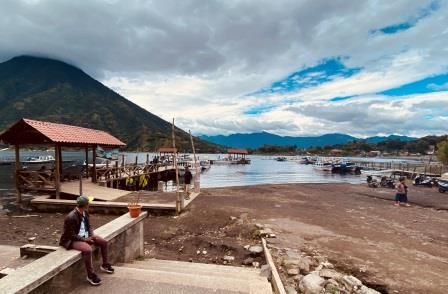
Lunch was fish caught from the lake and enjoyed in Santiago Atitlan, the largest settlement on the lake and a centre of indigenous culture.
After lunch there was a visit to see the little shrine to Maximon, a deity worshipped by the locals. Maximon is a 3ft tall wooden plaster figure which people make offerings to. He always has a cigarette on his lips.
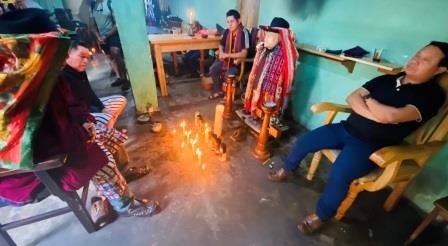
At the time of our visit there was a Shaman, a local priest, in the middle of conducting a ceremony to remove a curse from a local.

Traditional Mayan belief has been mixed with Christianity. The Maximon figure is also associated with Judas from the New Testament. The little shrine itself was filled with different Mayan and Christian symbols.

Christianity itself has been part of life here for many centuries, the main church, Iglesia Parroquial Santiago Apostol, dates from the middle of the 16th century.
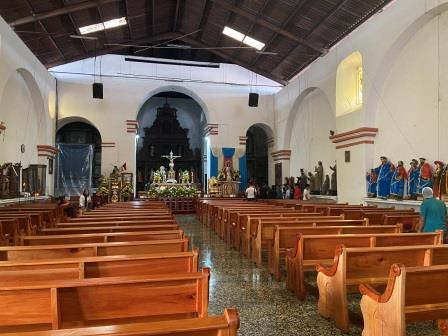
Our final stop was San Jaun La Laguna where the local residents had, in what is a potential model for other such settlements, created cooperatives to run the village. Some of these were modelled on the Israeli kibbutz method.

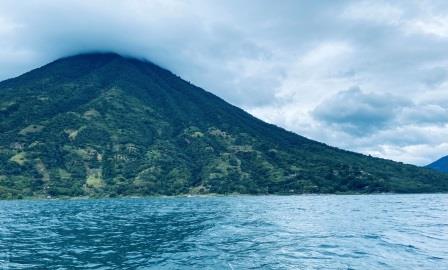
Some cooperatives looked after fishing and coffee growing; others oversaw the traditional crafts that are now aimed at tourism, such as painting and textiles.
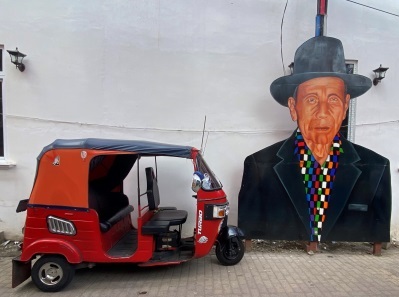
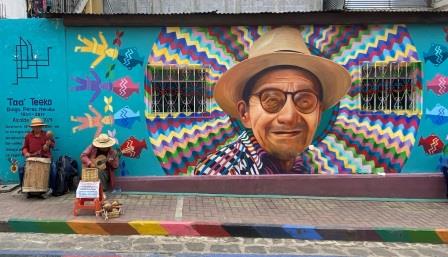
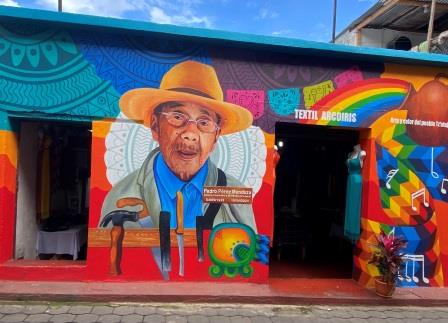
Significant elders who contributed to the village’s prosperity, like the engineer who first brought electricity here, were commemorated around the village by colourful murals.
DAY SIX
Pacaya
If I had one small complaint about my time in Guatemala, it was the weather. I visited at the tail end of the rainy season, so it was to be expected. The temperature stayed around 22 degrees Celsius the whole time, as it does for much of the year, but it was usually pretty cloudy with a fair bit of rain.

I never really saw much sun, nor did I ever manage to see the tops of the three volcanoes that surround Antigua.
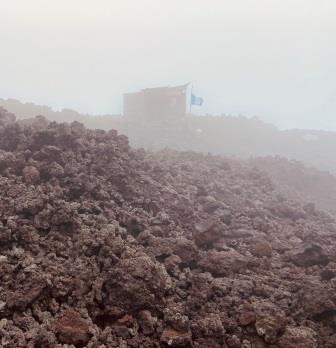
Guatemala has 37 volcanoes of which 3 are still active, Fuego, Santiaguito and Pacaya. The latter is the closest to Antigua and actually the most active of the three.
It was probably down to my own stupidity that I picked probably the worst weather of a bad week to attempt to hike up it.
The trip out to Pacaya took about two hours. The volcano has an elevation of 2552 metres but the route up was a pretty easy ninety minute hike with a few rests.

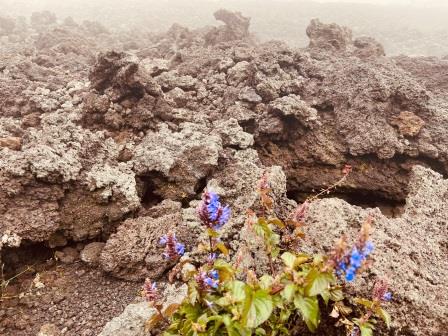
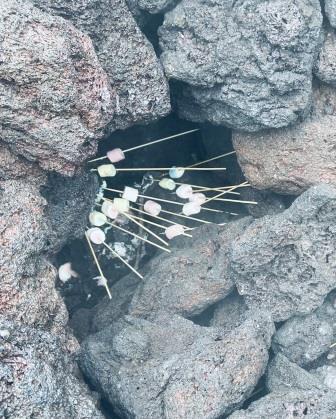
Sadly, the mist never cleared on the way up. We reached the lava field to enjoy the traditional toasted marshmallows on the hot stones, but apart from a dog fast asleep on the warm rocks, there was hardly anything to see.
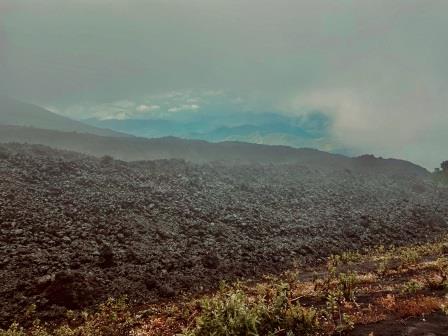
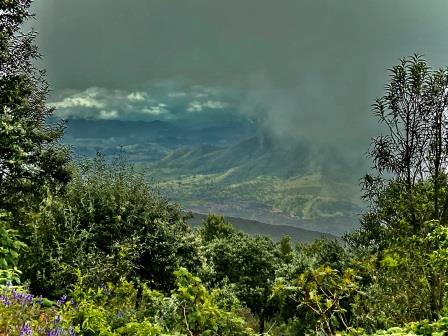
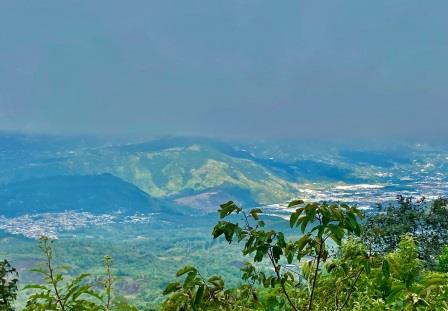
Happily, on the way down the skies finally cleared a little bit and we managed to get some pretty great views of the valley below.
Pollo Campero
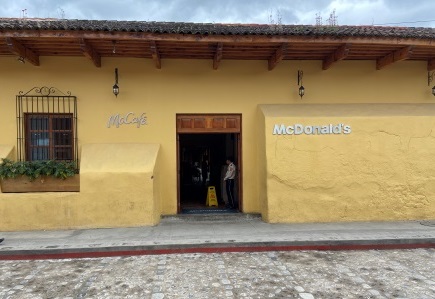
As I walked around Antigua, I began to notice the various western fast food chains located very subtly in traditional buildings. Taco Bell was the first one I noticed, then Starbucks, then Burger King. None of them had the normal logos you would normally associate them with.
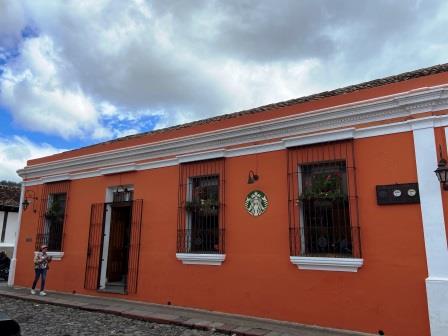
I assumed that this was all to do with the UNESCO status, but with the logos subdued it took me a while to realise that almost every burger, chicken and pizza chain seemed to have an outlet in Antigua.
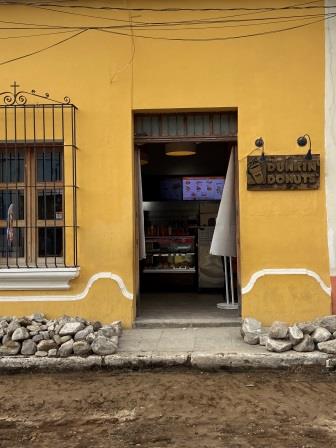
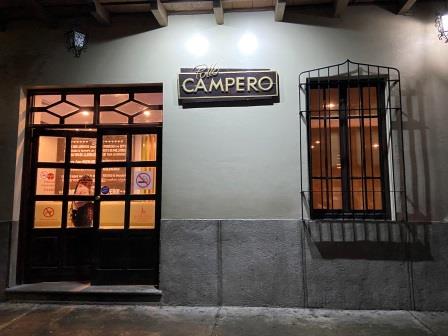
As I wandered around, I saw most of the places were moderately busy, but not overly so. Yet the fast food chain that had by far the longest queues was the one I had never heard of: Pollo Campero.
I did a bit of investigating on the internet and found that this was actually a local chain, founded in Guatemala in the early 1970s and originally featuring fried chicken in a similar style to KFC.
As the chain expanded, it also became popular with the Guatemalan diaspora in the United States (an estimated 1 million fled during the civil war) who often returned to America carrying boxes of fried chicken onto airliners. The company developed special packaging to contain the odours and keep the chicken fresh.
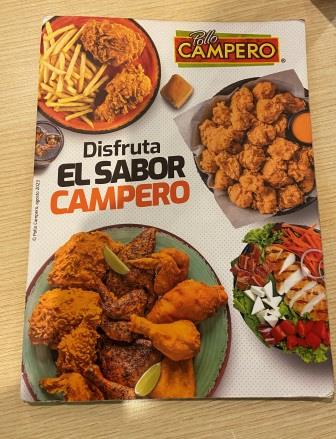
Pollo Campero finally expanded into the USA in 2002 and now has 400 branches across the world including some in Mexico, Spain and Italy. However, apparently the taste is not quite the same; Guatemalans returning to the USA still transport plenty of chicken in the special boxes.

Reading all this, I decided I just had to try some. I joined the line and waited patiently. Eventually I was shown to a table, and I ordered a set meal comprising of 3 pieces of fried chicken (they do grilled chicken too), fries, salad, a bread roll and a drink. I have to admit the taste was pretty good and the chicken itself pretty succulent. It certainly wasn’t the best meal I had had in Guatemala but I think I got why they fuss about it.

DAY SEVEN
Finca de Azotea
My last trip on a chicken bus was to nearby Jocotenango, for a visit to the Museo del Café.
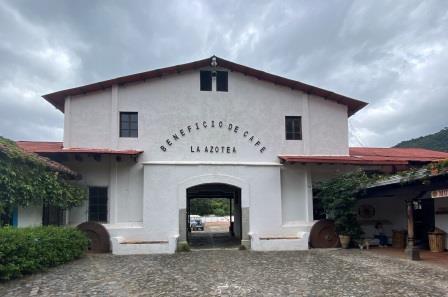
Housed on the Finca de Azotea, the small museum covers the history of coffee. It started with the discovery of Coffee back in Ethiopia and its introduction into Guatemala in the late 19th century.

Antigua coffee was described as “elegant and well balanced with a rich aroma and sweet taste.” Apparently, this is due to the rich volcanic soil, lots of sun and cool nights.
Guatemala produces around 4.2% of the world’s coffee, lying in 8th place behind Brazil, Vietnam, Colombia, Indonesia, Ethiopia, India and Mexico. Coffee is the main agricultural export from the country ahead of bananas, sugar and cardamon.
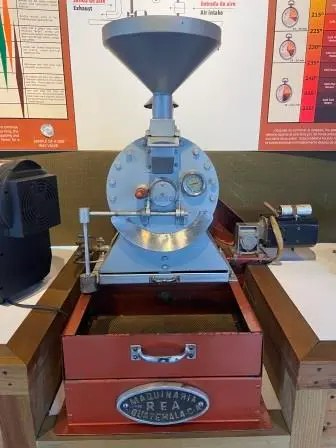
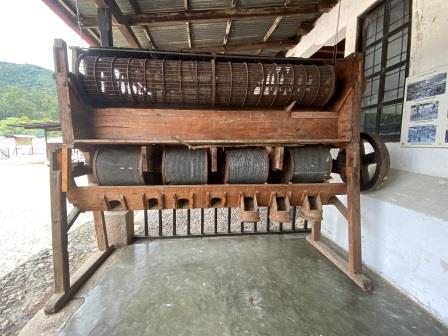
The museum explained the initial process from planting and growing to harvesting. Then, demonstrating the equipment used at each stage, it went through the weighing, separating, hulling, fermenting, washing, drying in the sun and husking before storage and roasting.
The startling story of why a cup of coffee is so expensive was also covered. The producing country gets just 16% whilst the importing country gets 84% of the price of a cup of coffee.

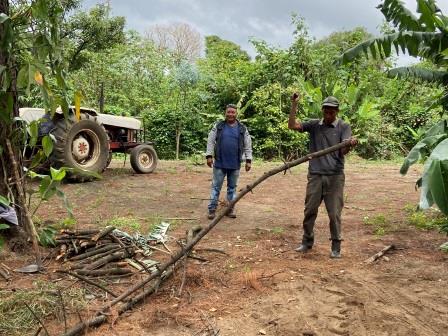
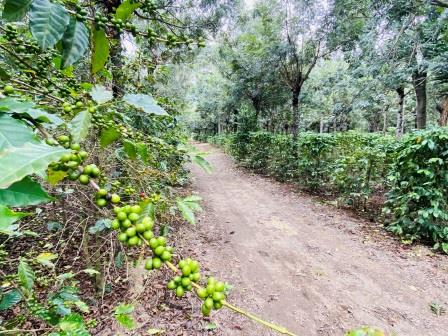
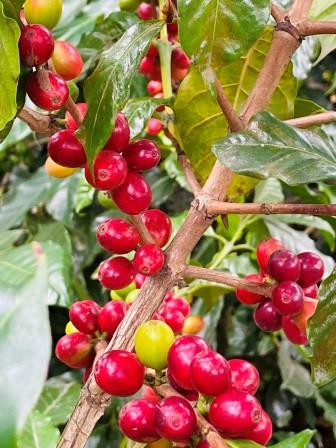
After learning about the process, I walked by myself for an hour or so around the farm itself. The coffee beans were just becoming ripe, many of them already turning red.
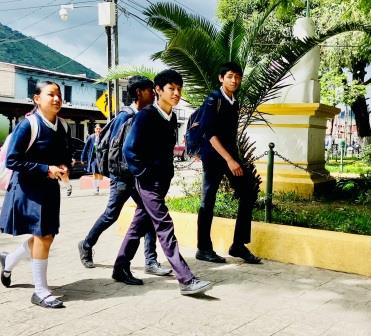
Later, as I sat in a little square admiring Jocotenango’s main church, I saw parties of children walking home from school. The long school holidays were about to begin. They were traditionally timed for the coffee bean harvest, enabling children to help bring in the crop without skipping class.

Por Qué No?
I spent my last evening in Por Qué No, a wonderful graffiti-covered bar around the corner from my hotel. I had tried a different bar each night of my stay and had enjoyed meeting visitors and locals in each one of them.

Amongst others, I had had the pleasure of meeting a local furniture company owner, a Guatemalan singer who had made his money in the USA, and an Argentinian girl who was taking a year off and was working behind one of the bars I visited.
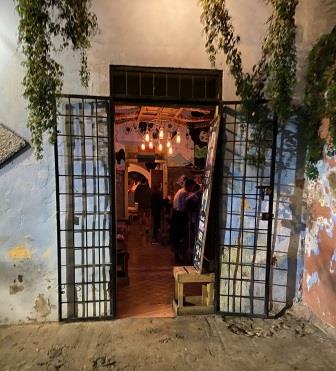
The bar scene in Antigua was obviously aimed at the tourist market, but the fact that it was busiest on Friday and Saturday nights, when plenty of rich locals came to stay from Guatemala City, meant that it was not exclusively aimed at foreigners.

All the places I visited were different, some of them were struggling for lack of tourists, but most were reasonably busy. Café No Sé, pitch black with only a few candles for illumination was probably my favourite. The place had its own home-made “Illegal” Mezcal too.

During my stay I tasted Gallo, the local mass-produced beer, but also had a chance to sample some of the up and coming craft beers, not least the wide range produced by the cool Antigua Brewing Company.
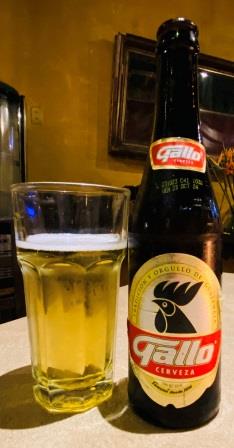
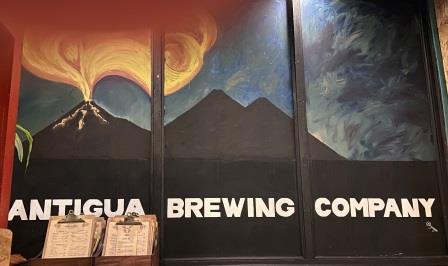
There also seemed to be a lively expat scene in the city. I met two men who had British wives and two Americans living in the town. The place even had a cool British pub, the Londoner, owned and managed by a very friendly English guy.

DAY EIGHT
Salidas Internacionales
They have recently streamlined the immigration and customs process for Guatemala. It can all be done in advance, both entry and exit, online. All I needed to do was present a QR code to the officer at the gate and I was through.

I suppose it’s a move to encourage more tourism, and Guatemala certainly deserves more tourists. Despite visiting the country when its problems were very visible, I enjoyed my time greatly. I hadn’t intended to see much of the country but I had managed to see a lot more than I expected.
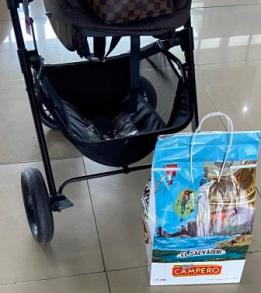
As I was waiting at the gate for my plane to Miami, I noticed people with boxes of Pollo Campero. There must’ve been more than 30 people on my plane with them. I smiled at some of them, and they smiled back.

Although my not speaking Spanish was obviously a hindrance, I found the Guatemalan people I met extremely patient, helpful and very welcoming. I hope they get through the current crisis quickly and prosper well in the future.
 Trains To Beyond