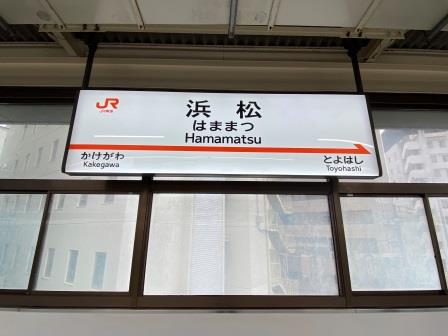
Hamamatsu (238.9km / 149.3 miles)
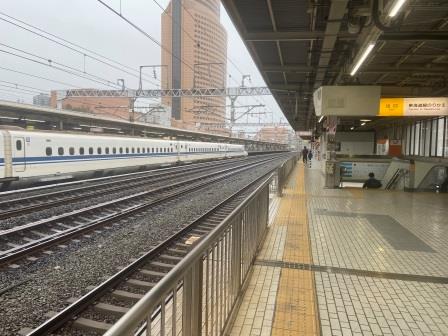
Although the layout at Hamamatsu, two side platforms and two centre tracks, is exactly the same as at Shizuoka, here we are on a tight curve. The fast trains tilt slightly as they come thundering through the centre roads.

The modern N700A and N700S trains can tilt as they curve, a factor that has helped raise the maximum line speed of the Tokaido Shinkansen to 285km/h.
Hamamatsu gets roughly the same service level as Shizuoka with a Kodama every thirty minutes and an hourly Hikari in each direction. The station is pretty much the halfway point of the Tokaido Shinkansen. It is roughly 90 minutes by Hikari and 120 minutes by Kodama to both Tokyo and Shin-Osaka.

In and around Hamamatsu Station
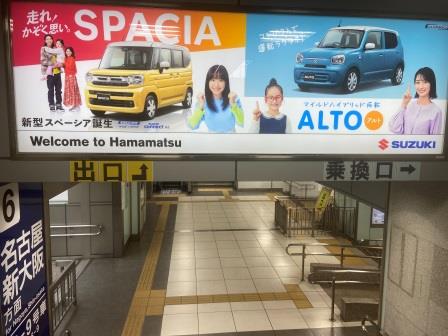
The first thing I see as I go down the stairs is an advert for Suzuki cars. The company was founded here in 1909, although its first products were cotton and silk looms. Despite eventually diversifying into the production of motorcycles and cars, and becoming a worldwide brand, the company still has its headquarters in Hamamatsu.
Yamaha was also founded here in 1887 and although its motorcycle division was spun off, the musical instrument part of the company is still based in the city. There are various interactive displays promoting the company on the lower concourse.

Kawai is Yamaha’s big rival in piano making: the company was founded by an ex-Yamaha employee in 1927. It also has a presence here at the station with a dedicated promotion area and a large piano for passengers to play.

I wander out of the South (Shinkansen) exit and make a circle of the little square opposite. The main exit is on the other side of the station, which first opened in 1888. It is still a major stop on the Tokaido Line today.

As I am walking around I spot an unagi (freshwater eel) restaurant. Hamamatsu is famous for the fish, which is caught in nearby Lake Hamana. Unagi features in some of the bento lunches being sold back at the station.


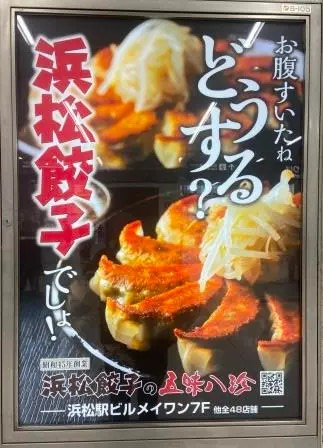
Another local delicacy is fried Chinese-style dumpling. Hamamatsu gyoza is said to have originated in the 1950s when a resident returned from China and began selling them at a small stand near Hamamatsu station.
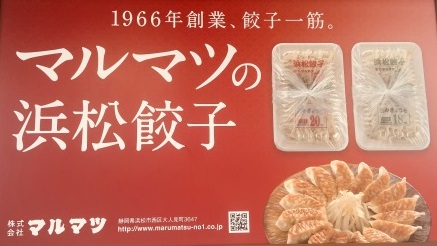
Gyoza are popular all over the country but the distinguishing factor here is the presentation, laying them in circles when cooking in a frying pan, and the method of serving, always with plenty of moyashi (bean sprouts).
Train #6 – Hamamatsu to Toyohashi
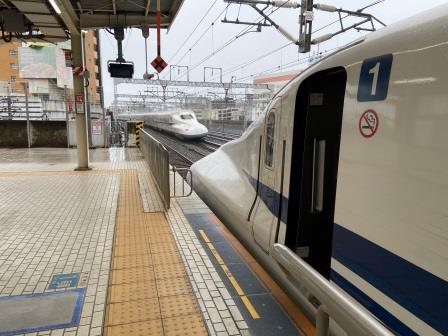
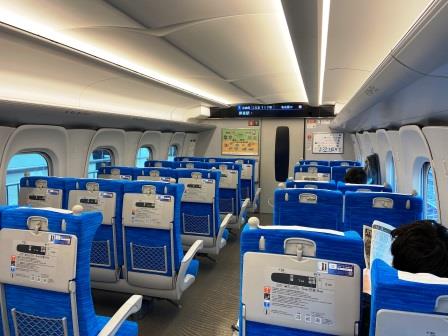
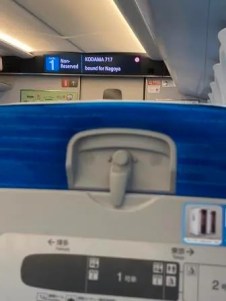
My next train, Kodama 717, which left Tokyo at 10:27, comes in and I get a seat on the right hand side. This train is formed of an N700S set, the newest design. There are a few external differences to the N700As that I have been travelling on so far. Inside, it is more modern, with a different lighting system.
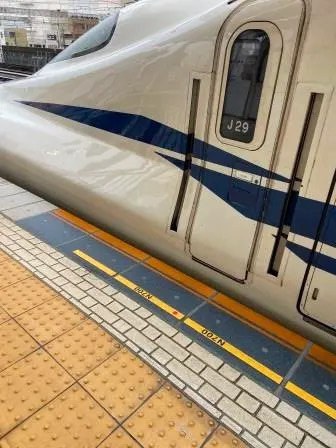
As we leave the station at 12:23, the main Shinkansen works where new trains are built and heavy repairs to existing train sets are carried out comes into view. As I continue to admire the interior of this very latest version, I think back to all the different types of Shinkansen that I have travelled on past here.
We are passing very close to the coast but there are also views of Lake Hamana on the right. We cross the Lake Hamana Bridge (505m) with the old Tokaido Line alongside us once more.
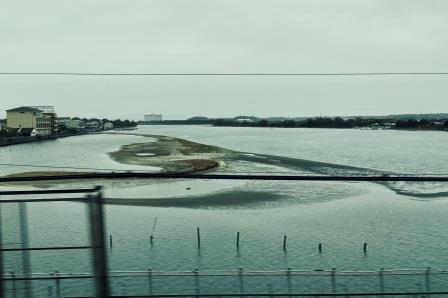
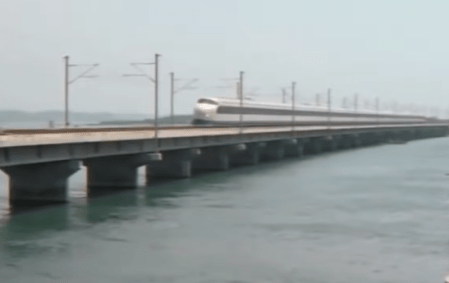
This is another famous view that often appears in shots of the Shinkansen. On the right is the impressive speed boat racing stadium. As we pass into Aichi prefecture we are around 250km from Tokyo.

The views are a little different now, this section between two stations is the first without any tunnels, but the line is famously undulating due to mining subsidence. Eventually, we begin to gently curve to the right.
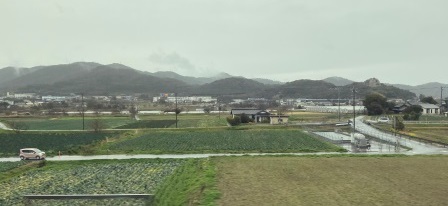
For me this always marks the beginning of the second stage to the journey. We slow and, bang on time at 12:39, arrive at Toyohashi. Our journey time of 12 minutes for the 35.3km compares with 17 back in 1965.

 Trains To Beyond