A lot has been written over the years about the history of the railway system on the Japanese island of Kyushu. This is my own modest account.
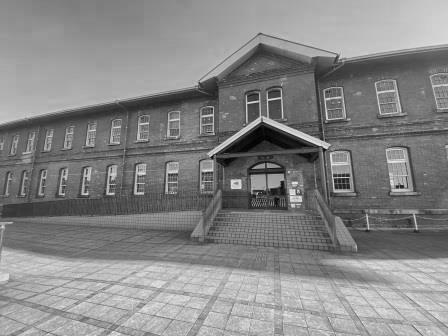
This brief overview draws heavily on a visit to the excellent Kyushu Railway History Museum at Moji in Fukuoka Prefecture. The museum is thoroughly recommended.
Introduction
Kyushu, the world’s 36th largest island, does not have its own regional government. It is an integral part of Japan and is made up of seven prefectures, each with its own directly elected governor and assembly. It follows therefore that the history of its railways is intertwined with that of the Japanese network as a whole. Yet, prior to 1907 and again since 1987 its main operating company has covered only the island itself, bringing a local regional ‘Kyushu’ flavour to its trains.
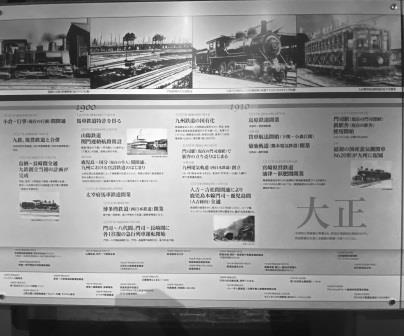
At one end of the central hall at the Kyushu Railway History Museum there is a large, illustrated panel. It tells the story of the island’s railway in chronological order from the 1850s right up to the present day. Viewing it together with the other exhibits in the museum building and the items of rolling stock outside, gives one a clear understanding of the impact that the train had on Kyushu.
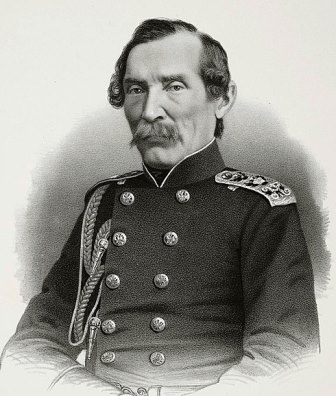
Interestingly, Japan’s whole railway story actually began in Kyushu. In 1853 a Russian naval officer, Yevfimiy Putyatin, visited Nagasaki and displayed a model steam locomotive to Japanese officials from Saga Domain. In a possible sign of what was to come, by 1855 the officials had succeeded in building their own model.
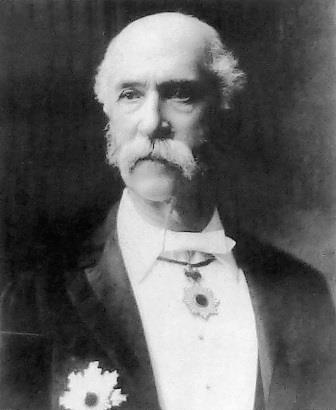
In 1865, Thomas Glover, a Scottish merchant and industrialist, was responsible for bringing the first full size locomotive to Japan. He demonstrated a small 2-4-0 tank engine named Iron Duke, built by Vulcan Foundry, on an 8-mile track especially laid in Nagasaki. The first fully fledged Japanese railway opened just seven years later between Tokyo and Yokohama in 1872 using similar locomotives.
The first real railways in Kyushu arrived almost twenty years later and the history of the island’s railway system can be broken down into four stages between four operating companies: Kyushu Railway (1888-1907), Japan Government Railways (1907-1949), Japan National Railways (1949-1987) and JR Kyushu (1987-present).
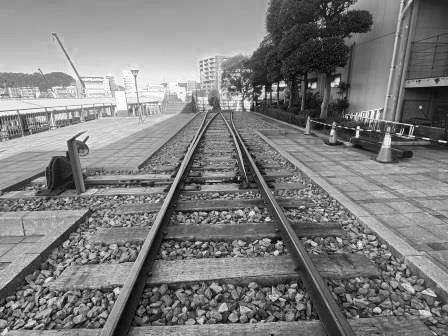
Kyushu Railway (1888-1907)

The Railways Arrive
Kyushu Railway (Kyushu Tetsudo), a private concern, was set up in 1888. Initially it was based in Hakata (Fukuoka). Its first stretch of line was opened between Hakata and Kurume in 1889. It employed the same track gauge as the rest of the growing Japanese network, 1067 mm (3 ft 6 in).

This line would eventually become part of the Kagoshima Main Line, and in 1891 it was extended eastwards to Moji and southwards via Tosu to Kumamoto. In the same year, the company’s headquarters moved to Moji to be housed in the building that is now used for the museum.

The Network around 1900
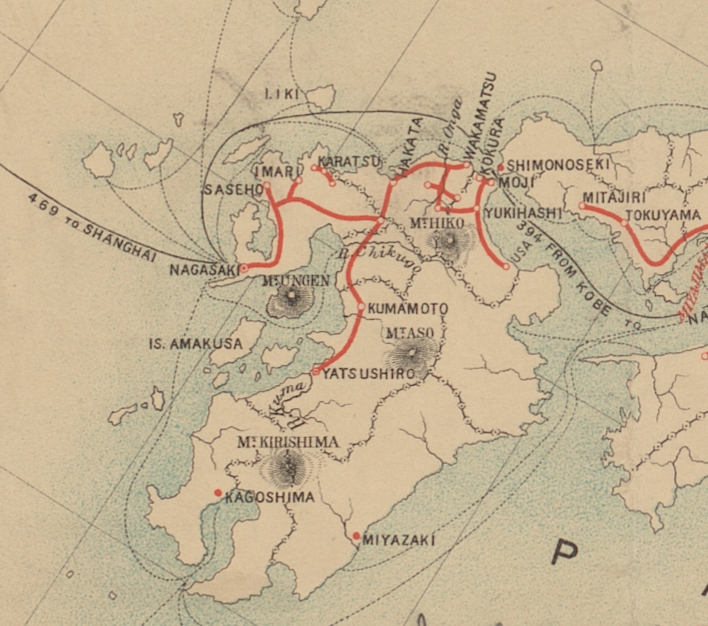
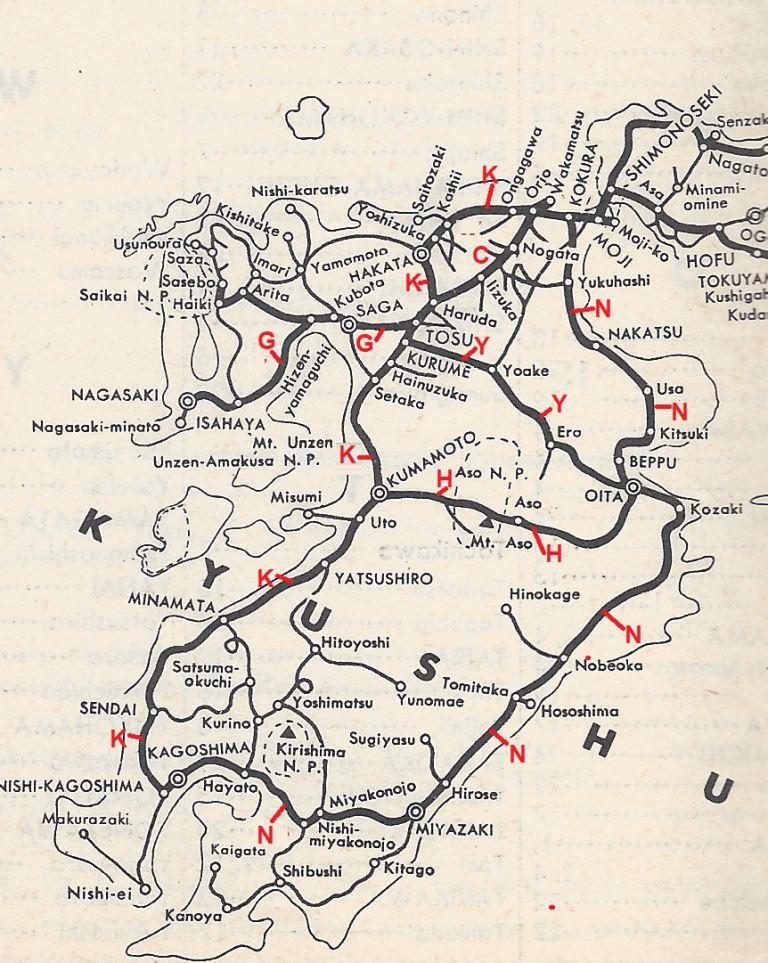
By 1900 the network was slowly beginning to take shape. The Kagoshima Main Line had been extended to Yatsuhiro in 1896 and would reach Kagoshima via Hitoyoshi (the current Hisatsu Line) in 1909. Trains had reached Nagasaki (current Urakami) and Sasebo from Tosu via Saga and Haiki (current Omura Line) in 1898.
In 1901, coinciding with the opening of the Sanyo Main Line into Shimonoseki, the railway ferry service across the Kanmon Straits to Moji began. It was to last until 1964, more than twenty years after the opening of the railway tunnel.
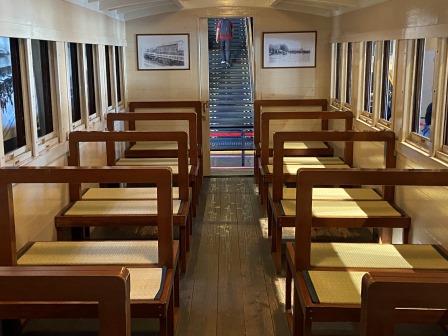
The Nippo Main Line, which would eventually stretch all the way down the east coast of Kyushu had begun in 1895 and by 1909 had reached Usa.
Several lines were constructed to serve the coalfields of Kyushu (not far from Moji) such as the Chikuho and Miike, which were at the heart of Japan’s rapid industrialisation at the end of the 19th century and supplied the Yahata Steel Works near Kokura.
By 1907, Kyushu Railway operated 712.6 km of railways in northern Kyushu including daily through services from Moji to both Nagasaki and Yatsuhiro.
Japanese Government Railways (1907-1949)

On July 1, 1907, the entire operation of Kyushu Railway was purchased by the government of Japan under the Railway Nationalization Act.
Moji Station
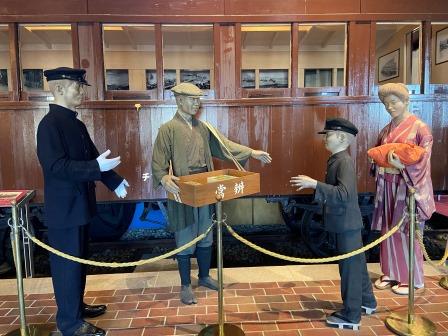
In 1914, the station at Moji (after 1942 known as Mojijko), which had first opened in 1891, was rebuilt in an Italian Renaissance style.
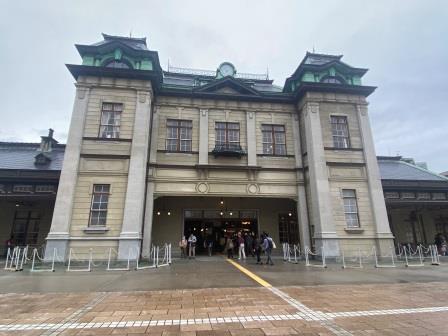
Moji was the ‘0 km’ point of the island’s network and until the 1940s a busy interchange point between the ferries to and from Shimonoseki and trains arriving and departing to different parts of Kyushu.
Development of the Main Line Network
By 1920 more progress had been made on construction and lines had been completed to Aso in 1914, and to Miyazaki via Yoshimatsu and Miyakonojo in 1916. Nevertheless, significant gaps in the main line network remained.
In the south, the break in the Nippo Main Line along the east coast (3 on the map below) would not be closed until 1923, the Kagoshima Main Line’s short cut via Sendai (2) would not open until 1927, whilst the direct route between Miyazaki and Kagoshima via Hayato (eventually also part of the Nippo Line) would not be complete until 1932.
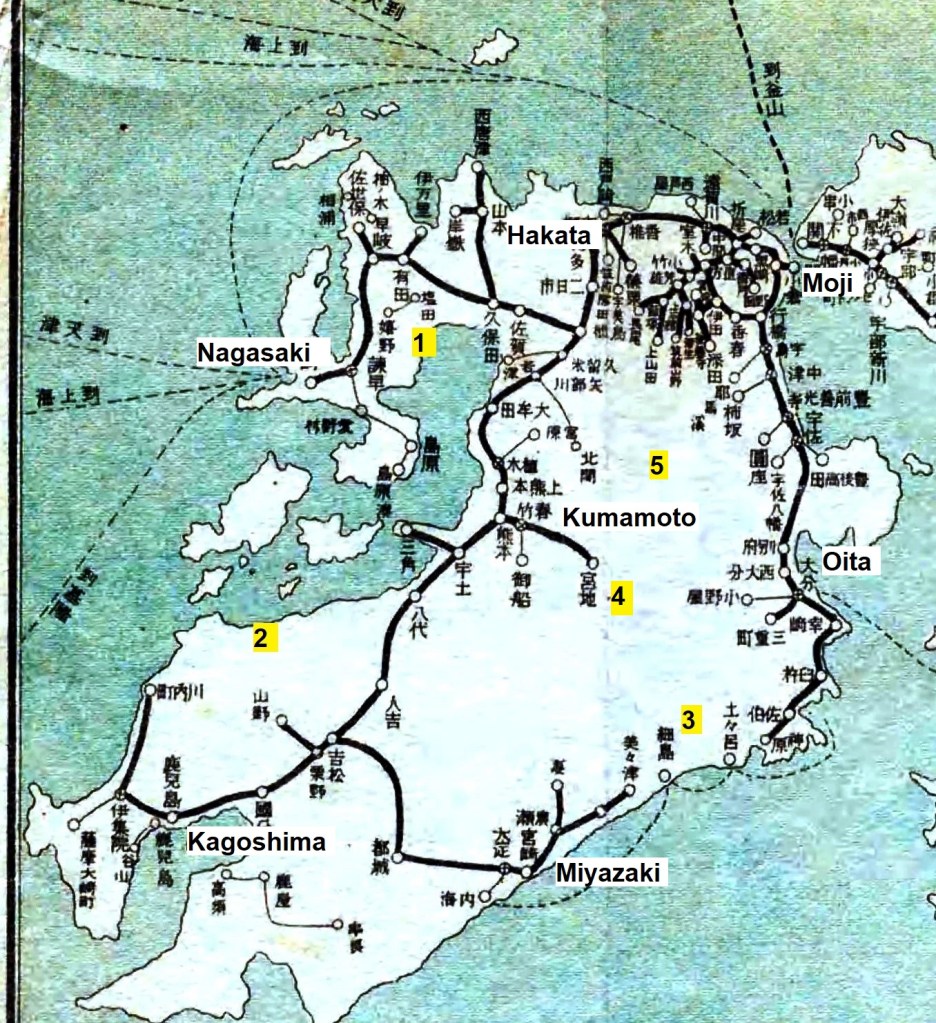
Further north, the Hohi Main Line linking Kumamoto with Oita via Aso (4 above) was finally completed in 1928 and the last section of the Chikuho Main Line from Wakamatsu via Nogata reached Harada in 1929. The Kyudai Main Line linking Oita with Kurume via Era (5) was not finished until 1934, the same year the more direct route to Nagasaki around the coast (1 above) came into operation.
Locomotive Power
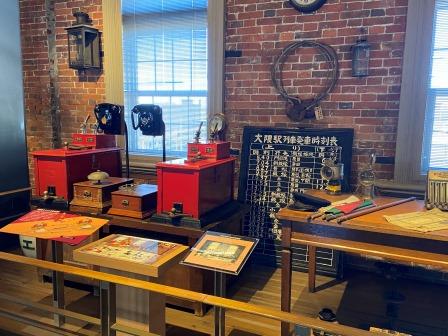
Museum exhibit 59654 is an example of the first mass-produced class of locomotive built in Japan: the 9600s. A grand total of 770 of these 2-8-0 freight engines was produced between 1913 and 1925 by various manufacturers.
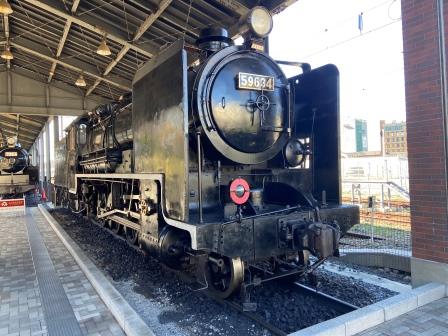
59654 itself was built by Hitachi and entered service in 1922. Many of the 9600s survived up to the end of steam in Japan in 1976 and more than 40 are now preserved. 
Nishitetsu
Local electric railways had been exempted from the 1907 nationalisation. In 1908 the Kyushu Electric Company was founded in Fukuoka. In 1911, it began operating a tram service from Moji to Okuragawa, the first electric tram or train in Kyushu. In 1924 another company, Kyushu Testudo, began operating electric trains between Fukuoka and Kurume. In 1942 the two merged to become the Nishi-Nippon Railroad. Today the organisation still operates a system of electric trains and buses under the name Nishitetsu.

The Kanmon Tunnel
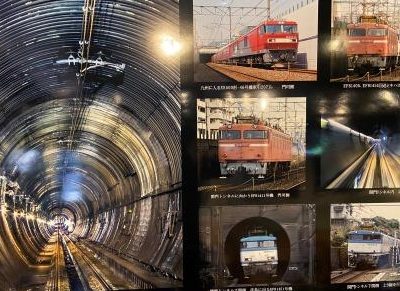
Work on the Kanmon Tunnel began in 1936 and it was opened to traffic in 1942. There were two separate bores, the Kyushu-bound tunnel was completed first and was 3,614 metres long. The Honshu-bound tunnel, opened in 1944, was 3,604 metres.
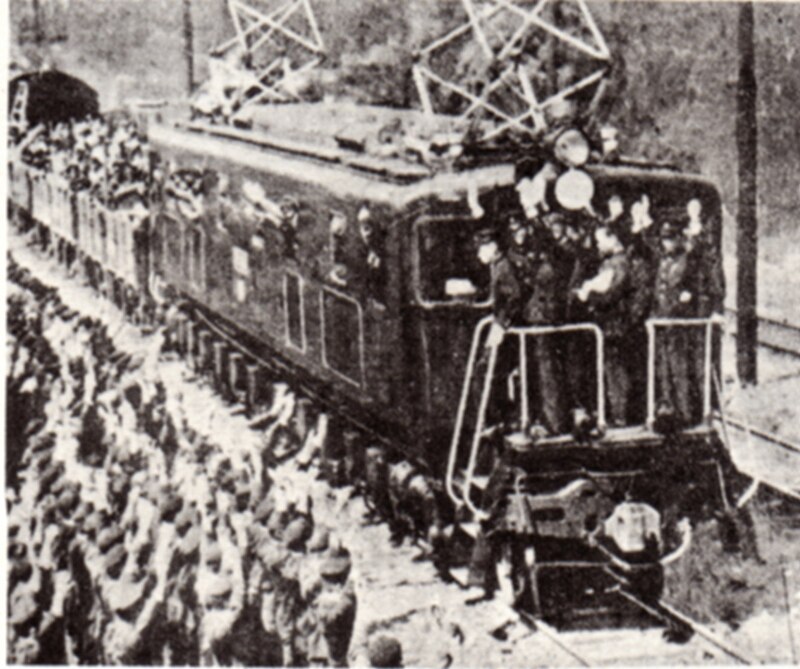
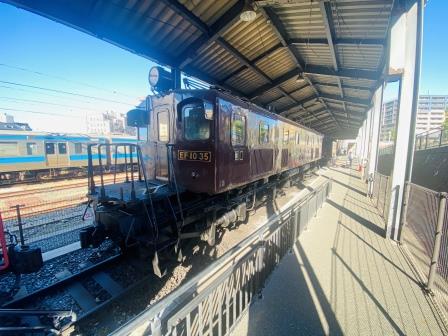
Although trains on either side remained steam worked, electric traction was necessary in the tunnel itself. A sub fleet of class EF 10 electric locomotives was provided to propel trains through the tunnel. 41 EF 10s were produced between 1934 and 1941 and some remained in service around Japan until 1983. Museum exhibit EF 10 35 was one of the last examples built in 1941.
Towards the end of the Second World War the Allies planned to blow up the Kanmon Tunnel as part of the invasion of Kyushu. In the event, the surrender of Japan occurred before the scheme was needed.
Wartime Devastation
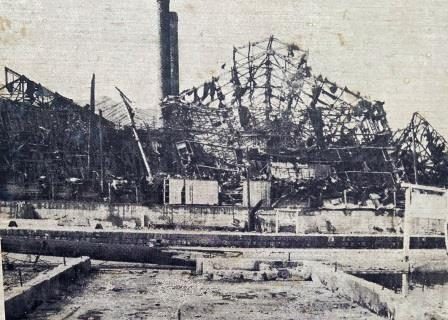
By 1944 the network was coming under increasing air attacks which cumulated with the atomic bomb on Nagasaki in August 1945. In the months following the end of the war, the railways became heavily involved in the repatriation and relocation of displaced persons.
Japanese National Railways (1949-1987)

In 1949, at the behest of the occupying US forces, Japan Government Railways was divested from the administration itself and recreated as a publicly owned corporation, Japan National Railways (JNR).

New Names
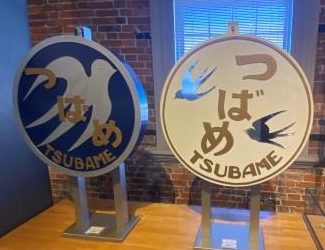
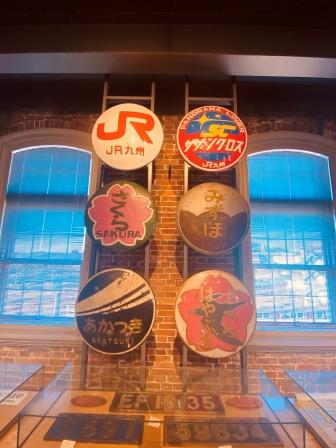
New names for Kyushu’s express trains (Kyuko) were introduced by JNR in 1950. The museum has a display of various name boards.
There is also a special explanation of how, in a practice considered quite normal in Japan, the name Tsubame (Swallow) has been applied to several different services over time, ranging from the crack Tokyo to Osaka express of the 1950s, the fastest train on the Kagoshima Main Line in the 1970s, to the all-stations stopping service on the Kyushu Shinkansen today.
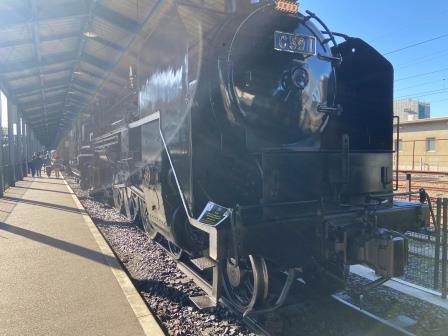
Typical of the motive power for many of these trains is museum exhibit C59 1. This Class 59, 4-6-0 passenger locomotive was the first of 173 built between 1941 and 1947. The last remaining Class 59 was withdrawn in 1970.
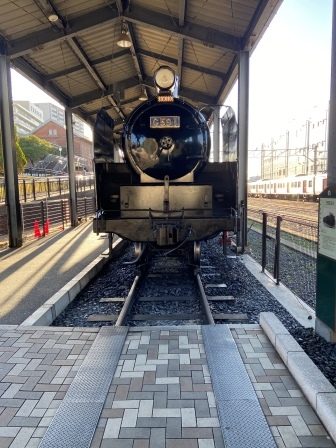
C59 1 was built by Kisha Seizo and originally allocated to Nagoya depot. The locomotive came to Mojiko in 1956 as expanding electrification elsewhere made it redundant. Before the electric wires caught up with it in Kyushu too, it would have hauled many of the long distance expresses onwards from Moji. It was withdrawn in 1965.
Blue Trains
In the mid-1950s a new generation of limited express (Tokkyu) sleeper trains was inaugurated. Because of the distinctive colour of their carriages, they were nicknamed “Blue trains”. The first was known as the Asakaze (Morning Breeze) and it ran between Hakata and Tokyo beginning in 1956. The Hayabusa (Peregrine Falcon) began running between Tokyo and Kagoshima in 1958.
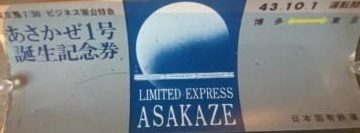
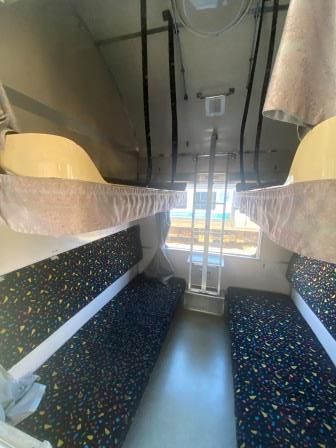
By 1964 the number of limited express sleepers serving Kyushu had increased to four, with the Sakura (Cherry blossom) linking Tokyo with Nagasaki and the Mizuho (Harvest) serving both Kumamoto and Oita. These trains ran in addition to a myriad of ordinary overnight express services. Museum exhibit 14-11 is a second generation “Blue Train” carriage from 1972.
Dieselisation
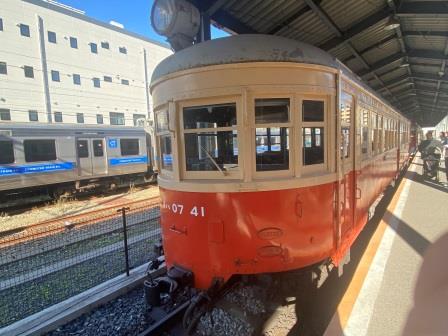
Museum exhibit KiHa 07 series number 41, a diesel rail car, was built by Nippon Sharyo in 1937. It was originally designed for urban commuter transportation and had a petrol engine. It was re-equipped with a diesel engine and received its current number in 1957. It saw service on Kyushu’s Miyahara Line before being withdrawn in 1969. 73 07s were built and number 41 is one of only 3 left.
In 1958, Kyushu’s first diesel express train ran, it was named Hikari (Light) and eventually linked Hakata with Kagoshima via Beppu using the Nippo Main Line. The name was subsequently used for the fastest services on the Tokaido Shinkansen from 1964.
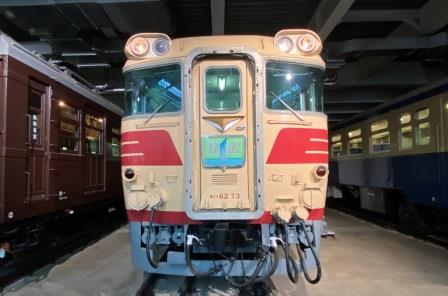
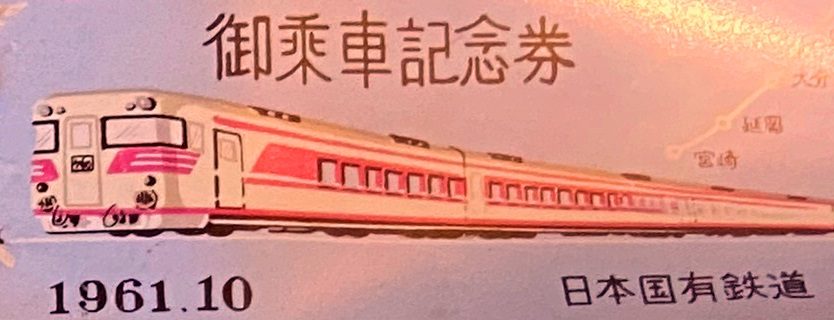
With the introduction of the Kiha-82 trains from 1960, Limited Express diesel trains began running from Osaka on the yet-to-be electrified Sanyo Main Line. On the eve of electrification to Shimonoseki in September 1964, JNR was running the Midori (Green) and Matsukaze (Pine Wind) trains between Osaka and Hakata as well as the Kamome (Seagull) diesel trains from Kyoto to Nagasaki.
The Decline of Coal
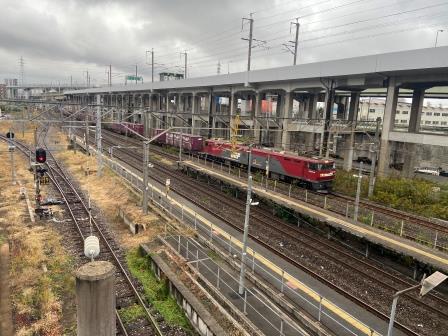
In 1953 severe flooding in Northern Kyushu caused extensive damage to many of the coal mines in the area. It also caused the temporary closure of the Kanmon Tunnel. Some of the coal mines never reopened and whilst rail borne coal transportation only reached its peak in 1961, the mines were soon in sharp decline. By 1997 the last of them had closed depriving JNR of an important source of revenue. The railway began to adapt to new sources of income; the first freightliner train from Kyushu to Tokyo began operations in 1970.
Electrification
In 1961 the first major section of the electrification of the Kyushu network, from Mojiko to Kurume, was inaugurated. Unlike the 1500V DC used until then on Honshu (and through the Kanmon Tunnel), it employed a more advanced 20kV AC system. Electrification of Kyushu’s main lines was completed in stages over the next twenty years. The wires reached Kumamoto in 1965, Sasebo in 1968, Kagoshima in 1970 and Nagasaki in 1976. The Nippo Main Line was electrified to Miyazaki in 1974 and to Kagoshima in 1979.
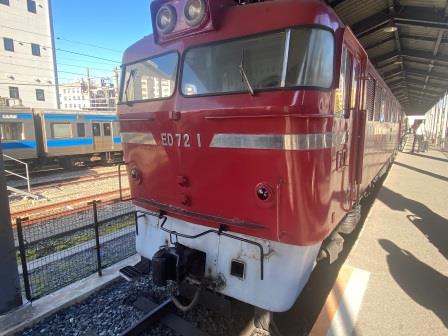
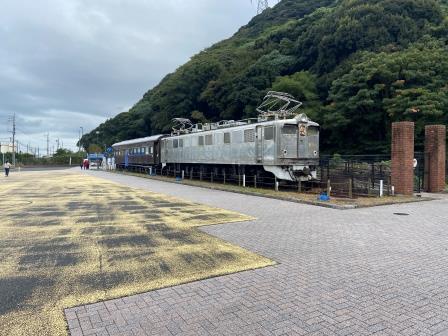
Museum exhibit, JNR ED 72 1 was the first of 22 20kV AC Class 72 electric locomotives built in 1961 for the start of electrification. Another 22 ED 73 locomotives were also built to a modified design. Intended for hauling freight, they did not include a steam heat generator and were thus shorter than the ED 72s. Both types had been withdrawn by the early 1980s. ED 72 1 is the sole survivor from either class.
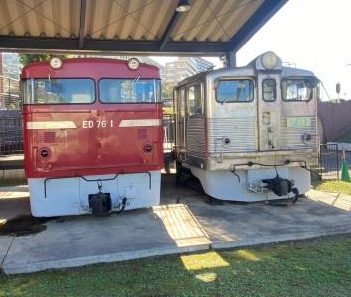
The museum collection also includes two locomotive cab sections. The one on the left above is ED 76 1. Introduced in 1965, it was the first of an eventual class of 139 20kv AC electric locomotives used in Kyushu and other parts of Japan. Next to it and introduced in 1960 is EF 30 3. It was the third of a class of 22 locomotives developed specifically for hauling trains through the Kanmon Tunnel. They were equipped with a large headlight and used an aluminium body to prevent corrosion.
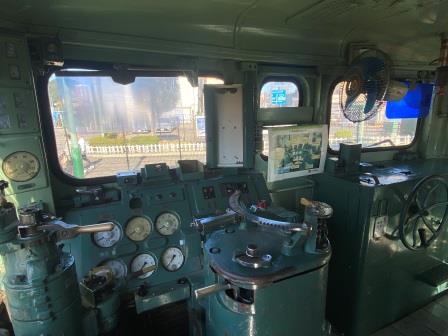
Able to run under the 1500V DC system used in the tunnel and on the 20kV AC system being planned for Kyushu, the EF30s were the world’s first mass-produced dual voltage electric locomotives. They were based at Moji depot. The first one was withdrawn in 1978 with the last of the class disappearing by 1987. The prototype EF 30 1 is preserved nearby at Mekari Park.
Electric Limited Express
In common with the rest of JNR, the 1960s saw a move away from locomotive haulage for express trains in Kyushu. In October 1964, the first limited express electric multiple units began operating between Shin Osaka and Hakata.
The Tsubame (Swallow) and Hato (Pigeon) services initially used 1500V DC Class 181s (upgraded from Class 151s first introduced in 1958) that had been displaced from the Tokyo to Osaka route by the opening of the Shinkansen. They were hauled through the tunnel by EF 30s and then on from Moji by EF 73s, an unsatisfactory solution that resulted in no improvement over the previous diesel timing.
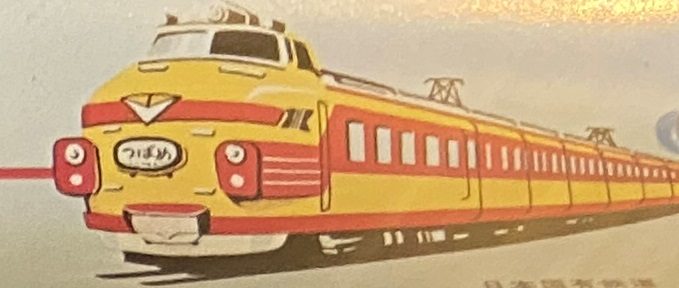
The following year saw the introduction of the dual voltage (1500V DC / 20kv AC) Class 481. The new trains had the same distinctive “bonnet” design and red and cream colour scheme as the 181 but were capable of making the Osaka to Hakata run without assistance. Museum exhibit 481 603 dates from 1969.
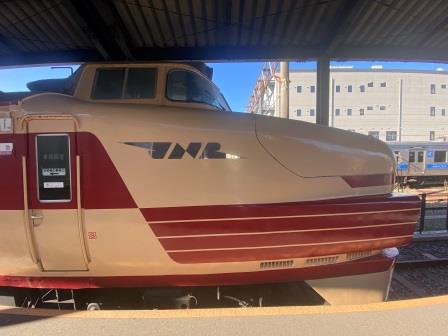
The 481s continued to be used on limited express services linking Kyushu with Honshu up until the opening of the Sanyo Shinkansen in 1975. They remained on ‘domestic’ Kyushu services into the JR period and well beyond. 481 603 is displayed with a Nichirin (Sun) headboard, recalling its use on the Nippo Line service via Oita and Beppu.
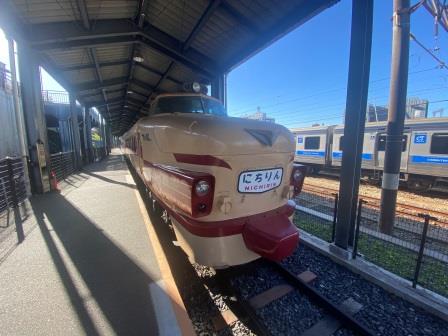
The 481 design (along with the 483 and 485 variants) continued in production from 1964 until 1987, albeit with a change to the front end design (see below) in 1972. More than 1,500 vehicles were constructed and they saw service nationwide with the last versions only finally being withdrawn in 2022.
l
Convertible Sleeper Trains
Museum Exhibit 581 8 was one of 272 vehicles of Class 581/583 dual voltage trains also designed for limited express use and constructed between 1967 and 1972. The front end design was a departure from the previous bonnet shape and incorporated front folding doors to enable passage between two units coupled together. After 1972 it became standard for all new limited express electric multiple units.

The key feature of the Class 581s was their ability to be rostered for both day and night duties. Pairs of facing seats could be converted into beds and other bunks folded down from their daytime storage positions in the ceiling. They were the first electric multiple units in the world to be used as sleeping car trains.
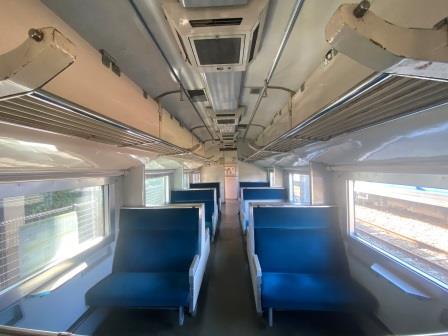
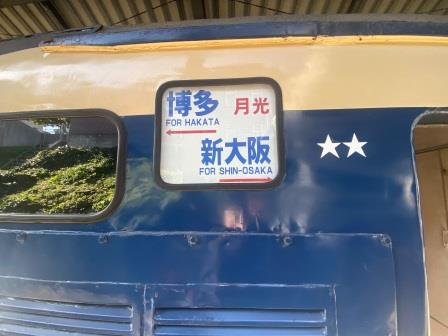
In 1967 the 581s were introduced on the daytime Midori limited express between Shin Osaka and Hakata. They also worked the return Gekko (Moonlight) overnight service, thus improving train set productivity. They remained on the route until the opening of the Sanyo Shinkansen in 1975.

581 8 is displayed showing a Gekko destination blind. Subsequent to their work on the Hakata to Shin Osaka services, the trains were used in other parts of the country. 581 8 was withdrawn in 1998 but the final example of the type lasted right up to 2017.
Sanyo Shinkansen
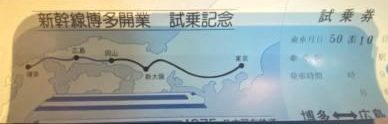
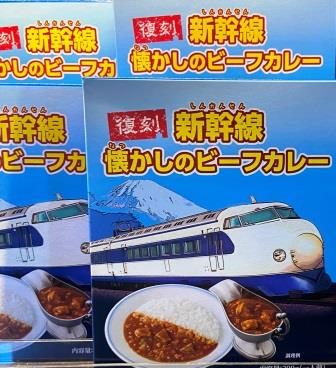
In 1975, the Sanyo Shinkansen was extended from Okayama to Hakata with the Shin Kanmon Tunnel, then the longest in Japan, bringing the bullet train to Kyushu for the first time and offering direct services to Tokyo in less than 7 hours. Continued speed ups over the years have resulted in the travel time shrinking to less than 5 hours by 2025.
Urban Developments
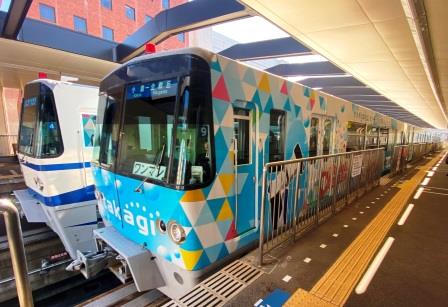
The 1980s saw developments in urban transportation with Kyushu’s first (and so far only) subway opened in Fukuoka in 1981 and the Kitakyushu Monorail beginning operations in 1985.
Decline
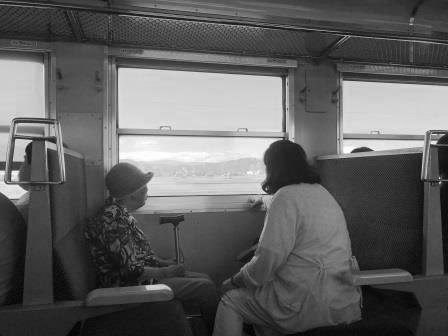
Falling passenger numbers, particularly in areas suffering from economic depression, such as the old mining towns, saw 678 km of track closed by 1984. One man operation on some rural lines was introduced in 1987 but with JNR running a massive deficit across the country, a more radical plan was needed.
JR Kyushu (1987-
A New Image
Japan’s railway system was privatised in 1987 largely along geographical lines with a group (JR Group) of six regional companies and one freight company being formed out of the old JNR.
The Kyushu Railway Company, often referred to as JR Kyushu, took over all passenger operations on the island, with JR Freight managing cargo trains. The plan was for the seven JR companies to be privatised at different times; JR Kyushu was not fully floated until 2016. JR Freight remains publicly owned.
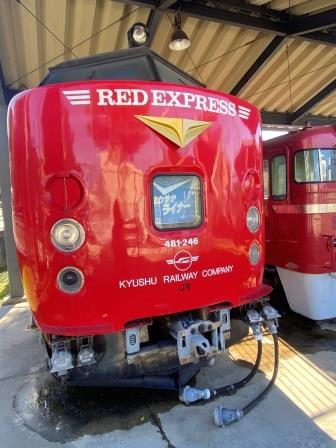
The creation of JR Kyushu quickly led to a new identity for the island’s railways. Whilst JR West used blue, and JR East used green, JR Kyushu was allocated the colour red for its signage and publicity. Museum exhibit limited express electric multiple unit 481 246 (front section only) shows off the “Red Express” livery that was initially used for the island’s “domestic” inter-city services.
New Trains
With no more recent rolling stock exhibits, the museum uses photographs and models to tell the story of developments from 1988 onwards. Since 1988 JR Kyushu has introduced a variety of distinctive train types, many with exterior and interior styling by renowned designer Eijii Mitooka.
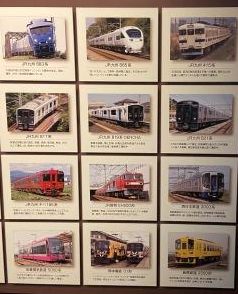
Since 1987 train design in Japan has become much less standardised and a variety of different types have been ordered. This, coupled with the fact that Mitooka, with one or two exceptions, only works for JR Kyushu, has meant that the island’s railways have developed quite an individual character.
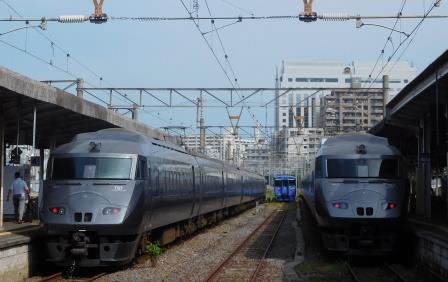
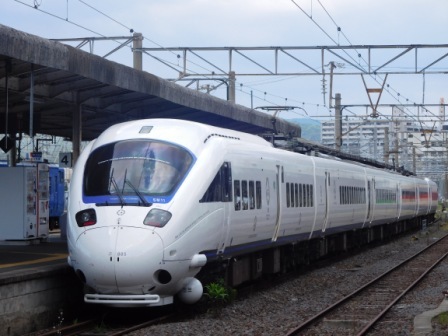
The “Kyushu look” extends beyond the limited express trains to cover local commuter services and tourist trains. There is extensive use of quirky patterns and wood or wood effect used in the interior of most of the designs, not really seen in other parts of Japan.
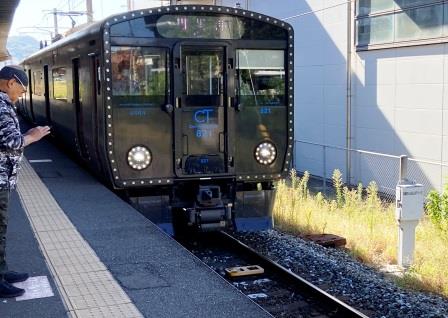
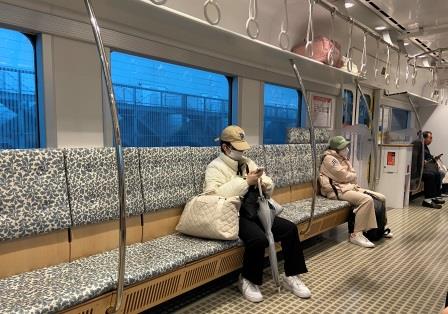
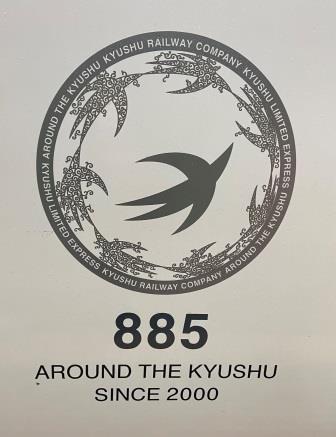
And whether it is a mistake or intentional, the use of “The Kyushu” on some of the English language in-train advertising seems to strengthen the idea that this is almost like a national railway system rather than a regional one.
Kyushu Shinkansen
The biggest development for the railway network of Kyushu since privatisation has been the Kyushu Shinkansen. Planned as an extension of the Sanyo Shinkansen on from Hakata, construction began in 1991.
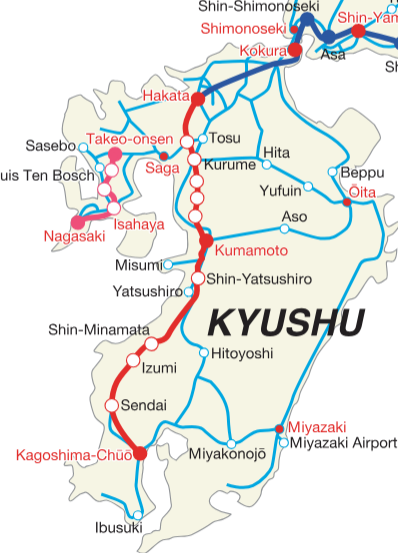
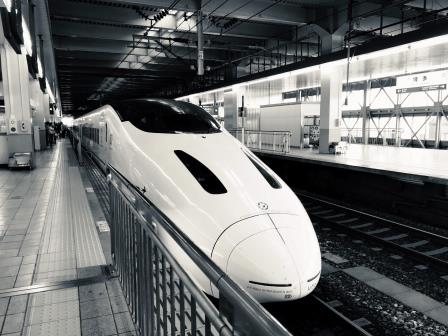
The first section to open in 2004 was between Shin Yatsuhiro and Kagoshima Chuo, with new 800 series trains operating Tsubame services and the ‘Relay Tsubame’ providing connections to Hakata on the conventional line.
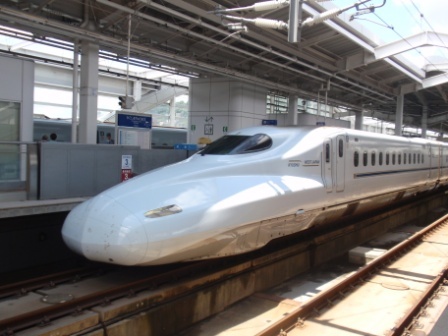
The full 256 km line to Hakata opened in 2011 with the fastest trains taking around one hour and twenty minutes (compared to four hours before 2004). In addition to the Tsubame all stations service, new Sakura and Mizuho trains providing direct service along the Sanyo Shinkansen to Shin Osaka were introduced using 8-car versions of the N700 series trains.
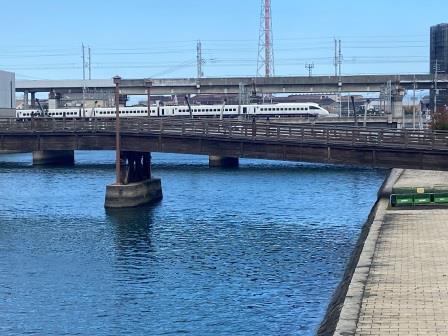
The 66 km Nishi Kyushu Shinkansen constructed between Takeo-onsen and Nagasaki began operating in 2022 using N700S trains and the service name Kamome. No date has yet been set for its extension to Hakata and in the meantime Kamome Relay trains on the conventional line are used.

As with the conventional system, Eijii Mitooka has been heavily involved in the design of both the Kyushu Shinkansen lines. He is responsible not just for the interior and exterior looks of the rolling stock, but also for Kumamoto and Kagoshima stations too, ensuring that Kyushu’s rail network continues to have a distinctive feel.

Kyushu’s Rail Network Today
Kyushu has a population of around 13 million people, roughly 10% of the Japanese total. Today’s JR Kyushu network stretches to around 2,342 km of track, a relatively small proportion of the 30,000 km covering the whole country. 258 km of the island’s system is Shinkansen, around 60% of it is electrified and 35% double tracked.
JR Kyushu, which now also has a substantial non-railway business, operates around 1600 carriages and runs between 571 stations carrying around 16 million passengers a year.
Back to – 2025 – JAPAN – “KANMON”
 Trains To Beyond