To Matosinhos
We used the metro extensively during our week in Porto, including to and from the airport. We also made a one day trip from Sao Bento out to Matosinhos, a coastal town about 8 miles (13km) to the north, known for its beautiful beaches, amazing seafood restaurants and its market.

The Creation of the Metro
In operation since 2002, the new standard gauge (1435mm) metro system of Porto has its roots in the old ‘Norte’ metre gauge network. Its central spine of five lines, (A, B,C, E and F) use the old Metre gauge corridor. The site of the old terminal station at Trindade has been rebuilt as the main interchange on the system.
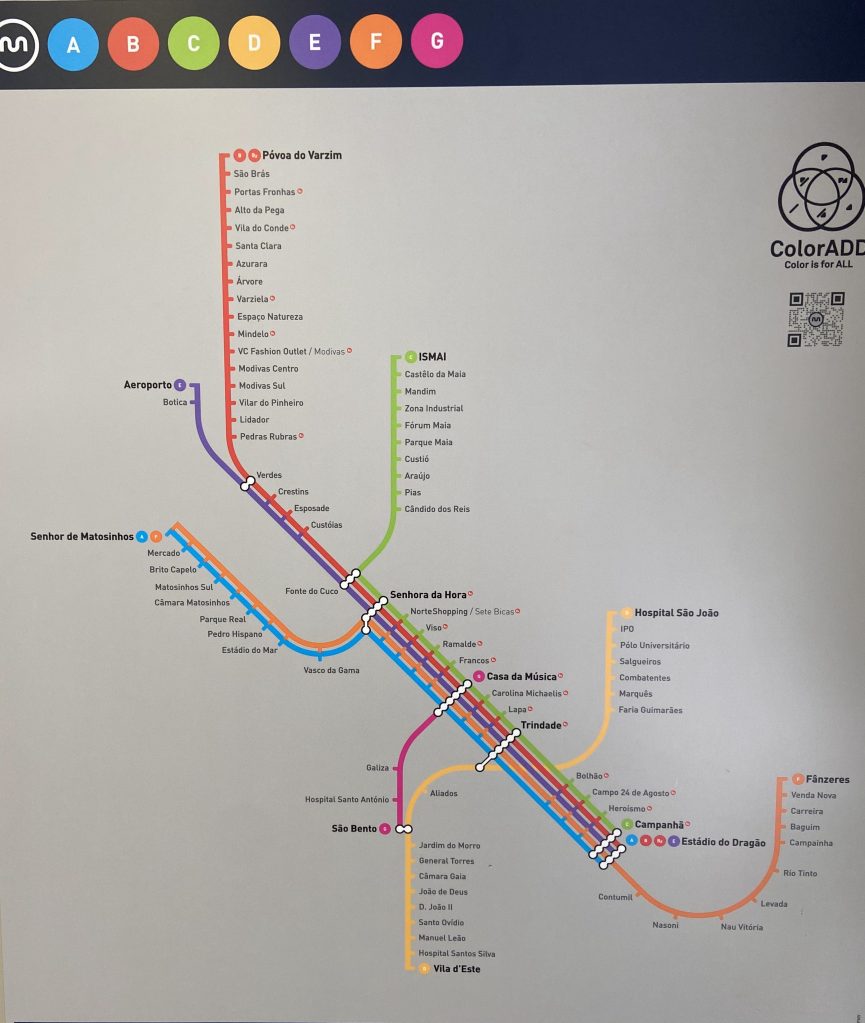

The route of the old line to Povoa de Varzim has been repurposed in its entirety as the basis for Line B. Services to Matosinhos (Line A) and to the International Airport (Line E) use branches from this line. The old system also served Matosinhos but only part of that track bed has been used for Line A, the majority of which is on a brand new formation.
Line C uses the old line which used to serve Trofa and Lousado but has now been truncated just past Castelo de Maila (16km). A new station has been built to serve an educational institute, ISMAI. Plans to extend back to Trofa are on hold.
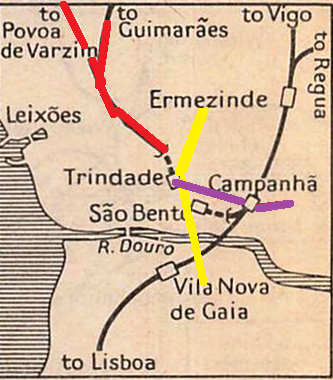
The old terminus station at Trindade was demolished in 2001 and replaced by a new surface station with two through and two terminal platforms built for the A,B,C,E and F line trains.

From here a brand new line, mostly in tunnel, with four intermediate stations (including Campanha) was built in 2004 to Estadio de Dragao. A further extension to Fanzeres opened in 2011 and is currently served by F line trains only.
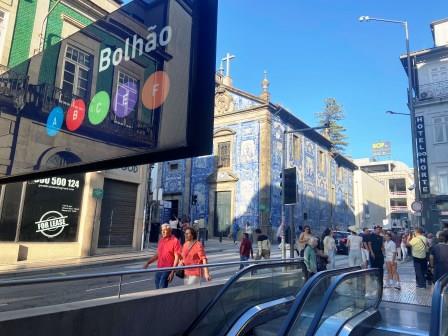
Line D
Line D is on a separate axis and in much of central Porto it is underground. The first part opened in 2005 but the line was expanded gradually with sections opening in 2006, 2008 and 2011. As recently as 2024 a 3.5km extension was added to a new southern terminus, Villa d’ Este.
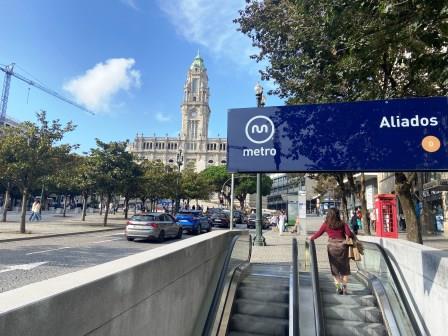
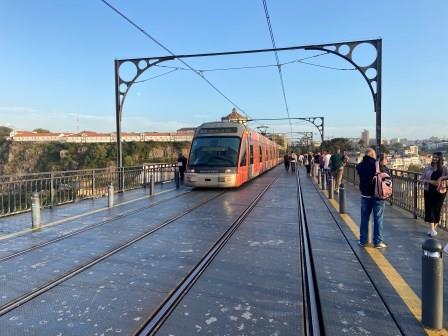
The line starts in the north of the city at Sao Joao Hospital and intersects with the other existing lines at Trindade and then runs south via Aliados to Sao Bento. It then climbs to the surface to cross the Douro on the top level of the historic Dom Luis I Bridge, sharing the deck with pedestrians.

Once on the other side of the river, in Gaia, the line continues largely on the surface to intersect with the main Linha del Norte at General Torres before continuing on to its southern terminus at Villa d Este.

Line G
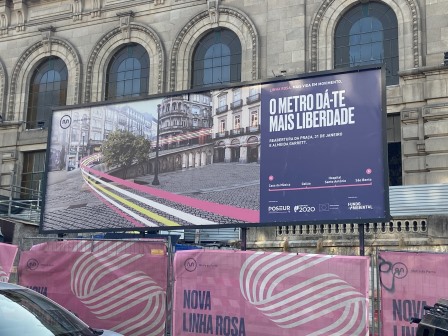
Although it already appears on several network maps, Line G (or Linha Rosa / the pink line) is not yet open. Designed to be a link between Casa do Musica and Sao Bento with two intermediate stations, it will all be underground.

Construction work was still going on in Autumn 2025 and judging by the number of holes still yet to be covered, it would seem it will be a while yet before trains start running. Another line, Linha H, is also under construction and will also start at Casa de Musica stretching south across a new bridge to Gaia.
The Fleet
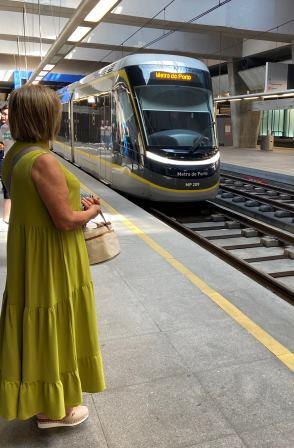
The Metro fleet currently consists of articulated trams which normally operate in pairs. They come in two main types, the original Eurotram vehicles which date from the opening and Flexity Swifts which date from 2008. More recently new vehicles from Chinese manufacturer CRRC have also been introduced.
Andante
An “Andante” card is needed to travel on the metro. This can be bought at a variety of outlets, but the easiest way seemed to be to purchase from the machines at the stations.

The card can be loaded with a day ticket or with single or multiple journeys before purchase. The exact cost of a single trip depends on a slightly complicated zonal system. Prices generally range from 1.40 euro to 3 euro.
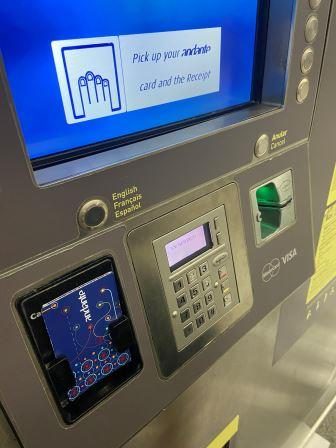
The cards can be subsequently re-loaded with several journeys at the ticket vending machines and are valid not only on the metro but also on buses and the local train system.
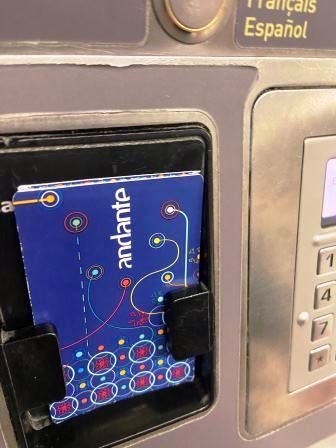
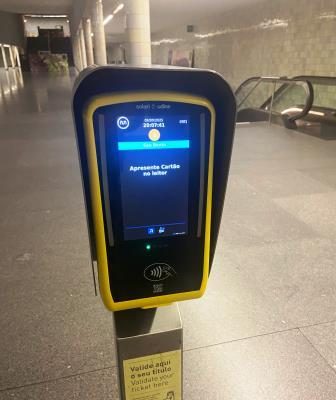
Cards need to be validated before boarding the metro, special readers are provided for this purpose at the entrance to the platforms. The machine validates the ticket for one hour, but it is also necessary to validate again when changing trains, even within the same zone.
Matosinhos
We took the metro out from Sao Bento to Matosinhos, We boarded a line D train for the two stations to Trindade and then made the easy connection, not forgetting to re-validate the Andante card, to line A. The whole trip took around 30 minutes.

The final part of the journey involves a bit of street running as the metro wound its way in a loop around the town, making stops for the beach (Matosinhos Sul) and Mercardo (for the market) before terminating at Senhor de Matosinhos close to Porto’s large Leixoes Cruise terminal.

The impressive fish market was getting ready to close up when we arrived, just before lunch. We had a wander around the various stalls before choosing to dine at one of the restaurants that surround the market.

We chose some razor clams, sardines and horse mackerel from one of the market stalls and then, following the local system, paid for our chosen restaurant to grill it all and serve it up to us with some tasty tomato rice and courgettes.

The Praia de Matosinhos provided a wonderful place for an after lunch walk. The long sandy beach is known for its strong waves and surfing is popular here. We enjoyed views of the cruise ships and cargo vessels entering and leaving the port just to the north.
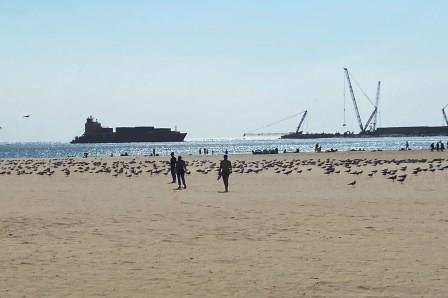
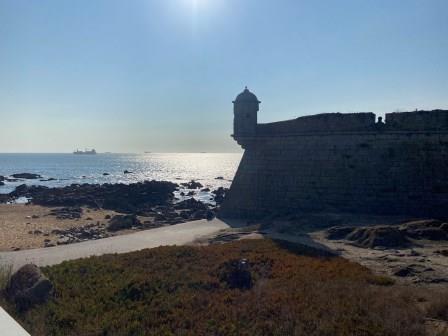
The beach featured a lively promenade lined with cafes, and bars, and a walk along it of around thirty minutes led us to the historic Castelo do Queijo which gets its name from the cheese-shaped rocks on which it stands.
The 500 bus, normally operated by double decker vehicles, plies between Matosinhos and Sao Bento several times an hour. It takes the coastal route and sitting upstairs affords panoramic views of the Atlantic ocean and then the Douro River. The bus passes the Passeio Alegre and runs alongside one of Porto’s last remaining tram lines.

To Passeio Alegre…. by Tramway
 Trains To Beyond