FERRY – Dover-Ostend
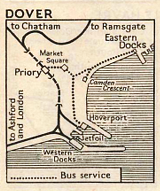
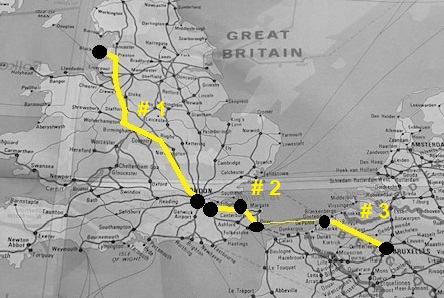
In the end, we didn’t need the taxi. When we arrived at Priory station just after midnight, there was a Sealink bus waiting for us. We were at Eastern Docks by 00:30 with thirty minutes to spare. I was surprised and very impressed with Sealink, the former British Railways shipping line, that had only just been privatised in July 1984.
As I showed my passport to the man in the Sealink booking office, I explained to him how I had stapled the Interrail ticket to one of its pages so that I wouldn’t lose it. I was actually proud of the idea and thought it pretty clever.
I wasn’t prepared for his reaction, “You have defaced a government document. This passport is not your property. Unless you remove that ticket from the passport now, you will not be allowed to board the ship.” My friend did his best to control his laughter as, chastised, I took the ticket booklet out of the passport as carefully as I could.
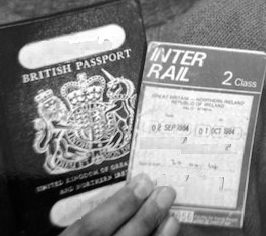
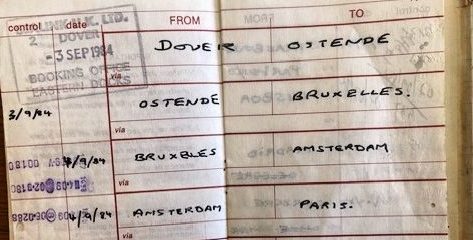
The Interrail booklet had seven pages with five spaces on each page where you were supposed to write each leg of the trip. The left hand column was marked ‘control’ and that was where the ticket inspectors were supposed to stamp it.
The Sealink guy seemed to shake his head in despair when he noticed that I had already written out the first four stages of our planned itinerary. In the end, he said nothing as he stamped the ticket and waived us through. I suggested to my friend that Sealink had got much worse now it was in private hands.
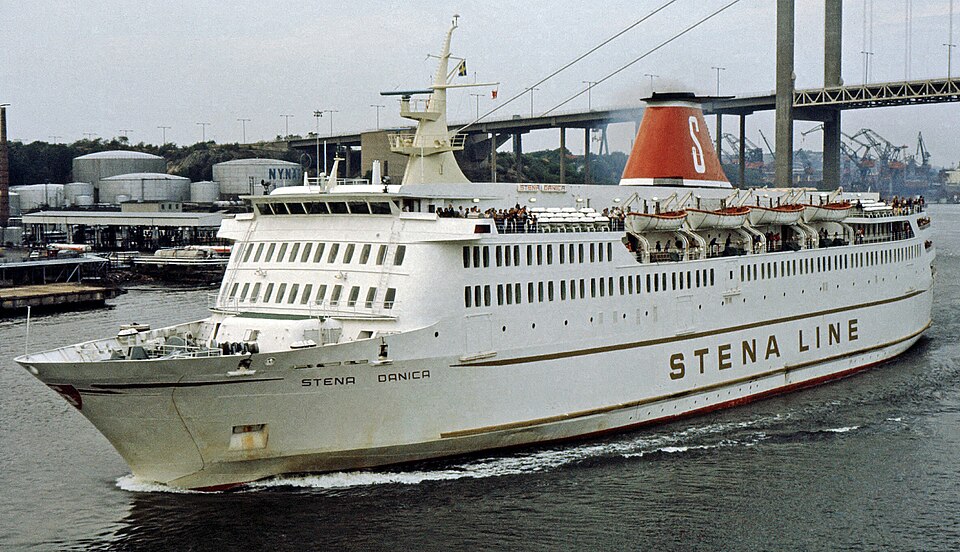
We were the last passengers to board the Sealink Belgium-operated Stena Nautica, sailing as the 01:00 from Dover to Ostend. The ship was actually on loan from the Swedish Stena Line. The departure was on time and we sat up on deck watching the darkened cliffs of Dover disappear and then headed down to the bar and ordered a couple of cans of Stella Artois. The sea started to get rough so we went back up on deck and stayed there, we never really tried to go to sleep or even discussed doing so.
We docked in Ostend on schedule just under four hours later. We went straight from the ship to the adjacent railway station with a quick stop for immigration in between. There was no check for customs that morning. I had arrived in Belgium, only the second country I had ever visited in my life at that point.
TRAIN # 3 – 06:35 Ostend to Brussels
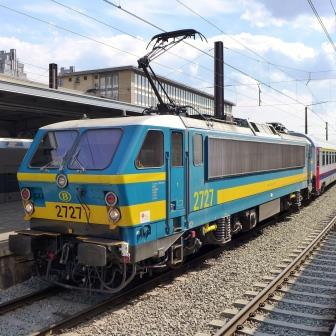
The 06:35 departure, which we would be taking to Brussels, was already standing at the platform. Operated by Belgian National operator (SNCB), it had a 3kV Class 27 locomotive on the front and was formed of “Eurofirma” carriages turned out in an attractive orange livery with a white stripe. We boarded one of the second class corridor coaches and found an empty compartment.
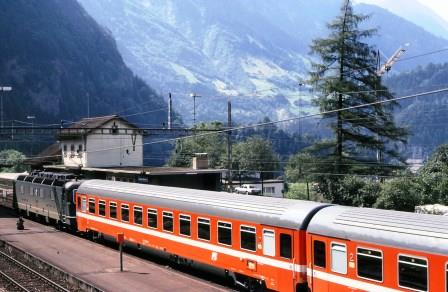
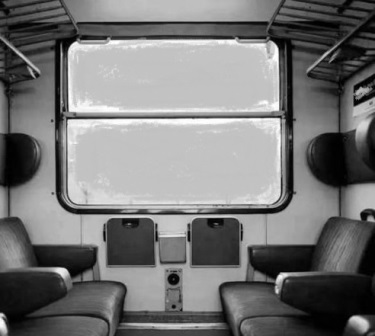
The air-conditioned Eurofirma coaches had been introduced in the late 1970s and were a common design shared between several European systems including Belgium, Italy, Switzerland and Austria. Our compartment had six seats, three either side, and rather drab brown upholstery. It was to be fairly representative of the majority of compartments we would use on the trip.
The seats were separate from the headrests which remained fixed to the compartment wall. The seats on opposite sides of the compartment could be reclined to meet each other in the centre. In this way three fully horizontal beds could be created from the six seats. There were two luggage racks on both sides of the compartment, a wider one above and a narrower one below, the latter containing an individual reading light for each seat.
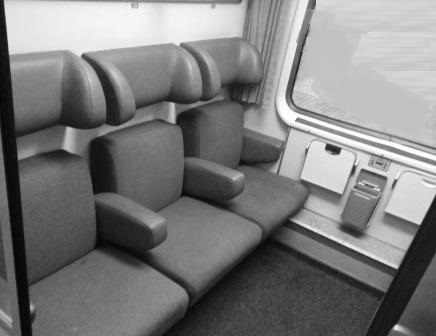
We sat opposite each other in the two window seats. In the centre position underneath the window was a silver metal rubbish bin which could be tilted around by the staff when it needed to be emptied. There were also two small tables that were flush to the walls when stowed but could be tilted out and fixed for use.
The train departed on time. The ride was pretty smooth. The countryside flat but not uninteresting. I was quite fascinated. This was my first long distance train journey outside Britain. We started out with just the two of us but after Brugge the compartment filled up with commuters; they seemed oblivious to the international role the train was playing. We arrived at Brussels Centrale just after 08:00.
BRUSSELS
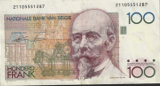
We changed some pounds into Belgian Francs and then strolled off in the direction of the Botanical Gardens and found the Youth Hostel nearby. We paid about £4 to secure a couple of beds and left our rucksacks in the storage room. We went off for a morning walk around the city centre, taking in the Cathedral and the Royal Palace. We bought baguettes and jam at a little shop and had a makeshift breakfast in the Parc de Bruxelles.
We were starting our European adventure with a bit of luxury. My uncle was in Brussels for the celebrations for the 40th anniversary of the city’s liberation and had very generously invited us both to lunch and dinner. We planned to spend most of the day with him.
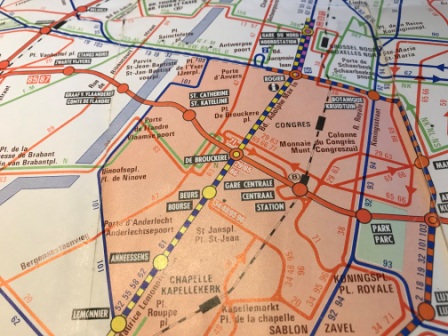
We got a metro from near the Palace of Justice to the Gare Du Midi and then a taxi to the hotel where my uncle was staying. I gave the name of the hotel to the taxi driver and he took us there in about ten minutes, relieving me of exactly 200 francs.
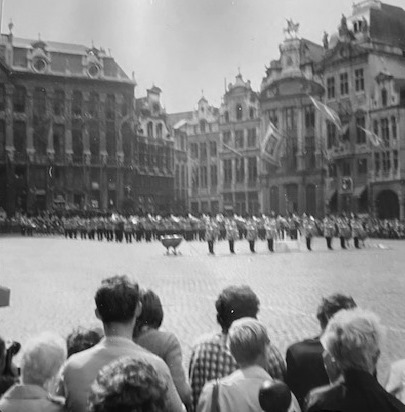
We jumped in another taxi with my uncle and went to Grand Place to watch, with a lot of other spectators, soldiers from a British army regiment parade around the square to commemorate the events of 3rd September 1944.
We went off to a restaurant for a lunch that included snails and beef bourguignon and then took a tram out to the Atomium, paying 80 francs to go inside. We found a bar nearby and had a drink there with one of the British Army guys.
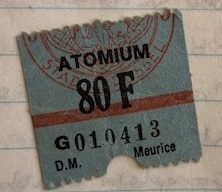
After a shower back at the hostel, we met my uncle once again for a drink in the illuminated Grand Place before he treated us to another fantastic meal that featured frog’s legs and veal. Having already eaten by far the best food of the entire trip, we went back to the hostel just before midnight in a taxi.
Forty Years Later….
- Eurostar now links London with Brussels in 1hr 53 minutes.
- The Stena Nautica (1974) changed names several more times before it was scrapped in Turkey in 2005.
- Stena Line actually took over the UK part of Sealink in 1990 and still operates today.
- Foot passengers are no longer permitted on its services from Dover.
- All 60 SNCB Class 27 locomotives had been withdrawn by 2025.
- Some Eurofirma carriages are still in service in parts of Eastern Europe.
- Euro banknotes and coins replaced the Belgian Franc on January 1, 2002.
- I have returned to Belgium and Brussels many times over the years.


