My Visit
During my visit to Freetown, I visited the impressive National Railway Museum three times. On my first day I spent most of the time looking over all the exhibits and meeting the staff. I was also taken to see Fourah Bay College which itself played a small role in the history of Sierra Leonean Railways.
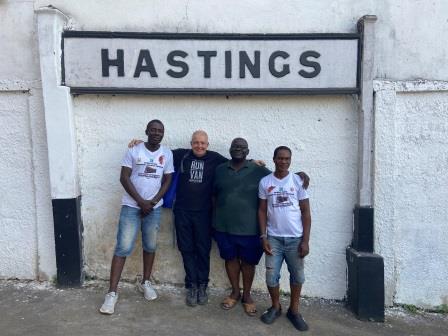
I returned a few days later to have a deeper delve into the museum archive. I was also taken to see Nichols Viaduct. On my last full day in the country, I returned to the museum and had the honour of attending the staff party.
Background – Railways in Sierra Leone
The railway network in Sierra Leone dates back to the last decade of the 19th Century. In 1893 a proposal financed by the Liverpool Chamber of Commerce, itself heavily involved in the colony at the time, was put forward.
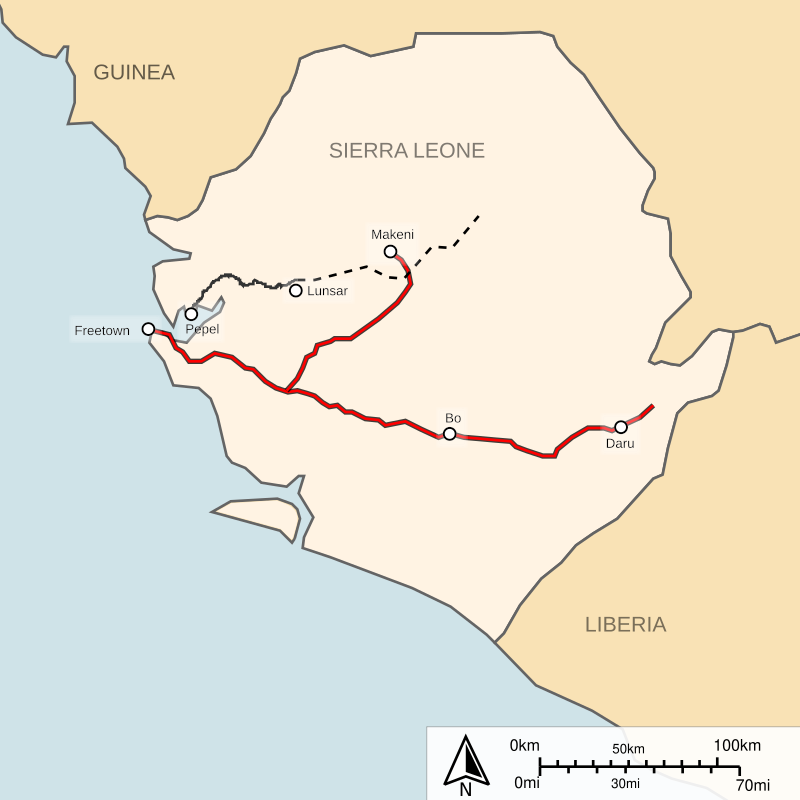
After surveying, construction began from Freetown in 1896 with the comparatively narrow gauge of 2ft 6 inches being used to save costs. Although the choice of narrow gauge precluded a lot of heavier civil engineering (there are no tunnels anywhere on the system), a substantial number of bridges were needed.
Gradual openings saw second city, Bo (103 miles) reached in 1903 and by 1907 the line had been extended to Pendembu near the Liberian border. A branch was opened to Makeni in 1914. It was extended by around 20 miles to Kamabai but by 1930 it had been cut back to Makeni. In 1930 the network stretched to around 310 miles.
Despite dieselisation in the 1950s, and Sierra Leonean independence in 1961, decline of the network, mainly due to increasing road competition, was relatively swift. The main system closed in 1975, and the tracks were torn up and sold for scrap.
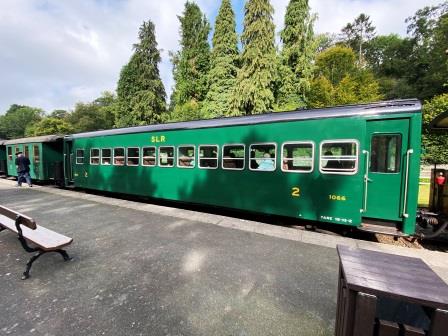
Due to the foresight of Richard Norman, the last General Manager of the system, some examples of rolling stock ended up being stored in at the works at Cline Town, Freetown. Meanwhile, a locomotive and four carriages were bought by the Welshpool & Llanfair Light Railway (W&LLR), a line which shared the same gauge, and shipped to Wales.
A separate 3ft 6 in. system was opened in the 1930s from the port of Pepel to the iron ore mines to the north. It also closed in the mid-1970s but was subsequently restored and rehabilitated and still operates today.
Background – Restoration
The works shed containing the collection of old rolling stock lay neglected for many years, even surviving the country’s decade long civil war (1991-2002). It was rediscovered in 2004 by Colonel Steve Davies, a British Army Officer and railway enthusiast, who was in Sierra Leone as part of the International Military Advisory and Training Team (IMATT) after the end of the civil war. Following an intervention of the President of the country, the museum opened in 2005.
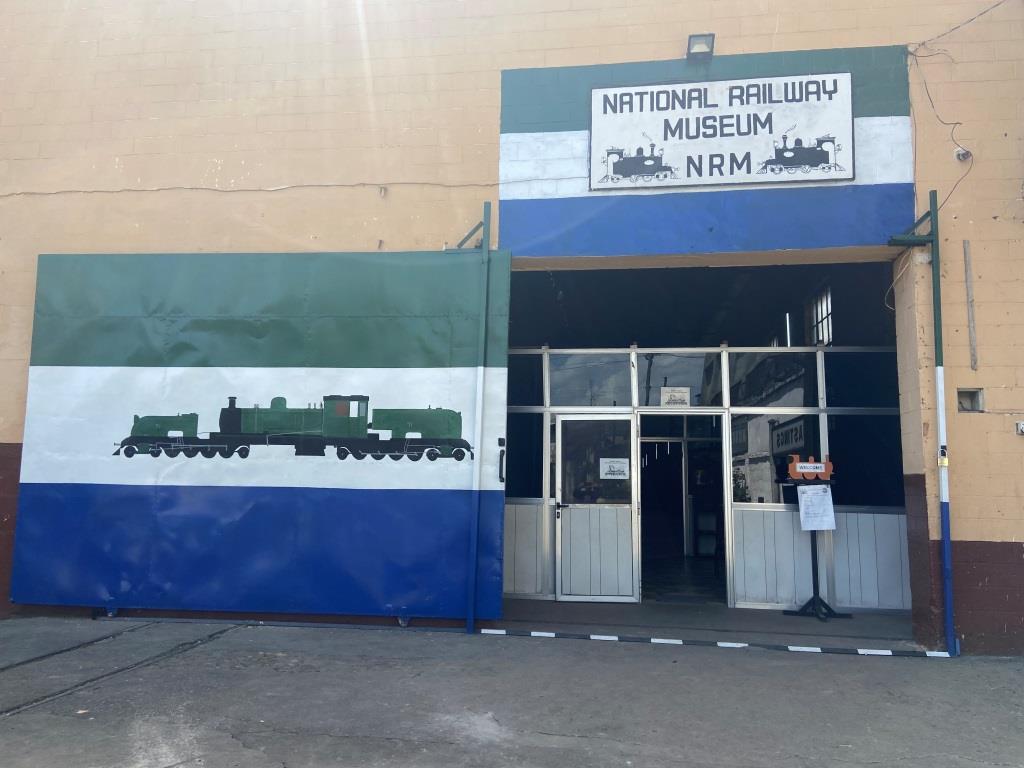
The museum has developed over the years. This is largely as the result of an incredible amount of work by Colonel Steve Davies, by former works manager, the late Mohamed Momodu Bangura, by the wonderful team of local employees, and by a support group that was set up in the United Kingdom, Friends of Sierra Leone National Railway Museum (FoSLNRM).
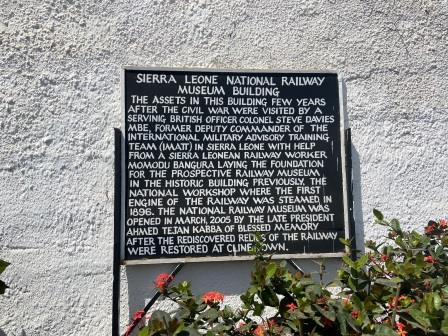
Despite the fact that Freetown is not yet a major holiday destination or a stop on cruise ship itineraries, the museum still attracts quite a few international tourists. Local children make up quite a high proportion of visitors and it is nice to see that the railway story is reaching those who never saw the real thing in action.

My Preparations
In the months before I visited, I became a member of the FoSLNRM. On a trip to York, I was able to meet up with the Chair, Helen Ashby to discuss the best way to visit. During our meeting in York and subsequently when we met up again at the Welshpool and Llanfair Railway Gala Weekend a few weeks later, Helen gave me lots of advice which proved extremely useful.

Helen and her husband Adrian visit the museum annually and very fortuitously I was able to time my stay to coincide with their own. I was also extremely lucky that my trip also overlapped with a visit from Colonel Steve Davis. Having Helen, Adrian and Steve to welcome me to the museum and show off some of Freetown enhanced the trip greatly. I am indebted to all three of them.
A warm welcome
On my first day, I was welcomed into the museum by all of the lovely staff members lining up outside and giving me a rendition of the famous “train to Bo” song.
It starts off…
The train for Bo, he no agree for go,
The train for Bo, he no agree for go,
The train for Bo, he tire,
Because he got no fire,
The train for Bo, he no agree for go.
I was shown into the little gift shop and introduced to the museum team one by one. I was then given a very comprehensive tour of the former works shed where the collection is housed.

We started with the carriages. Pride of place among the rolling stock collection is the old governor’s coach, and a special carriage that was commissioned for Queen Elizabeth II’s visit in 1961 at the time of independence. A change in schedule meant Her Majesty never used the carriage. Nevertheless, it was impossible to resist the urge to jump up onto the back and try to give a royal wave.
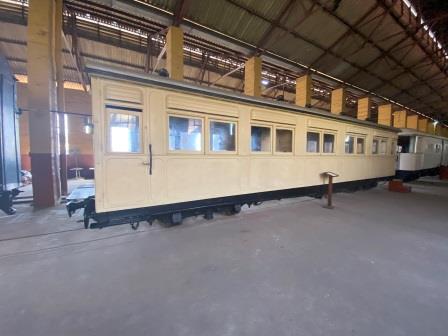
When the country became independent in 1961, several new carriages were ordered from Gloucester Carriage and Wagon Company for use on the system, these became known as the Independence Coaches. Most of them were lost when the railway closed just 14 years later, but two examples were exported back to Britain and are now in use on the Welshpool and Llanfair Railway. There are two more examples on display here, although their windows are sealed to prevent deterioration.

There are three steam locomotives in the collection. My undoubted favourite was No. 73, a huge 4-8-2 + 2-8-4 Beyer Garratt from 1955. Built in Gorton, Manchester, near where my family once lived, the articulated locomotive looked stunningly beautiful in its lovely green livery. It is in surprisingly good condition too, having just undergone an overhaul shortly before final withdrawal in the mid-1970s.

No. 81, a 2-6-2 built in 1947 by Hunslet in Leeds, was one of a class of locomotives used in the latter years on the network. Sister locomotive, No. 85, was exported back to Britain in the 1970s and is now restored on the Welshpool and Llanfair Railway. No. 81 is not in quite as good condition as the Garratt, it is missing a pair of wheels, but it has been restored cosmetically.
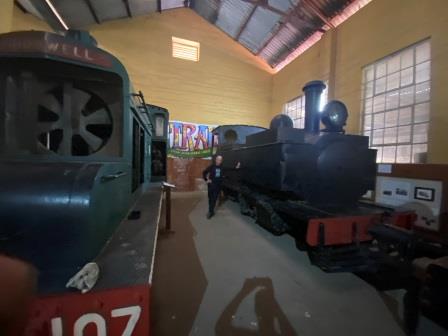
Nellie, an 0-4-0 built by Leeds-based Manning Wardle in 1915 is the oldest locomotive in the collection. Used initially on the Fourah Bay Harbour construction project, she was retained as a shunting engine, working in and around Freetown right up until the final closure of the system in 1975.

There are also four diesel locomotives and one railcar in the collection. All of the locomotives were built by Hudswell, Clarke Ltd of Leeds and exported to Sierra Leone. The railcar inspection trolley was built by Wickham of Ware.

Although inspecting the locomotives and carriages was fascinating, the single biggest highlight of my tour was having a go on the pump trolley. They have a short section of track specially laid out for it and I have to admit it was great fun going backwards and forwards along it. Given modern health and safety concerns, I doubt it is something you would be able to do at a museum in the UK.
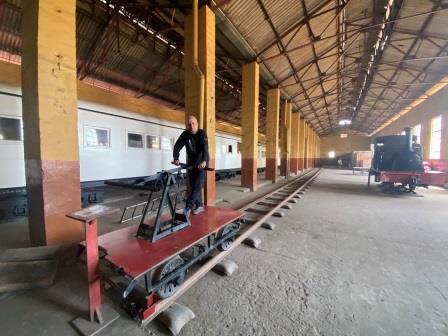
We completed the tour with a look at the old token signalling machines, lamps and other artefacts. I then spent time by myself looking at the murals and enlarged maps on the walls which, along with other displays dotted around, explained the history of the Sierra Leonean Railway system. In the courtyard outside were several station signs rescued from various locations on the old system.

All of the captions on the exhibits were extremely well done. The museum is still developing too. Even during my short visit, I witnessed columns being painted and a new display of all the station names in the country being created. It was inspiring to watch.

Fourah Bay College
During the afternoon of my first day, some of the museum staff led me on a short walk through the lively streets of Cline Town to another historic building with a railway connection. Fourah Bay College was founded in 1827 as the first western-style university built in Sub-Saharan Africa. For almost 100 years it was affiliated with Durham University in England.
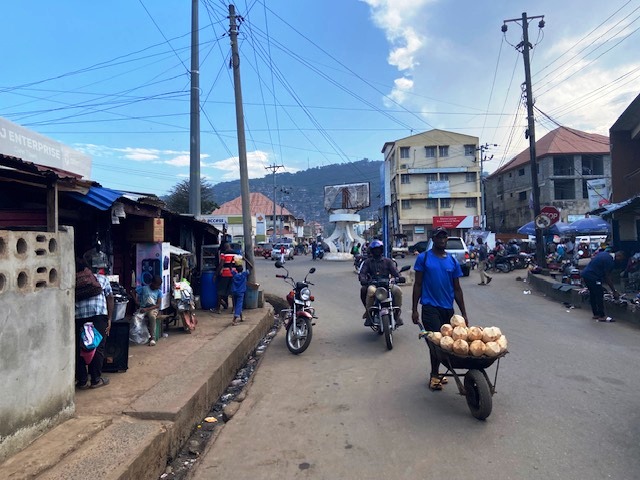
The building here was completed in 1845 and used by the University for around a century. After the Second World War it served as the headquarters of Sierra Leone Railways before eventually being turned into a magistrate’s court. Declared a national monument in the 1950s, it fell out of use in the early 1990s before being gutted by fire in 1999. Hopefully one day it can be restored.

Archive
During my second visit to the museum a few days later, I concentrated on a detailed inspection of the impressive document collection in the reading room.

As well as a full library of books published on the Sierra Leonean Railways, there was an extensive collection of tickets, photographs, and various railway paperwork such as wage slips and works requisition orders.
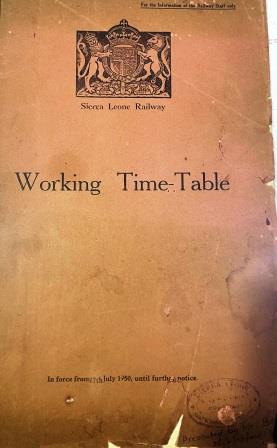
A report on the performance testing of the Garratt locomotives when they had just been delivered to the railway was one of the more absorbing documents.
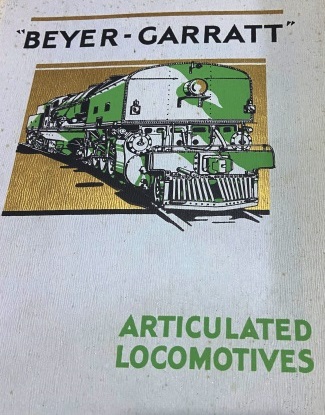
For me, among the most fascinating documents were the working timetables dating from 1926, 1933 and 1950. A thorough reading of them gave a lot of insight not only into the types of services operated, but the changes over the 25 year period covered as well.
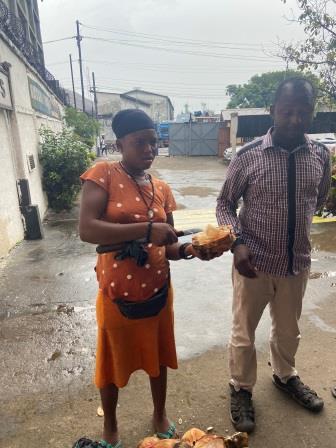
During the middle of all my research, I was called to the front of the museum because the coconut seller had arrived. Along with other members of the team I enjoyed a lovely fresh coconut. Apparently the seller visits the museum frequently.

The Nichols Viaduct
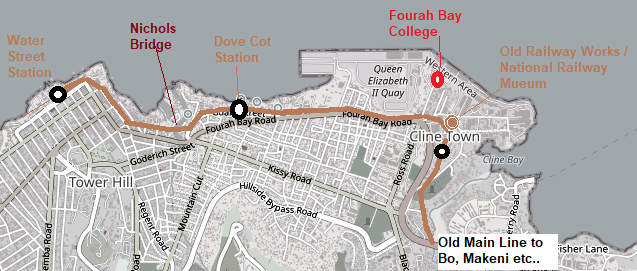
I was treated to another excursion by the lovely museum team. Three of us boarded a Keke for the short hop along Fourah Bay Road along which the railway line itself used to run. 
At the Eastern Clock Tower, we piled out and then negotiated a labyrinth of narrow streets filled with market traders. We descended down through bustling alleys until we found a makeshift bridge across the Nichols stream.
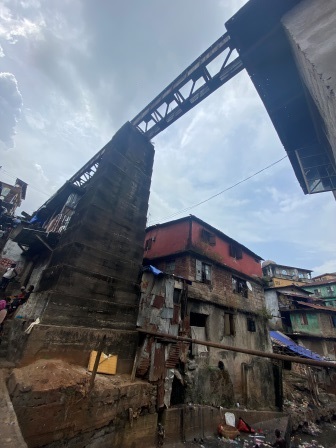
Looking up we could see the incredible Nichols Viaduct. No train has crossed it for 50 years but it is still there, one of the last few survivors of the hundreds of viaducts the SLR system once used.
We retraced our path and then followed the course of the old railway as it would have threaded its way through the narrow streets. Eventually we came to a police box in the middle of the road.
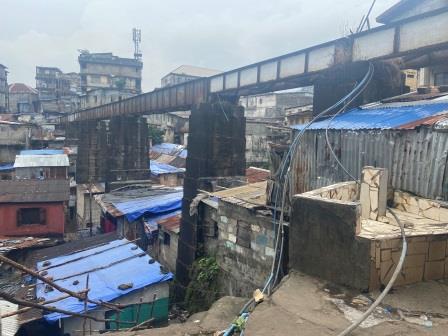
To the obvious bemusement of the policewoman in the box, my guides explained that this structure was once part of Dovecot station, the first station out of Water Street and the only stop between the terminus and Cline Town.

Party at the NRM
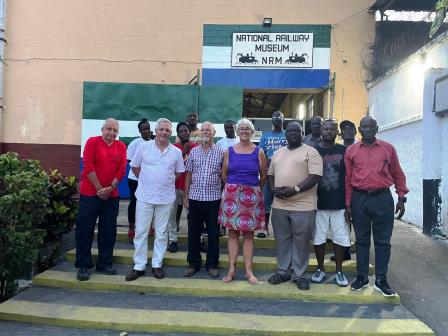
On my last full day in the country, I was lucky enough to be invited to a staff party to celebrate Steve, Helen and Adrian’s return to the Museum.
I arrived just as the Museum was finishing for the day and the staff were busy arranging trestle tables for us to sit at. Music was playing on a sound system, but to add a bit of atmosphere bits of wood were put in to the fire boxes of Nellie and the Garratt, and thus a bit of smoke created.

Soft drinks and beer were readied and then everyone sat down to enjoy a wonderful home cooked feast. The food was lovely: peanut sauce, chips, rice and fish with salad. 
We spent a wonderful hour sitting together eating, drinking and chatting. We finished off with some speeches and songs. The whole thing was a terrific way to end an amazing trip.
IMPORTANT UPDATE
Fire at the Museum
Sadly, only a few days after my visit to Freetown a fire in an adjacent warehouse seriously damaged the NRM building.
The structural damage has seen 20% of the roof fall, 15 large windows implode and cracks appear in one major wall. Smoke and water have caused cosmetic damage to every vehicle. Panels and photos were destroyed.
Government support and potential repair is not guaranteed; An initial fundraising campaign has been launched by the FoSLNRM.
The fundraising page is:
https://www.justgiving.com/page/helen-ashby-1733150616104
CONTACTS / FURTHER READING
Details on how to join and donate to the Friends of Sierra Leone Railway Museum are here – https://www.sierraleonerailwaymuseum.org
Further details on Sierra Leone Railway and the museum can be found in Helen Ashby’s excellent book – The Sierra Leone Government Railway – From Creation to Preservation (Mainline and Maritime 2020)
 Trains To Beyond
