Odawara (76.7km / 47.9 miles)

The layout at Odawara is typical for Tokaido Shinkansen stations that are served mainly by the Kodama stopping services; there are four tracks, two centre fast lines and two on loops with side access platforms.
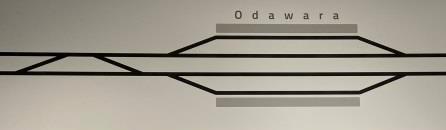
This is the first station out of Tokyo where trains overtake each other. When the service began in 1964 there was just one Hikari train each hour and one Kodama. The fast trains would catch up with the slower ones, but overtaking would normally be done just once during the journey, normally at Hamamatsu.

The Kodama that I alight from now has to wait for the next Nozomi and then the Hikari behind that to pass before it can continue. This is the typical pattern, and this train might be passed by up to eight more before it reaches Shin-Osaka.

I find all this fascinating to watch. It never ceases to amaze me how the whole thing works so well. If one train is just a couple of minutes late it could throw out the whole schedule, but that never seems to happen.

For the first sixteen years of operation only Kodama trains stopped here, now the station gets a Hikari, typically heading for Shin-Osaka, every two hours or so to supplement the roughly half-hourly stopping service.
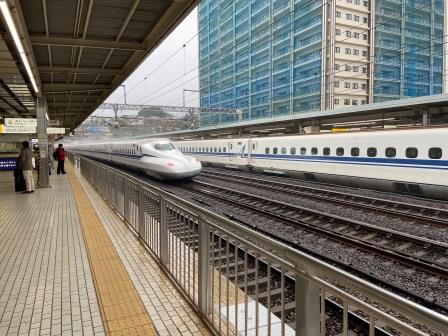
In and around Odawara Station
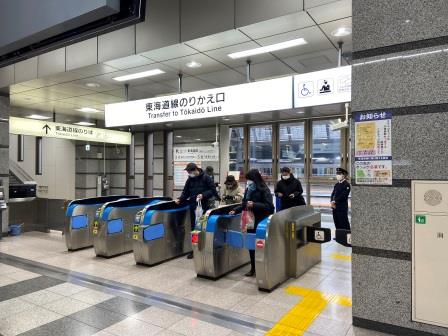
I go downstairs and exit the ticket barriers. There is an easy transfer here to the Tokaido Line and the station also has platforms serving the Izu Hakone Railway and the Odakyu line. The latter links Odawara with Shinjuku in Tokyo and extends west towards the popular resorts of Hakone and provides much cheaper, albeit slower, access from the capital.
From the station footbridge it is just possible to see Odawara Castle. It is actually only a few years older than the Shinkansen, being constructed out of reinforced concrete in 1960. It is one of several recreated castles in Japan, the original stood here from the 15th Century until the 1870s.

I pop out of the Shinkansen (West) exit and go over to have a look at the statue of Hojo Soun, a daimyo or clan leader who seized Odawara castle in 1494. He is depicted on his horse carrying a flaming torch .

Back on the station concourse, my attention is drawn to the Suzuhiro Kamaboko display at the gift shop. Kamaboko is a kind of fish paste or sausage found all over Japan, but the Suzuhiro brand is local to Odawara.
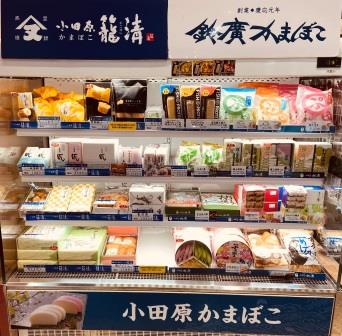
Japanese culture is big on gift buying and on local products. Each station I visit today will be selling its own local souvenirs for passengers to take back to friends and relatives, as well as its own bento stand where a locally themed unique boxed lunch can be purchased to eat on the train.

Train #3 – Odawara to Atami
My next train, Kodama 713 (the 9:27 from Tokyo) comes in at 10:00. I get on but we need to wait for the next Nozomi to overtake before we can move. Our train gently shakes as the faster one thunders past, and then at 10:02 we are off heading after it in hot pursuit.

After Odawara the wide plain where the city is situated runs out and the old Tokaido Line twists and turns as it hugs the narrow coast. We run broadly parallel but in a much straighter line, almost always in tunnel. First there are six relatively short tunnels. They are punctuated by glimpses of bridges on the old line and views out to the ocean beyond.
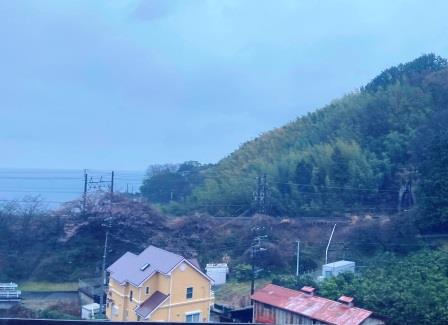
Now we plunge into the second longest tunnel on the whole line, Nanogayama (5,170m) and after a few more short bores we enter Izumigoe (3,193m), inside of which we pass into Shizuoka Prefecture.
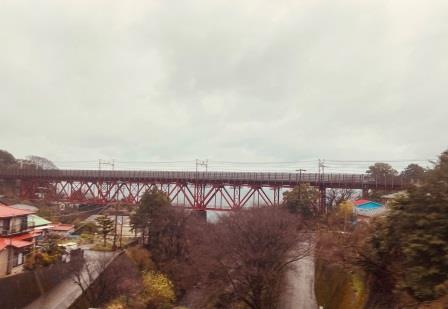
Tunnels form 68.2km or 42 miles aggregate length of the Tokaido Shinkansen. That equates to 13% of the line. This was impressive at the time, but it is small when compared with later Shinkansen lines. A final short tunnel on a curve brings us into Atami Station at 10:10am. Our short journey time of 8 minutes for the 19km compares with 13 back in 1965.

 Trains To Beyond