Porto is Portugal’s second city and has a population of around 250,000. The entire metropolitan area is home to around 1.8 million, representing a fair proportion of Portugal’s 10 million or so citizens.
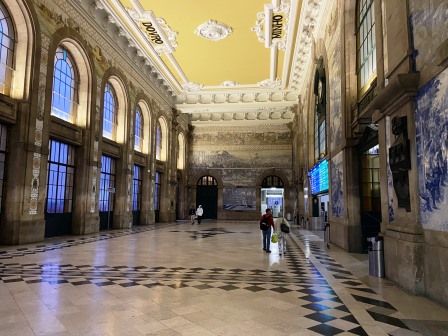
The historic city centre was declared a UNESCO World Heritage Site about 30 years ago and features a variety of architectural styles. São Bento station is close to many of the city’s attractions and our apartment nearby made a great base to explore.
Highlighted on the map below by numbers, is a suggested trek around the city with lots of food and drink along the way. Starting out at São Bento, the walk loops first around Bolhao, descends to Ribeira, circulates back around the historic centre, eventually to the cathedral at Se and thence across the Luiz I bridge to the Port lodges of Gaia.
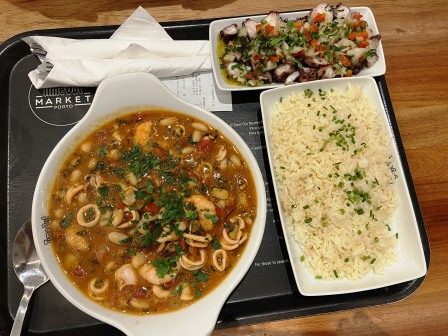
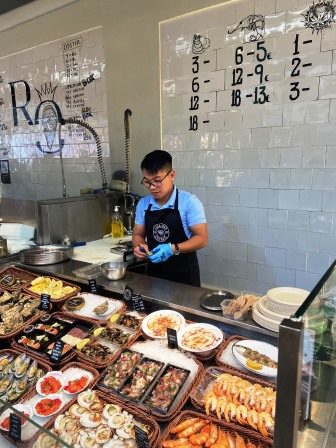
There was a brand new Time Out food court at Sao Bento station itself. It featured 13 restaurants several of which had Michelin stars.
Octopus salad, and one of Porto’s staples, seafood stew.
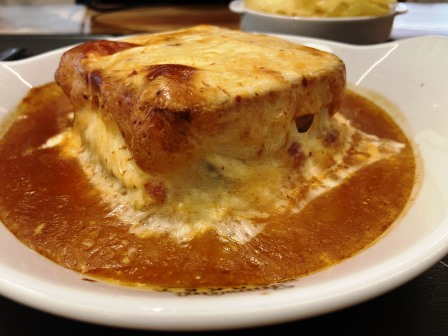
Francesinha – a hearty rich sandwich which originated in Porto in the 1960s. It is the local take on the Croque Monsieur, hence the name.
It is made with layers of various meats including ham, steak and sausage sandwiched between toasted bread and topped with melted cheese and then covered in a tomato-beer sauce.
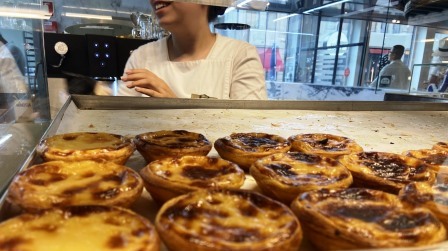
For dessert, traditional Portuguese custard tarts – available all over the city.
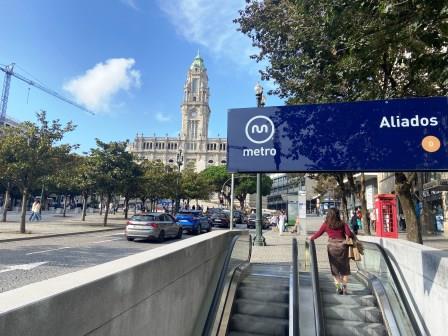
2 – Aliados
A short walk away, Avenida dos Aliados is Porto’s most grandiose boulevard. Lined with prestigious hotels and office buildings built in a variety of styles.
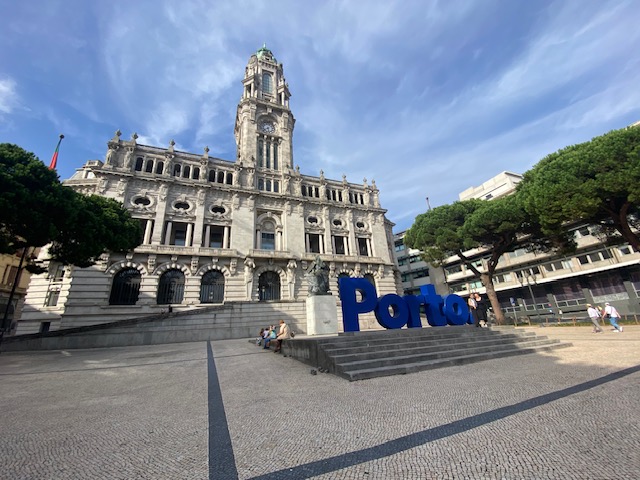
Standing at one end is the impressive town hall, Camara Municipal, with its blue Porto sign attracting tourists taking ‘selfies’
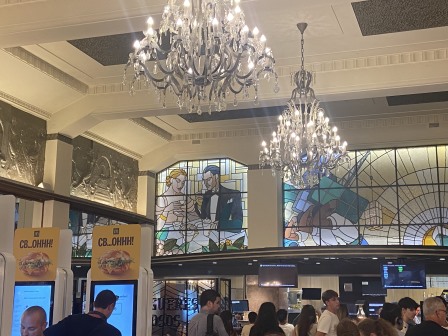
At the other end is what is said to be the most beautiful McDonald’s in the world.
It was originally the grand Café Imperial and the conversion retained all of the art deco features, including the chandeliers
3 – Mercado do Bolhao
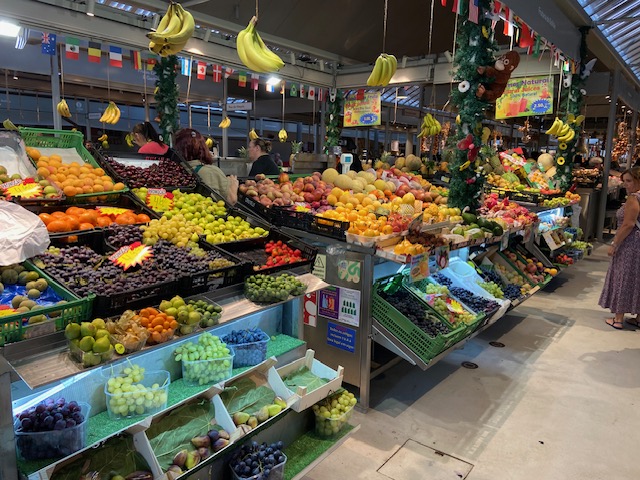
A few blocks to the east, the Bolhao market is the traditional market of Porto and first opened in 1837.
Recently refurbished and perhaps made a little less authentic and more tourist orientated.
Nevertheless, it still retains a lively atmosphere with stalls selling food, drink and handicrafts.
There is a variety of food ready to eat too.
The thing to do is to grab a glass of wine, and sample some of the delicious things on offer.
4 – Santa Catarina
The Rua de Santa Catarina is one of the most famous shopping streets in the city.
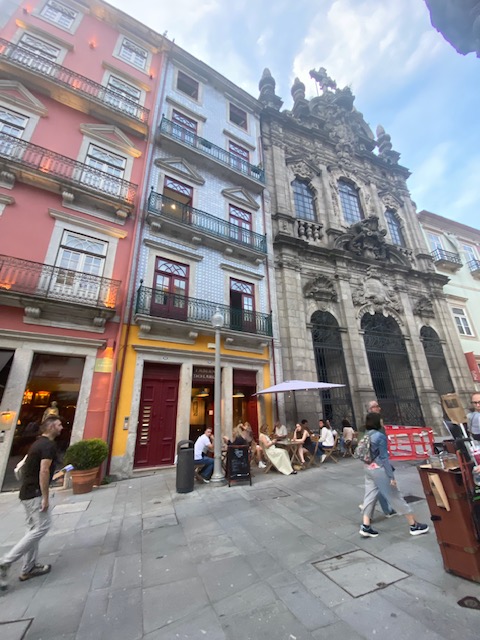
The Capela das Almas with its beautiful, tiled facade can also be found along the street.
The Cafe Majestic (1922) is housed in an Art Nouveau style building and its interior is designed to resemble a Parisian cafe.
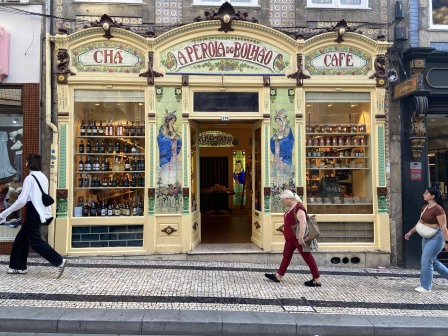
Not far away, is another Art Nouveau gem, the A Perola do Bolhao grocery store.
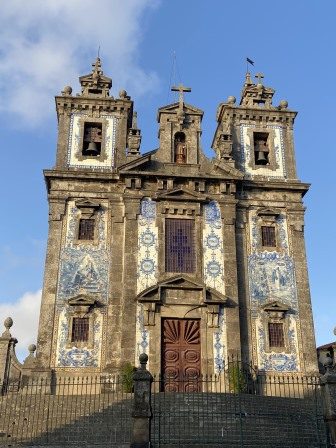
5 – Igreja de Santo Ildefonso
Completed in 1739 the church stands near Batalha Square.
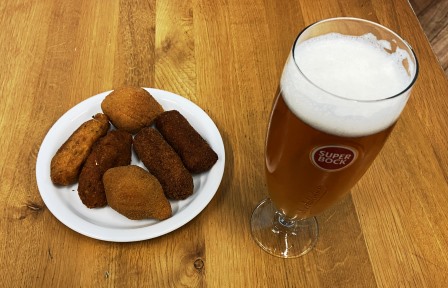
The square has several cafes, perfect for a Super Bock beer and salted cod fritters
6- Funicular dos Guindais
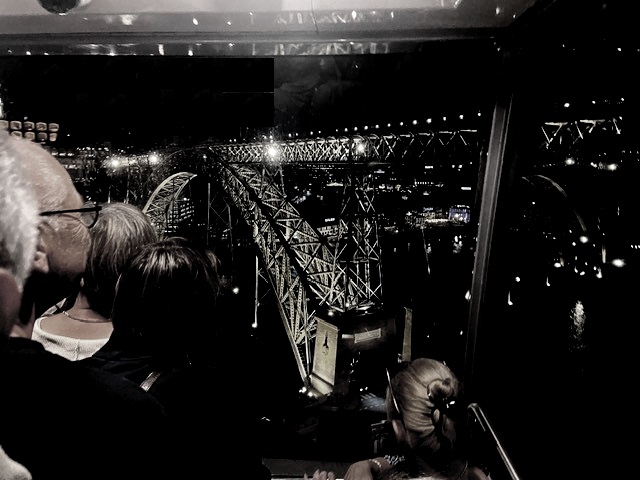
A short walk away is Batalha station of the Funicular dos Guindais. It starts in a tunnel and then descends to the riverbank .
The modern funicular opened in 2004 and is built roughly on the site of an older one that operated only between 1890 and 1893.(Funicular dos Guindais / Barcex / Creative Commons 3.0)The ride lasts for about two and a half minutes and provides great views of the historic Dom Luis I Bridge.
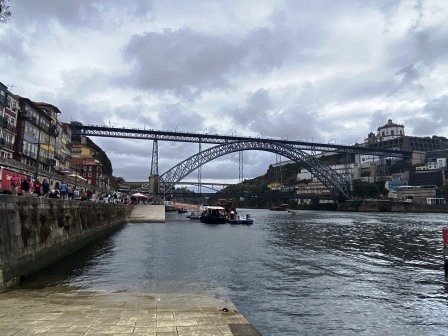
The bridge itself opened in 1886 and has two decks, both of which are open to pedestrians. Metro Line D also crosses the upper deck, whilst taxis and buses are permitted on the lower.
7 – Ribeira
Just west of the bridge (on the left above) is the waterfront of the historic Ribeira district.
Seen from the opposite bank, there is a colourful mix of old houses and used to be the city’s poorest neighbourhood.
Today it is extremely lively with restaurants and bars.
8 – Infante
The church of St Francis is the most prominent Gothic church in the city
The Rua das Flores is a long shopping street that gently rises from river front towards Sao Bento
The narrow streets just to the north of it are great for wandering
There are views back across the historic city centre.
9 – Praca Gomes Teixeira
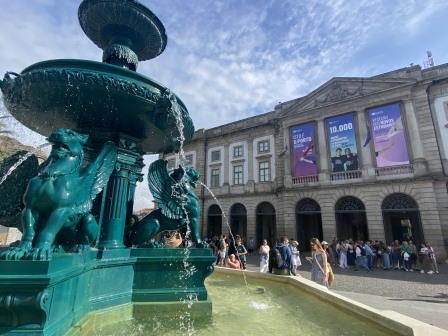
The Praca Gomes Teixeira is situated in the university district. The faculty of science with its imposing facade is one of the buildings surrounding it.
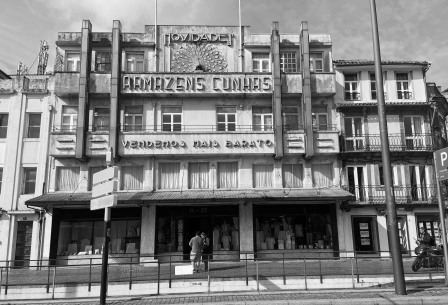
The Armazens Cunhas department store building, also on Praca Gomes Teixeira, is one of several examples of Art Deco architecture in Porto.
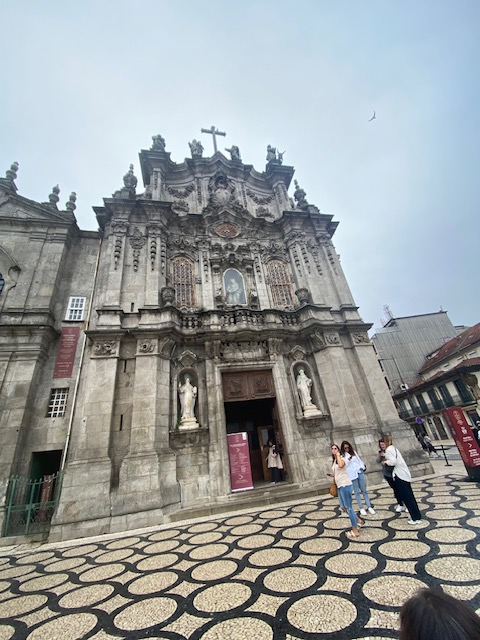
The Igreja do Carmo sits next to the Igreja dos Carmelitas just opposite the square.
The Igreja do Carmo is famed for the beautiful blue and white tile mural that covers the entire eastern wall
This area around the Praca Gomes Teixeira, close to the university, is a hub for bars
10 – Clergios
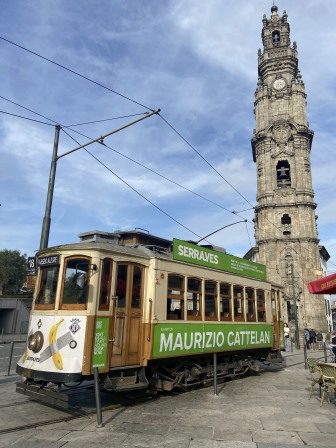
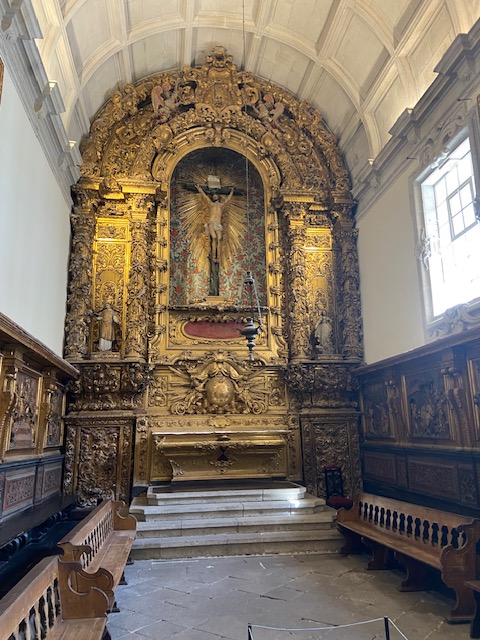
This church has a unique oval nave and the tower is the highest structure in the historic centre of Porto
11 -SE
Porto Cathedral, located at the highest point in the city.
The cathedral is also among the oldest monuments in the city. It was originally constructed in the 12th century but has been rebuilt many times since.
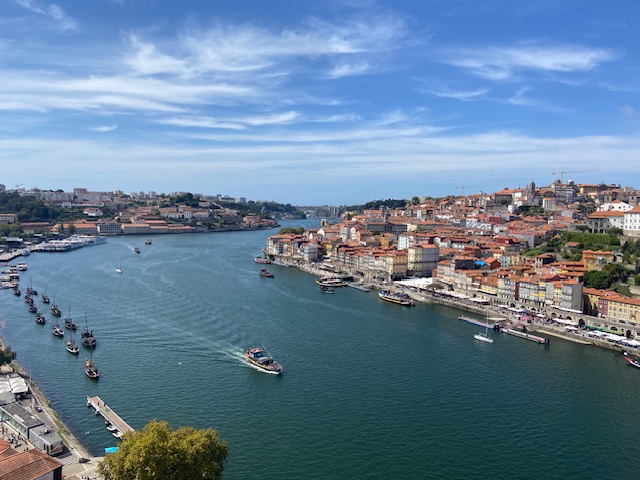
The view from the tower looking west.
12 – Dom Luis I Bridge (Upper level)
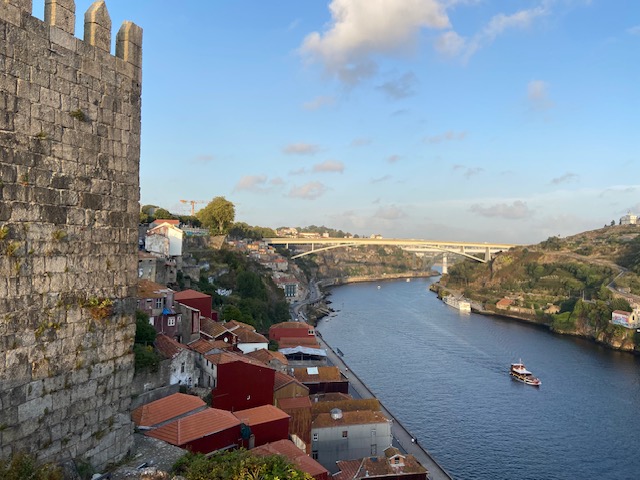
The view from the bridge looking west
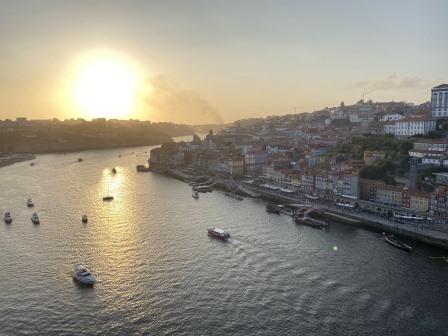
….and at sunset
The view looking east.
13 – Villa Nova de Gaia
The southern side of the River Douro is officially Villa Nova de Gaia, and not part of Porto. The city contains many cellars where port wine is stored and aged.
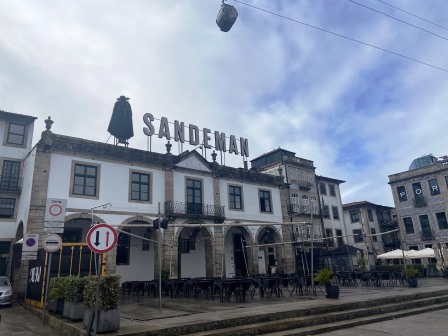
Every port producer is represented here, many household names amongst them. Most of the companies offer brief tours around the cellars. We visited Sandeman’s.
Its “Don” logo combines a Portuguese student’s cape with an Andalusian hat, to illustrate the company produce sherry as well as port.





















 Trains To Beyond
