Introduction
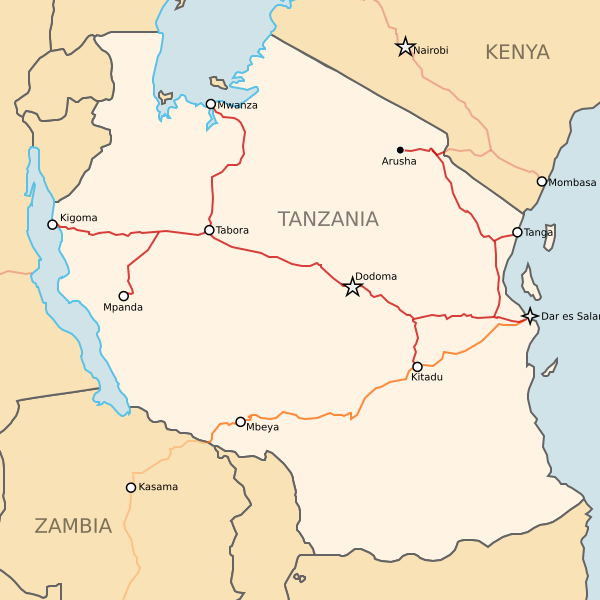
Tanzania is home to three different railway systems. They were built at different periods in the country’s history and each system uses a different track gauge. In the early 1900s, the Germans built the first railway using the Metre Gauge (1000mm, 3ft 3in). Then in the 1970s, the Chinese financed and helped to build the “Tazara”, a link with Zambia using Cape Gauge (3ft 6in, 1067mm). Most recently the Tanzanians, aided by Turkey, have opened a Standard Gauge (4ft 8.5 inches / 1435mm) line.

During my visit to Dar es Salaam, I embarked on a 6 km walk to see how the three systems came together in the city. I started at the Old Central Railway Station (1 on the map above) and then visited the new Central Railway Station (2) before visiting the temporary metre gauge terminus at Kamata Karaikoo (3). I then traced the metre gauge and standard gauge lines as they left the city on my way to the Tazara station (4).
Old Central Station
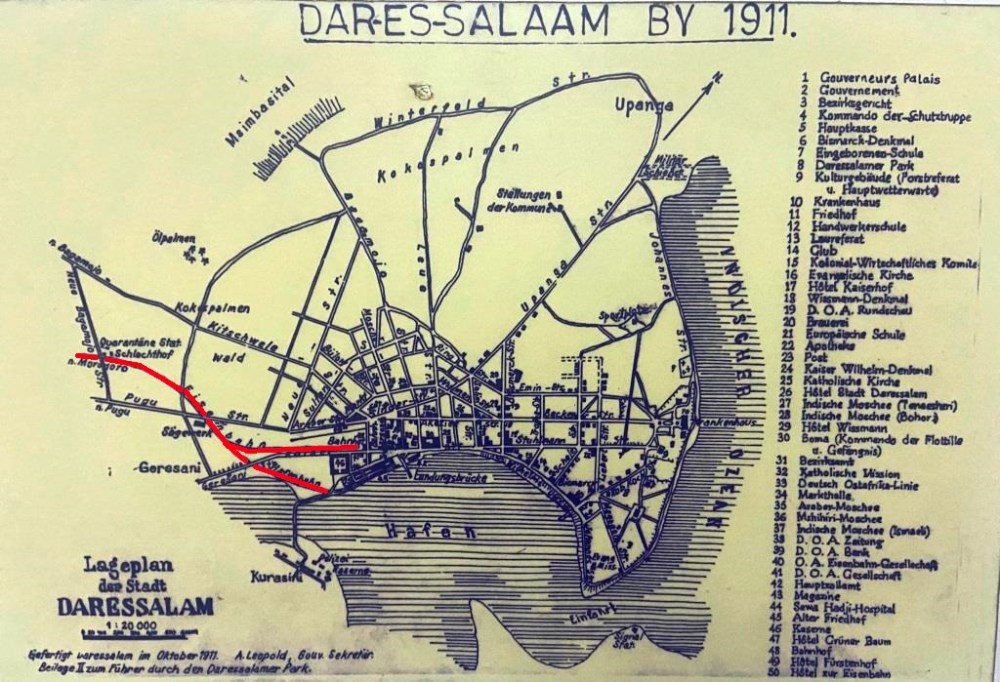
Tanzania’s Metre Gauge railway system (known today as MGR) dates from 1905 and extends to around 3,000km of route. It is one of the biggest legacies from the German colonial era. The original line terminated in what was then the edge of the downtown area with a short branch to the port. It is shown in red on the 1911 map below.
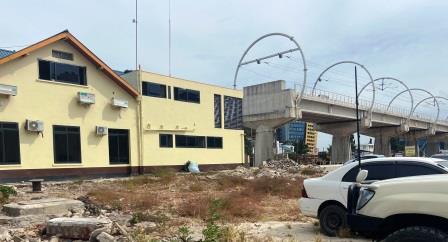
The old terminal building was still located in Railway Street although the MGR line itself had been temporarily curtailed at the next station, Kamata Kariakoo, whilst the new Standard Gauge Railway (SGR) was being built partly on the site of the old terminus. The view below is looking towards the west and although the building was (March 2025) not in use, it was being refurbished.

The platform of the MGR terminus stretched out behind the building and is shown in the 1996 photograph below, with carriage works and sidings also visible on the right. The new SGR terminus has now been built to the side of the old tracks, roughly to the left of the first carriage in the picture.

2.5
In the picture below, a side view of the old MGR terminus, the extent of the new SGR electrified line can be seen. The new elevated structure almost comes up to the old MGR terminal building itself.
The new SGR line is nominally single track, with a single platform in the station and a run round loop. In the view below, a locomotive can be seen in the shunt neck beyond the end of the platform about to run around its train. The MGR track can also be seen at ground level with the new platform in the process of reconstruction.

When the current work to restore the MGR to the station is complete, there will be two MGR entrances: the ground level of the New Central Railway Station will provide an interchange with the SGR, whilst the refurbished Old Central Railway Station will give a slightly faster route to and from the city.

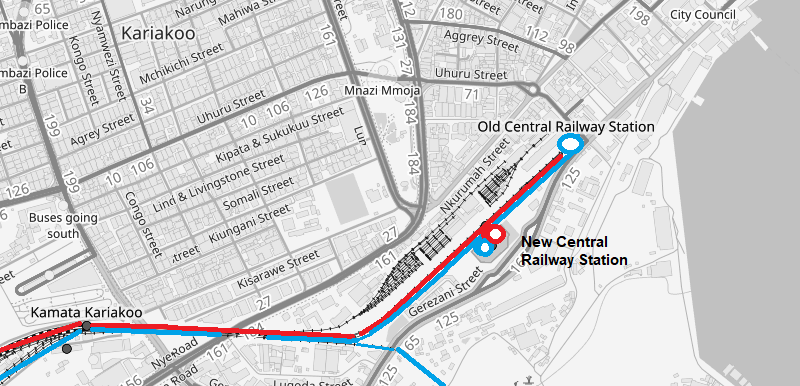
The whole layout can be seen in the photograph above (taken before track on the SGR was laid) and also on the map below, with the original MGR system in blue and the elevated SGR tracks in red.
New Central Station
The New Central Railway Station (seen below with the new railway just visible behind it) was an impressive modern structure. It is named for John Magufuli (1959-2021) who was President of Tanzania from 2015 until his death.
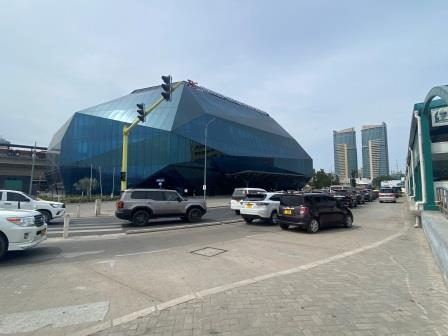
Opened in 2024 when the new SGR started operations to Morogoro (services now extend 541 km to the capital, Dodoma), the building was laid out over several floors. The future entrance to the MGR platform was on the ground floor.

On the ground and first floors were fast food chains, convenience stores and souvenir shops. The ticket office, including ticket vending machines, and access to the SGR platform were on the second floor. There were restaurants on the third floor.


The SGR service was not exactly intense. There were departures for Morogoro roughly every two hours or so, with most of them extending to Dodoma. The train service, offering a variety of stopping patterns, was maintained by a mixture of electric multiple units and locomotive-hauled trains.
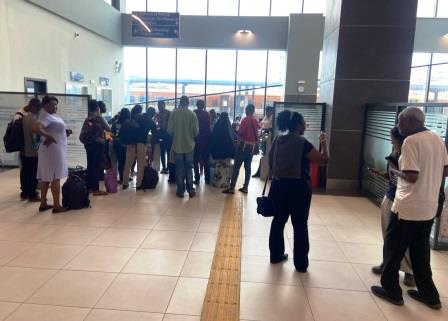
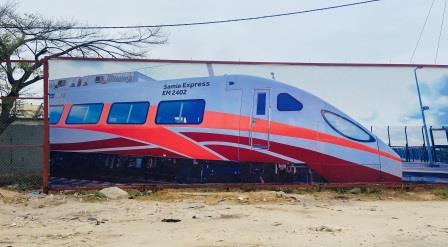
The new SGR trains were obviously a source of pride and symbols of the economic growth of the country. They featured on quite a few posters displayed around the city. Plans are now afoot to expand the SGR to Kigoma as well as neighbouring Burundi and Rwanda.

Temporary Terminus – Kamata Karaikoo
The new elevated structure of the SGR, with its distinctive horseshoe shaped overhead line supports, followed the old MGR line all the way through to the western outskirts of Dar. A couple of kilometres on from the central terminus it passed the current temporary MGR terminus at Kamata.

A prefabricated building (above) had been erected at the side of the tracks to deal with the extra business. Inside there was a small waiting room and a ticket counter.

The vast majority of trains using the temporary terminus were the commuter services which ran in from Pugu and Ubungo. Most arrived mainly in the morning and returned in the evening but there were trains at other times of the day.
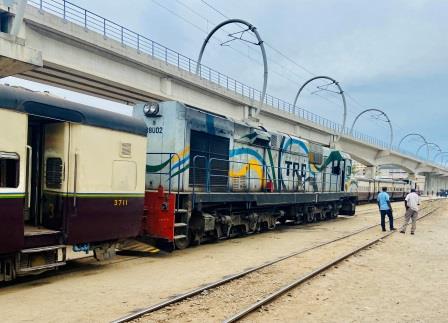
There were three tracks here but no real platform to speak of. They seemed to struggle a little bit to turn the trains around in this rather cramped layout. In the vicinity of the station were three commuter trains with locomotives attached at either end of them, as well as a rake of long distance coaches being stabled on their own.

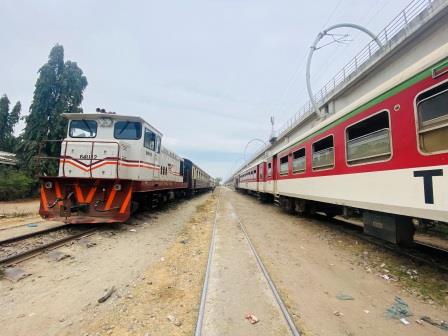
Despite the opening of the new SGR, there were still (March 2025) long distance trains operating from here. Services connected Dar with Tabora (running parallel with the SGR as far as Dodoma) about three times a week.

The central railway’s main line to Kigoma was served twice a week, whilst the branches to Mwanza and Mpanda got weekly trains. Arusha, on the northern line close to Mount Kilimanjaro, also had a twice-weekly service.
Heading West
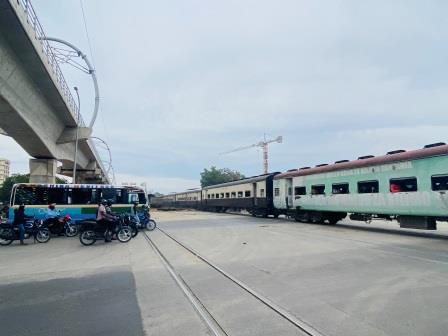
As the MGR line headed out of the city, there were numerous level crossings with busy roads to encounter. Witnessing the operation of these, even for the limited traffic on the MGR, the need to elevate the new SGR tracks through the city became obvious.
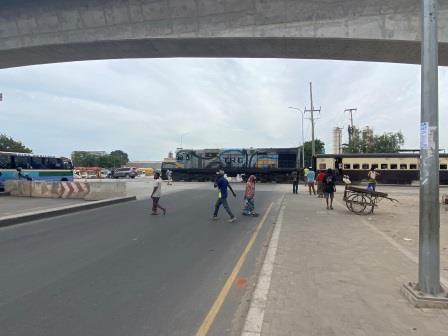
As a train approached with its horns blaring, the traffic seemed to stop almost instinctively and wait patiently. But even before the last carriage had even cleared the crossing, everyone was off again, twisting around it to get to the other side as fast as they could.

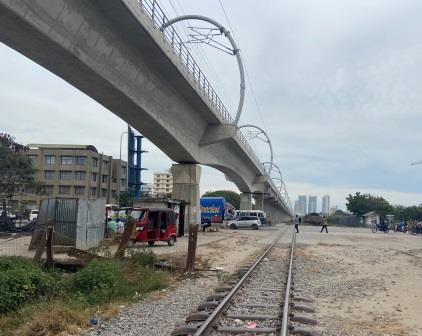
Looking back towards the centre of the city and then in the opposite direction, both the MGR and SGR lines could be seen to be perfectly straight as they exited the city.

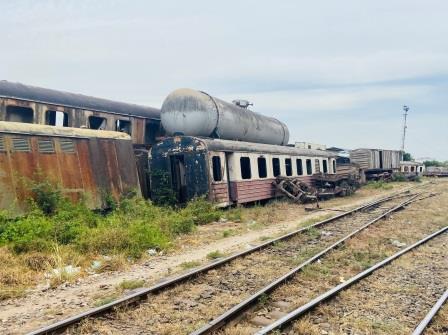
Just beyond this point there was a little dumping ground where the old MGR carriages and wagons had been piled up, presumably awaiting scrapping.
Tazara
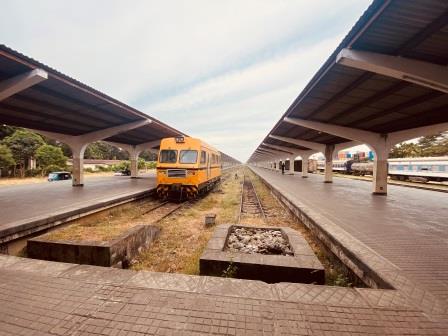
Looking from the main road, the Tazara station looked large and imposing. Set in its own extensive grounds and betraying its Chinese design, it looked more like a university campus or a library than a railway station. The place was pretty deserted too.

The building also serves as the headquarters of the Tazara Railway, so even on a day when the (twice-weekly) train service to Zambia was not running, it was not empty. There were people on the security gate and a few cars in the car park below the main building.

The Tazara also operated its own commuter service, serving Mwakanga about 30 km away, but it only ran in the peak hours on weekdays. Tracks also extended from a junction just a few miles outside the station around to Dar’s port via Kurasini and ended in close proximity to the dockside. Commuter trains have also run on this branch too.
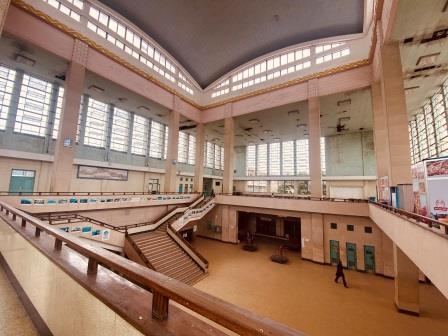
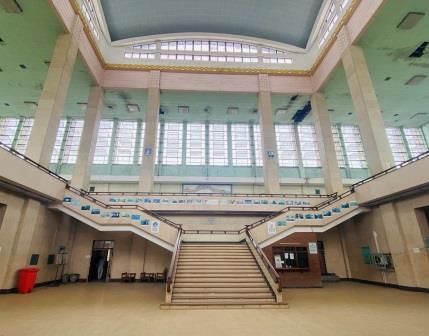
Inside the main building, save for a cleaner and security man, there was nobody to be seen. Given that the commuter service was actually an afterthought and has only operated since 2012, this all looked like hopeless over provision for a service of just two trains a week.

Displayed on some of the walls there were lots of photographs of the various projects the Chinese had invested in, not just in Tanzania but all over Africa. The recently opened Mombasa to Nairobi standard gauge project in Kenya got a big mention.
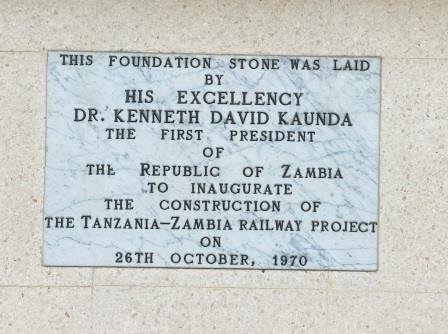
Despite positive backing from both Governments, the Tazara never really got the level of passenger and freight traffic for which it was aiming. Mainly conceived to carry copper from Zambia to the port at Dar, it initially enjoyed some success with an initial freight haul of around 1.1 million tons in 1977.

With the re-opening of alternative freight routes via Angola and South Africa in the late 1990s and early 2000s, traffic volume plummeted. By 2015 annual freight haul had fallen to around 90,000 tons, less than 5% of the designed capacity. Although traffic has now recovered to around 300,000 tons or more, there are still serious maintenance issues that limit capacity.
Outside there were a few loose carriages in the sidings and a track inspection vehicle was stabled in one of the four platforms. Passenger services on the Tazara were seriously curtailed and only ran as far as Mbeya, and did not cross the border into Zambia.

Things might be about to change though. China’s Civil Engineering Construction Corporation is about to invest $1.4 billion to revitalise the railway by improving track, obtaining new locomotives and wagons and operating it under a 30-year concession. It seems that after a decade or more in the doldrums, the Tazara might be finally on the up.
Conclusion
Tanzania is investing heavily in its railways. Whilst the SGR project is obviously leading the way and the Tazara might be finally getting its own rehabilitation, the MGR still has a siginificant role to play for a while yet.

It will be interesting to see how fast all these plans take to come to fruition and how the three networks continue to develop alongside each other in the years ahead.
 Trains To Beyond


