TRAIN # 26 – 23:14 Hamburg to Hannover (continued)
After an uneventful journey, we alighted from the Stuttgart-bound train onto a cold platform at Hannover. It was ten past two in the morning. Along with four others we crossed to platform eight to await the arrival of the Ostend to Moscow ‘Ost-West Express’ due out at 02:37.
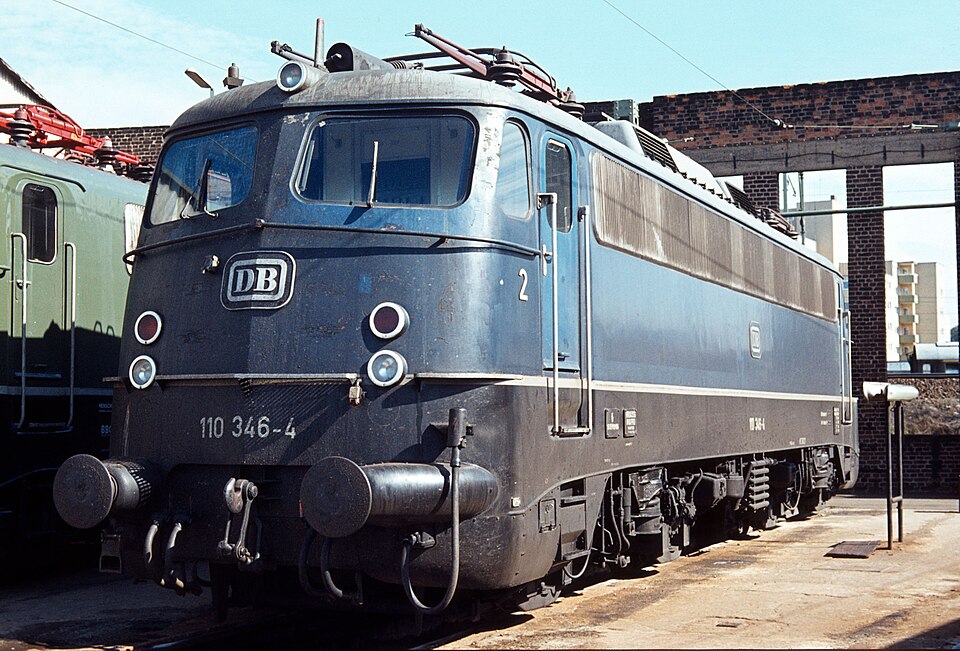
The train arrived on time. It was hauled by one of the workhorses of the West German system, a Class 110 electric locomotive, and formed of a mixture of Russian, Polish, East and West German stock. It seemed to be absolutely crammed full apart from, as we observed as it went past, the third coach. We ran along the platform in pursuit but when we reached it we saw that the door was covered with signs suggesting it was reserved for the passport and customs people.
We approached one of the officials standing next to the coach and asked if the whole coach was taken up. We got an answer along the lines of “can’t you read” and were literally pushed out of the way. We decided to wait for the following 03:04 train.
TRAIN #27 – 03:04 Hannover to Berlin Zoo
We didn’t have to wait long. As soon as one train had left the next one, the Paris to Moscow ‘Ost-West Express’, arrived on time at 02:44 with another Class 110 on the front. The make-up of this train was similar to the previous one. I knew from the timetable that its Russian carriages would eventually unite with the Ostend ones at the Polish/Russian border for the last part of their trip.
Our wait had paid off. One of the DB (West German) coaches that was only going as far as Berlin, had an empty compartment. We helped an elderly German man put his bag on the rack above one of the seats before putting the other four seats together and getting the sleeping bags out.
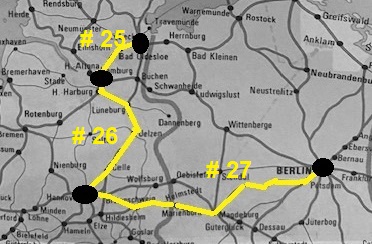
The train left on time at 03:04 but I couldn’t sleep. Within an hour or so, we had arrived at the East German Border (Helmstedt / Marienborn). We were then kept awake whilst transit visas were issued for 5 DMs each and passports were stamped. We set off again, now hauled by an East German State Railway (DR) diesel.
I then managed to doze for a few minutes as we passed along the transit corridor through East Germany. We crossed the West Berlin Border at 06:40 and as I looked out of the window I saw that it had started to rain. It was misty and the whole city looked grey and none too inviting. At 07:02 we pulled into Bahnhof Zoo.
WEST BERLIN
Bahnhof Zoo was the main transit hub for West Berlin. We had a coffee, deposited the bags and then went straight on to the U-Bahn (U1) to Hallesches Tor. The ride took in six stations and the track was elevated for the last part of the journey.
We passed through the barren wasteland to the south of Anhalter Bahnhof, once one of Berlin’s great railway termini, and then followed the banks of a canal. Most of the buildings seemed to be new but there were older ones mixed in. There were also plenty of trees. It was not unpleasant at all.
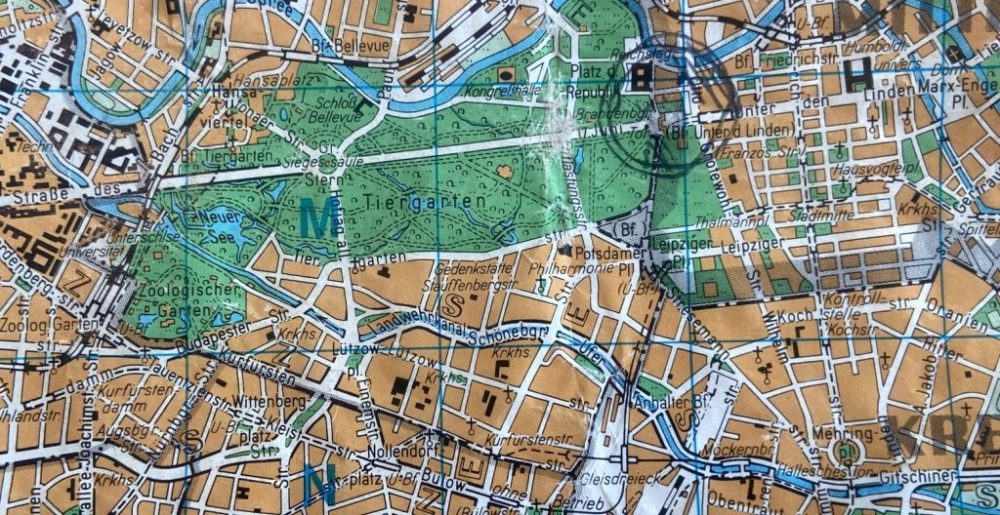
From the U-Bahn station we walked up Friedrichstrasse Here, we figured the city must have been comprehensively destroyed as it had been completely rebuilt. The area reminded me a little of Elephant and Castle in London, full of grey sixties concrete blocks.
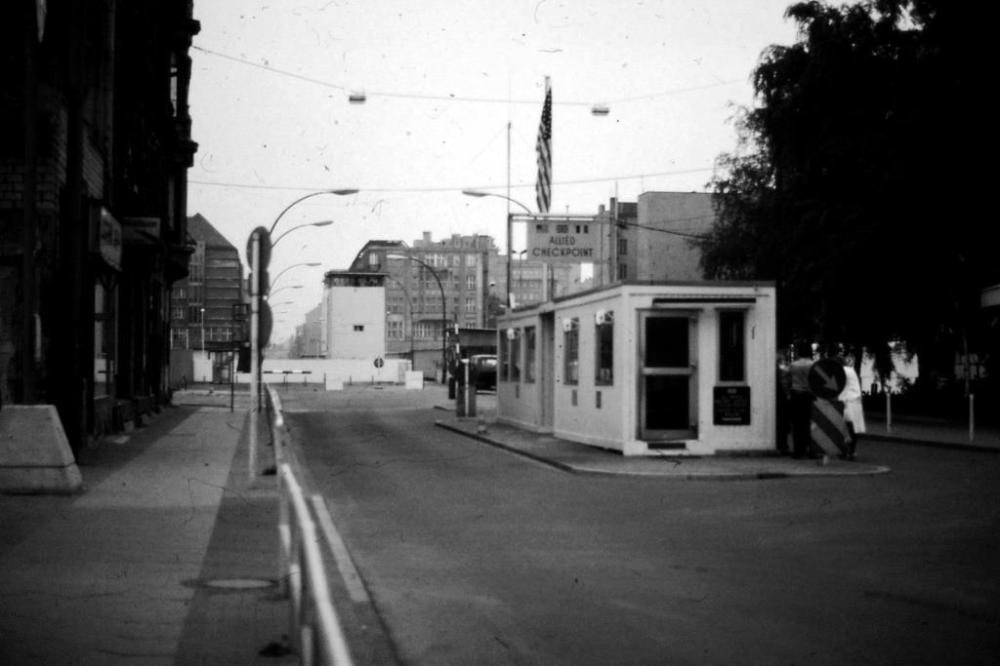
We crossed Kochstrasse and walked as far as we could to Checkpoint Charlie and stood a while watching the vehicles pass through from the American to the Soviet Zone on the other side. We lingered a while and then went to a supermarket to get bread, cheese and liver sausage for breakfast.
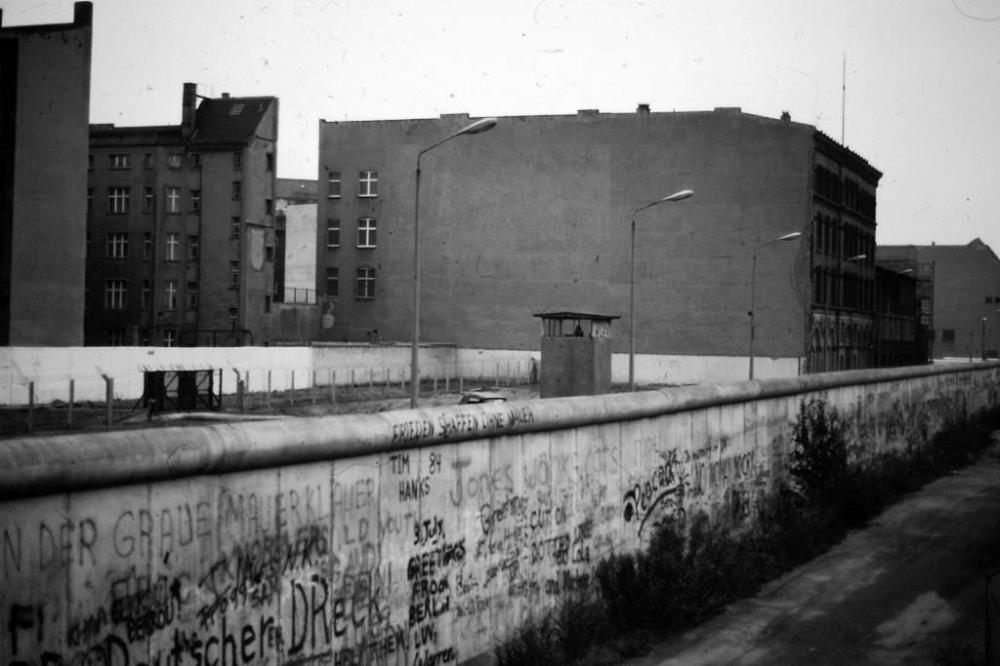
We then walked west alongside the wall itself heading towards the British Zone at Potsdamer Platz. I was impressed by the amount of clever and colourful graffiti that adorned the thing. There were several viewing platforms where we could climb and look over to the other side, with views of the other inner wall and the so-called death strip in front of it.
We eventually made our way around through the wasteland that was Potsdamer Platz, once Berlin’s version of Piccadilly Circus, all the way to the Brandenburg Gate, itself now stranded over in East Berlin. Here we could peer across the wall again and look down the Unter den Linden on the other side.
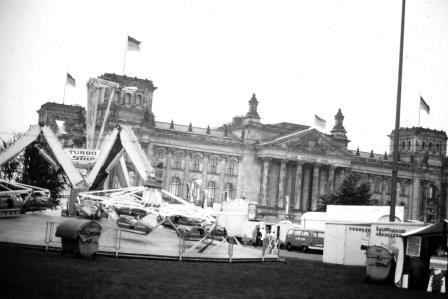
We went over to the Reichstag. We went inside for a look around the unexpectedly interesting Reichstag Museum. Then, having learned a little about German politics, we paid 10 pfennig for a coffee in the cafeteria. The lawn in front of the old parliament building was playing host to some kind of pop festival combined with a funfair.
We had a long walk through the Tiergarten to the Victory Column and decided to invest 50 pfennigs to climb it. We eventually made it back to the vicinity of the Zoo. We had a longer walk around the Kurfürstendamm looking at the modern shops and ending up spending 14 marks on lunch in a Burger King.
We did a bit of people watching through the glass windows of the restaurant. We remarked that a lot of the people we saw seemed to have sad faces; perhaps it was just the weather. We admired their discipline at waiting at the pelican crossing even when there was no traffic around.
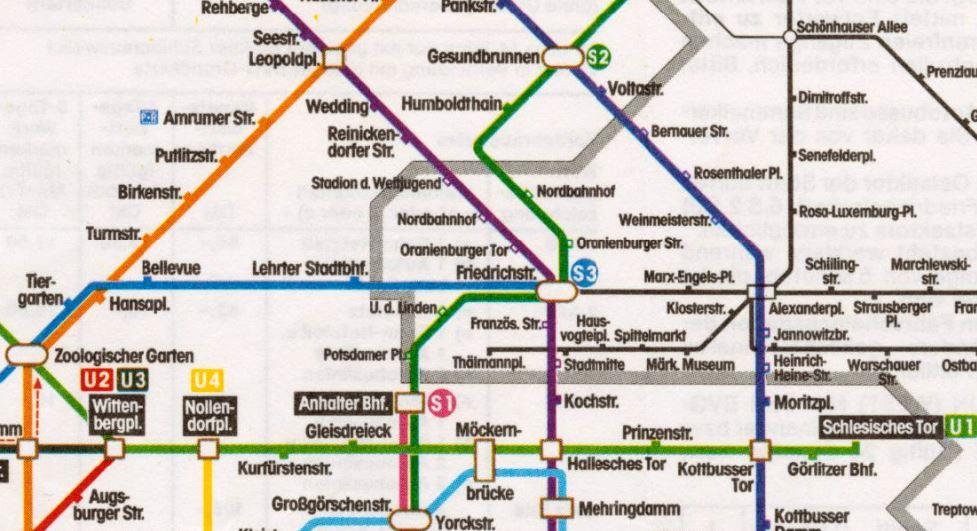
We returned to Zoo station and boarded the S3 S-Bahn train heading east. The train, run by West Berlin’s transport operator BVG, was from the 1920s. We rattled across the elevated viaduct back through the Tiergarten park and then, after stopping at Lehrter, we passed over into East Berlin. The train terminated at Friedrichstrasse Station.
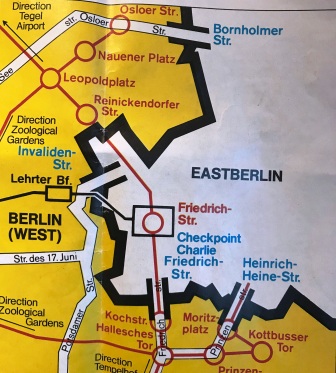
Here we were technically in the GDR but were still sealed off from it. From here, had we had the time or the inclination, we could have elected to enter East Berlin, Instead, we merely changed onto another BVG-operated S-Bahn line.
The S2 ran underground from Friedrichstrasse and took us north under East Berlin through closed stations where pairs of East German guards stood on darkened platforms.
Running through East Berlin between the north and south of the Western part of the city, the S2 served only West Berliners. With the exception of Friedrichstrasse, the surface entrances of the so-called ‘ghost’ stations that were in East Berlin had been sealed and measures taken to prevent any East Berliner gaining access.
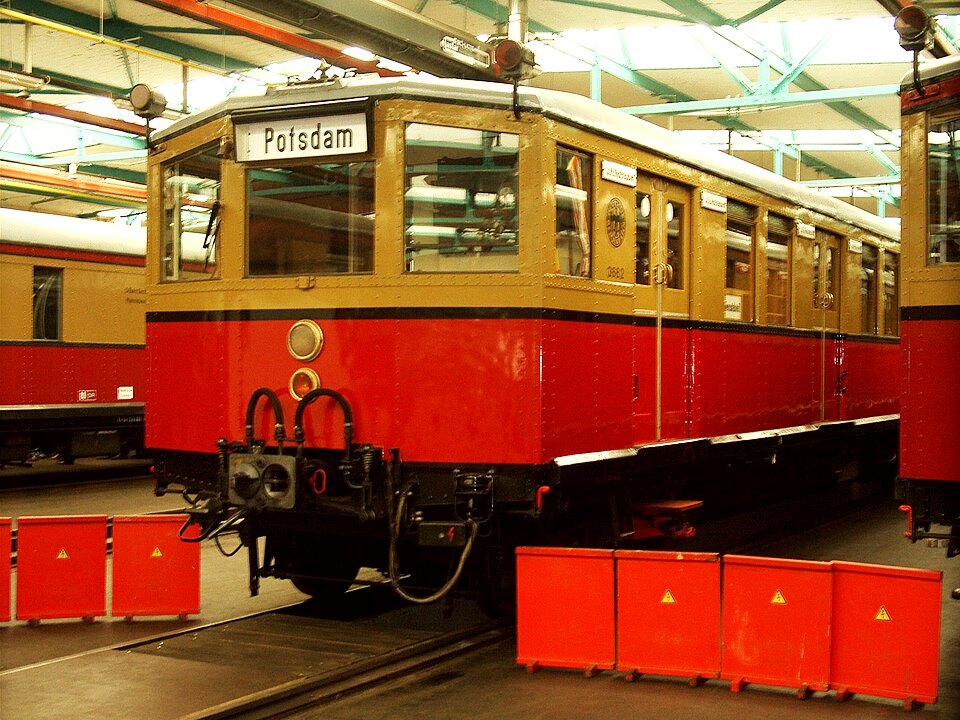
At Gesundbrunnen, back in West Berlin, we changed onto the U8 U-Bahn line and then headed back south under East Berlin through a total of six more ghost stations each with their darkened platforms and pairs of guards. The whole thing was as fascinating as it was eerie.
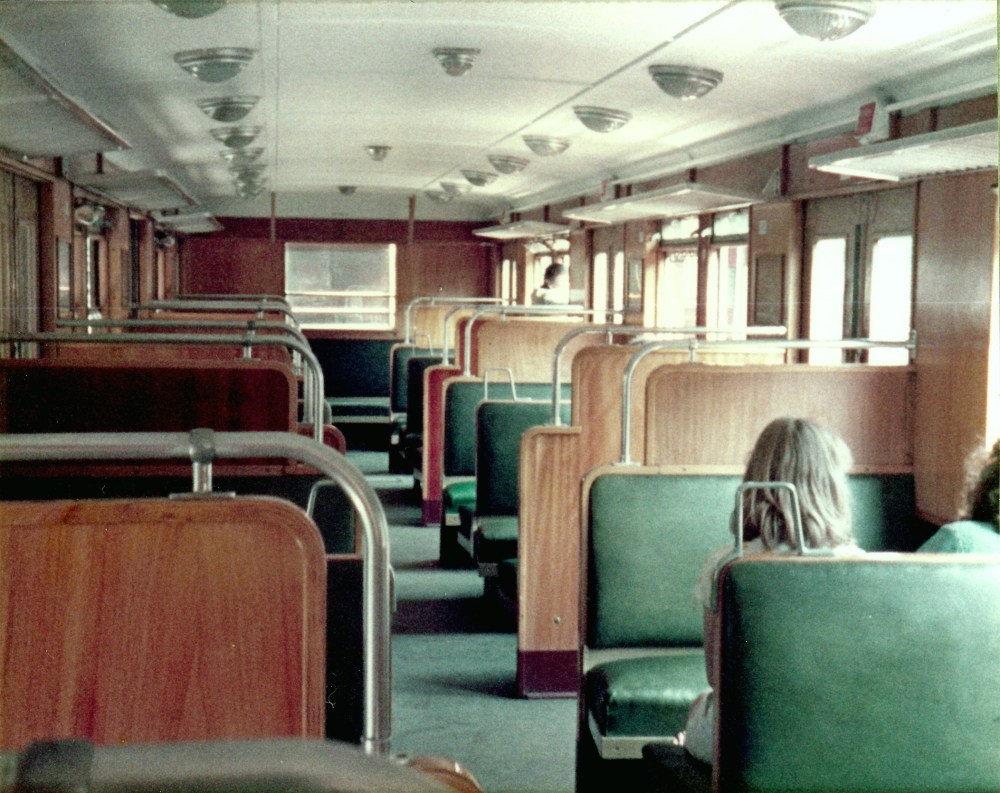
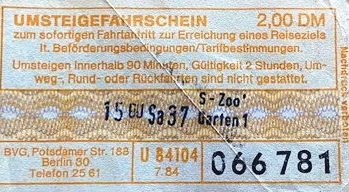
Back in West Berlin again we changed on to the elevated U-Bahn U1 at Kottbusser Tor and, on the way back to Zoo station, chatted to a Scottish man who was dressed in a kilt and setting out for an evening busking with his bagpipes.
We had been fascinated by Berlin and we agreed that it would have been good to have stayed much longer. The next visit would have to include a trip into the eastern part too.
TRAIN # 28 – 16:56 Berlin Zoo to Hannover
We boarded the 16:56 to Hannover. We were now retracing our steps to Hamburg. The train meandered through suburban West Berlin. Now, In contrast to the grey image I had received on arrival, I thought that the city seemed quite green. ‘Berlin: Drop in on us’ confirmed this, it suggested that a third of Berlin’s area consisted of lakes, rivers and forests.
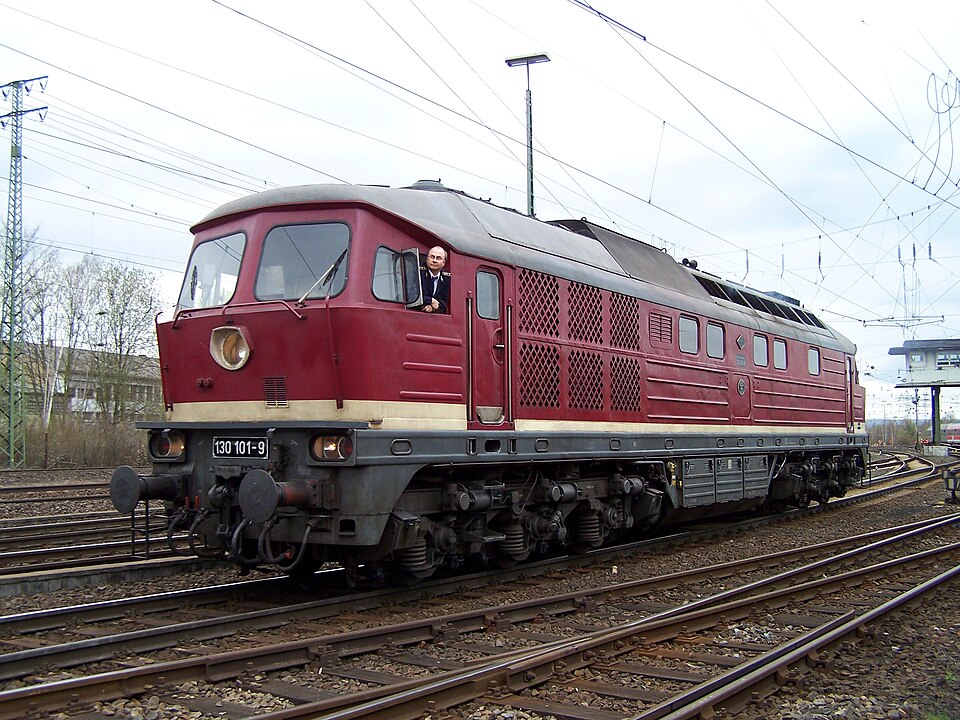
We crossed into East Germany around thirty minutes later. Our train was not scheduled to stop before the border and was certainly not accessible to the East Germans who we saw standing on the platforms of the intermediate stations we were passing. The route was not electrified and although our own locomotive was a Soviet-built Class 130 diesel, I was surprised to see steam locomotives at some of the stations.
We reached the internal German border around 19:10 and were subjected to several stringent checks by the East Germans. The passport check was particularly lengthy with the guard cross checking between my photograph and face a few times. The luggage was given a good going over and they searched underneath the seats with torches. We were eventually allowed to move. The train reached Hannover on time at 20:15.
TRAIN # 29 – 20:51 Hannover to Hamburg
In contrast to the steam traction we had just seen on East Germany’s railways, our next train was one of the flagships of the West German system. The Munich to Hamburg ‘Amalienburg‘ InterCity (IC) service was hauled by one of DB’s Class 103s. 145 of these locomotives had been built between 1970 and 1974. At almost 10,000hp they were among the most powerful electric locomotives in the world and were easily capable of reaching 200km/h.
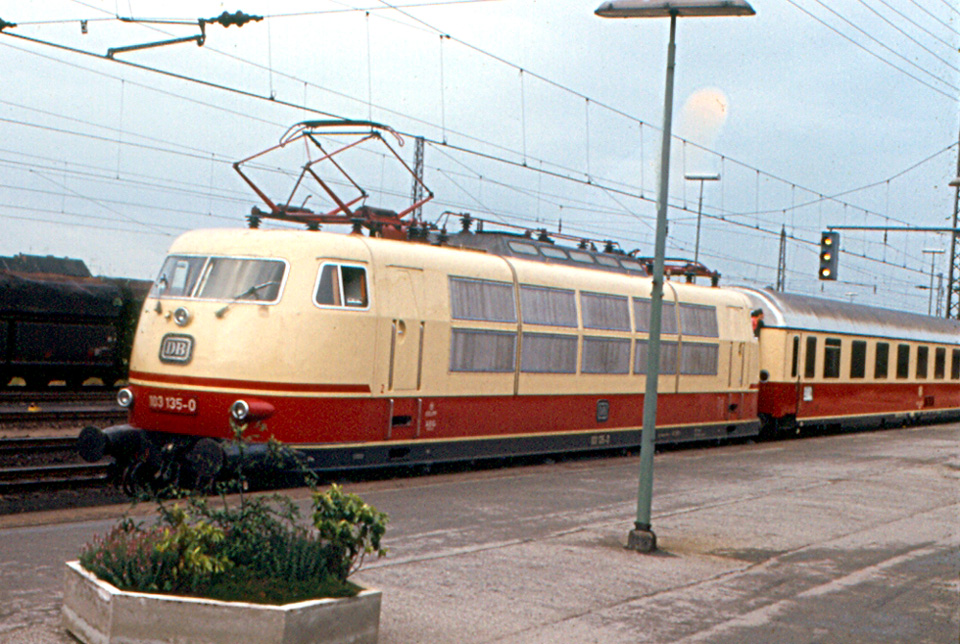
The ‘Amalienburg‘ left Hannover right on time at 20:51. The new InterCity coaches had comfortable seats arranged, not in compartments, but in open saloons, similar to the modern trains back in the UK and the French Corail carriages we had already travelled on.
There was a DB magazine at each seat and a little paper IC train guide that listed all the stopping points and connections. For the first thirty minutes we travelled along to the accompaniment of a party of singing Germans in the seats just in front of us. We were into Hamburg by 22:24.
TRAIN # 30 – 23:48 Hamburg to Copenhagen
As we stood on the platform waiting for the Copenhagen train to appear, we got talking to a Malaysian aeronautical student who was studying at Bristol University. He was travelling around on a first class Interrail pass before returning home to work for Malaysian Airlines. As we were talking, the train pulled in. We were delighted to see that there were lots of free compartments in the second class.
Forty Years Later….
- The Berlin Wall came down on November 9th 1989.
- The first U-Bahn ghost station opened two days later, with all of them opening by September 1990.
- East Germany was dissolved on October 3rd 1990.
- West Berlin and East Berlin merged into a single city state and became capital of the united Germany on the same day.
- Steam operations ended in East Germany in 1988.
- Berlin is still served by sleeper trains from both Paris and Brussels but there are no overnight trains linking to Poland or Russia.
- The fastest time by Inter City Express (ICE) from Hannover to Berlin is now around 1 hour and 20 minutes.
- The last type 165 S-Bahn trains were retired in 1997.
- All class 110s had been retired by 2014. More than 40 are now preserved.
- The last Class 103 locomotives were retired in 2003. 17 have been preserved.
- The modern Reichstag opened in 1999.
- Since the opening of the Hauptbahnhof at Lehrter in 2006, long distance trains no longer serve Bahnhof Zoo.
- In 2011 a museum on the division of Germany was opened at Friedrichstrasse station.
- I first returned to Berlin in 1988 and managed to visit East Berlin in its final year. I have been back to the unified city many times since and it is one of my favourite places in Europe.


