Shin Yokohama (25.5km / 15.9 miles)
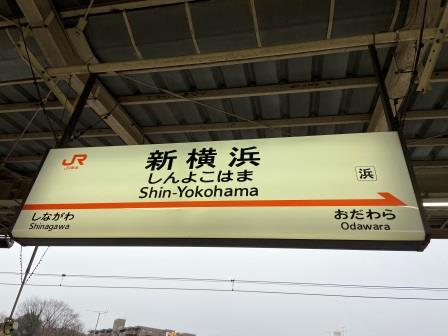
Shin Yokohama is provided with two island platforms serving four tracks. There are no longer any trains that skip the station, but for much of the first decade of operation only Kodama trains served Shin-Yokohama.
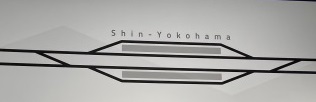
Originally, the fast Hikari trains passed through on the centre tracks, sometimes overtaking a Kodama that had left Tokyo earlier. Now, everything stops here, and trains depart in exactly the same sequence as they have left Tokyo around 18 minutes earlier.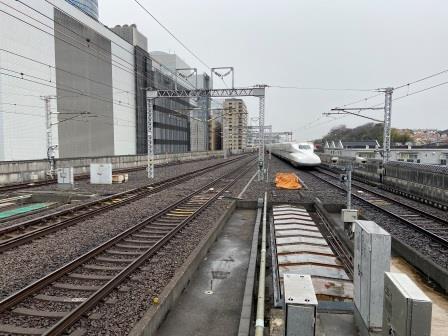
I go for a little wander up the platform I have arrived on. There is a photograph of Shin Yokohama in my 1964 booklet, but it doesn’t look anything like the scene that greets me here today. 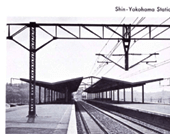
Like all the stations in the first few years, the platforms were quite austere and even the distinctive “V” shaped canopies only covered the area around the centre 4 carriages of the then 12-car trains. Anyone trying to wait for a seat at the front or the rear would have got wet.
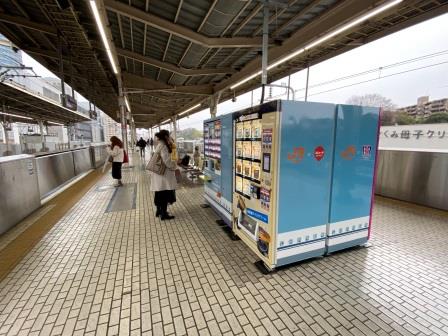
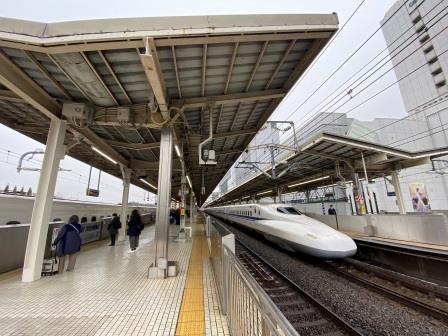
Today, the platform is filled with little sales kiosks, waiting rooms and vending machines and feels quite cluttered by comparison. Like everywhere else, the canopies have been extended to cover the whole length of the 16-car trains now in use.
The platform faces of the centre tracks are fitted with safety doors, a legacy of when some services passed through here without stopping before 2008.
In and around Shin-Yokohama Station
I leave the platform and go out of the station first heading to the main (north) exit. At most of my stops today, I intend to spend a few minutes outside each station and given that I haven’t allocated too much time to the task, I am going to concentrate on the exits nearest to the Shinkansen platforms.
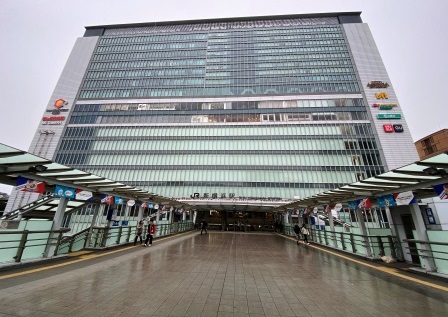
At Shin-Yokohama, things are a little different as the station itself was built specifically for the arrival of the Shinkansen and thus both sides count. Although it is located at the interchange of the JR Yokohama Line, the latter was until 1964 a very lightly used railway and the area where the new station was constructed was in the middle of nowhere.
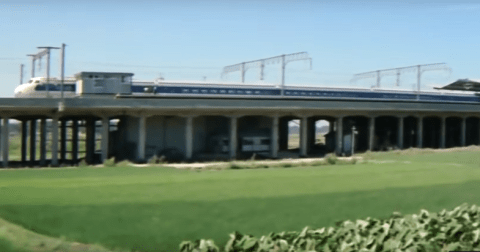
As the still from the 1964 film above shows, when Shin Yokohama opened it was on its own in the middle of green fields. Today it is in the middle of a metropolis. Over the course of 60 years a whole city has grown around it and is now a separate district in its own right. The station is now also served by the Yokohama Subway and, a recent addition, by the Sotetsu Shin-Yokohama line.
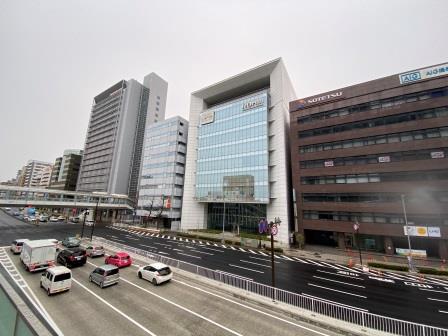
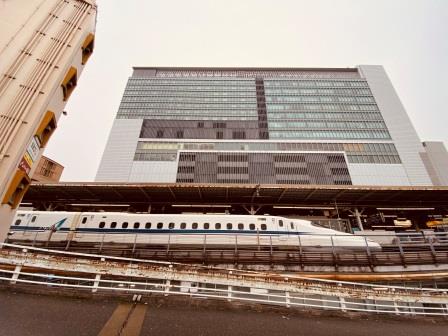
I have just enough time to pop over to the southern exit, which is much quieter by comparison to the north, but offers nice views of the trains arriving and departing on the platform above.
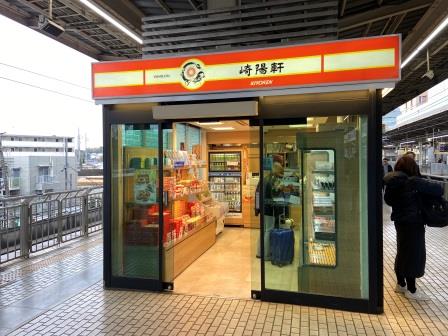
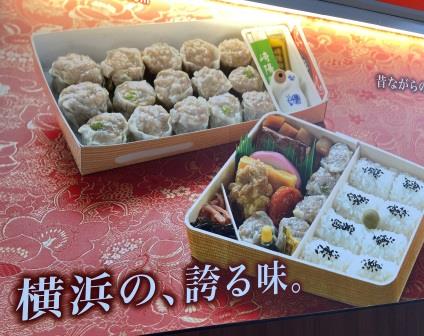
Soon, I am back in the station and there is just time to browse in one of the platform kiosks. Yokohama is famous for its Chinatown and the delicacy on offer here is shumai, traditional Chinese dumplings made of ground pork and often served with hot mustard.
Train #2 – Shin Yokohama to Odawara
My next train is Kodama 711. It has left Tokyo at 8:57 and is also heading for Shin-Osaka.
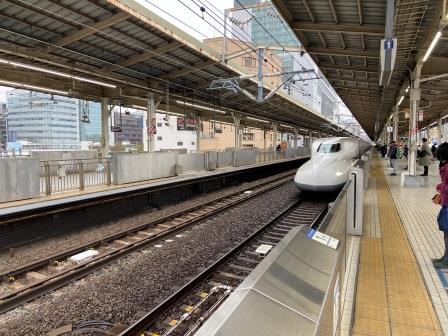
We leave on time at 9:15. After Shin-Yokohama the train gets into its stride, accelerating quickly to the line speed of 285km/h.

The line is relatively straight here, and whilst the Tokaido Line runs closer to the coast, we are cutting across to Odawara, sometimes up to 10km inland.
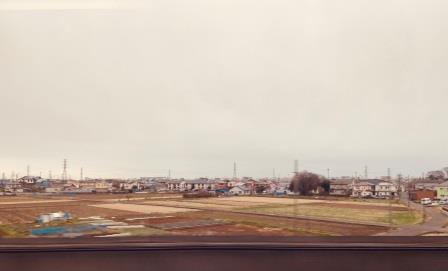
Sometimes we are in cutting, sometimes on the level and sometimes on embankments, but unfortunately the view is never inspirational. We are passing through a seemingly endless landscape of apartment blocks, densely packed in houses, concrete overpasses, and factories.
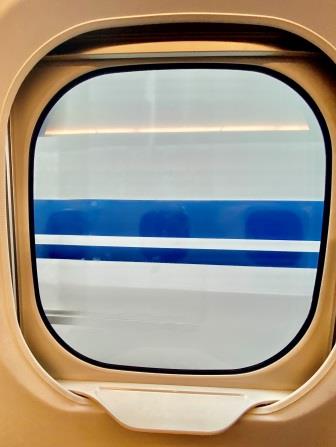
Trains heading in the opposite direction flash past every two minutes or so and add a bit of excitement to the otherwise drab scenery. There is little in the way of greenery here, and I know already that this won’t change for much of my journey.
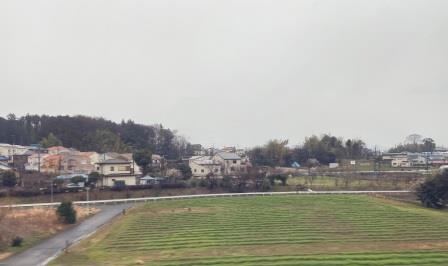
Making things worse are the noise prevention fences along the line that help block some of the view. Shinkansen noise pollution is a big issue in Japan now, and the newer projects have had their top speed restricted as a result.
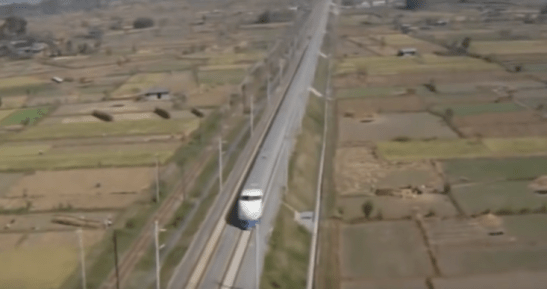
It is simply amazing to watch the 1964 film and see just how different this area was back then. How nice it would have been to travel through those green fields and enjoy unhindered views out of the window. It is said that the line’s security fencing back then wasn’t as impenetrable; there are even stories of local children creeping up to the track to listen and watch out for the next hourly Hikari to come past.
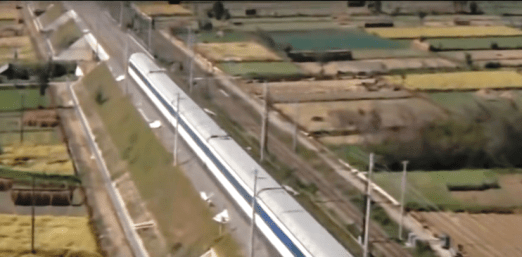
After passing through a few short tunnels, we reach the first of several long bridges. As we move west we will be crossing several rivers that drain into the Pacific. This one over the Sagami, at 668m, is actually one of the shorter ones.
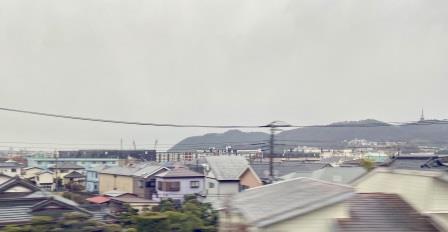
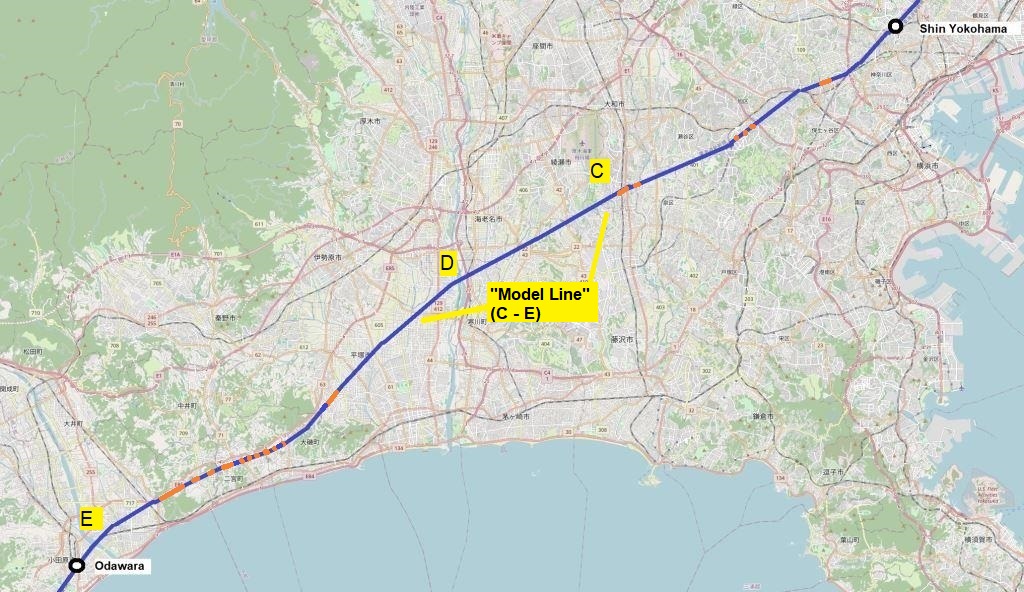
We are now just over 40km out of Tokyo, and we are entering what was initially called the “model line”. Opened in early 1962, this roughly 30km section played a vital role in testing construction methods, power systems and the trains themselves whilst the rest of the line was still being constructed. As we approach the coast, we pass through a succession of eleven very short tunnels.
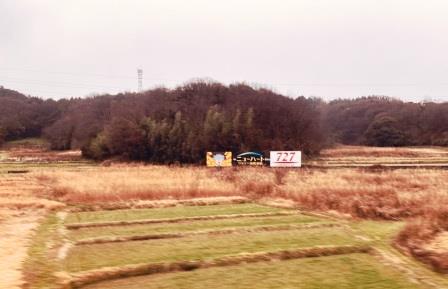
After passing through the longer Bentenyama Tunnel the “model line” section ends at Kamonomiya. Here there are sidings (E) housing the various vehicles that are used to maintain the Shinkansen during its nightly 24:00 to 06:00 shutdown.

They stand where the old test centre once was. At nearby Kamonomiya station on the Tokaido Line there is even a “birthplace of the Shinkansen” memorial.
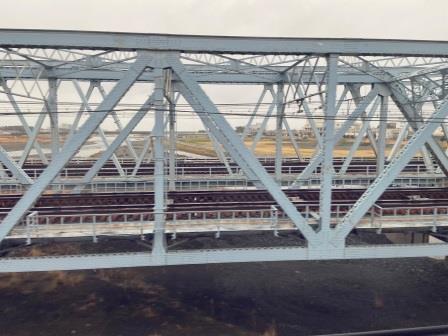
We have emerged into a smaller plain and now we cross the Sakawa River, and with the Tokaido Line beside us for the first time since Tokyo, we arrive at Odawara on time at 9:35. Our journey time of 15 minutes for the 51km compares with 23 back in 1965.
 Trains To Beyond