Shizuoka (167.4km / 104.6 miles)
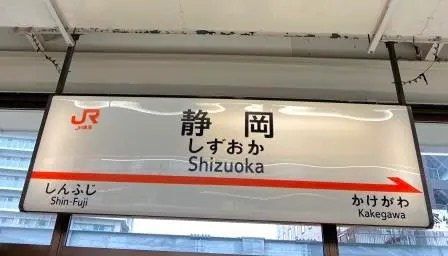
The layout at Shizuoka is the same as Odawara with the two central fast tracks through the centre and two platform roads at either side. A few services terminate and originate here so there are sidings to the east of the station too.

The service level here is two Kodama trains every hour and one Hikari which completes the journey from Tokyo in around sixty minutes. As at most of the other stations, the trains that stop, including the Hikari services, are overtaken by one or two Nozomi trains.

The Shinkansen is on the south side of the station complex at Shizuoka with the conventional station, first opened back in 1889, to the north and once again offering connection to the Tokaido Line.

In and around Shizuoka Station
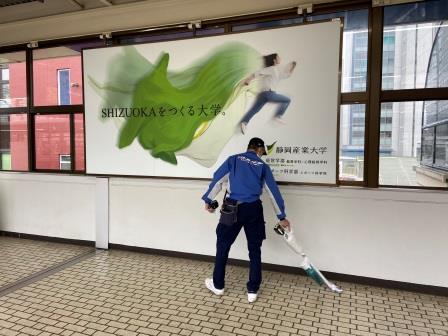
The first thing that strikes me as I emerge onto the concourse below the tracks is a large notice board advertising the benefits of the new Linear Chuo Shinkansen. This is highly political. The new line is being built in the north of Shizuoka Prefecture and will be no obvious benefit to the city.

Meanwhile, the prefectural governor has been holding up the construction work on supposedly environmental concerns, although some suggest he is angling for an extra station to be built on the Tokaido Shinkansen to serve Shizuoka Airport.

This piece of JR propaganda highlights the benefits to the city, with the new line taking most of the main Tokyo to Nagoya traffic, more of the Nozomi trains will stop here at Shizuoka. When the Chuo Shinkansen is extended to Shin-Osaka, there will be more benefits too.

Just outside the south exit is a little tower which was built in 1915 to mark 300 years since the death Tokugawa Ieyasu (Founder of the Tokugawa Shogunate which ruled Japan from 1603 to 1863). He died at nearby Sunpu Castle and is buried at Kunozan Toshogu Shrine.

Shizuoka Prefecture is famous for production of Japanese green tea and there is plenty of marketing going on inside the station. Even the photographs of the various bento lunches are adorned with tea leaves and there are several prominent tea-themed displays here and up on the platforms.

Train #5 – Shizuoka to Hamamatsu
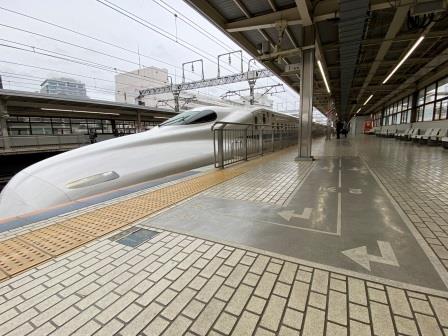
My next train comes in at 11:21. Kodama 715 left Tokyo at 09:57 and is heading for Shin-Osaka. We wait once again whilst a Nozomi thunders through the central road and then with the platform bells whirring and announcements ringing out, the doors close and we are off once again.
As I walk through the train I see some people smoking in the tiny smoking room provided at one of the car ends. I remember back when the trains had smoking cars themselves. Even these smoking rooms are about to be phased out now. Finally, after 60 years the Tokaido Shinkansen has quit.

Soon after leaving Shizuoka, we pass over the Abe River Bridge (595m) with the Tokaido Line still beside us. Then, once again, we have to head through mountains to make progress. Two shorter tunnels pre-empt the longer Nihonzaka (2,198m).
This is the oldest structure on the whole line, finished as part of the “bullet train” project before the end of the war, it was transferred to the Tokaido Line after the conflict until being handed back for the Shinkansen in 1964.

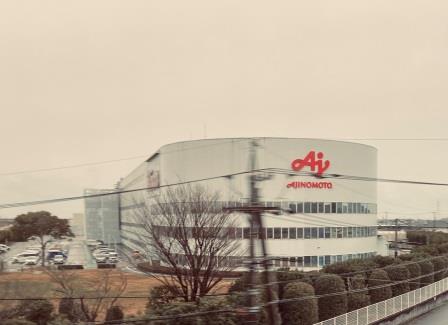
Back out into the open we pass through the area of Yaizu and then over the Oii River Bridge (987m), third longest on the line. On the other side of the river, we flash past the giant Knorr and Ajinomoto food factories.

We need a few more tunnels to cut through to the next plain, of which Makinohara (2,917m) is the longest. Inside we are 200km from Tokyo and directly above us is Shizuoka airport. This is where the prefectural government wants to create a station, with access directly to the terminal above. 
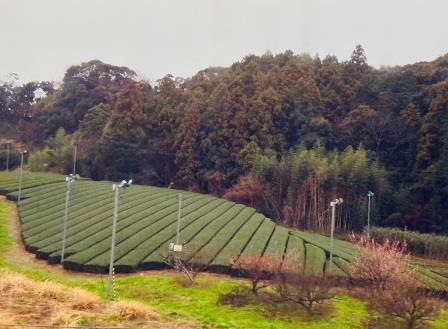
More tunnels follow and then the railway is much more in the open as it passes through tea plantations. This is one of the most photographed locations on the route. We reunite with the old line once again and then pause at Kakegawa (211.3km), the second of the trio of stations opened in March 1988.


After Kakegawa we continue in the open, with just one short tunnel, passing more built up areas before crossing the impressive Tenryu River Bridge (901m), the second longest on the line.

Eventually we curve around to stop at Hamamatsu on time at exactly 11:51. Our journey time of 23 minutes for the last 71.5km compares with 28 back in 1965, although we have made an extra stop at Kakegawa. Non-stop trains run between the two points today and take just 21 minutes. We are now very nearly half way to Shin-Osaka.

 Trains To Beyond