A lot has been written over the years about the history of the railway system of North-West Ireland. This is my own modest account.
This brief overview concentrates on the lines that served Derry-Londonderry and draws on recent visits to railway museums in the area.
Introduction
Derry-Londonderry lies on both banks of the River Foyle about 6 km (4 miles) upstream from where the river broadens into Lough Foyle and flows towards the Atlantic Ocean. The city’s historic walled centre stands on the west bank, whilst newer development has spread across the east bank.
The Foyle also played a significant role in the history of the railways that served the city. The four separate railway companies that once served Derry-Londonderry all had their termini beside the river, and at one time they were linked together by a tramway that ran along its banks. Here is a brief history of each one listed in the order that they opened.
Growth: 1845-1921
1847: Londonderry and Enniskillen Railway (Foyle Road Station)
The first line to arrive was the Londonderry and Enniskillen Railway (L&ER) which began operations to Strabane in 1847. Shortly after opening, it established its permanent terminus at Foyle Road on the west bank, just north of the Carlisle Bridge (the precursor to the Craigavon Bridge).
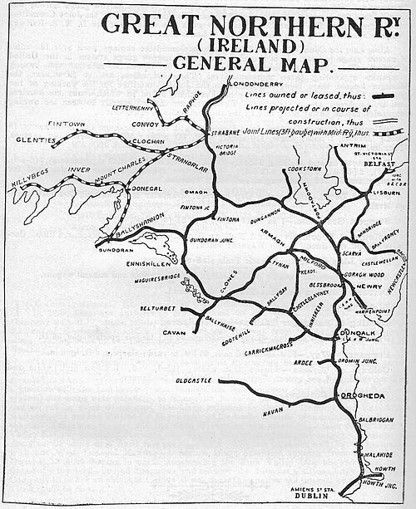
The line, built to the Irish 5ft 3 inch broad gauge, was extended through Omagh to Enniskillen in 1854. The Portadown and Dungannon Railway opened in 1855 and provided a link between Omagh and Portadown and completed the first rail route from Londonderry (Foyle Road) to Belfast (Great Victoria Street). This route eventually became known as the “Derry Road” and handled much of the freight traffic between the two cities.
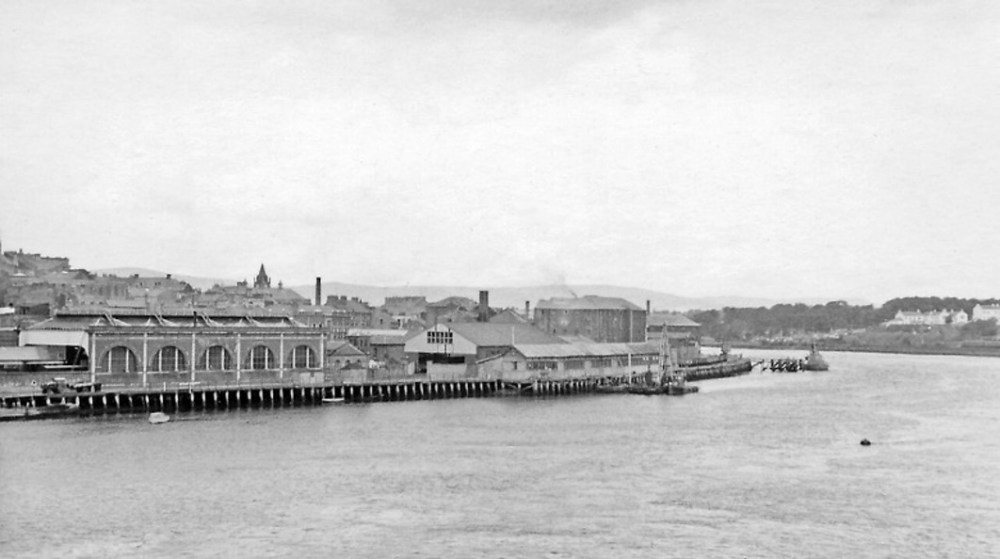
The network expanded from Enniskillen. In 1859 the Dundalk and Enniskillen Railway opened, creating another connection to the Irish sea, whilst the 1868 opening of the Enniskillen and Bundoran Railway created a connection to the Atlantic. In 1876 all these lines merged to become the Great Northern Railway of Ireland (GNR).
1853: Londonderry and Coleraine Railway (Waterside Station)
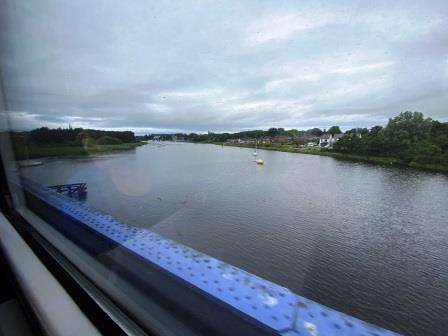
In 1853 the Londonderry and Coleraine Railway (L&CR), also built to broad gauge, became the second line into Londonderry. Its terminus was on the east bank of the Foyle at Waterside. The first station itself had a relatively short lifespan and it was rebuilt in 1874.
At Coleraine the L&CR terminated on the west bank of the River Bann. On the opposite side was the Ballymena, Ballymoney, Coleraine and Portrush Junction Railway, which itself linked to the Belfast and Ballymena Railway. In 1860 the three companies merged with others to form the Belfast and Northern Counties Railway (B&NCR).
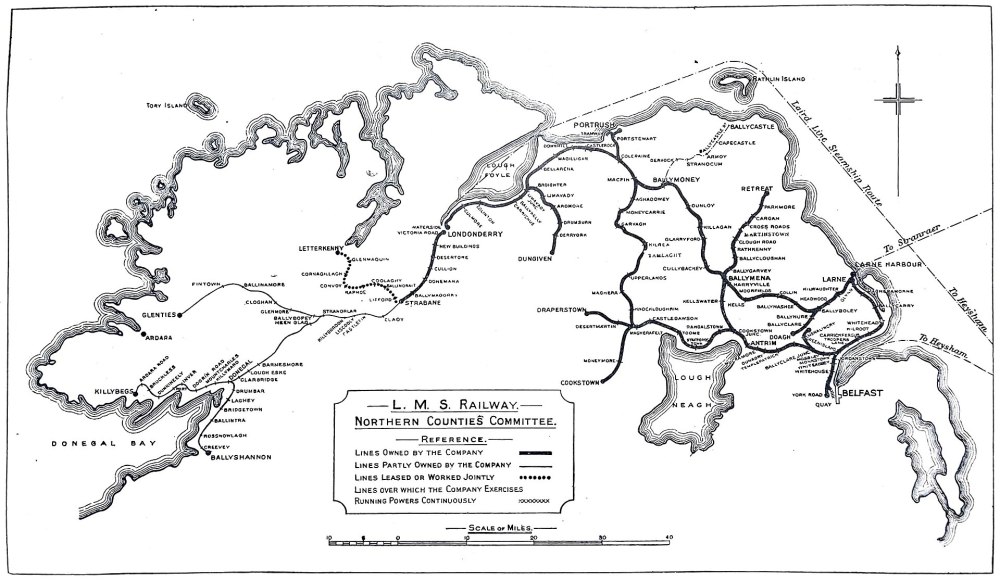
A bridge was finished over the River Bann in 1860 and through services between Londonderry (Waterside) and Belfast (York Road) began. Compared with the original route via Omagh and Portadown, the B&NCR line was flatter and quicker. It enjoyed more passenger traffic than its rival as a result. In 1903 the B&NCR was purchased by the (British) Midland Railway and thereafter became known as the Northern Counties Committee (NCC).
1863: Londonderry and Lough Swilly Railway (Graving Dock Station)
The third railway to open a terminus in Londonderry was the Londonderry and Lough Swilly Railway (L&LSR), often called the “Swilly”, which arrived in 1863. The initial line was built to broad gauge and linked Graving Dock in the city to Farland Point. A branch to Buncrana on Lough Swilly was added in 1864 and with the closure of the original line to Farland Point in 1866, became the only route.
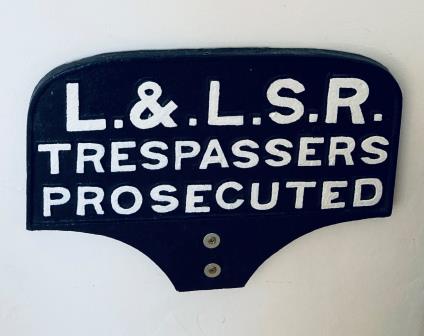
In 1883 a 3-foot gauge line was constructed from Letterkenny back towards the L&LSR at Cuttymanhill by the Letterkenny Railway. The L&LSR ended up working the Letterkenny Railway and in 1885 converted its own system to 3-foot gauge to allow through running. The Letterkenny Railway was passed to the Irish Board of Works in 1887 but continued to be worked by the L&LSR.
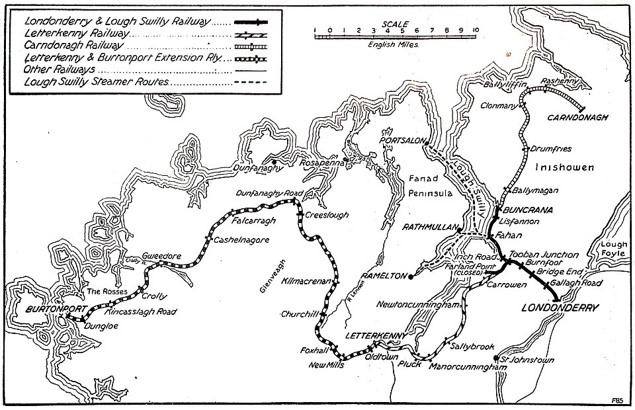
Two ambitious extensions, both the result of joint ventures with the UK Government, went ahead in the early 20th Century. The railway went north from Buncrana to reach Carndonagh in 1901, and west from Letterkenny to reach Burtonport in 1903. The L&LSR operated 99 route miles at its peak.
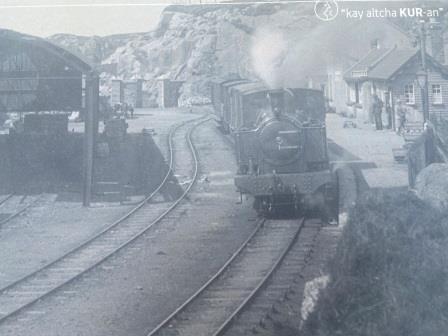
1900: County Donegal Railway (Victoria Road Station)
Londonderry’s fourth station would not open until 1900, but the Donegal Railway Company that opened it had a history going back much further. It began in 1863 when the Finn Valley Railway constructed a 16 mile broad gauge line to Stranorlar from a junction with the Londonderry and Enniskillen Railway at Strabane.
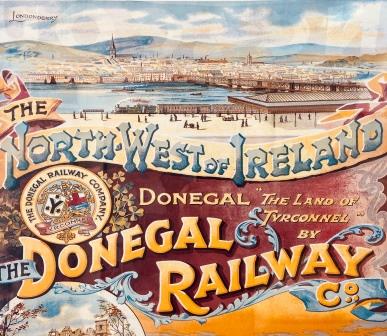
Meanwhile, the West Donegal Railway constructed its own 3-foot gauge line from Stranorlar to Donegal, opening it in 1889. The two companies merged to become the Donegal Railway Company in 1892 and then converted the original line from Strabane to 3-foot gauge in 1894. Extensions were then built from Donegal to Killybegs in 1893, from Stranorlar to Glenties in 1895 and from Donegal to Ballyshannon in 1905.
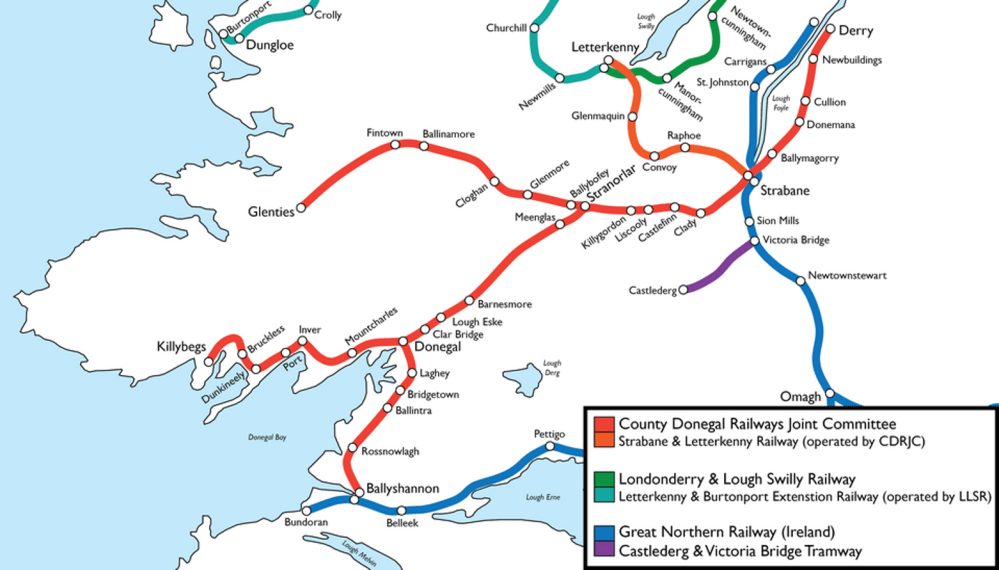
Tired of having to use the Great Northern Railway (as the Londonderry and Enniskillen had now become) to tranship its goods between Strabane and Londonderry, the Donegal Railway built its own 3-foot gauge line on the east side of the Foyle. The new Londonderry terminus was opened in 1900 at Victoria Road on the east bank just south of the Carlisle (later Craigavon) Bridge.
In 1906 the company ownership passed to the County Donegal Railways Joint Committee (CDRJC), a consortium of the Great Northern Railway (GNR) and the Northern Counties Committee (NCC). As the GNR already had a line from Londonderry to Strabane, ownership of the section of line between Victoria Road and Strabane passed exclusively to the NCC, although it was always operated by the CDRJC.
The last part of the network came in 1909 with the opening of the 3-foot gauge Strabane and Letterkenny Railway (S&KR). Although partly owned by the CDJRC, the S&KR was a separate enterprise. In practice all its services were operated by the CDJRC.
Londonderry Port and Harbour Commissioners Tramway
By the early 1900s Londonderry could boast four termini, two on either bank of the River Foyle. The two broad gauge railways (GNR and NCC) provided competing links to Belfast whilst the two narrow gauge railways (L&LSR and CDJRC) had a combined network of around 200 miles and served some of the remotest parts of County Donegal.
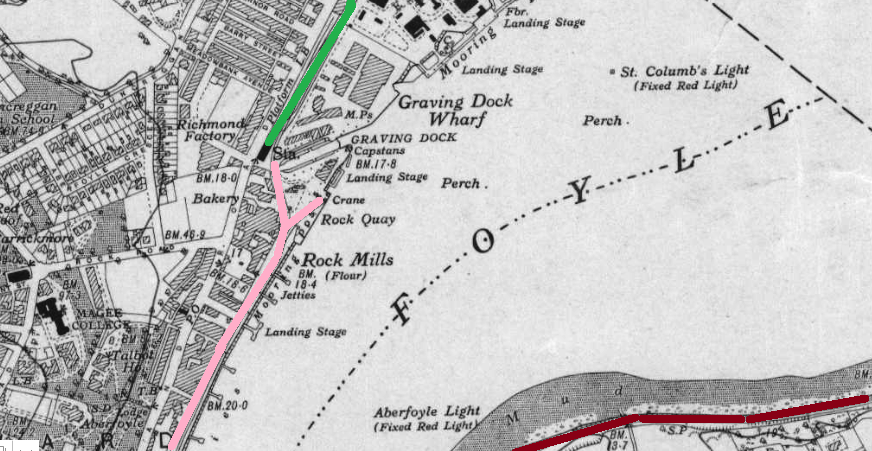
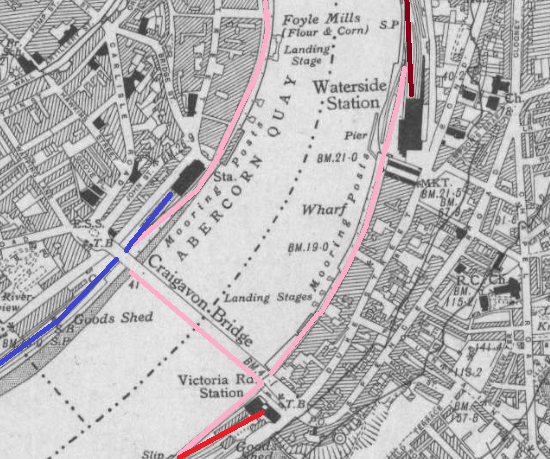
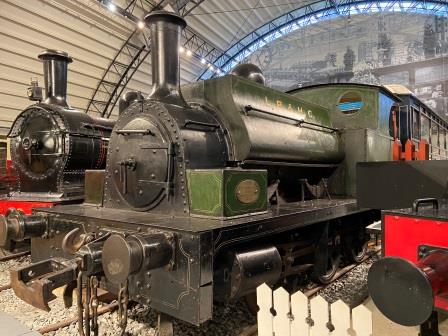
From 1867, the Londonderry Port and Harbour Commissioners built a network of mixed-gauge dock tramways to connect the quays and warehouses to the main railway lines. Initially horse-drawn, these lines used steam locomotives starting in 1872.
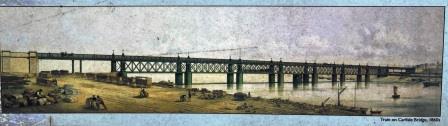
When the twin deck Craigavon bridge replaced the Carlisle Bridge in the 1930s, the tramway was laid along its lower deck. With the general decline in rail freight, the tramways were eventually phased out, with the last lines closing in 1962.
Decline: 1922-1968
The establishment of the Irish Free State in 1922 (destined to eventually become the Republic of Ireland) had a profound effect on the city of Derry-Londonderry and the railways that served it. In the immediate aftermath this was worsened by the ongoing turmoil of the Irish Civil War
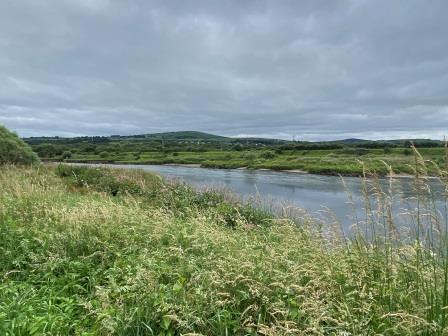
The city found itself just inside Northern Ireland and thus remained part of the United Kingdom. Yet, the borders of the Irish state began on its outskirts; a few miles south the River Foyle itself became the frontier. Donegal, a key part of Derry’s hinterland, became one of the 26 counties that formed the new state
The newly established border disrupted long-established trading patterns between the agricultural and fishing industries of County Donegal and the port of Derry. The economic damage sustained led to a reduction in the demand for passengers and freight and combined with growing motor competition to hasten the decline of the railways in the area.
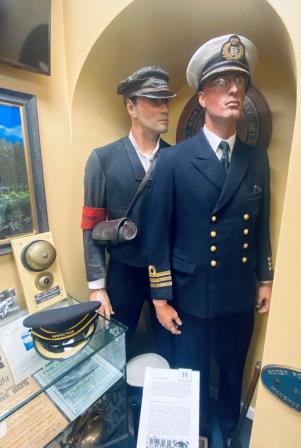
The Second World War, known as “the emergency” in Ireland, brought petrol rationing in the UK and offered some respite to the decline in rail traffic. Yet it also necessitated changes to the way passengers and goods were shipped, with war materiel and troop trains having to avoid lines that passed through any part of neutral Ireland
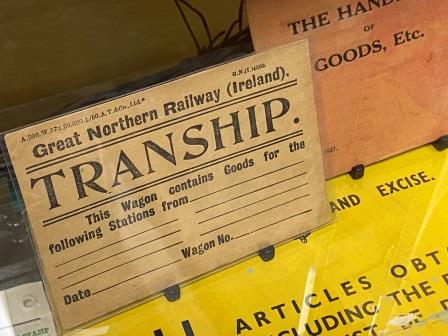
After the war, the government in Northern Ireland established the Ulster Transport Authority (UTA, 1948-1967) to run rail and bus services in the province. It immediately took over the railway companies whose lines were exclusively within Northern Ireland, including the NCC, but left the other cross-border companies, including the GNR, alone. In the Irish Republic, CIE (Córas Iompair Éireann) emerged as the state-owned (after 1950) corporation responsible for public transport.
Increasing motor competition in the 1950s led to further traffic decline. The Northern Ireland government actively favoured road transport over rail. After taking on the failing GNR in a joint venture with the Dublin Government in 1953, it pursued a policy of closing cross border lines. The GNR was eventually split between the UTA and CIE in 1958. The notorious 1963 Benson Report sealed the fate of almost all railways remaining in Northern Ireland.
The effect of all these changes on each of the railways in and around Derry-Londonderry is documented below. The railways are listed in the order in which they finally closed.
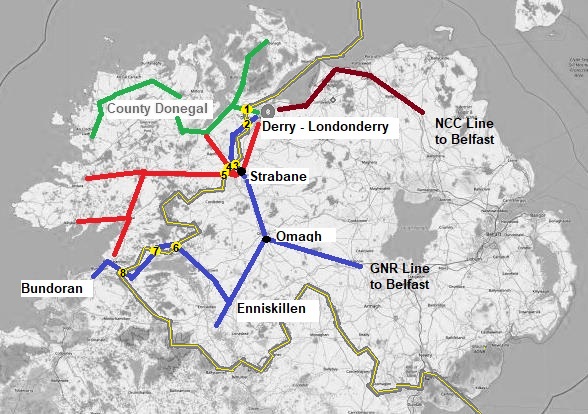
Londonderry and Lough Swilly Railway (closed 1953)
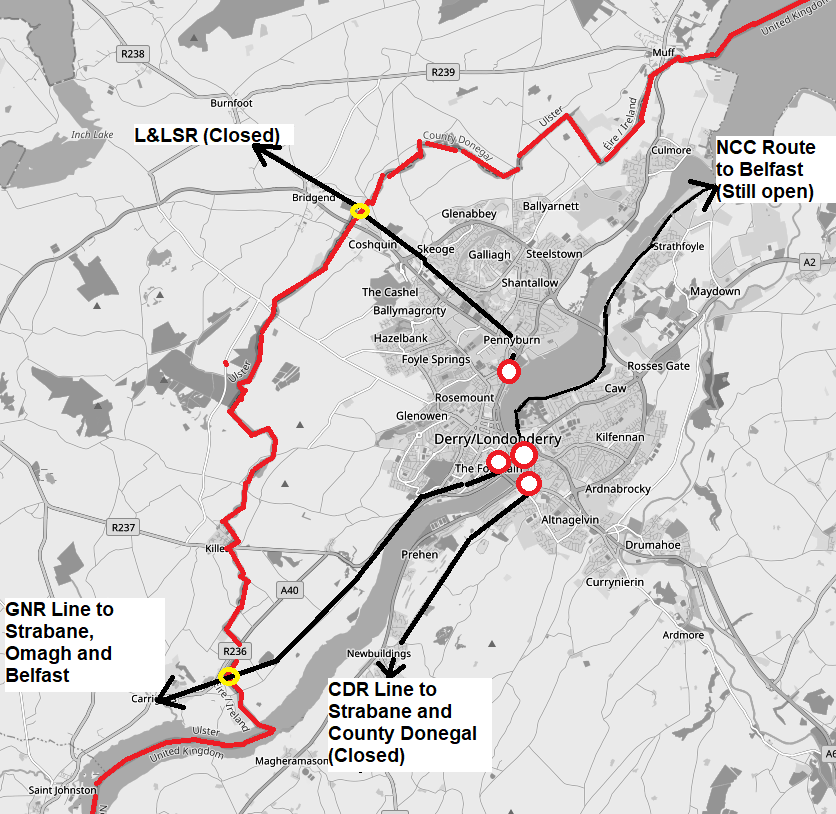
With its headquarters in Derry-Londonderry and its network stretching into County Donegal, the L&LSR suffered greatly from the new intra-Ireland border. The border crossing (1 on the map above) was just outside the city. Trains were now disrupted by customs officials inspecting and processing merchandise at the new frontier. This severely slowed down transport times and caused revenue to plunge
By 1925, mounting losses forced the company to ask the state for financial bailouts. Both the Northern Ireland and Irish Free State governments provided joint annual subsidies to keep the trains running, but the company began to look to shift its business away from the railway in order to survive. In 1929 it began acquiring buses and trucks.
The Carndonagh branch was closed north of Buncrana in 1935 and then in 1940 the entire Burtonport line was closed. The short section between Letterkenny and Gweedore reopened in 1941 due to fuel shortages but had closed again by early 1947. The remaining two routes to Buncrana and Letterkenny were closed in August 1953. The company itself lingered on as a bus operator until 2014.
The CDRJC (Closed 1960)
The CDRJC lines were affected by the same issues as the Lough Swilly. The line from Londonderry to Strabane lay totally within Northern Ireland, whilst the rest of the Donegal System was on the other side of the Foyle and became part of the Free State. This stifled the flow of traffic by subjecting goods and passengers to disruptive customs checks outside Strabane at Castlefinn (5) and Lifford (4).
In an effort to save cost, the CDRJC became a pioneer of diesel power, introducing the first diesel railcar in the British Isles in 1930. It subsequently ordered several articulated versions from Walker Brothers of Wigan between 1934 and 1951 and they became synonymous with County Donegal. The railcars had a single cab and could not be worked in multiple, requiring them to be turned on turntables at each termini.
The railways ownership split between the Great Northern Railway of Ireland (GNR) and the Northern Counties Committee (NCC) meant the company had to operate in two different authorities with varying regulations, currencies and divided political oversight. Postwar, things became more complicated with a split between the British Transport Commission, the Northern Irish and Dublin governments.
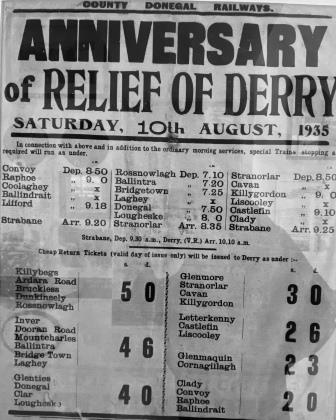
A further complication was that the line between Derry-Londonderry and Strabane was owned exclusively by the NCC (after 1949 by the UTA) which resulted in strict regulations that prevented the CDRJC from running diesel railcars on this section.
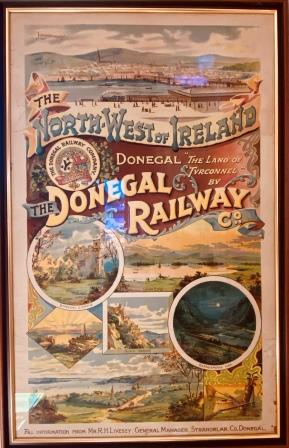
Deeply affected by motor competition in the postwar era, the CDRJC network started to shut down from 1947 with the loss of the branch from Stranorlar to Glenties. This was followed in 1954 by the Strabane to Derry-Londonderry section and then by the rest of the passenger system on the last day of 1959. Freight working continued between Strabane and Stranorlar until early 1960. The CDRJC remained as a bus and road freight operator until being absorbed by CIE in 1966.
The GNR (Closed 1965)
After the new border had been implemented in 1922, the Great Northern Railway (GNR) line was also impacted. It ran from Londonderry Foyle Road in Northern Ireland but crossed into the new Free State passing through Carrigans (2) and St Johnston in County Donegal before bridging the River Foyle to re-enter the UK (3) before Strabane. Around 11 miles of the 15 between Foyle Road and Strabane were now in the Free State.
On the GNR line between Enniskillen and the popular seaside resort of Bundoran, there were three border crossings between Northern Ireland and County Donegal. (6,7 and 8 on the map above). The little village of Pettigo found itself sandwiched between two of them (6 and 7).
Although some of the customs examinations and border delays were mitigated by using sealed freight wagons, traffic on the “Derry Road” still dipped. The situation was exacerbated in the Second World War when war supplies from other parts of Northern Ireland heading to the UK port of Londonderry could not be shipped between Strabane and Londonderry Foyle Road and had to be transferred to the 3ft gauge line to Victoria Road instead.
In 1953 both governments intervened to keep the GNR going, forming the Great Northern Railway Board (GNRB) which was jointly owned by both administrations. At first things looked relatively positive, with new diesel railcars being ordered. In 1954 Derry-Londonderry still had five daily services via Strabane to Belfast.
In 1956 the Northern Irish Government announced it would close almost all remaining GNR cross border lines including the Omagh to Enniskillen, Enniskillen to Dundalk and Bundoran lines. This was carried out by late 1957.
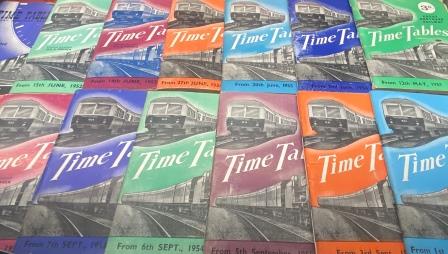
The Northern Irish Government then decided it was unwilling to continue to support the GNRB and by the end of September 1958 it ceased to exist. On 1st October, the UTA took over all remaining GNRB lines in the North, including all of the Portadown to Derry section of the “Derry Road”. The stations on the 11 mile section between Foyle Road and Strabane that were in the Republic were manned by CIE employees.
The line continued for a few more years but became a casualty of the Benson Report. It was closed on February 14th 1965, leaving Derry-Londonderry with a solitary rail connection.
NCC / UTA (Remained open)
The railway suffering the least impact from partition was the NCC line from Waterside. Its whole route to Belfast and all of its other lines remained wholly within Northern Ireland. Ownership of the NCC passed to the (British) London Midland and Scottish (LMS) Railway in 1923.
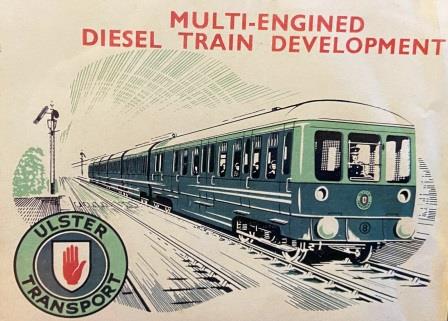
The NCC line subsequently came under the control of the state-owned Ulster Transport Authority (UTA) in 1949. The initial recommendation of the Benson Report was the closure of both of the routes from Belfast to Derry-Londonderry but after strong protests the NCC line was retained. In 1968 the UTA was abolished and the remnants of the network were transferred to the ownership of Northern Ireland Railways
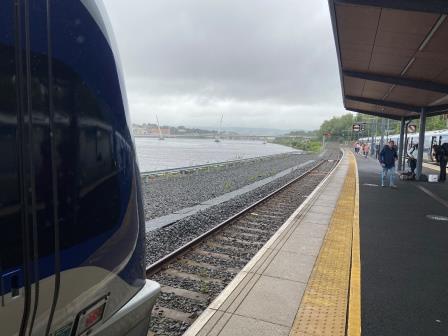
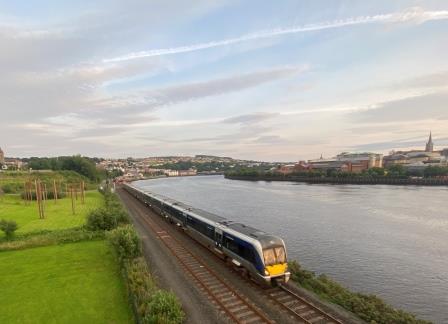
In 1980 a new station, the third structure to have served the same purpose since 1852, was constructed slightly to the south of Waterside. It stood for more than thirty years until 2019 when the current station was created back on the site of the old Waterside. It uses the former train shed which now houses a waiting room, café, and ticket hall.
What Remains ?
The old NCC line still offers a roughly hourly service on weekdays between Northern Ireland’s two largest cities. Now the busiest single track route in the British Isles, it is still operated by Northern Ireland Railways/Translink.
Most of the evidence of the other three railways that used to serve Derry-Londonderry and Donegal has vanished. Track on all the routes has been lifted and many of the buildings demolished. Nevertheless, there are still some reminders of the old network dotted around the area that can be visited.
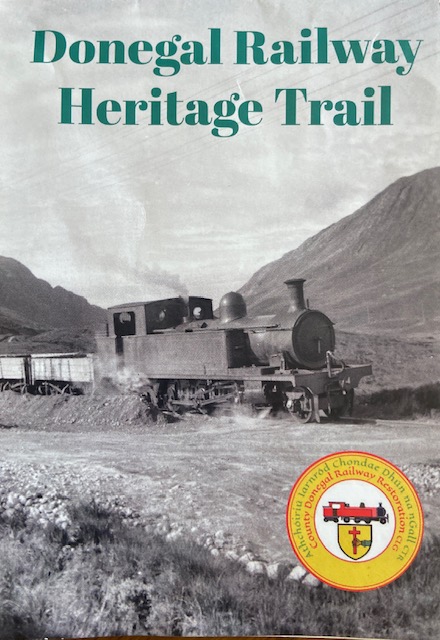
Obtaining the excellent “Donegal Railway Heritage Trail” map, available by visiting the wonderful museum in Donegal town, is a great starting point for exploration. Each station or bridge is shown on the map along with the coordinates and postal code (Eircode) reference. Listed below are some of the major remaining features for each of the three railways.
Londonderry and Lough Swilly Railway
Graving Dock, Derry-Londonderry
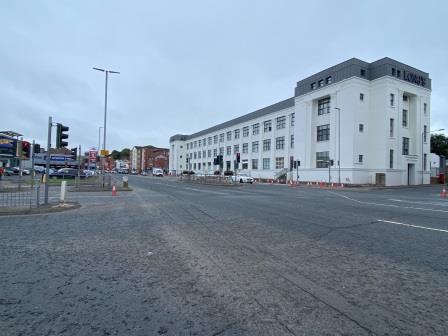
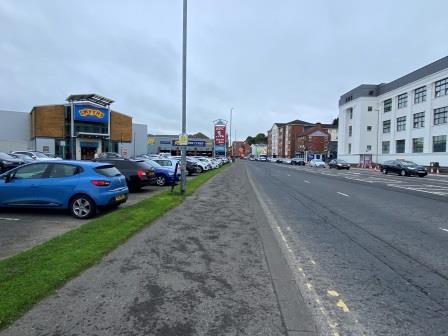
The old terminus where trains heading for Letterkenny and other places on the L&LSR used to depart from is long gone. Nevertheless, the position where it once was is discernable on Strand Road in the north of the city.
Other Stations
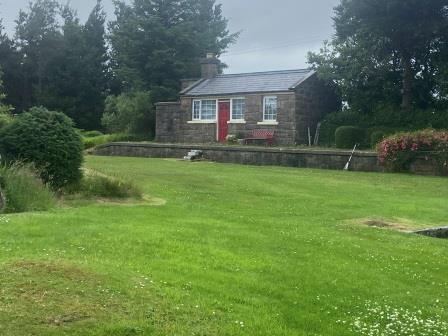
Other stations on the L&LSR that have survived include Carndonagh, Buncrana, Fahan, Manorcunningham, Letterkenny and Cashelnagore.
Owencarrow Viaduct
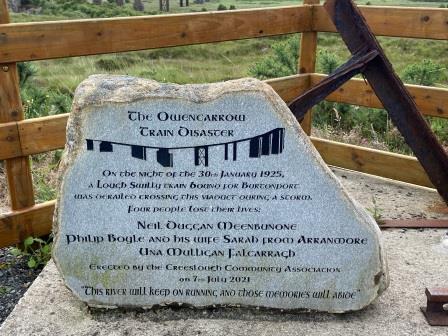
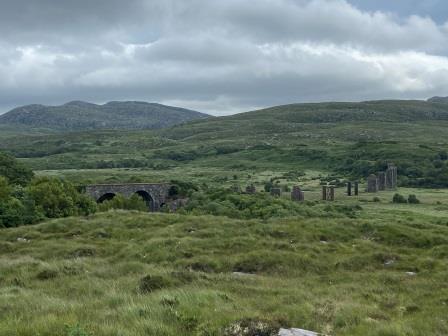
The remains of the Owencarrow viaduct are just to the north of Letterkenny on the old extension to Burtonport. The memorial commemorates an accident which occurred on the night of the 30 January 1925 when a 120mph wind caused carriages to derail and fall from the viaduct causing it to partially collapse. Four people lost their lives.
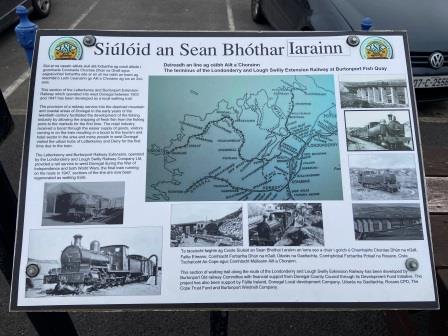
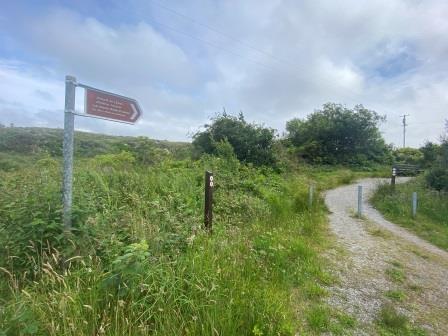
Burtonport Railway Walk
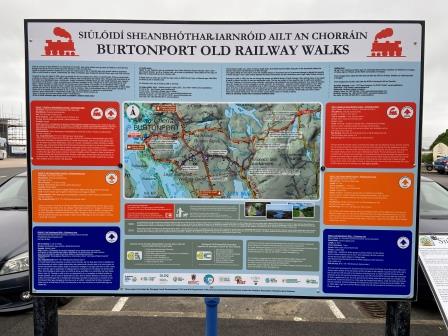
The Burtonport Railway Walk is a 5.5 km (11 km return) trail which begins at Burtonport Harbour and ends at Meenbanad (formerly Kincasslagh Road Station).
The Foyle Valley Railway Museum
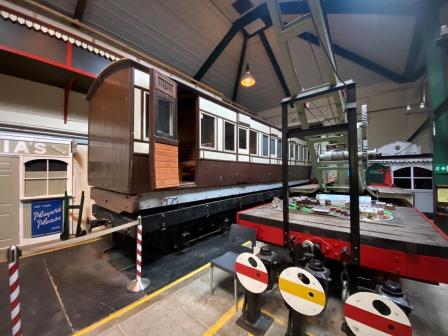
The museum has a crane and a L&LSR passenger carriage from 1901, as well as signs, timetables and other documents from the railway.
County Donegal Railway
Victoria Road
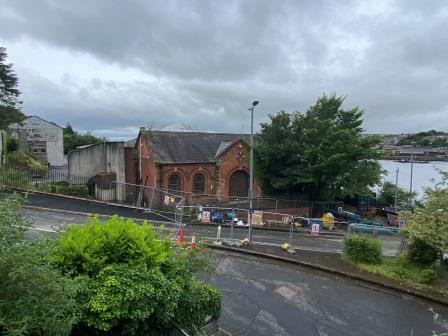
On the right bank of the Foyle, the old CDRJC Victoria Road station building is still standing. Closed by the railway in 1954, it has been used by a variety of different companies for storage purposes. In 1972 the North West of Ireland Railway Society’s (NWIRS) collection of rolling stock moved into the building and it was given the name Foyle Valley Railway Museum.
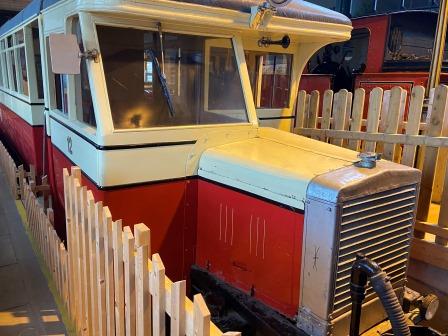
A short section of 3ft gauge track was laid as the Foyle Valley Railway and two CDRJC railcars (12 and 18) began running in May 1975. The museum closed at the site in 1978 and the building reverted to storage use.
Foyle Valley Railway Museum
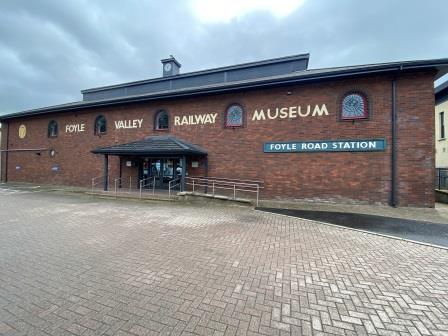
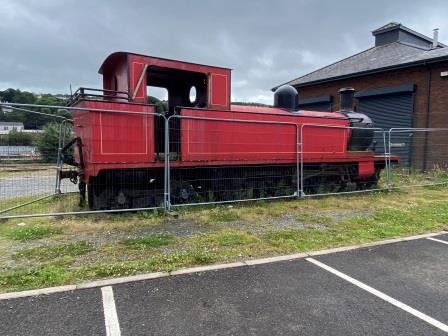
Whilst nothing remains of the old GNR Foyle Road station on the left bank of the Foyle, the Foyle Valley Railway Museum is now housed in a new building just to the south of the old terminus on the site of the GNR goods yard.
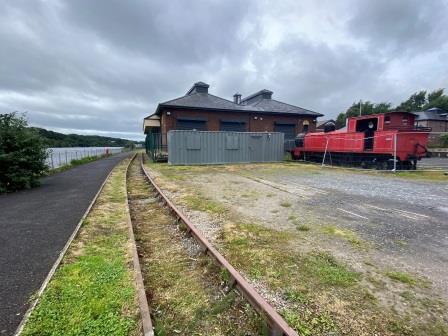
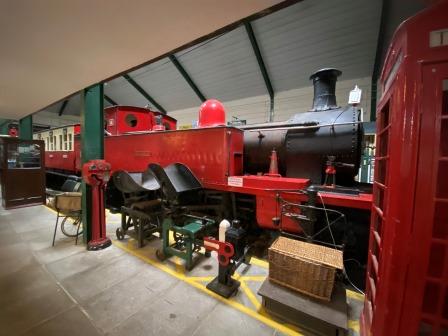
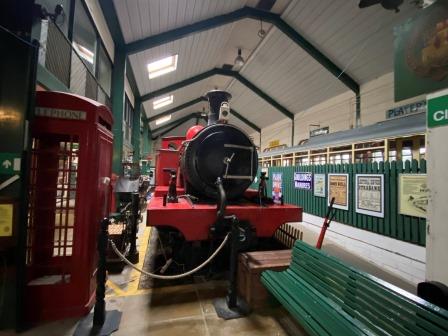
The NWIRS collection of rolling stock has been housed in the museum since 1986 and is available for viewing on Tuesdays and Wednesdays. 3ft gauge track for the Foyle Valley Railway was laid for about 2 miles along the old GNR formation towards Strabane. Railcars ran between 1993 and 2000 but then ceased on health and safety grounds.
The museum is currently home to two 1907-built 2-6-4T locomotives, Columbkille (stored inside) and Meenglas (outside). There is also a composite carriage from 1893, a third class coach from 1901 and a goods van. Diesel railcar number 12 dating from 1934 is also on display.
Fintown Railway
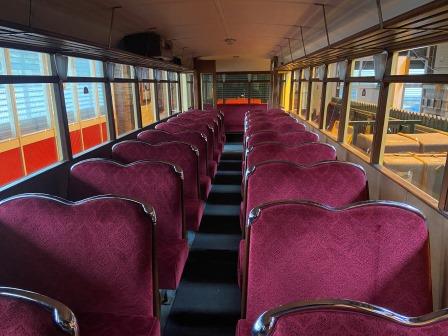
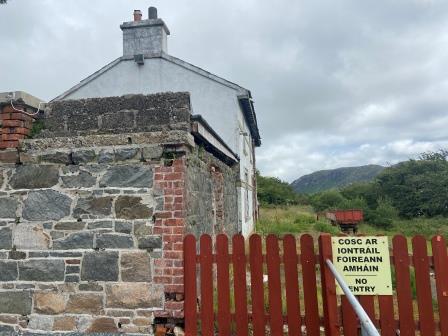
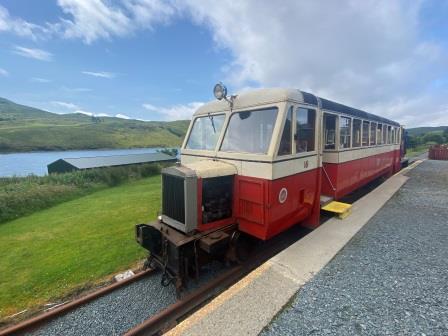
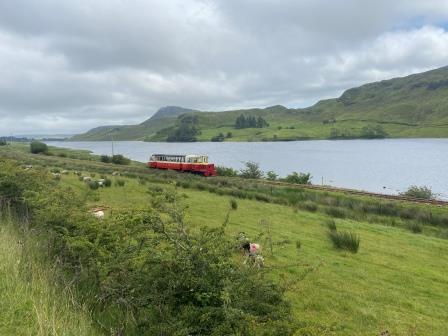
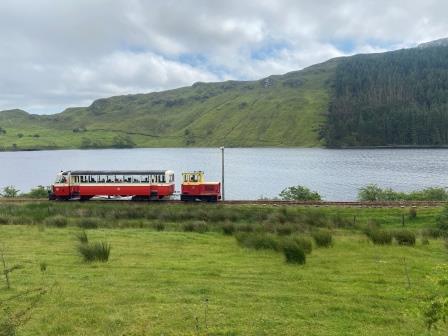
The Fintown Railway is County Donegal’s only surviving and operational heritage railway. It runs for approximately 3 miles (5 km) along the shores of Lough Finn. The restored track is a section of the former CDR. The heritage railway itself was officially reopened on June 3, 1995. Railcar Number 18 is based at the line.
Donegal Heritage Railway Museum
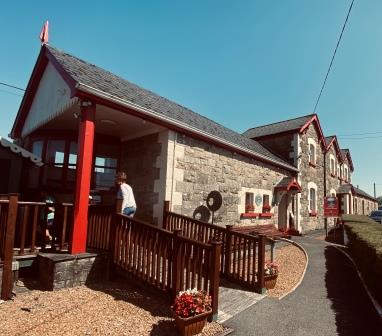
Donegal’s station buildings were restored by the County Donegal Railway Restoration Society and in 1995 became the home of the Donegal Railway Centre.
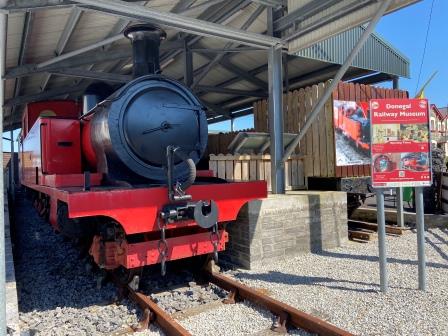
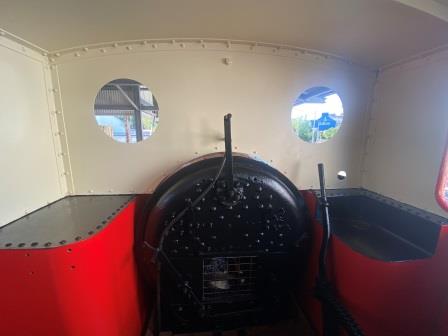
The museum is currently home to 2-6-4T locomotive Drumboe, the final steam engine to haul a passenger train in County Donegal on December 31, 1959. There are also carriages, wagons and part of rail car number 15 on display.
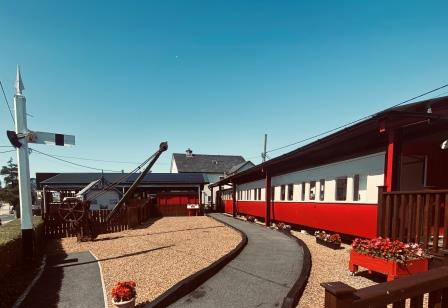
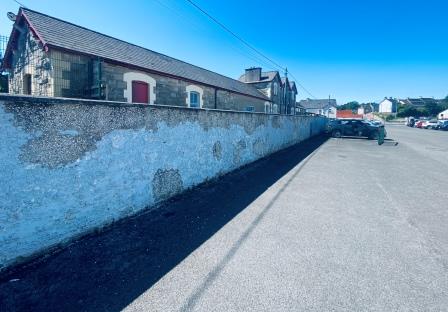
Other Stations
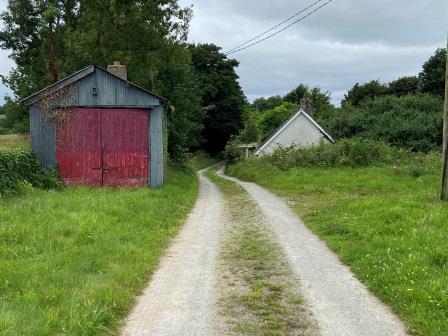
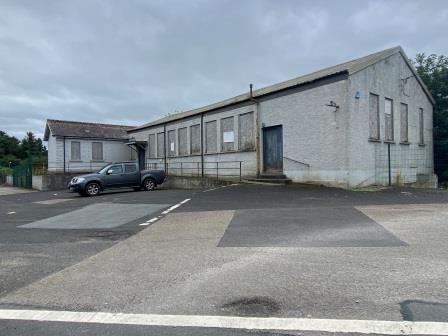
In addition to Victoria Road, Fintown and Donegal, several CDR stations remain in existence. These include Glenties, Killygordon, Castlefinn and Lifford. There are also signs of the old railway in other places such as Stranolar.
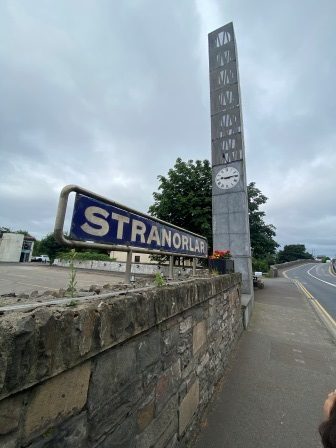
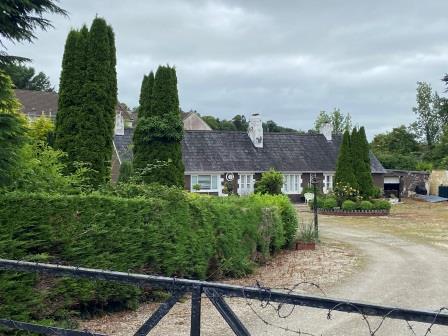
Cultra Museum
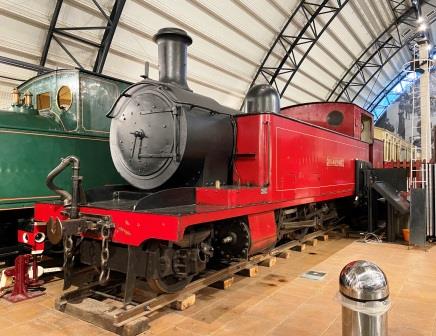
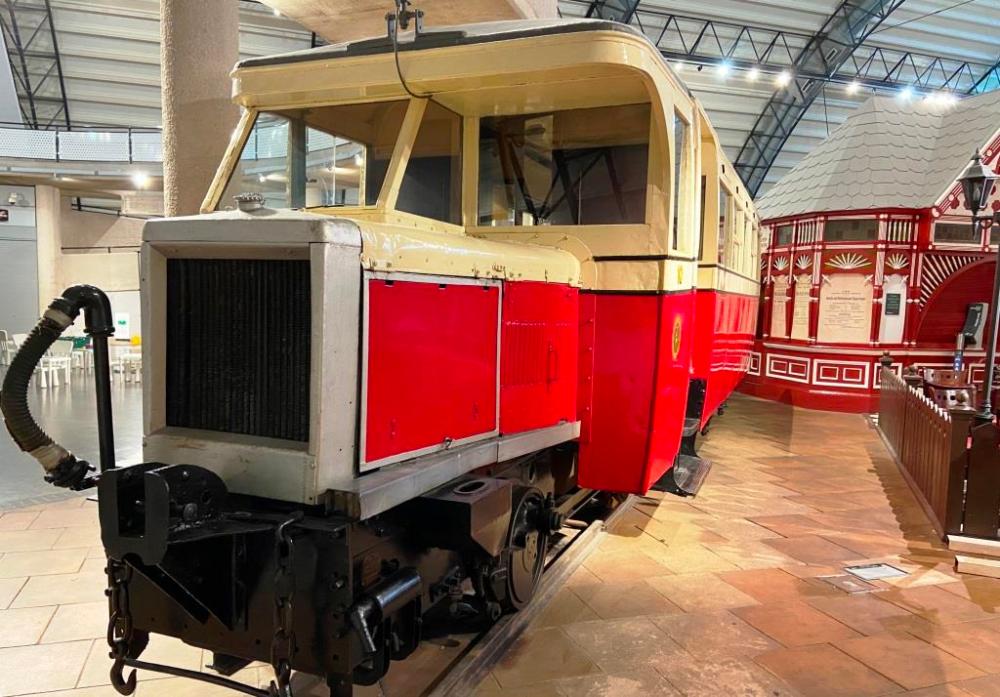
The Ulster Transport Museum at Cultra near Belfast has several exhibits connected with the CDR including 2-6-4T locomotive, Blanche and diesel railcar number 10.
Great Northern Railway
Foyle Road Terminus
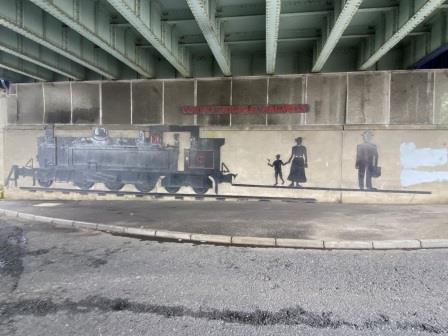
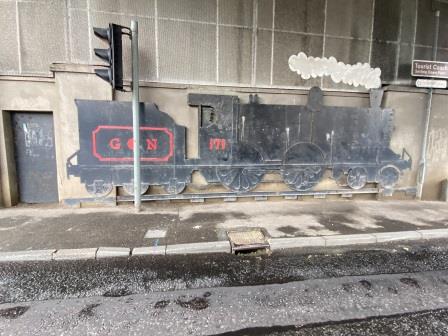
The old terminus in Derry-Londonderry is no longer extant, but there is a GNR themed mural underneath the Craigavon bridge just south of where the old station used to stand.
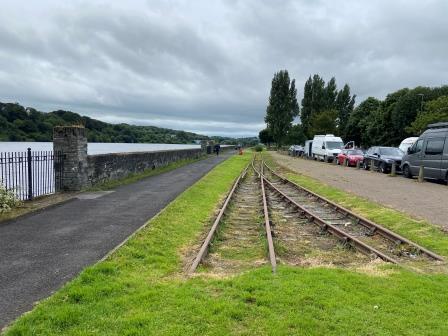
Nearby, the Foyle Valley Railway Museum with its 3ft gauge track stands near where an old GNR goods yard used to be. The course of the old line from here to the border with the Republic can be followed on foot or by bike.
Porthall Bridge
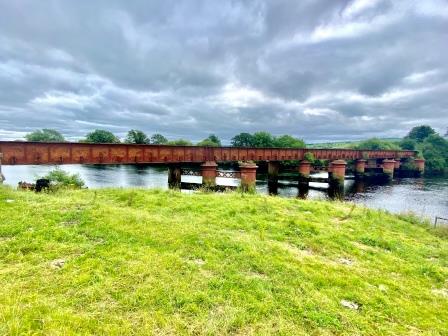
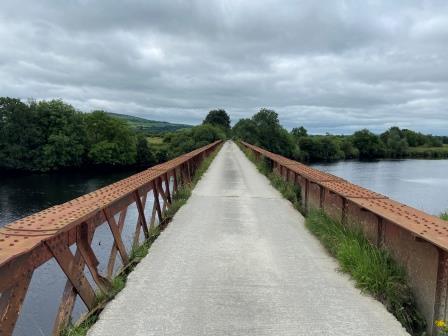
Over the border in the Republic of Ireland, Porthall Bridge over the River Foyle still exists and the trackbed can be followed onto an island in the middle of the river. The corresponding bridge from the island back to the Northern Irish side was removed by the British Army during the Troubles.
Other Stations
The stations at Pettigo and Ballyshannon on the old Enniskillen to Bundoran line are among those GNR stations in Donegal still surviving as private dwellings.
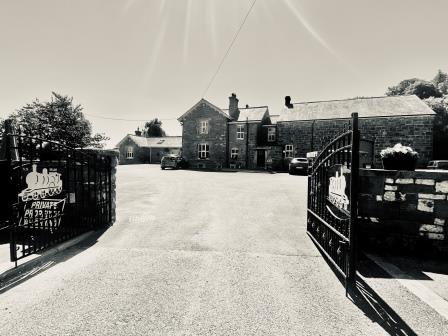
Headhunters / Enniskillen Railway Musuem
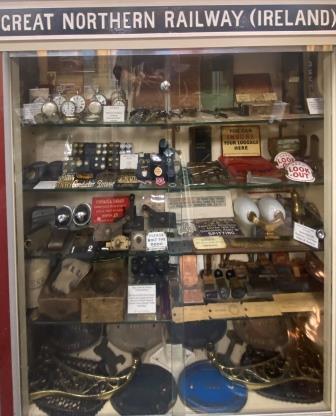
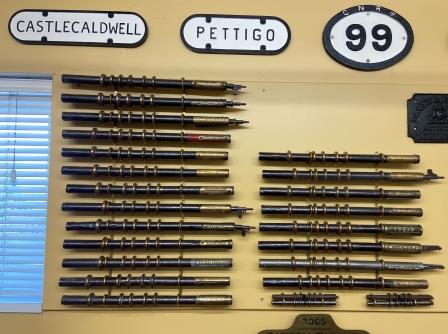
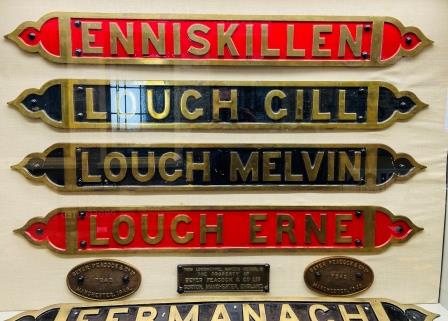
The museum includes a wide range of artefacts from the GNR and the other two railways which once operated in County Fermanagh, The Sligo, Leitrim & Northern Counties Railway and The Clogher Valley Railway. A large model railway is also available to view on the 2nd floor.
Sources
The following books are in my collection….
Irish Railways – The Last 60 years (Key 2021) Michael H C Baker
The County Donegal Remembered (Donegal Railway Heritage Centre, 2022) Jim McBride
The Lough Swilly Remembered (Donegal Railway Museum) Jim McBride
Irish Railway Record Society Journal, Feb 2026
The Meeglas -The 5 Railways of Derry (Destined)
County Donegal by Rail in Colour (County Donegal Railway Restoration Clg, 2019) John Langford and Neil Tee
Railway Connections (Donegal Railway Heritage Museum and Foyle Valley Museum, 2025)


