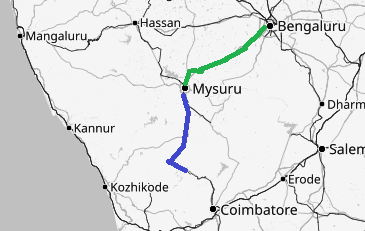
After three days in Bengaluru, I caught the train to Mysuru. I spent three days exploring Mysuru and then boarded a bus to Ooty.
I checked out of my hotel and walked over to KSR. Train #12007 was the daily Chennai to Mysuru Shatabdi (Century) Express. Having left Chennai at 06:00, it was due to depart Bengaluru at 10:30 and arrive at Mysuru at 13:00. I grabbed a cup of chai at the station café and then went over to the platform to wait.
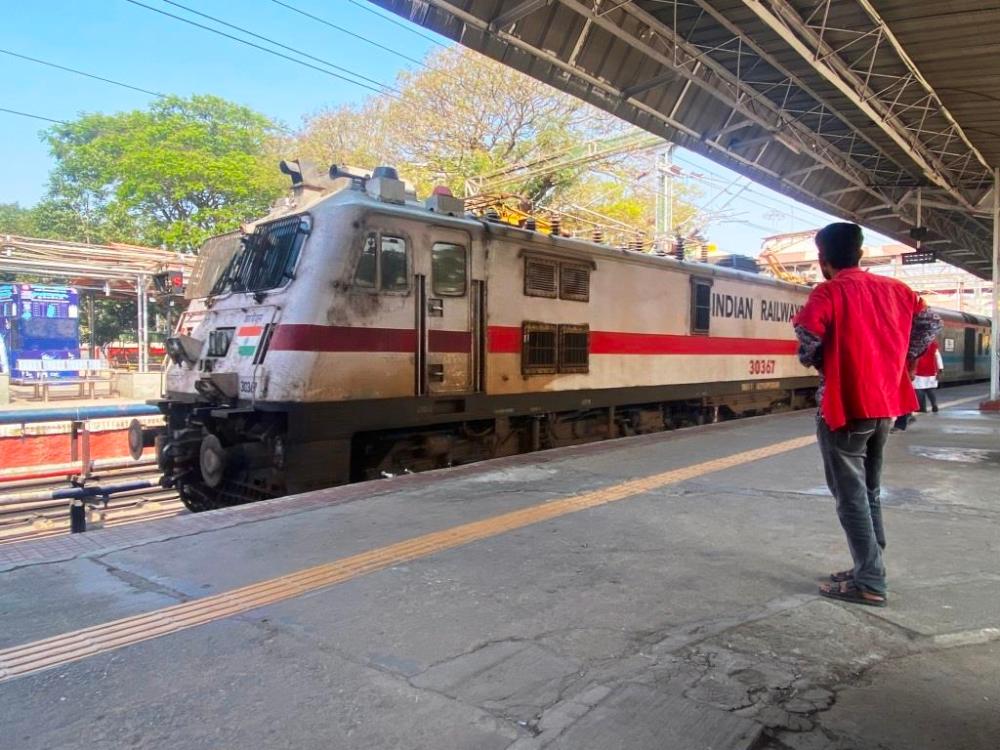
The Shatabdi finally arrived about twenty minutes behind schedule. Hauled by a WAP7 electric locomotive, the rake consisted of a generator van at the front, then twelve air-conditioned chair cars (C12 to 1), two regular executive cars (E2 and E1) and an Anhubuti Class coach (K1) ahead of another generator van at the back.
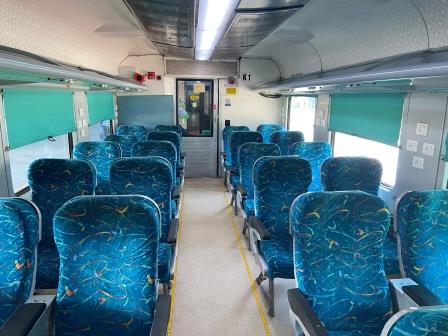
For this first leg of my journey, I had treated myself to Anhubuti, a kind of super executive class which promised plush blue seats and superior legroom. Most people were getting off at Bangaluru and as I settled into my allocated seat in the centre around a large table, I was almost alone in the carriage. We set off.
The Kingdom of Mysore established the Mysore State Railway and opened a metre gauge line between Mysore and Bangalore (around 140 km) in 1882. The line was converted to broad gauge in the early 1990s but not electrified until 2012. 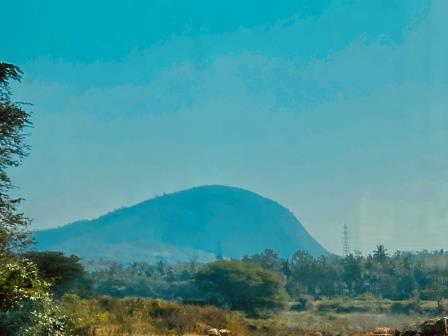
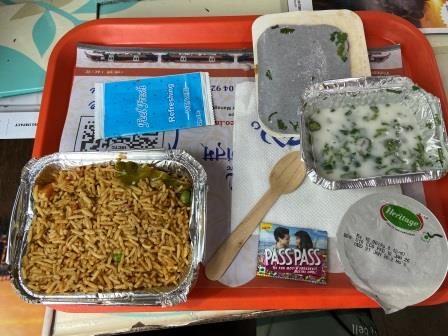
The Anhubuti fare included food and I had gone for the vegetarian option. A few minutes into the journey I got a tray with several cartons marked with the “Meals on Wheels” logo. There were packets of biriyani and raita, a tub of curd and some “Pass Pass” sweets. It was pretty good.
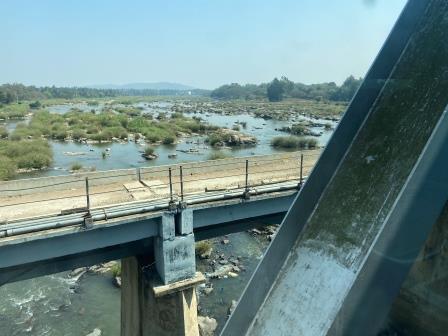
On the table was a copy of the Times of India and “Your Platform”, Indian Railways’ own magazine“. It described itself as India’s first train travel and lifestyle magazine. It wasn’t a bad attempt either.
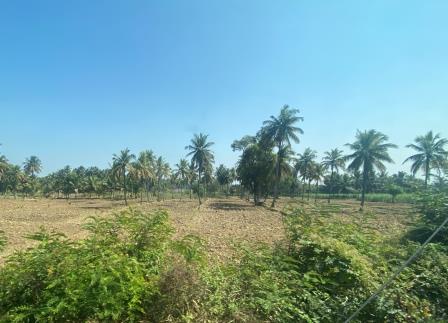
The journey was a mixture of crawling along slowly and relatively fast running. The scenery was pleasant but not particularly dramatic. Out of the window were green fields, rice paddies, sugarcane and the occasional coconut tree. They had obviously built in some serious recovery time into the schedule. I wasn’t surprised that, despite our late departure, we spent a while outside Mysuru and arrived bang on time.
Mysuru Junction
The station was effectively a terminus. There was a branch line on to Chamarajanagar, but everything coming either from the Bangaluru or Kannu directions turned around here.
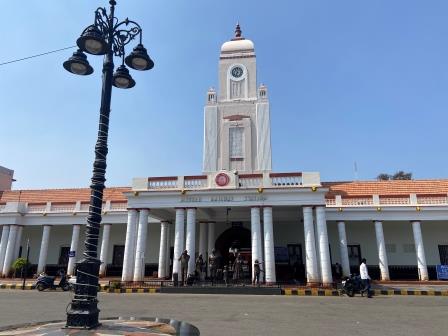
Outside, the station building, completed in 1942, was pretty magnificent and looked as if it had been recently restored.
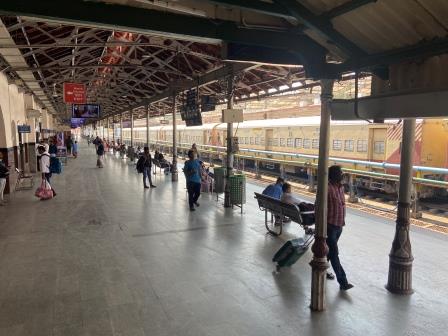
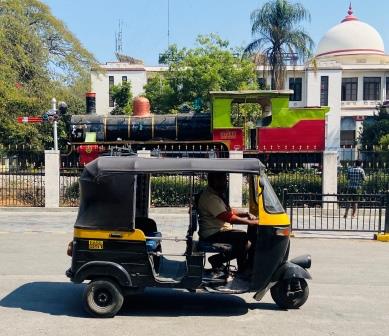
In the grounds of the station was 37244, a historic metre-gauge 4-4-4T steam locomotive built by North British company in Glasgow in 1920. A reminder that not so long ago Mysuru was a metre gauge station.
A Walk Around
I climbed into an auto (auto rickshaw) ordered on the Uber App. The ride through hot dusty streets took less than ten minutes and soon I was deposited in front of my hotel on the east side of the centre. 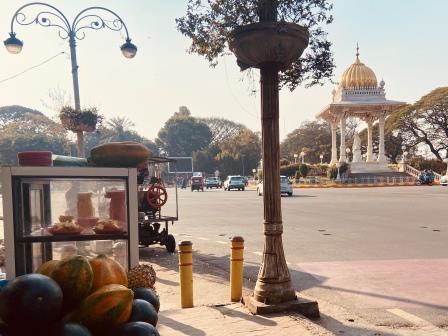
Ruled by the Wadiyar dynasty from 1399 until 1947, Mysore (Mysuru) is famous as the “City of Palaces” with the magnificent architecture of the Mysore Palace being especially notable.
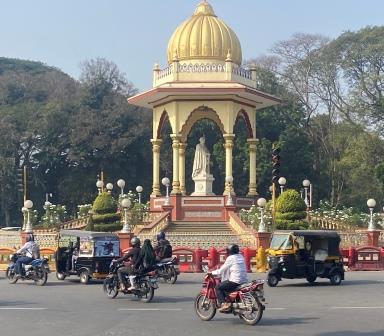
I set off walking around the city heading along Prince Albert Connaught Road towards the Mysuru Palace. All around the city were statues under canopies at road junctions honouring the Wadiyar dynasty rulers, who were instrumental in shaping the city’s heritage and urban planning.
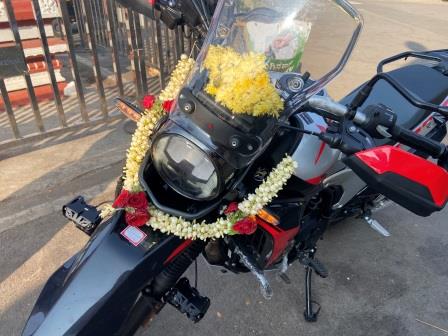
At the temple near the palace, they were holding little ceremonies to bless new vehicles. I watched as a new Suzuki was taken through the process before chatting with the owner of a new motorcycle which was covered in flowers and then blessed.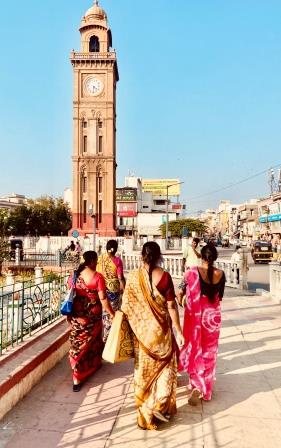
I continued walking past the clock tower (Dodda Gadiyara) built in 1927 to commemorate the Silver Jubilee (25 years) of Maharaja Nalvadi Krishnaraja Wadiyar IV’s reign.
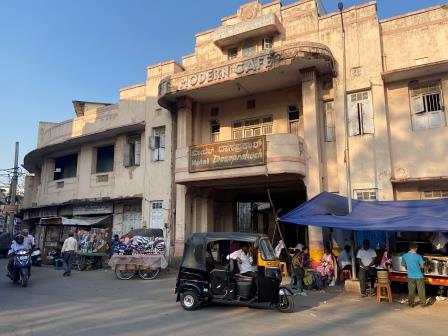
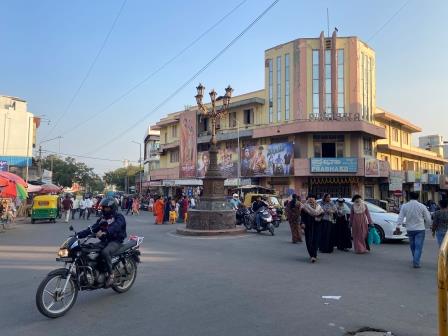
There were quite a lot of Art Deco style buildings dotted around. Just outside the market the Prabha cinema stood as one of the last remaining single screen venues in the city.
The Market
Devaraja Market was constructed in 1886. It spans around 3 acres and has more than 800 stalls. I returned to it more than once during my stay, wandering around taking in the intense bustling atmosphere and marvelling at the multi coloured displays.
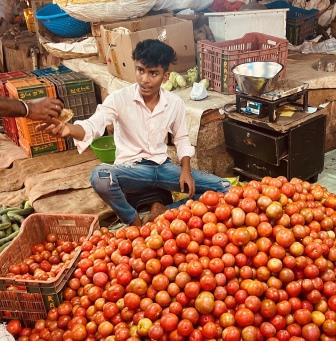
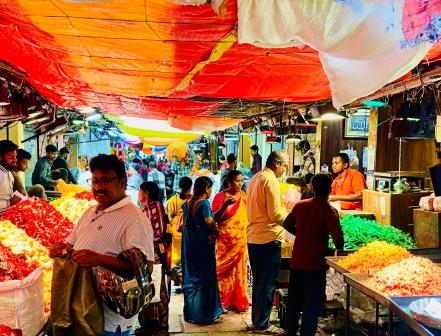
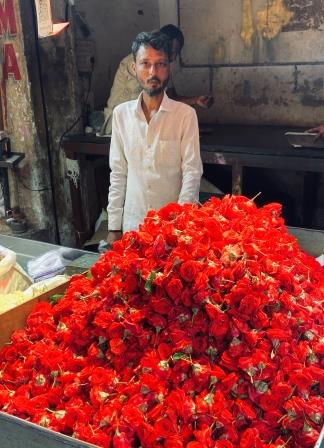
The market is famous for its mounds of jasmine and chrysanthemum, fruits, vegetables, and betel leaves.
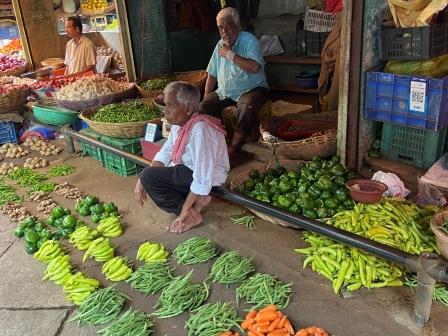
There were plenty of stalls selling local Sandalwood products and the famous Mysuru silk sarees.
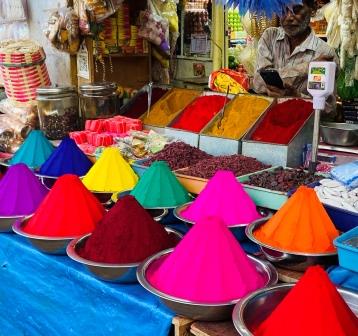
Especially photogenic were the stalls with conical piles of KumKuma displayed in an array of different colours.
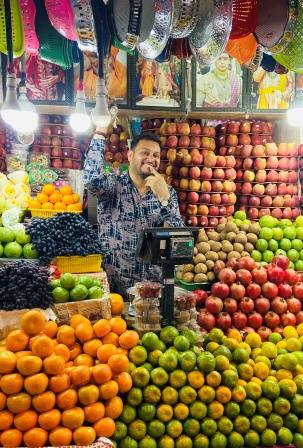
The powder is used for social and religious markings and is made by mixing dried turmeric with slaked lime.
Flower Market
sss
Mysore Palace
Mysore Palace (Amba Vilas Palace) is actually one of the most visited sites in India. Some say it is second only to the Taj Mahal.
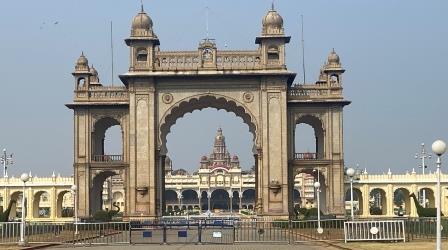
There were certainly a lot of tourists waiting to enter as I arrived just after it opened at 10am the next morning.
I met some people who were from Kolkata and doing a train trip around India. They had already ventured down via Chennai and after a tour of the south would return via Mumbai.
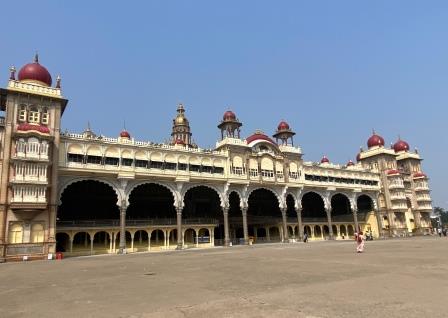
Entry to the Palace was very well organised. There was a separate ticket office for foreign tourists. I walked into the inner grounds and viewed the beautiful gardens and ancient temples before going in the palace.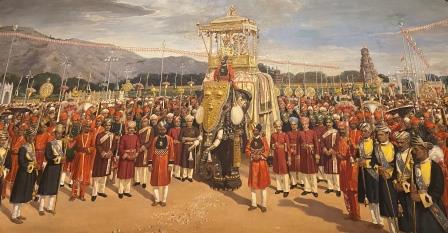
I then joined another short queue, removed my shoes and entered the magnificent 3-storey Indo-Saracenic palace. It blends European Gothic, Islamic and Hindu styles.
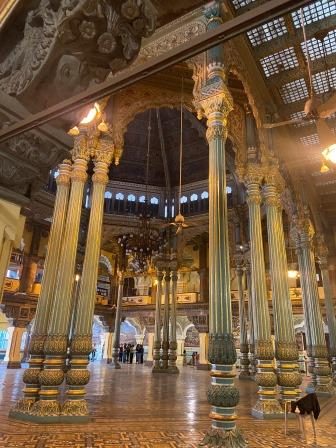
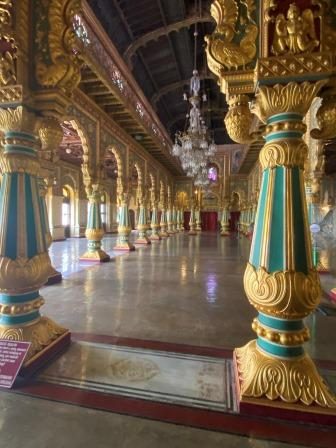
It is constructed with grey granite and has deep pink marble domes. Its stunning interior features stained glass, intricate carvings, and a jewel-encrusted golden throne.
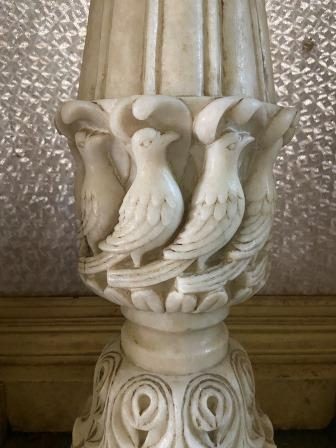
Mysuru had been the seat of the Wadiyar dynasty for centuries and the original wooden palace was destroyed by fire in 1897.
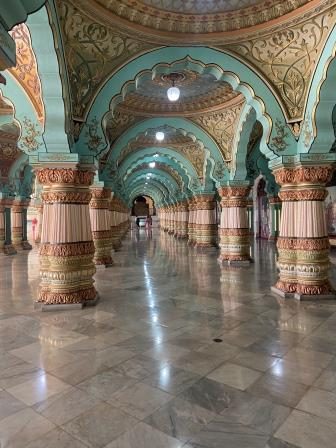
The current building was designed by Henry Irwin (who also had a hand in other Indian buildings including the station at Chennai) and was completed in 1912.
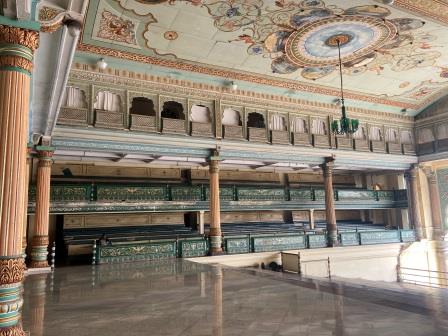
Inside, the Durbar Hall features ornate pillars and a large, open space for public audiences, whilst the Marriage Hall is known for its octagonal ceiling, peacock-themed stained glass, and mosaic floors.
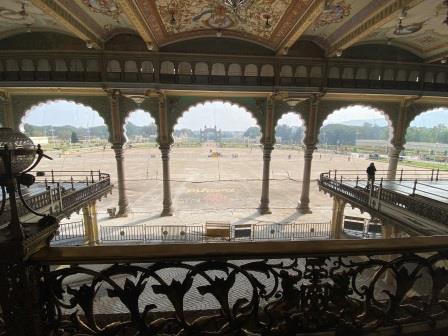
The palace is adorned with nearly 90,000 light bulbs, and on Sundays and public holidays the whole thing is lit up for an hour or so at night.
Other scenes
I walked across to the Jaganmohan Palace, another historic royal residence built in the 19th century by the Wadiyar dynasty.
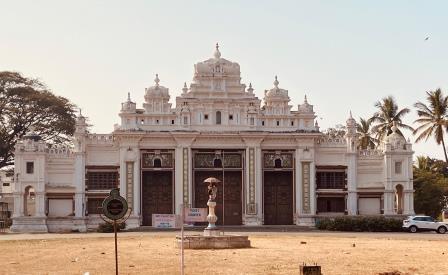
I paid the small entrance fee and spent time looking at one of India’s richest art collections.
I enjoyed my time walking around Mysuru. The pace was certainly slower than Bangalore and strolling along the many tree lined avenues was pleasant.
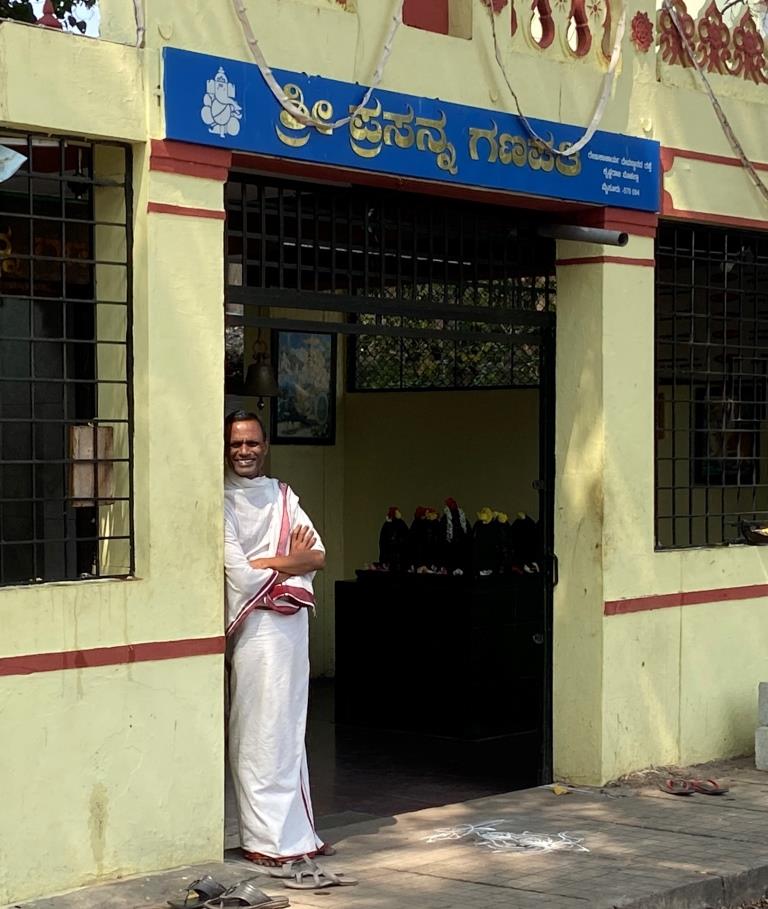
As I walked around there were small eateries serving dosa, idli, and sweet shops selling the local delicacy, Mysore Pak.
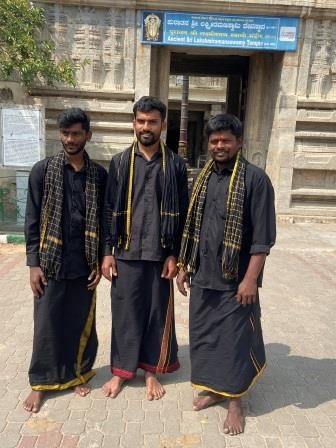
The local people were really friendly. There were lots of foreign tourists with an age profile similar to my own or a bit older: Europeans in their 60s.
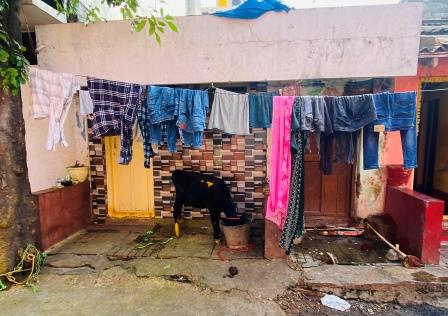
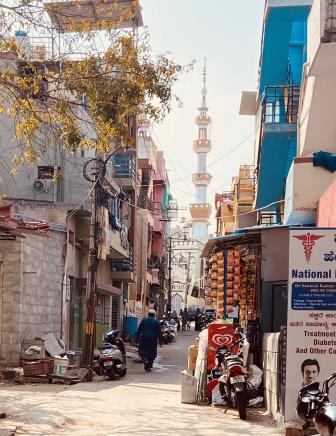
Walking around revealed a mix between colonial-era buildings, the royal architecture for the Wadiyars and traditional neighbourhoods.
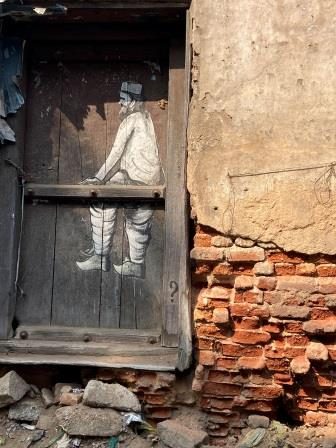
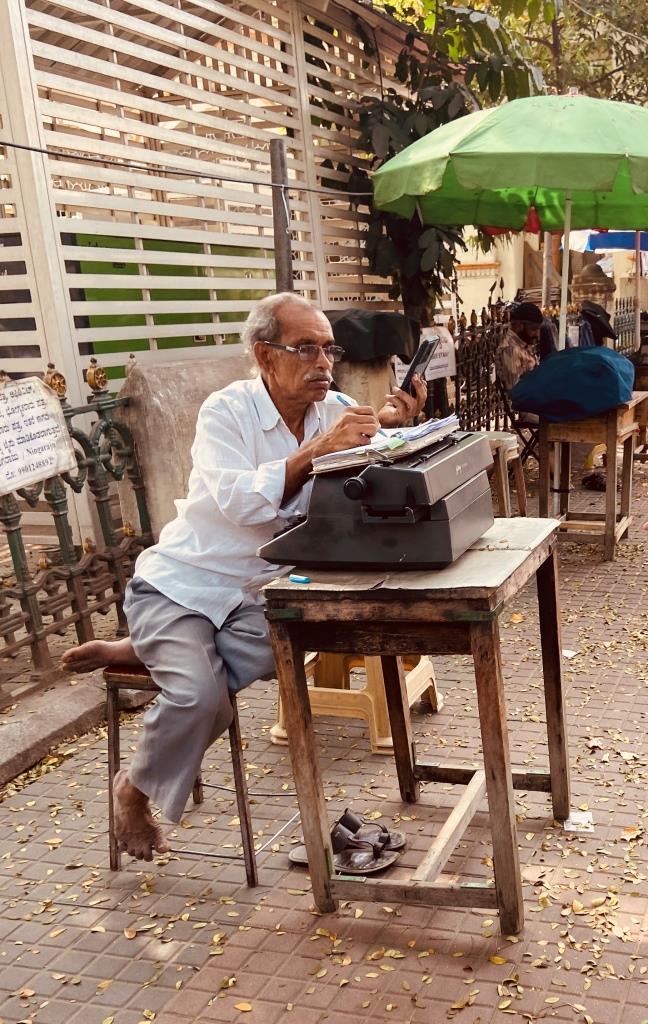
In one area there were street typists. They were sitting with a typewriter ready to provide typing, drafting, and document-writing services for the public.
Cows Dyed
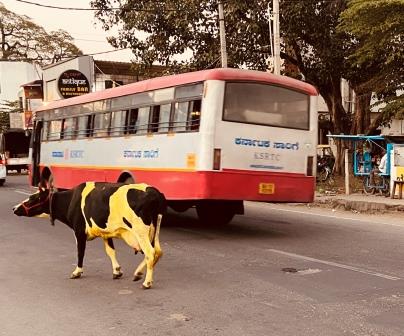
I had noticed a cow that seemed to be dyed yellow from the train window on the way into Mysuru but had dismissed it as an aberration. Then, as I walked around the city I came across more and more of the beasts.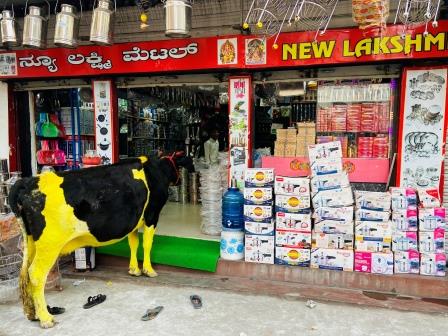
The tradition is part of Makara Sankranti or Mattu Pongal harvest festival, which takes place in mid-January. It is a celebration of gratitude towards the cattle for their role in agriculture.
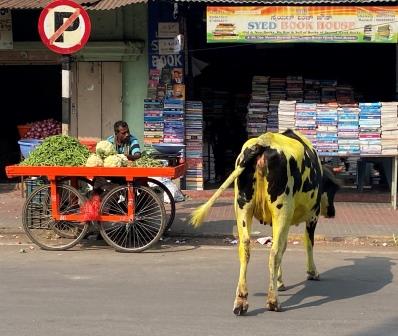
The animals are dyed with a yellow turmeric paste. Yellow being considered an auspicious colour. Apparently Turmeric also has properties which helps prevent skin diseases in the cattle too.
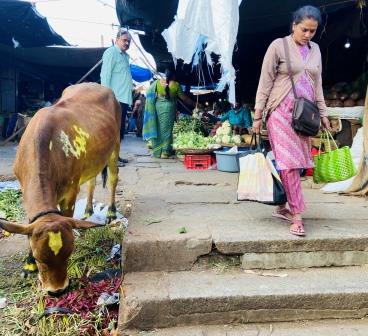
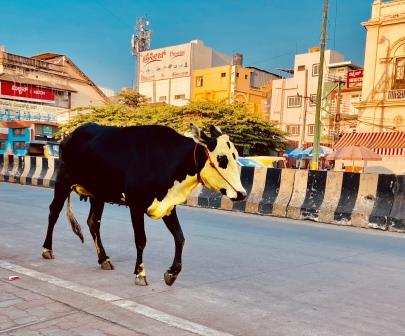
The tradition, which is prevalent mostly around Mysuru, also involves parades and sometimes a ritual where the cattle leap over a small fire. I had actually seen photos of such an event in a local newspaper.
Eating and Drinking
I ate well in Mysuru. Breakfast in the hotel was plentiful and tasty. Mysore Bonda was the local version of the Vada savoury donut.
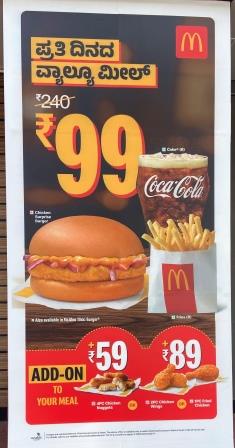
On one occasion I tried the local McDonalds. Everything about the experience was familiar except the food. I chose from a variety of local products which included the McAloo Tikka Burger, Paneer Wraps and the Maharaja Mac’veg. It was an interesting experience and certainly worth doing once.
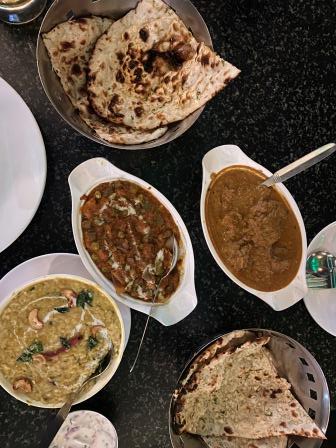
I had decided to go vegetarian during my stay and enjoyed Vegetable Kadai and Vegetable Kolhapur and meat free versions of the classics such as Gobi 65.
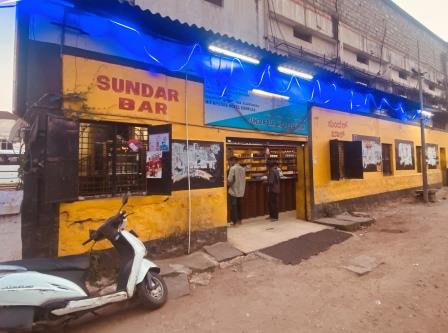
The Sundar Bar was a small pub across the road from my hotel. On my last night I went in for a few bottles of Kingfisher and got chatting to the locals.
I told them my plan for the next day. I explained that I would venture up to Ooty on the bus in order to ride on the steam-operated Nilgiri Mountain Railway. They told me it would be very cold in Ooty.
Railway Museum
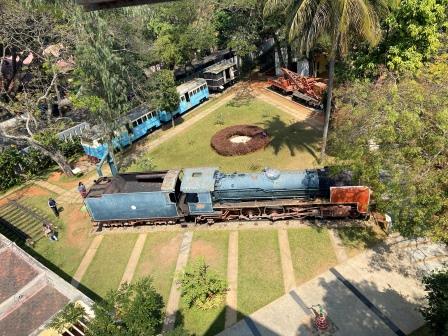
One of the highlights of Mysuru was a visit to the Railway Museum. It was established back in 1979 by Indian Railways. Located near the main station, it tells the story of the railways with a particular emphasis on local history. Exhibits include royal coaches such as the Maharani Saloon.
Eastern Side
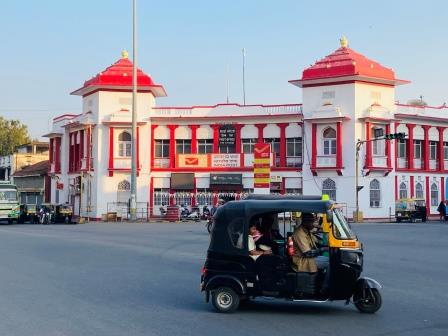
The Indian post office was a British-era public building with symmetrical design, tall pillars with an exterior in cream and red.
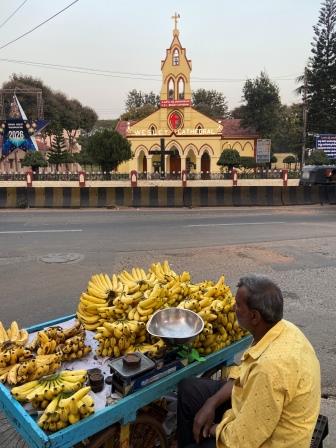
Wesley Cathedral was one of the most prominent and historic Christian churches in Mysuru.
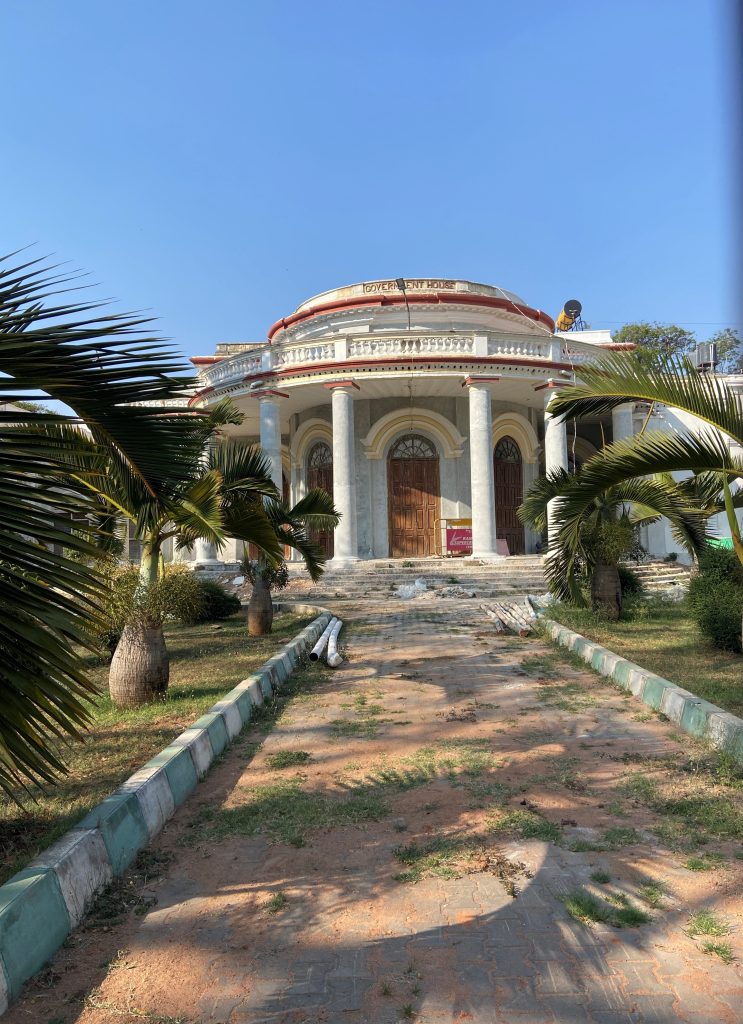
Government House was a colonial bungalow-style construction, typical of British government residences.
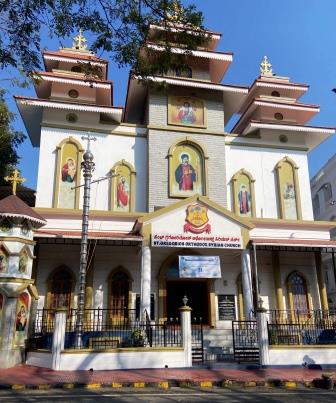
St Gregorios Orthodox Syrian Church was typical of an Orthodox church
Sunset Hill
On one of the evenings during my stay, I climbed Chamundi Hill to watch the sunset. I caught an Auto to the bottom of the 1000 steps that lead up the hill.
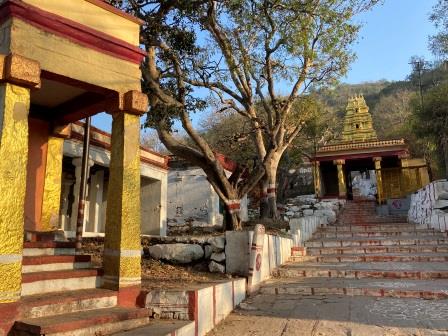
The steps are known as a traditional pilgrimage path and were apparently constructed back in 1659.
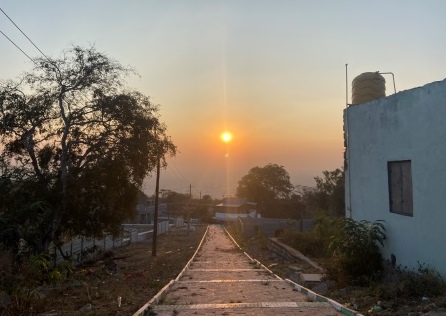
It took about 45 minutes, with a few breaks to take in the view, to get up to the top.
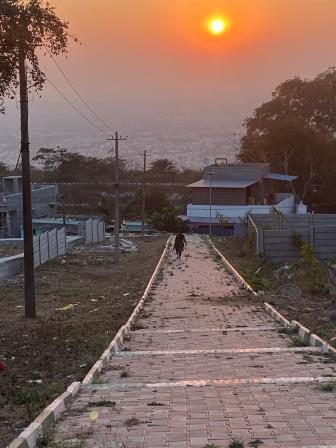
Winding up through the lush forest was hard work at times but ultimately rewarding.
About three quarters of the way up was the Nandi Statue, a large, 350-year-old monolithic bull statue. MISSED
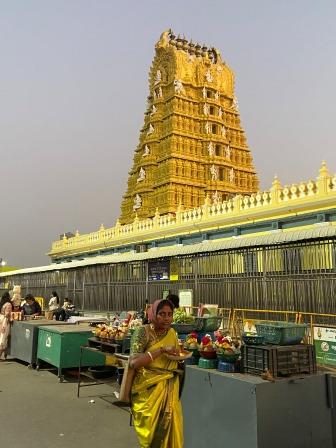
There were plenty of people at the top of the hill. I assume that most visitors don’t walk up. There are buses and taxis available from the centre of the city.
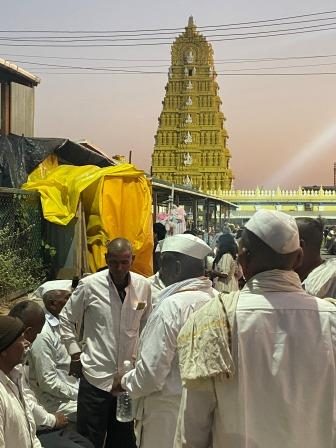
A lot of the visitors were preparing to enter the Chamundeshwari Temple, one of the most revered shrines in Karnataka.
On to Ooty
To reach Ooty, my next destination, I needed to get a bus. I checked out of the hotel at 7am and walked the short distance down to the Karnataka State Road Transport Corporation (KSRTC) Bus Station. There was one window seat left on the 8:30am departure. As the lady behind the counter explained, I would be on the “normal” bus and there would be no air conditioning, was I okay with that? I told her I was happy with anything as long as I was in Ooty by mid-afternoon. The ticket cost 200 Rupees (about £1.80).
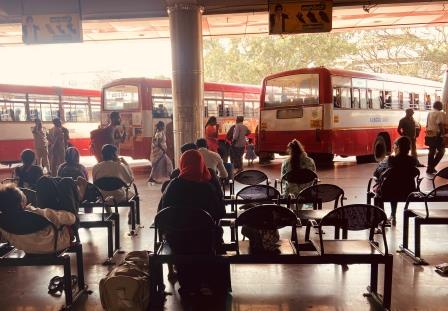
There were a number of services linking Mysuru and Ooty, one of the most scenic routes in South India, and almost all of them took about four hours for the 160km run, some were air-conditioned and relatively luxurious, but many of them ran at odd times of the day.
There were a number of services linking Mysuru and Ooty, one of the most scenic routes in South India, and almost all of them took about four hours for the 160km run, some were air-conditioned and relatively luxurious, but many of them ran at odd times of the day. The bus station was a pleasant place to wait. It was pretty busy early in the morning with services departing to all parts of Karnataka, but It was well equipped with food outlets and places to sit. I got myself snacks for breakfast and a loaf of bread for the journey.
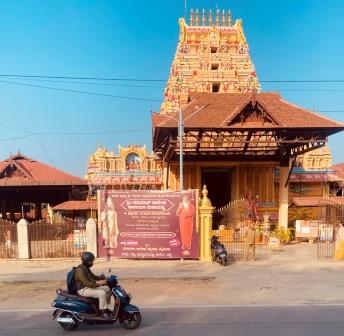
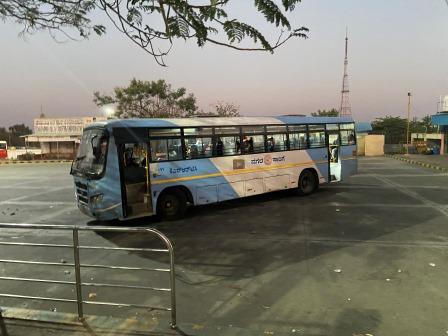
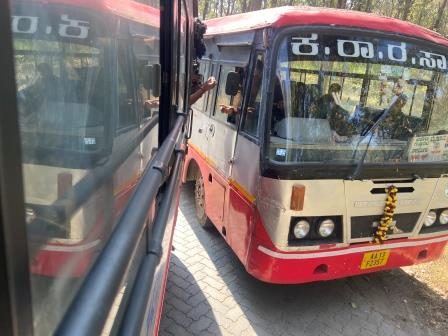
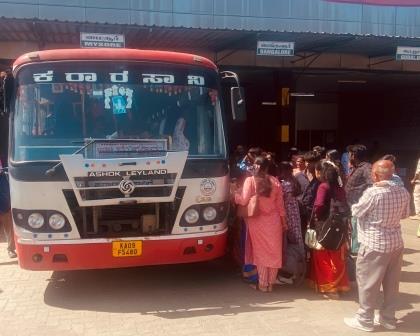
With about twenty minutes to go before departure, our vehicle turned up at gate three. The Ashok Leyland Viking, workhorse of the KST fleet, was in the standard red and grey livery with the words “Point to point express, the journey redefined” on the side. Inside it was fitted with seating for about 45 passengers in a ‘two and three’ layout.
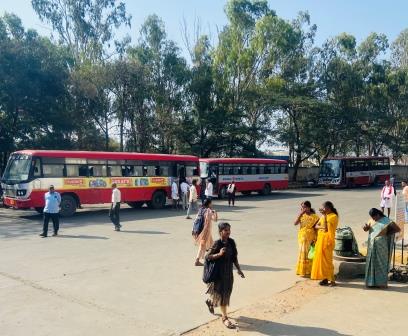
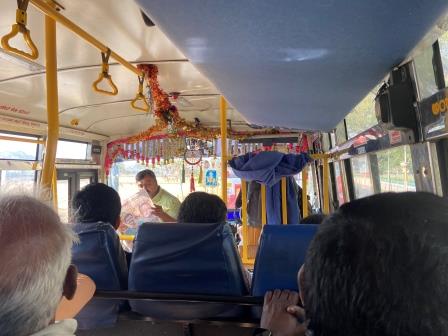
I squeezed into the window seat on the second row with my rucksack between my legs. A young lad came and sat next to me. He watched something on this phone for the whole of the journey to Gudalur and never spoke to me. A woman sat on the end of the row. We set off on time. There were two conductors, one was checking the tickets, one was reading a newspaper. We stopped just outside the bus station to pick up another conductor. We then made good progress on the road out of Mysuru. The urban bustle gave way to open fields, small villages, and patches of forest.
The driver seemed as if he was in a bit of a hurry and with constant honking on the horn he took every opportunity to overtake vehicles along the single carriageway road. To be fair though, he seemed to be good at his job and I never felt he was taking any unnecessary risks. After almost an hour and a half on the road, we made a brief stop in a parking lot at Bandipur. A few of the passengers got out and bought things from the “Bakery and Cool Bar” but most of us stayed on board to be entertained by a busker.
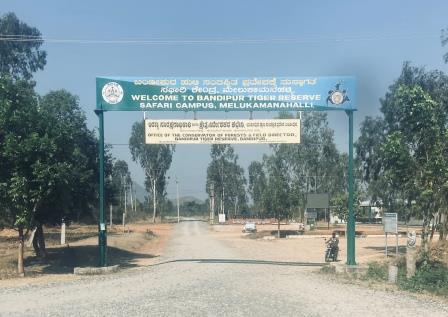
When we got going again we soon began to climb gently. We soon reached the Bandipur Tiger Reserve. There were large warning signs all over the place, including several prohibiting photography. I saw a few monkeys from the window of the bus but nothing larger than that. We reached the state border and passed over to Tamil Nadu and immediately into the Mudumalai Wildlife Sanctuary.
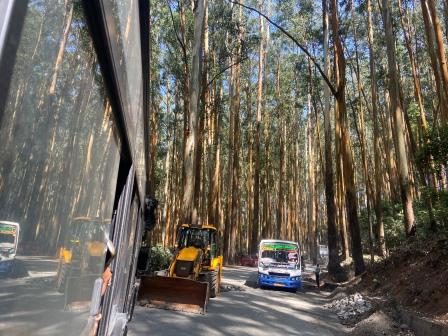
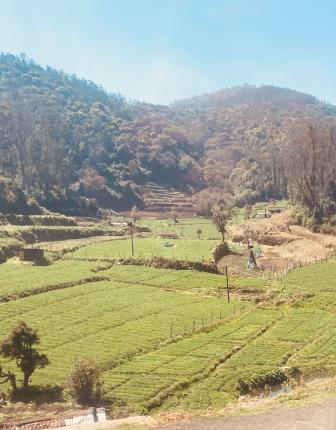
We carried on gently climbing until we made it to Gudalur. There was a lengthy stop. Half of the passengers alighted and were replaced by a new set of travellers. We then began the serious part of the climb negotiating more than thirty hairpin bends with amazing views off through the trees.
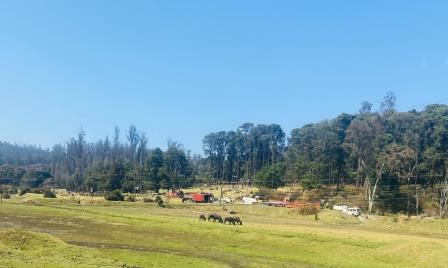
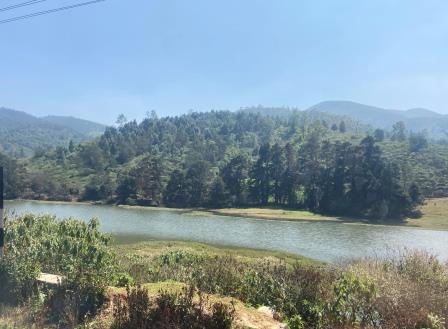
Finally, as we were closing in on Ooty, the landscape opened up and the views out of the window changed completely. We circled a lake and passed a few tea plantations before coming into the bustling hill station town and finding our way down to the bus station.
 Trains To Beyond