Tro tro
The next morning, I walked up to a little car park on the edge of central Takoradi where tro tros heading to Cape Coast left from. I paid my 37 Cedis to a guy sitting behind a desk and was shown to a minibus.

There were already two other people sitting waiting. I counted the empty seats and calculated that we would need thirteen passengers in total before we would be moving off.
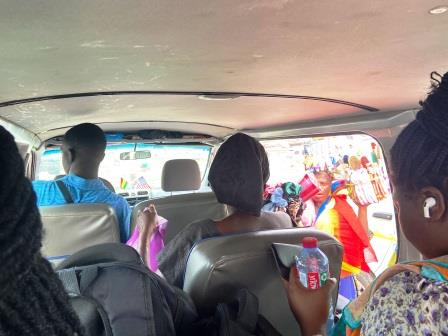
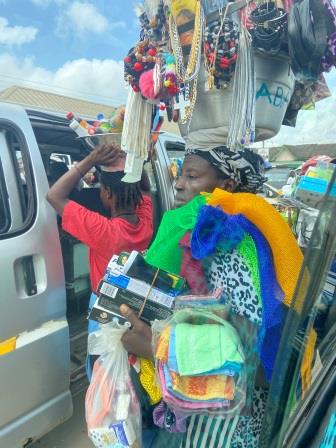
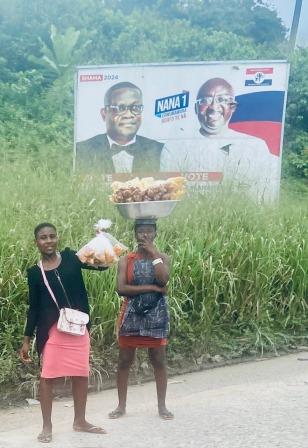
As we were waiting to move a variety of ladies with various goods, including loaves of bread, on their heads approached the buses.
To Cape Coast
The last passenger joined, and we were off. It had taken just thirty minutes to get everyone on board. Now, sitting at the back next to the wide open window, I was able to get a much better view than I had managed on the STC bus the other day.
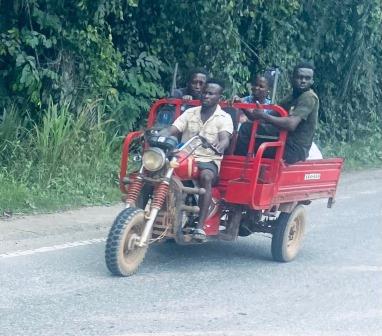
Our speed varied with the road condition. On the longer sections that were paved we sped along seemingly quite dangerously, only to suddenly stop and wobble and bounce for a section of unmade road.
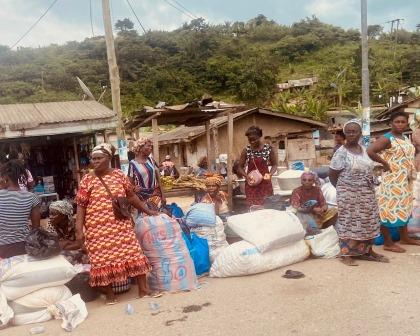
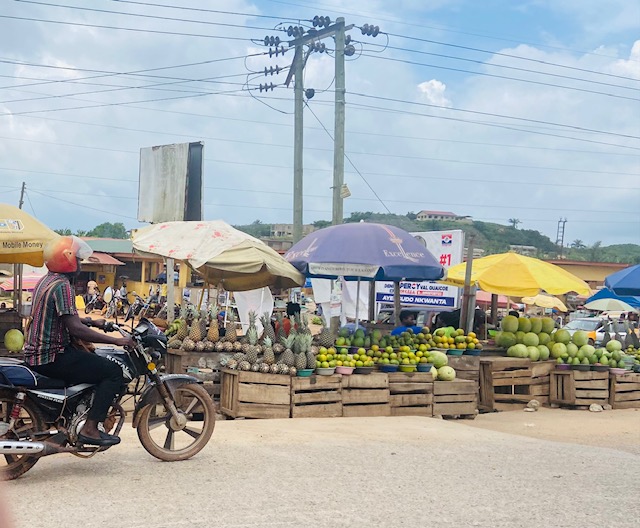
We also ground to a halt as we passed through villages, mainly to negotiate the numerous speed bumps in the road. As we slowed almost to a stop, a variety of sellers would come up to the open windows offering plantains in bags and other delights for five Cedis. I wasn’t tempted but there were some takers.
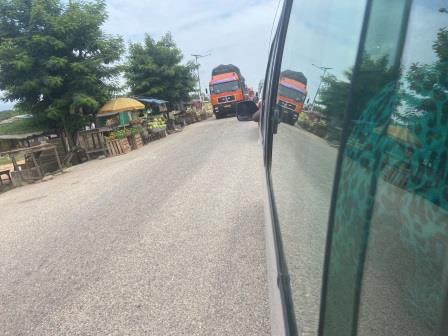
For most of the trip we were travelling inland, then the ocean finally appeared as we reached the outskirts of Cape Coast. We pulled up at the tro tro park on the bypass and everyone got out.
I knew Uber did not work in Cape Coast and so as I had expected I was met by a barrage of taxi drivers. I fixed a price with one and threw the rucksack into the back of a battered old Nissan Micra. Within ten minutes I was delivered to the pharmacy where my next Airbnb was.
Cape Coast
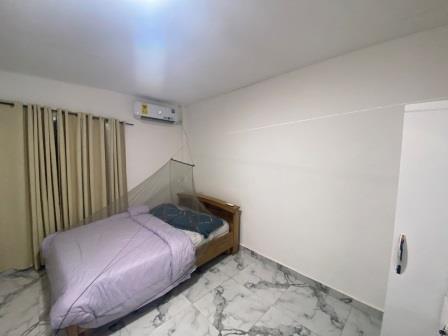
The people in the shop called the landlady and she appeared within a few minutes to show me upstairs. The flat was not quite as posh as the one in Takoradi but it was cheaper and a lot more spacious. We discovered there was no running water, a plumber was called, and he quickly fixed the problem whilst I was setting up my mosquito net.
I went for a walk around the city. Cape Coast is a fishing port but also one of the most historic cities in the country. It was the first capital of Ghana and currently has a population of around 190,000.
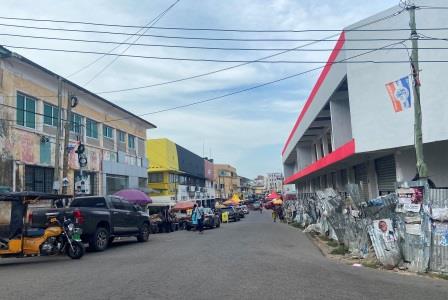
I did a quick circuit of the town, pausing at the impressive Melcom supermarket to get some small provisions for the flat. I had had enough of chocolate spread and bread.
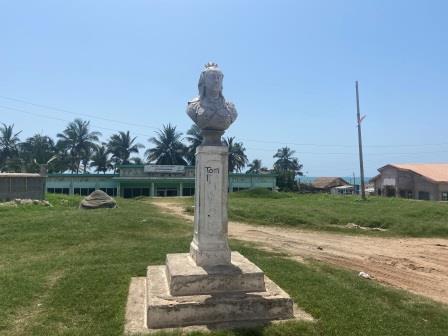
On the way back I passed a park named for Queen Victoria with a lonely looking statue of the old monarch standing there in the centre.
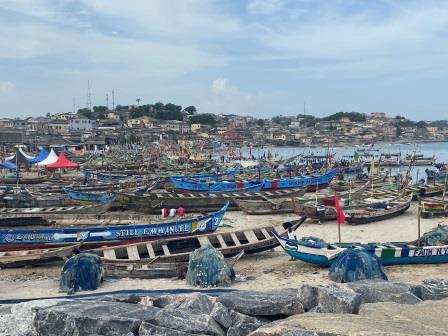
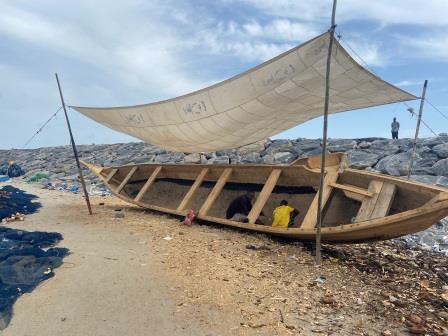
I had a good walk around the fishing village. A lot of the fishermen were mending their nets and one of them was building a new boat.
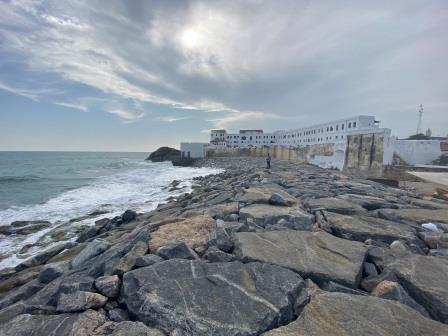
All this was happening in the shadow of Cape Coast’s main attraction: its UNESCO-listed former slave castle.
The Castle
Before I went into the castle, I had a walk around the perimeter. I met a few hawkers trying the trick of asking my name so they could present me with a personalised bracelet on my way out, but I kept quiet.
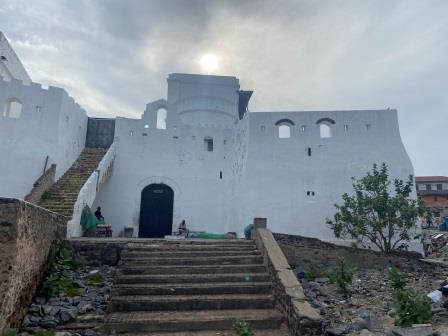
Cape Coast is one of about forty slave castles built along the Ghanaian coast by various European nations. It was first established in 1555 by the Portuguese and was originally called Cabo Cors which is where the settlement itself got its name.

A hundred years later in around 1653, the Swedish Africa Company constructed another timber fort in the same location. Ownership switched between the Danish and the Dutch before passing to the English in 1665. It was then effectively under British control for almost 300 years until independence in 1957.
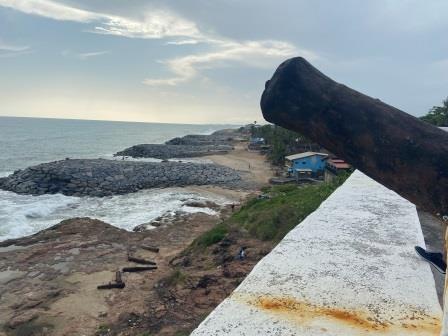
Although originally trade was in gold and timber, the castle was eventually used for the Atlantic slave trade. By 1700 around 70,000 slaves a year were being exported from here to the “New World.” After the British ban on slavery in 1807, trade in gold and other precious metals continued.
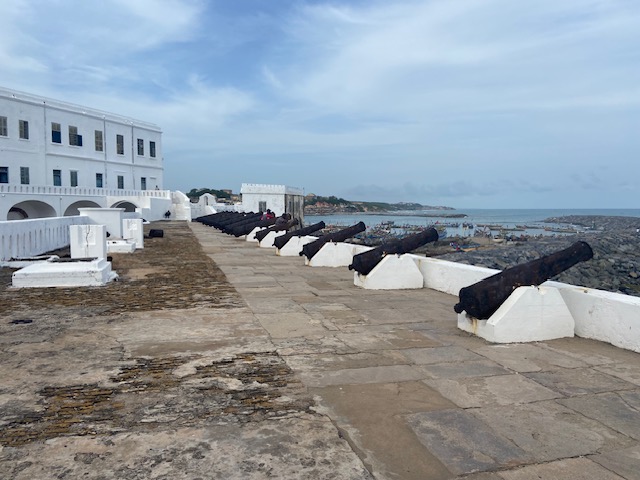
Entry to the castle was only as part of a guided tour. I paid 80 Cedis to enter, Ghanaians get In for 2, which seemed perfectly fair. A tour had just started, and I was asked to join it.
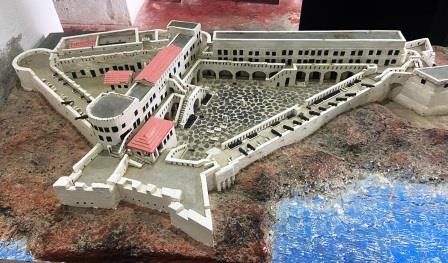
The group of around twenty people seemed to be made up of locals and a few African Americans who were wearing “I have returned” T shirts. I was the only white person. The lady guide was excellent but did not hold back in giving us very vivid descriptions of what happened in the castle.

We were led from dungeon to dungeon and told stories of people being imprisoned in the most squalid conditions imaginable. We learnt of deprivation of sunlight and air, starvation and rape.
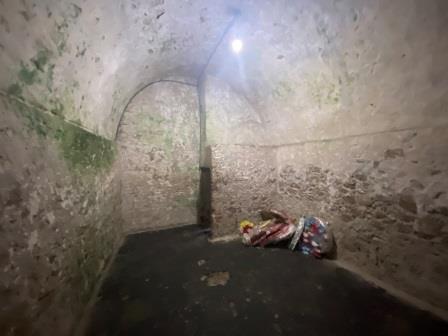
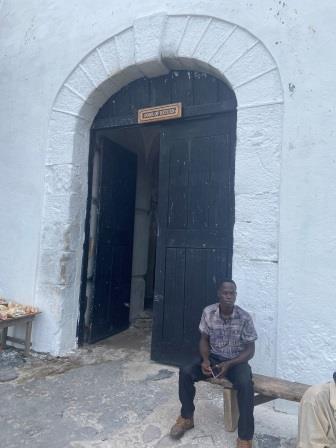
Towards the end of the tour, we were shown the “gate of no return”, here the slaves were led out to the ships.

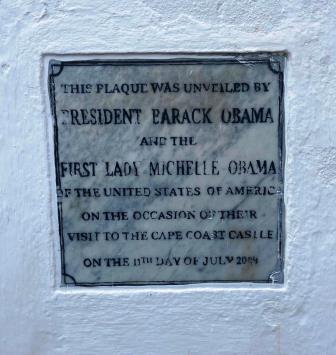
On the other side, they have marked it “gate of return”, and many African Americans now walk through the gate. Michelle Obama, whose ancestors were said to have gone this way, visited the castle in 2022 with President Obama.
One of the most dreadful things was the ironic sight of the Christian church that had been built literally over the top of the dungeon.
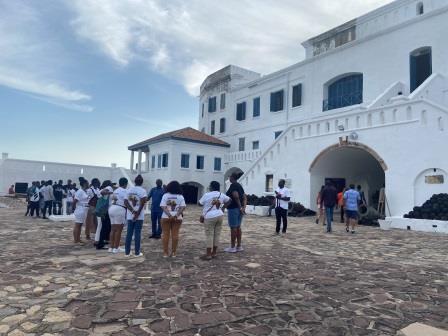
There were various places where tributes of flowers had been laid. The whole experience was difficult to take in but it felt essential, nonetheless.
Beach
I walked from the castle down to the beach, getting a bit of hassle from sellers of paintings who seemed to be guarding the entrance, as I went.

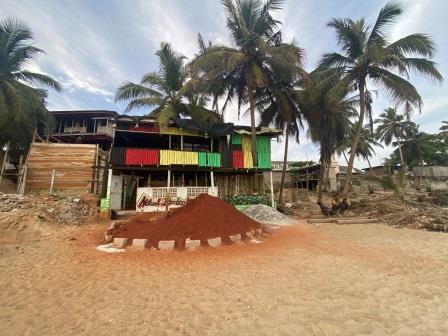
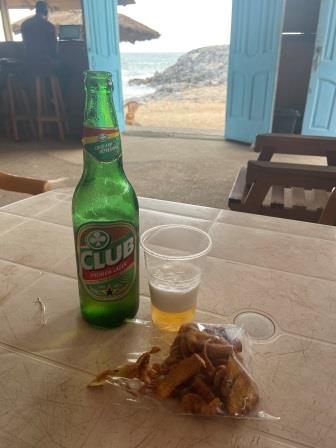
It was just approaching sunset, and I spent the next hour relaxing in a small beach bar. The lad who served me a bottle of Club and some plantain chips was very interested in English football and we spent quite a while discussing the Premier League.
Cape Coast Town
I explored Cape Coast a little more. It was obviously more touristy than Takoradi, but not overwhelmingly so. Certainly, there seemed to be plenty of budget accommodation options and restaurants that seemed to cater for tourists, yet there didn’t seem to be that many foreigners walking around.
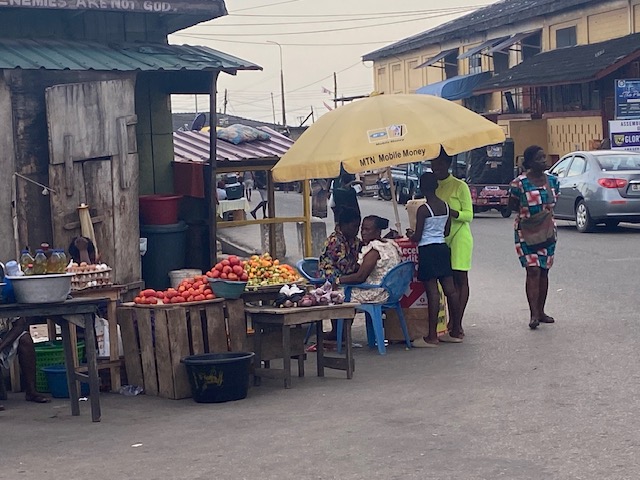
There were a lot of tuk tuks though, something I hadn’t seen anywhere else. They were known as “Pragya” here, apparently after a character in an Indian drama. They all seemed to be painted yellow.
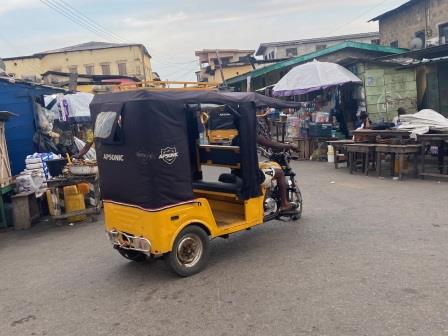
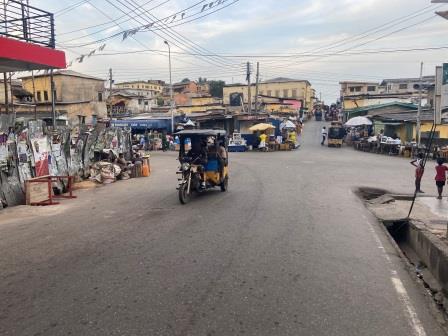
Given the impending presidential election, I suppose it was inevitable that there would be political rallies and demonstrations on the streets. I witnessed two of them in the space of 30 minutes. One guy was struggling to wave a large flag as he walked down the street.

I noticed there were lots of churches in the town too, some of them quite old. Ghana is more than 70% Christian and it is also common to see religious themes being used for the names of businesses.
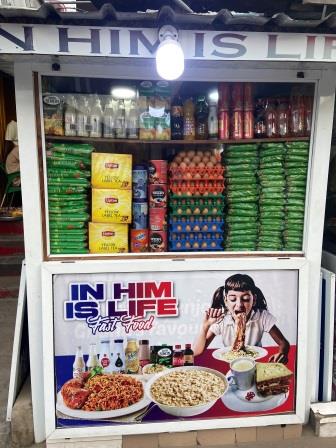
I had seen this already during my trip, but there seemed to be even more places in Cape Coast. You could change money at the “three virgins’” exchange bureau, have your hair cut at the “try Jesus” barbers or buy noodles from the “In him is life” shop.
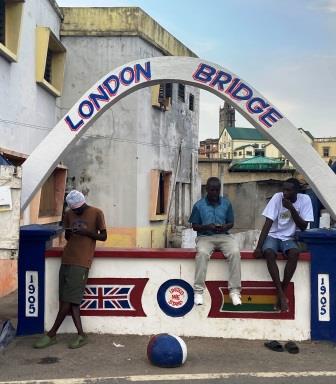
Cape Coast had its own London Bridge too, not quite as grand as its namesake but a celebration of the first culvert in Ghana. It was built in 1905 to prevent flooding in the area. The structure is now decorated with Ghanaian and British symbols in a celebration of friendship.
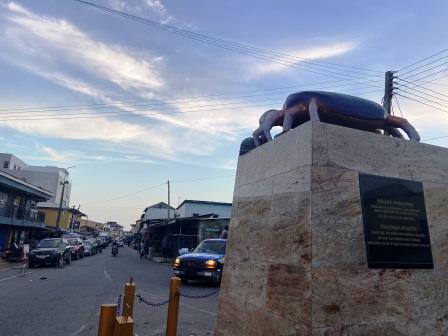
Cape Coast was also home to some of the cement shrines known as posuban. They are unique to the central coast region’s Fante settlements and created by Asafo, traditional warrior groups. Here was one of a Crab, the symbol of the city. The crustacean once provided much of the basis of the local economy.
Dinner in the Sahara
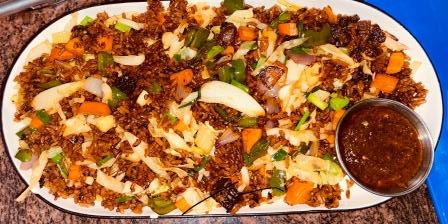
For dinner I treated myself to an excellent plate of beef jollof rice in the Sahara Bar close to my apartment. There is a big debate as to whether Nigerian jollof rice, the sort I have usually encountered in London, is better or whether the Ghanaian version trumps it. On the strength of this, I would go for the latter.
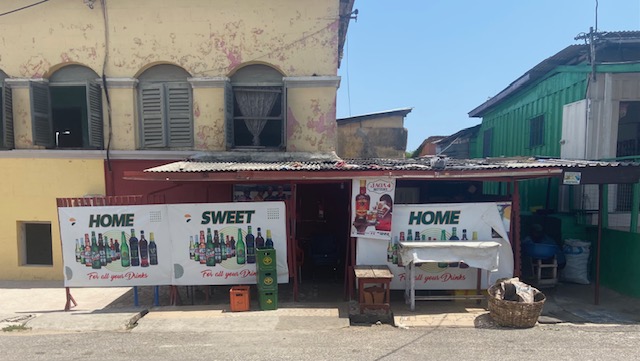
On the way back I stopped off at the “Home Sweet Home” bar and ended up chatting with a local guy who had spent most of his life crewing cargo ships, and had once ended up living in Kilburn, London.
Continue = Shared taxi to Elmina
 Trains To Beyond