To Lousado (Linha do Minho)
My third trip was a short hop by Urbano train along the Linha do Minho to Lousado in order to visit the museum of the Metre Gauge railways there. Named for the Minho River in the north of the country and stretching up to the Spanish border, the Linha do Minho is the third of the main lines which congregate on Porto. Like the Linha do Douro, it is celebrating its 150th anniversary this year too.

The first part of the line was opened in 1875 to Nine (39km from Campanha) along with the branch to the important city of Braga (Braga Branch / Ramal de Braga). It was continued towards the Spanish border city of Valenca around 130km from Campanha (1882) before being extended back to its official starting point São Bento in 1896. Between 1915 and 1989 trains also extended around 14km from Valenca to Moncao.
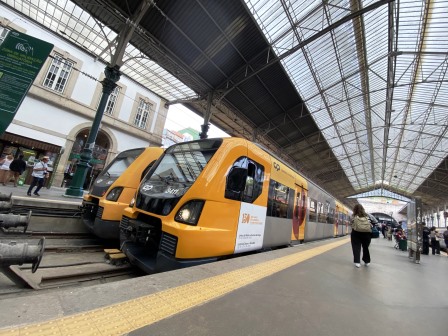
Today the line, which incorporates the branches to Braga and Guimaraes, sees a variety of services ranging from the Alfa Pendular, Inter City, Inter Regional and regional trains up to Valencia and a twice daily international service across the border to Vigo in Spain.
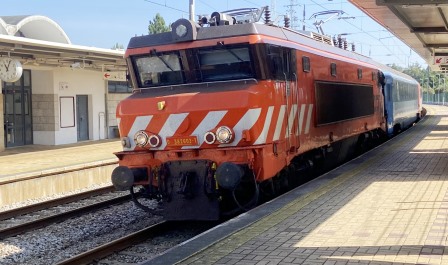
Urbano
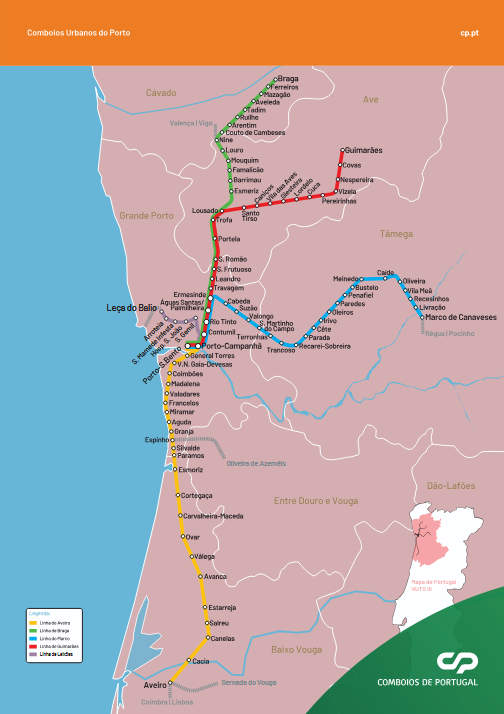
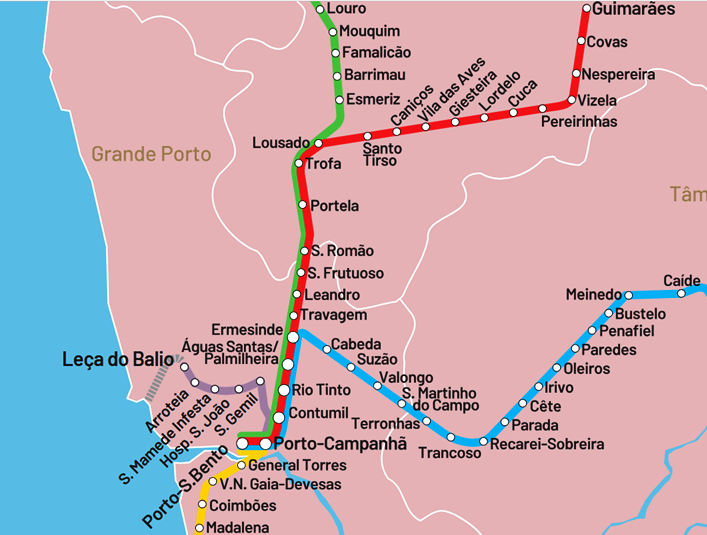
Porto’s Urban train network comprises of 87 stations on five lines within a 60km radius of the city. Its red line extends along the Linha do Douro to Lousado and thence along the branch to Guimaraes, whilst the green line goes as far as Nine before serving all the stations on the branch to Braga. 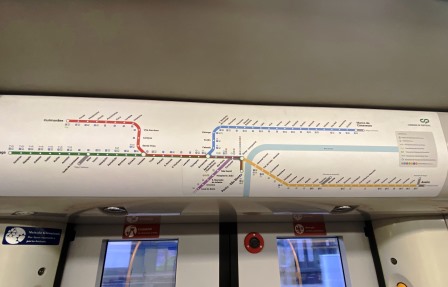
The system is completed by the blue line on the Douro to Marco de Canaveses, and the Yellow line south on the Linha del Norte as far as Averio. The purple line serves the relatively short branch, reintroduced recently, to Leca do Bailo.
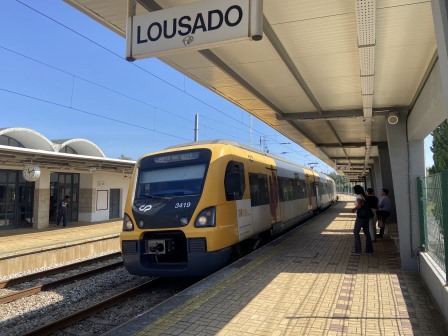
The whole network is currently serviced by a fleet of 34 Class 3400 electric multiple unit trains. Fitted out in an attractive yellow livery and built by Bombardier in 2002, the four car trains are attractively decorated with red seats and seem very modern.
The current service pattern from Sao Bento sees hourly or better services on the lines to both Braga and Guimaraes on the red/green lines, half hourly services to Penafiel with an hourly extension to Marco de Canaveses on the blue line and an hourly service reversing at Campanha to Aveiro on the yellow line. Extra trains go south from Campanha on the yellow line, some of which work through to Leca do Bailo on the purple line.

Lousado
Our 25km trip out of the city to Lousado involved first getting a Siga smart card from the Ticket Vending Machine on the platform. We loaded two tickets at once on our cards to take care of the return trip. The cost was just 2.20 euros for a 35 minute jaunt.

The train was on time and the journey pleasant enough. There was a ticket check soon after leaving Campanha. There was a least one fare dodger in the same carriage who got caught and fined. Once past Ermesinde the train made swift progress and was soon passing through more rural scenery.
The last stretch was brand new, the old line through Trofa has been closed and the Linha do Minho has been diverted through a tunnel and to a sparkling new station at Trofa. The station at Lousado itself was configured in a “V”-shape with two platforms on the line north to Braga and Valenca and two curving away towards Guimaraes. This, as we were about to find out, was far from the original arrangement.

Museum
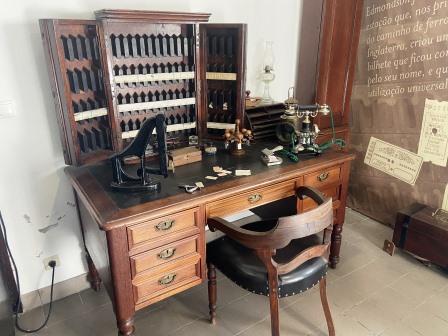
The National Railway Museum at Lousado, located right next to the station, is an outpost of the main site at Entroncamento and is run by the National Railway Museum Foundation. It occupies the whole 1400m² original workshops of the Guimarães Railway Company (CFG) which operated the line here between 1883 and 1927.

It deals mainly with the history of the Norte system, the companies that formed it as well as the other metre gauge systems in the north of the country. It holds examples of locomotives and rolling stock built between the 1870s and the 1960s.

The old network
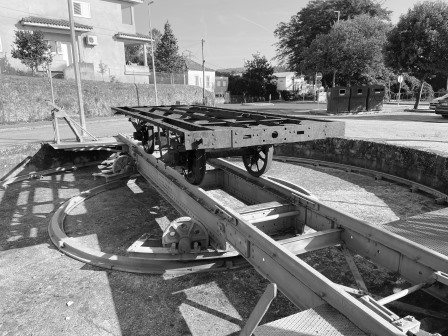
The branch line from Lousado to Guimaraes was only electrified and converted to Iberian gauge in 2004. This was prompted by the holding of the Euro Football Championship in Spain and Portugal the same year. For many years, Guimaraes (25km on from Lousado) had been served by a Metre gauge railway which actually began back at Trofa and used mixed gauge track on the section to Lousado.
The branch (show in orange below) was opened in 1884 and for many years remained an outpost of Metre Gauge with a change to the broad gauge system at Lousado (or Trofa) necessary to reach central Porto. The branch was extended to Fefe, another 30km east, in 1907 but that section closed in 1986.

Between 1875 and 1881 a line had been constructed from Porto to Povoa de Varzim and eventually on to Famalicao. (Shown in red above) by the Companhia dos Caminhos de Ferro de Porto a Pavos de Varzim e Famalicao (PPF). This railway was originally constructed to 900mm gauge. In Porto it originally had its terminus at Boa Vista (now close to Casa de Musica).

In the late 1920s construction began on a metre gauge line from Trofa direct into Porto via Castelo da Maia (shown in maroon above). In 1927 the PPF was converted to 1000mm and then the two railways merged to create the Norte metre gauge system. In 1938 the terminus moved from Boa Vista station via the newly constructed Lapa tunnel and into central Porto at Trindade.

The Locomotives
The oldest preserved narrow gauge locomotive in Portugal, PPF number 6 is an 0-6-0T built by Black, Hawthorn and Co., in 1874. It was originally designed for 900mm gauge and operated on the Famalicao line before conversion to 1000mm for the Norte in the 1920s.

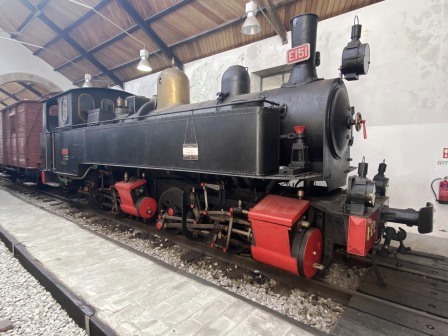
E151, a 0-4-4-0T Mallet, was also originally a 900mm gauge locomotive. It was built by Henschel & Son in 1905 in Germany and also operated on the Famalicao line. Originally PPF No. 14, it then became Norte No. 31 before finally assuming its CP identity with the E prefix.
CFG No. 6 is a 2-6-0T, an original 1000mm gauge locomotive built by Esslingen in 1907. It started work on the CFG line as No. 6, in which guise it is now displayed. It became Norte No. 51 after the merger and was latter assigned to the Vouga / Dao network but eventually returned to its original territory. Its final identity in service was E101.
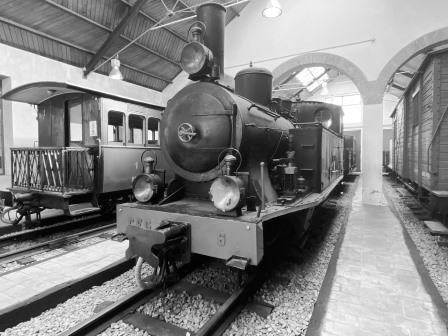
Built by Henschel and Sohn in 1931, Norte 104 is a 2-8-0T. It was used extensively for passenger services and eventually became E144. It is now displayed in its original Norte livery. 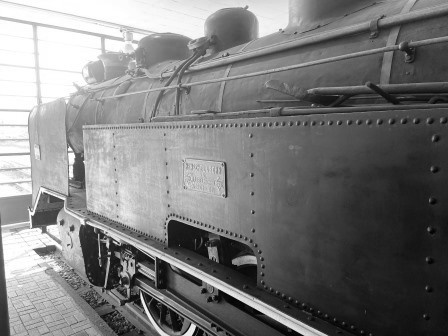
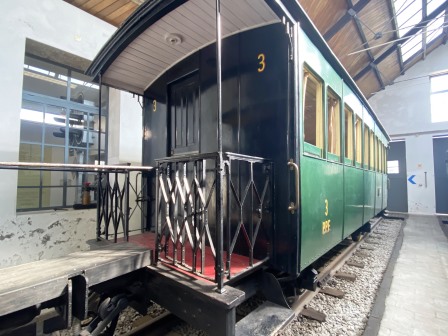
Local company Oficinas built this third class carriage in 1906 for use on the PPF line.
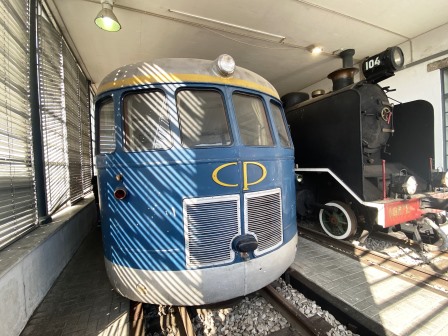
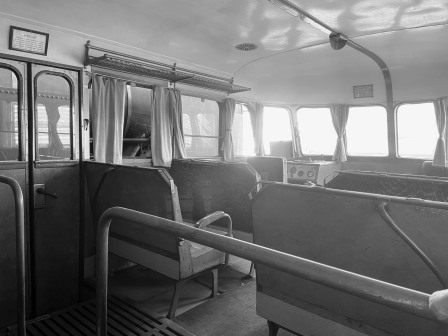
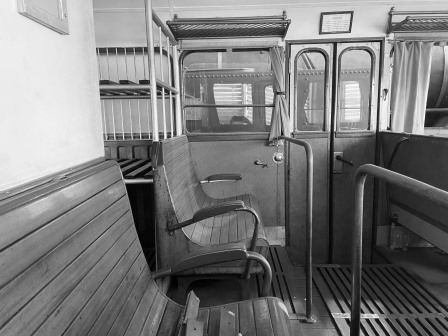
CP built 8 of these ME2 railcars in their Lisbon Santa Apolonia workshops in 1947/8. They were powered by a Chevrolet 90 horse power petrol engines.
Closure and Rehabilitation
In 1995 the section of line between Povoa de Varzim and Famalicao was closed and remains out of use today. The rest of the Metre gauge system was taken out of use between 2001 and 2002. The line from Trindade to Povoa de Varzim and the former branch to Trofa as far as Castelo de Maia (shown in purple below) have been reused as part of the Porto Metro system.

The Guimares branch from Lousado has now been converted to Iberian Gauge, electrified and incorporated into the Urbano system. Despite a few promises and failed attempts, the section between Castelo de Maia and Trofa remains out of use.
Matosinhos….. By Metro
 Trains To Beyond