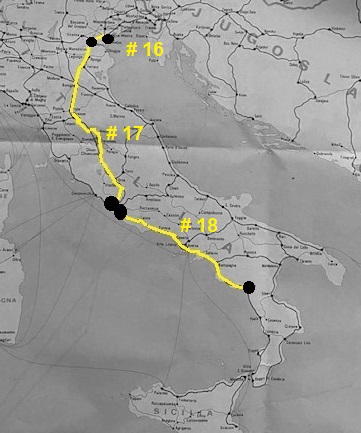
TRAIN # 18 – 20:45 Rome Termini to Sapri (Continued)
By the time the train left Naples it was well after midnight and we were more than three hours late. It had been too noisy to sleep in the compartment and I had spent most of the time in the corridor looking out of the window.
The train finally got quieter after Naples but I still couldn’t sleep. I had now realised that we would no longer make our connection at Paola. Instead, I figured we would have to alight at Sapri, about 100km short.
As we headed south we got later still. The northbound connection left Sapri at 05:38 and I started to worry that we would miss it. In the end, we pulled up at the platform at 05:20. The few people who alighted with us headed to the exit, whilst we went over to the opposite platform to await our next adventure.
TRAIN #19 – 05:38 Sapri to Pompeii
The 05:38 was, perhaps to no great surprise, running late. We spent an hour standing alone on the cold platform at Sapri cursing Italian Railways. We had reached the southernmost point of the whole trip and now we planned to head north for the next few days passing through West Germany to Denmark, Sweden and Norway.
The train finally appeared at 06:55. We clambered aboard and found seats in an empty compartment. It was coming light by then and there were lovely views of the coast as we headed north. I dozed a little but was still extremely tired by the time we arrived at Pompeii just after nine.
POMPEII
We found a little shop next to the station and ended up having to purchase a postcard just so we could ask the way to the ruins. We tried to get a taxi but couldn’t find one. Then we met a German tourist who advised us to walk into town.
We popped into the cathedral and then, seeing a bank, decided to change some more money whilst we could. We got another 22,300 lira and then paid 4,000 each to get into the ruins. We bought a bottle of Coke and left our bags with a man at the gate, getting little wooden tags in exchange.
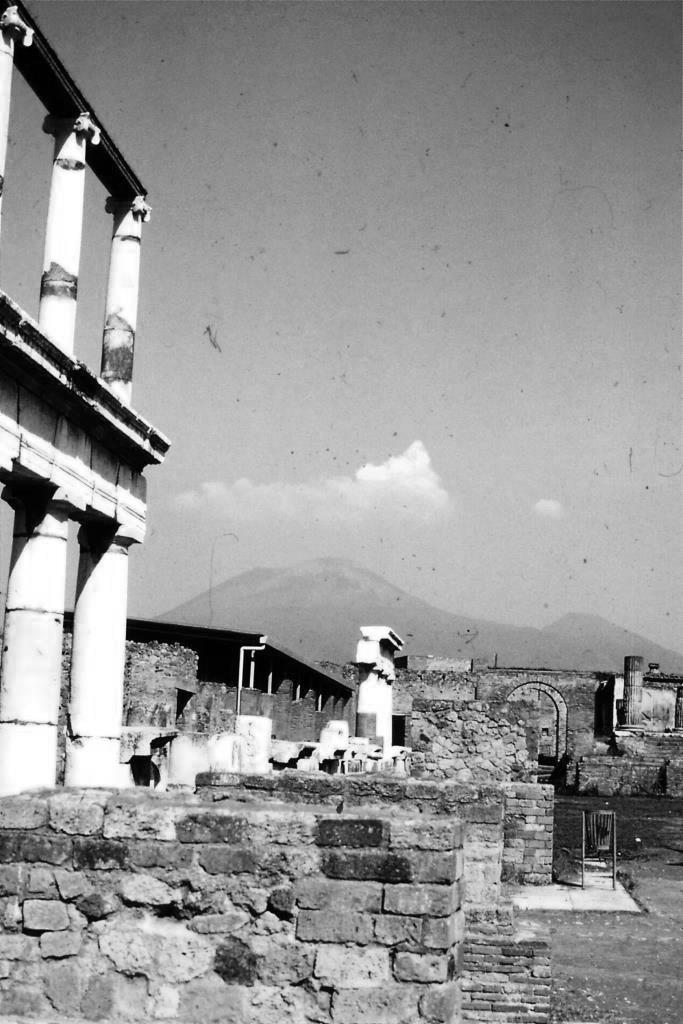
Then we walked up and down streets amazingly preserved by the lava of Mount Vesuvius. The volcano itself was still visible in the background. We took in the whole fascinating spectacle; the preserved villas with their marble flowers and Roman writing on the walls. We trekked around the small forum, visited the amphitheatre and the two smaller theatres.
We picked up our bags and walked over to the Pompei Scavi-Villa dei Misteri station on the narrow gauge Circumvesuviana line. We were followed by a dog for most of the way and we ended up convincing ourselves that the poor animal had rabies.
TRAIN # 20 – Pompeii to Naples (Circumvesuviana)
The Circumvesuviana wasn’t covered by the Interrail ticket but it was a quicker way back to Naples. In the end, we managed to miss one train whilst we were working out how to get tickets and we had to wait half an hour before the next one turned up. It was interesting to see that even on the narrow gauge the train arrived in ritardo, although to be fair, it was only a few minutes adrift.
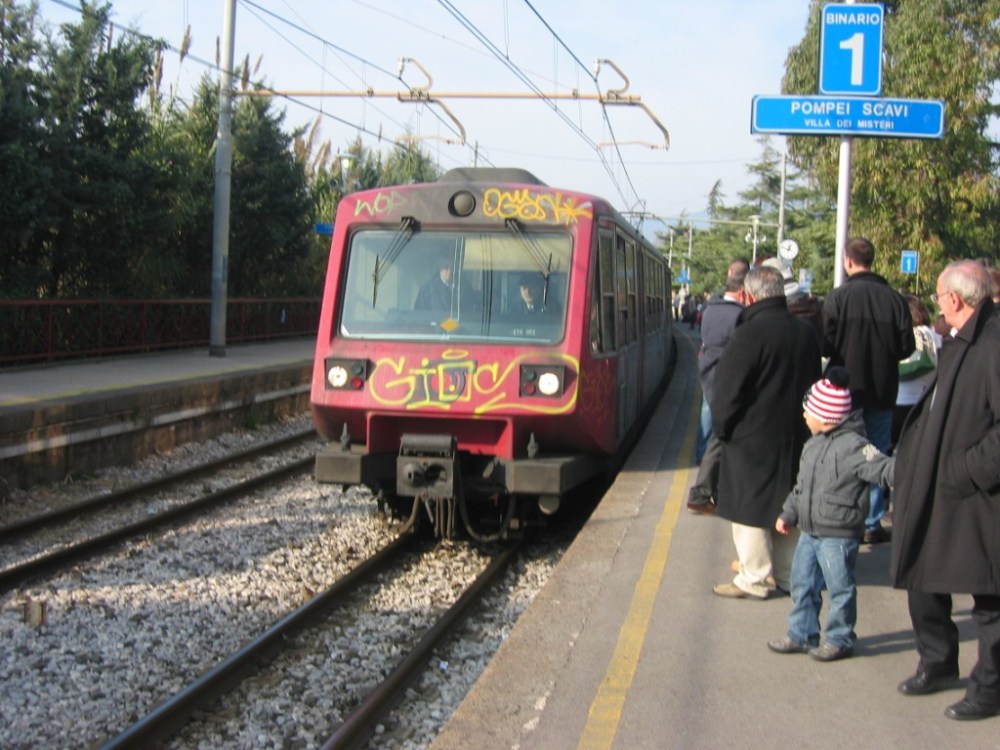
The railway passed through some of Naples’ worst suburbs. Many of our fellow passengers were Americans and they provided us with a running commentary on how poor they thought the place was. We arrived at the central station and went shopping again, purchasing a loaf of bread, sweet buns, ham, water and yet more Fanta.
TRAIN # 21 – 13:38 Naples to Rome Termini
We travelled back to Rome in a compartment with four young Italians: two girls and two guys. I managed to stay awake and chatted with them a little but my friend slept for most of the journey. The scenery with a lot of tunnels through mountains was impressive. With only a short delay we made it into Rome at around four in the afternoon, well in time for our connection to Germany.
TRAIN # 22 – 17:00 Rome Termini to Munich
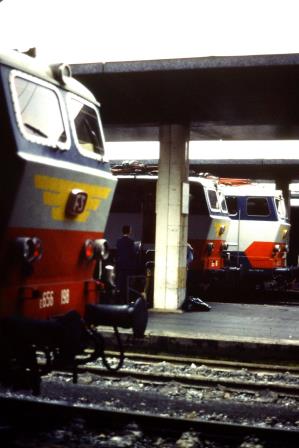
Our next train was the 17:00 ‘Brenner Express’ which we would take all the way to Munich. We got on and were just making ourselves comfortable in an empty compartment when a party of Germans arrived and, pointing to the reservation notice we had obviously missed, threw us out. We found another compartment further along the corridor and were soon joined by an Italian lady and a middle-aged German couple.
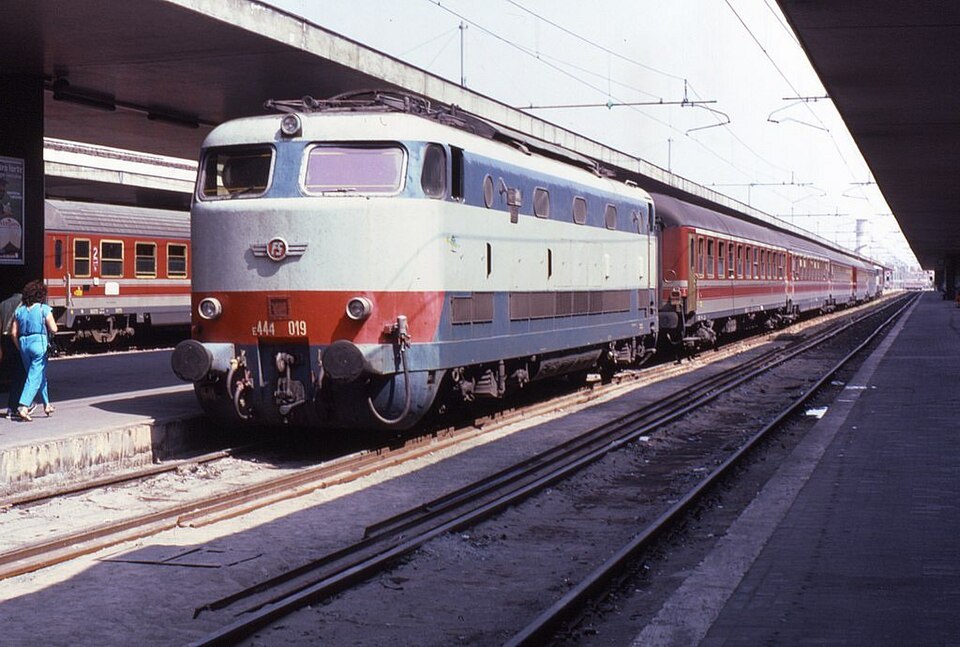
The train was hauled by a Class E444 electric locomotive. Nicknamed “turtle” and introduced between 1967 and 1975, these engines were the first in Italy to be capable of 200 km/h (125mph) running. They sometimes exploited this top speed along the new Direttissima high speed line, although they were mostly limited to 160km/h.
The Direttissima, which stretched 130km north from Rome on the route to Florence, had been opened in 1977 as Europe’s first true high speed line, beating France’s LGV by four years. Yet, although it had been designed for 250km/h, no trains capable of that speed were in operation in 1984. The E444s were the fastest form of traction then available.
Our carriage was not air conditioned and as we sat in the station at Rome it was stifling hot. Then, as we headed north passing through the tunnels along the new line at around 160km/h, the noise from the open window was deafening.
We reached Florence where the train was swamped by female German Interrailers. One of them came and sat in the last remaining empty seat in our compartment and the rest of them seemed to cram into the corridor.
We reached the Italian / Austrian border around 22:00. The two sets of immigration and customs officials boarded the train and slowly made their way through the compartments. Then with all the formalities completed we headed on towards Innsbruck. The corridor was still full of people and it seemed we were in for another noisy night.
Forty Years Later….
- High speed trains now take less than one hour between Naples and Rome.
- 56 brand-new trains are being introduced to the Circumvesuviana in 2026 to replace the FE220s.
- The Rome to Florence high speed line was gradually extended between 1985 and 1992 eventually bringing the transit time between the two cities to 1 hour 20 minutes.
- The Italian high speed network now stretches to around 1,000km.
- The first trains capable of more than 200km/h, the ETR 450, were introduced in 1988.
- Italian high speed trains now operate up to 300km/h, with 250km/h running on the original 1977 stretch.
- The last of the 117 class E444s was withdrawn in 2019.
- An overnight ‘Nightjet’ train still operates between Rome and Munich.
- Austria joined the EU in 1995 and border checks between Italy and Austria disappeared in 1997 as a result of the Schengen Agreement.
- I went back to Pompeii in 2006. Sapri remains the furthest south I have ever ventured by train on the Italian mainland.


