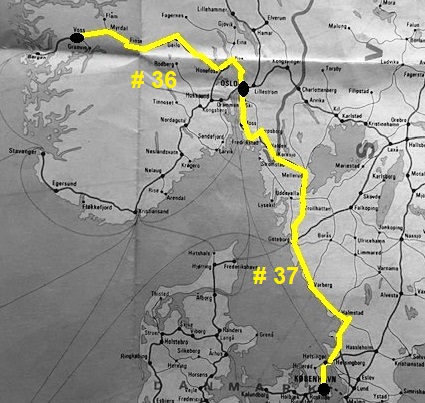
TRAIN # 37 – 22:35 Oslo to Copenhagen (Continued)
I slept badly. As we passed from Norway to Sweden I drifted in and out of consciousness. The Americans were pretty quiet in the end but I never really settled well in the seat. I dozed a bit as we were loaded back on the ferry over to Helsingor and on the short trip down to Copenhagen. We arrived back in the Danish capital at 09:30 well in time for the next train that would take us back to West Germany.
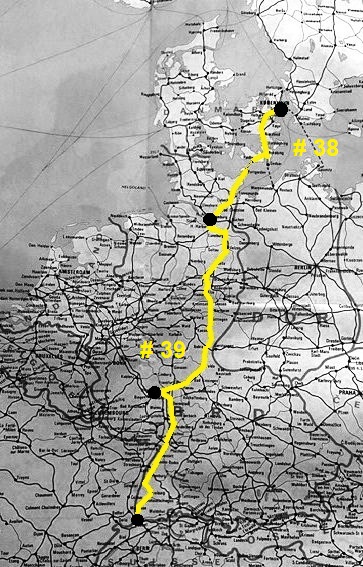
TRAIN # 38 – 10:10 Copenhagen to Hamburg (via Train Ferry)
The 10:10 departure was a DB InterCity train bound for Karlsruhe. In the timetable it had been given the name ‘Merkur’ and was comprised of the same modern German InterCity coaches we had experienced a few nights before. We would be taking the ‘Merkur’ as far as Hamburg.
It seemed they were accepting any currency for the obligatory supplement. We paid ten DMs and an American sat behind us coughed up five dollars. There was a French couple sitting across from us and the guy started to argue that there shouldn’t have been a supplement because the train didn’t travel faster than any other in Denmark. His wife was obviously embarrassed and encouraged him just to pay.
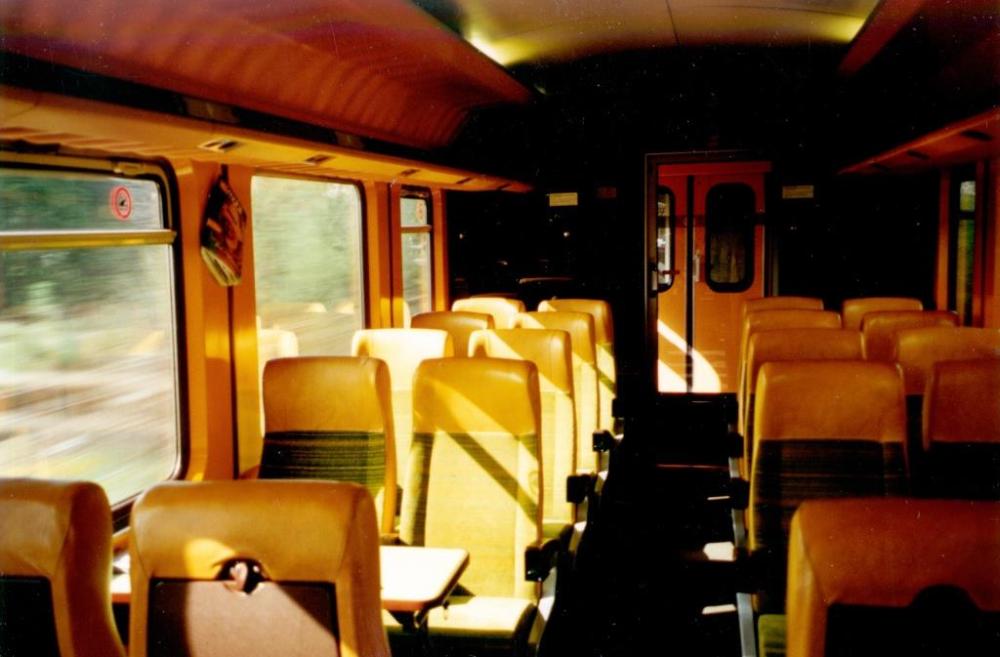
We passed through pretty flat but attractive Danish countryside. It was raining hard outside. We stopped at Nykobing and then crossed over to the Islands of Falster and Lolland. The French couple opposite still seemed to be arguing about money between themselves.
At 12:07 we arrived at Rodby, the exit point for Denmark. After the immigration and customs checks were done, the train was broken into two smaller sections and rolled onto the train ferry. This was the fourth time we had been on a train ferry in as many days, but it was the first time we had been properly awake to watch it all.
The ship was the Prins Henrik, and it sailed at 12:20. We stepped down from our carriage, along with everyone else to have a look around the vessel. It didn’t take long. The food in the restaurant looked expensive and they seemed to be selling the tax-free cigarettes at the same price as taxed ones elsewhere.
We spent some time on deck looking back on Denmark and watching West Germany appear on the horizon. We went back to where the train was. It was quite weird: two lines of railway carriages sitting in the middle of the ship. It also stank of marine oil.
We clambered on board our coach and went back to our seats. The carriage was in darkness but we found the American and the French couple had also returned. The French guy was standing in the centre aisle with the American talking to a guy from Argentina about the poor railway service.
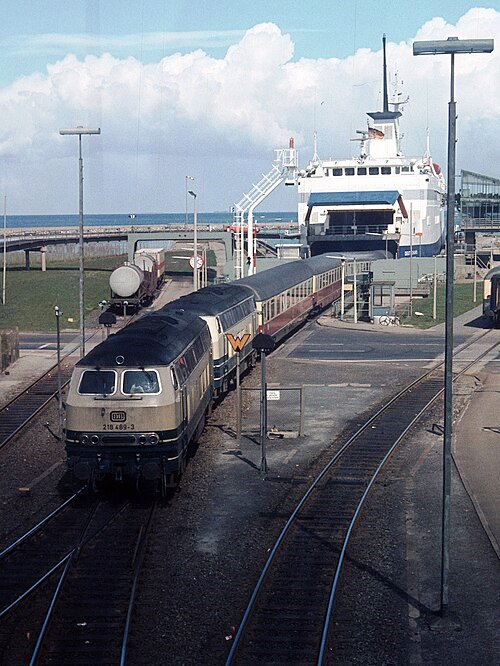
The ship docked at 13:30 and by 13:45 the train had been re-marshalled, we had undergone passport and customs checks and we were on our way south from Puttgarten. Our neighbours were driving us mad with their loud inane conversation so we moved to the next carriage.
We passed Lubeck and rolled into Hamburg just after three. It had stopped raining but it still looked pretty dull outside. We would switch trains in Hamburg and head to Basel in Switzerland, hopefully arriving by midnight in order to make a very tight connection to Luxembourg.
The problem was we would also have to switch stations in Basel. So, anticipating a taxi ride from the German station to the French station at Basel, I changed a traveller’s check into French Francs. I also discovered 6 DMs at the bottom of my bag and used them to get bread rolls covered with cheese and some coffee.
TRAIN # 39 – 15:50 Hamburg to Basel
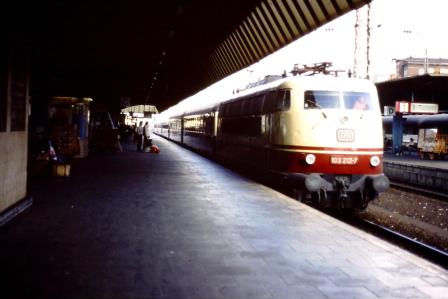
We watched as the IC 671, ‘Kommodore’, hauled by another Class 103 came into the station. The first class coaches came in first behind the locomotive and shared its red and cream colour scheme, the second class then followed in a different livery of blue and cream. We were taking the train, which had originated at Altona just a few minutes before, all the way to its terminus at Basel.
We helped an old lady with her bags onto the train and then settled in a mostly empty carriage. We set off on time. The conductor came around and noted the destination written in the Interrail ticket booklet. He seemed friendly and we asked him about the chances of getting across Basel to the French Station in time. He assured us that all would be well.
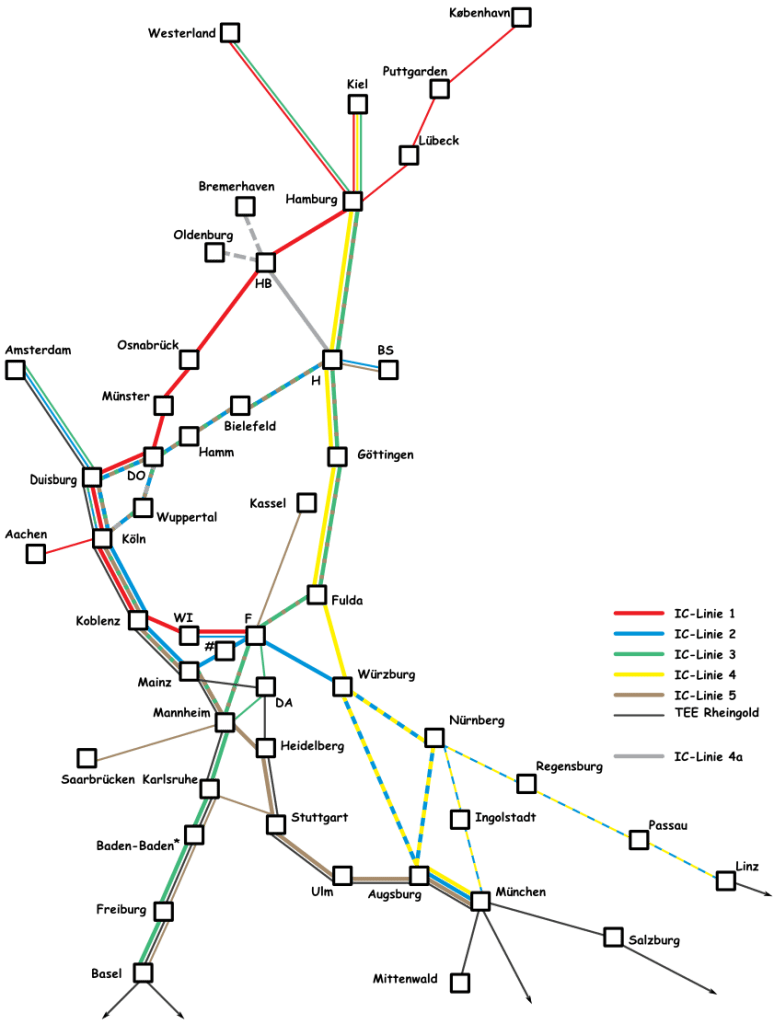
I had started to realise just how impressive the German IC system was. Based on the concept known as “IC 79” and offering an hourly service on numbered metro-like lines, it was designed for carrying convenience more than speed. Each of the trains had both second and first class accommodation and normally a restaurant car too.
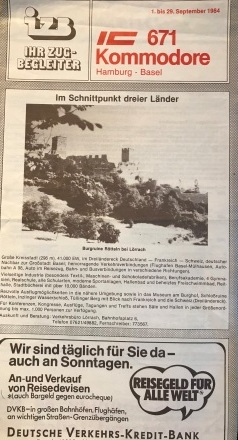
There was a paper train guide (Zug Begleiter) at each seat and it contained details of all the stations where we would be stopping at and, more importantly, all the connections that could be made at each one. These connections were often made across the platform with the numbered carriages often facing their counterparts.
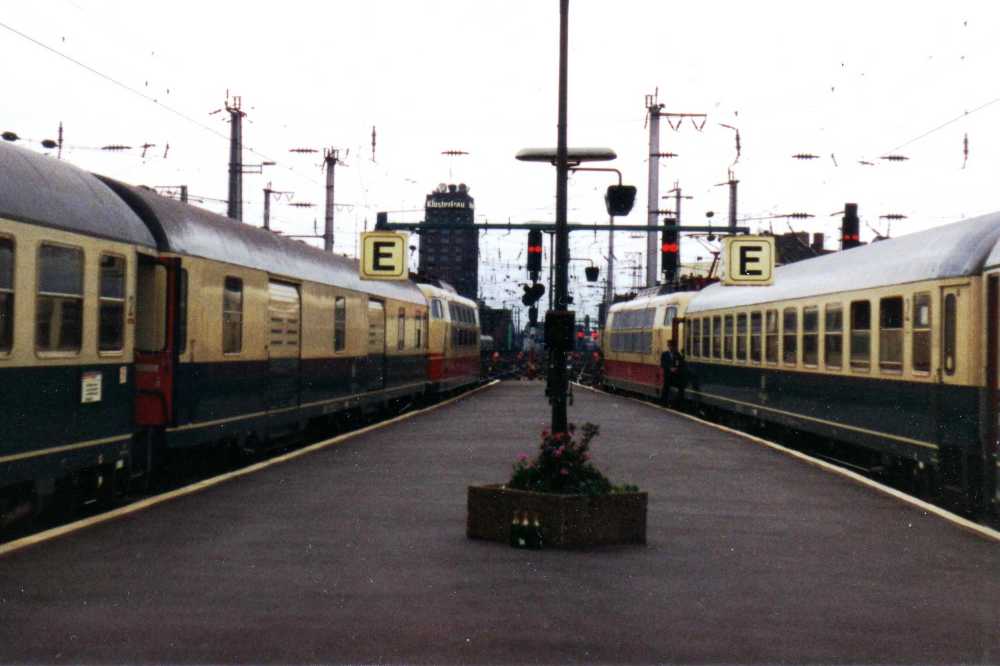
It was common for IC trains to meet each other a couple of times during their journeys to swap passengers. Whilst the ‘Merkur‘ train we had alighted from would be going to Karlsruhe via Bremen and Cologne, the ‘Kommodore‘ would be heading there via Kassel and Frankfurt. The whole timetable had been constructed by meticulous planning and needed high standards of punctuality to execute.
The trip down to Basel was pleasant but uneventful. I took advantage of the long journey to wash my hair. The train reversed at Frankfurt. By the time we left at 20:37 it was getting dark and the city’s skyscrapers were illuminated against the night sky.
We thundered down the right bank of the Rhine in darkness. We were five minutes late at Mannheim but had reduced the delay to three by the time we got to Freiburg. By now the train was almost empty, we walked through most of it, right to the front of the second class section and counted just five people still on board. We arrived at the German ‘Badischer’ station at twelve minutes to midnight. We ran from the train and quickly went through customs.
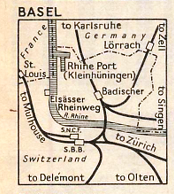
Outside the station there were three taxis, two of them drove off as we approached but the third one remained where it was. The driver looked miserable and he didn’t cheer up when I asked him to take us to the SNCF station as fast as possible. It was midnight. We had thirty minutes before our Luxemburg train left.
Forty Years Later….
- There are no longer any direct trains from Oslo to Copenhagen, a change is needed in Gothenburg. The total journey time is around 7.5 hours.
- Train ferry operations between Rodby and Puttgarden ceased in 2019.
- A tunnel is now under construction and is due to open in the early 2030s.
- Copenhagen to Hamburg trains are temporarily routed through Jutland via the Great Belt Fixed Link. The journey time is around 4.5 hours.
- The German IC network has been largely replaced by the ICE system which uses some new-build high speed lines. It first began operations in 1991.
- The quickest journey time between Hamburg and Basel (429 miles) by ICE in 2026 is 6.5 hours.
- Physical border controls between Germany and Switzerland were removed in 2008 under the Schengen Agreement.


