Queens Park
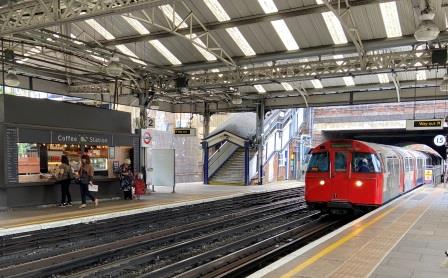
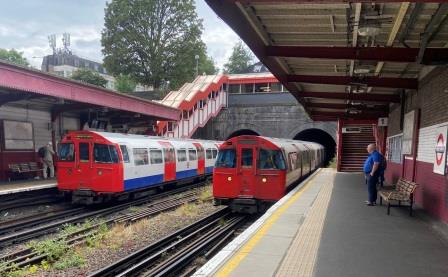
Queen’s Park (10.8 km) opened in February 1915 when the Bakerloo line was extended from Kilburn Park. The line climbs out the tunnel here to reach the station on the surface, with the tube portals located just before the platforms The station marks the transition point from Transport for London (TfL) to Network Rail (NR) ownership. The station itself belongs to NR but is managed by TfL.

The New Line
The track that the Bakerloo trains run on from here onwards is owned by Network Rail. It was built back in the early twentieth century as part of a joint project between the London & North Western Railway (LNWR) and the Underground Group.
The New Line effectively added an extra pair of tracks to the West Coast Main Line (WCML) out of Euston as far as Watford Junction. The WCML had been quadrupled in the latter part of the nineteenth century and the New Line added two more tracks. The plan called for the LNWR to operate electric services from Euston (and Broad Street in the City) to Watford Junction whilst the Bakerloo line would operate from Elephant and Castle.
The ‘new line’ was constructed on the east side of the WCML as far as Stonebridge Park and then on the west side thereafter. The first section from Willesden Junction to Harrow & Wealdstone opened in 1912 and was extended to Watford Junction the following year. At first the line was operated by steam. Bakerloo line services began to operate north of Queen’s Park as far as Willesden Junction in May 1915 and then were extended northwards to Harrow and Watford 1917. Electric trains operated by the LNWR began to serve Euston in 1922.
Sometimes known as the ‘Watford DC lines, especially when the main WCML was electrified using AC in the 1960s, the line is now part of the London Overground and has been given the name ‘Lioness’ line.

On the platfom
Queens Park has two island platforms which are grouped by direction and housed in an attractive train shed. Eight Bakerloo line trains an hour terminate here and combined with the four Stonebridge Park and four Harrow trains, provide the line south of here to Elephant and Castle with a sixteen train an hour service.
The four ‘Lioness’ line trains an hour between Euston and Watford Junction use the outer faces of the two island platforms 1 (southbound) and 4 (northbound) and provide cross platform interchange with the Bakerloo line trains which use the inner faces, platform 2 (southbound) and platform 3 (northbound).


Queens Park Depot
There are two small Bakerloo train sheds at either end of station. The one in the Harrow direction comprises of four roads. Trains terminating at Queens Park go forward from platform 3 and reverse in the depot and return to platform 2. In normal service trains heading to and from Stonebridge Park or Harrow pass through the empty depot roads on their way into and out of the station.


Outside

Baker ?
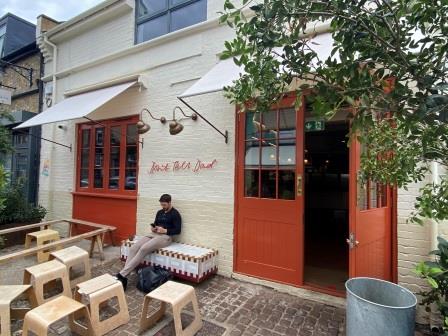
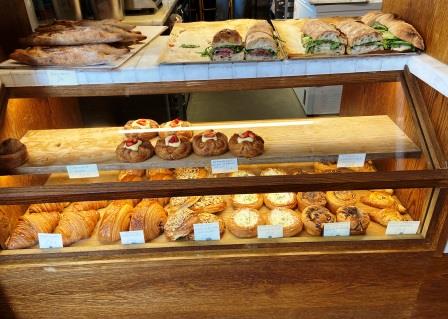

Loo ?
Kensal Green
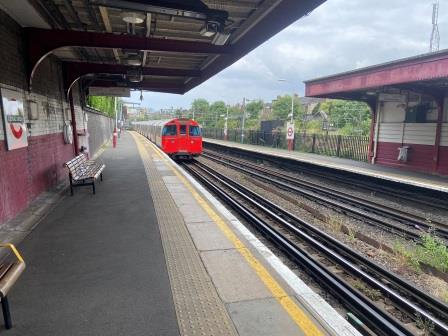
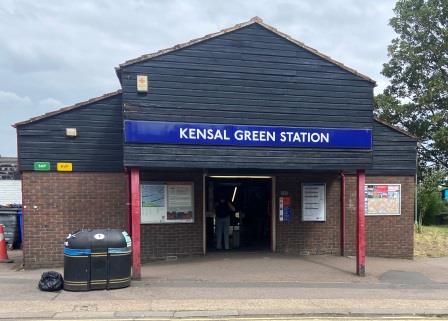
Kensal Green (12.13km) opened in October 1916 after the line itself. Bakerloo trains had begun running between Queen’s Park and Willesden Junction in May 1915.

On the platform
Outside
The station building was rebuilt in 1980.
Baker ?
Loo ?
Willesden Junction
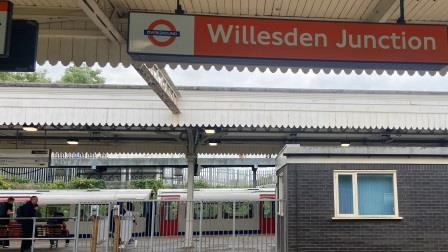
Willesden Junction (13.6 km from Elephant & Castle) Low-Level station on the ‘New Line’ was opened in 1910 with services beginning north to Harrow in 1912. It started to be served by Bakerloo line trains from Queen’s Park in May 1915 and these were extended along the ‘New Line’ in 1917.
In 1869 the North London Railway opened a high level station on a line which crosses the WCML at a right angle. The High-Level station on the NLL was opened by the North London Railway in 1869. Today it forms part of the London Overground’ s Mildmay Line with services to Clapham Junction, Richmond and Stratford.
On the platform
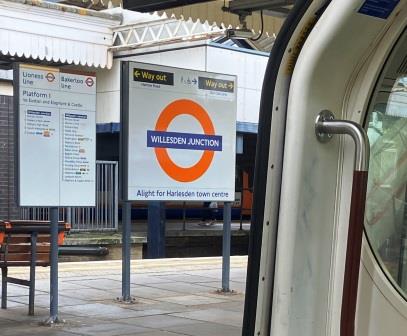
Originally built with two through platforms and two London-facing bay platforms, since 2014 it has had three through platforms. Bakerloo line trains normally use the outer platforms 1 and 3.

Outside

Baker ?
Loo ?
Harlesden
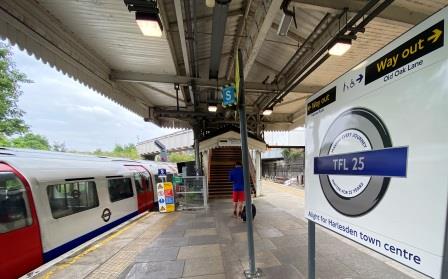
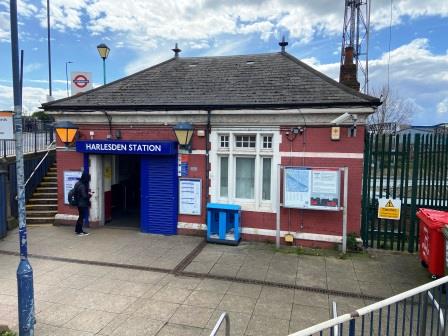
Harlesden (14.68 km) opened on the ‘New Line’ in June 1912 and Bakerloo line trains began to serve it in April 1917. There was a station, Willesden, on the main line close to the site. It opened in 1841 but closed in 1866 when it was replaced by Willesden Junction further south.

On the platfom

Outside
Baker ?

Loo ?
Stonebridge Park
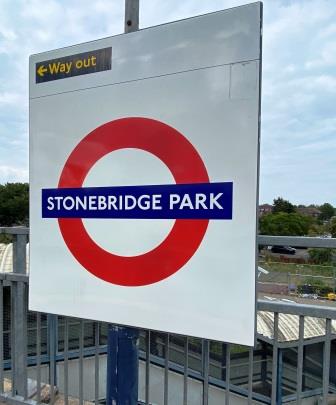
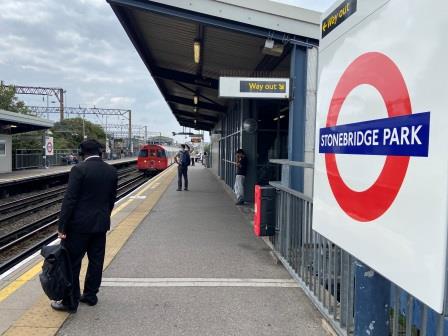
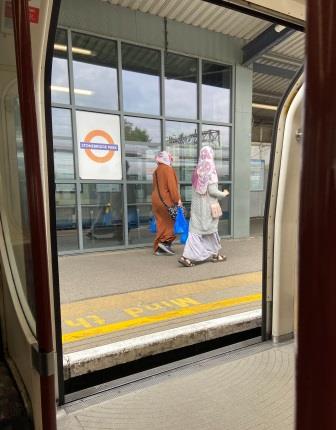
Stonebridge Park was opened in to steam-hauled services in June 1912 and began hosting Bakerloo line electric trains in August 1917. Whilst the booking hall dates from opening, the platforms and the buildings on them are 1948 replacements of bomb-damaged originals.
On the platform
Whilst the booking hall dates from opening, the platforms and the buildings on them are 1948 replacements of bomb-damaged originals.
Today four trains an hour turn around at the station and combine with the four Bakerloo services from Harrow and four Lioness line trains to give a combined twelve trains an hour.
Depot
After Wembley Central, having run parallel with the WCML on its western side thus far, the ‘New Line’ dives under the main line and reemerges on its eastern side. Visible just north of Stonebridge Park, the main depot for Bakerloo line trains here is located just north of the station on a site that used to be occupied by the power station that generated electricity for the line.
Outside
Whilst the booking hall dates from opening, the platforms and the buildings on them are 1948 replacements of bomb-damaged originals.
Baker ?
Loo ?
 Trains To Beyond