Edgware Road
Edgware Road (6.75km) was opened in June 1907 as the line was extended from the temporary terminus at Marylebone. It has no connection to the nearby Hammersmith and City, Circle and District line station of the same name.

Down on the Platform
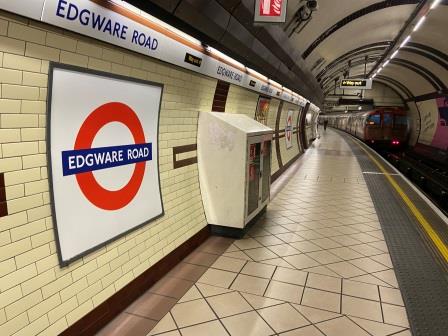
The platform at Edgware Road Bakerloo line station was refurbished as part of a lift refurbishment in 2013-4. 125-step staircase.
Up above
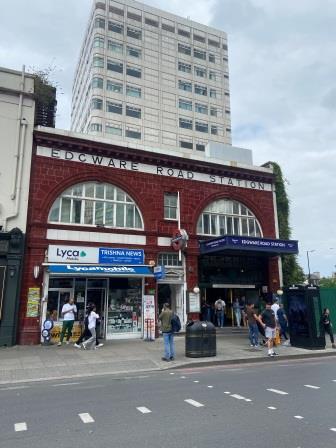
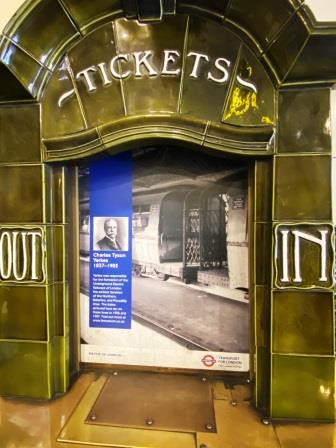
In common with most of the remaining stations southwards to Elephant & Castle, it featured a two storey surface building designed by architect Leslie Green, using ox-blood glazed terracotta. The building is the last of the four on the line that remains in use today.
Baker ?
Loo ?
Paddington
Paddington (7.47km) was opened in December 1913 after the line had been extended from Edgware Road. It remained the terminus until the line was further extended towards Queens Park in January 1915. The Metropolitan line EXPAND GWR
Down on the platform
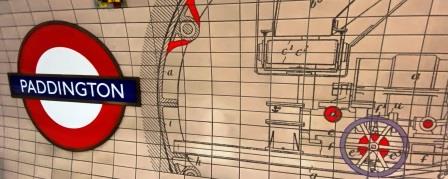
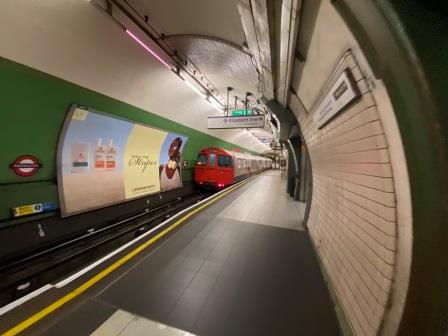
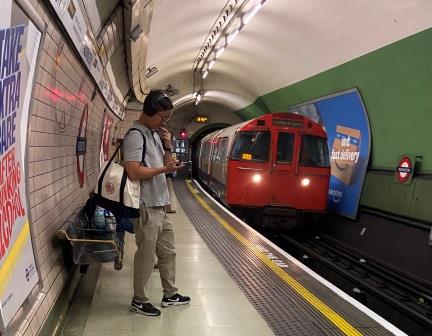
The platforms are on a tight curve, necessary to get the route on the correct alignment for the extension. The station was the first on the line to be designed to use escalators instead of lifts to reach the surface. WARNING The ticket hall and platforms are decorated with tiling designs by David Hamilton installed during a £6 million refurbishment of the station between 1984 and 1987 incorporating elements of technical drawings by Marc Isambard Brunel and other engineers
Up above
WARNING A separate station building was not constructed at Paddington, although there was a small pedestrian entrance on the corner of London Street and Praed Street leading to the ticket hall below.
Baker ?
Loo ?
Warwick Avenue
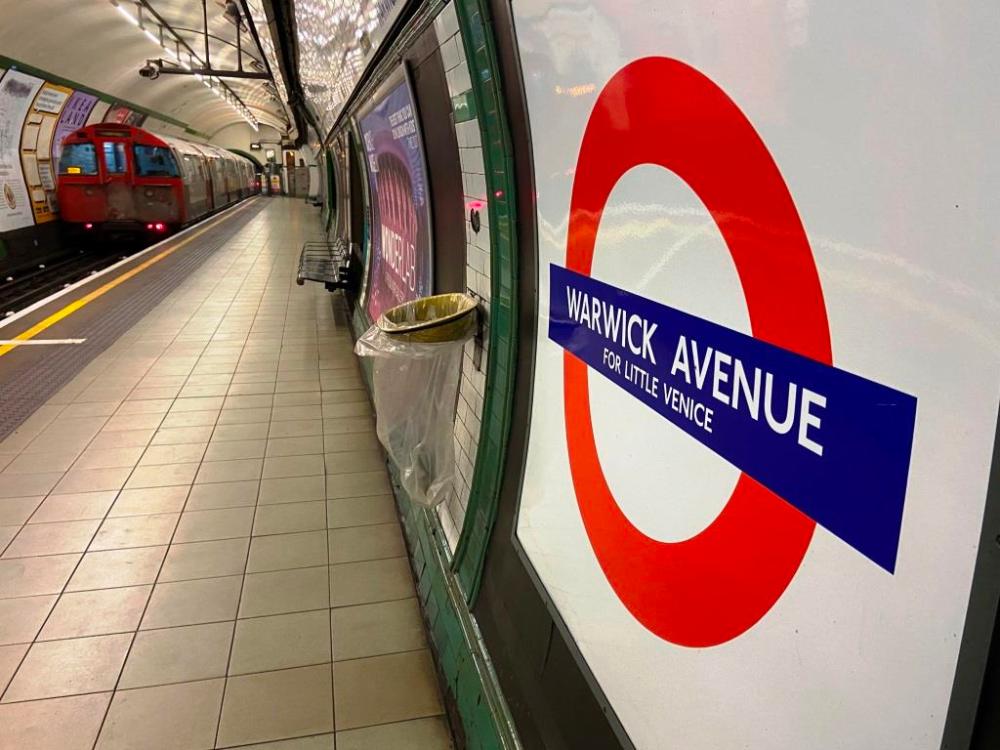
Warwick Avenue (8.35km) opened in January 1915 at the same time the line was extended from Paddington towards Kilburn Park. For Little Venice…..
OOOOOOOOO
Down on the platform
Like Maida Vale and Kilburn Park, it featured escalators from new.
Up above
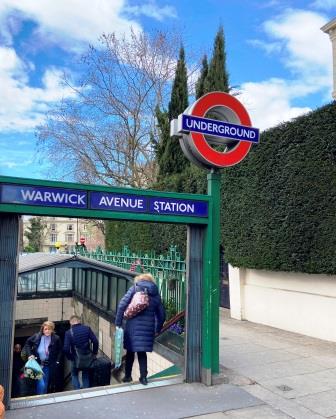
Unlike the other two stations on this extension, it does not have any surface buildings. Steps lead down from the road.
Baker ?
Loo ?
Maida Vale
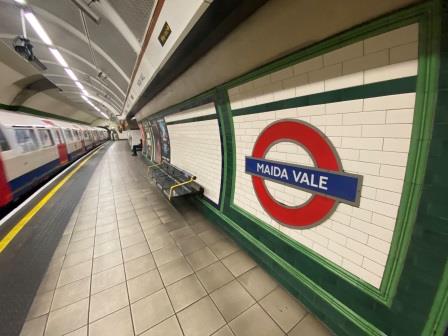
Maida Vale (9.14km) opened in June 1915 about six months after the line from Paddington to Queens Park itself. Opened in the First World War, it has the distinction of being the first station to be staffed entirely by women.

Down on the platform
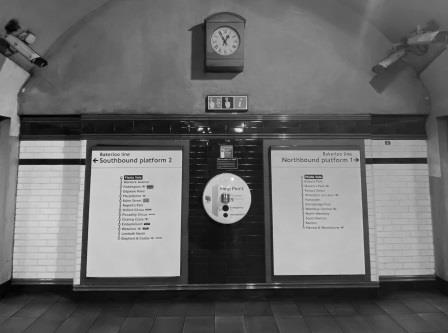
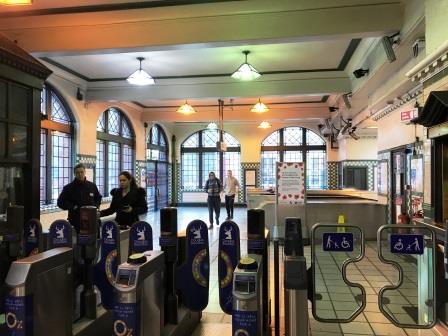
Along with the other two stations on the 1915 Queens Park extension (Kilburn Park and Warwick Avenue) it was fitted with escalators, rather than lifts, from new. Pioneering design with the escalator coming down to the platform with platforms either side- between the platforms MODIFY

Up above
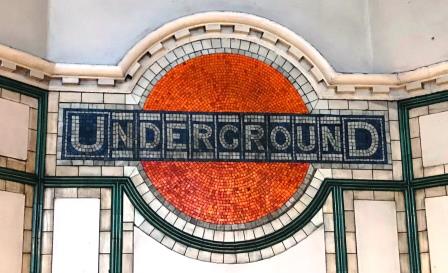
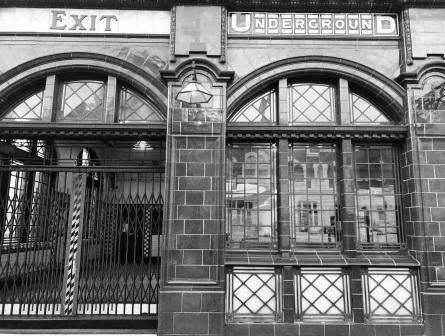
The station building was designed by Stanley Heaps and features the same ox-blood glazed terra cotta tiles as those designed by predecessor Leslie Green. It is in an updated style though and, with no need to provide a second floor for the lift gear, is a single storey design. It features distinctive staircase mosaics. It is Grade II listed.

Baker ?
Loo ?
Kilburn Park
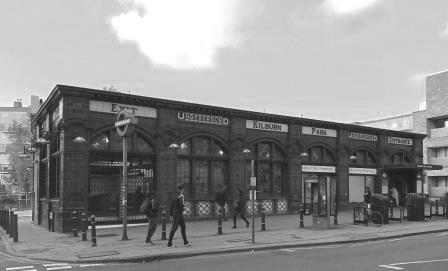
Kilburn Park (10.02km) opened in late January 1915 and became the terminus of the line from Paddington for the few weeks before it was extended to Queen’s Park. When travelling north, it is the last station reached that has deep level platforms.
OOOOOOOO
Down on the platform

Up above
Its design, again by Stanley Heaps, is another very pleasing update of the original Leslie Green style. It is also Grade II listed.
Baker ?
Loo ?
 Trains To Beyond