Piccadilly Circus
The Bakerloo platforms at Piccadilly Circus (3.08km) were opened in March 1906.
Station
The Bakerloo platforms were opened about nine months before those serving the Piccadilly Line which followed in December 1906. The two lines were both part of the UERL group and a single surface station was planned to serve them.

With three entrances, one each on Jermyn Street, Haymarket and Piccadilly, the station was another Leslie Green creation in ox-blood terracotta. It featured eight lifts, four to serve each line. Although it went out of use in 1928, it survived for several decades and was only demolished in the 1980s.
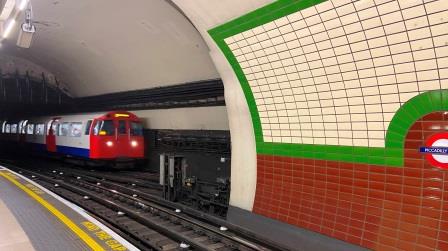
The Bakerloo line platforms at Piccadilly Circus offer a unique view on the tube network: the platforms are arranged back to back but there is a single tunnel containing a crossover at the north end which allows passengers to see both platforms at once. The crossover means that the station can be used as a temporary southern terminus.

Traffic growth meant that the original surface building was soon inadequate and a decision was made to construct a new sub-surface booking hall and circulating area. The concourse was linked by new escalators to the platforms and to several new entrances by pedestrian subways.
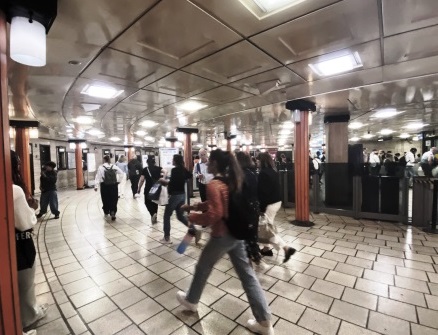
Designed by Charles Holden, it was completed in 1928 and became a flagship station for the London Transport in the 1930s. It is difficult to believe it is almost 100 years old now.
Nearby
We emerge into Piccadilly circus. Dating from 1819, the square’s name is derived from “piccadils,” the pleated collars worn in the 17th century.
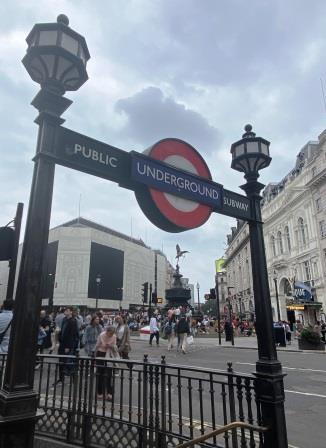
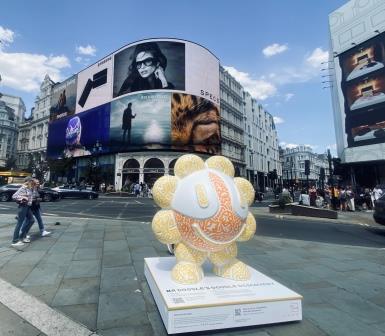
Here is the giant curved advertising screen, now digitalised, that has been a feature of the square since 1908. Today they are trying to sell us products from Disney, Samsung and XXXXXX
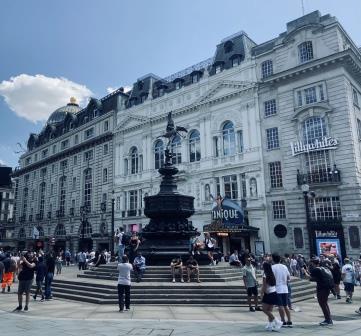
Opposite us is the Shaftesbury Memorial Fountain, topped by the statue of Eros. The steps leading up act as a meeting point and are filled with people sitting waiting.
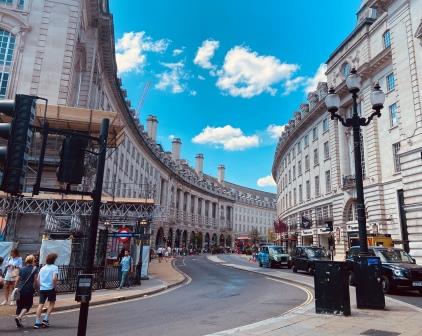
Fanning out from here are several roads including Haymarket, Piccadilly and Regent’s Street. There are bakeries along them, but we decide to dip into the streets of Soho, heading a little further to find a special place.
Baker
Masion Bertaux (28 Greek St, London W1D 5DQ) is London’s oldest surviving patisserie. It was founded back in 1871 by a fleeing Parisian Communard. It is located in what was once the heart of the French community in London.
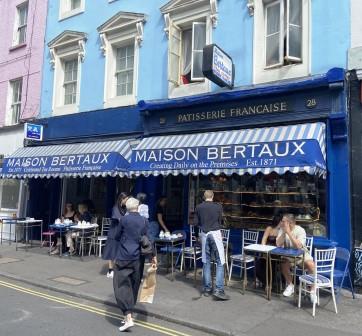
It is a Soho institution Over the years it has attracted many famous people including, apparently, Claude Monet, Karl Marx, Virginia Woolf and Alexander McQueen.
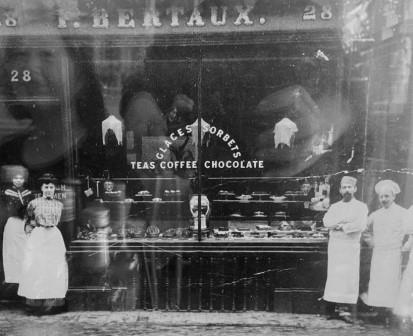
Since the 1980s the shop has been owned and run by Michele Wade, who started working as a Saturday girl, and her sister Tania. When Michele is behind the counter, the place certainly has a different atmosphere than a branch of one of the bakery chains that now dominate much of London.

The window display here is delightfully old school. Masion Bertaux is known for handmade chocolate éclairs, fruit tarts, cheesecakes and croissants.
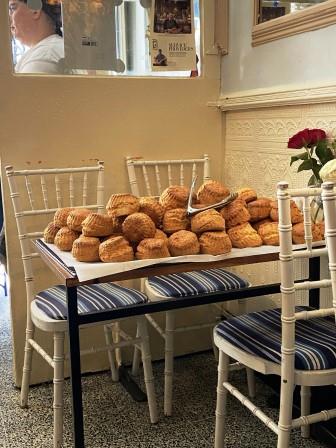
It is a good idea to take a seat in the cafe and we stay for a afternoon tea: fresh artisan scones covered with clotted cream and jam. We also get some scones to take home.
PICTURE
Loo
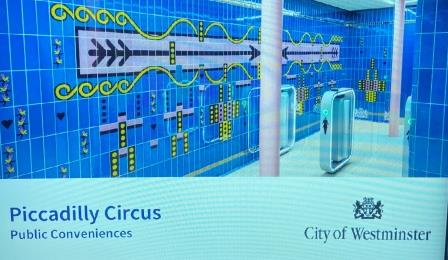
The public toilets are located inside the station concourse itself next to Exit 1. They are managed by Westminster City Council and cost £1 to enter.
Oxford Circus
The Bakerloo platforms opened at Oxford Circus (4.05km) in March 1906.
Station
The first tube railway at Oxford Circus was the Central London Railway (today’s Central line) which opened its station in 1900. The Central and Bakerloo line had separate surface buildings and their own lift shafts but they were eventually connected to each other underground. Escalators were installed in 1926.
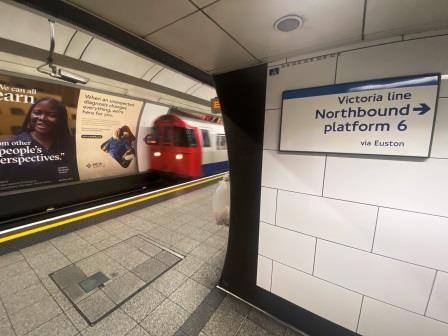
The Victoria Line arrived in March 1969. Cross platform interchange was provided to the new line from the Bakerloo platforms which were re-tiled to match the style. They were re-tiled again starting in 1983.
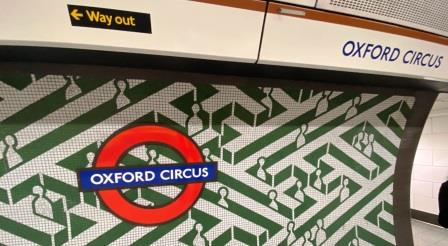
1969 also saw the installation of a new larger concourse under Oxford Circus itself. There are now stairways in the corners of the square with steps leading down to it.
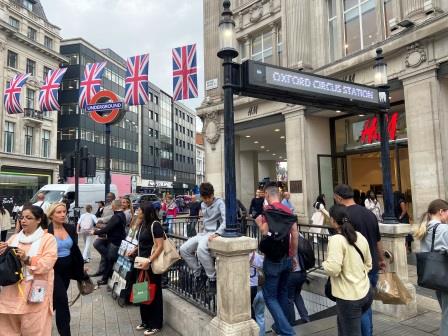
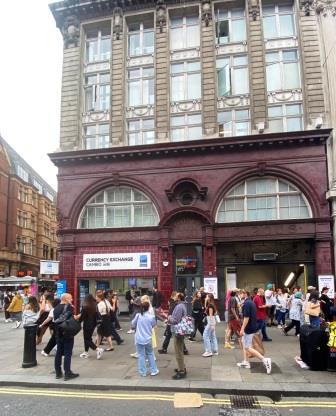
Nevertheless, the original Bakerloo surface building still exists. It is the third classic Leslie Green creation remaining on the line and is now used as an exit. It is Grade II listed.
Nearby
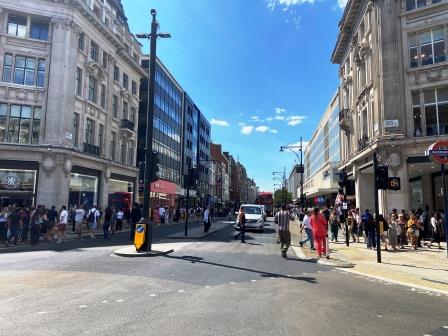
We emerge from the original building onto Oxford Street opposite the new Ikea City store and walk up to Oxford Circus. We are at the intersection with Regent Street. Here two of the capitals most prominent shopping streets meet. Around us here are Victorian and Edwardian building facades with modern store fronts.

Here also are crowds of people. The pavements are usually packed and it certainly seems a great idea to pedestrianise Oxford Street. In search of a slightly slower pace we dive into the streets to the north and seek out Margaret Street.
Baker
Fred Bakery (52-53 Margaret Street, W1W 8SQ) was founded in 2021 by Burak Demierelli who is originally from Turkey.
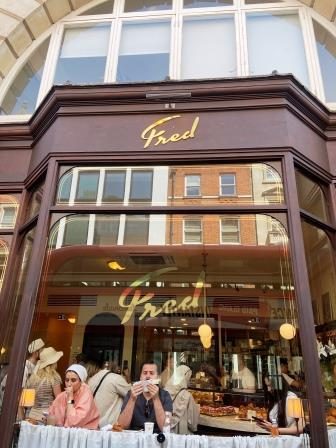
The name combines “Fresh” and “Baked.” The flagship store is in Holborn and this is the second branch to open.
On a Saturday afternoon, the cafe is very busy and there is a queue at the counter too. In the background, behind a glass screen, the team are hard at work creating new stuff.

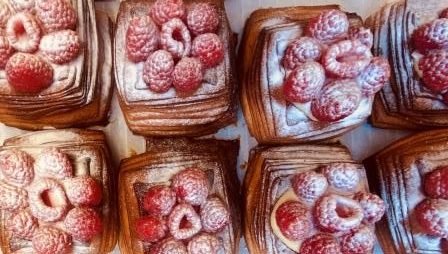
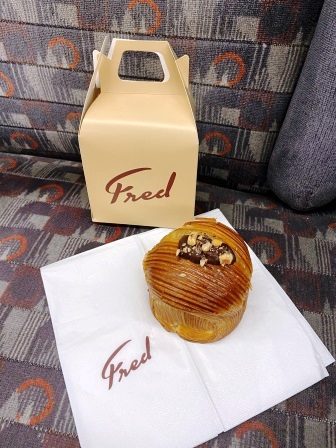
Fred is known for high-end creative pastries. They are not cheap but, lined up behind the glass at the counter, they all look absolutely delicious. We get a Brownie & Chocolate Cruffin to share and take it away in an attractive little box. Cut in half it makes the perfect dessert.
Loo
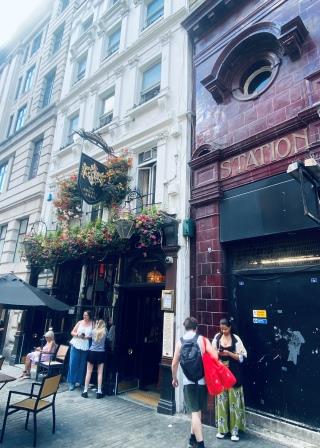
There are toilets located inside the John Lewis department store which is just a 3 minute walk west along Oxford Street. Alternatively, the Argyll Arms right next to the station is a long time favourite. It has lots of old-style charm and plenty of “snob glass”.
Regents park
Regent’s Park (4.92km) was opened in March 1906.
Station
This was the penultimate station on the original section. The northbound platform is arranged on top of the southbound one here. Although the tiles on the platform are not original, they have been sympathetically replaced to give the station a similar to how it might have originally looked.
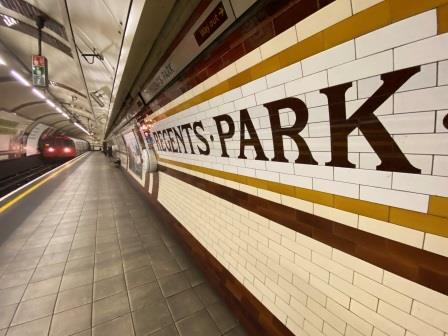
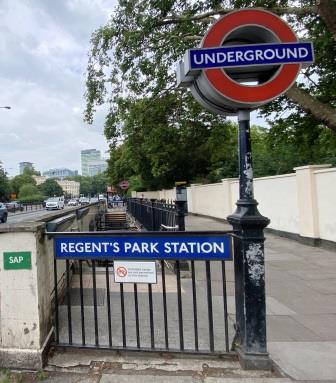
Like Trafalgar Square, Regent’s Park has no surface buildings and is accessed from a subway under the road. The platforms are still served by lifts. There is also a staircase with 96 steps. The cost of repairing the lifts almost led to the closure of the station in the early 1980s. It is still one of the quietest stations in the central area.
Nearby
We emerge on the north side of the busy Marylebone Road, effectively the northern border of central London. We walk towards Regent’s Park past the white stucco terraces and historic crescents designed by John Nash in the late 18th century.
PHOTO
We come to the 410-acre Regent’s Park, another Nash creation which first opened in 1841. Today it is the third largest of the Royal Parks and the home to London’s famous zoo.
PHOTO
Returning to the station and emerging next on the south side of the Marylebone Road, we soon arrive at Great Portland Street station (Metropolitan, Hammersmith and City and Circle lines) and then turn into Great Portland Street itself. The road with its upmarket shops and cafes is the border between Fitzrovia to the east and Marylebone to the west.
PHOTO
Housed on the ground floor of a historic Victorian building. Features warm herringbone parquet flooring and exposed original brickwork. Styled with a custom hand-crafted herringbone counter and oak panelin. Upmarket image.
Here are Chelsea buns, croissants, and artisanal savoury pies. Sourdough and signature multi-layered
Jaffa cakes, fresh cream Victoria sponges, and handmade tarts.
Baker Street
The Bakerloo line platforms at Baker Street (5.8km) opened in March 1906.
Station
Baker Street marked the end of the first section of line opened from Kennington Road (today’s Lambeth North) in March 1906. It remained the northern terminus for about a year before the line was extended onwards.

Baker Street Station itself first opened in 1863. The platforms that now serve the Circle Line (5 and 6) are the original ones and were part of the World’s first underground railway. The first platforms on what is now the Metropolitan Line (1 to 4) on the line towards Amersham opened in 1868.
PHOTO
The Bakerloo line uses platforms 8 and 9, which date from 1906. Between 1939 and 1979 northbound trains on the line also used an extra platform, now 7, for the Stanmore branch. That, along with a new south bound platform 10 are now part of the Jubilee line which took over the Stanmore branch in 1979.

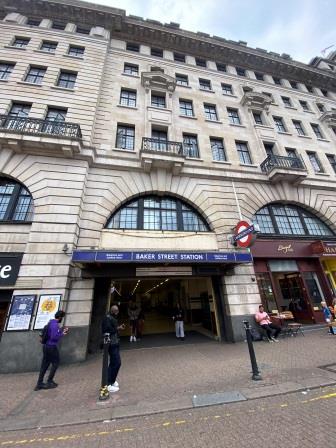
The original Bakerloo line surface building designed by Leslie Green stood on Baker Street itself and it was linked to the tube platforms by lifts. A new concourse was added below the Metropolitan line platforms in 1914 with escalators. The current station building, Chiltern Court, was constructed between 1927 and 1929. The old 1906 building was demolished in 1964.
Nearby
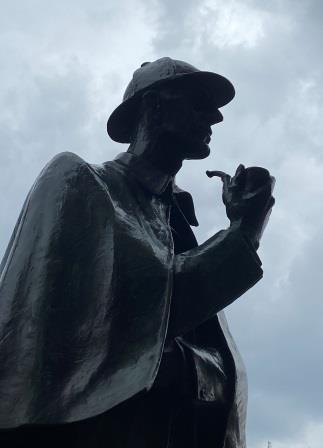
As we emerge from the station, we are greeted by the statue of Sherlock Holmes standing right outside the station exit. His fictional 221B address is a little further north along Baker Street. The museum dedicated to the character is actually between numbers 237 and 240.
A walk south on the north side of ever busy Marylebone Road brings us to Madame Tussauds. The first permanent waxworks museum opened in 1835 and moved to its current site in 1884.
PHOTO
Baker
Heading away from Marylebone Road and walking a couple of blocks south along Baker Street brings us to a branch of Paul. (55 Baker St, W1U 8EW).
Whilst it is obviously a chain, operating in over 40 countries with more than 30 branches in London, it is still a family-run company. Now in the hands of the fifth generation of the same French family who founded it in Croix near Lille in 1889.
Paul first came to the UK in 2000 and opened a lot of outlets at railway stations. It is known for its sandwiches but it also sells artisanal breads, croissants, macarons and cakes.
Loo
The station itself has toilets with the ladies in a passage off the south side of the lower concourse, and the Gents near the bottom of the stairs leading to platform 5.
PHOTO
Marylebone
Marylebone (6.3km) was opened in March 1907.
Station
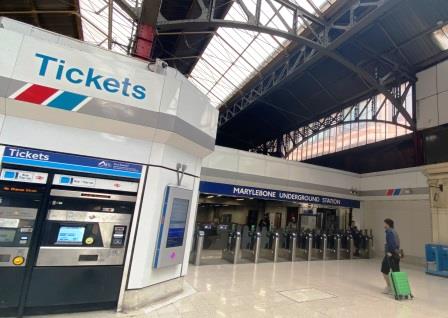
The station became the new northern terminus of the line when it first opened but became a through station a few months later when the extension to Edgware Road was completed.

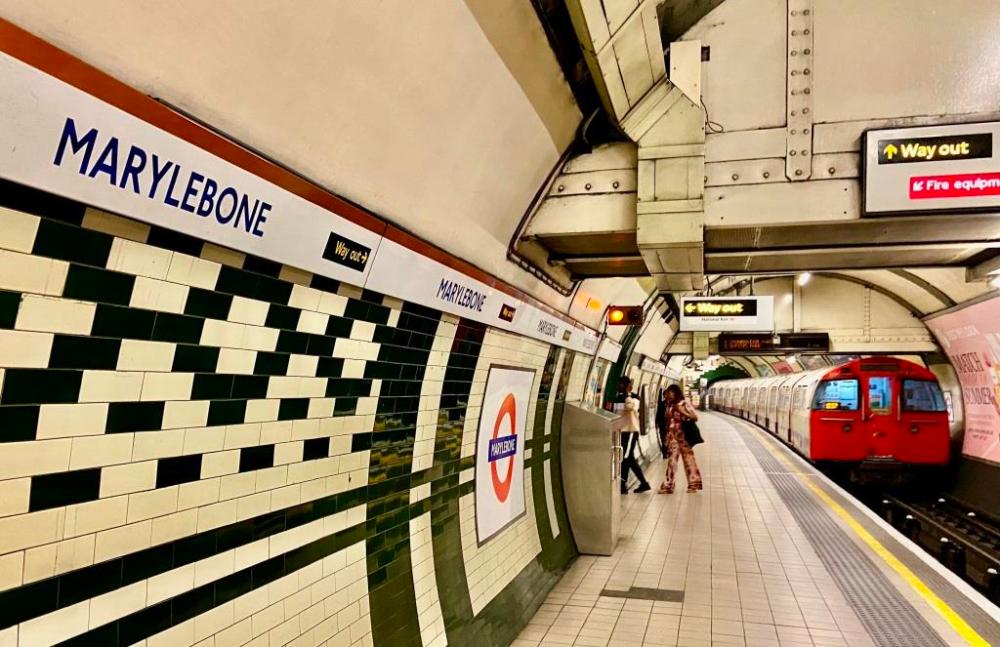
It was originally named Great Central, the name of the railway company operating from the Main Line station above. It was renamed in 1917, although tiles with the original name can still be seen.
There was another Leslie Green station building on the surface outside the mainline station but it suffered damage in the Second World War and was eventually demolished.
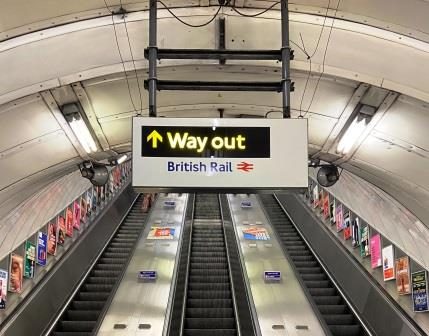
The present entrance inside the station in 1943. The platforms, until then only accessed by lifts, were linked to the surface by escalators.
Nearby
We come out of the station and pop straight across into the Landmark, the grand five-star luxury hotel. Opened originally in 1899 as a Victorian railway hotel, it was for a time the headquarters of nationalised British Railways. Now a hotel again, it features 300 rooms, and a majestic eight-storey atrium.
PHOTO
This is a quite an elegant neighbourhood. We walk west just north of the busy multi lane Marylebone Road. Here we are just to the south of Lords cricket ground and passing along quiet residential streets with classic period architecture.MEWS ???
PHOTO
Baker
Irene (82 Bell Street, NW1 6SP) is co-owned by Maria who is the head baker. She grew up in Kazakhstan and trained as a baker in Paris. The bakery is named after her mother. In addition to the Marylebone branch there are shops in Camberwell and Brixton Village.
Here is sourdough bread, traditional organic baguettes, and rotating sweet and savoury pastries. French-style baguettes, Italian ciabatta, and European sourdough.
Popular items include Earl Grey & Honey Bun, almond croissants, and cinnamon buns.
Loo (National Rail Station)
Known for its relaxed, and perhaps charming atmosphere, Marylebone station opened in 1899 and is London’s smallest termini with just six platforms. It was built by the Great Central Railway at the southern end of its main line from northern England into London.
PHOTO
It once served Leicester, Nottingham and Sheffield but today is the point of departure for trains heading to the Chilterns. Female toilets are on the main concourse near the Melcombe Place entrance, male are near the Harewood Avenue entrance.
PHOTO
 Trains To Beyond