Elephant and Castle
The Bakerloo Line station opened here in August 1906 six months after the line had begun operation between Lambeth North (then Kennington Road) and Baker Street. Despite several plans to extend south over the years, it has remained the line’s southern terminus ever since. The Bakerloo was not the first tube line at Elephant and Castle: the City and South London Railway had opened what is now the Bank Branch of the Northern Line in 1890. The two stations are separate on the surface but linked by underground passageways.
Down on the platform
The two platform tubes are 18 metres (60 feet) below and arranged next to each other in a kind of ‘island’ arrangement. As the station is a terminus departing trains tend to alternate between them. Approximately sixteen trains an hour leave each hour, with half going as far as Queens Park, four to Stonebridge Park and only four heading up to the northern terminus at Harrow & Wealdstone.


Up above
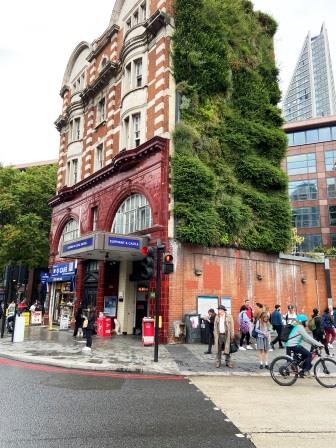
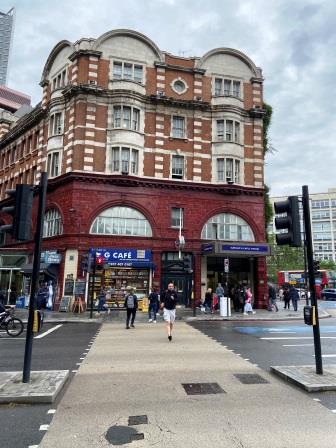
Lifts connect the platform level with the surface, although there is also a staircase with 117 steps for those feeling energetic. The station building is largely as constucted and is typical of those designed for the London Undergound Group by architect Leslie Green. Influenced by Art Nouveau styling the building are turned out in oxblood block with semicircular windows. All the buildings contained a second storey to house the lift winding apparatus but here at Elephant Castle three further floors of offices have been added above.
Baker ?
Loo ?
Lambeth North
Lambeth North (0.82 km from Elephant & Castle) served as the southern terminus of from March 1906 for six months. The station’s name, originally Kennington Road was changed to Westminster Bridge Road after a few months. It became Lambeth (North) in April 1917 with the brackets being dropped a decade later.
Down on the platform
There are two tracks in separate tunnels next to each other in a similar arrangement to Elephant and Catle. The station has two lifts and a spiral staircase connecting the street level to platform level (about 70 feet (21 m) below).

Up above
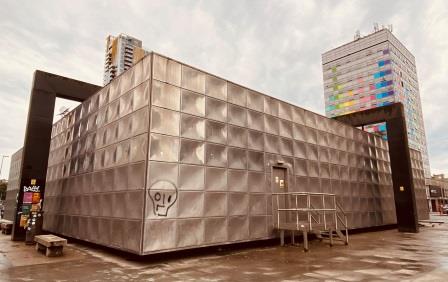
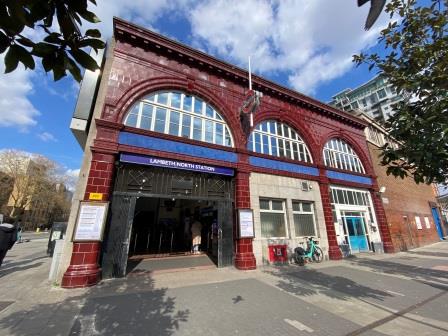
The surface building is another Leslie Green design, this time without any construction on the roof. DEPOT !!!

Depot
Baker ?
Loo ?
Waterloo
The Bakerloo line arrived at Waterloo (1.45km from Elephant and Castle) in March 1906 when the rest of the line between Kennington Road and Baker Street opened. It was not the first underground line at Waterloo though, what is now the Waterloo and City Line had been opened by the London and South Western Railway in 1898 to link their terminus to Bank in the City of London. The Charing Cross branch of the Northern line arrived in 1926 and the Jubilee in 1999.
ROUND
Down on the platform
The two platform tubes here are arranged on a curve 19.28m (63ft) below ground. surface. Unlike the two previous station the platforms tubes are seperated. WORK The station was extensively refurbished to coincide with the arrival of Eurostar in the 1990s. Connection to the surface, originally by lift, is now by banks of escalators.

Up above
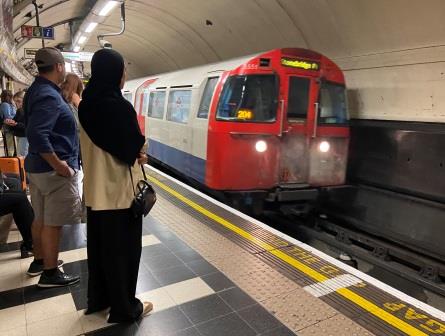
The original Bakerloo line surface building, another Leslie Green design, on York Road was demolished in 1951. As part of this work, the escalators were built this new entrance, replacing lifts. It was later integrated into the Shell Centre Complex. WARNING
Baker ?
Loo ?
Embankment
Embankment (2.16km) is the first station north of the River Thames. It was built at right angles to the platforms of Charing Cross (currently Embankment) that had opened in 1870 on the District Railway. The Charing Cross, Euston and Hampstead Railway (today’s Northern line) arrived in 1914, orginally as a single platform on a terminating loop being extended to Waterloo in 1926.
Down on the platform
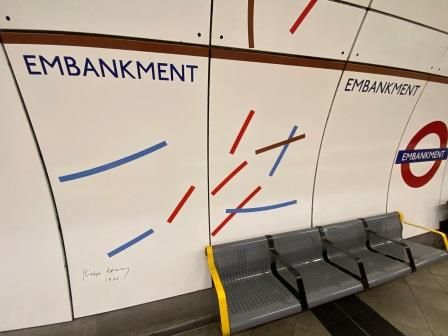
The platforms at were upgraded and redecorated in 1984-85. Art work by artist Robyn Denny was installled on the platforms and passageways. Platforms are arrange here on either side of the tracks.
Up above
Given that the District already had a station on site, no surface building was provided for the Bakerloo. Interchange was provided between the two separate railways, although initially the Bakerloo station was known as Embankment. Over the years the station has been known as ‘Charing Cross’ and ‘Charing Cross Embankment’ before finally becoming Embankment in 1976.

Baker ?
Loo ?
Charing Cross
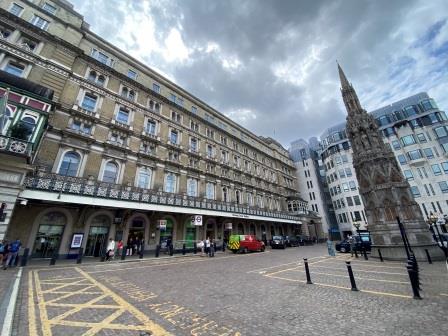
Originally known as Trafalgar Square, Charing Cross (2.53km) opened with the rest of the line in March 1906. The adjacent CCE&HR Charing Cross station, later Strand, opened as the southern terminus in June 1907 and extended to Embankment in the loop in 1914. Today it is part of the Northern line. The Jubilee terminated line here between 1979 and 1998 before being diverted from Bond Street to Westminster.

Down on the platform
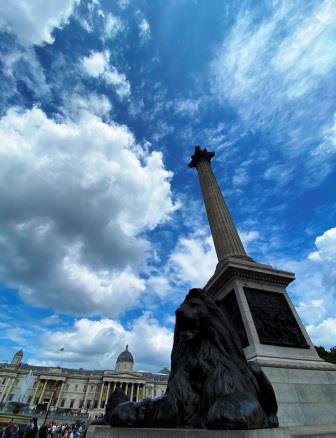
The Bakerloo line platforms are just 5.72 meters (18 feet 9 inches) below Trafalgar Square and reached by escalators. In 1983 panels featuring artwork from the National Gallery and National Portrait Gallery were installed on the platforms.


Up above
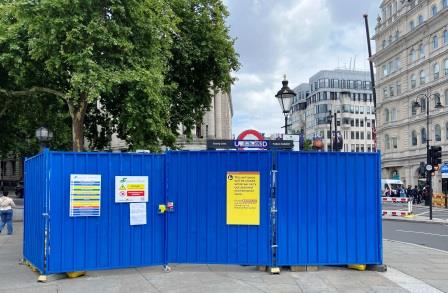
The station didn’t have a surface building, instead, three entrances: one at the south-east corner of the central area of the square, one on the corner of Strand and one on the east side of the square. There is also an underground passageway connecting to the Northern line concourse and platform adjacent to the main line Charing Cross station.
Baker ?

Loo ?
 Trains To Beyond