Mettupalayam to Mangaluru
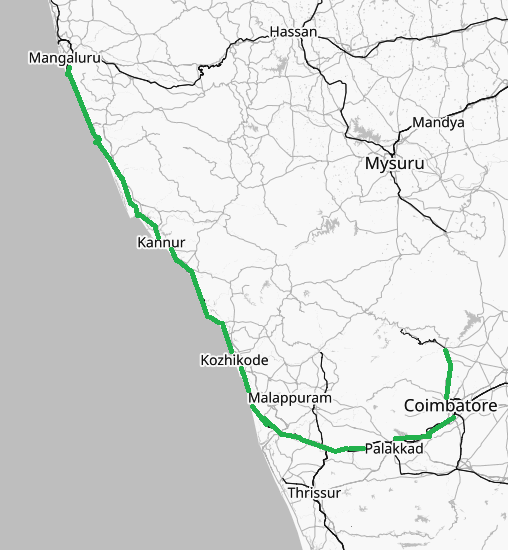
Having descended on the Nilgiri Mountain Railway from Ooty, I spent the night in Mettupalayam. Early the next afternoon I boarded a local train to take me the 38 kilometres to Coimbatore. I spent the rest of the day exploring that city. The next morning, I caught an express bound for Mangaluru.
Mettupalayam
Before I left Mettupalayam Station, I went over to the ticket office to enquire about trains onwards to Coimbatore. Six locals headed south on weekdays but there were only four departing the next day, a Sunday. I decided on the 13:05.
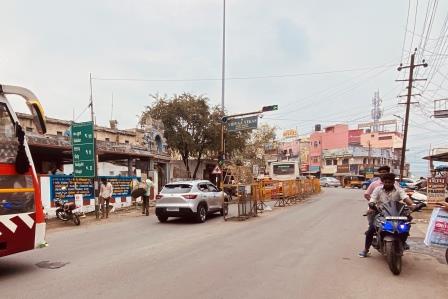
I walked about 500 metres from the station to reach the main road which ran through the small town. I immediately spotted my chosen hotel. The sign outside the SV Grand promised “a luxurious stay”.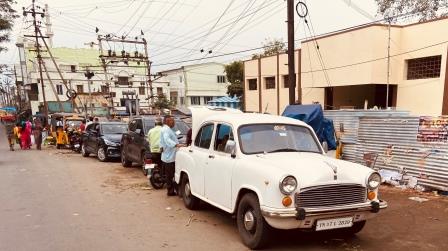
To be fair, the check-in was efficient and the place, which looked rather new, was sparkling clean. The air conditioning didn’t seem to be working, but after Ooty, I was not too bothered about that.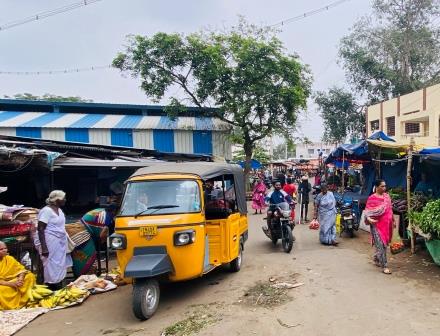
Luxury at the SV Grand did not extend to food: there was to be no breakfast nor dinner. The guys at the Sri Krisna’s Sweet shop, next door recommended the restaurant at the Mayura Hotel close by. I was the only customer. I treated myself to a very pleasant Kadai vegetable gravy and a plate of rice. I got an early night.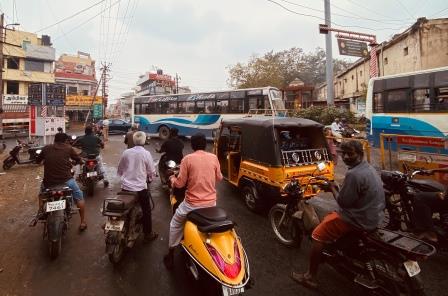
The next morning, I had a walk around Mettupalayam (population 70,000). On a Sunday it was a little quiet. I spent more than an hour walking out in all four directions from the central crossroads. The town certainly wasn’t unpleasant but there didn’t seem to be an awful lot of attractions for the casual tourist. 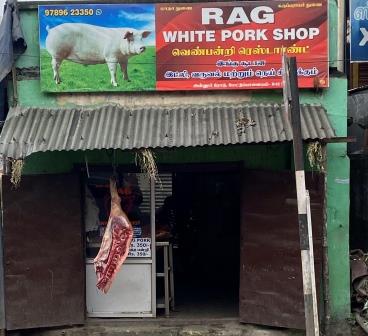
I stopped off for a chai at a little store. I passed through the market, which was just getting going, and paused in front of St John’s Church where loud speakers were projecting the service outside. Everywhere were signs for doctors’ clinics with all types of treatments for all types of ailments.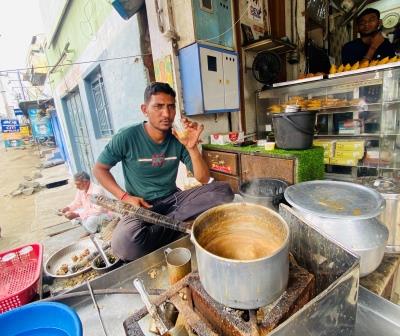
When it began to drizzle, I took shelter at the Paradise Bakery and got a coffee. I needed to kill time until my train left. The lady receptionist back at the hotel smiled as I checked out with just one minute to go before the 11:00 deadline. I stayed in the reception reading the Times of India before walking back to the station. I arrived there more than an hour in advance of my 13:05 departure.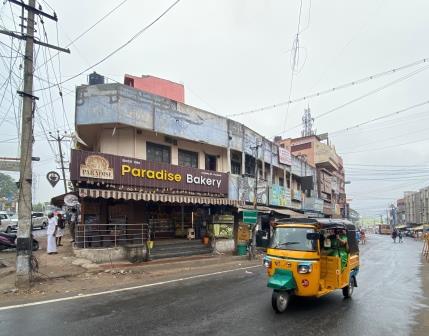
Train #06815, Podanur MEMU
The ticket to Coimbatore Junction cost me 100 IRS (90p). Some of the local trains from Mettupalayam just went to Coimbatore but most, including mine, extended the short distance on to Podanur.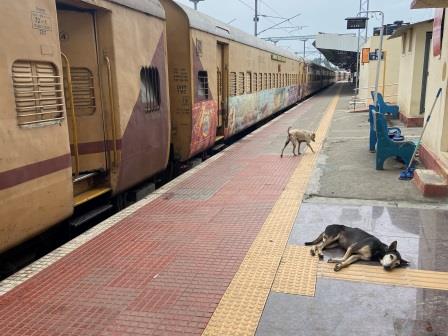
In addition to the local service, on Fridays and Sundays a long distance train went to Thoothukudi at 20:00 and another daily express went to Chennai at 21:20. Both these trains had arrived from their respective terminals early in the morning and were being stabled in one of the platforms and the adjacent siding.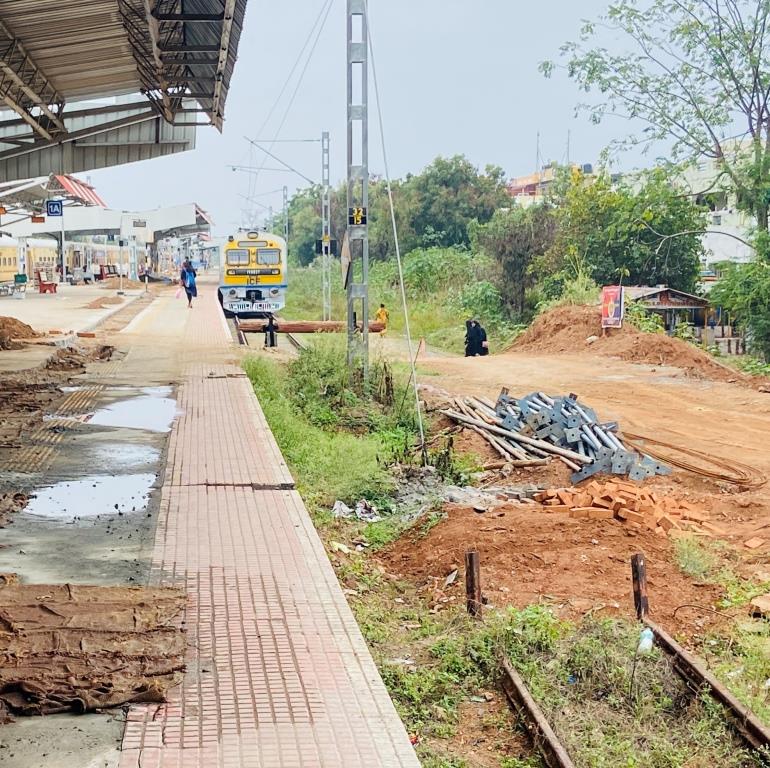
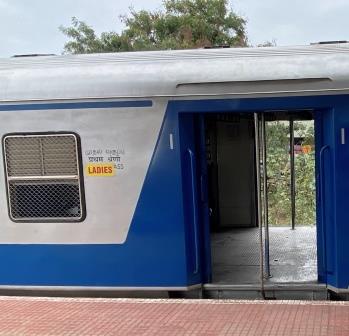
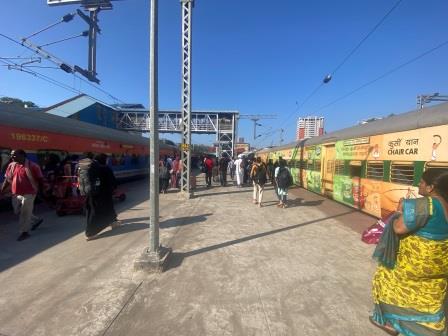
With more than an hour to go, my train was already in another platform and I walked over to it. It was a MEMU (Main Line Electric Multiple Unit), a regional version of a suburban commuter train. The doors were all open and although it was deserted I clambered on. I figured it would be a cooler place to wait than the hot platform.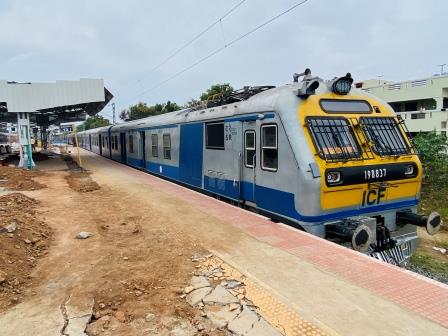
I tried to read the Times of India but eventually gave up. Whilst I was sitting all alone, three cleaners came in and cleaned. The first washed the floor, the second gave the windows a good going over. The third did the seats.
The station itself was immaculate. There were plenty of signs aimed at keeping it that way; “Maintain prosperity and beauty through society – open urination and defecation is prohibited under Indian Railway Act 1989.” There was a 500 rupees fine for either. Littering and spitting had a similar penalty.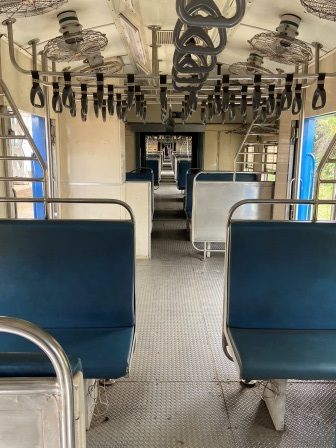
By 12:50 a fair few people had boarded. Then the electric motors below the floor suddenly sprang into life, the green display panel lights above my head lit up to confirm I was travelling with Indian Railways. Over the next ten minutes more and more people arrived and as departure time came we were full and standing. With the customary horn blasting constantly, we were off on time.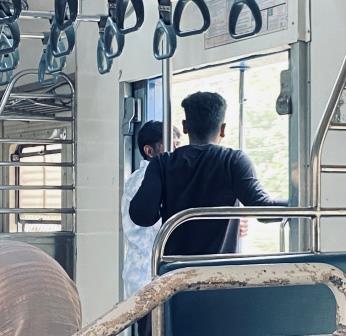
The Coimbatore–Mettupalayam branch was opened to traffic as a mixed broad gauge and metre gauge line in 1873. It was converted to broad gauge in 1907. Electrification of the single track branch was finished in 2015.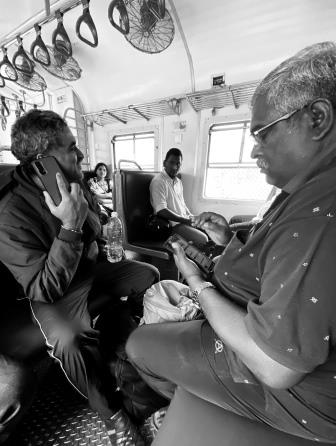
With four stops, the journey took just over thirty minutes. The scenery, especially after the previous day, was nothing to write home about. The train moved surprisingly fast and people were hanging out of the doors trying to catch the breeze. We pulled into Coimbatore Junction on time.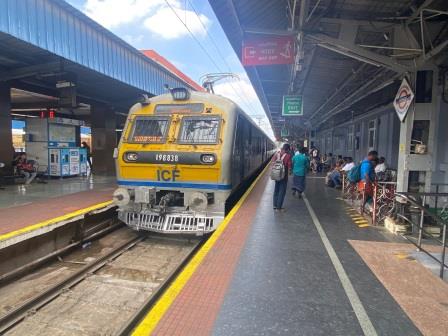
Coimbatore
I came out of Coimbatore Junction, stopping to admire plinthed Nilgiri Mountain locomotive 37389 as I went, and crossed the road. My hotel, the iStay, was literally two minutes’ walk away. The check-in was relatively swift but included a capture of my face with an immigration-style camera.
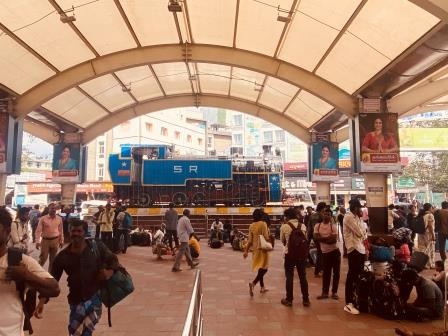
Coimbatore is Tamil Nadu’s second-largest city. With a population of 1,601,438, it is a major industrial and manufacturing hub. Sometimes referred to as the Manchester of South India, it is famous for textiles, makes motors and is also known as “pump city.”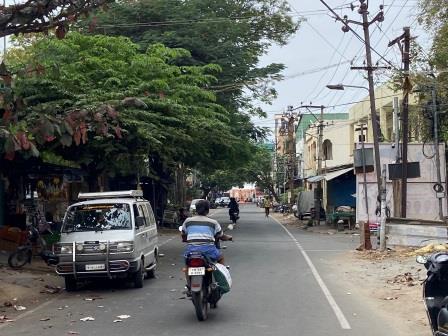
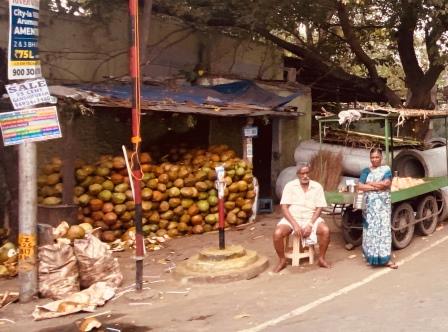
A single afternoon was obviously not enough time to do the place justice, but I elected to go on a long walk to get a rough feel for the city. I quickly decided on a circular route in the anticlockwise direction from the hotel, a distance of around 8km.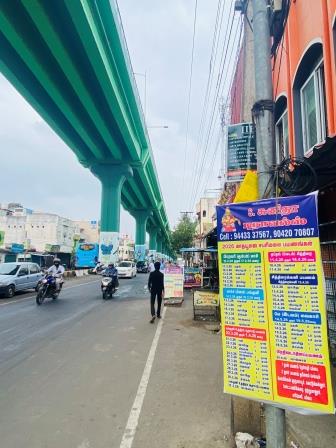
I ventured first along Geetha Hall Road. Its proximity to the station meant that it was full of small hotels and travel agencies. The pavement was limited and the steady flow of autos meant it was quite difficult to navigate. I walked east underneath a long elevated road until I reached the Gedee Car Museum, established by industrialist G. D. Naidu, who is known as the “Edison of India.” I did not go inside.
I headed north, through pleasant tree lined streets stopping more than once for a small cup of chai or coffee at the many little stalls along the side of the road. I made it to Sree Ayyappan Temple. It was built in traditional Kerala-style and is one of the most visited temples in the city.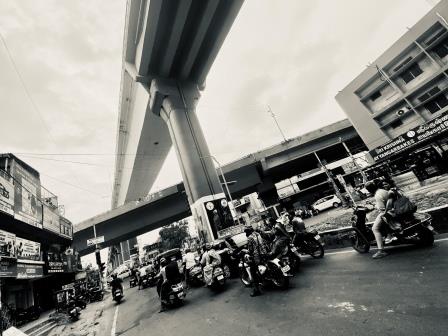
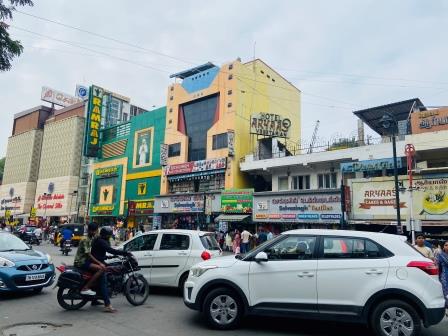
I then went west along an avenue with another flyover up above and eventually arrived at Cross Cut Road, one of the city’s main shopping streets. This was the liveliest place I had seen since Bengaluru and was lined with stores selling clothing, textiles, jewellery and electronics. On a Sunday afternoon it was heaving with shoppers.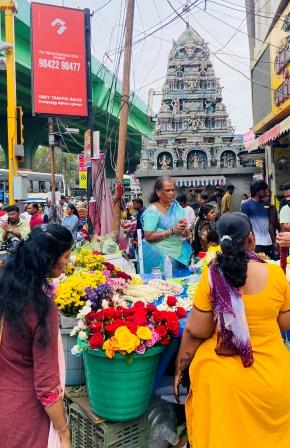
Another short walk got me to the Brookfield Shopping Centre. Typical of the modern malls now found in all large Indian cities, its air conditioning provided a welcome respite from the hot temperature outside. There seemed to be a mixture of Indian and foreign chains, a large multiplex that had some Tamil films advertised and a game zone for the kids.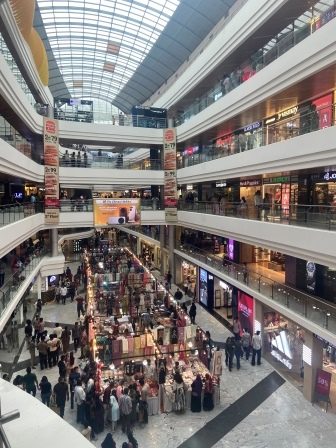
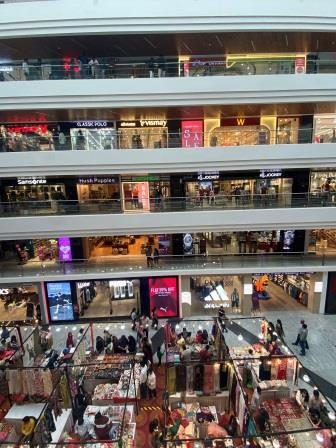
Now going south, I went past the Syrian church, underneath the railway line and eventually towards the town hall area in the centre. It was very enjoyable walking around. I found the whole city quite a pleasant surprise.
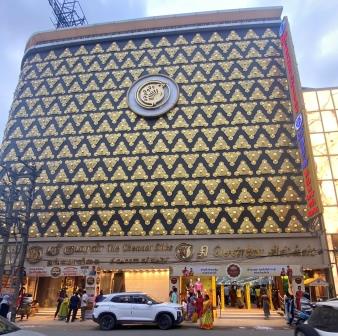
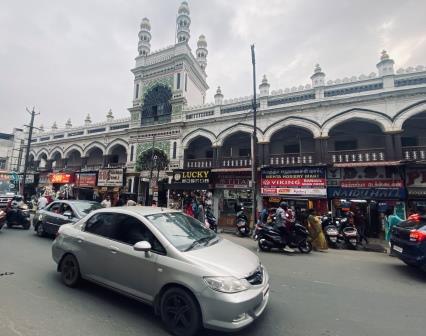
Raja Street was one of Coimbatore’s oldest and most iconic commercial lanes. Here I found local garment shops. Big Bazaar Street was another commercial artery with lots of massive jewellery stores and clothing companies. It was dense with shoppers.
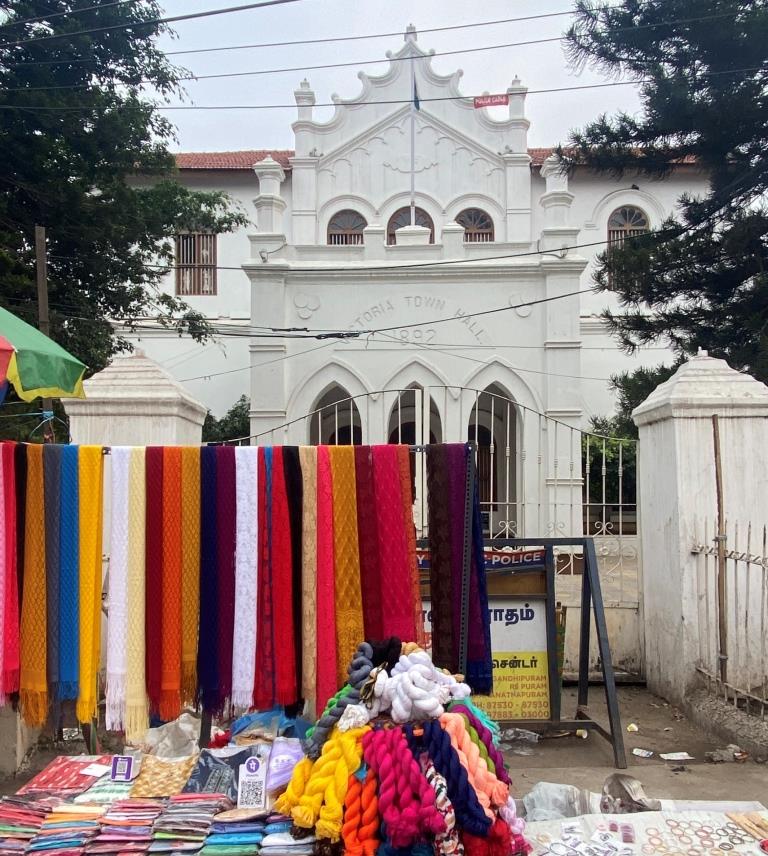
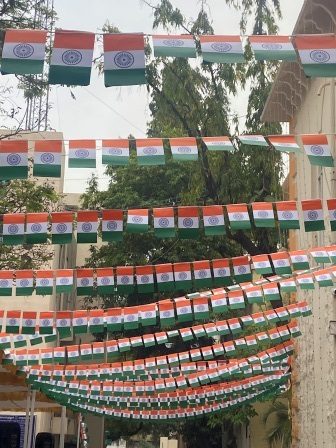
On the final stretch, now heading back east towards the station, I walked past the original Town Hall building. It was built in typical British-era civic administration architectural style and it still plays an administrative role today. I saw that some of the buildings nearby were decorated with flags ready to celebrate Republic Day, the following day.
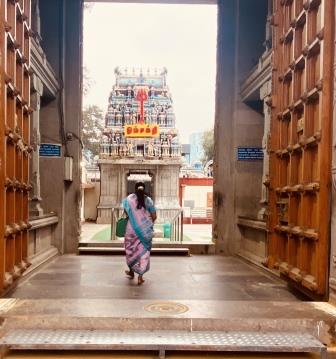
Nearby was one of the oldest and most revered temples in the city, Arulmigu Koniamman. I watched a few people walking towards that and then crossed the road to walk past the impressive St Michael’s Cathedral.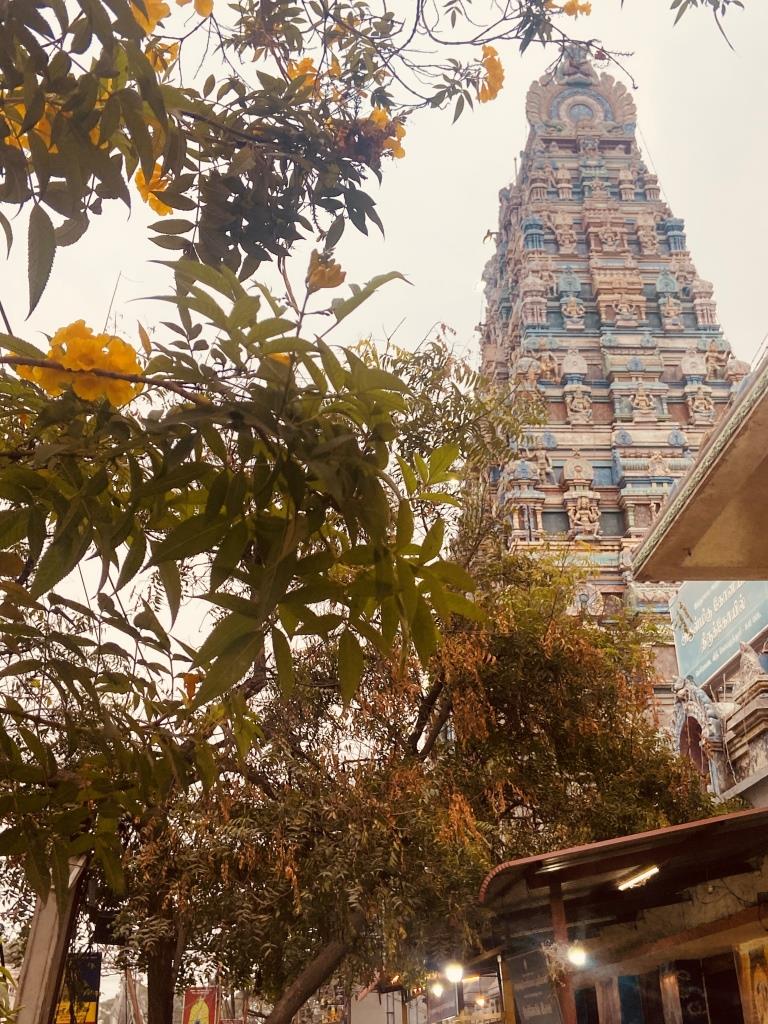
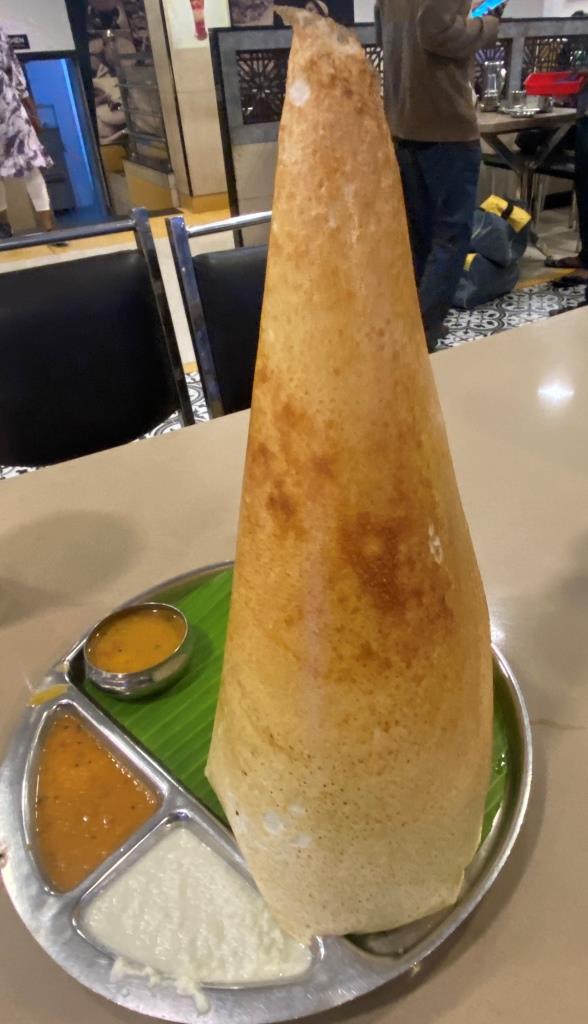
I completed the circle back to Coimbatore Junction and then treated myself to a ghee roast dosa for my evening meal. One of the signature foods of the city, it is made from fermented rice and urad dal batter. It came with sambar and a coconut chutney. It was absolutely delicious.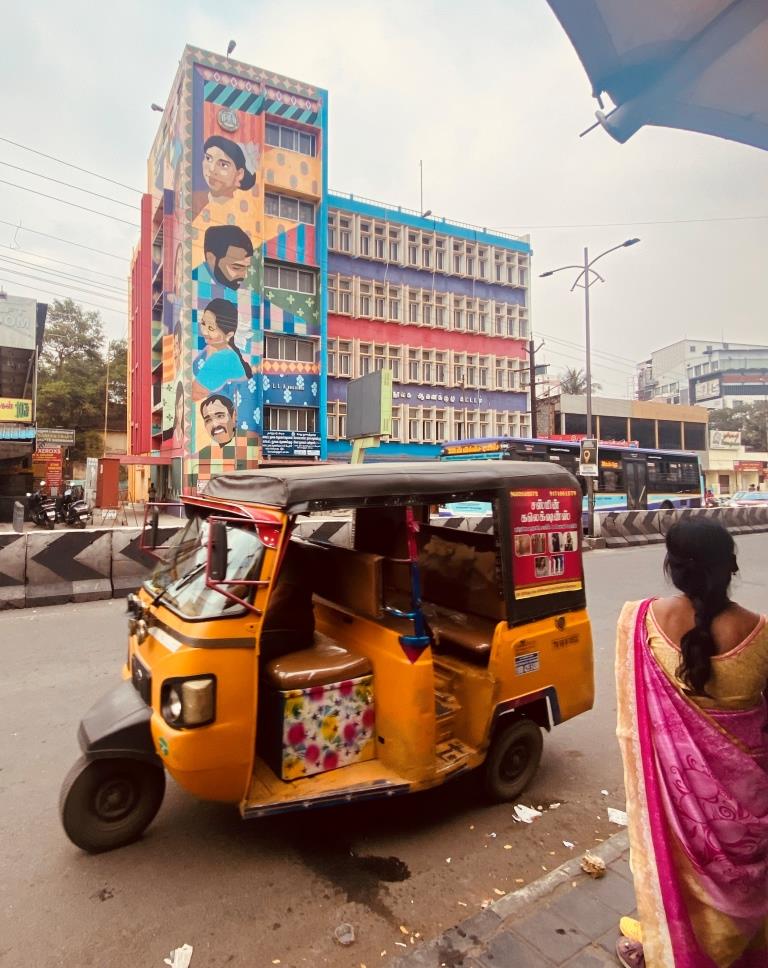
Before I went to sleep I ordered my lunch for the next day. I knew that there would be no formal food provision on the seven hour trip so I needed to make my own arrangements in advance. Using Indian Railways e-catering App, I put the details of the train I would be catching from Coimbatore to Mangaluru and my PNR (which automatically identified the coach and seat number).
I needed to choose a station where my meal would be loaded, so I chose Kannur, where the train was scheduled to stop before 13:00. This brought up a list of local places in Kannur that supplied food to the trains and details of what they served. Domino’s Pizza was on the list, but I settled for the Vegetarian Thali Meal produced by “Safe Catering”. I fell asleep happy in the knowledge I would not go hungry on the train the next day. 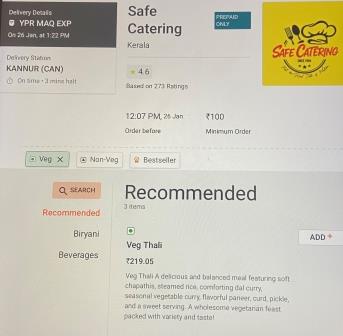
Train #16565 Yesvantpur – Mangaluru Central Express
As I came to, I tried to identify all the sounds that were waking me up. The local mosque was calling people to prayer, there were banging sounds from up above, a couple of thuds from somewhere else and in the distance the noise of train horns.
The Wi-Fi in the room was a bit patchy, but eventually I got on line and checked the progress of train #16565 which was arriving from Bengaluru. I was pleased to see from the XIogo App that it was on the move towards me, had passed Erode Junction and was only 22 minutes late.
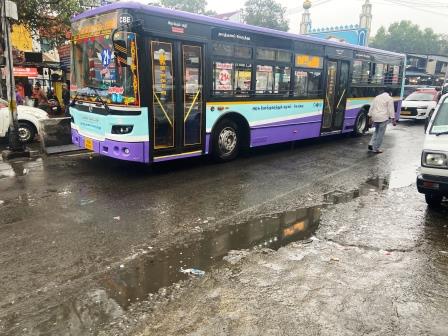
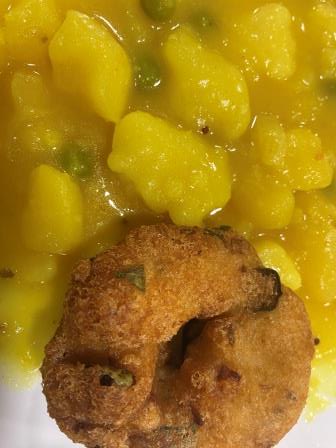
I went downstairs and had some excellent vada and sambar for breakfast. Outside rain was falling and I had to avoid the puddles as I made my way across the road to the station. At 08:00 the train information display on the concourse showed #16565 was departing at 08:07. This was a bit disconcerting as it was actually scheduled at 08:20.
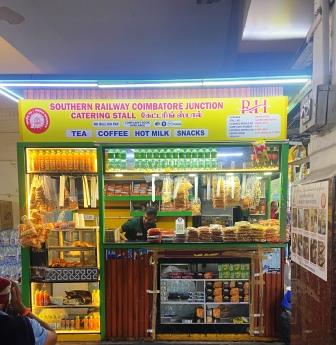
Up on the platform things were different. The previous train had been due sometime before 08:00 and had not even arrived yet. Listening to the public address seemed useless, they were advertising health insurance for most of the time. It was well past 08:20 before #16565 eventually showed up. It was hauled by another WAP7. It pulled in so slowly that people were jumping off before it was even half way through the station.
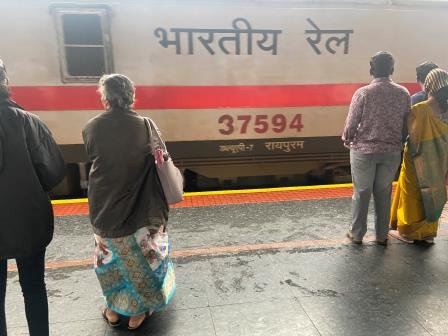
The rake comprised of a generator van (EOG), two unreserved carriages (GEN) seven three-tier sleepers (S1-7) two three-tier air-conditioned sleepers (B1 &2) the two-tier air-conditioned sleeper that I was in (A1), two more GENs and an SLR luggage van at the rear.
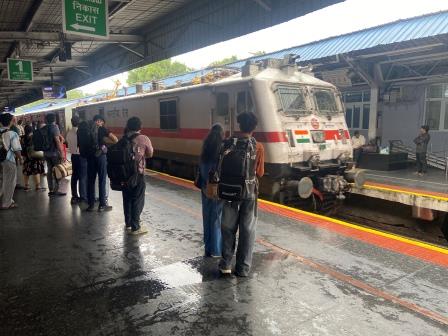
The #16565 Yesvantpur – Mangaluru (YPR-MAO) Central Express is a weekly mail express train running every Sunday from Yesvantpur Junction near Bengaluru to Mangaluru. It covers the distance of 845km in 17 hours, departing its terminus at 23:55, arriving at Coimbatore at 08:20 and terminating at Mangaluru at 16:00.
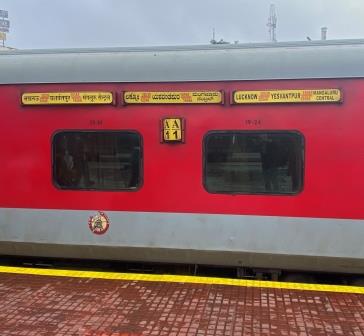 I had been waiting at the appropriate place and boarded A1. The carriage had longitudinal two tier beds along one side and then four beds divided into compartments on the other side. The air conditioning was working well but it was not too cold.
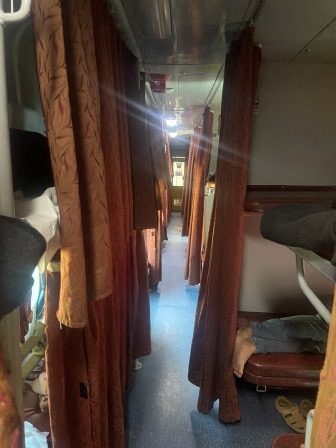
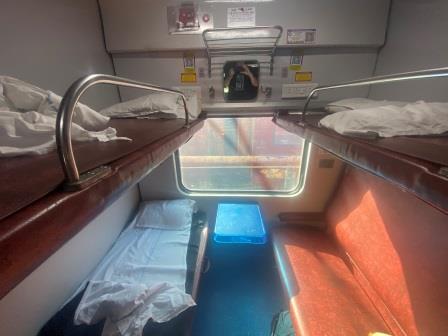
I was on the bottom bunk in the compartment of four. The bunk above me remained empty for the entire trip but on the opposite top bunk there was a guy still sleeping. A woman in her thirties came in behind me and claimed the opposite lower bunk. I tried to make conversation but it was clear she did not want to or could not speak.
We left at 08:33, thirteen minutes behind schedule, edging very gingerly out of the station and moving at a slow speed for more than twenty minutes. The conductor came along with his iPad and noted that I was in the right seat. I offered my ticket but he just smiled.
The sign next to me said, “please pull up the backrest-cum-bed during 6am to 10pm to avoid inconvenience to sitting passengers”. In theory the compartment should now have been configured for day use, with the top bunks out of use, but it was not.
I got a packet of blankets in a brown paper bag labelled “South Western Railway Mechanical Department”. There was a warning note telling me that I should avoid staining them, as stained linen causes loss of public property.
The broad gauge line from Madras (Chennai) reached Coimbatore Junction in the 1860s. The line was further extended in phases and reached Mangalore (Mangaluru) in 1907. It was electrified to Coimbatore Junction in 1995/6 and to Shoranur Junction in 1996/7. By 2014 the whole line to Mangaluru had been doubled and by 2017 completely wired.
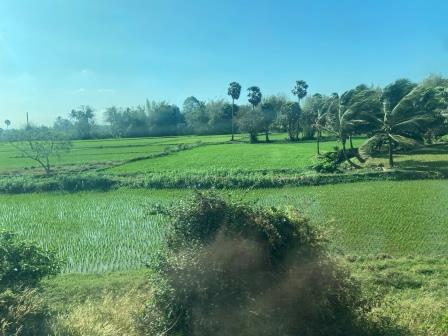
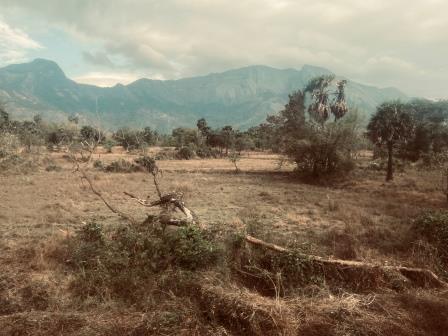
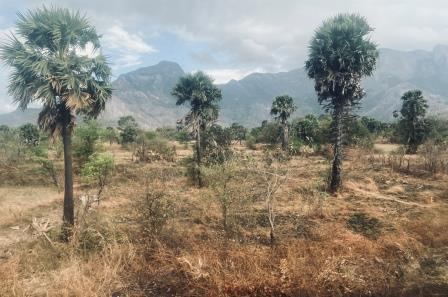
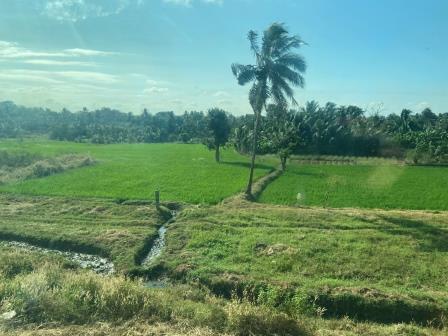
The train finally picked up some speed. The scenery out of the right hand window, to the north, was mountainous. We were skirting the bottom of the Ghats, the hills that came all the way down the west of India and then finally fizzled out around here. By contrast, the views off to the left were of flat land, they were growing plenty of rice in the fields and it seemed to be ready for picking.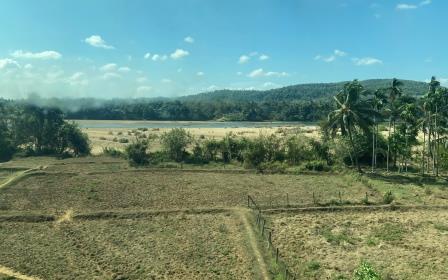
At Palakkad Junction the train stopped. The guy above in the opposite bunk prepared to get off and left without speaking. Vendors came through the train selling pineapple chunks on sticks. The girl opposite left the compartment briefly and returned with a paper plate of delicious looking samosas and dipping sauce.
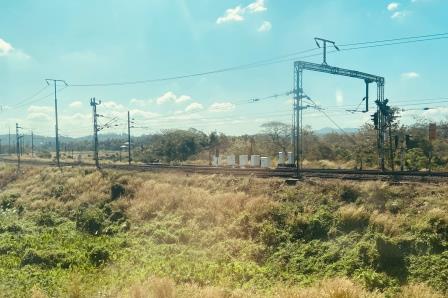
We were now following a river on the left side. We passed from Tamil Nadu into Kerala. The train crawled, made a bit of progress with some spirited running and then crawled again. We reached Shoranur Junction station 30 minutes late. We then made a 30 minute stop. The sellers on the platform had lots of time but did not seem to be doing too well.
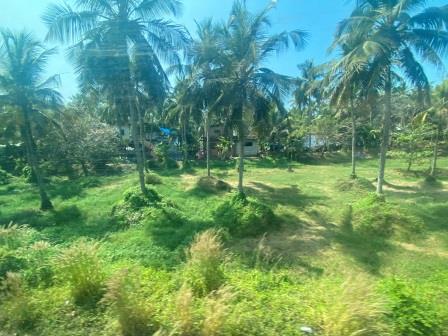
After we left Shoranur Junction the scenery changed and we were soon travelling just a few miles inland from the coast. There were little settlements set back from the beach and for most of the time the view of the sea was blocked by palm trees.
I talked to a guy in the opposite bunk above who had got on at Shoranur. He was a student and studying Psychology but he also had his own little software company. We chatted about his ambitions to travel to different countries. He got off at Kannur where we arrived fifteen minutes late.
I looked around in search of my meal and saw a guy in a yellow “Safe Catering” shirt walking along the platform with three paper bags. A few minutes later he appeared in the compartment and handed me my lunch. I tipped him and he disappeared.
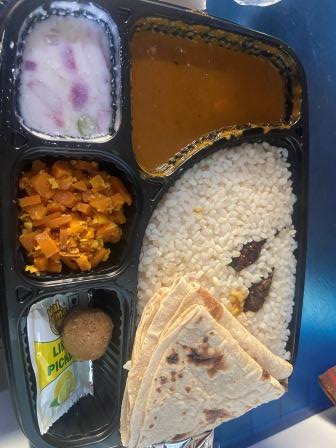
I took the food out of the bag; It was almost like a model plane kit. There were chapatis to unwrap, silver bags of sambar and dal to decant and a sachet of lime pickle to squeeze out. It took about ten minutes to assemble everything on the plastic tray. I spent the next half hour devouring it. The whole thing was quite delicious.
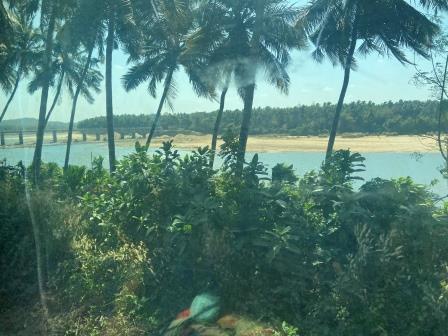
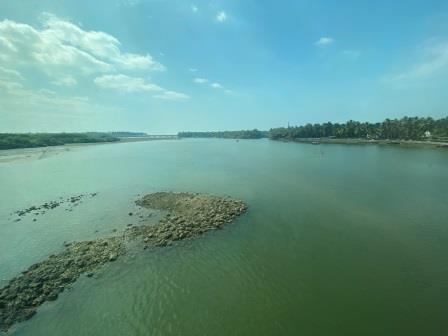
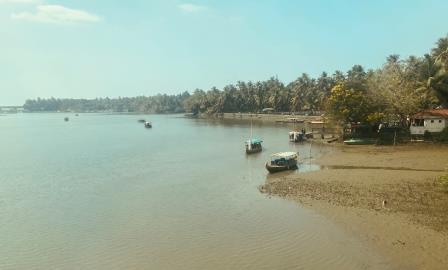
We headed on through flat, fertile fields passing small villages, coconut groves and more palm trees. We crossed over many river bridges where the view opened up and the sea was suddenly visible for a minute or too.
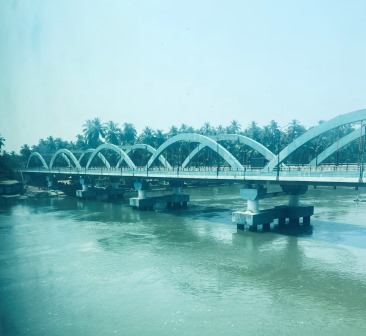
Finally, we crossed the impressive Nethravathi Bridge and then crawled on the approach to the station to arrive at Mangaluru Central bang on time.
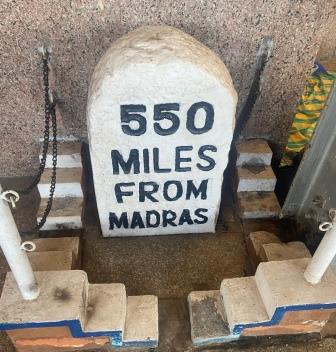
I got off and walked along the platform passing an old milestone that indicated that we were now 550 miles from Madras. Before the Konkan Railway was completed in 1998, this was effectively the end of the line.
Continue the journey soon on – #20646 – Vande Bharat (Mangaluru)

 Trains To Beyond