Madgaon to Mumbai
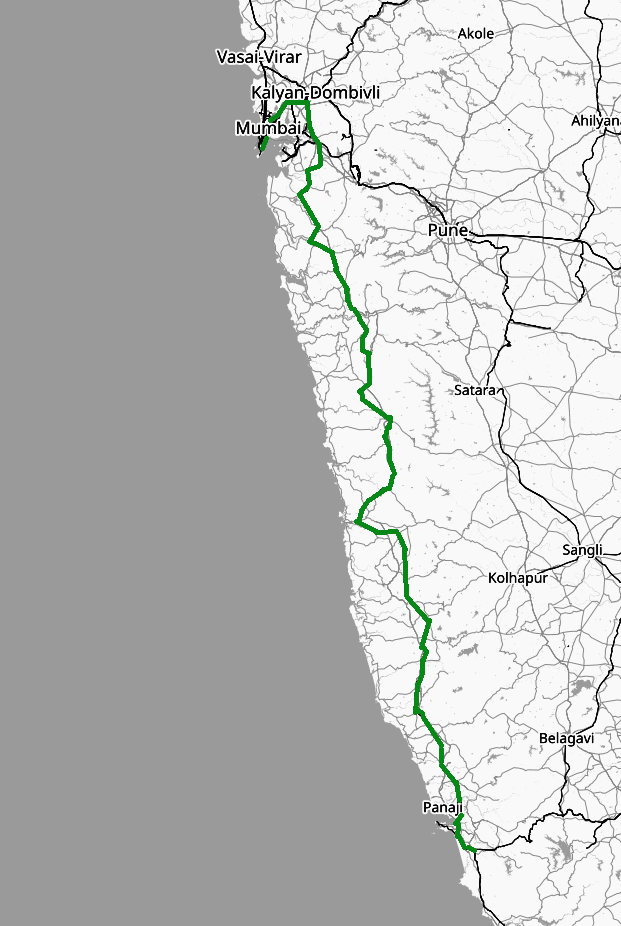
Having arrived from Mangaluru, I spent the afternoon exploring Madgaon and Colva Beach. The next morning, I boarded the Mandovi Express for the twelve and a half hour trip up the Konkan Railway to Mumbai.
Madgaon Station
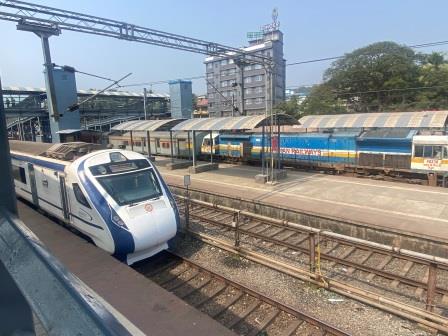
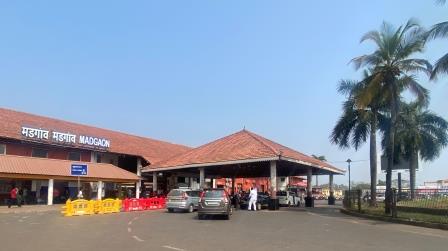
It was the hottest it had been so far on the trip. I made my way across the footbridge and over to the station exit. Madgaon Railway Station was one of Goa’s biggest transport hubs. Most long-distance trains stopped here. There were also a few local trains in the platform.
Goa’s railway history began in 1887 when the Portuguese built a line eastwards to connect with the British Indian rail system over the border at Castle Rock. This metre-gauge line, shown in brown below, began at Marmagao (Vasco) and continued for over 400 km to Guntakal.
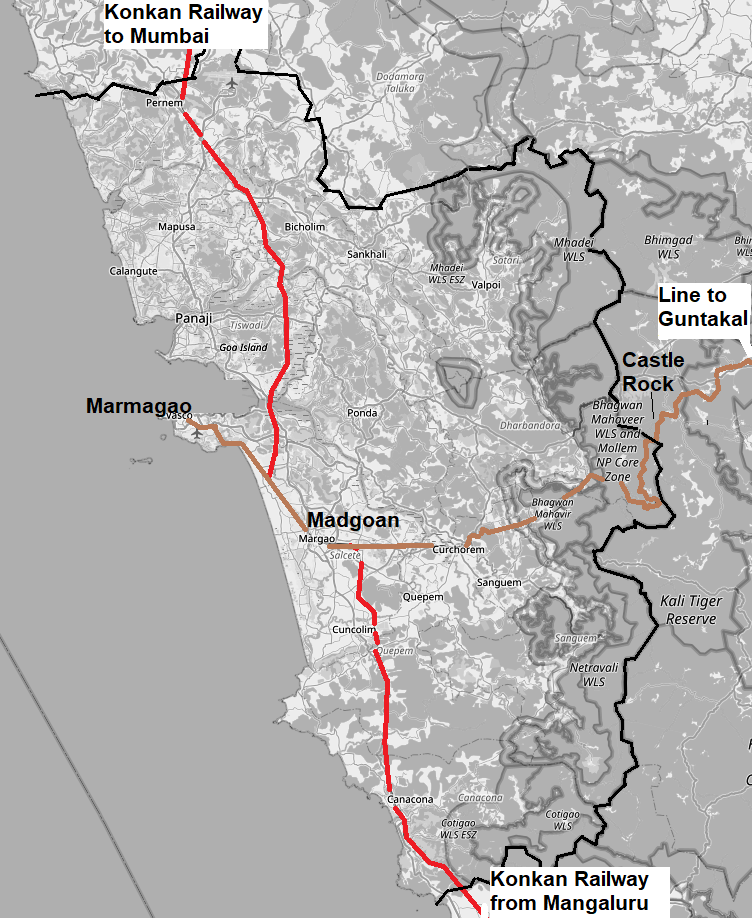
It eventually became part of the South Western Railway network. It was converted to broad gauge at the same time the Konkan Railway opened in 1998; the two lines have a 15km contiguous section. Electrification was completed in 2025.
Madgaon Town
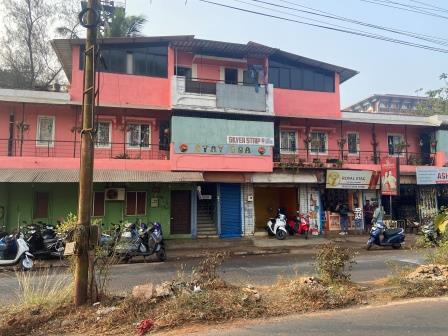
Now I was finally really feeling the heat. It was over thirty degrees. I walked about ten minutes towards the Silver Strip building where a sign led me up to the Stay Goa Guest house. I was thankful that I had reserved the nearest place to the station. I found the host and after taking a photo of my visa with his iPhone, thus avoiding the usual check in rigmarole, he showed me to the room.
The room was almost filled by a double bed and a chair. There was an air conditioning unit on one wall and a TV on another. They had constructed a little wooden box around a toilet and shower and added a door. Although there was no Wi-fi and no kettle. For the price I was paying and the purpose I needed it for, I decided it would be absolutely fine. The lock was a simple padlock on the door. I bolted it and walked off in the direction of town.
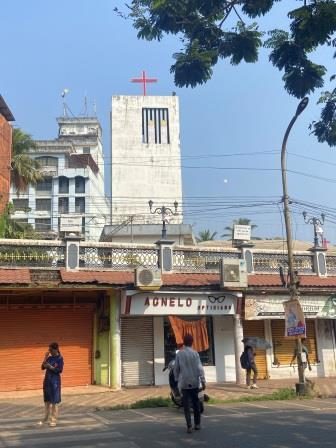
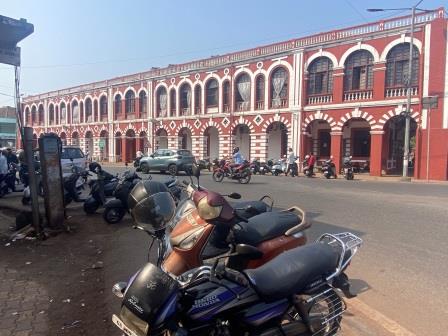
Portugal ruled Goa for nearly 450 years, heavily influencing its culture, architecture, and cuisine. Goa was integrated into the Indian Union in 1961 and gained full statehood in 1987. It is the smallest state by area and, with 1.5 million inhabitants, the fourth least populous. Konkani is the official language.
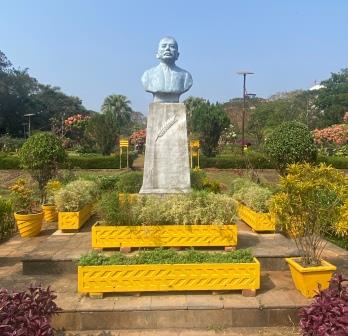
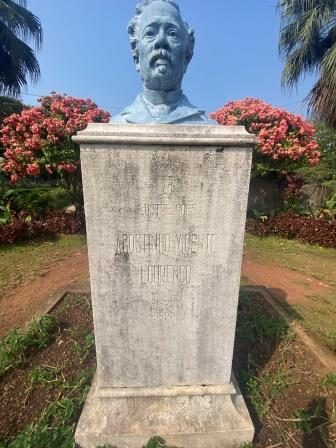
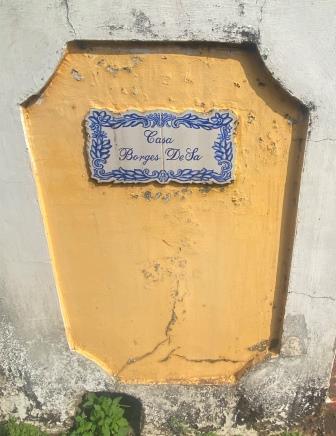
Madgaon (or Margao) is Goa’s second largest city. It was said to have a strong Goan identity with tree-lined avenues, old Portuguese-era bungalows and lots of churches. I walked through the Margao Municipal Gardens and along Padre Miranda Road.
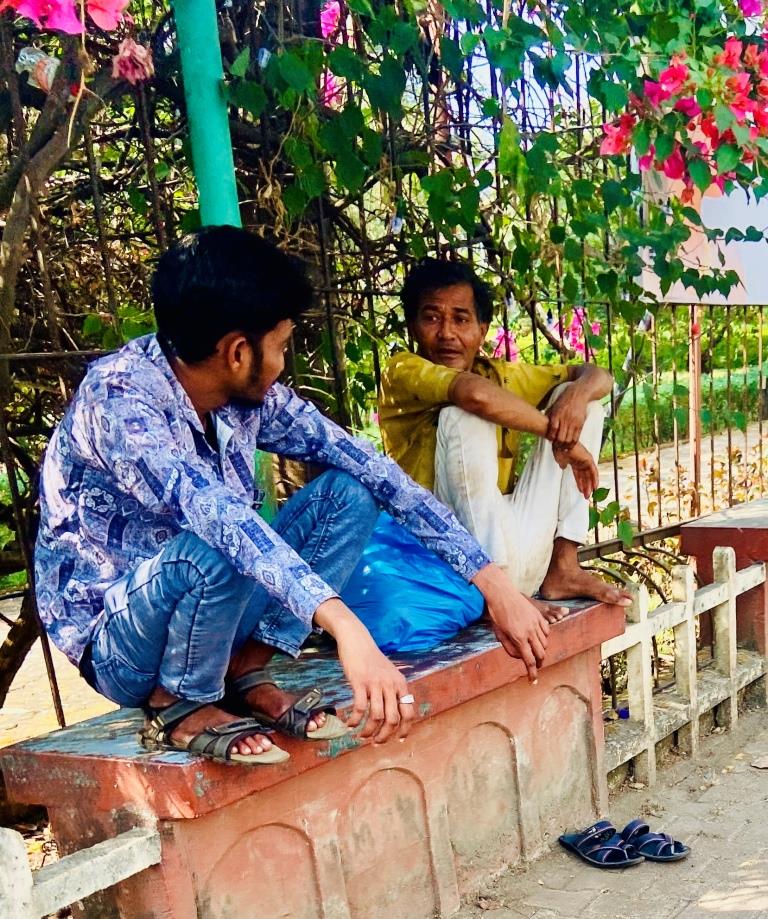
I dipped into the rather pleasant Ana Fonte Gardens. It was deserted but for the two gardeners. I sat for a while watching them work and then pressed on.
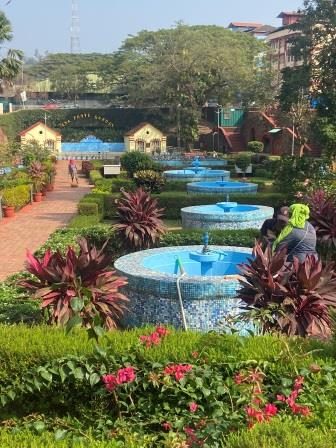
Goa definitely had a different feel to it; I could not quite put my finger on it. Certainly, one thing was the obvious presence of more alcohol outlets than I had seen so far. There were also quite a few western tourists in the town centre.
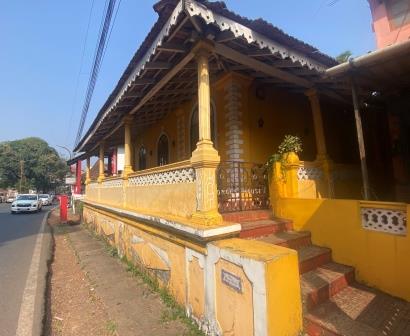
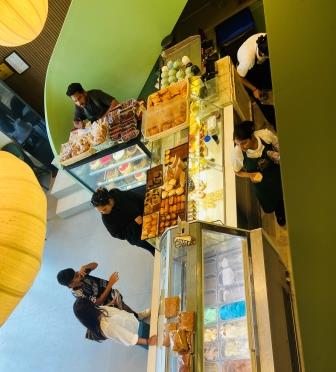
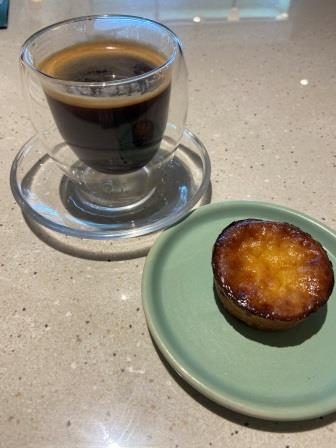
I had been eying up a place to shelter a bit from the heat, among several worthy candidates, the Patisserie Victoria stood out. It was lovely and cool inside and had a comfortable seating area on the second floor. I sat with a coffee for more than an hour. Given the Portuguese history, I felt almost obliged to have one of the custard tarts they had on display. It tasted pretty authentic too.
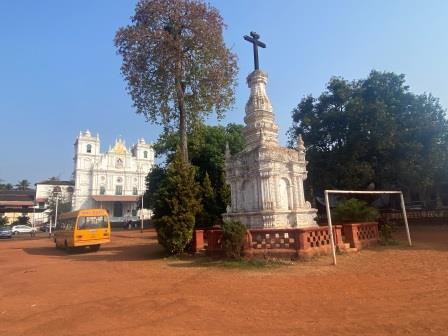
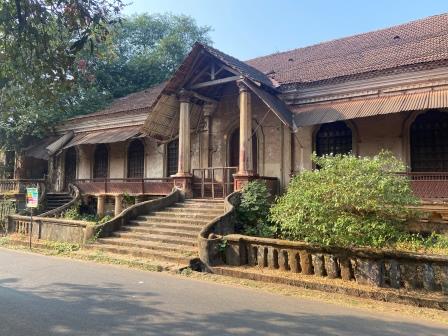
I continued walking and reached the Holy Spirit Church, a stunning white Baroque-style building dating to the 17th century. The church is one of the city’s main landmarks and the surrounding Holy Spirit Square was lined with Indo-Portuguese homes.
Colva Beach
Margao was inland. The nearest beach, Colva, was around 5km away. I was not entirely sure how to get there. I set out walking from the Old Market Circle Clock Tower. I could not see any buses on the road and there didn’t seem to be any taxis either.
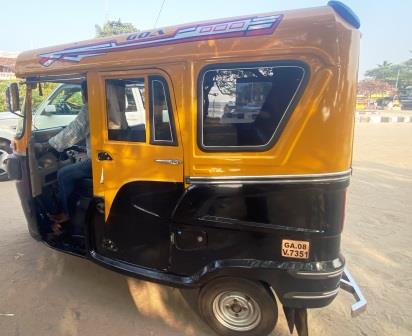
I was almost resigned to walk the full 4km to Colva Beach and had covered about a quarter of the distance when an auto appeared from the opposite direction. In a weak position, I did not put up much of a fight to the inflated price the driver quoted and climbed in. Interestingly, as I figured out later, the autos in Goa had doors.
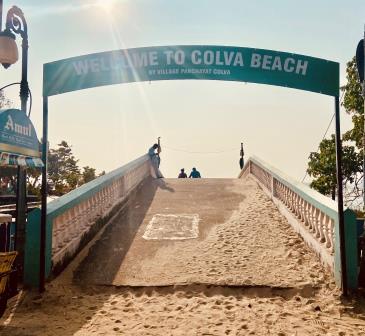
Colva Beach was a lot busier than the beaches at Mangaluru had been the day before. There were a lot of people in the water and even more on the beach sunbathing. There were several large shacks along the edge of the beach. They housed restaurants and bars and had names like “sports bar” and “multi cuisine”. There were signs outside advertising Goan seafood, grilled snacks and cocktails. They all had tables under cover and beach loungers on the sand. I popped into one and ordered a mug of Kingfisher.
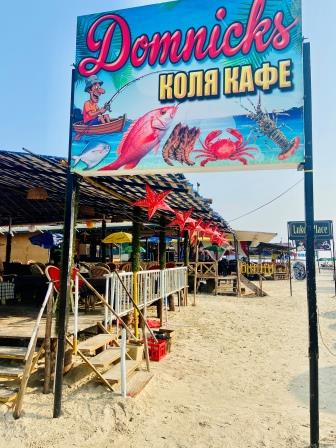
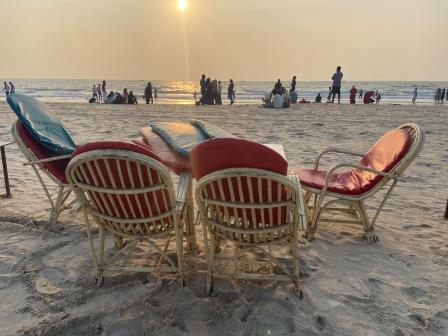
Apart from a couple of local guys who seemed to be engaged in an in depth discussion with the owner, there was no one in the bar. I sat there in the shade alone listening to an instrumental version of the Beatles’ Ob-La-Di, Ob-La-Da which seemed to be on constant repeat. 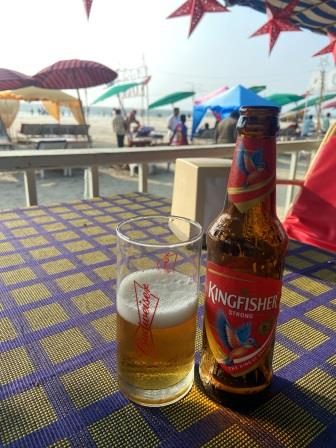
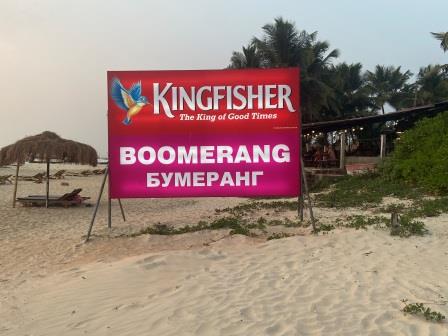
There were a lot of westerners on the beach and I guessed some of them might be Russians. There were signs everywhere in Cyrillic.
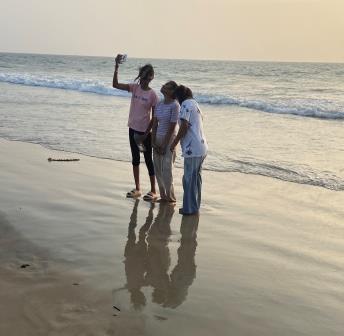
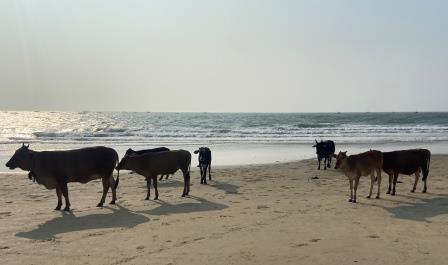
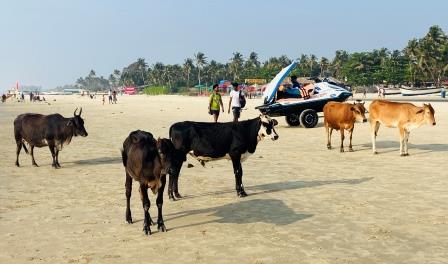
I went for a long walk up and down the beach. It seemed well organised. There were beach marshals everywhere and the place was exceptionally clean. Although, just as at Mangaluru, there were several cows walking along the sands. Apparently the site is not unusual as the animals gravitate towards the beaches.
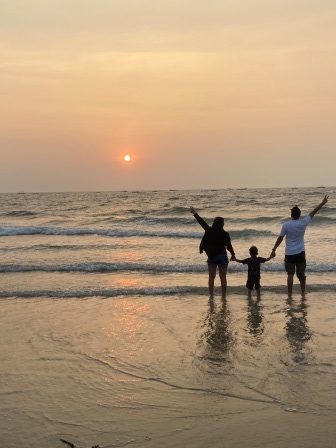
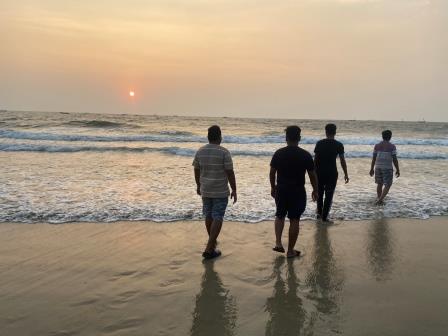
I met some guys who were on holiday from Kerala. They were Manchester United fans and we had a long chat about the Premier League and the differences between Goan beaches and those back in Kerala. Afterwards I just sat there and watched the sun go down.
Know your Fish
I considered eating at one of the beach restaurants, but decided to head back into Madgaon, and try Longuino’s instead. I had noticed “local bus stop” on the map on my phone right across from the entrance to Colva. When I walked across to it there was a yellow bus parked right at the spot. No information was otherwise available as to its destination.
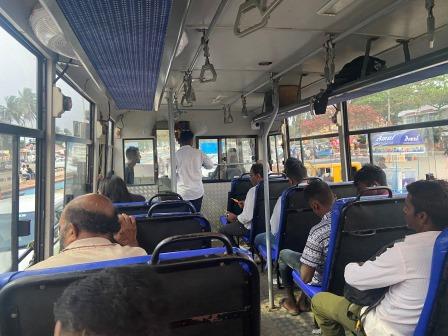
The bus was almost full. I asked the conductor if it was going back to Madgaon. He nodded and beckoned me to the last empty seat. The engine started and within minutes we were away. It felt rather satisfying. The fare was just 30 Rupees.
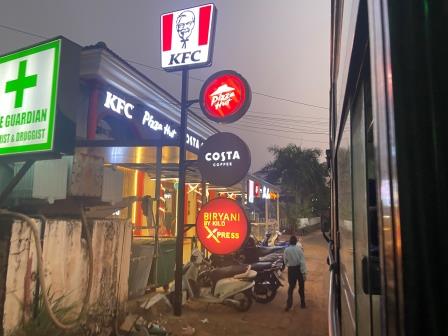
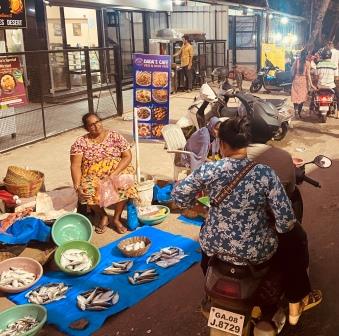
The trip back took almost an hour, but it was fascinating. We started off with a drive down the strip near the beach. We passed lots of touristy restaurants and then turned off and headed along back roads. It was already dark when I got back to the small town square where Longuino’s was.
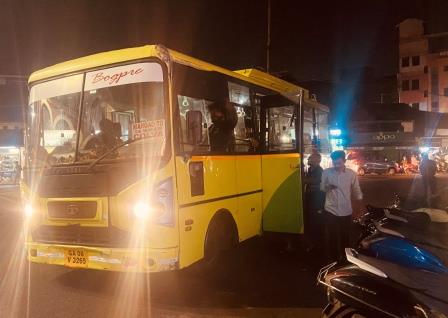
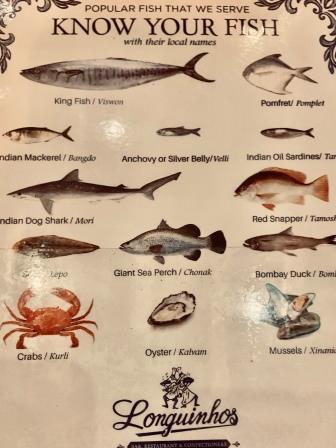
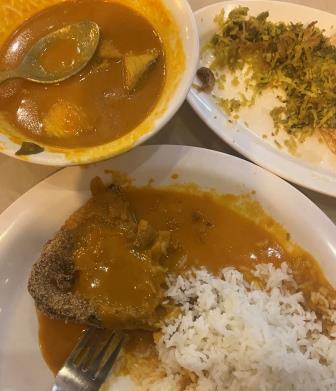
Longuino’s, established in 1950, was having a relatively quiet night. The dining room with its dark wooden panels was certainly atmospheric. They had a strange choice of music though. I sat there listening to the Osmonds’ Puppy love’, and Engelbert Humperdink’s, ‘Please release me, let me go.’ I had expected to see anjal but the “Know your Fish” section of the menu explained that king fish was viswon in the local language. I ordered it with the Goan fish curry and it was delicious.
I set off walking back towards the guest house and was just about to cross the railway bridge when a guy on a moped stopped and beckoned me to hop on. He took me over the long bridge and then dropped me on the other side. It was typical of the friendly welcome I got everywhere.
Train #10104, Mandovi Express
I had a surprisingly good sleep. They must have had a pretty intensive train schedule through the station overnight because I woke a couple of times on hearing the horns. It would not have been too bad except It set the local dogs off barking too. The shower was not really working so I used the bucket and cup, present in every Indian hotel I had stayed in, and had rather a satisfying wash instead.
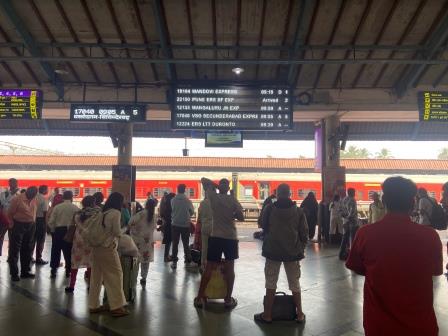
Train #10104, Mandovi Express is a daily service operated by the Konkan Railway from Madgaon Junction to CSMT Terminus in Mumbai. It is famous for its pantry car service which offers excellent onboard catering. With thirty minutes to go, things on platform one were warming up. There was a large group of people gathered awaiting the arrival of the stock to form the train. I got a chai from the stand, found where my coach (HA1) would be stopping and joined them. It was going to be a long journey; we would depart at 09:15 and were not due into Mumbai until 21:45.
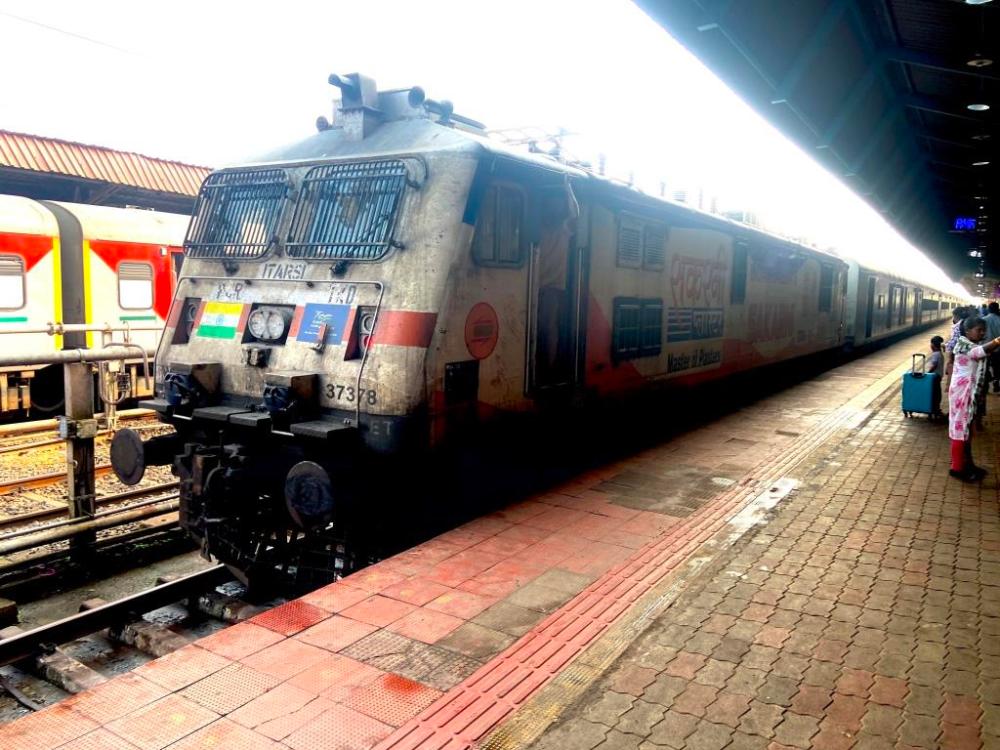
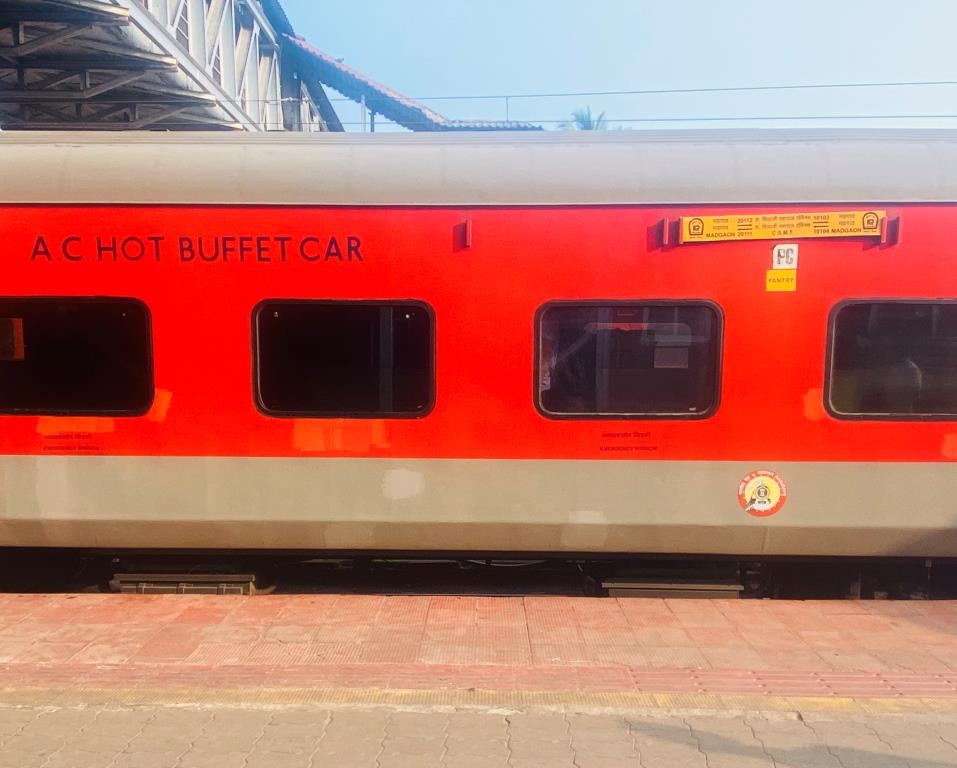
Pulled in by the inevitable WAP 7, this one sponsored by a plastering company no less, the train arrived with about twenty minutes to spare. There were twenty two carriages in the rake. Starting at the front, there was a generator van (EOG), two unreserved second class carriages, seven non-airconditioned sleepers (S1-S7), the pantry (AC Hot Buffet) car, and next to it, the air-conditioned HA1 that I would be in.
Then there was a single air-conditioned two-tier sleeper (A1), four three-tier air-conditioned sleepers (B1-B4) of an older type and three (M1-M3) of a newer type. Finally, there were two more unreserved seconds and an SLR van at the back.
In Indian Railway terminology H stood for half which meant that HA1 was a composite carriage. The front part had several First Class compartments, the rear part, where my own bunk was located, was AC 2-Tier.
On my ticket, it said that I had been allocated one of the upper bunks but, as this was a day trip, that effectively meant that I would be sitting on the lower bunk in the seat on the corridor side of the compartment. The person with the lower bunk ticket would get the window seat.
There was a young guy sitting in one of the window seats on the bottom bunk in the compartment. He beckoned me to sit opposite him. He explained that he had the ticket for the other top bunk but he had asked the conductor and the window seats would be free for the first hour or more of the journey.
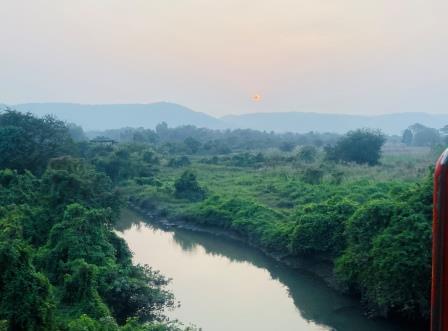
We pulled out on time. We got talking straight away. My compartment mate was a chef and worked for a cruise line. He was from Madgaon and had been visiting his family there. Now he was headed for Mumbai for some training before joining the ship in Europe a little later in the month.
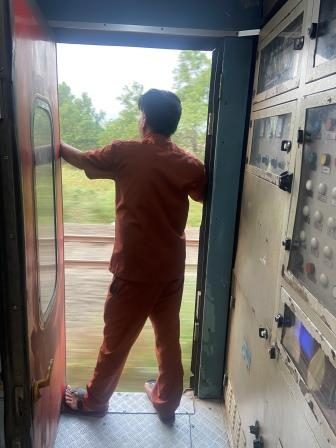
My new companion was no stranger to the Mandovi and, being a chef, took intense pleasure in explaining everything once I showed an interest. The pantry was the next vehicle towards the locomotive and about ten minutes into the journey we made a quick visit.
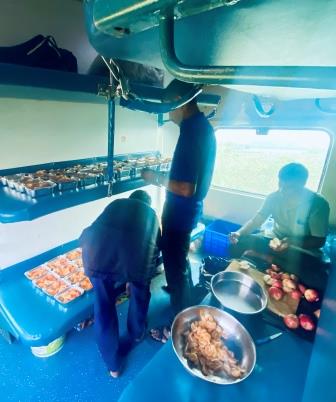
At the rear were some converted second class compartments where a team of chefs were busy laying out the food in containers ready for distribution through the train. Then towards the rear was the main kitchen area where another group where busy cooking.
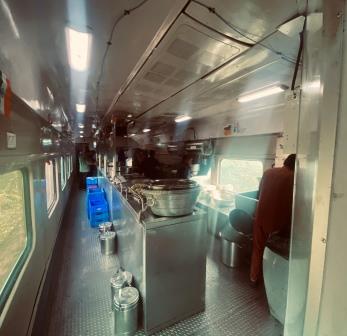
The system was pretty simple. At roughly twenty to thirty minute intervals the kitchen released a new item and then sellers took it off in crates down the train to sell. They came back hopefully with empty crates ready to take another product. First up on our trip was the onion bhaji. My companion stopped the guy and got us a portion to share. It came with a mint sauce.
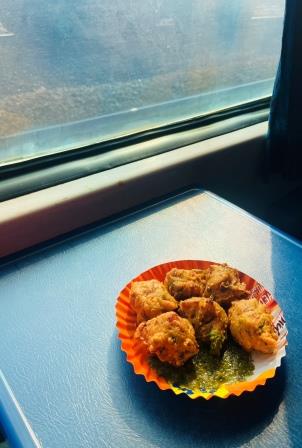
The whole operation had been going for years and had developed its own reputation which fed its self. It was all done by the Ahuja Catering Company, operating a concession from Indian Railways. There seemed to be two or three different sellers circulating at one time and the system was supplemented by two more guys who brought chai and coffee.
Our next item was a plate of fresh fruit. It came with masala salt and was delicious. We decided to share a carton between us, but my companion was too generous and I ended up with more than my fair share.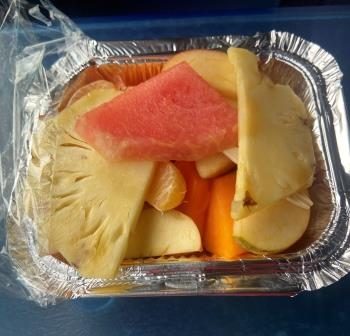
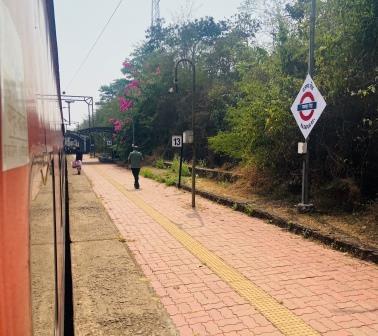
We reached the second of eighteen stops, Thivim, on time at 10:06 but we were held until after 10:40. The thirty minute delay incurred here stayed with us for the next three or four hours. It was obvious that the largely single-line Konkan Railway was suffering from lack of capacity, we had long halts in passing loops waiting for trains, both freight and passenger to come through.
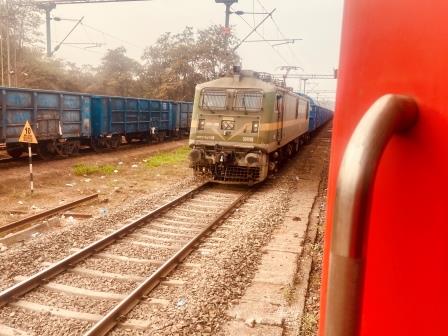
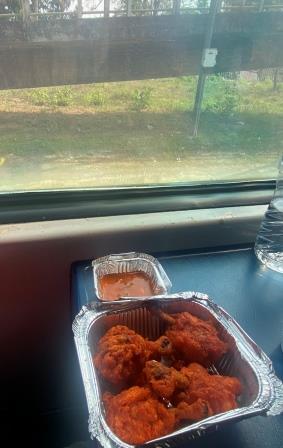
We passed through the Penem Tunnel and my companion announced that we had left Goa and entered Maharashtra, my fifth state (of India’s twenty eight) of the trip. Next up coming down the corridor were chicken lollipops. We stopped the seller and got a couple of portions. With spicy crispy batter and juicy chicken, they were excellent.
At Kudal, where we arrived 25 minutes late at 11:30, an elderly couple got on and sat in the bottom seats. They had brought their own food, my companion explained that many people did this and of course the e-catering was available on the train too. The old guys had their meal and slept for most of the journey, leaving just enough space for us to sit and continue chatting.
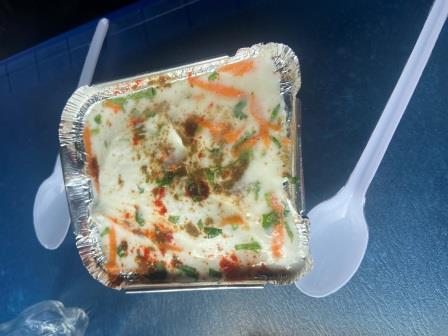
We were at Vaibhavwadi Road at 12:25, still thirty minutes adrift. Our last snack of the morning was dahi vada, deep-fried lentil dumplings soaked in thick, sweetened yogurt and topped with chutney.
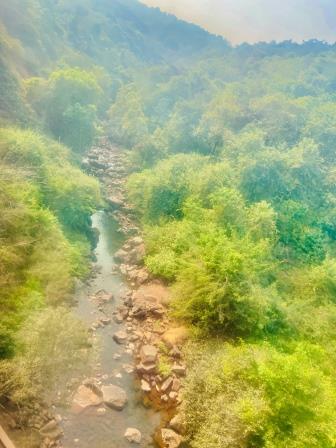
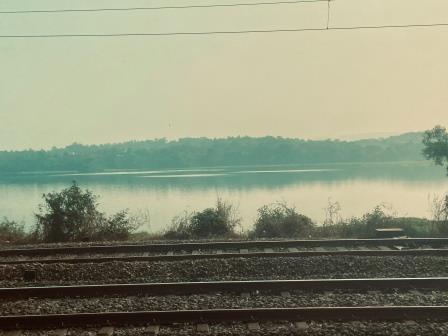
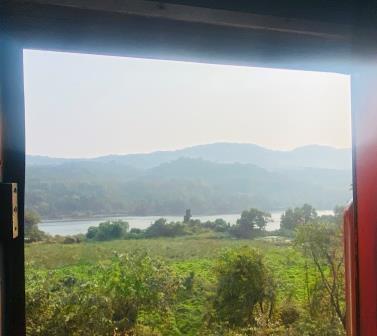
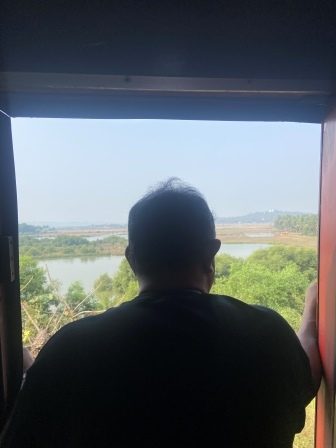
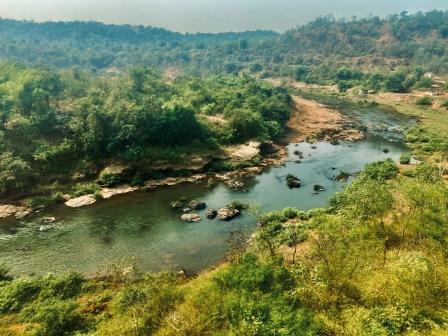
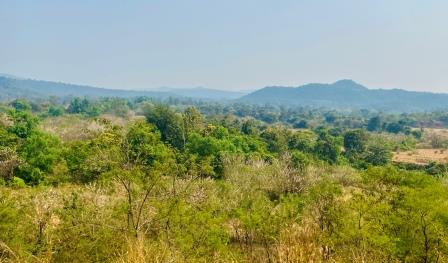
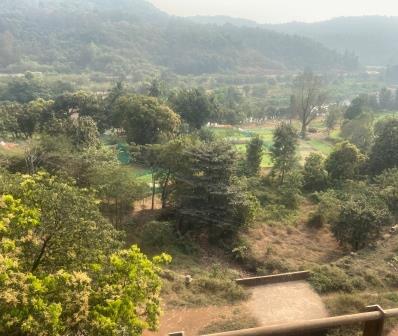
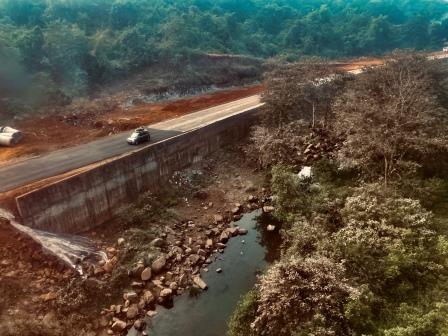
The countryside was pretty stunning. We were passing through coconut groves and paddy fields. There were plenty of tunnels too. We were into Rajapur Road at 13:02.
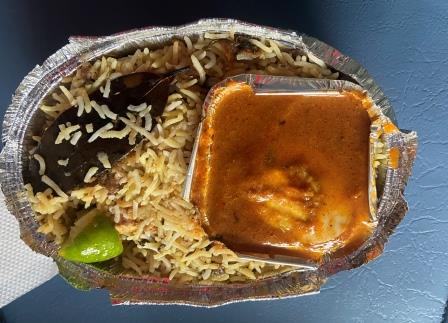
Ordering lunch on the Mandovi was a little different. One of the staff came around with a pad and pen offering us some choices. My companion strongly recommended the chicken biriyani, so I went for that.
The food took a good half an hour to arrive, but it was certainly worth the wait. Freshly cooked with big thick pieces of tasty chicken. We stopped at Ratnagiri, having made up time, at 1435.
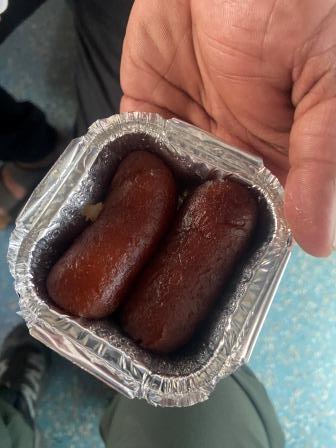
The dessert on offer was gulab jamun. I am not a fan of Indian sweets but my companion persuaded me to try one, it was actually not too bad.
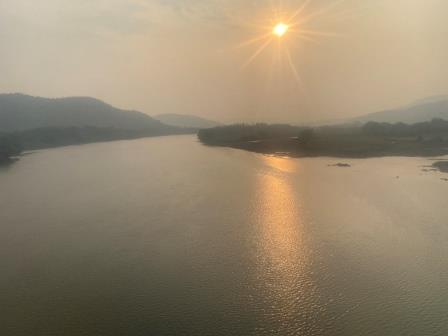
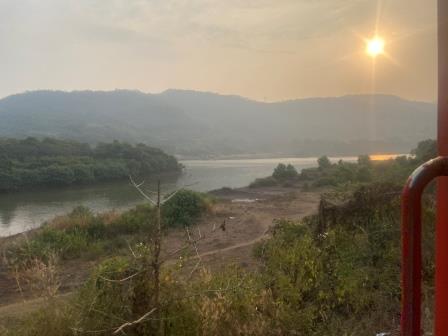
By the late afternoon we were skirting a river estuary and the sun had begun to set. They were still passing through the train with food. There were a lot of things that I was refusing, including tomato soup and roll, dosa, bread with cutlet, omelette sandwich and fried chips.
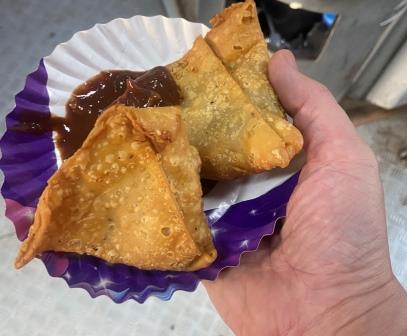
Feeling a little peckish, I finally decided to try the samosas. They came with a tamarind sauce and were quite terrific.
The elderly couple got off at Mangaon where we arrived on time at 17:08. Their seats were taken by a couple of guys who looked like businessmen. My companion fell asleep in his top bunk and I spent a lot of the rest of the journey sitting out in the corridor.
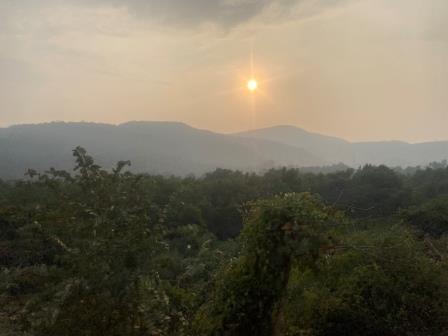
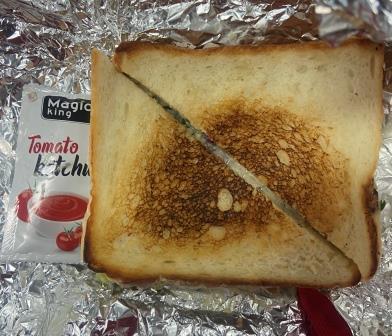
The chilli cheese sandwich had been going up and down the train a few times and I had passed up on it twice. My curiosity finally got the better of me.
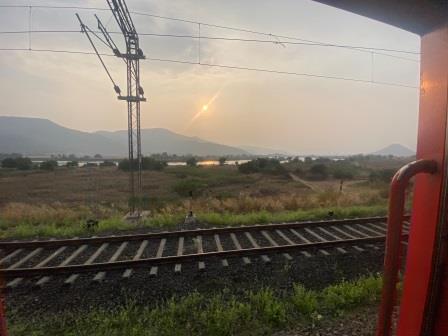
An interesting mix of cheese, onion and chilli flavour, it was the last thing I tried on the Mandovi. It was a suitable end to a great trip.
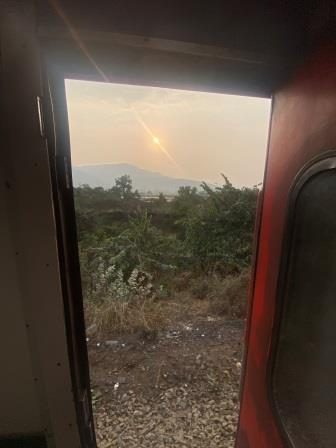
It was already dark when we passed through Panvel, the last major stop before Mumbai. It was 19:40 and we were around thirty minutes late again. My companion was awake now and he was predicting that we would still be arriving at Dadar on time. I figured there must be a lot of recovery time built in to the schedule. By the time we got to Thane we had made up 20 minutes and, sure enough, we reached Dadar on time. I bid him farewell and wished him good luck in his training.
Most people got off at Dadar and as the train travelled the last few kilometres into CSMT terminal, I was on my own in my part of the carriage. The crew were busy redistributing pillowcases. They told me that they would be returning to Madgaon at 23:00 after a turnaround at CSMT of just 1 hour and 15 minutes.
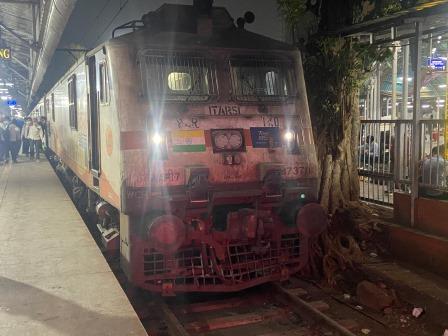
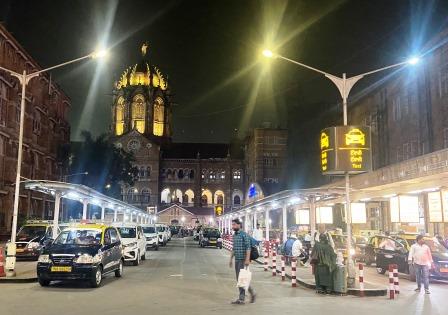
The allowance from Dadar proved more than ample and in the end we arrived in to platform 18 at CSMT terminal at 21:30, a full fifteen minutes early. I had made it. I wandered through the concourse and out into the city. I had one last journey to make, a return trip to Pune the next day, but first I had to find my hotel.
Continue the journey soon on – #11008 – Deccan Express (Pune)

 Trains To Beyond