Mumbai to Pune and return
Having spent the night close to Mumbai’s CSMT terminus, I returned to the station the next day to board a train to Pune. My aim was to experience the historic and scenic line over the Bohr Ghat, spend a couple of hours in Pune and then return to Mumbai in the afternoon.
CSMT
I was back at CSMT the next morning at 07:30. My night in Mumbai had passed off without too much drama. I had found my hotel, the A K Fort, without too much trouble just ten minutes’ walk from the station.
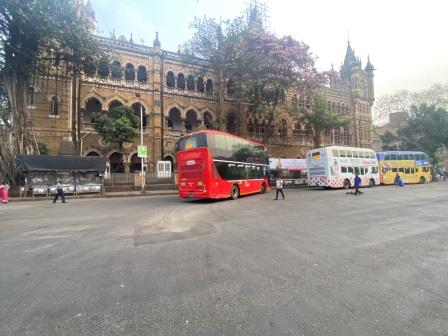
Being back in Mumbai gave me a sense of experiencing “a big city” for the first time in the trip. I had popped out for a little walk and grabbed a beer at the Universal, an Irani café at the end of the block. This brief glimpse of the city had left me wanting more and as I prepared to head out of Mumbai, I was also looking forward to returning quickly.
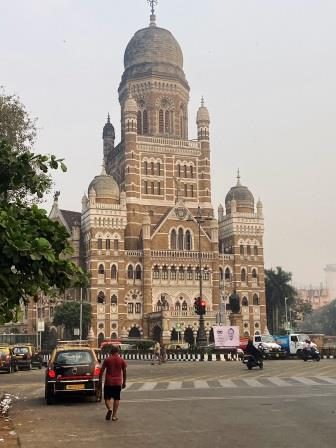
I made a longish detour to approach the station from the west and enjoy its façade in all its glory. I stood next to the brand new entrance to the Aqua Line metro and admired the old terminus.
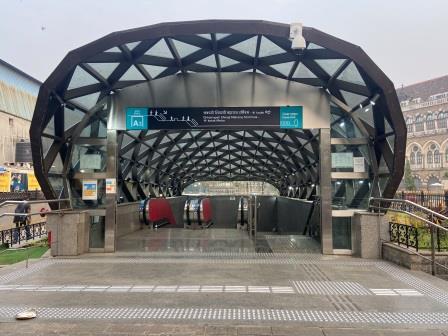
The iconic Chhatrapati Shivaji Maharaj Terminus in Mumbai, a UNESCO World Heritage Site, is known for its Victorian Gothic Revival architecture which has both British and Indian influences. Opened in 1888 it was named Victoria Terminus in honour of Queen Victoria’s Golden Jubilee. It was renamed in 1996 but is still popularly known as “VT.”
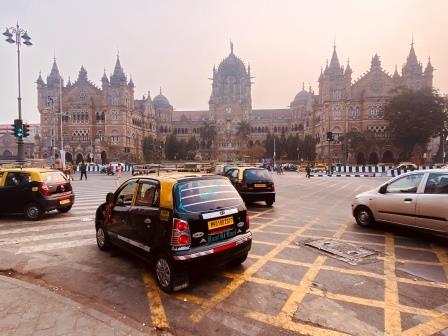
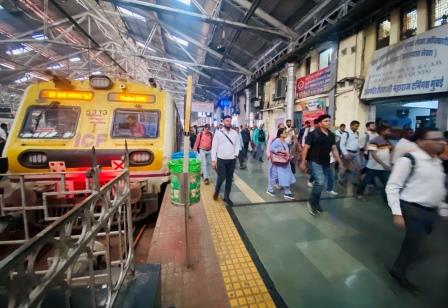
I walked through the subway under the street and entered the concourse. It was before 08:00 and the place had a buzz about it; the morning rush was well under way. Trains were arriving at the suburban platforms and I stood and watched as the masses piled out of the EMUs and filed past me on their way to work.
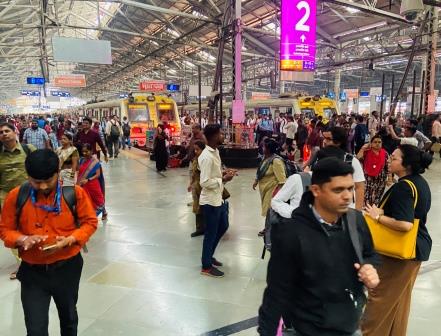
The place had certainly brightened up from when I last saw it in 1994. One prominent change was the big, illuminated platform signs in different colours, purples and oranges, to match the lines they signified.
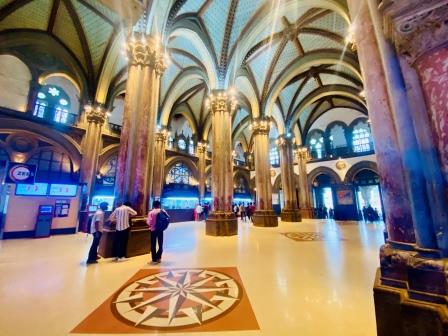
I walked into the Star Chamber booking office and admired the beautiful roof. The place was relatively quiet; There was a little queue in front of the row of Automatic Ticket Vending machines.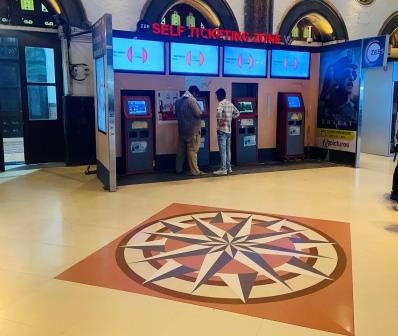
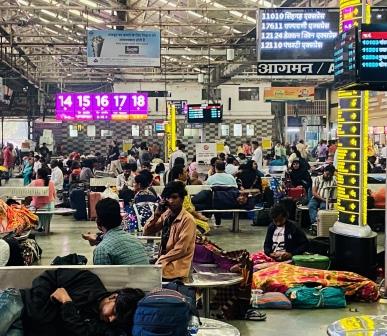
After wandering around a bit more I walked through to the 1929 extension side of the station. This was where all the long distance trains arrived and departed from. Here was a completely different atmosphere, people were crowded around waiting for their trains. Most were sitting on the benches; some were camped on the floor. The destination boards showed a variety of trains leaving over the following couple of hours. I saw that my own train would depart from platform 11.
There were not that many outlets on the concourse to get breakfast. I made a beeline for Dinshaw’s, a Parsi café established in 1932, with a branch here, and purchased two of Mumbai’s signature vada pav snacks.
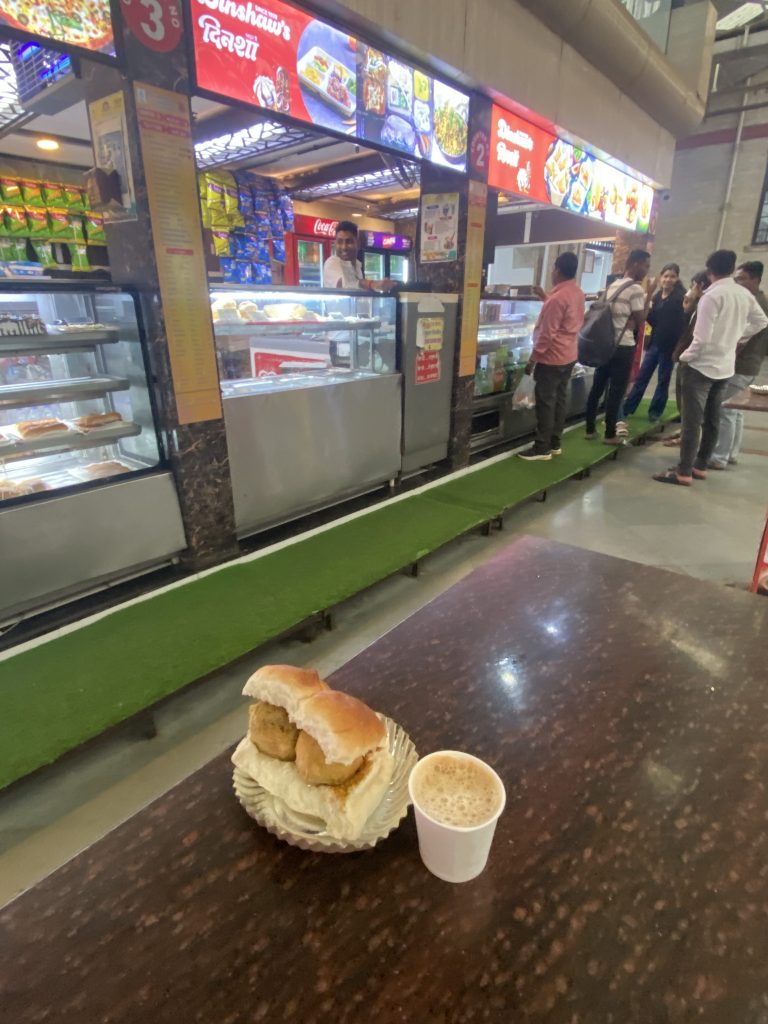
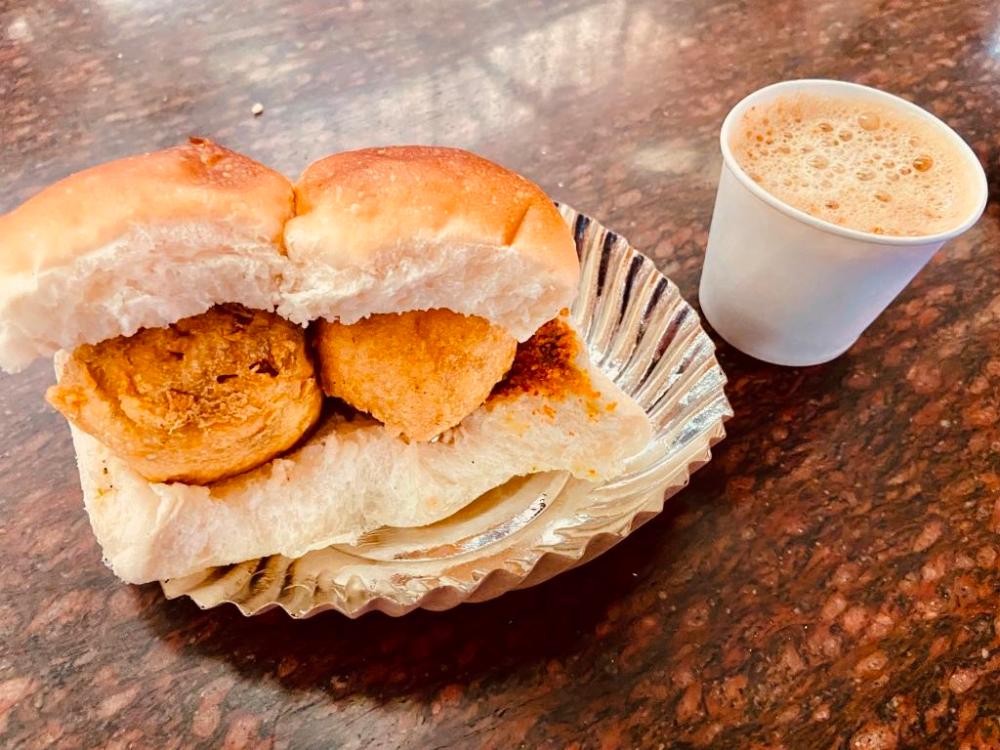
The potato donut in a roll with hot spicy chutney was originally developed for local mill workers but has become synonymous with the city. I enjoyed mine with a coffee. Delicious.
Train #11029, Koyna Express
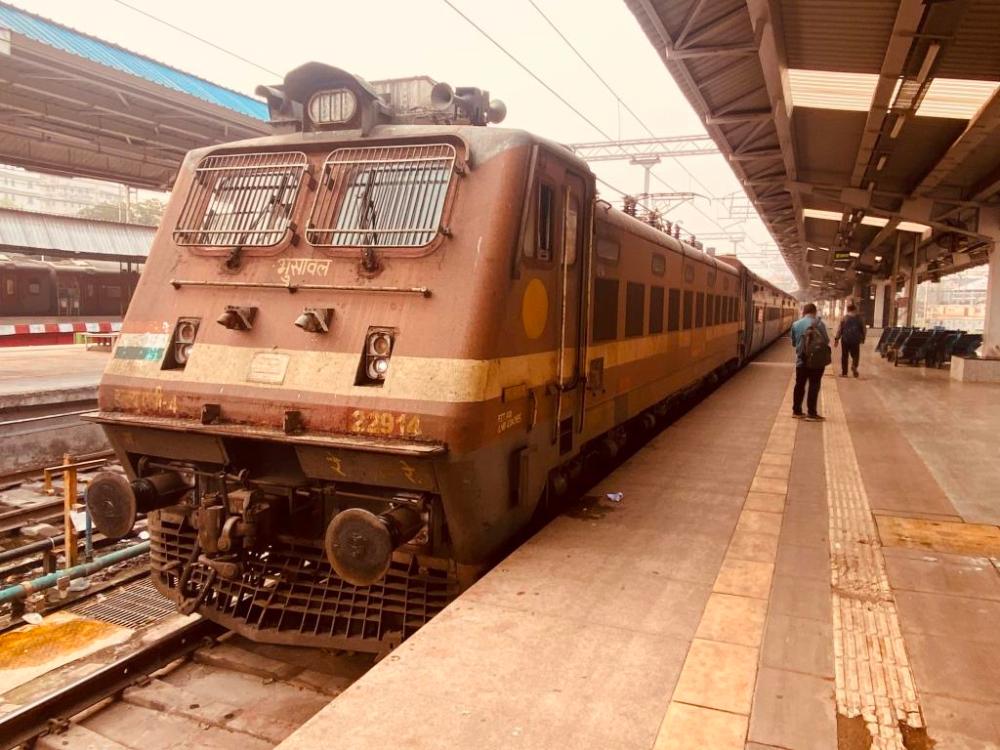
Although there was still more than half an hour to go before departure, my train was already standing in platform 11. The WAP 4 electric locomotive that had brought it in was still at the head and preparations were being made to separate it from the rake of coaches.
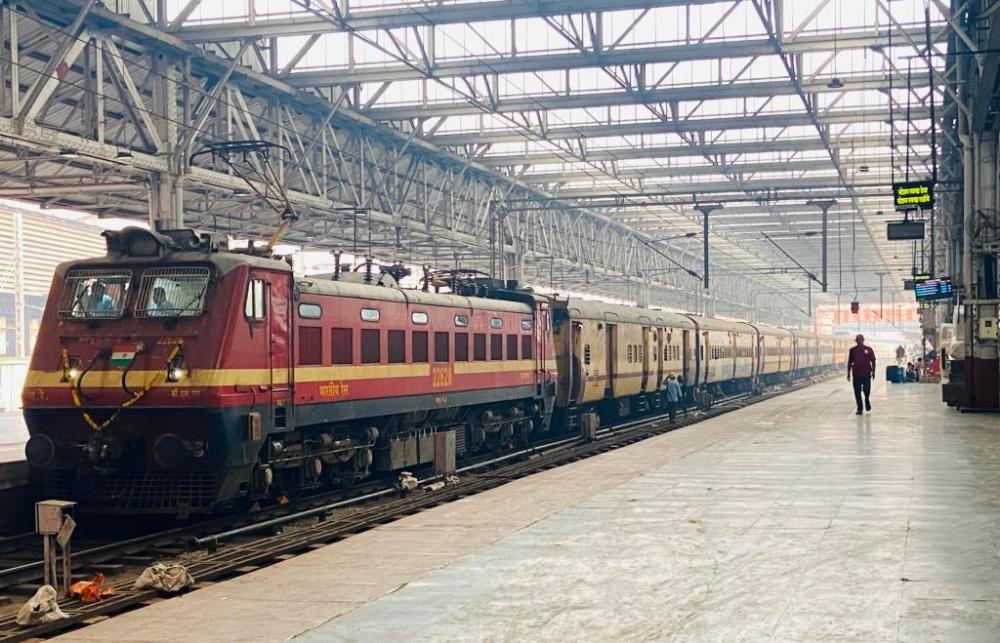
Train #11029, the Koyna Express, is a daily service linking Mumbai (CSMT) and Kolhapur. It is named for the Koyna River. It departs at 08:40 and travels across Maharashtra for about 11 hours to its destination. It makes several calls enroute including at Pune (192 km) at 12:35.
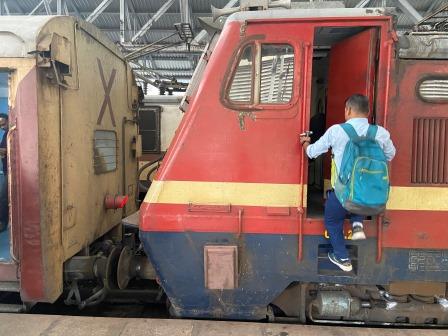
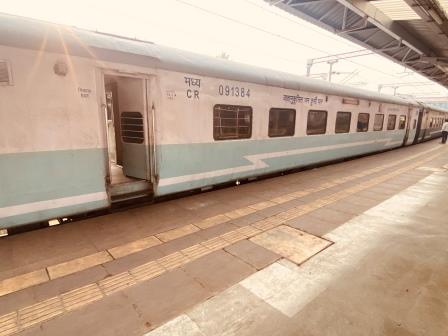
I walked the entire length of the train. All the express services I had used up until this point had been formed of the German-designed LHB carriages introduced from the late 1990s on. I now saw that the ‘Konya’ was made up of older Integrated Coach Factory (ICF) carriages that I had encountered on my first visit to India in 1994. 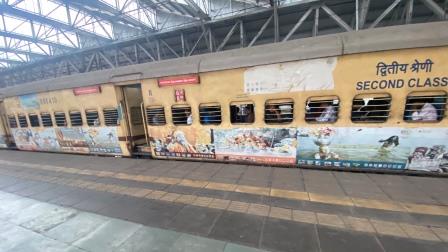
The first carriage (SLR) destined to be at the rear of the train was divided into sections for passenger seating, luggage storage and a guard’s cabin. There were two non-airconditioned chair carriages (D1 & D2) and six non-airconditioned sleepers (S1-6), been used here in daytime mode. All of these coaches were already filling up with passengers.
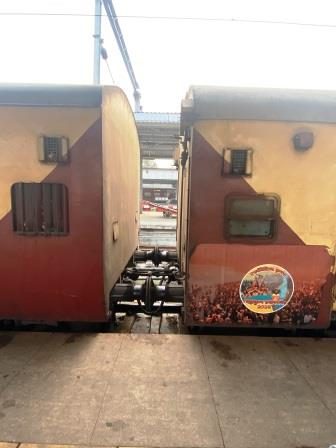
The next five coaches were air conditioned. The composite (HA1) was familiar from my trip from Madgaon and that was followed by two three-tier sleepers (B1& B2) and then two chair coaches (C1, where I had my reservation, and C2). Right at the front were two more general unreserved second class carriages and a second SLR. Another WAP 4 stood at the head of the train with the driver already in the cab.
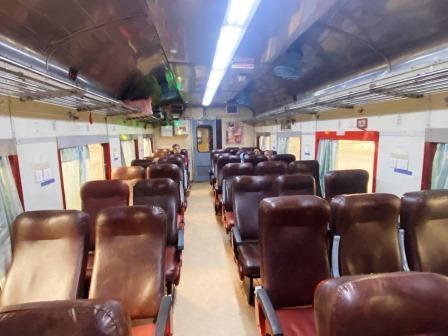
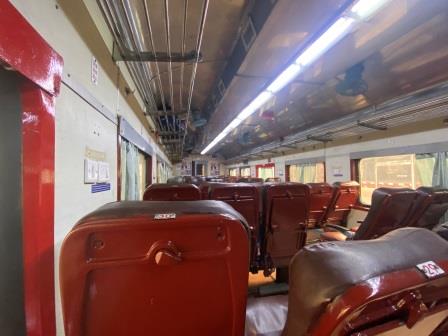
I returned to my own carriage and went inside. It was mostly empty. The old brown seats were arranged in a 3 + 2 pattern and were all fully reclined. Their backs seemed to have been painted too many times and looked a bit worse for wear. I sat in my allotted window seat and then watched a few rows in front of me as four middle aged ladies came aboard and spent more than ten minutes arguing amongst themselves about which seats they were supposed to have.
When at 08:40 precisely we began to move, there were no more than ten people in my carriage. A minute later we stopped just outside the station and waited for more than ten minutes before moving off. We left Dadar, a little later than our 08:50 scheduled departure time, with the carriage half full.
We stopped at Thane about twenty five minutes later. A middle aged lady and her elderly mother came and sat next to me. There were no empty seats left.
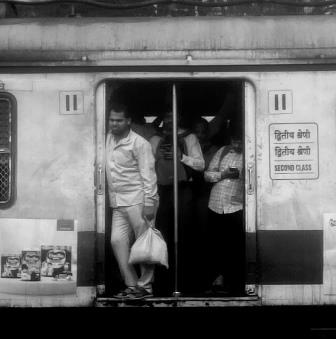
As we made our way through the Mumbai suburbs I was watching the commuter trains heading into the city at the tail end of the rush hour. We stopped at Kalyan Junction about twenty minutes or so later. We were almost 55km into the journey before finally some longer stretches of green countryside became visible.
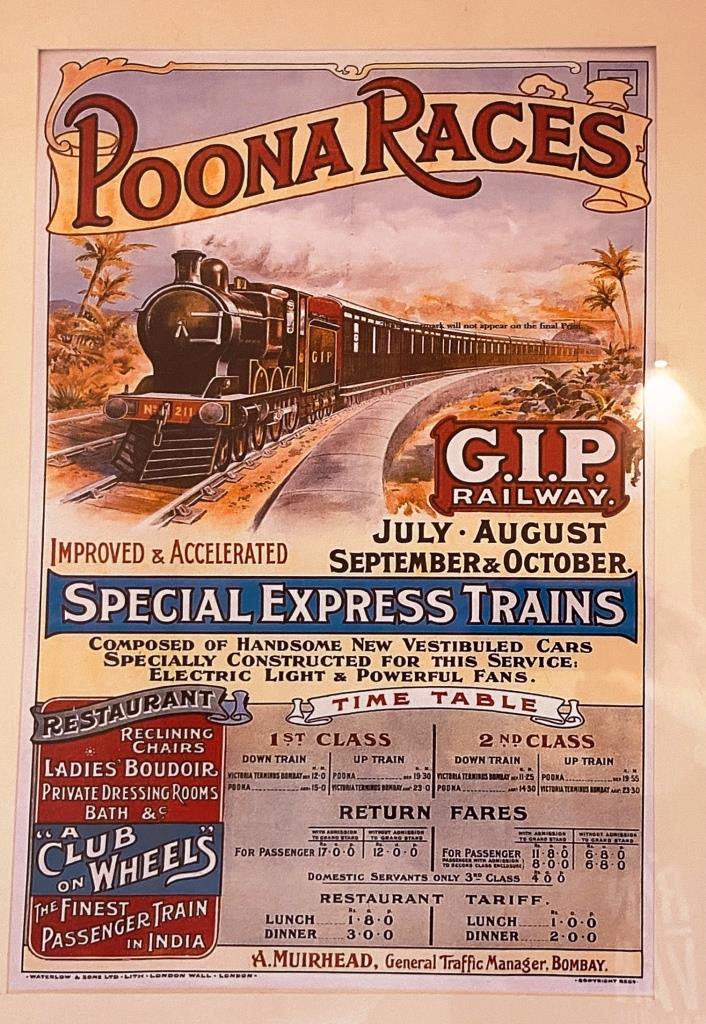
The line out of Mumbai includes the first stretch of railway built in India. The line to Thane (34 km) had been opened by the Great Indian Peninsula Railway (GIPR) in 1853. It was gradually extended towards Pune but the difficulty of crossing the Western Ghats meant that it took several years to complete. The Poona Mail started running from 1864.
We put on a good turn of speed for a while and then just stopped. We sat just outside Neral Junction for almost three quarters of an hour. Nobody seemed to be concerned. I looked out of the window and saw that the track was strewn with litter. It was not the first time I had seen this but it was particularly bad. India is still grappling with a big littering problem.
We finally arrived at Neral Junction at 1105, almost an hour late. Quite a few people got of. When we got going again there were sellers coming through the train. One guy was selling coffee and I got a cup; another guy was hawking a suction device that you could stick on the window to hold your mobile phone. He demonstrated it by throwing it at the window next to me. It was quite impressive. I passed but he made quite a few sales.
We pulled into Karjat, still an hour down, for a technical stop. Three electric banker locomotives were attached to the rear of the train to help with the forthcoming climb of the Bohr Ghat.
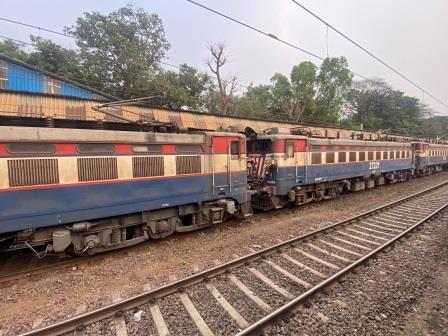
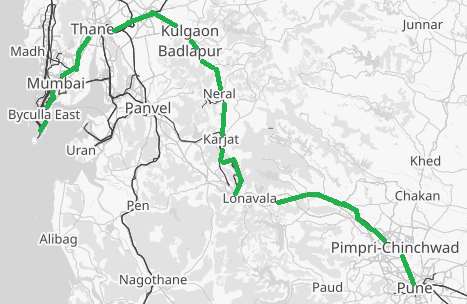
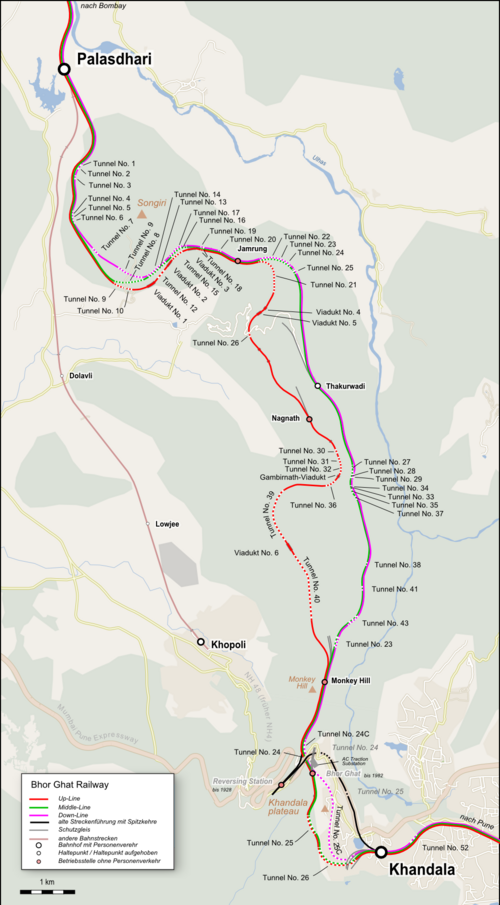
A few kilometres on we passed through Palasdhari and the Mumbai Suburban line heading to Khopoli (located in the valley) branched off. We started on the 25km climb; we would ascend around 550 metres.
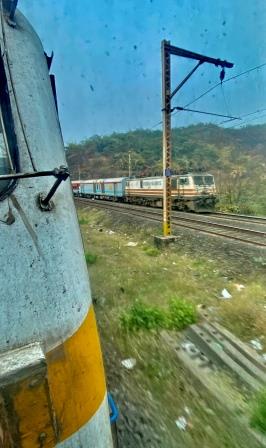
After passing through several short tunnels the route split into two. The descending line, a single track, is the original 1863 railway. It is shown in red on the map below. The ascending line that we now followed comprised of two tracks (shown in purple and green) and was built in the early part of the twentieth century to ease the uphill gradient.
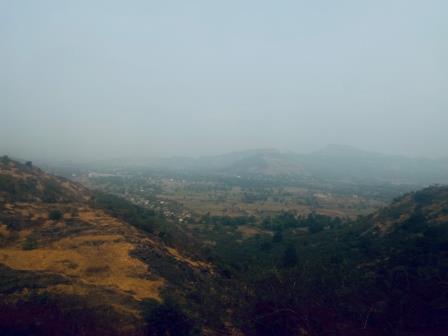
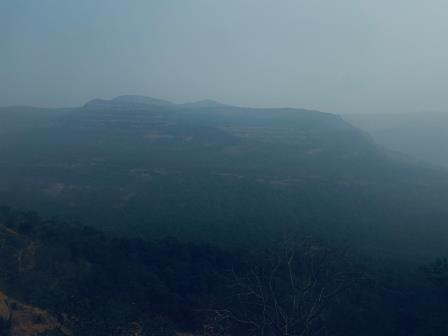
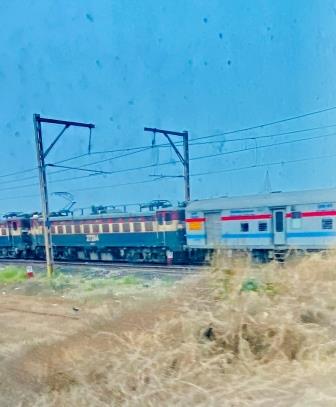
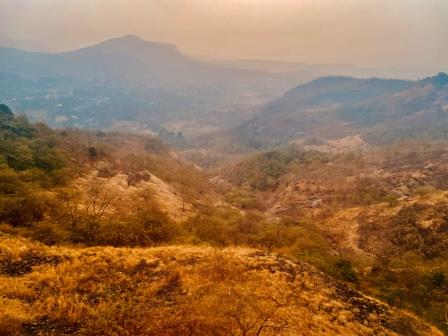
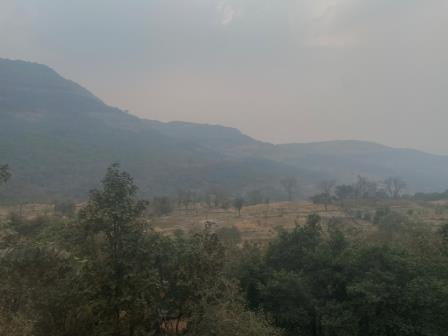
The best views were off to the left as we climbed but it was quite misty. We passed through more tunnels and the view opened up to reveal deep valleys. In 1930 the whole line from Mumbai to Pune was electrified using the 1500V DC system which further helped the climb. Conversion to 25 kV AC was completed by 2016.
After a long tunnel, we pulled into Khandala at the end of the climb. We then stopped at Lonavala to get rid of the bankers. Once we got going again the speed increased. We were now up on the Deccan plateau. We made a few more stops on the outskirts of the city and, not having made up time, arrived an hour late at Pune at 13:40.
Pune
The late arrival into Pune somewhat put paid to my plans to get a spot of lunch and then spend an hour or so exploring the Aga Khan Palace, one of the city’s most famous sites.
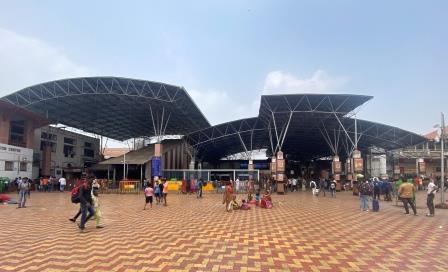
Pune, sometimes known as the “Oxford of the East” is a major educational and tech hub. The population of the metropolitan area is around 7.5 million which makes it the ninth most populous city and Maharashtra’s second largest. Its most common nickname is “Queen of the Deccan”.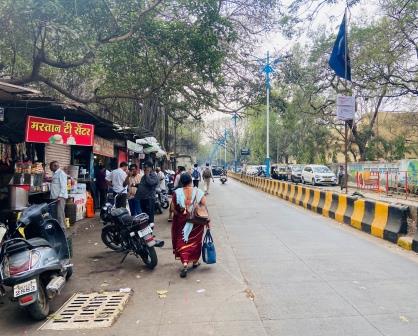
To be fair, I had only really made the trip for the train ride, a deeper dive into Pune would have to wait until another visit. Now with only two hours before my train back I decided just to walk to the outside of the Shaniwar Wada and get an auto back again.
I set off walking. I quickly left the busy area around the station and headed down a tree lined boulevard. At first glance Pune felt a bit more relaxed than Mumbai, a bit more like Bengaluru perhaps. The temperature was a little lower too.
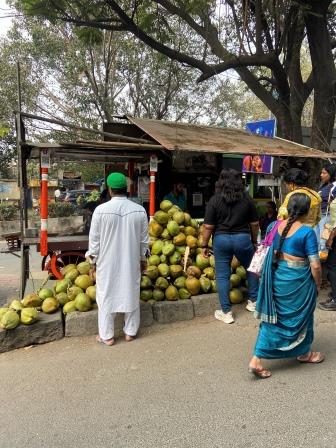
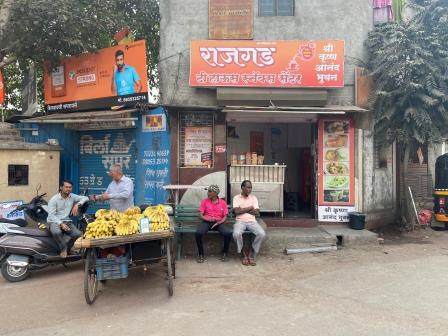
I walked for about forty minutes along narrow lanes passing little stalls selling snacks to the lunch time crowd. I encountered the occasional old traditional building tucked in between modern houses.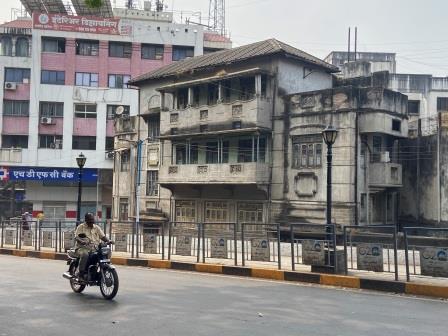
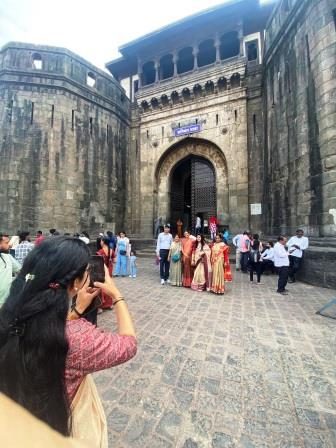
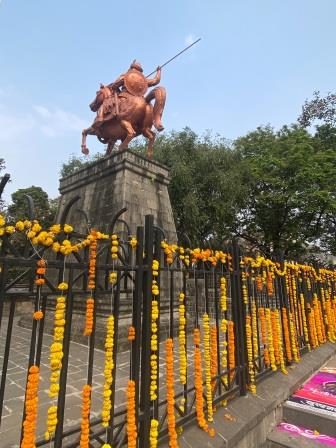
Shaniwar Wada, built in 1732, was once the seat of the Peshwas of the Maratha Empire. I did not have time to go in but I sat for a while admiring its massive gates and then had a little stroll around the garden to examine the statue of Bajirao Peshwa I, the 7th Peshwa of the Maratha Empire and the builder of the palace.
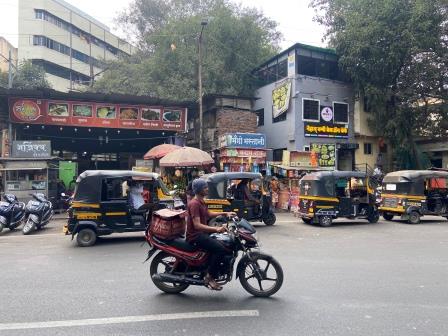
The taxis and autos in Pune were, I had read, all supposed to be using their meters now and the Uber prices were pretty much fixed at similar rates. I was sceptical. I ordered an Uber to take me back to the station, noting the 45 rupee price, cancelled it and then hailed an auto off the street.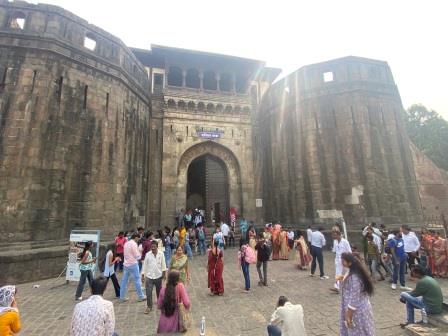
I was told that the meter could not be used, but the special price was 300. I had 60 rupees in change in my pocket. I offered that on a take it or leave it basis and after a bit of thought it was accepted. It took ten minutes to get back to the station.
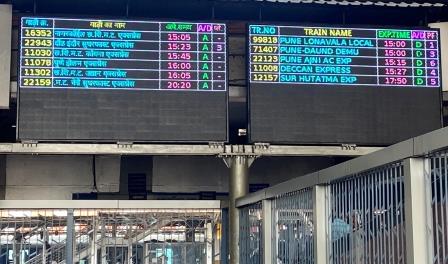
I had not left myself much time. My train was showing as departing on time at 15:27. Most of the eating places were busy so I settled for a vegetable sandwich and a samosa from a kiosk. I ate them quickly and then hurried across to platform 4.
Train #11008, Deccan Express
Train #11008, the Deccan Express is an intercity train linking Pune with Mumbai. It runs daily, leaving Pune at 15:27 and arriving in Mumbai at 19:15.
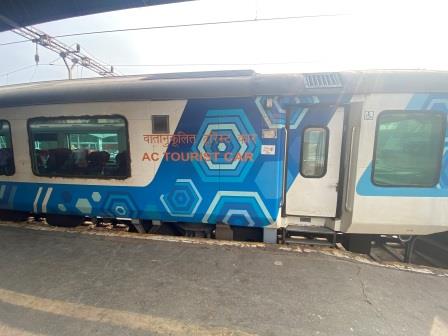
The rake for the Deccan Express consisted of 16 LHB carriages, there was a generator van at one end, five ‘GEN’ unreserved second class coaches, five “D” second class seating coaches, a trio of C chair coaches and the usual SLR van at the front. Marshalled right behind the locomotive was the “vista dome” (EV) carriage. For my last journey I had treated myself to a ride in it.
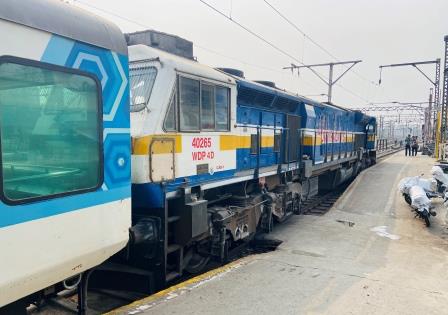
Finding the coach was easier than getting inside. With twenty minutes to go, a group of passengers were standing around watching the train crew try to open the doors. There was something wrong. The doors would not shift. Frantic mobile phone conversations ensued.
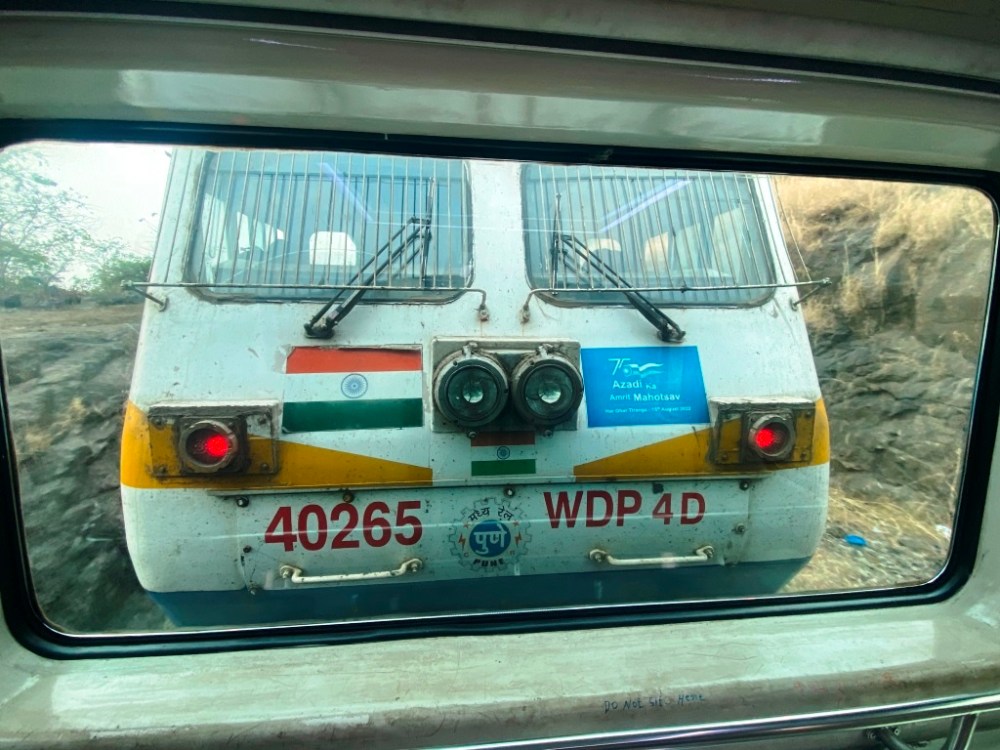
While I was watching all this, I realised that the locomotive was a diesel, a WDP 4D to be precise. I learned later that whilst the whole line was wired, there was a shortage of electric locomotives in the area. This meant that for quite some time, this train and a few others were diesel hauled.
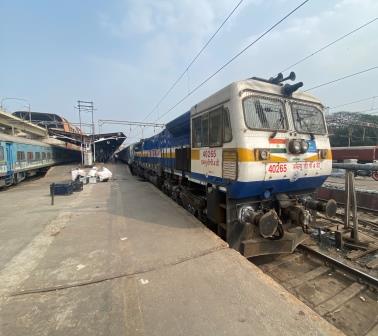
With just five minutes to go they cracked one door open with some kind of wedge tool and then managed to open the other one from the inside. We all piled on. The plush red seats and the wide windows were impressive. There were 44 seats in total and all were filled by the time we left.
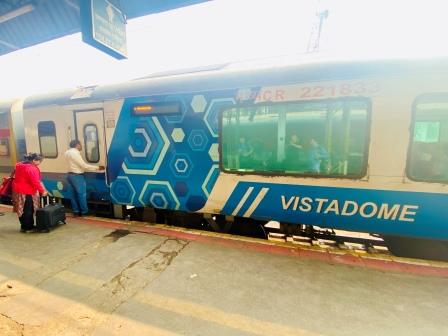
The destination display on the carriage end had not been changed, this rake was shared with the Jan Shatabdi express which headed from Mumbai to Madgaon, obviously another good route to have a vista dome on.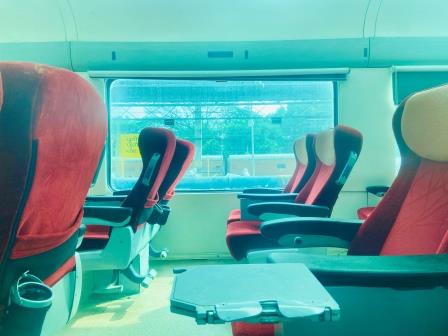
We set off on time and made satisfactory progress back to Lonavala. Then we began to descend through tunnels that were added in the early twentieth century. The ascending line here uses a longer tunnel that was opened in 1982. The original 1863 railway followed a different course here and used a zig zag reversing section (shown in black on the map above) on the Bhor Ghat to tackle the gradient.
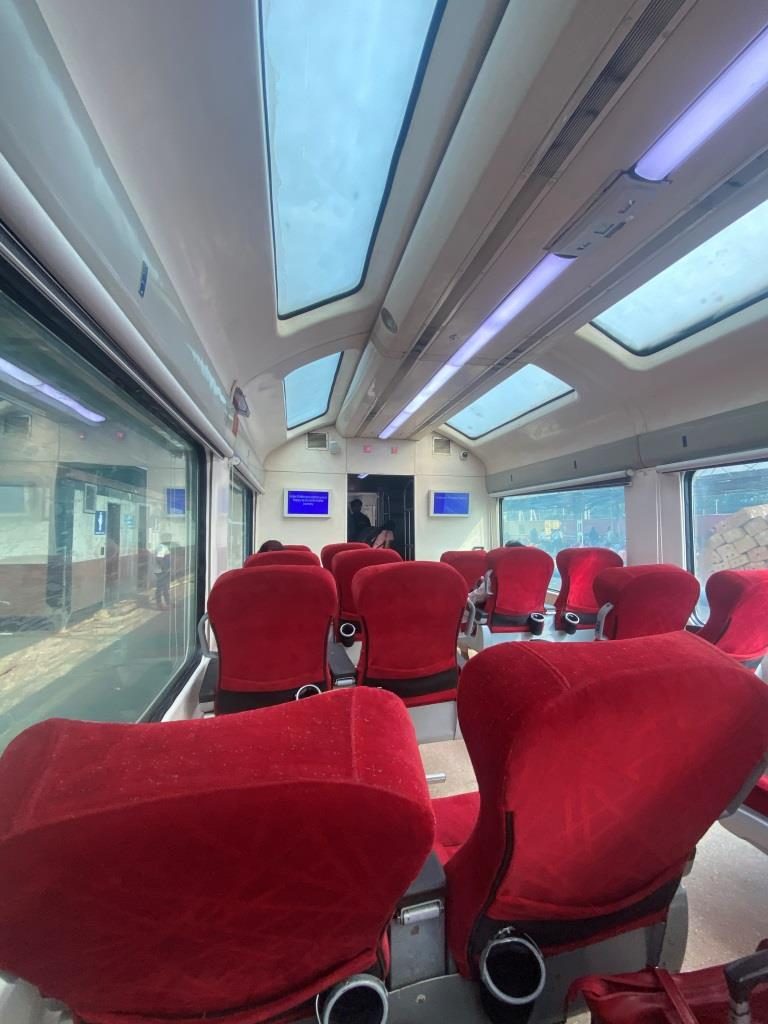
We came to a halt at Monkey Hill for a mandatory brake test, before setting off again on the original 1863 line passing through Monkey Hill tunnel. From here the line curved its way down the mountain side through cuttings and tunnels and over bridges. The best views were off to the left hand side.
I left my seat and walked to the little enclosed observation platform at the end of the coach. The locomotive was clearly visible through the glass. A few people were taking selfies but they soon went back to their seats. I stayed there until the train was approaching Karjat at the bottom of its climb.
The engineering challenges involved in building the line back in the nineteenth century were immense, a maximum gradient of 1 in 37, more than 25 tunnels and 8 high viaducts. The Human cost of the construction was enormous. Worsened by a cholera epidemic, it is estimated that the death toll was around 25,000.
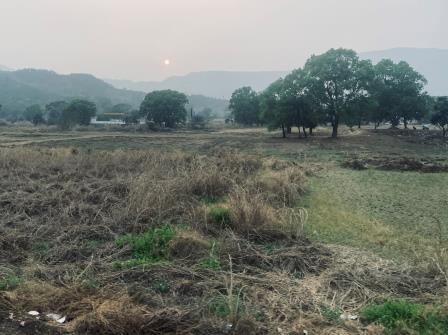
We arrived at Karjat running about fifteen minutes behind schedule and after a lengthy stop, set off again. As we got closer to Mumbai the stations came quicker and we were passed by crowded suburban trains heading out of the city.
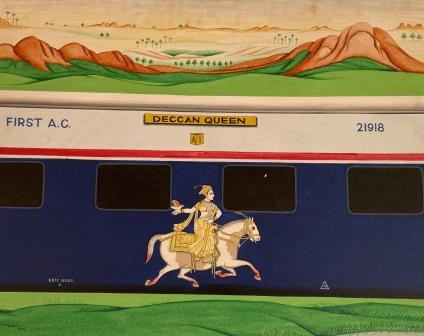
Whilst we were stopped at Kalyan Junction the Deccan Queen, recognisable by its distinct red and green livery, came hurtling through heading for Pune. The ‘Queen’, which runs from Pune into Mumbai in the morning and returns in the evening, has been operating since 1930. It currently covers the 192km distance in 3 hours and 10 minutes; back in the 1960s when the suburban lines were less congested and the train made fewer stops, it was only taking 2 hours and 45 minutes.
It was dark by the time the Deccan Express arrived at Dadar. It was just after seven o’ clock and we were still fifteen minutes late. I changed at Dadar onto a very crowded Western Railway commuter train. I was heading the short distance north towards Ville Perle and the rented apartment I would use as a base to explore the city over the next six days. As I squeezed into the crowded train, I congratulated myself on my ability to navigate Dadar station and effortlessly switch to being a ‘Mumbai commuter’.
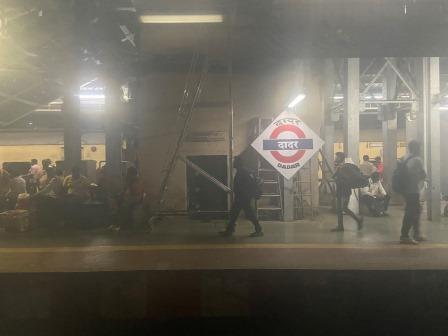
When I got off the train at Ville Parle a few minutes later I suddenly realised my wallet was missing. I had thought it would be safe in a zipped-up trouser pocket, but I was wrong. There were only around 2,000 Rupees inside so, although I had to quickly cancel a couple of credit cards, I actually considered myself lucky. Unfortunately, I had picked the wrong night to celebrate the end of my train travels, it was the anniversary of the assassination of Mahatma Ghandi and none of the bars were serving alcohol.
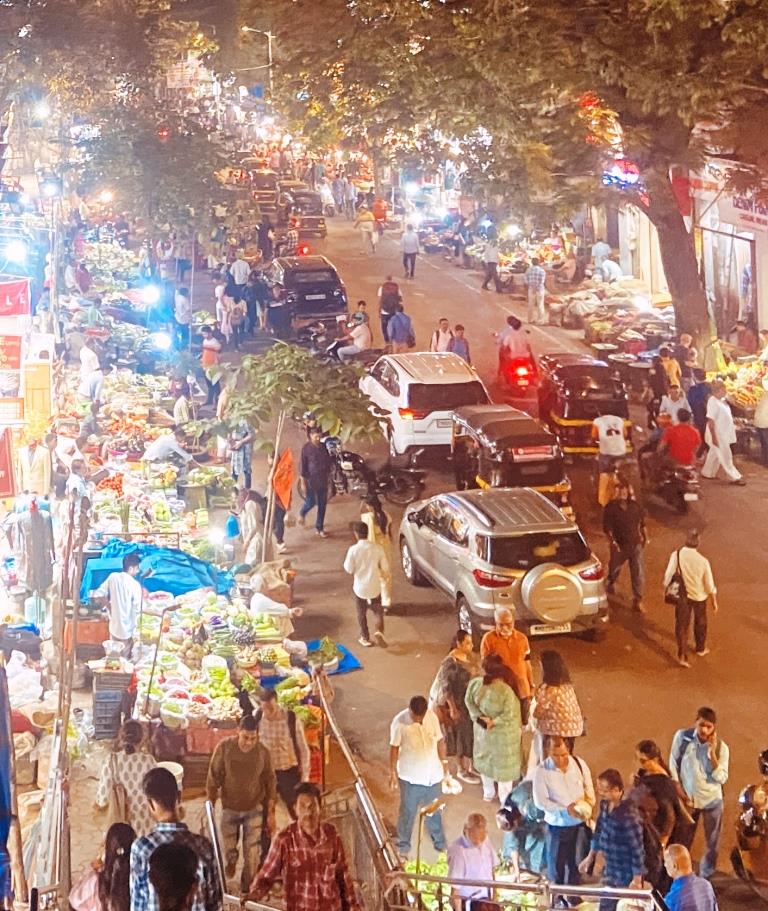
Welcome to Mumbai !

 Trains To Beyond
