Day Five – Pettigo
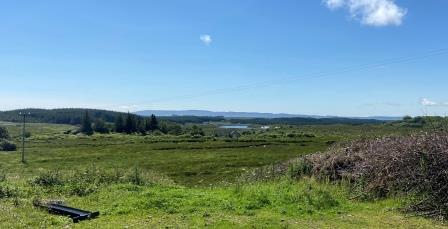
The next morning, we set off once more in the Volvo, this time heading south-east towards Enniskillen. We cut across from Donegal on the R232 to Pettigo pausing a few times to admire the views en route.
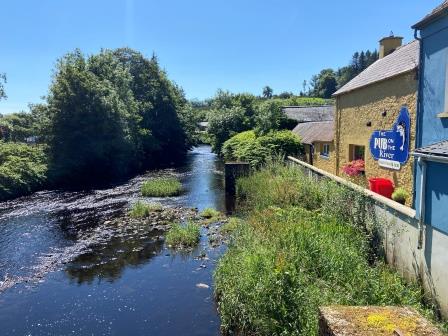
We drove into the village of Pettigo heading straight across the bridge over the River Termon at its centre. The 30 mph speed limit sign at the end of the little bridge indicated we were re-entering Northern Ireland.
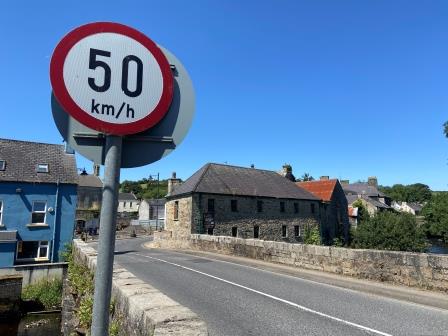
We did a little circuit of the part of the village that was in the UK and then went back to the Republic of Ireland side, passing the 50 km/h sign that was attached to the back of the 30 mph one in the process.
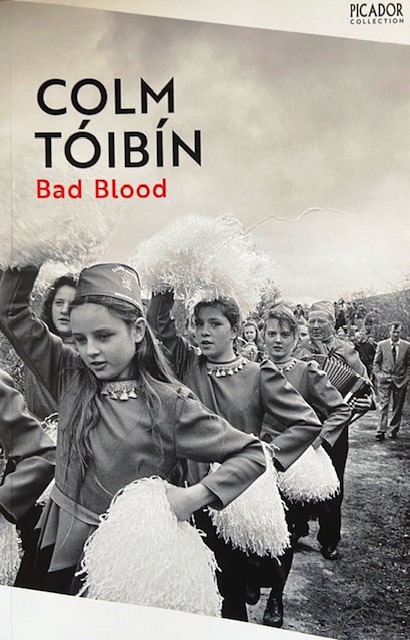
The near invisibility of the intra-Irish border was very easy to take for granted. It was not always so. I had brought Colm Toibin’s excellent book “Bad Blood” along with me on the trip. It tells the, often harrowing, story of the author’s own walk along the border in the mid-1980s. Pettigo itself is mentioned.
Pettigo was also a stop on the Enniskillen to Bundoran railway (E&BR). The station which functioned as a customs post after partition in 1922 is still extant as a private residence. The railway, eventually part of the GNR, actually went through the border three times in total and served the popular seaside resort of Bundoran. It closed in 1957.
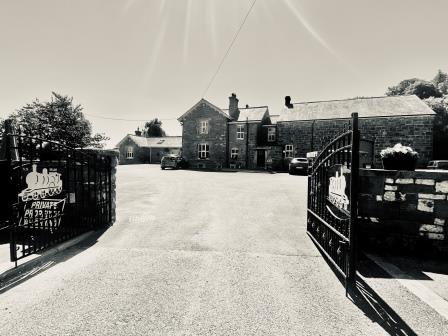
We found a little café in the village community centre and sat there with a couple of coffees discussing whether somewhere so close to the border would accept pounds as well as euros. We got our answer a few minutes later as we paid at the till. A lad dressed in an Irish rugby shirt offered the woman a £20 note for his lunch and, without anything being said, got 5 euros as change.
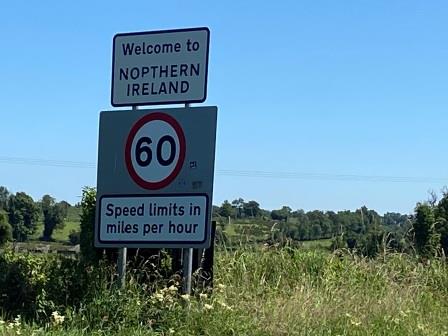
Enniskillen
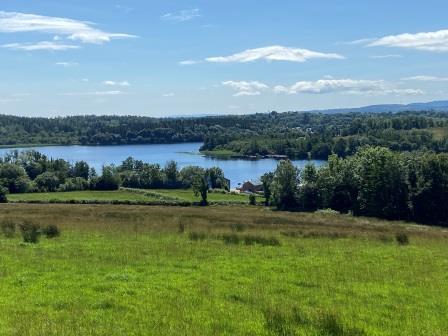
Back in Northern Ireland we passed through Kesh, another town that was on the E&BR, and took a right turn to take the scenic route to Enniskillen. The road was narrow but the views were amazing. We stopped in a layby for several minutes looking down on Lough Erne in the distance.
In Enniskillen, we found a free car park overlooking the River Erne in the centre of town and went on a little walkabout. It was finally getting a bit hotter; the first time we had experienced more than 20 degrees since leaving Britain.
Headhunters
We then visited Headhunters. the world’s only barber’s shop that doubles as a railway museum and the main reason we had come to Enniskillen. We spent a fair amount of time examining the wonderful collection of Railwayana on display and chatting to one of the brothers who ran the shop.
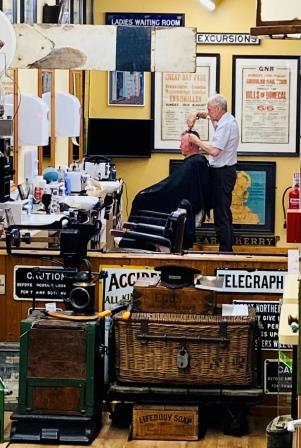
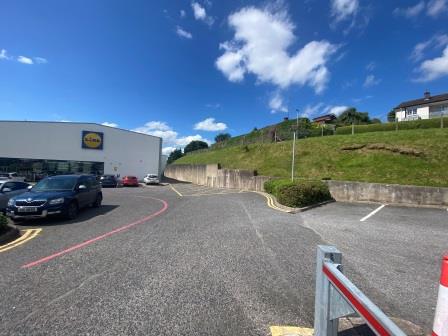
We had another excellent lunch of salad and soup in the bakery next door to Headhunters and then went off in search of the old Enniskillen station. It was once an important hub but closed in 1957. Today the old retaining embankment, in the corner of a Lidl car park is about the only thing left.
Lough Erne
We left Enniskillen on the A46 heading north-west and passing the imposing grammar school on the outskirts of the city. Originally Portora Royal School, it is one of the most famous educational institutions in Northern Ireland, former pupils include Samuel Beckett and Oscar Wilde.
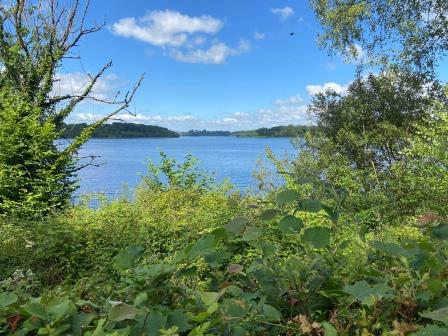
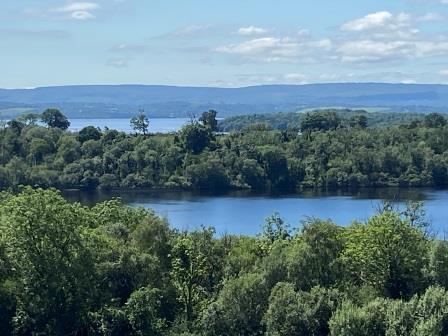
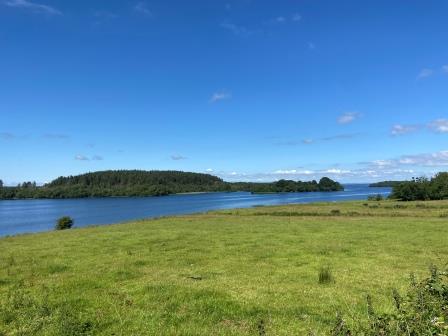
The road skirted Lough Erne, and we stopped a few times to take in the views. With little traffic, sitting by the lakeside felt wonderfully peaceful. We considered stopping for coffee in Belleek, the last settlement on the lake and officially the westernmost in the UK, but decided instead to continue over the border.
Ballyshannon
The A46 became the N3 and it led us across that narrow stretch of Donegal, the brain stem?, that forms the link with the rest of the Republic. A few miles on from Belleek we came to Ballyshannon, the point at which the River Erne finally drains into the Atlantic. There was a GNR station on the south side of the river, the penultimate one on the Enniskillen to Bundoran line. It closed in 1957.
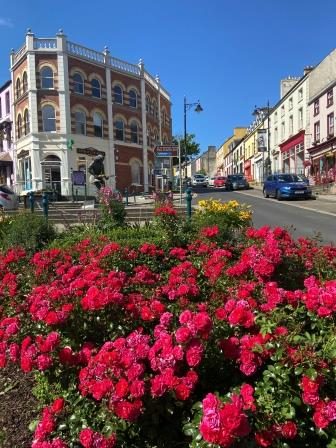
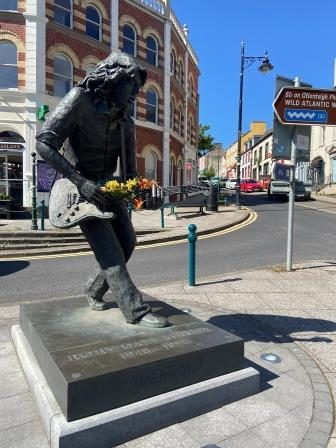
We crossed the river and parked up in the free town centre car park. On a Wednesday afternoon at 4:30pm it seemed deserted. We popped into Slevin’s department store hoping for a coffee but found the little café was closing early. We walked around, the town was pretty enough and was celebrating its most famous son, guitarist Rory Gallagher (1948-1995), not just with a statue but with a music festival too. It was a lovely spot; there just didn’t seem anywhere for coffee.
Creevy
There was a little “local link” bus sitting in the car park at Ballyshannon. It had route 292 painted on the side and it was clear it formed the link up to Donegal through Rossnowlagh.
Effectively it was the replacement for the old 3ft gauge CDR line that led up from its own Ballyshannon station on the north bank of the river to connect with the Killybegs to Stranolar line at Donegal.
We set off along the N15 but soon turned off on to the local road signposted “Wild Atlantic Way” At Creevy we crossed the path of the old CDR line as we headed down a single track road to the coast.
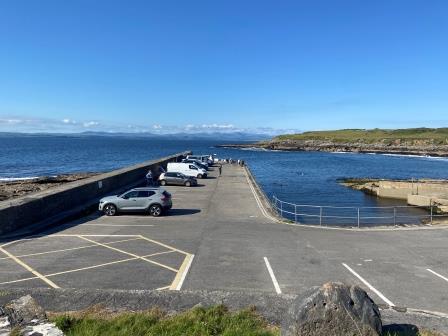
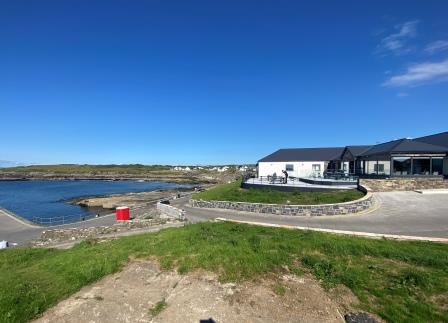
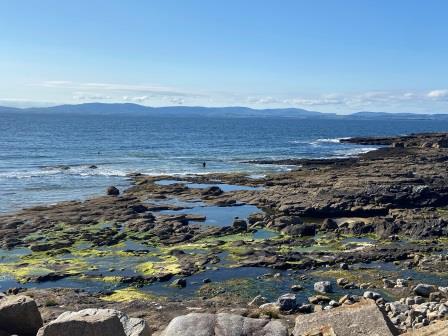
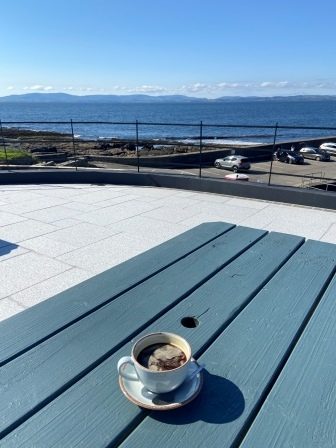
At the end we found Creevy Pier and enjoyed breathtaking views across the bay whilst drinking coffee from the Creevy Cove Hotel. We returned to Donegal tracking the route of the old line through Rossknowlagh.
Day Six- Drumboe
By our sixth day the weather was finally beginning to turn. No rain was forecast and Belfast, where we would ultimately end our day, was due to be sunny with temperatures in the mid-twenties. We checked out of the Airbnb and headed over to the Donegal Railway Museum.
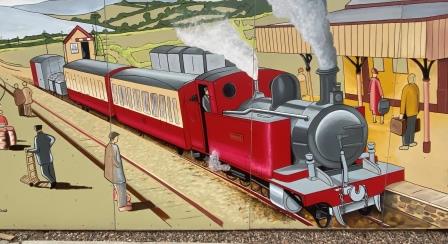
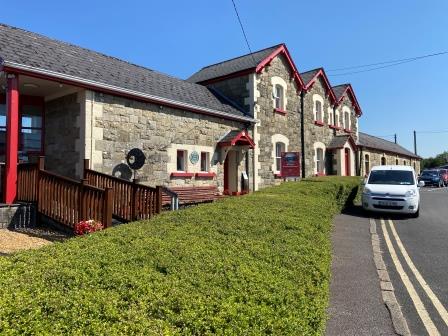
The museum is based in the old station building and features an extensive collection of artefacts, documents and a wonderful model version of the station. We were shown around by a couple of the volunteers who left us to watch an old colour film of the railway from the 1950s and then engaged us in a fascinating discussion on the past and possible future of railways in this part of Ireland.
Outside in the yard, was part of CDR railcar number 15, a passenger carriage, a wagon and then in pride of place, CDR 2-6-4T steam locomotive number 5 “Drumboe”.
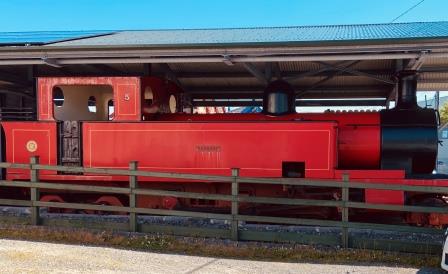
Donegal was the junction where three lines of the CDR used to merge. Having already covered the line from Killybegs and the line from Ballyshannon, we were now to follow the main line back to Stranolar. From there we would continue following the CDR route towards Strabane.
Barnesbough gap
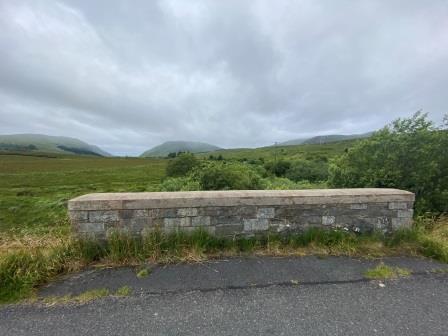
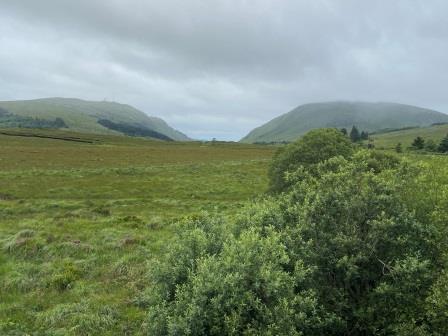
We set off in the Volvo along the N15 heading up towards the Barnesbough Gap. The railway would have been right alongside the road here,
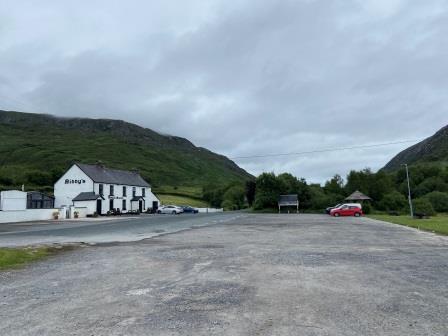
We paused in the car park of Biddy O’ Barnes pub and, much to the amusement of a couple of electricity workers in a transit van, spent a bit of time trying to work out exactly where the track had been.
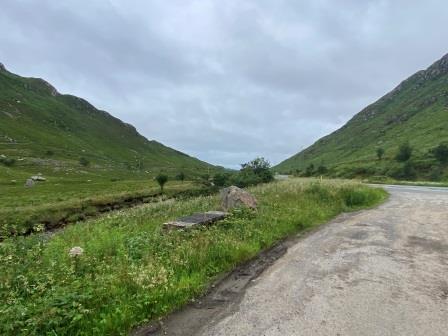
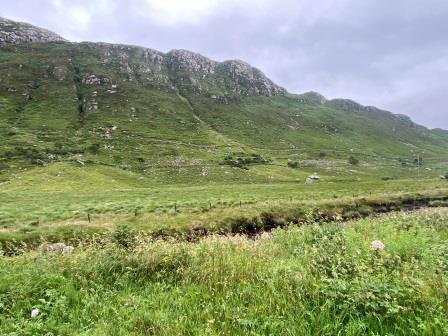
Spotting the old railway formation was a bit clearer further on and we paused again at the Castlederg road where the remains of an overbridge marked exactly where Derg Bridge Halt used to be.
At Stranolar the line from Donegal merged with the branch coming from Glenties. We stopped to take photographs of the information board they had erected where the station used to be.
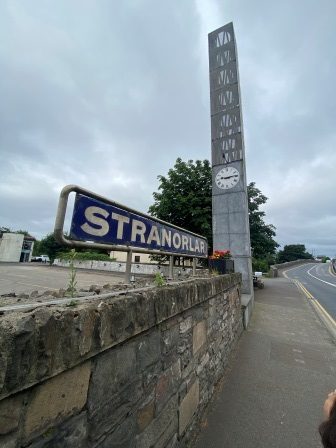
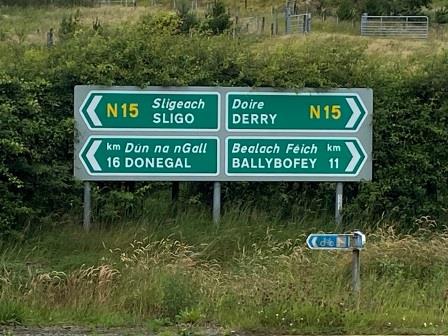
We then continued along the N15 following the route of the line and visiting some of the old station buildings as far as Castlefinn, the old customs post. Beyond here the CDR crossed the River Foyle into Northern Ireland and ended up at Strabane station. We stayed on the Republic side, going north through Lifford town to find the old Porthall Bridge.
Porthall Bridge
Porthall Bridge carried the old GNR line from Derry to Belfast on to an island in the middle of the Foyle. Another bridge on the other side of the island took the line into Northern Ireland. This was destroyed by the British Army during the Troubles to prevent it being used as an escape route for the IRA.
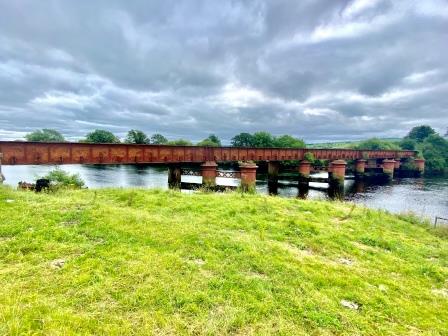
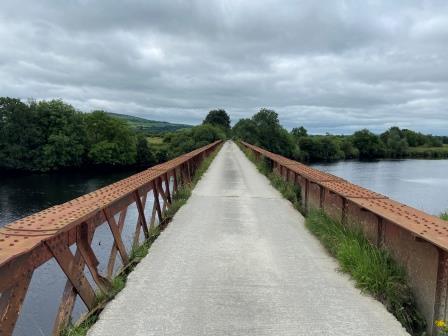
Crossing for the last time back into the UK, we drove through Strabane town centre and then took the A5 south. We were now roughly following the old GNR route to Belfast via Omagh and Portadown. We stopped for coffee in Omagh.
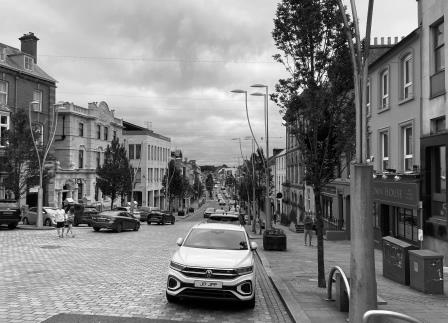
We continued on heading east along the A4 past Dungannon, another former GNR stop, and onto the M1 towards Portadown. Eventually we found our way up to Belfast International Airport where we gave up the Volvo and got an early afternoon bus into the city.
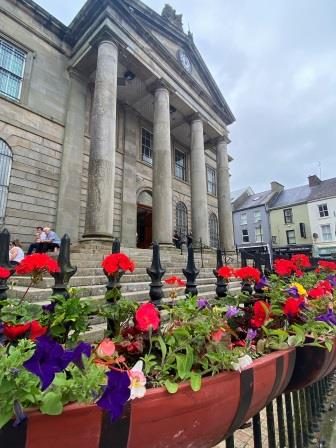
Day Seven – Belfast
During my first visit to Belfast in early 2023, the Titanic Museum had been closed for a bit of renovation, so naturally a visit was high on the list for this trip.
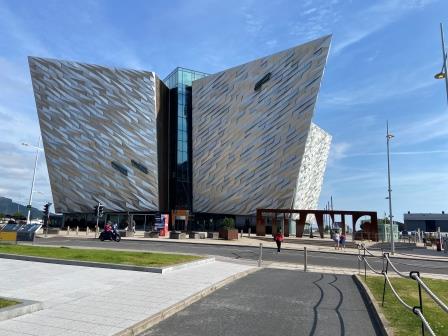
In the end we spent more than three hours wandering around the whole complex. It was a bit crowded, but very well done.
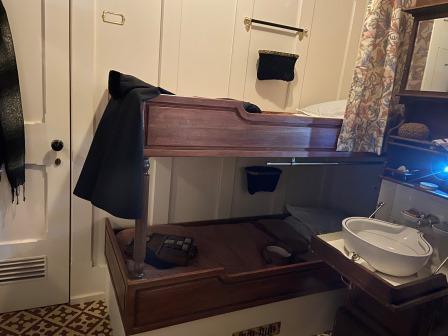
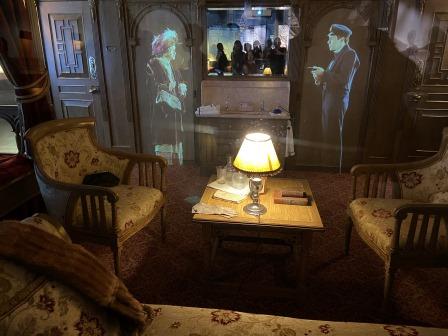
For the most part we spent the time in the city revisiting some of the places, like St George’s Market, that I had seen on my earlier trip.
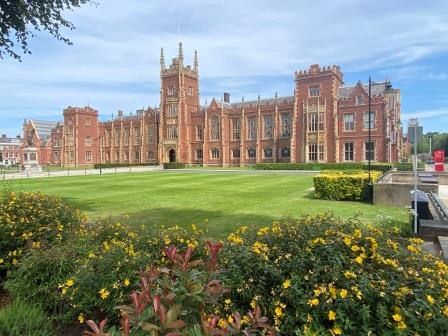
The daytime temperature had risen to twenty six degrees centigrade which made walking around very pleasant and was a big contrast to my previous experience when there had been snow on the ground.
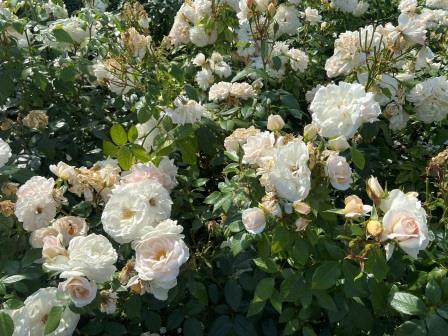
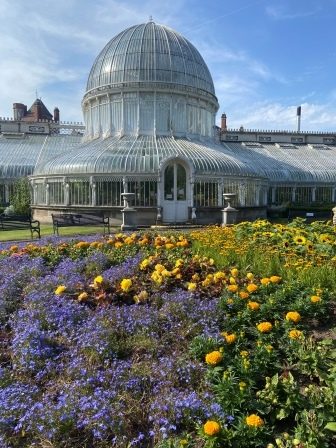
We took a bus out to Queens University and spent time exploring the excellent Ulster Museum, and then afterwards had a wander around the Botanical Gardens outside.
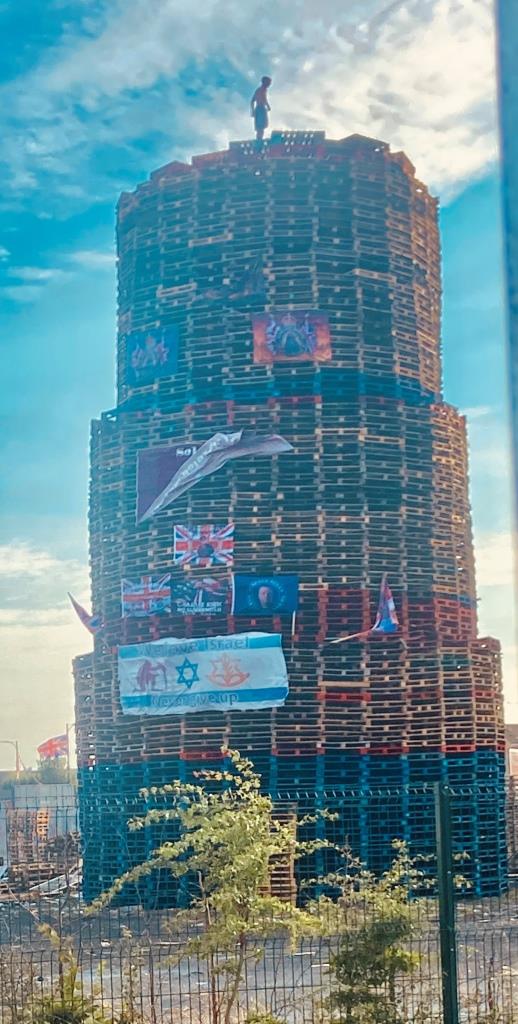
On the way back into the city centre we passed the enormous bonfire being prepared for the 12th July celebrations in Sandy Row.
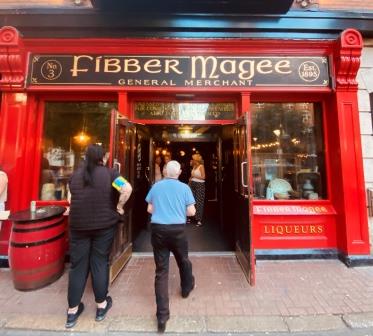
Naturally, I also took the chance to revisit some of the excellent pubs that I had been so impressed with back in 2023. None of them proved disappointing, and the visit did nothing to dispel my view that Belfast is one of the best places in Europe for a city break.
Day Eight – Sail Rail
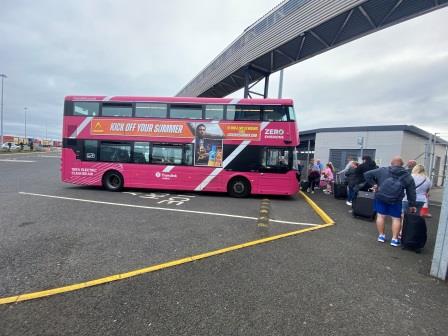
We started our long journey home from a bus stop just around the corner from the City Hall. The pink Translink Metro number 96 bus turned up just before its scheduled departure time of 09:45. About twelve people joined us in paying £2.30 for the twenty minute trip out to the Stena Terminal.
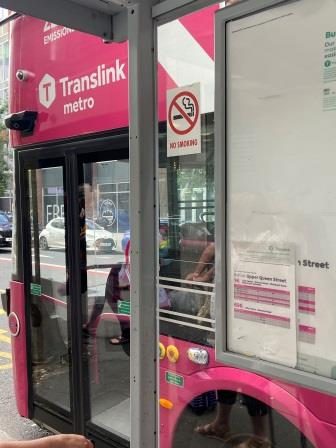
The Cairnryan Terminal was just a little further along the River Lagan than the Liverpool terminal we had arrived at. The Sail Rail ticket I had purchased for £41.95 (including railcard discount) would cover the rest of the trip all the way from here to Kent.
We were checked in fast, once again there was no ID check, and we were shown up to the third floor lounge of the terminal building from where, at around 10:45, we were allowed to board the 30,285 ton Stena Superfast VII.
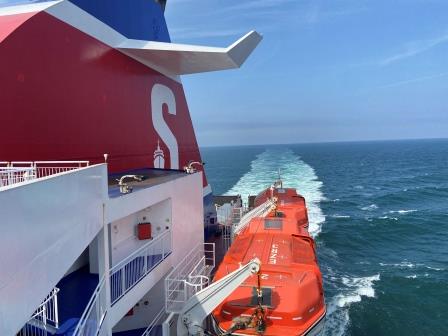
We sailed on time at 11:30 and had good clear weather all the way across the Irish Sea. We used some of the 2 hour 20 minute crossing to have lunch in the ship’s restaurant and then spent the last part of the voyage out on the deck as we came up the Cainryan Estuary.
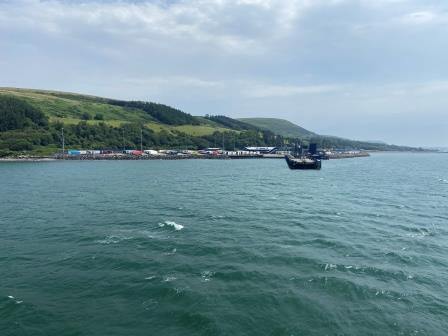
As we disembarked, we saw that the connecting bus had just arrived from Ayr bringing passengers for the return sailing to Belfast. It made a very efficient turnaround: having docked at 13:55, we were on the road by 14:15.
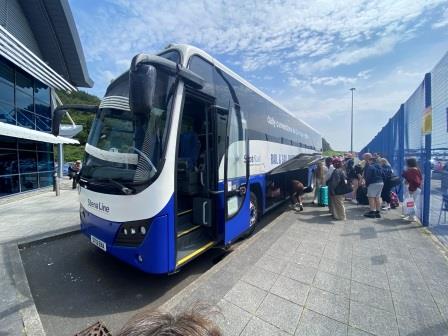
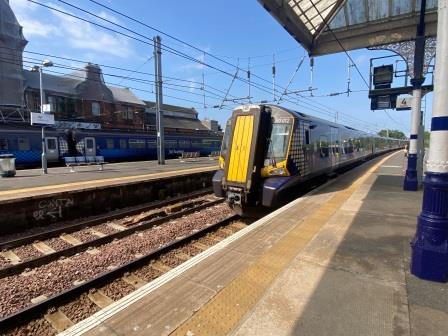
The trip along the A77 featured a lot of lovely coastal scenery with scenes of holidaymakers enjoying themselves in the sunshine. It took slightly less than the scheduled 75 minutes to reach Ayr. We arrived in good time to catch the 16:05 train to Glasgow Central which was formed by one of Scotrail’s comfortable Class 380 trains. We were into Glasgow just before 17:00.
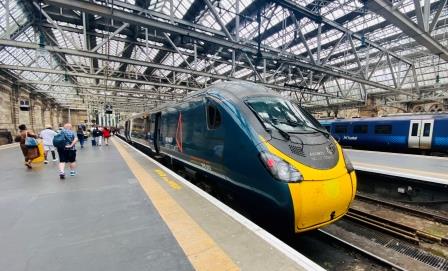
A trip to M&S for food preceded boarding the 17:30 to London Euston which was due to arrive in the English capital just before 23:00. We had our train picnic with some rosé wine whilst enjoying the scenery of the upper Clyde Valley, fully expecting to be home in Kent just after midnight.
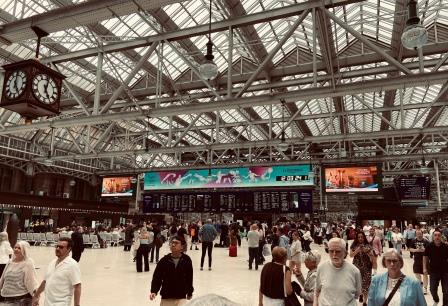
It wasn’t to be. A lineside fire closed the railway at Weaver and forced us off at Preston, We spent the night in a Premier Inn near the station. We finally made it home after lunch on Sunday. To be fair though, our late arrival didn’t really affect our impressions of a great trip.
I would certainly like to see more of North-West Ireland.
Return to Part One
More on – History of Railways in North-West Ireland

