Day Three – Enterprise
We had ordered a rental car from Enterprise and needed a taxi to get out of the city towards the airport to pick it up. The driver asked us about our trip and enthused about Lake Erne near Enniskillen where we would be visiting.
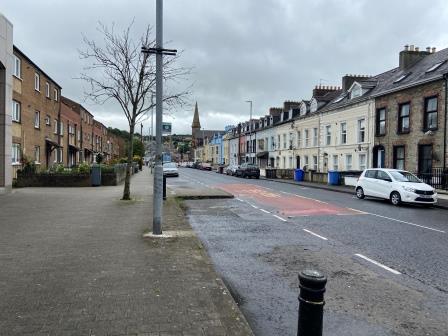
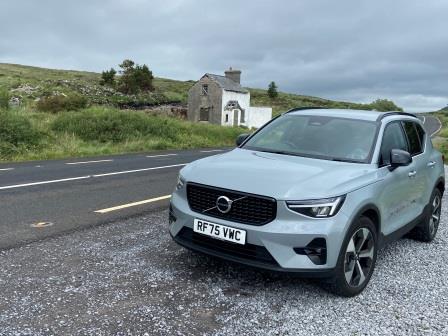
When I mentioned we were also heading across the border he told me to tell the car hire people as they got funny about that sort of thing. I knew this already and I wasn’t surprised when the guy in Enterprise told me there would be a £28 cross border charge. When all the formalities were done he led us out to a grey Volvo XC40.
Glovebox Map
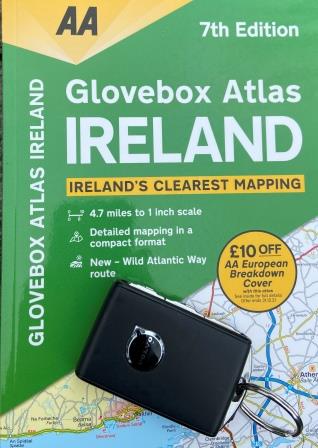
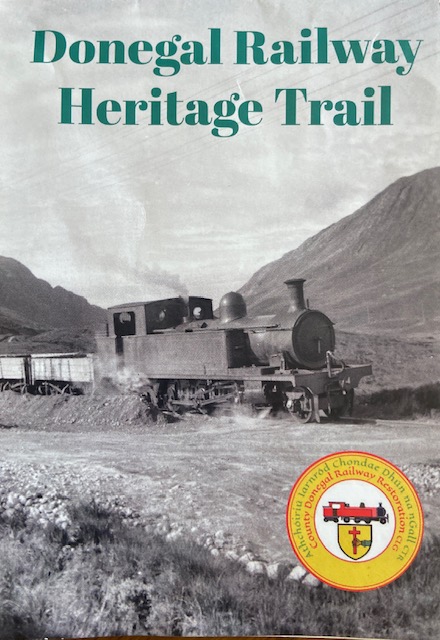
We had picked up an AA “Glovebox” Map of Ireland from the Waterstones in the Foyleside Centre and I had already begun to plan some of the trips we would be making. I was also using the Donegal Railway Heritage Trail leaflet which had some of the important railway heritage sites marked on it.
My basic strategy was to try to follow the course of the old railway lines that used to serve the area. The first day would feature a trip out to Burtonport, the terminus of the Letterkenny & Lough Swilly Railway (L&LSR) that until 1953 used to depart from its terminus at Graving Dock station in Derry-Londonderry.
More information on – History of Railways in North-West Ireland
Letterkenny
We crossed the river on the Foyle Bridge just to the north of Derry-Londonderry and after a few miles on the ring road picked up the A2 heading west, close to the point where the L&LSR had its first intermediate station, Gallagh Road. A few miles on we passed into County Donegal, the Republic of Ireland.
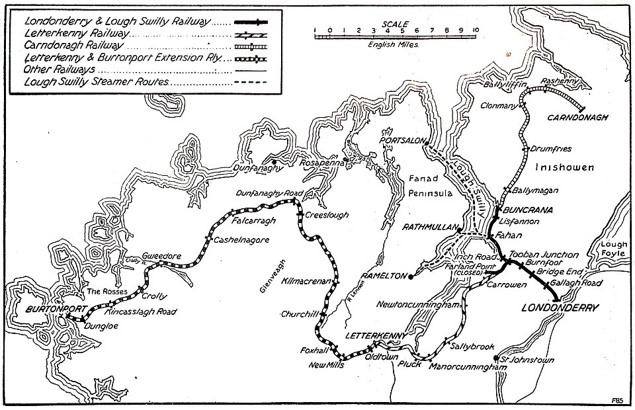
There was nothing really to mark the border, save for the road signs were now in both Irish and English and the speed was being measured in Km/h. We were heading towards Letterkenny, following the N13, which is what the A2 had now become. Soon we passed through Bridge End where the L&LSR had their second halt and customs post. From here the original line linked to Farland Point on Lough Swilly and eventually to Buncara and Carndonagh to the north.
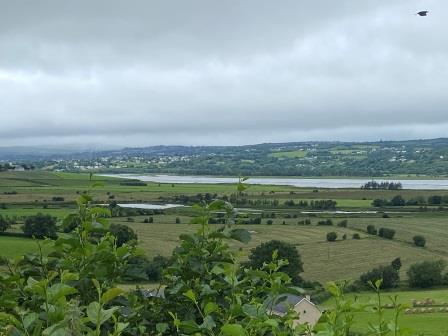
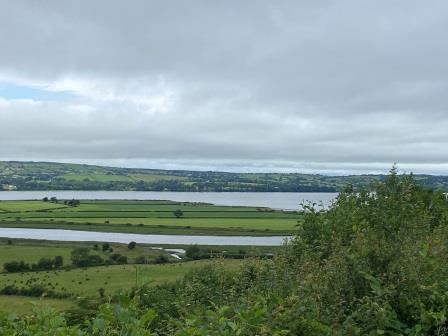
We followed the N13 as it curved to the west and the beautiful Lough Swilly came into view. It is one of only three glacial fjords in Ireland and stretches for 50 km. We continued down into Letterkenny, passing through Manorcunningham where the L&LSR once had a station.
Our first plan had been to stop for a coffee in Letterkenny (34km from Derry-Londonderry) but after heading along Upper Main Street and completing a circuit of the one way system, we decided to go for somewhere a little quieter.
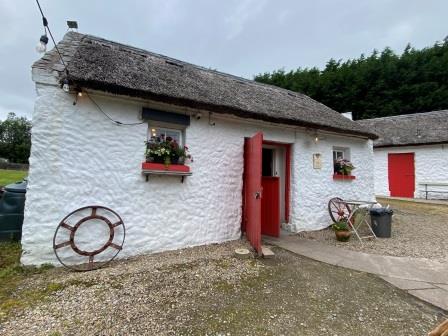
We headed up the N56 and found a lovely spot 10km further on in Kilmacrenan. We sat outside “Coffee Time”, an olde world thatched cottage, enjoying coffee and slices of freshly baked lemon drizzle cake. With the temperature staying around 18 degrees centigrade, we were certainly escaping the heatwave, it was already over 30 back home.
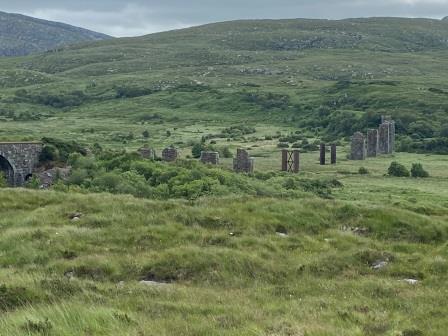
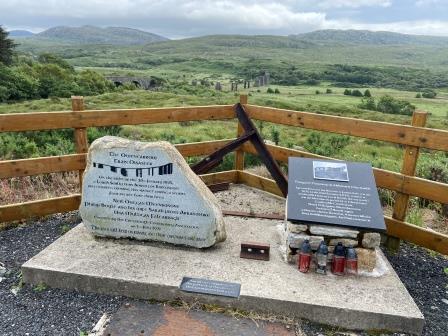
The L&LSR had a station at Kilmacrenan and a little further north was its largest civil engineering structure and the site of its worst tragedy. We paused at the little memorial overlooking the remains of the Owencarrow Viaduct. In January 1925 four people died when winds of 120mph derailed a train and caused the bridge to collapse.
The N56 pretty much followed the route of the 80km extension of the L&LSR from Letterkenny to Burtonport. The railway was built with a government subsidy in 1903 and was never commercially viable. Driving through this largely unpopulated area it was easy to see why it never made any money and was forced to close in the 1940s once roads were fully developed.
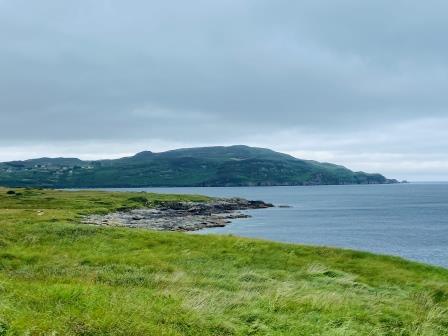
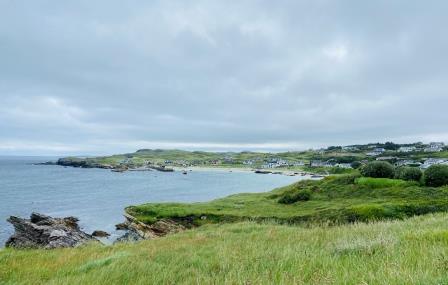
We reached Portnablagh and enjoyed beautiful views of the coast around to Dunfanaghy. There was evidence of a few tourists but the place was relatively deserted. The railway never quite got to the coast here; it served this area with a station called Dunfanaghy Road some distance inland.
The Volvo, which had been handed over with less than a quarter tank, needed replenishment. We paid 1.80 Euro (£1.53) a litre at a local garage.. This was bad planning: petrol had been cheaper in Northern Ireland; we had seen it at £1.44 back in Derry.
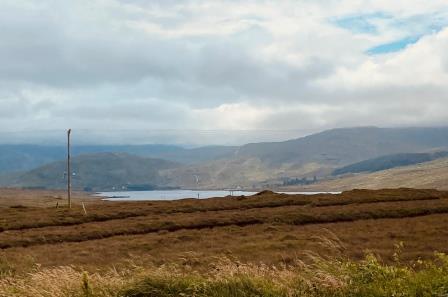
As we drove, we noticed that many of the road signs indicated that we were following the “Wild Atlantic Way”. The 2,500 km (1,500 mile) coastal driving route dates from 2014 and spans the whole west coast of Ireland. It is one of the longest defined coastal routes in the world.
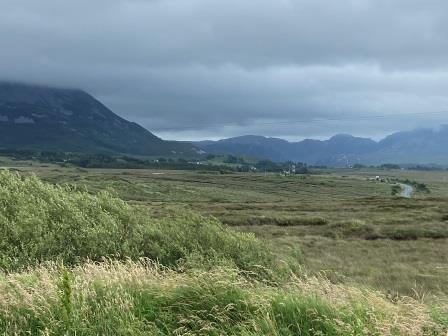
We followed the Wild Atlantic Way as it left the N56 heading along the R259, passing Donegal Airport. The area here is designated as Irish speaking (Gaeltacht) and so we were trying to follow signs for Ailt an Chorráin with no translation of Burtonport.
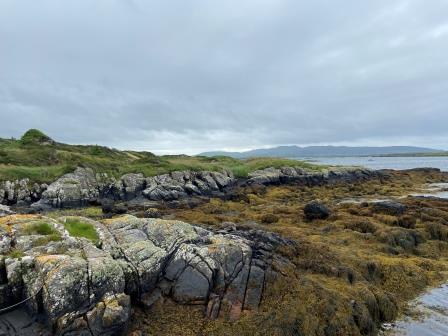
Burtonport
We reached the picturesque fishing village and parked up. The small Aranmore vehicle ferry was just leaving and we watched it sail out before enjoying a lunch of potato soup and hot chicken sandwiches at the harbour café.
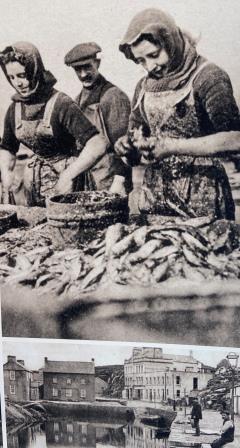
There were plenty of posters and photographs that told the story of how the village had been named after English landowner Lord Burton Conyngham, developed into a fishing port and how it had been influenced by the coming of the railway in 1903.
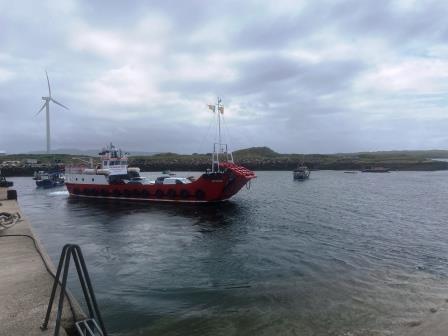
We walked along the harbour where the railway from Derry-Londonderry had once terminated. There were old photographs on signboards to help us imagine what it all looked like back in its heyday.
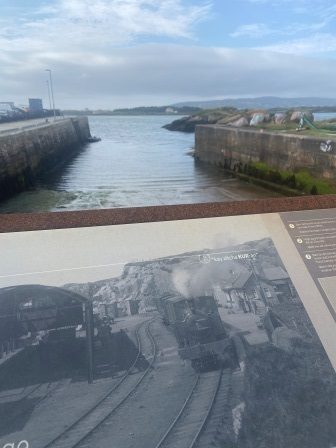
The 5km Burtonport Old Railway Walk was waymarked on signs by a little steam locomotive logo. It covered the first section of route out of the fishing port.
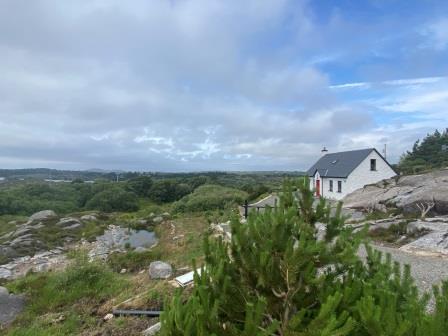
A little way along at an old keeper’s cottage there was an old rail trolley and memorial bench dedicated to Frank Sweeny, historian and author of That Old Sinner, a book about the Letterkenny & Burtonport extension of the L&LSR.
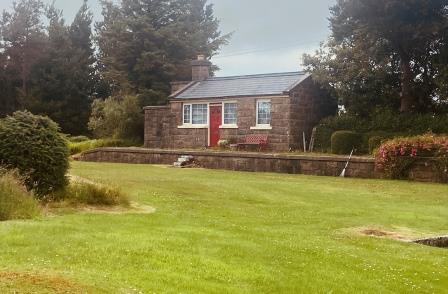
The trail continued through rugged bog-like terrain and ended at the old Kincasslagh Road Station which is now in the grounds of a private house. The family were in the garden and I shouted across to get their permission to take a photograph.
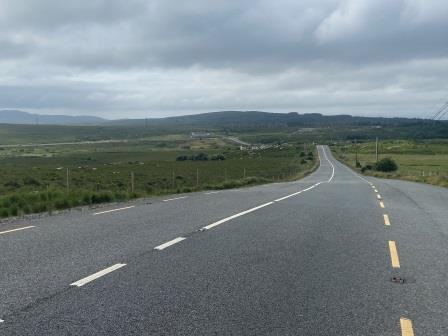
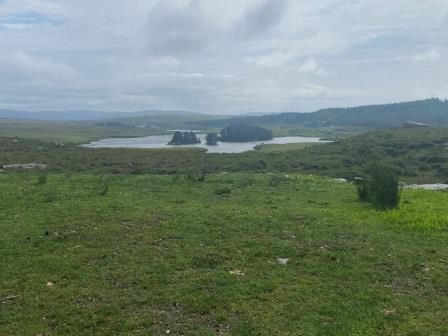
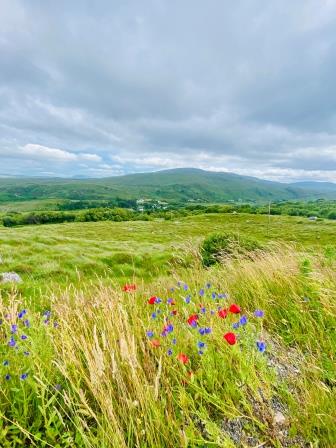
We returned to Derry-Londonderry by a more direct route passing through Dungloe, Fintown and Stranolar. The scenery was outstanding and the roads, which had speed limits that often felt a little high, were largely deserted for most of the journey.
We had finally worked out the rather complicated Volvo entertainment system and treated ourselves to a selection of local radio stations including Highland, broadcasting live from Letterkenny.
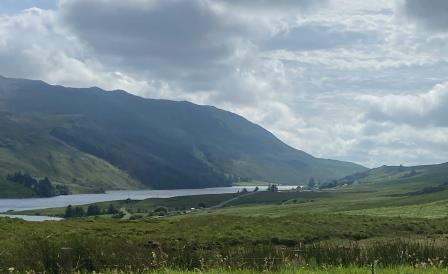
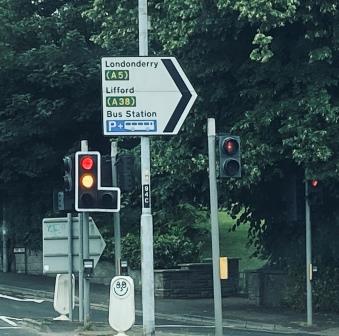
We reached Lifford and then crossed over the River Foyle back into Northern Ireland. We circled Strabane to head the short distance up the A5 towards Derry-Londonderry, enjoying some great views of the Foyle as we went
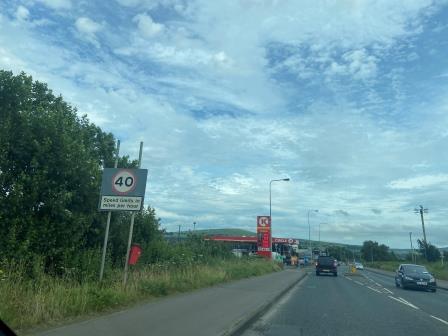
Here we were roughly following the route of the County Donegal Railway (CDR) line on the east bank of the Foyle. We eventually passed through Newbuildings, a staunchly loyalist village with an extensive display of flags, to arrive at the CDR’s Victoria Road Station (now a warehouse) next to the Craigavon Bridge
Day Four – Foyle Valley Railway Museum
The next morning, we checked out of the Airbnb and drove across the Craigavon Bridge to the Cityside. Here facing the CDR’s old Victoria Road Station on the opposite bank was the Foyle Valley Railway Museum.
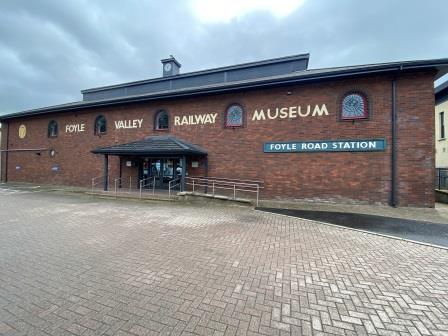
The museum actually started out being based at Victoria Road but was eventually moved across the river to this purpose-built building. A short length of track used to be in use as the Foyle Valley Railway stretching a few miles south from here along the old Great Northern Railway formation towards Strabane.
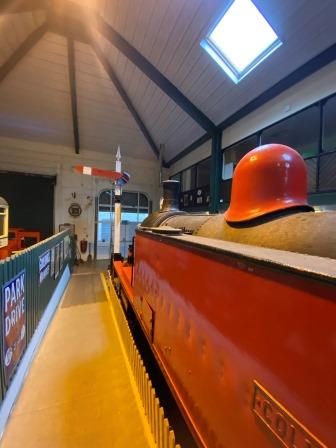
We were treated to a special viewing of the museum opened up for us by the lovely people of “Destined” next door. Although not exclusively, the museum tells the story of the County Donegal Railway (CDR) system and features two of the steam locomotives and one of the diesel railcars. After we had visited the museum we set off towards Fintown where we would travel on another railcar.
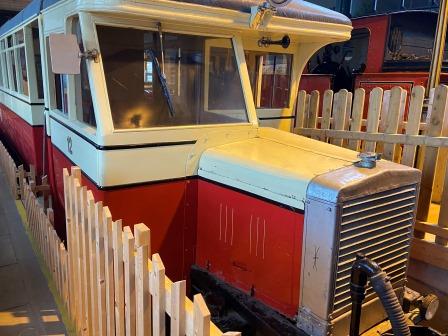
We left Derry-Londonderry heading along the A40 which soon changed to the R236 as we crossed the border. We stopped to look at the Foyle again in the distance and then headed west, eventually following the route of the old CDR line from Stranolar to Glenties
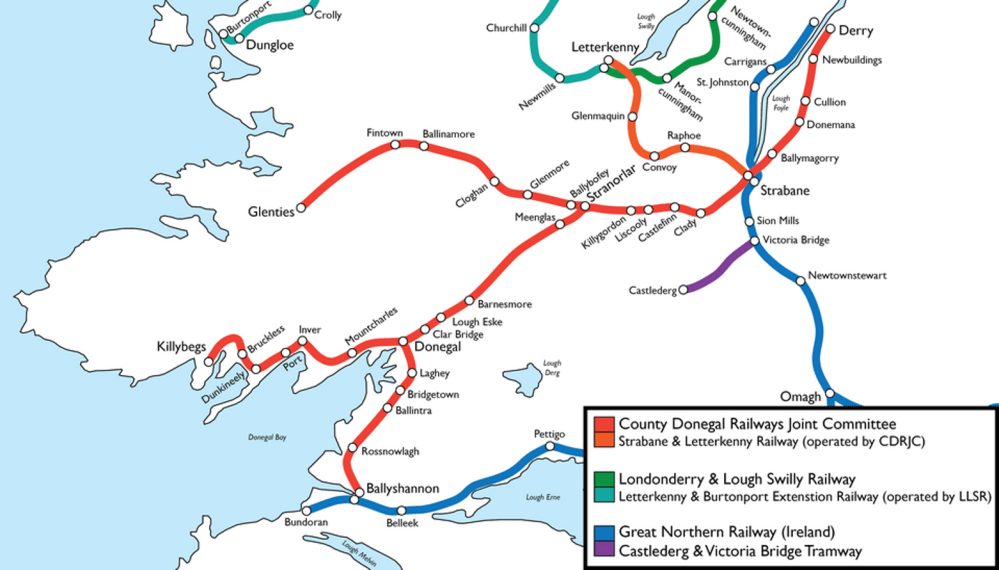
The Finn Valley
We arrived at Fintown (around 27km of the 42km from Stranolar to Glenties) in time for the 12:00 train departure rather than the 13:00 we had booked. After a bit of negotiation, I managed to get the ticket swapped over. It was harder than I had expected as they were quite busy.
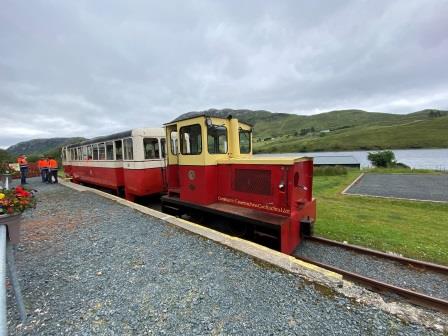
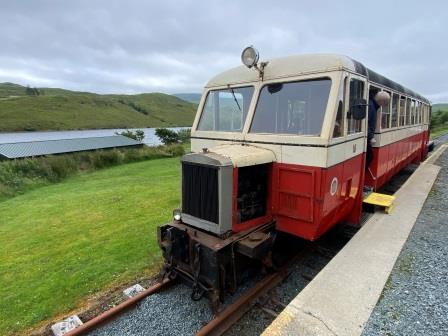
We boarded preserved CDR railcar number 18 which was standing at the platform. Built in 1940, the vehicle had been restored to the condition it would have been in during the 1940s and 1950s when it worked along the same line.
We got chatting with the Indian couple who were sitting behind us. They were from Kerala and were with a bigger party visiting from Tipperary where they were all working as nurses.
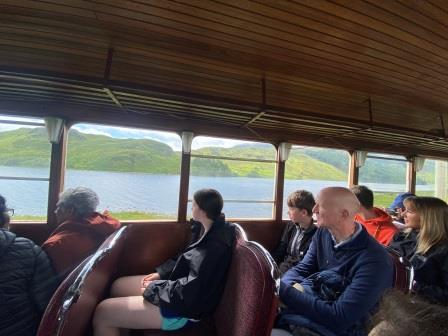
One of the guides from the railway came on board to explain that we would start off by being towed for about three miles or so by the small diesel locomotive attached to the back of the railcar. Then they would power up the railcar itself and then we would travel back. The whole trip was expected to take about 40 minutes.
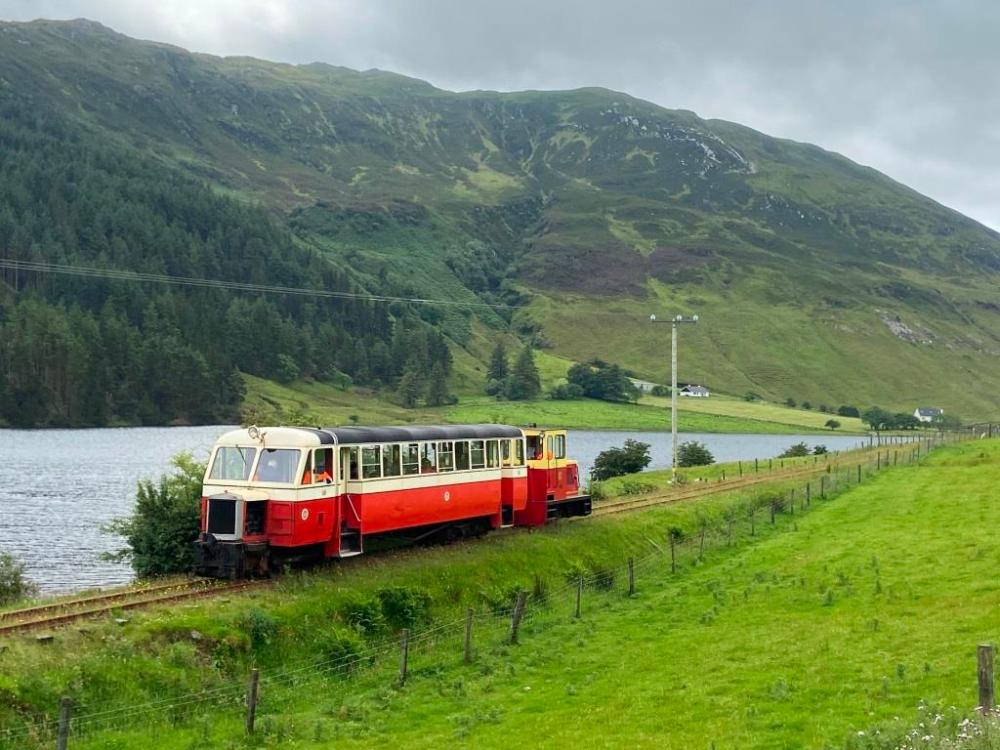
We set off. They had certainly picked a great stretch of track to run the restored service on, the views across the lake were amazing. Before we turned around our guide gave us a short history of the line and of the diesel railcars that were brought in in the 1930s to try and save it.
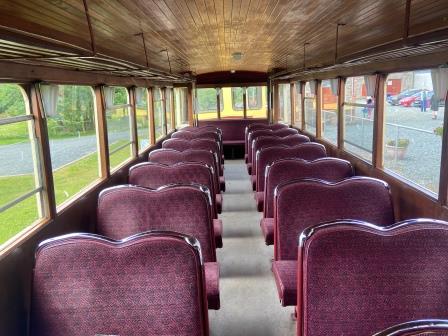
Back at Fintown I had a long chat with the guide about the railway and the seemingly constant search for volunteers and money to keep the thing going.
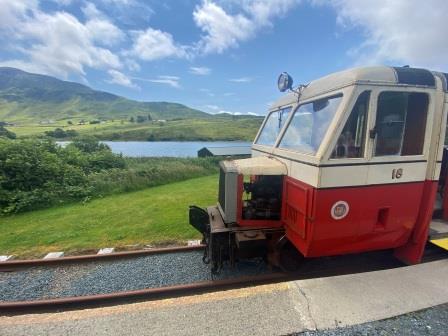
Ardara
We drove on through Glenties, where the CDR line terminated, to arrive in Ardara about 10 km further on. The place is billed as the prettiest village in Donegal. We had a walk around and then enjoyed another great soup and sandwich lunch at the Courthouse restaurant and bakery.
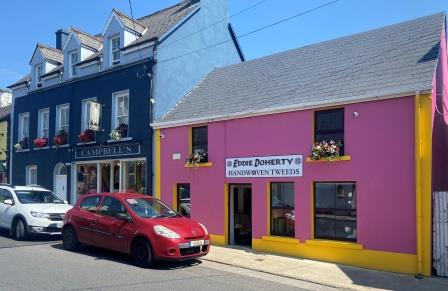
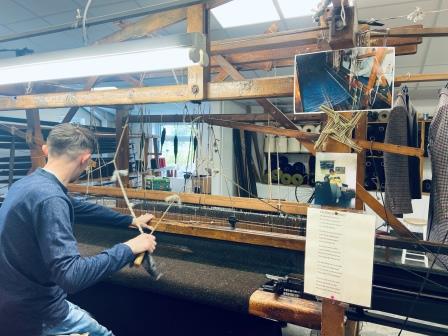
The Tirona Donegal Tweed Visitor Centre was a combined working factory, living museum, and retail shop, We watched a display of the loom operation and then had a chat with the employee demonstrating it about the prospects for young people, past and present in this part of the world.
Killybeggs
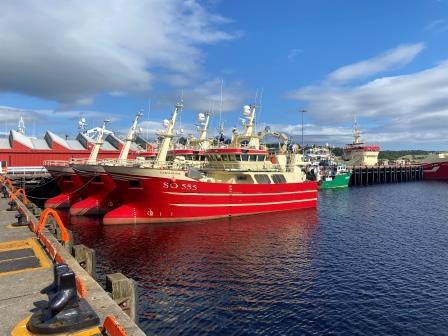
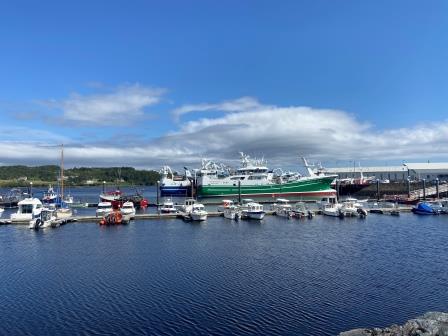
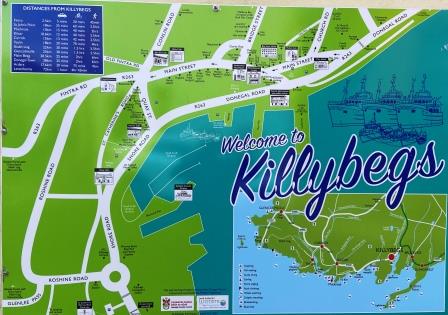
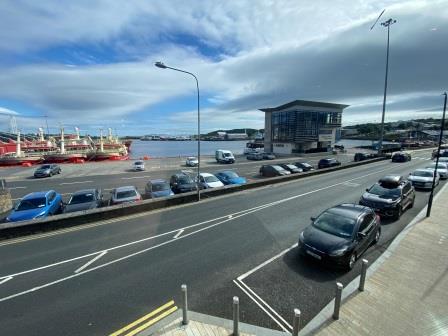
It was another 17km down to the coast and the port of Killybeggs. We parked up outside the Tara Hotel opposite the massive harbour which was filled with large deep sea trawlers and smaller inshore fishing boats.
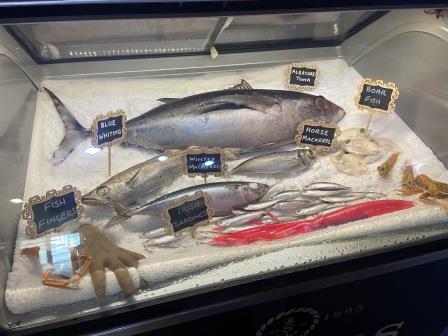
We went off for a walk around Ireland’s largest fishing port. At a fishmongers we chatted with the owner. One of the local specialities was Albacore tuna usually fished in July, August and September. He told us that EU quotas and scientific advice were forcing massive reductions. Mackerel quotas in particular had been slashed.
The 19 mile (27km) railway extension from Donegal arrived here in 1893 and transformed the transportation of fish. With the help of the tourist information people, we tried to trace exactly where the old railway terminus had been.
They showed us a few photographs in a couple of books and pointed to the area just opposite their building. We retired to the Tara Hotel and sat drinking coffee overlooking the place where the turntable at the end of the platform had once been.
We got back in the car and drove along the N56 towards Donegal. We followed, more or less, the CDR line passing through places such as Dunkineely, Inver and Mountcharles which used to have stations.
Donegal Town
It took us about thirty minutes to get to Donegal Town. We found our Airbnb in a side street just outside the main town square or ’diamond’ as they called it here.
We had opted to self-cater and so took ourselves off to the SuperValu supermarket nearby. We also shopped at Aldi. On average, food prices seemed comparable with back at home.
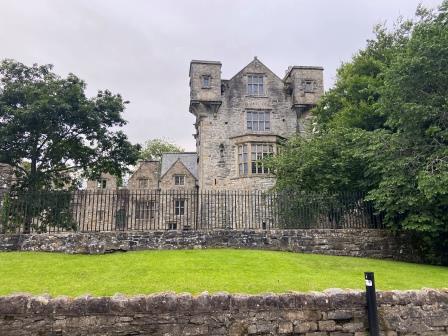
We didn’t really spend a lot of time exploring Donegal Town. We had a good walk around but didn’t get the chance to see much or even visit the restored castle.
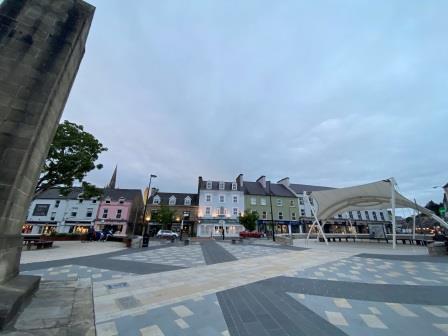
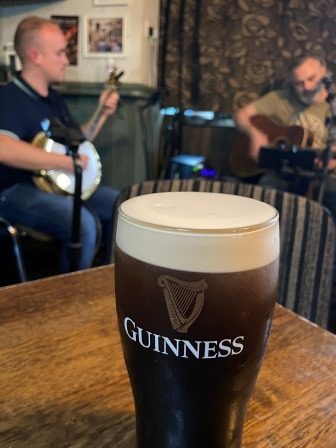
We did spend two nights in several of its pubs though. It was difficult to complain, but the place was full of tourists. It would be nice to experience Donegal when there were fewer visitors around, perhaps.
Continue the journey…. Ireland – Northwest (Cont…) –

